
Groundbreaking
More new varieties are on the way, including plenty from other hop growing countries and some from parts of the U.S. where farmers only recently began growing hops.
Now Open: World Beer Cup Early Bird Registration – Enter & Save ›


You are using an outdated browser not supported by The Brewers Association.
Please consider upgrading!
Practical guidance on the raw materials behind every beer you make, from barley and hops to yeast and water.
More new varieties are on the way, including plenty from other hop growing countries and some from parts of the U.S. where farmers only recently began growing hops.

Some things remain unchanged. Cascade’s reign in the top spot of the BA Hop Usage Survey stretches on, but there’s a newcomer in the top 10.

A comprehensive look at the 2014 hops and barley harvests, broken out into regions. First up: how shifting demand for hop varieties has led to replanting in the U.S.

For many craft brewers, the only method of adding yeast to wort is by cone-to-cone pitching. But this simple method can result in highly variable fermentations.

Calcium and magnesium play important roles in brewing water, but are typical recommendations for brewing water treatment appropriate for all brews?

A multi-institutional group of researchers, farmers, maltsters, and brewers is slowly piecing together the links in a supply chain to develop new, flavorful malt varieties.

For the November/December 2014 The New Brewer, we present our Raw Materials issue. For this issue, we review the 2014 world hops and barley harvests; discuss new hop varieties; present the BA Hop Usage Survey results; and examine barley and malt from the Southern Hemisphere. Read More
This issue is brought to you by FILTEC
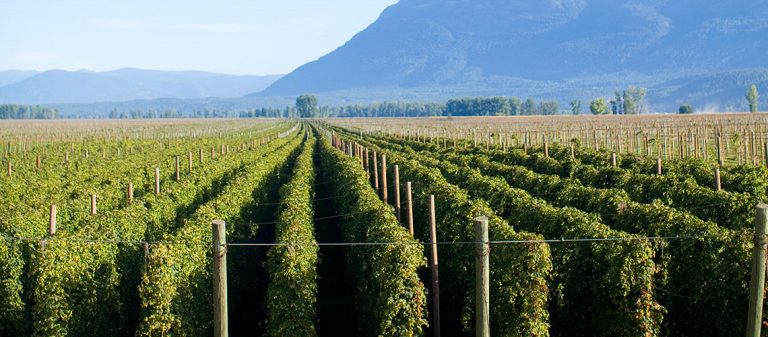
The world barley markets are improving; the hop alpha-glut is receding; and the hop flavor/aroma markets are tightening as we offer our annual global raw materials report.

Brewers are looking at two sets of numbers these days: how many acres of popular varieties are planted, and the attributes of numbered hops under development.

The purpose of the BA Hop Usage Survey has been one of empowerment, serving a purpose not just of education, but of communication between brewers and growers.
 Resource Hub