

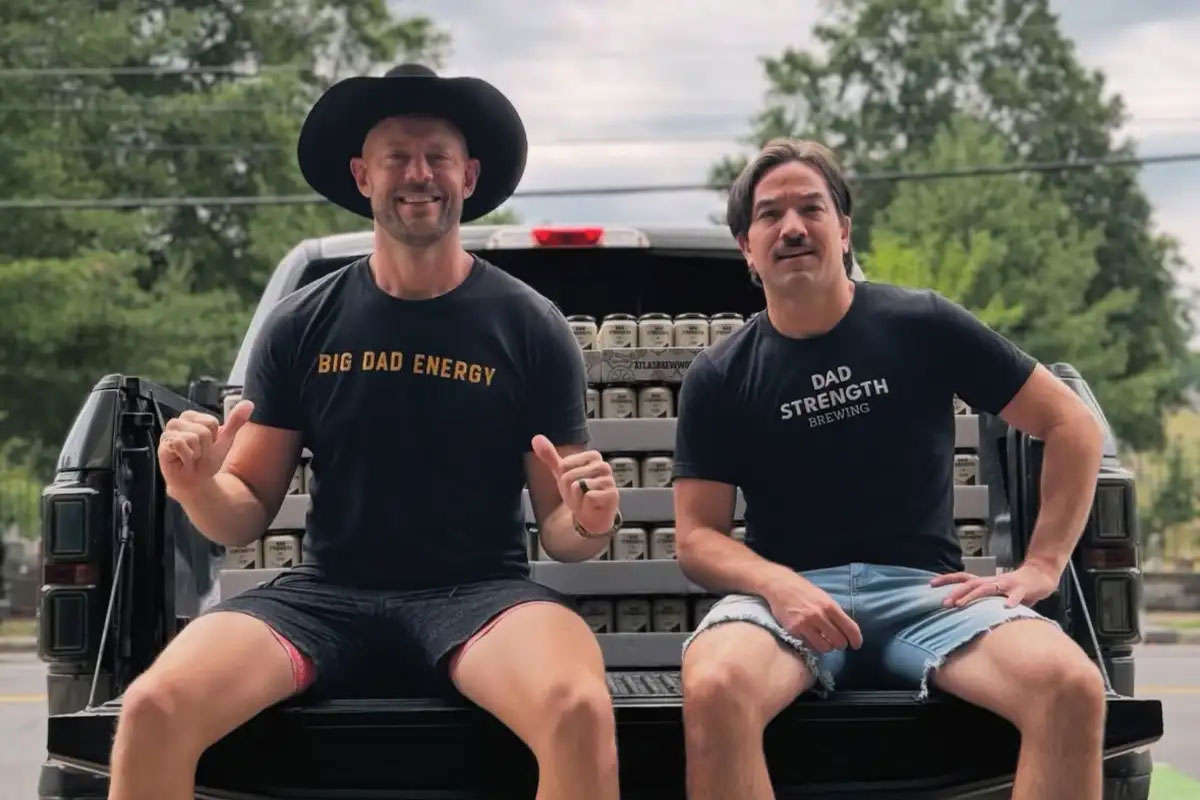

A conversation with Ryan Kutscher, co-founder of Dad Strength Brewing
I’ve been following Dad Strength Brewing’s journey on Instagram for a while now, and I have pointed to their content as an example of what breweries could be doing more of. (This post alone is a great example of a strong hook followed by great storytelling.) What I appreciate about Dad Strength’s approach is that they are sharing a clear story of why they started their brewery and what the journey of selling their beer looks like. They lean heavily into the build-in-public strategy that many entrepreneurs have used, and it’s working well for them as you’ll hear in this interview. And this is part of what makes them standout from other breweries–they’re telling a story that only they can tell.
Stephanie Grant: I love that you’re doing founder content and building in public. What’s the thinking behind your approach to social?
Ryan Kutscher: We started from ground zero, and the idea was, how do we share this journey as two dads building this brewery and this brand, the good, bad, and ugly. So much stuff on Instagram tries to play the high notes. What we’re trying to do is show that there are high notes, but it’s also a grind, and there are setbacks. There’s a learning curve, because you have to be a little vulnerable and share some stuff that doesn’t always look glamorous. We’re getting better at it, more comfortable with it, but it’s definitely been a journey figuring out how to do that.
SG: One of your posts, the one in the car with your kid asleep in the back, is one I’ve actually used in my own talks. What was the thinking behind that one?
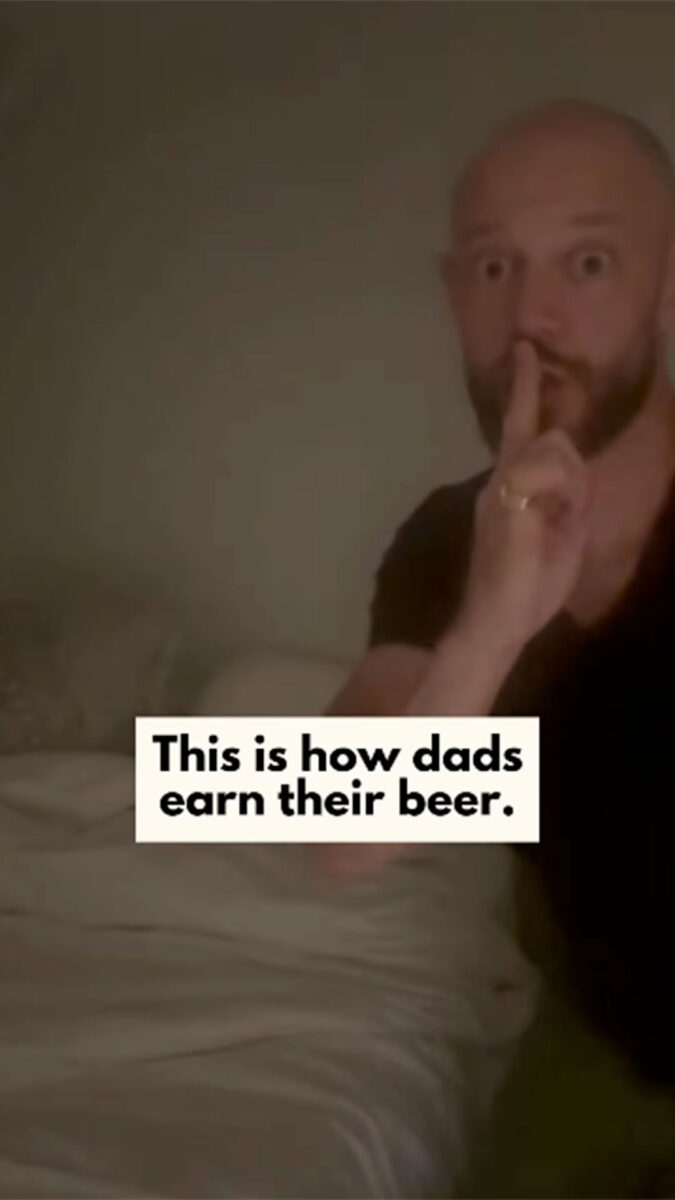
RK: Honestly, I steal a lot of ideas from other people and modify them a little. I think that’s the art of the game, seeing a piece of content and thinking, that’s really compelling, how could I modify that? At the end of the day you have to come up with content people find engaging, and doing that entirely on your own is really hard. Most of the time, if you find someone who’s made something amazing, they found the idea somewhere else too.
So we take ideas from other categories, other platforms, TikTok, LinkedIn, YouTube. We look at what’s working for other people and try to do our version of it, because there are just great tricks for storytelling out there, and you don’t have to only look at beer accounts to find them.
Solving a Problem, Not Chasing a Trend
SG: Given how you’ve talked about the business, who would you say your audience actually is?
RK: That’s a great question. Ninety-nine percent men. Probably a mix of dads and craft beer enthusiasts. That lines up with our origin story, honestly. We’re not the typical “I started homebrewing and loved it so much I started a brewery” story. We were solving a problem we had ourselves, and a lot of advice for entrepreneurs is that if you’re dealing with a problem, there’s a good chance other people are dealing with it too. That’s held up for us. We didn’t know if people would want this or if we were insane, so we made the product and started selling it door to door, reaching out directly to people. We started hearing yes, yes, yes, and that’s what gave us the confidence to keep going. I’d tell anyone thinking about launching a product to test it live like that, because you get that feedback right away, and you find out whether people are actually willing to pay for it.
Telling the Story Without Selling It
SG: With such a clear sense of who your audience is, how does that shape how you actually create content?
RK: Like I said, it’s a lot of exploration. We understand what we’re trying to do, but the how is definitely trial and error. We’re always trying to tell our story in a way that’s entertaining but doesn’t feel like branded content, like solicitation or constant sales. We want people interested in our story, and ultimately in our product, but we’re not treating it like a paid strategy where we’re moving people through a funnel. Commerce is part of what we’re doing, but it’s not the only goal.
SG: How do you and your co-founder divide the work of actually creating content?
RK: The lion’s share of execution falls on me, but from a storytelling standpoint we’re always trying to identify what we’re doing that week. Our strategy is basically “what are you doing right now,” and that usually yields decent ideas. Then I put them into the pipeline, we film them, and we try to keep things moving. It’s not easy, content creation is basically a full-time job on top of the full-time jobs we already have running the brewery. You’re on Instagram constantly, soaking up what’s working, looking for inspiration. I’m on there at least five hours a day, and a lot of it doesn’t look or feel like work, but it is. It’s a lot of extra work, but it’s critically important.
What Actually Counts as Success
SG: Since alcohol brands can’t sell directly online everywhere, how do you measure whether your social efforts are actually moving the business?
RK: We do measure online sales in the handful of states where we can sell, and we track engagement, but some of it is harder to quantify, the partnership opportunities and the discovery. We were found by Shark Tank through our social content. We’ve had other outlets reach out to us the same way. If you wanted to put a real number on it, cost per eyeball, you probably could, but a lot of it is more like, you know it pays dividends, you just don’t always know when or how to price it.
Instagram shares engagement metrics with you directly through organic posts, likes, shares, follows, so you do get a sense of how well the storytelling is landing and how that reflects on the brand overall.
SG: Why is telling your story specifically so important to you, versus taking a more traditional approach?
RK: If you don’t tell your story, how is anyone going to find you? You’re in the public space if you’re a brand, and for a consumer good especially, marketing is the moat. You have to market well. The story is the differentiator. You can either sell desirable things, or you can make the things you sell desirable, and we’re trying to do both. The story is what makes the product desirable, and the quality of the product is what makes you worth selling in the first place.
The Grocery Store No’s
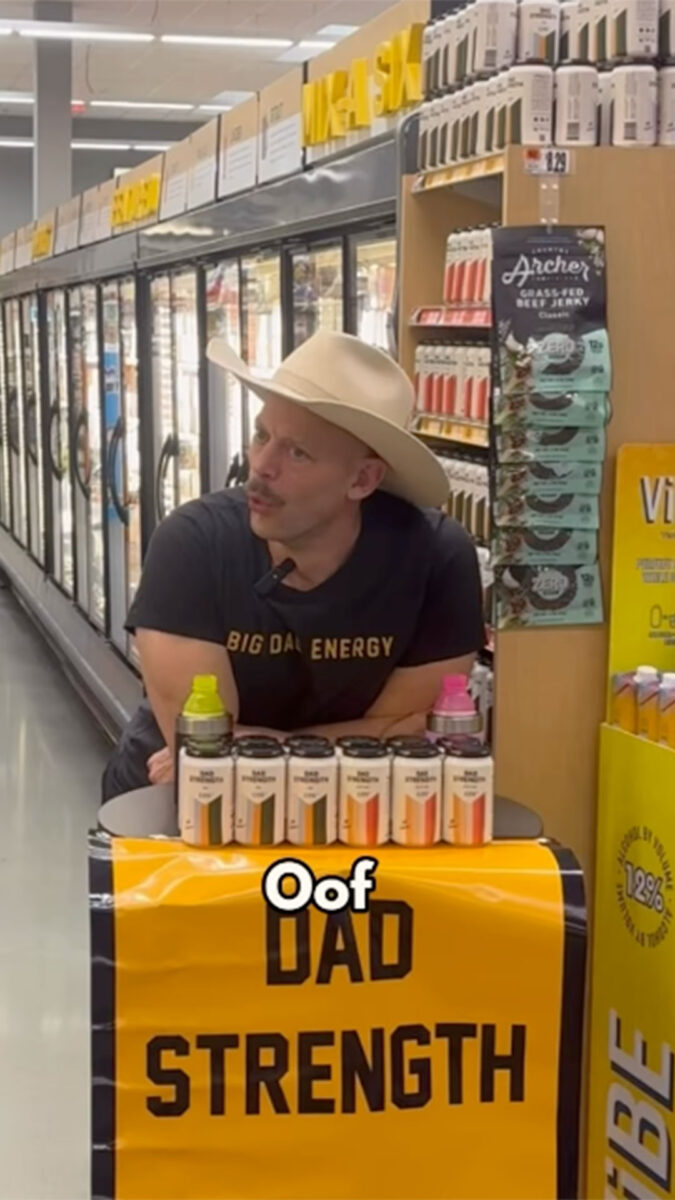
SG: How does your audience respond to the more vulnerable, behind-the-scenes side of what you post?
RK: For the most part it’s all good feedback, and you can see it in the platform metrics. We had one post, us out trying to get people at a grocery store to try the beer and getting a lot of no’s, that got over 600,000 views. It’s resonating because it’s the real pain of trying to get someone to try something and it not quite working.
The negative comments you feel ten times as much as the positive ones roll off. But we try to fold that back into the content itself, sometimes poking a little fun at the back-and-forth that happens in the comments, rather than letting it just sit there.
Advice for Breweries Still Figuring This Out
SG: What advice would you give brewery owners who are unsure what to do with social, or who are posting but not feeling the return on investment?
RK: First, you need to know what you actually want. If you’re a brewery trying to get people to show up in person, you’re selling an experience. We’re selling a solution. So know your why: why do you exist and what are you trying to do?
Then find a handful of accounts that inspire you, in your category or an adjacent one. If you’re a brewery, maybe that’s a restaurant, a coffee shop, another on-premise concept. Find the ones doing a genuinely fantastic job and break down what’s working about their posts and their storytelling, literally write it down, frame by frame, what you’re seeing and hearing. That’ll help you decode the mechanics of how they tell stories, and from there you can start to understand the pieces of your own story you can build content around every day. Then you start scripting, you film, and you build a pipeline and a posting cadence. One thing we keep learning is there are way more stories to tell than you’d think, and they’re usually smaller moments, not bigger ones.
The Takeaway
The biggest thing I want you to take away from this conversation isn’t really about strategy, it’s about willingness. Ryan and Craig aren’t just posting when things go well. They’re posting the grocery store run where people say no, the exhausted dad in the car after a long day, the parts most brands would edit out. That’s what makes people root for them instead of just following them.
Ryan’s advice for other breweries is worth sitting with too: know your why before you know your content calendar, and go find the accounts outside your category that are telling stories well. Don’t just learn from beer brands. Find inspiration everywhere.
Dad Strength built a following, and eventually a Shark Tank appearance, out of two dads solving their own problem in public. Start posting what’s already happening in your space and show us why you continue to do what you do despite the challenges.

 Resource Hub