

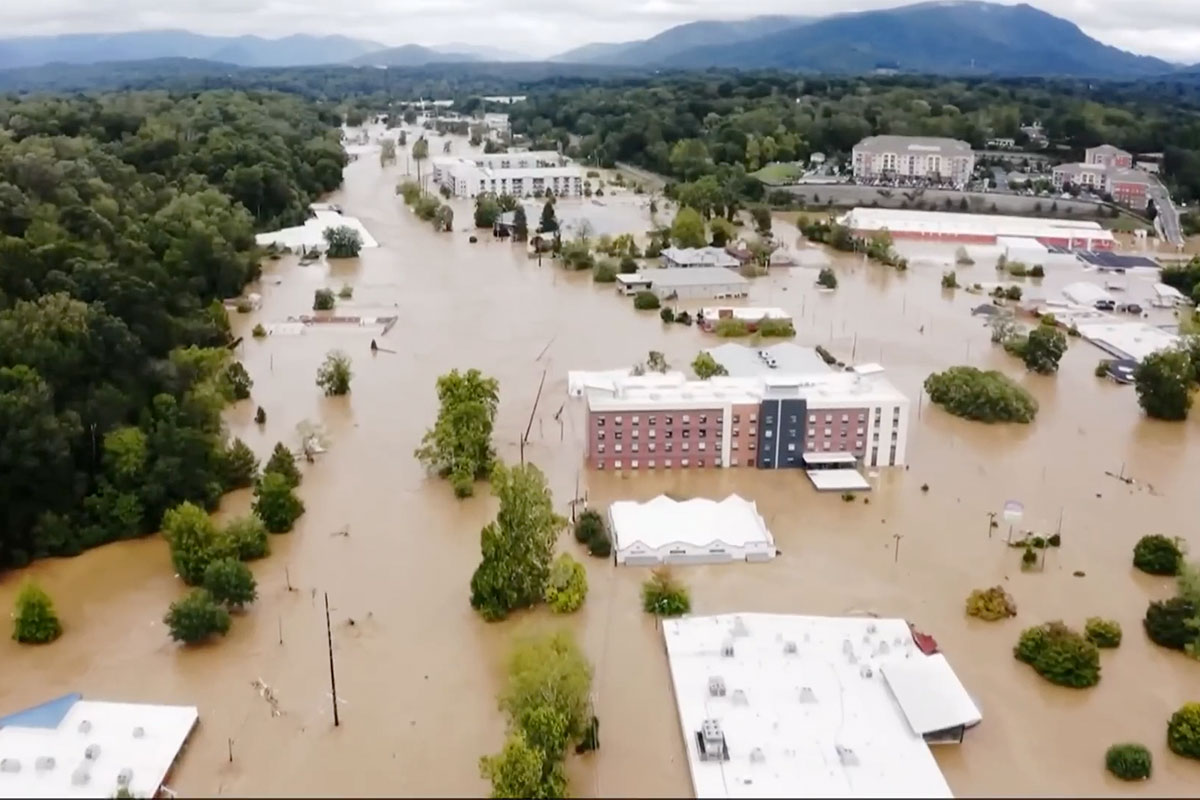

As I type these words, the air is relatively clear here on Colorado’s Front Range. At the same time, there are major fires burning in Washington state. Historic floods recently hit Indiana. Although the strong El Nino weather pattern this year is expected to minimize the severity of the Atlantic hurricane season, it’s also tied to significant drought westward from the Rocky Mountains.
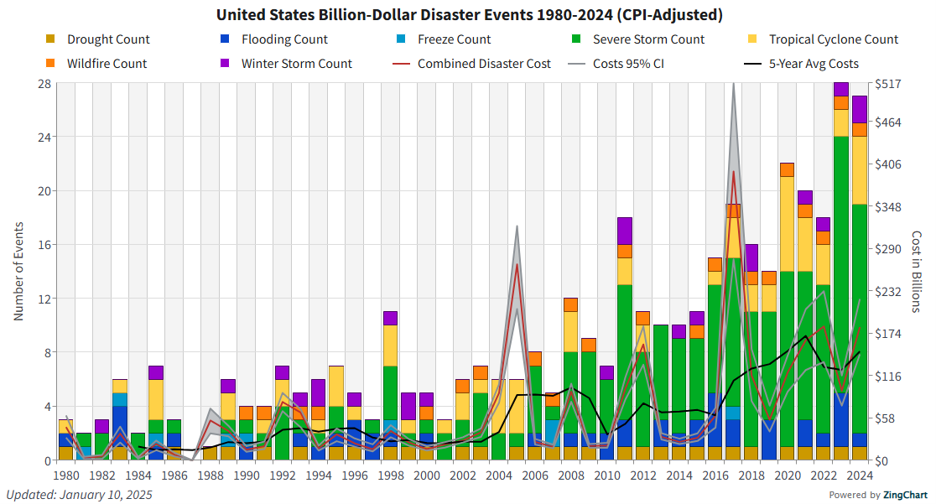
A changing climate has led to natural disasters hitting more often, with more intensity, and in more places than we’ve seen in our lifetimes. The number of inflation-adjusted billion-dollar natural disasters in the U.S. has been steadily rising over recent decades. And caught in the crosshairs of all this are small and independent brewers who are just trying to make a living while serving their communities.
When disaster strikes, there’s plenty on the mind of a small business owner. The Brewers Association has put out many resources around how to prepare and how to react on the individual business level (like this, this, and this).
However, if your facility and staff weather the storm, the question then becomes what kind of an impact does that event have on craft production and sales? Of course, the impact will vary for every brewery in every incident, but what follows explores the average impact of four natural disasters occurring between 2024-2025.
Production: Among the four case studies, the average production change for the year of the disaster (compared to the prediction for each market) was -2.7%, while the median was -3.7%. Yet, by the year after the disaster, the mean production change was +3.3% above the predicted values, and median was +2.9%.
Sales: The average dollar sales of craft beer in the year of the natural disaster were down -1.9% compared to expectations, while average volume sales were down -1.6%. The impact on craft sales were smaller in the year after the disaster took place. There, the average deviations from dollar sales expectations (+0.2%) and volume sales expectations (+0.7%) were close to no deviation at all.
Openings/Closings: In the year that the disaster took place, on average, brewery openings were down 1% from their expected values while brewery closings were up 1% from expectations. However, in the year that followed, openings dropped to 2% below expectations while closings bumped up to 2% above expectations.
Every natural disaster is deeply personal, impactful, and will have unique impact on the cities and states that it affects. There will be some brewery owners that feel they “dodged a bullet” and some that will lose everything. This assessment of four recent events, however, may provide some hope that the impacts are primarily felt in the immediate aftermath of the disaster, and that the sweat and tears that go into recovery after a major disruption have the possibility of paying off in the end.
When disaster strikes, the last thing you’ll do is come back to this post for analytics. I hope to leave you with the understanding that your Brewers Association is here to support in any way we can — we are here to track down resources to help you cope, rebuild, and come out the other side. And it’s not just us. Craft brewers have consistently shown up to support other breweries and their communities in the face of disasters (see for example: No-Li Brewhouse response to Spokane fires, Sierra Nevada response to the Camp Fire, and Burial Beer Company response to Hurricane Helene). This is an industry that wants you and your community to succeed, come rain or shine.




 Resource Hub