

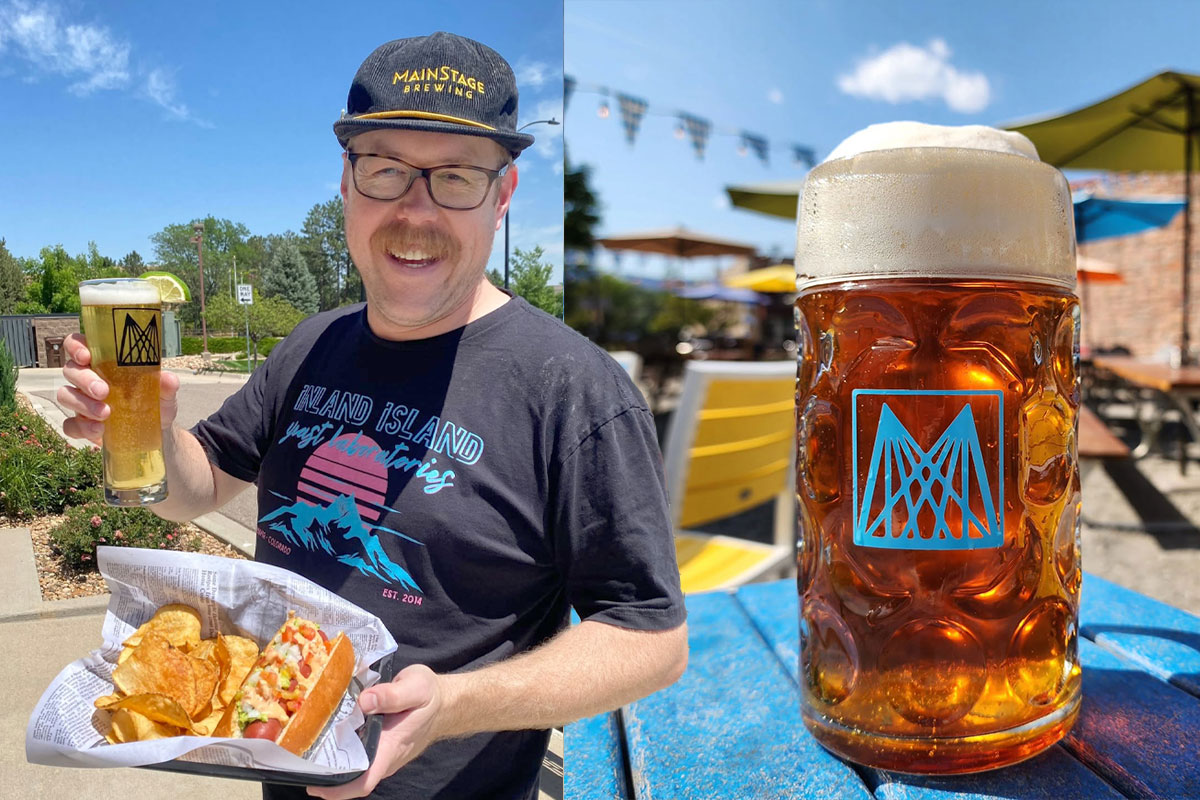

Thinking about adding food to your taproom? If so, welcome to the party. Food options are commonly known to increase check averages, provide additional opportunities for visits, and reach wider audiences. But the increased complexity of adding a food program can quickly reduce the potential benefits.
Is there a way to unlock those benefits even with the additional operating costs? We checked in with a brewery that has found its sweet spot with food options: MainStage Brewing Company in Boulder, Colo.
Owners Eric Kean and Sam Scruby are familiar with (and believe in) food programs. Their first location, in Lyons, Colo., came with a kitchen that they originally didn’t plan to utilize. Fast-forward to today, and their food program is integral to their business.
To build on that success, they decided to introduce food at their second location. The catch? The new spot was intended to be a taproom. What can you do with a space designed without a kitchen or hood, and no space set aside for food prep/service? The solution: get intentional with what you want to accomplish and add a splash of creativity.
For Kean and Scruby, that intentionality led to hot dogs. Now, this is not your crock pot of hot dogs at a Midwest dive bar (IYKYK). These are gourmet hot dogs that are thoughtfully plated with house-made chips. To them, that distinction matters.
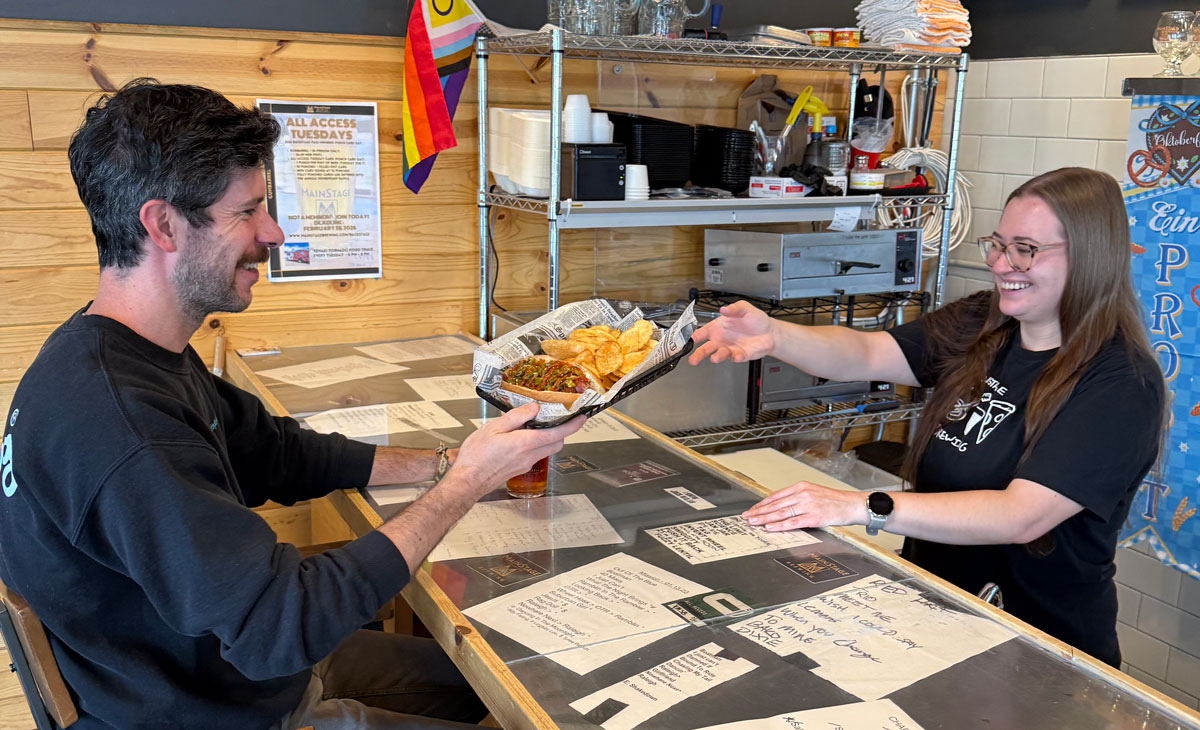
Why Hot Dogs?
When posed with this question, Kean and Scruby looked at each other and shrugged.
“I said ‘We need to make a hot dog cart in the middle of what we are doing,’” said Scruby. “It was a little bit of a joke…but looking around, it made sense. Hot dogs are easy and they are good. They have a small footprint and are reasonably popular. We don’t have hood or a fryer, but we can keep it all contained in a steam table. It felt very achievable.”
Sounds easy, right? By the end of our discussion, it was apparent that they undersold the considerations that went into selecting that food option. It was extremely intentional…and not a process described as easy.
Diving into the rationale, Kean feels there are four tiers to food service at a brewery.
- Tier 1: Premade. This might be a frozen burrito or a panini press. No assembly required.
- Tier 2: Some assembly required. It isn’t a robust menu with options, but something created (or assembled) onsite.
- Tier 3: Food fully prepared onsite, like a standard restaurant.
- Tier 4: Fine dining. As the name implies, it’s an upscale version of Tier 3.
Kean feels Tier 2 and Tier 3 are the sweet spots for breweries. Tier 2 was the right fit for MainStage’s location.
“There is a substantial difference in what you can charge a customer if you make it yourself,” says Kean. “The act of [staff] going over to our little hot dog stand, getting the ingredients together, assembling it, grabbing the chips we fry in Lyons, and serving to the customer plated nicely means something. We can charge more for it, the customer stays longer, they enjoy it more, and they talk about it.”
From Vision to Reality
After establishing that they wanted something assembled onsite, and with the initial idea of a hot dog cart, what came next? Taking that concept and designing the food program is where they got intentional, accommodating for space limitations, labor cost, quality, and company ethos.
Intention 1: Accounting for Limited Space
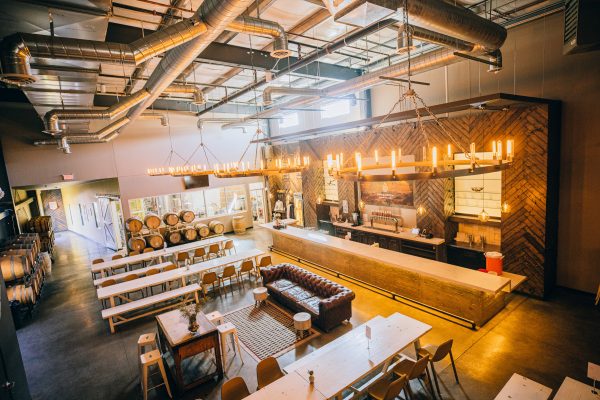
As mentioned, their taproom was not designed to include a kitchen. They would either need to give up space in the brewhouse or taproom seating to accommodate a full kitchen. All tables/bar seating are regularly occupied. Cutting down seating would likely mean dollars lost.
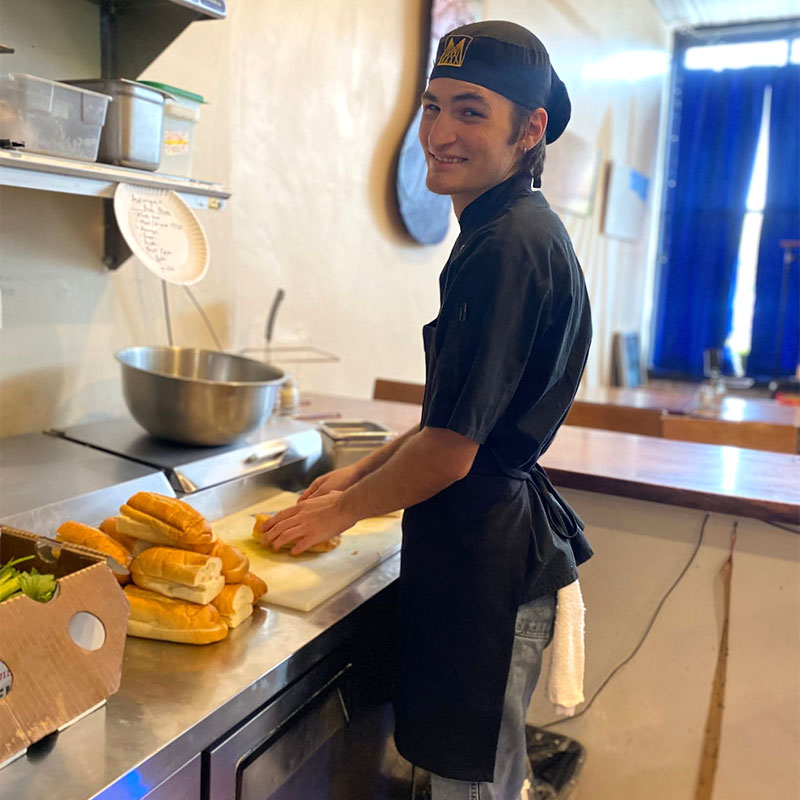
The hot dogs are pre-cooked, and other food elements are prepped elsewhere. So, Kean and Scruby overcame space constraints with a small setup: their hot dog kitchen includes a steam table, two convection ovens, and a small fridge for ingredients. The entire setup fits behind the bar.
Tip: MainStage does have a second location with a kitchen they can use for prep, but commercial kitchens can be rented as well. Laws vary about where and how you can prepare food for your business. Investigate available options and think creatively about what would work for you.
Intention 2: Considering Labor Costs
Labor costs are typically a major line item for small businesses. Another brewery raised this as a barrier to implementing a food program: would they need more staff to handle food orders?
Scruby and Kean proved that you don’t. The hot dogs are easy to assemble (heat up the dog, sprinkle with appropriate ingredients, plate with chips). On a typical day, their lone bartender can pour beers and sling dogs to customers. That was by design: “What is a bartender going to be able to execute on their shift?”
There are labor costs affiliated with prep and procurement, but those are minimal. When brainstorming, they came up with a laundry list of hot dog types, but their final menu includes only four. Why? “We trimmed it down to make it easy for our staff. We are happy to do the hard work to make the hot dog process as streamlined as possible.”
They made it easy for staff, but how did they get buy-in?
“We didn’t give them a choice,” said Scruby. “If you want to come down here and work, then you’re going to sling hot dogs. If you aren’t into that, then it’s probably not the right place to work.”
The food program is intended to help staff as well.
“It only takes two food trucks canceling while you’re bartending to realize how important food is,” said Kean.
Streamlining aside, they deemed the food program to be successful only if it was increasing check averages and staff tips.
Intention 3: Keeping Quality in the Spotlight
“A lot of places don’t think about quality on any level other than their beer. You need to care that much about everything else you are making, as much as possible,” emphasized Kean. “We did a tasting panel with hot dogs to just see what we liked and what was marketable. It needs to somewhat to match people’s expectations of having a nice beer.”
After the duo landed on hot dogs, they repurposed beer sensory concepts to identify the best products for their needs. They researched different types of hot dogs available and tried 20 in a single day. “We did a tasting panel with hot dogs to just see what we liked and what was marketable. It needs to somewhat to match people’s expectations of having a nice beer.”
While there were many solid dogs, the team felt the wagyu selection from Snake River Farms would appeal to more customers. They weren’t just considering the quality of the product but also the marketability and their audience.
Intention 4: Factoring in the Fun
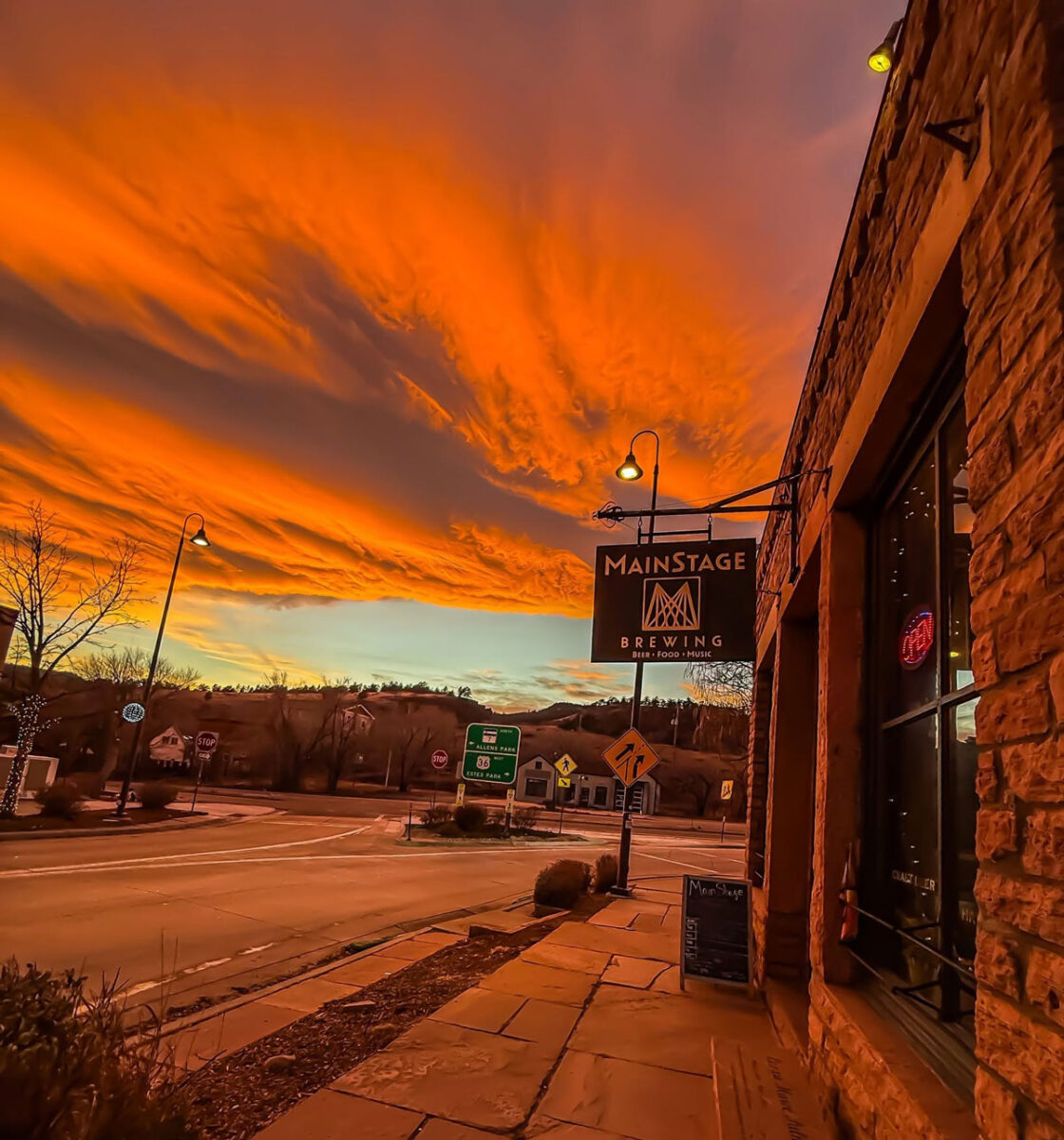
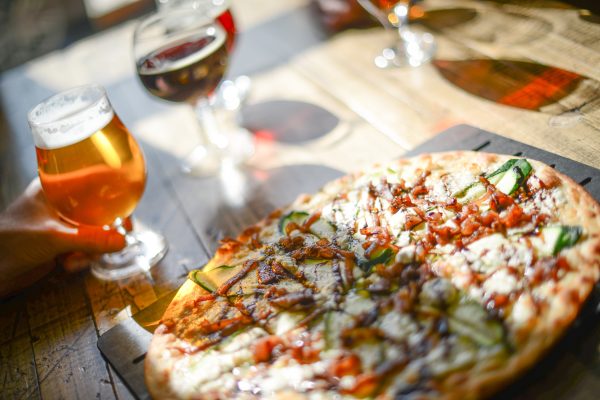
The brewery previously served frozen pizzas. These were nicer than the rank-and-file frozen options at the grocery store and not bad (I speak from experience).
But the duo wanted something that was “more than fine.”
“The pizza that was here, you kind of see that everywhere,” said Scruby.
Their brewery is in my neighborhood, and I (unknowingly) shared Scruby’s perspective. The frozen pizzas were easy and inexpensive. My husband and I would swing by for a quick bite. The hot dogs serve that same purpose…but are also notable. Sam got me with an Instagram promoting hot dogs recently. I watched it one morning, and we stopped by the next day for lunch because it sounded so good.
“In order for us to be busy, we have to offer things that draw people in,” said Kean. “And the things that brought people in in 2013 are not what bring them in today.”
Hot dogs fit what Kean and Scruby were trying to accomplish, and, most importantly, they like them. “I try to limit myself to one a week,” said Scruby. “And it’s like ‘Oh! It’s Hot Dog Friday!’”
There are many logistical details that went into rolling out this program: retrofitting the bar for the new license and health inspection requirements; how they order, store, and prep inventory; and other unexpected things they learned on the fly. But creativity and intentionality can mesh with a cost and return analysis for solutions that fit with your business.
What is that solution unique to your business? What is your hot dog cart?
Tip: Obtaining the correct license for food service, and what is permissible within that license, varies by state (the MainStage model is permissible in Colorado), and food service changes health inspection requirements. If you want to explore options available to you but don’t know where to start, feel free to reach out. I cannot give legal advice, but I can help you start sleuthing.

 Resource Hub