

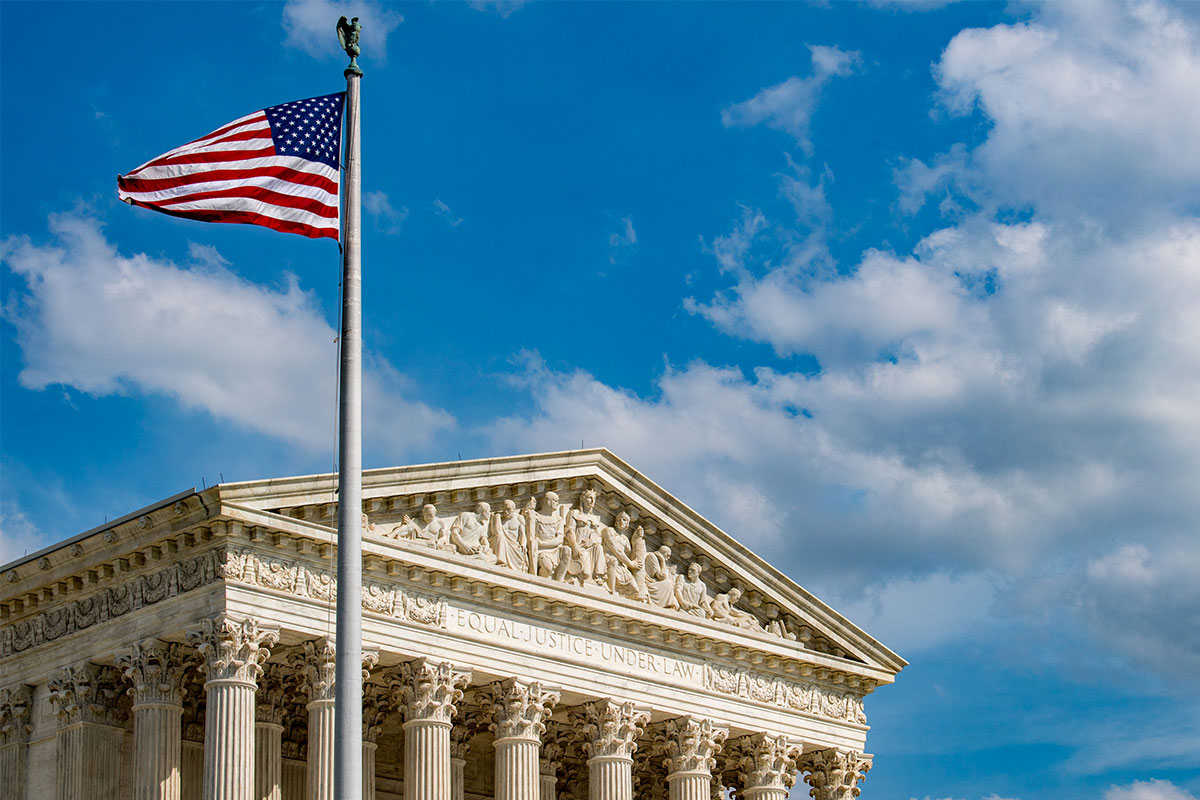

On Monday, October 19, the Supreme Court agreed to review a court of appeals decision on the constitutionality of the federal ban on distilling spirits in a “dwelling house” (home). The law was enacted in 1868 as part of a comprehensive reform designed to end widespread avoidance of the excise tax on spirits—then a substantial part of the federal budget.
The issue is whether the prohibition is “necessary and proper” to effectuate the power of Congress to levy taxes. Plaintiffs, including the Hobby Distillers Association and several individual home distillers, argue the ban is not, emphasizing that allowing home distillation would increase federal revenue by increasing the production of spirits. The government, specifically the Treasury Department, counters that Congress could reasonably decide that allowing distilling at home could lead to widespread tax avoidance and an overall reduction in excise tax revenue.
The case, now entitled Dept. of Justice v. McNutt, was first brought before a federal district court in Texas, then appealed to the Fifth Circuit Court of Appeals, which handles federal appeals from Texas and several other states. Both the district court and the Fifth Circuit found the law unconstitutional because it was not within Congress’ core taxing power nor was it necessary and proper to effectuate that power. The government originally also sought to uphold the law under Congress’ power to regulate interstate commerce, but it dropped that rationale after losing in the district court.
Shortly after the McNutt case was filed, the Hobby Distillers Association and others filed a similar suit in Ohio. That case, Ream v. Dept. of Treasury, was dismissed on procedural grounds by an Ohio district court. On appeal, the Sixth Circuit Court of Appeals reversed and concluded that the home distilling ban was constitutional as a necessary and proper effectuation of the taxing power. The plaintiffs petitioned the Supreme Court to review that case, but as of this writing the Supreme Court has not acted upon that petition.
If the Supreme Court eventually agrees with the plaintiffs and strikes down the law, that precedent could jeopardize other Alcohol and Tobacco Tax and Trade Bureau (TTB) regulations governing the operation of breweries, wineries, distilleries, and industrial alcohol operations. Many of the federal regulations governing breweries (i.e., those contained in Part 25 of the TTB’s regulations) implement the Internal Revenue Code and were passed under Congress’ taxing power. Of course, should the Supreme Court reverse the Fifth Circuit and uphold the law, it would endorse a broader ability of the federal government to legislate under the taxing power, even where such legislation does not directly raise revenue.
Yet the impact of any decision in favor of the hobby distillers and their allies would largely depend on the wording of the Supreme Court’s opinion. Prior Supreme Court cases, as well as the Fifth Circuit in McNutt, state that Congress can pass laws under the taxing power if they “are restricted to the very articles which are the subject of taxation” or “facilitate collection of taxes associated with the activity.” Such pronouncements are hard to precisely apply to Internal Revenue Code provisions governing breweries and other producers. Nevertheless, these earlier decisions suggest that a host of other regulations stemming from the Internal Revenue Code—such as requirements for bonding, brewers’ notices, formula approvals, and record keeping—might still pass constitutional muster.
As for more direct consequences, a win by the plaintiff hobby distillers would establish home distilling as a lawful pursuit, albeit one that still would require tax payment, reporting, and a host of other requirements under existing TTB regulations. The plaintiffs claim that more home distilling would spur innovation and interest in craft distillers, just as homebrewers propelled craft breweries, particularly in the early years of the craft beer revolution. Critics, conversely, worry that legalized home distilling will result in the production and consumption of dangerous spirits. For example, improper distillation can result in spirits containing significant amounts of methanol, which can cause blindness and even death.
As for what’s next, the Supreme Court will solicit briefs from both parties over the coming months. We also expect numerous amicus (“friend of the court”) briefs to be filed, particularly by libertarian-oriented groups that view these cases as a vehicle to limit the power of the federal government. A final decision will likely come in 2027, before the Court’s summer recess begins in late June.

 Resource Hub