

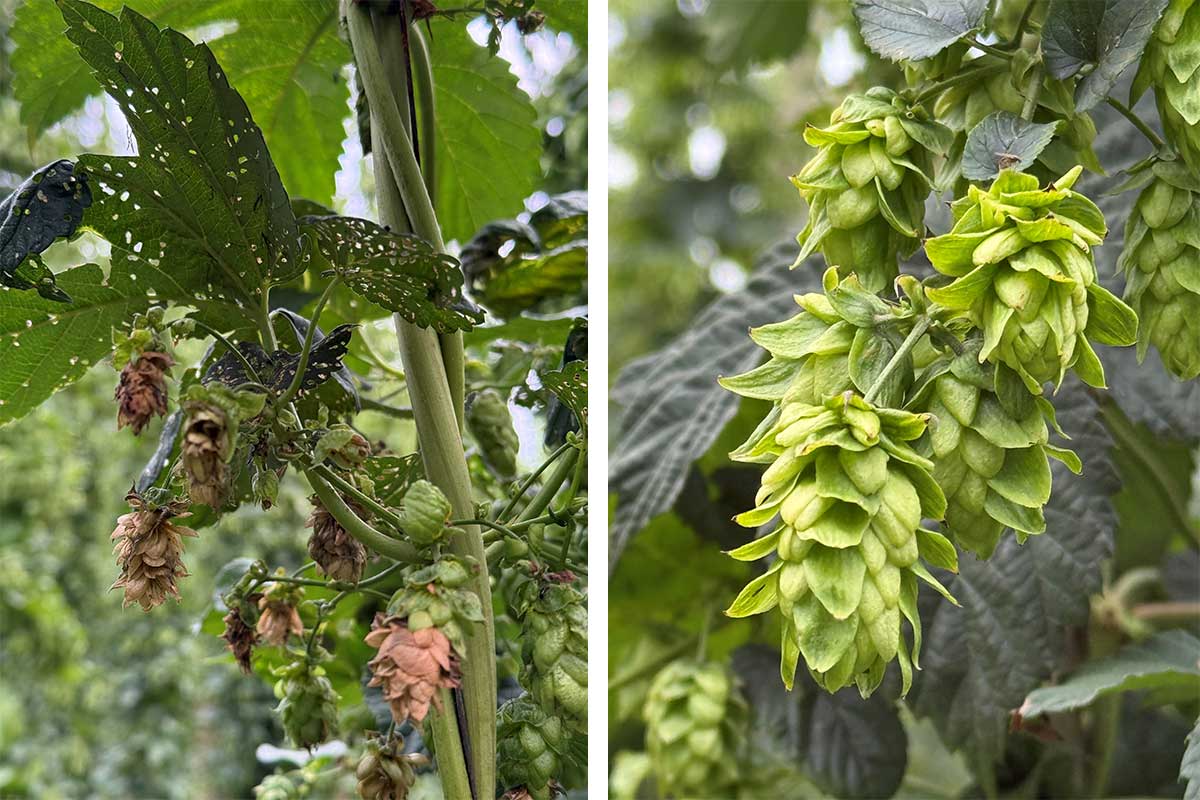

Virtually all of Europe suffered through one of the hottest and driest summers on record. Hop growing regions across the continent felt the effects. Southern and western Germany may have suffered most, enduring a series of intense heat waves and prolonged drought. The town of Kitzingen recorded a temperature of 40.8C (105.4°F), a record for the state of Bavaria. Total precipitation across Bavaria was 34% below the long-term average. Weeks of intense sunshine dried out the soil, profoundly affecting agricultural production.
Yield and Alpha Acid Affected
The official estimate of the 2026 hop harvest, released at the end of August, points to a decrease in the overall yield of 22%. Less than 20% of German hop acreage is irrigated. The heat and lack of rainfall peaked during critical developmental stages, specifically lateral shoot formation, flowering, and the development of hop cones. Growth was stunted, and cone formation was dramatically affected.
As of this writing, hop quality analysis of the crop has only just begun, but early indications are that alpha acid levels and other variety specific aromatic compounds will be lower than average, perhaps significantly lower. The hot and dry conditions minimized disease pressure from powdery mildew and downy mildew, reducing the amount of treatment needed by growers. However, insect pests, such as the hop flea beetle, flourished, creating significant damage to leaves and cones.
Landrace Varieties Hard Hit
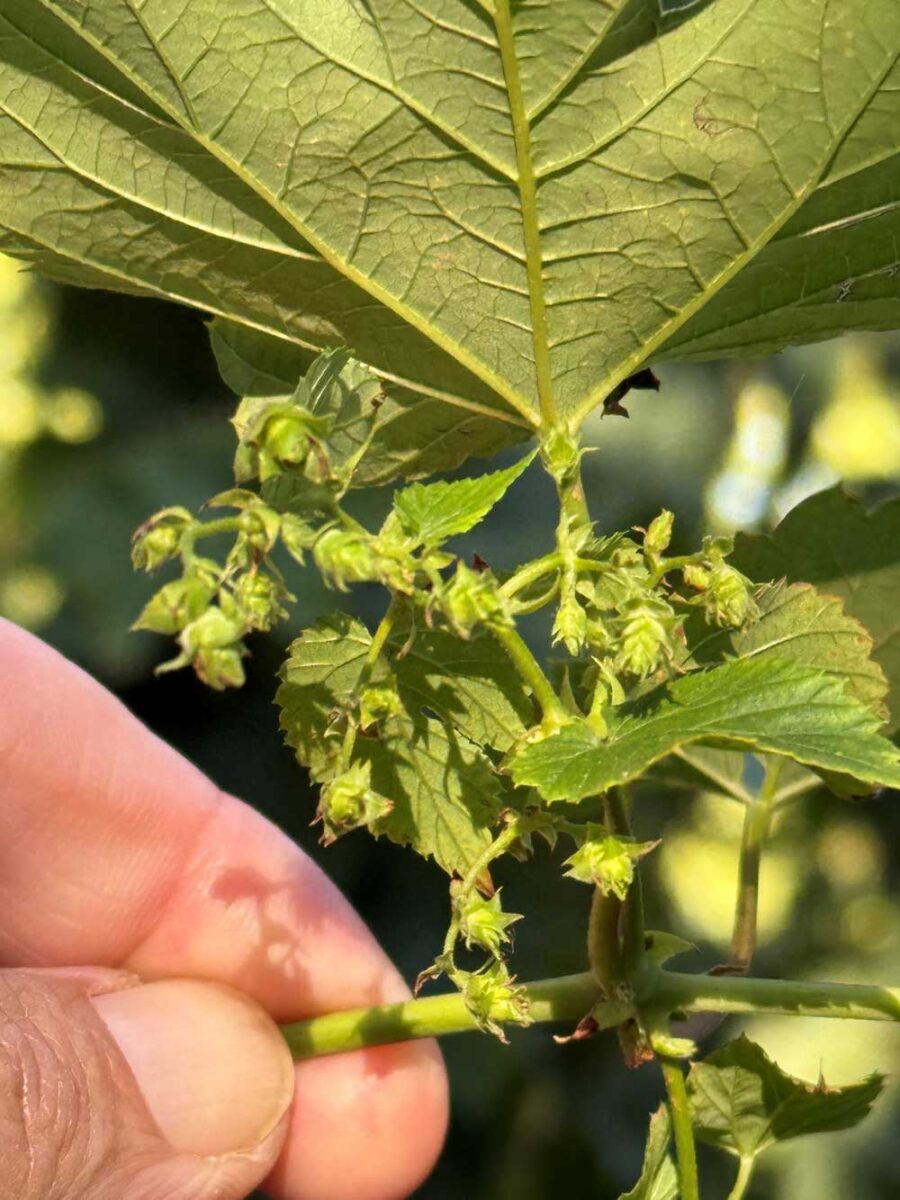
Traditional landrace varieties, such as Perle, Tettnanger, and Hallertau Mittelfrüh, have been more affected by the climatic conditions than newer varieties. Recently developed varieties, including Titan, Tango, and Hüll Classic, have demonstrated better agronomic stability in the face of severe heat and drought stress. These varieties have delivered comparatively lower losses in yield and alpha acid. They are a testament to the German hop breeding program’s focus on addressing agronomic challenges under changing climatic conditions while maintaining classic quality and aroma characteristics.
The Alpha Clause
The alpha clause is a contractual agreement between hop merchants and brewers that is used to adjust hop delivery volumes and prices when a poor harvest results in a severe shortage of alpha acids. The alpha clause activates during historically bad growing seasons when total hop crop volumes and alpha acid yields drop significantly below long-term averages. The intent is to adjust contracted quantities and pricing equitably among brewers who hold contracts.
Typically the alpha clause is triggered when the alpha acid content of a specific hop variety falls at least 15% below its 10-year average. Current observations and preliminary analysis results point to below-average alpha acid levels that will determine whether, and for which varieties, the conditions for triggering the alpha clause have been met. This determination will be made in mid-October when analysis of the 2026 harvest is complete.
Here is an in-depth look at how the alpha clause works.
Next Steps for Brewers
While the 2026 German hop harvest and alpha acid levels will be significantly reduced from previous years, this does not indicate a widespread shortage. Significant carryover from previous harvests exists while global demand for hops remains subdued. However, availability of specific varieties may be limited, especially on the spot market. Brewers utilizing German grown hop varieties should communicate with their supplier to address their immediate needs and concerns.
In the longer term, brewers using traditional landrace varieties in their beers should consider examining a switch to the newer German varieties that are better able to withstand climatic stress while still exhibiting noble aromas and flavors. A variety’s yield and quality under changing climatic conditions are becoming just as important as its quality and aroma characteristics. As always, it remains critical to continue to forward contract future needs to ensure availability of preferred varieties.
Thanks to Walter König of the Gesellschaft für Hopfenforschung e.V. for his insights and photographic contributions.


 Resource Hub