

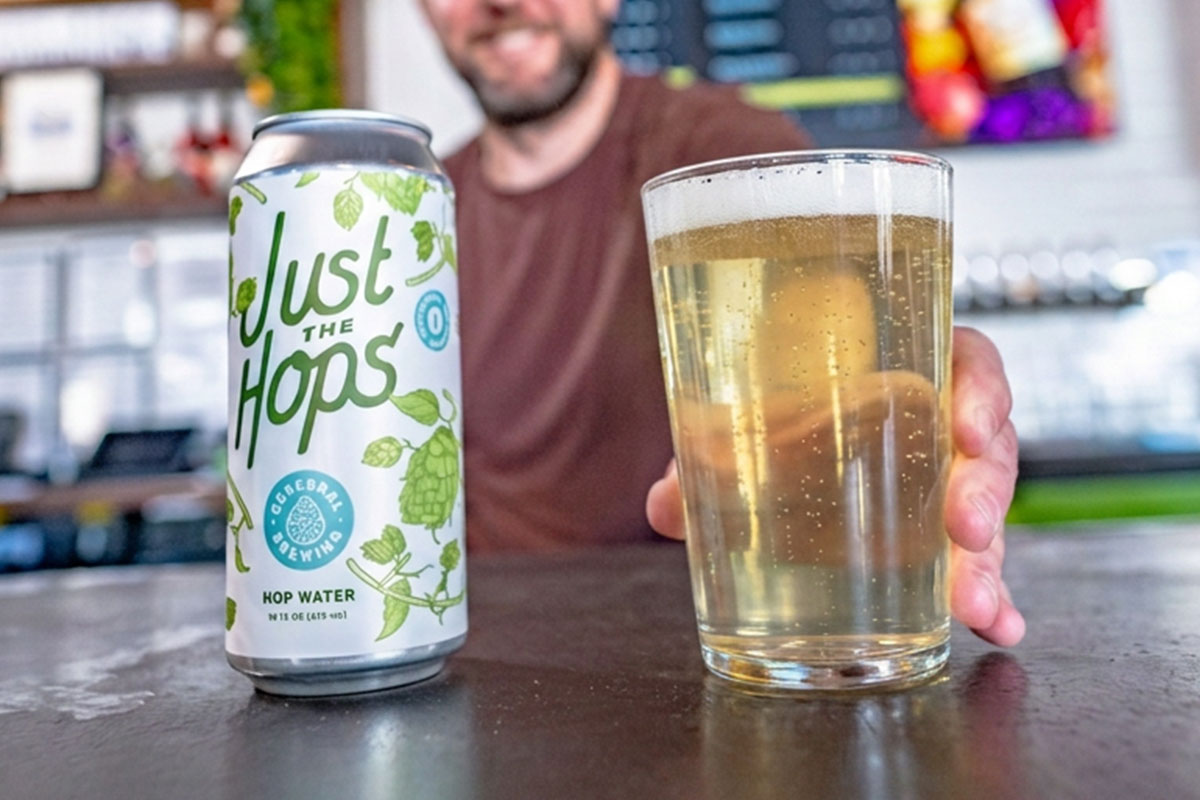

Short answer? Probably not. At least not with the hop water most brewers are producing today.
While hops contain hundreds of compounds, and modern research has identified real therapeutic potential in several of them, it is important to remember that a functional health claim is not about beneficial compounds in the raw material. Instead, the claim represents the benefits received from the actual beverage when consumed.
Technically, a claim is possible—if you can back it up with scientific proof and can consistently deliver an effective dose of the beneficial compound in the product. For most brewers making hop water right now, that is too high a bar. Here’s what stands between you and it.
Dosage Matters
Therapeutic effect can be defined as the specific, intended beneficial response that a substance produces in the body. In research and trials, isolated compounds in hops have shown promising therapeutic properties. For many of these compounds, therapeutic effect can only be expected with highly concentrated dosages. Any beverage carrying a functional health claim must not only establish a realistic dosage that provides the therapeutic benefit but also must validate and document that the beverage contains the same dosage.
Is the therapeutic effect of the compound relatively immediate, as in the case of caffeine, or is the functional value achieved by measured dosages spread out over time? These, and other questions, are key to the brewers’ ability to make a legitimate functional health claim.
The Solubility Conundrum
Hop waters face a unique challenge. Ethanol is an excellent natural solvent, which dissolves, delivers, and stabilizes volatile oils and other functional compounds in a traditional fermented beer. (Although it is important to note that traditional beers also typically don’t contain enough hops to deliver any therapeutic value. Nor are health claims allowed for beverages containing alcohol.) In the absence of alcohol, the use of hop cones or pellets will rarely, if ever, provide enough concentrated compounds to deliver health benefits in a conventional size serving.
What Regulators Require
Dosage is the first obstacle. Substantiation is the second. The U.S. Food and Drug Administration (FDA) and the Federal Trade Commission (FTC) enforce the legal requirement that all functional health claims are substantiated. To legally justify a claim like “improves cognitive ability” or “promotes restful sleep,” the brand must back up the claim with competent and reliable scientific evidence.
Functional health claims need to be supported by research and clinical trials that demonstrate that the intended benefits are achieved through the actual dose in the product. Further, the actual dose in the product must be verified and match the dose used in clinical trials.
If a brand prints a functional health claim without reliable scientific evidence, there can be penalties enforced by the FDA and FTC along with the threat of civil litigation if a product does not deliver on the functional health claim.
The Potential Is Real
None of this means the interest in hops as a functional ingredient is misplaced. It is possible that some of the compounds in hops may be unique to only hops. A member of the hemp family, hops have long been identified in traditional cultures as providing health benefits among many other uses.
Traditional uses of hops as a treatment for a variety of ailments include coughs, fever, gastronomical ailments, liver ailments, headaches, toothaches, earaches, skin ailments, leprosy, tuberculosis, silicosis, sleeplessness, and even delirium tremens. As with other herbs and certain plants, traditional cultures recognized functional uses in hops without the benefit of modern science.
Modern science has allowed the compounds that create certain health benefits from Humulus lupulus to be identified. Recent studies have shown that the bittering compounds in hops have anti-inflammatory effects and improve cognitive function. Xanthohumol, found in the female hop cones, can act as a powerful antioxidant. Some studies suggest Xanthohumol can play a role inhibiting cancer cell proliferation. 8-PN, a prenylated flavanone, has been described as the most potent plant-based phytoestrogen and could play a role in female hormone replacement therapy. Hop oils have often been identified as a sedative and exhibiting antimicrobial properties. These are just a few of the substances in hops that have been identified to have therapeutic value.
The gap is not in the plant. It is in the delivery.
Research and Innovation
This challenge of solubility has given industry the opportunity to explore the development of new hop products that can isolate specific compounds and deliver them in specific doses. Further innovation has addressed the issue of stability. Natural emulsifiers have been developed that stabilize specific compounds, allowing consistent dosages.
As we learn more, it will become easier to develop hop products that deliver stable, measured doses of specific hop compounds. Brewers and beverage producers can use these products to their advantage to deliver alcohol-free hop water with concentrated and measured levels of the hop compounds that have therapeutic potential.
That is the path to a claim you can defend. It runs through documented dosing and scientific evidence—not through the hop bill.
For more information:
- Health Claims and Functional Beverages: Know the Rules
- Functional Beverages: Development and Production Challenges




 Resource Hub