Clean-in-Place: The Synergistic Circle

Clean-In-Place

By Dirk Loeffler

This article was originally published in the September/October 2026 issue of The New Brewer.

In craft brewing, operational efficiency often starts with treating every part of the brewery as a documented, repeatable process—not a habit. Nowhere is that concept more fitting than in the cleaning-in-place (CIP) room.

The Sinner’s Circle, the 67-year-old framework behind every cleaning cycle a brewery runs, is exactly that kind of process: four measurable inputs, traded against each other under real limits, in service of a consistent result. Understood and engineered correctly, it is not a sanitation footnote, but one of the most direct efficiency levers a brewery has.

When the conversation comes to operational efficiency in a brewery, safety, cleaning, and sanitizing rarely come up as topics. Yet often there are tens of thousands of dollars hidden in potential savings when it comes to variables such as chemicals, water, CO₂, and downtime. Cleaning and sanitizing are rarely considered from an efficiency standpoint; instead, they are viewed as a necessary process that nobody really likes doing.

I vividly remember working with the engineering department of a major brewery. We had proposed a few cleaning and sanitizing changes that, once implemented, would amount to significant savings. However, the engineer felt bothered by this project and said, “I need to work on real projects that are more important.”

Cleaning is often treated as overhead: a program (if you are lucky) someone came up with many years ago, running on fixed times, adjusted only when something goes wrong, and often not even then. We just clean it again and blame the chemicals, shifting the responsibility from the brewery to the supplier.

Undoubtedly, there are big differences between caustic and acid cleaners, but they generally involve the concentrations required to clean. If a piece of equipment suddenly does not come clean using the same chemical out of the same drum or tote, something other than the chemical is likely the cause. Sometimes it is the chemical, but more often the underlying issue is more complex.

That is a missed opportunity, because cleaning does not have to be a black box. When approached correctly, the process runs on a documented, quantifiable framework of its own—ironically, based on parameters that predate most modern Lean methodologies by decades.

TACT: A Framework

In 1959, German chemist Herbert Sinner published the model the sanitation world still uses today. In North America, it is usually referred to as the Sinner’s Circle. In Europe, it is called the Synergistic Circle, my preferred title not only because I am German, but because it better describes the synergy within the circle.

On the plant floor, we often refer to it simply as TACT, an acronym for Time, Action (mechanical energy), Chemistry, and Temperature. All three names describe the same principle: a desired cleaning result is produced by some combination of chemicals, mechanical energy, temperature, and contact time, and those four inputs can be traded, within limits, against one another. (See Figure 1.)
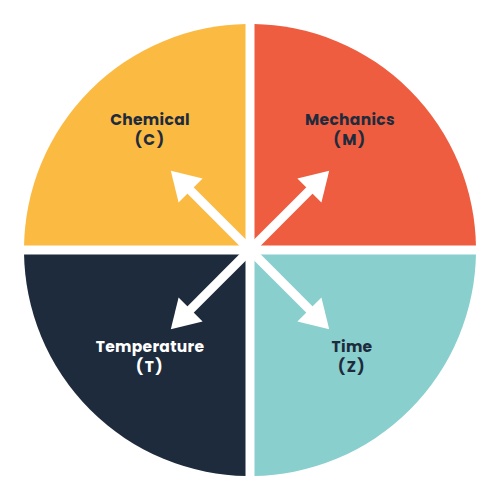
Circle with quadrants labeled Chemical (C), Mechanics (M), Temperature (T), and Time (Z)
Figure 1: The Synergistic Circle

The result of any cleaning process is the sum of four interchangeable inputs. The equation is simple:

CR = C + M + T + Z

CR is the cleaning result (treated as a constant, since we ideally always want to achieve the same repeatable result: CLEAN!).

C is the chemical energy contributed by the chemical(s): composition, concentration, activity, etc. (Note: water is included here.)

M is the mechanical energy applied to the soil (flow velocity, flow turbulence, impingement, pressure, etc.).

T is the temperature of the cleaning solution.

Z (from German, Zeit = time) is the contact time.

We also refer to these four parameters as the Operational Parameters.

The emphasis here is on “interchangeable within limits.” The Circle is not a free-trade zone where any parameter can be substituted infinitely for one or more of the other parameters. Each of the four parameters has a lower and upper limit, set by either chemistry or physics, and by equipment, cost, or safety. It is important that we know and understand what those limits actually are.

Designing and engineering the cleaning process deliberately around these four operational parameters, rather than guessing, is what separates a brewery that runs a genuinely efficient cleaning program from one that is quietly compensating for one or several incorrectly set or utilized parameters. When that happens, the brewery pays for it in water, chemicals, energy, or downtime, and this expense is never accounted for as a cleaning cost; or worse, the equipment never really gets clean. (The perception of “clean” now enters the conversation, but that’s a subject for another article.)

Two other groups of parameters sit above the Synergistic Circle or Operational Parameters, determining how much room a brewery actually has to maneuver:

Equipment Parameters: These include the materials being used (e.g., 304 or 316L stainless steel, finishing, etc.), equipment design (are all surfaces contacted by the cleaning solution? Are there drains?), often determined and fixed in place at the design and installation phase of the brewery.

System Parameters: These include the chemical composition and quantity of the soil in and on equipment, frequency of cleaning, soil load of cleaning solution, quality of process water (particularly hardness and chlorides), and the environment in which the brewery is situated (e.g., hot, dry, wet, humid, etc.).

Get these parameters wrong and no amount of clever adjustment of the Circle’s four operational inputs will be able to fully compensate, which is exactly why truly efficient sanitation starts during the conversation when a tank farm or brewhouse is specified.

Mechanical Energy: The Overlooked Efficiency Variable

Of the four operational parameters in the circle, mechanical energy is often the least understood and most neglected, even though it’s critical to the success of the cleaning. While chemicals can, to some degree, compensate for poor mechanical energy (the circle again), it is often mechanics, and to a much lesser degree chemistry, at fault when a CIP program should work on paper, but does not.

It is important to understand that chemicals do not remove soil. Instead, they prepare the soil for removal through saponification, hydrolyzation, emulsification, and other chemical reactions. Here is where mechanical action comes into play. Once the soil is prepared and the bond to the surface has been dissolved, sufficient flow velocity in a pipe or a sufficiently thick, falling film of solution on a tank wall is required to produce turbulent flow, which creates the mechanical energy needed to remove the soil and keep it from redepositing.

Laminar flow, no matter how fast it feels, does not produce sufficient mechanical energy to do that job. Liquid, as it increases in speed and velocity, starts to react with the wall surfaces of the equipment and the friction and roughness of the wall surfaces begin producing vortices alongside the surface. These vortices create the mechanical energy required to physically remove the soil. Think of it as a brush in liquid form.

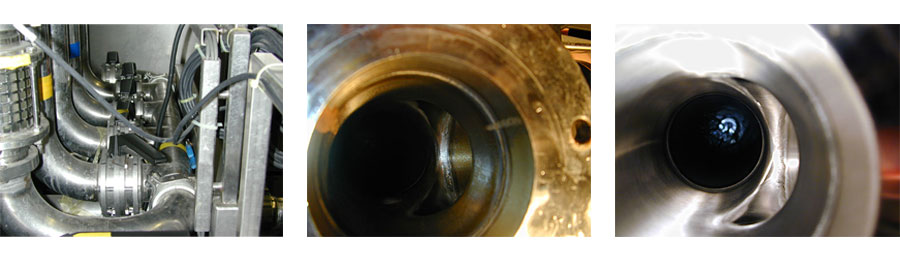
The photos below show this principle in action in the field. A brewery cracked the valve on the CIP return to compensate for the imbalance between supply and return. The left photo shows the piping coming from the tank with the cracked valve, with visible soil remaining after the cycle (center photo). Without changing any other parameters, we simply opened the cracked valve and ran a CIP cycle. The photo on the right shows the same pipe after a single CIP cycle with the valve open 65% of the time. Laminar flow caused by a low flow velocity was replaced with turbulent flow in a high velocity flow, creating the mechanical energy that was lacking before. (The determination as to whether laminar or turbulent flow is present in piping and hoses can be accomplished by calculating the Reynolds number—see bottom of page.)
Not all mechanical problems are this easy to resolve and high-quality chemicals are still required to achieve optimal results, using all four of our operational parameters. This is why operational efficiency and cleaning engineering need to be in the same conversation. A poorly designed pipe run with lots of turns and elbows, an undersized or oversized pipe run, a supply and/or return pump without variable frequency drive (VFD), or a cracked valve quietly restricting flow to balance a CIP system does not just risk a failed clean—it forces the operator to compensate with more chemical, more time, or more heat than the job actually requires. That compensation shows up directly on the utility and/or chemical invoice, CIP cycle after CIP cycle.

Getting fluid mechanics right can be tricky. Reducing a DN80 (3-inch) pipe run to DN65 (2½-inch) while maintaining the same flow rate substantially increases velocity and friction loss—potentially approaching three times the original loss, depending on the pipe’s actual internal diameter and operating conditions. (See Table 1 below.) Increasing the run to DN100 (4-inch) lowers velocity and friction loss below the turbulent threshold entirely and may allow entrained or released air to accumulate at high points.

Table 1: Flow Volume at Common CIP Pipe Diameters

Pipe diameter (DN) 40 50 65 80 100 125
Inches 1½” 2″ 2½” 3″ 4″ 5″
Flow volume (m³/h) 9 14 24 36 54 86
Flow volume required to reach a flow velocity of 2 m/sec (the practical minimum for turbulent flow) at common CIP pipe diameters.

Pipe sizes and diameter transitions should therefore be selected using hydraulic calculations and appropriate reducer and venting arrangements. Avoid changes in diameter whenever possible. Pipe sizing and pump selection deserve the same deliberate engineering as the chemistry. A brewery running a balanced, properly sized CIP circuit with variable-frequency drives on its supply and return pumps is not just cleaning more reliably; it is running the most efficient possible version of that CIP, because it is not paying for a mechanical shortfall with one or more of the other circle parameters.

Time: The Parameter Tied Directly to Revenue

Time is the parameter with the most direct line to operational efficiency. Downtime is money. Equipment turnaround is throughput, and throughput is revenue, which is exactly why production is always trying to minimize the cleaning window. But time also has a real lower limit: saponification, dispersion, and the wetting of dried soil are time-dependent chemical reactions. Good quality chemical products can reduce the time, but no amount of clever chemistry can make these reactions instantaneous.

The efficiency approach here is not a shorter fixed time. It is replacing fixed times with verifiable instrument endpoints wherever the chemistry and physical setup allow it. A prerinse programmed to run until the return water runs clear, rather than for a flat five minutes, saves water and cycle time in a system that cleared early. It also saves your CIP solution from contamination in a heavily soiled system that a fixed timer would have cut short.

A CIP program built entirely on fixed times, without conductivity or pH endpoints anywhere in the sequence, is a program guessing at its own most valuable parameter rather than measuring it. And guessing is the opposite of operational efficiency. A tank rinsing for five minutes despite needing just 90 seconds to run clear wastes thousands of gallons each year. Multiply this by a number of tanks and this is real money.

Temperature & Chemistry: Where Efficiency Meets Risk

Temperature is the parameter most likely to turn an efficiency conversation into an operational safety discussion. A caustic CIP cycle generally needs to reach at least 50°C (120°F) to saponify protein and fatty soils effectively. However, while brewery tanks are built and engineered to handle high internal pressures (often up to 15–30 psi), they can implode under a negative vacuum pressure of just –1.5 psi to –3 psi (–0.1 to –0.2 bar). There is hardly a more expensive form of cleaning inefficiency than an imploded tank and the production loss that goes along with it.

The fix is the same one that the rest of this framework calls for: establishing in writing, with the tank and relief-device manufacturers, a validated maximum rate of temperature change per tank, and programming step-up and step-down rinses to stay inside it, rather than relying on a generic rule of thumb.

Chemistry carries its own quiet efficiency cost. Chemical concentration has a real lower limit. Dilute a detergent below the point where its surfactants and alkalinity can function, and no amount of added time or heat can compensate for it. Chemicals also have a real upper limit, past which the excess concentration attacks gaskets and stainless steel without any added cleaning benefits. Using the right quality chemicals and monitoring the concentrations, either with titration or via temperature-compensated conductivity rather than assumption, is the difference between a program using and dosing exactly what the soil load requires, and a program that is overdosing chemicals as insurance or compensation for a mechanical or time shortfall that is never diagnosed.

Other Hidden Efficiency Traps: The Incompatibility Issue

Sodium hydroxide (NaOH) is generally the preferred workhorse alkali in brewery cleaning. It provides the bulk of the free alkalinity responsible for saponifying and removing organic soil and is the chemical most brewery CIP programs are built around.

However, NaOH is a strong base that will react readily with any acid gas it contacts, including carbon dioxide. Put liquid caustic in contact with CO₂ gas, and the following reaction proceeds essentially to completion:

2 NaOH (aq) + CO₂ (g) → Na₂CO₃ (aq) + H₂O (l)

Sodium hydroxide mixed with carbon dioxide gas yields sodium carbonate plus water. On the surface this looks like an unremarkable acid-base neutralization, and chemically that is exactly what it is. However, for cleaning, it means you started with a strong alkali carrying a large amount of usable free alkalinity, and then converted a potentially significant portion of your free alkalinity into sodium carbonate. Sodium carbonate is a considerably weaker alkali with a fraction of the cleaning power of the NaOH it replaced.

Every bit of NaOH consumed this way is free alkalinity that is no longer available to saponify the protein and fatty soil it was dosed to remove. And this reaction is happening continuously and invisibly, wherever your caustic solution is exposed to a CO₂ atmosphere, which, in a working brewery cellar, is almost everywhere. Open drums or other containers slowly neutralize into sodium carbonate.

A particular application is often overlooked here. In a keg washer, residual carbon dioxide is in almost every keg. During purging, some of this gas remains and reacts with the caustic CIP cleaning cycle. After a certain number of kegs, an NaOH-based solution becomes mainly sodium carbonate, and is no longer able to clean your kegs properly.

Some titration kits only titrate for total alkalinity, not free alkalinity. Make sure you use a test kit that has a reagent that precipitates sodium carbonate and bicarbonate first before titrating for free NaOH, and titrate frequently. Failing to do so may not only be compromising operational efficiency, but may also be jeopardizing product quality and brand reputation.

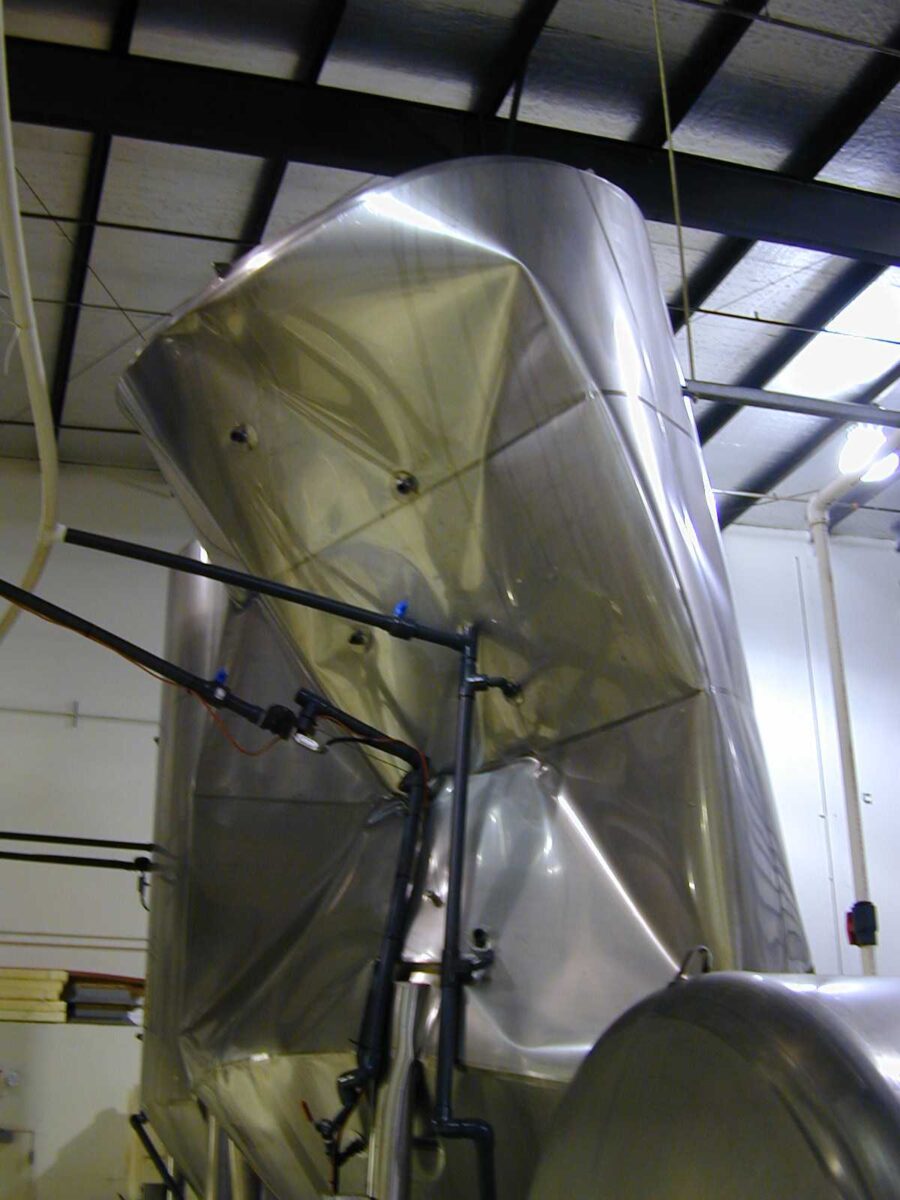
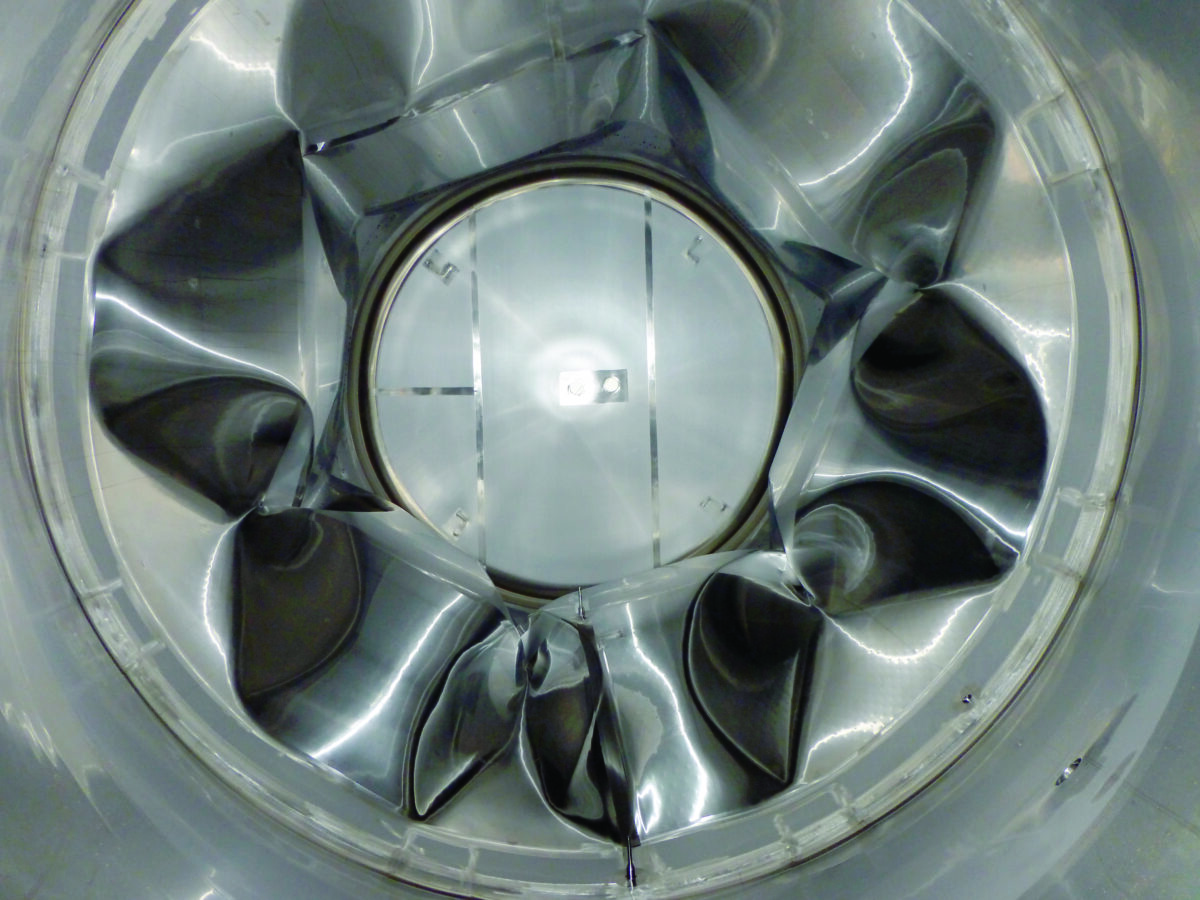
In a tank, the reaction of sodium hydroxide with carbon dioxide is a net negative volume reaction, meaning the total gas volume in the tank rapidly decreases, causing a vacuum to form. Every mole of CO₂ absorbed disappears from the gas phase and becomes dissolved carbonate or bicarbonate. Without getting into the math of caustic absorption capacity, it is important to understand that even a relatively small CIP charge can remove several cubic meters of headspace gas, with potentially catastrophic consequences.

The photos below show tank implosions that occurred after running a caustic CIP solution into tanks filled with carbon dioxide without prior purging.
Operational Efficiency Through Optimized CIP

As you can see, there are potentially significant savings hidden in your cleaning and sanitizing processes. This article barely scratches the surface of these savings, but it quickly becomes clear that optimizing brewery cleaning procedures can carry significant benefits, both from a quality standpoint and an operational efficiency standpoint.

The Sinner’s, or Synergistic, Circle gives you the framework. Calculating the Reynolds number—the standard design threshold for pipe circuits to ensure turbulent flow and mechanical soil removal (see sidebar)—and flow velocity gives you the mechanical half of the equation that chemistry alone cannot cover. And understanding what temperature and an ordinary acid-base reaction can do to a tank will keep you out of the kind of trouble that ends up as a cautionary tale in someone else’s conference presentation.

None of this requires an engineering degree to apply. It simply requires the discipline to calculate rather than assume. Measure your actual flow velocity instead of trusting the original drawing; measure your rinse endpoint instead of trusting a set time; measure the temperature swing your largest tank will actually see instead of trusting that “it has always been fine.” Every tank collapse and chronic cleaning failure I have ever been called in to look at had a moment, well before the failure, where either knowledge or a simple measurement would have prevented it.

Dirk Loeffler has been working in the craft brewing industry since 1992, specializing in cleaning, sanitizing, chemical safety, metallurgy, and enzymes.

The Reynolds Number

The determination as to whether laminar or turbulent flow is present in piping and hoses can be accomplished by calculating the Reynolds number, a dimensionless ratio of inertial forces to viscous forces in a fluid:

Re = (v × D) / ν = (v × D × ρ) / μ

Where v is the mean fluid velocity, D is the internal pipe or hose diameter, ν is the kinematic viscosity of the fluid (μ / ρ), μ is the absolute dynamic viscosity, and ρ is the fluid density.

A low Reynolds number means viscous forces dominate and the flow stays smooth and laminar; a high Reynolds number means inertial forces dominate and the flow becomes chaotic and turbulent.

For flow in a circular pipe, the transition from laminar to turbulent flow begins at a Reynolds number of around 2,000. However, in practice engineers do not design systems to be anywhere near that number because the zone from roughly 2,000 to 4,000 is a transitional region where flow is neither reliably laminar nor turbulent. Fluid behavior in this range is difficult to predict. The practical design rule is to target a Reynolds number at or above 4,300, which provides sufficient margin and ensures you are always in solid turbulent territory, with flow not collapsing back toward laminar under normal process variations.

In an existing brewery pipe system, the pipe or hose diameter is generally fixed and the viscosity of your cleaning solution is essentially constant, which means the Reynolds number, and whether you get turbulent flow or not, is almost entirely controlled by one variable: flow velocity. The practical conclusion is that an aqueous CIP solution needs a flow velocity of at least 2 m/sec (roughly 6.5 ft/sec) to reliably achieve turbulent flow in a typical CIP pipe run.

Because the required velocity is fixed (2 m/sec), the flow volume you must circulate to hit that number depends entirely on pipe diameter. Table 1 gives the flow volume needed to reach 2 m/sec for common pipe sizes; the relationship is not linear, because flow volume scales with the cross-sectional area of the pipe (proportional to the diameter squared), so a comparatively modest increase in pipe size demands a much larger increase in pump capacity to maintain the same velocity.

This has direct, sometimes expensive consequences for pipe sizing and pump selection. Consider two real-world examples:

Example 1: Reducing Pipe Diameter. A run of DN80 pipe requires 36 m³/h to hold 2 m/sec, with an associated pressure loss of roughly 0.55 bar (~8 psi) per 100 m of pipe. Reduce that same run to DN65 while holding the flow volume at 36 m³/h, and the velocity rises to about 3 m/sec—comfortably turbulent—but the pressure loss more than triples, to roughly 1.8 bar (~26 psi) per 100 m. You have bought better mechanical energy at the wall at the cost of a pump that now has to work considerably harder against friction.

Example 2: Increasing Pipe Diameter. Go the other direction—increase DN80 to DN100 while holding the same flow volume—and velocity drops from 2 m/sec to about 1.25 m/sec. That is now well below the threshold for reliable turbulent flow. And worse, an oversized pipe run creates hollow space that can allow air to be drawn into the system from vertical runs (the Venturi effect), introducing air entrainment problems on top of the lost mechanical energy.

The practical design rule that follows from both examples is to avoid changing pipe diameter within a CIP circuit wherever you possibly can; and if you cannot avoid it, never increase or decrease by more than about ½ inch in a single transition.

2026 Board of Directors Election: Sept. 21 through Oct. 21

Beer glass with BA logo and text "Board of Directors Election"

 The 2026 Brewers Association (BA) Board of Directors election runs from Sept. 21 through Oct. 21.

Voting members of the association may vote via online ballot. Voting member criteria are small and independent brewers, as described by the BA’s bylaws, who are members in good standing.

Three 3-year board positions are open: two for the packaging brewer class and one for the brewpub & taproom brewer class. Positions start in February 2027. 

Voting Guidelines 

  • Only one ballot per member brewing company will be counted (NOT one vote per location). 
  • Each voting member brewery can vote in only one category. If you are unsure which category is correct, you can vote in both. We will review your ballot and retain the vote in the single correct category. Only votes in your voting membership class will count. 
  • Voting member criteria are described by the BA bylaws (no brewers producing more than 6 million barrels/year, breweries-in-planning, suppliers, etc.).  

***

Frequently Asked Questions 

What does the Board of Directors do? 

The Board of Directors governs the activities of the BA and its divisions — Events, Government Affairs, Marketing & Communications, Membership, and Operations. 

Which class should I vote in? 

The BA recognizes two voting classes. Please vote in the class that best represents your craft brewery. If you’re not sure which class you belong to, please vote in both categories and BA staff will retain the vote in only the correct one. 

  • Packaging brewers are defined as those who sell 75% or more of their production outside of the brewery and produce six million barrels or less annually. 
  • Brewpub & taproom brewers are defined as brewers that sell more than 25% of their beer onsite and produce six million barrels or less annually. 

Voting closes Oct. 21. 

3 Less-Talked-About Reasons to Focus on a Flagship

Variety of packaged beer in bottles and cans against white background

The challenge is recognizing when it’s time to stop searching and start focusing.

Please log in to view this resource. Not a member? Join Now

Log In
Members Only Content

Get access to this article, and every article, and every technical resource with a Brewers Association membership.

Log In Not a Member? Join Now

The Art of Selflessness in Hospitality, Part 2

Atlas Brew Works hospitality

Editor’s note: This is part 2 of a two-part series on hospitality. Here’s part 1.

There is a word in the Japanese language that captures the idea of giving without expectation—of giving to someone with your heart. The word is Omotenashi. In simple terms, it means kindness with no pretense—caring for someone, even a stranger, with the utmost respect. 

In an industry built on profit, how do we give without expecting anything in return? We work in a business where everything hinges on the customer’s expectation of receiving a quality product and customer service in exchange for money. But what if there is something more? Something that can be gained beyond monetary service? 

In order to explore this concept, we need to reshape the idea of hospitality. We need to be different, to stand out. And to do this, we have to go beyond the basic tenets of good customer service. 

Amping Up the Service 

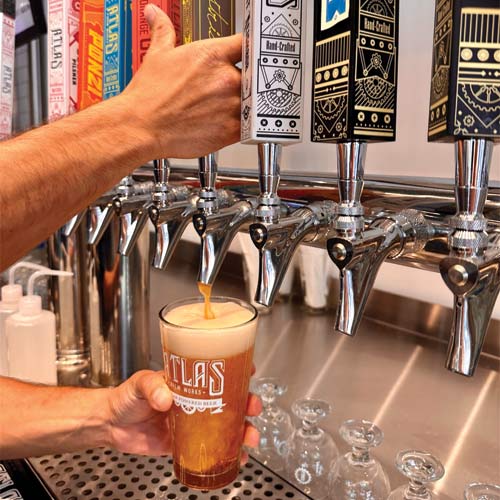
Atlas Brew Works beer

Service is motion, steps, timing, and the gears in an engine. It’s a well-rehearsed dance that ebbs and flows through the space.  

Every person on the team works toward one goal—to serve the customer efficiently, with grace, and with the same selfless precision of an operating room or a Japanese tea ceremony. With a solid training program and clear standard operating procedures, service should feel like driving a stick shift without looking at the gears or playing guitar without watching your fingers. It’s the details no one on the outside sees. And hidden among the music of glasses clinking and good conversation is the quiet sound of movement and enjoyment. 

From the time staff greet the customer, clear the dirty glassware away, and everything in between, it is an opportunity for selfless, seamless hospitality. 

We have all walked into a restaurant or brewery with long lines at the bar. Each bartender takes one order at a time, pours the beer, brings it to the customer, and closes or starts a tab. Even with multiple people behind the bar, everyone is singularly focused on their tasks, and as they take turns, the customers stand and wait. 

One way Atlas Brew Works combats this is by employing “beer guides.” They roam around the brewery with no sense of urgency, ready to discuss beer and place an order for someone if needed. They have a handheld POS at the ready to place orders when customers request it.  

Beer guides are not considered servers, but on slower days, they can help run food and drinks. Atlas created this position to make the restaurant space feel less like a busy restaurant and more like a private tasting. Beer guides do table touches and make customer service feel more personable and less rushed. Implementing them is an investment in selfless hospitality, as they focus solely on the customer, but they are worth it. 

When the Storm Comes

There is no greater test for your hospitality than when your taproom is getting crushed. It’s easy to be present when the taproom is half full and the kitchen or food truck has low ticket times. The real measure of selflessness is what happens when the place is packed, tickets are running long, and you have a server, bartender, or floor lead out. 

Servers instinctively begin to protect themselves when times are busy. They start to lessen hospitality without thinking. Their pace quickens and they stop being present to the customer and their co-workers. Beers are dropped off without a call out, there is no head on the beer, and the tasting flight has not been explained. 

Throwing bodies at this will not solve the problem on its own. When the storm is upon the staff, they need to ground themselves immediately. They can still stop for a few moments to speak to the customer—not a long table touch, just a check-in with eye contact. The guest knows they are busy. But they’re not just waiting on their order; they’re waiting for information. They can handle some bad news. Staff can talk to them honestly and provide a solution. This grounding moment will make a world of difference to the customer and subconsciously give a staff member’s mind some respite. The customer will start to feel seen and not lost in a sea of people. 

Then there are the difficult guests—the ones who snap back, who complain, who seem determined to bring staff members down. Train your staff to be gracious anyway. We never know what people are carrying into the building such as the loss of a job, a sick family member, an argument with a spouse or partner, or a child who has gone off the rails. The gift we can hand them in that moment is understanding. We might be the one thing that makes a bad day slightly less painful. Receive their frustration with grace and hand back kindness instead.

Atlas Brew Works burger and beer

A Simple Tea Ceremony 

By ensuring your establishment is clean and organized; the team has each other’s backs (and you have theirs); your service is seamless and efficient, even during the difficult moments; and that even difficult guests feel welcome and acknowledged, you are providing more than a memorable dining experience for your guests. They will feel cared for. 

The art of building selflessness in hospitality is just a simple tea ceremony. It is the unprovoked, natural action of making people around you feel seen and part of something. If you can do that, you can better the lives of all the people you encounter, not just at work but in life. 

Canadian Beer Import Ban Set to Take Effect September 29

Bottling line closeup with brewery workers in background

This article was updated on September 29, 2026 to reflect that NA beer is also banned.

American brewers that produce beer in Canada should be aware of major trade changes taking effect September 29. Beginning at 12:01 a.m. ET, the U.S. will prohibit imports of many Canadian alcohol beverages, including packaged beer.

The administration announced the restrictions under Section 338 of the Tariff Act of 1930 in response to Canadian provincial restrictions on American alcohol beverages. According to the administration, U.S. alcohol exports to Canada fell by roughly 81% during the period it examined, from $718 million to $137 million. U.S. Census Bureau figures indicate declines in beer exports to Canada are outpacing the broader alcohol market, down 85% since 2025 and 94% since 2024.

The September 29 restrictions cover Canadian beer shipped to the U.S. in bottles, cans, kegs, and other finished packages. This is particularly important for American breweries that use Canadian contract brewing partners. The restrictions are based on where the beer is produced, not where the brand is headquartered or who owns it. In other words, beer brewed and packaged in Canada can be subject to the ban even when the brand itself is American.

Bulk beer appears to receive different treatment. Based on the way the administration wrote the restrictions, Canadian beer shipped in bulk to be packaged in the U.S. appears to fall outside the new ban. It would still be subject to the existing 50% Section 338 tariff. Kegs, however, are specifically covered by the ban and do not qualify as bulk shipments. Any brewer considering changing how beer is shipped or packaged should work with its customs broker to confirm how its specific product would be treated.

Unfortunately, the administration’s new policy also includes non-alcoholic (NA) beer in the September 29 import-ban list. There will now be a blanket ban on Canadian NA beer, including NA beer produced in Canada under contract for an American brand. Importers should confirm the classification of individual products and determine whether other tariffs or requirements apply.

With September 29 fast approaching, domestic breweries with Canadian production partners should review their existing commitments and the status of any shipments headed to the U.S. The rules include separate treatment for certain covered products shipped before September 29 but entered into the U.S. afterward, so breweries should not assume that simply placing an order or getting a shipment on the road before the deadline resolves the issue.

Brewers with any Canadian production should examine where their beer is being produced, how it is packaged, and when it will enter the United States. Those details could determine whether the beer can continue entering the U.S. after September 29.

The Brewers Association will continue to engage with government officials, monitor trade developments and advocate for the removal of barriers impacting independent craft brewers.

The Instagram Audit Every Brewery Owner Should Run

Brewery employee working on laptop at taproom bar

The reason I do what I do is because I know how much social media can transform a business. A great social media presence can put you in front of new customers, convince them to leave their couch, and even convert them into fans of your business. The key is creating a social media presence that mimics your taproom experience. It should answer: what you offer, who you are, and why they should visit.

Oftentimes, your profile needs to be able to answer those questions as soon as someone lands on your profile. To make sure you make a good first impression, I’m sharing the strategy I use when performing audits for my clients, so you can know exactly what you need to fix to start capturing the attention of your target audience. 

Your Bio: Who are you? Why should I care? Why should I follow you?

If the only thing in your bio is business hours, you are underutilizing a key part of your profile. Your Instagram bio should give people a clear idea of who you are and what you’re all about. This is where you put in statements that help differentiate you from other breweries or other businesses in your area and let people know why they should come visit you. Your bio should be specific. It should feel unique to you. It should sound like you. 

Going back to those business hours. Unless you have a really good one-liner, I would not recommend putting your hours in your bio, because the space is limited. If your bio does its job, somebody will go hunt down your hours. They will find them. There are plenty of places on Instagram, whether that’s your link in bio or your highlights, where you can add your hours without using up the precious space of your bio.

Your Highlights: The FAQs of Your Profile

I believe your Instagram Highlights should act as the frequently asked questions of your profile. Yes, those questions you already have living on your website. Your highlights are there to introduce people to you. Having your frequently asked questions there is like a level of hospitality in digital form.

It can answer questions like: are you dog friendly? Kid friendly? Big group friendly? You can even have a highlight to showcase your core beers. 

I recommend making your highlights as evergreen as possible. Having highlights that are outdated, or time-sensitive ones, can make your timeline look stale and old. If you focus on evergreen topics, you don’t have to worry about changing them up often. I’ve taken this approach with all of the brewery accounts I’ve managed. You want your highlights to feel fresh and still relevant to how you run your business today.

Your Grid: Your Last Nine Posts Speak Volumes

In your last nine posts, you should have a combination of content that tells people who you are, what you offer, and gives them reasons to visit you. If you don’t have those three things, your feed is likely out of balance. 

Also look at how many posts are promotional versus how many give people an example of what it’s going to be like to sit in your taproom. Are you showing your space? Will people get an idea of who your staff is and what their personality is? Do they understand who the types of people are who come here? Do they understand what it is about you that makes you special?

These are things that go into people’s decision to visit. This is the content that helps convert. People are looking for spaces in which to connect with people. Yes, they might be coming for the beer, but they’re likely also making their decision to visit off a lot of other things, and you want to make sure you’re constantly creating content that helps answer the questions people might have about visiting your space.

This is why it’s important for your grid to look less like a community bulletin board and more like what it’s actually like to be in your space.

Your Captions: Are You Talking to the Right Person?

When you’re looking at individual posts, also review your captions and think about how your audience is going to respond to it. For example, if you have a caption about a beer release that’s really focused on the technical aspects, and you haven’t spent time defining those technical aspects, you could be turning off your audience. Most consumers are looking for what your beer tastes like, and I think having that answer at the very beginning of your caption is important. Then you can dive into more technical language, but make sure to define it for them as you go.

You also want to make sure you’re adding calls to action to your captions. It doesn’t always have to be something that encourages someone to click a link or purchase something or come visit your taproom, it could be asking a question and asking them to comment, share, or save your post. 

Your Comments: Go Beyond “Hearting” and Start a Conversation

Many taprooms are community spaces, and the biggest advice I could give is finding ways to translate that taproom experience online. With that in mind, you want to make sure you’re replying to people, not just liking a post, but trying to think of something fun and engaging to say back.

When you’re responding to someone, think about what they said and what you would say to them if you were sitting in front of them. Find ways to give a good comment, something that will spark conversation or make the person on the other end feel like what they said mattered. Try your best to respond in a very human way when you’re responding to comments.

Auditing your own account is not always the easiest thing to do. If you feel too close to your own account, you can always let someone else give you feedback like, a new hire, an unbiased friend, even a family member who might not know your brewery well, and ask them one question: what do you think this place is like? Don’t guide them. Don’t explain anything first. Just let them scroll and tell you.

Their answer will surface things you can’t see anymore because you’re too close to it. Maybe they say it looks like a sports bar when you’re actually a quiet neighborhood spot. Maybe they can’t tell if you’re kid-friendly, or they assume you’re closed because your last post is from months ago. That gap between what you think you’re putting out into the world and what a stranger actually sees is exactly what this whole audit is designed to close.

Want a second pair of eyes on your own account? I’m looking for one BA member brewery to audit using this exact process for an upcoming feature. If you’re curious what a stranger would actually see when they land on your profile, reach out to volunteer.

Heat and Drought Define the 2026 German Hop Harvest

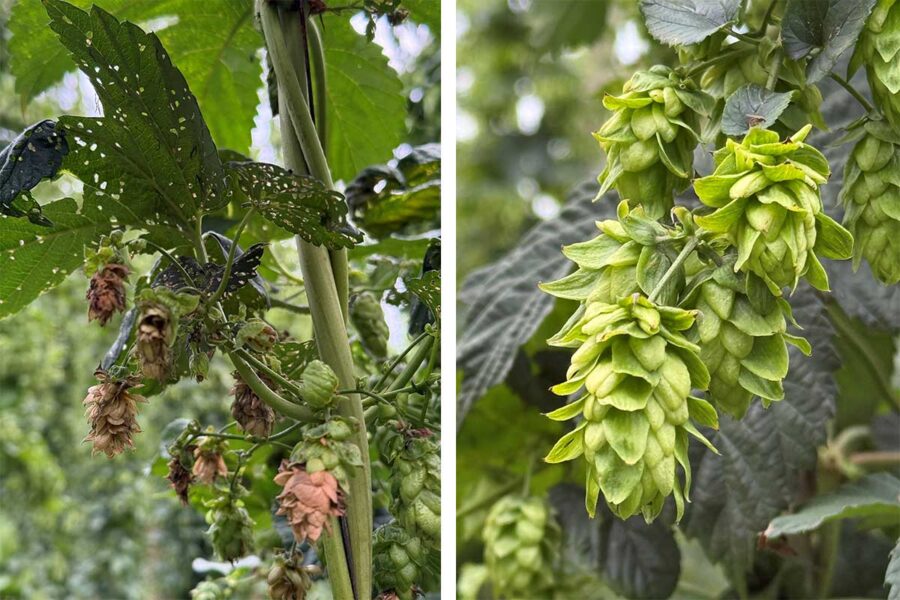
Closeup of heat-stressed and water-starved hops
Walter König

Virtually all of Europe suffered through one of the hottest and driest summers on record. Hop growing regions across the continent felt the effects. Southern and western Germany may have suffered most, enduring a series of intense heat waves and prolonged drought. The town of Kitzingen recorded a temperature of 40.8C (105.4°F), a record for the state of Bavaria. Total precipitation across Bavaria was 34% below the long-term average. Weeks of intense sunshine dried out the soil, profoundly affecting agricultural production. 

Yield and Alpha Acid Affected 

The official estimate of the 2026 hop harvest, released at the end of August, points to a decrease in the overall yield of 22%. Less than 20% of German hop acreage is irrigated. The heat and lack of rainfall peaked during critical developmental stages, specifically lateral shoot formation, flowering, and the development of hop cones. Growth was stunted, and cone formation was dramatically affected. 

As of this writing, hop quality analysis of the crop has only just begun, but early indications are that alpha acid levels and other variety specific aromatic compounds will be lower than average, perhaps significantly lower. The hot and dry conditions minimized disease pressure from powdery mildew and downy mildew, reducing the amount of treatment needed by growers. However, insect pests, such as the hop flea beetle, flourished, creating significant damage to leaves and cones. 

Landrace Varieties Hard Hit 

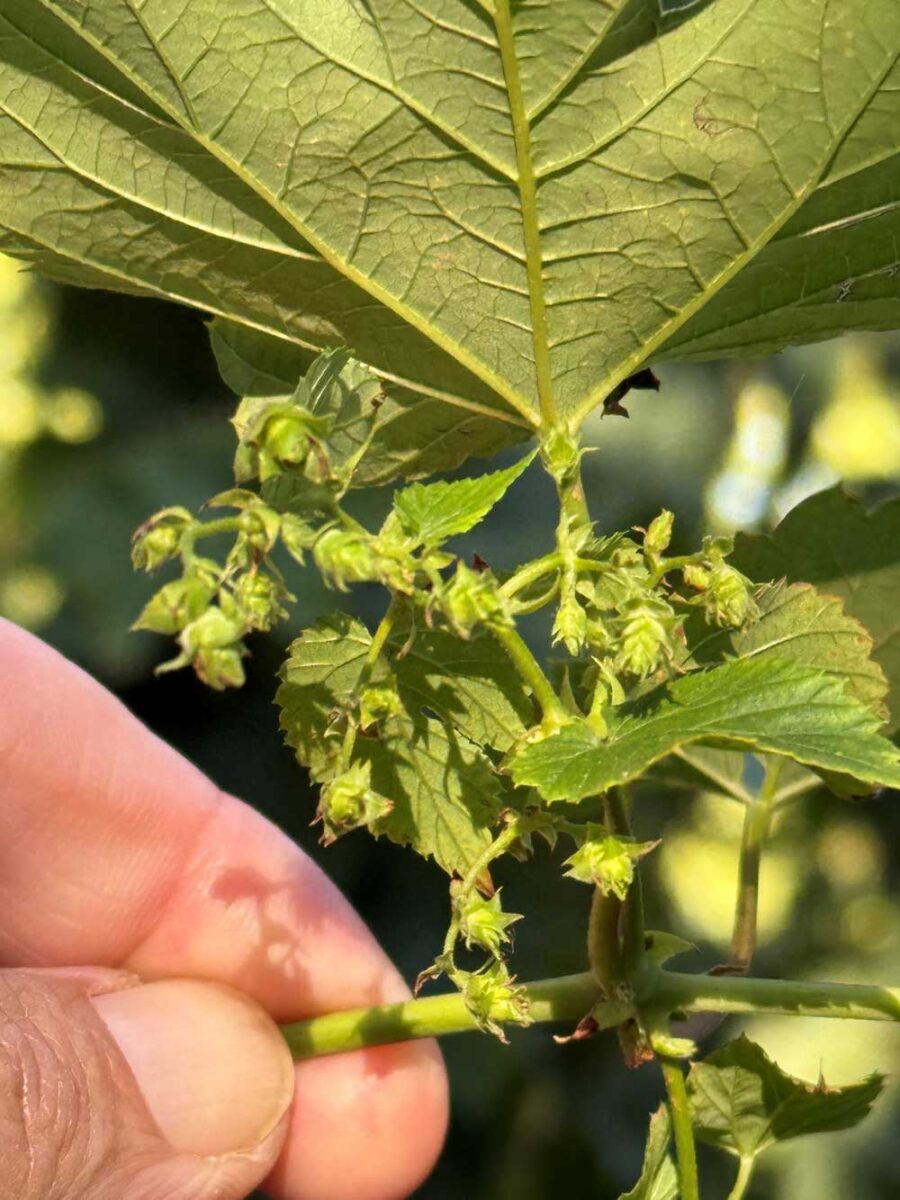
Closeup of hops
Walter König

Traditional landrace varieties, such as Perle, Tettnanger, and Hallertau Mittelfrüh, have been more affected by the climatic conditions than newer varieties. Recently developed varieties, including Titan, Tango, and Hüll Classic, have demonstrated better agronomic stability in the face of severe heat and drought stress. These varieties have delivered comparatively lower losses in yield and alpha acid. They are a testament to the German hop breeding program’s focus on addressing agronomic challenges under changing climatic conditions while maintaining classic quality and aroma characteristics. 

The Alpha Clause 

The alpha clause is a contractual agreement between hop merchants and brewers that is used to adjust hop delivery volumes and prices when a poor harvest results in a severe shortage of alpha acids. The alpha clause activates during historically bad growing seasons when total hop crop volumes and alpha acid yields drop significantly below long-term averages. The intent is to adjust contracted quantities and pricing equitably among brewers who hold contracts.  

Typically the alpha clause is triggered when the alpha acid content of a specific hop variety falls at least 15% below its 10-year average. Current observations and preliminary analysis results point to below-average alpha acid levels that will determine whether, and for which varieties, the conditions for triggering the alpha clause have been met. This determination will be made in mid-October when analysis of the 2026 harvest is complete. 

Here is an in-depth look at how the alpha clause works. 

Next Steps for Brewers 

While the 2026 German hop harvest and alpha acid levels will be significantly reduced from previous years, this does not indicate a widespread shortage. Significant carryover from previous harvests exists while global demand for hops remains subdued. However, availability of specific varieties may be limited, especially on the spot market. Brewers utilizing German grown hop varieties should communicate with their supplier to address their immediate needs and concerns. 

In the longer term, brewers using traditional landrace varieties in their beers should consider examining a switch to the newer German varieties that are better able to withstand climatic stress while still exhibiting noble aromas and flavors. A variety’s yield and quality under changing climatic conditions are becoming just as important as its quality and aroma characteristics. As always, it remains critical to continue to forward contract future needs to ensure availability of preferred varieties. 

Thanks to Walter König of the Gesellschaft für Hopfenforschung e.V. for his insights and photographic contributions. 

The Art of Selflessness in Hospitality, Part 1

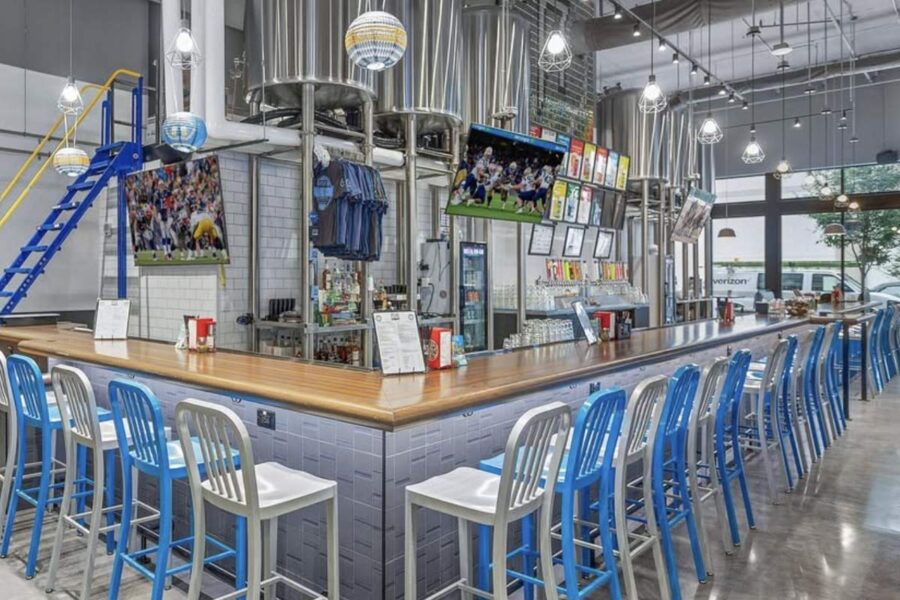
Atlas Brew Works Taproom

Editor’s note: This is part 1 of a two-part series on hospitality. 

“Giving with the intention of receiving really isn’t giving. It’s trading.”
— Robin Sharma 

There is a word in the Japanese language that captures the idea of giving without expectation—of giving to someone with your heart. The word is Omotenashi. In simple terms, it means kindness with no pretense—caring for someone, even a stranger, with the utmost respect. 

In an industry built on profit, how do we give without expecting anything in return? We work in a business where everything hinges on the customer’s expectation of receiving a quality product and exceptional customer service in exchange for money. But what if there is something more? Something that can be gained beyond monetary service? 

To explore this concept, we need to reshape the idea of hospitality. We need to be different, to stand out. And to do this, we must go beyond the basic tenets of good customer service. 

When you go to a friend or loved one’s home, and you’re greeted with a warm, genuine smile, and you sit down at the kitchen table and talk over some homemade stew and crusty bread—it’s the best meal you’ve ever had. And it’s not necessarily because it’s the best food. It’s because of how someone is making you feel—loved and cared for and fully seen. 

This is the magical feeling we’re trying to create when a customer walks into our establishment. But this can be challenging in an industry where lines of customers waiting for beer is the norm. 

To reinvent hospitality, we must get back to basics. The first areas to address are our space and our people. 

Where to Begin? With a Broom, of Course 

Atlas Brew Works beer

First things first: our space should be clean and tidy. I’m not talking about an overhaul. I’m talking about picking up a broom and cleaning—scrubbing, touching up paint, dusting off lightbulbs, and wiping the dried beer buildup from under the tap counter. This includes clearing out old, unused items such as the broken wrench you are keeping as a backup hammer or the limited-edition six-pack of beer someone gave your staff two years ago.

At Atlas Brew Works, we clean and organize our space and equipment with the goal of utmost efficiency. And we keep it that way by having a weekly walkaround with the staff so that they take ownership. We also give the walkaround lead to someone different each week. 

The staff doesn’t have to wonder what belongs where. Think about coming home to discover your housemate has already cleaned up the kitchen. How much easier was the next meal to prepare? How much better did the food taste? Did it feel like a sunny Friday shift beer after a 10-hour workday? That’s the freedom to move without hindrance. 

When customers walk into a taproom that is spotless and organized, they feel secure in the knowledge that they won’t be just getting a good product—they’ll be enjoying an experience. This allows them the freedom to make choices and enjoy themselves. I compare this to the feeling of walking into a clean hotel room with crisp white sheets and fresh towels after traveling all day. You immediately exhale. You are in a safe, comfortable space. 

When customers enter a clean, well-organized, fully stocked taproom, they are immediately at ease. They know their every need will be taken care of. They feel like the taproom was set up this way just for them, because it feels personal. 

Building the Team 

Atlas Brew Works beer served

People love to say that it’s hard to find good help, and it is, as it should be. Someone who brings both real-world experience and a great personality is the proverbial unicorn in the hospitality industry. If you hire someone purely for their experience, you might also inherit their old habits and previous training. If you hire for personality first, then you have the opportunity to create a unicorn of your own. Their personality is what will ultimately define how customers see your brand. 

Finding the right people can be exhausting, but there’s no better feeling than giving someone a job and developing them into a high performer. Finding someone who has the ability to listen, be present, be empathetic, and carry just enough urgency to care is the ultimate goal. Once you have this person, you can teach them about beer and good service.

When Atlas first started, much of our labor force was friends and family who volunteered. Most of them (including me!) had no idea what they were doing. But we knew how to treat people, or at least how to treat people on behalf of Atlas. This support came from a foundation of love for what we were building—and that is what reached the customer. 

As we grew and opened new locations, we did not always follow this practice of hiring based on personality, and we paid for it. For a time, one of our locations struggled with customer service. Every time I walked into the taproom, it felt like a wet blanket had been thrown on me. People did not look like they wanted to be there. Serving customers appeared to be a chore.  

We ended up having to start over. Since then, we have changed our hiring practices to focus more on personality rather than placing such a high priority on experience. We now conduct lengthy interviews to get to know the applicants and do reference checks to ensure we know who we are hiring and that they not only want to be there but are also excited about it. 

A recent hire at Atlas absolutely lit up the room with her positive attitude during her interview. She was the definition of bubbly. She was genuinely interested in our company and asked many questions and listened intently to the answers. She did not have any experience in hospitality. Fortunately, she did like craft beer. After only six months on the job, she is now a floor manager. 

When you put a higher emphasis on personality, you have the opportunity to build more than a staff. When staff have mutual respect for one another and feel part of something bigger than themselves, it shows, and it reflects back to customers. 

When customers come to a taproom and see a team who genuinely care for each other and the establishment, it shines through the service. And when they are greeted and treated as if they are a part of that family, it is an unexpected surprise that will change their whole experience. 

Next: The Art of Selflessness in Hospitality, Part 2

Style Spotlight: Saison

When it comes to the enigmatic style of saison, balance is key. 

“All the flavors and aromas should be in balance, perfectly integrated,” says Yvan De Baets, co-owner and brewmaster of Brasserie de la Senne in Brussels, Belgium. “It should be extremely drinkable, simple and complex at the same time.” 

Saison, or “season” in French, originated in the French-speaking region of Belgium known as Wallonia, brewed during the late fall to early spring as provisions for migrant workers (“saisonniers”). These farmhouse ales were made during the “good” brewing season (winter) and normally consumed during the “bad” brewing season (summer), according to De Baets. 

The flavors and aromas of saison include a “noticeable vinous Brettanomyces character, in balance with noble hop and malt flavor; a pleasant lactic tartness that enhances its refreshing character; and a dry finish but with adequate mouthfeel,” said De Baets. 

Brewers have many options to build in layers of complexity.

“Things like using a Pilsner malt from a craft maltster or using spelt instead of wheat—these minor changes will add up and help make a saison more interesting,” said Will Quinlin, co-founder of The Big Friendly in Oklahoma City. “Specialty grains and Brett are part of those layers.”

The Big Friendly won gold medals in both Saison categories (Classic and Specialty) at the 2025 Great American Beer Festival. “Winning gold for these beers was a really cool experience,” said Quinlin. “The Classic Saison category medal is the one I’m most proud of since it’s where I started my journey with the farmhouse style.” He’s been brewing the style for around 15 years, becoming interested while living in San Diego.  

“I’d grab any Belgian bottle I could find,” he said. “It was fun to explore all the styles.” 

The Big Friendly’s Universal Beings, which took gold in the Classic Saison category, is brewed with Pilsner and wheat malts and hopped early in the boil with German noble hops including Hallertau Mittelfruh. Goodbye Bread, which claimed gold in the Specialty Saison category, is a kvass-inspired farmhouse ale made with Pilsner malt and homemade sourdough bread. 

De Baets mentioned in his seminar at the Craft Brewers Conference in April that his favorite specialty grain for saison is spelt. 

“I like the fresh cereal character it imparts,” he explained. “It also gives a nice body and great foam.” 

When it comes to yeast, De Baets mentioned that many primary yeasts—including saison-specific yeast—can be used for the style, with the secondary fermentation being the most important. “If there has been one ‘saison’ yeast, it is Brettanomyces.” 

Yvan De Baets
Yvan De Baets, co-owner and brewmaster of Brasserie de la Senne in Brussels.

But De Baets, who has been studying and brewing the style for more than two decades, believes using POF+ (phenolic off flavor positive) yeast is not mandatory. “If a POF+ yeast is used, the phenolic character should stay in balance and not overwhelm everything.”  

Quinlin said he experiments with different saison strains, both single and blended. “We have three stainless tanks that are only for saison,” he said. “I’ll start out with one yeast strain in each tank and then I’ll mix yeast between them to see what happens.” 

De Baets, who judged the category at the 2026 World Beer Cup, said he sees many common mistakes when brewing the style.

“The main one is that many of them are phenolic bombs, where medicinal phenols completely overwhelm the beer. It creates beers that are totally unbalanced—no room for grains, hops, and other fermentation flavors—with poor drinkability. Some are huge in fruity esters, one-dimensional, and resemble more a Belgian blond. Some are not well-attenuated and impart a remaining sweetness. Some are overly spiced. And a lot of them are obviously too strong. If you can taste the alcohol, there is an issue.” 

Key characteristics 

  • Well attenuated
  • Complex
  • Balanced
  • Drinkable
  • Dry finish
  • Brettanomyces (in traditional versions) 

More information: BA Style Guidelines

Make Your Taproom’s First Impression Count

taproom staff pouring beer

Greet Like You Mean It

The following is an excerpt from the “Foundations of Hospitality for Brewery Taprooms,” the first module in the Brewers Association Front-of-House Taproom Staff Training Program.

* * *

The first few moments a guest spends in your taproom can shape their entire experience. A warm, intentional greeting builds trust, comfort, and connection. Mastering first impressions ensures every guest feels welcome, valued, and eager to return.

Executing the Basic Greeting Flow

Follow these steps to ensure every guest receives a warm, effective greeting from the moment they enter to the start of their service.

Step 1: Notice the Guest Arriving

Stay alert to new arrivals, even during busy times. Make eye contact as soon as possible to show you’re aware of them.

Step 2: Offer a Warm Greeting

Smile and greet the guest with a friendly phrase, such as “Welcome in!” or “Hey, be right with you!”

Step 3: Acknowledge Wait Time (if needed)

If you can’t serve them immediately, let them know you’ll be with them soon. A quick, sincere acknowledgment goes a long way.

Step 4: Transition to Service

Once you’re able, move smoothly into taking their order or guiding them to the next step. Maintain your positive tone throughout.

taproom bartender taking an order

4 Ways To Elevate Your Customer Greeting

  1. Maintaining eye contact: Eye contact shows guests they’re seen and valued, building instant connection and trust, even in a busy room.
  2. Wearing a smile: A genuine smile shows warmth and friendliness, helping guests feel welcome and at ease.
  3. Offering a verbal acknowledgment: A friendly verbal greeting lets guests know you’re attentive and reassures them they haven’t been overlooked, especially when there’s a wait.
  4. Using friendly body language: Open, approachable body language helps guests feel comfortable and shows you’re ready to help before you even speak.

About the Front-Of-House Taproom Staff Training Program

The Brewers Association (BA) Taproom Front-of-House Staff Training program trains individuals working front-of-house service positions, including bartenders and servers. This 4-part online course supplements your taproom’s onboarding processes by providing crucial information and skills to engage and serve guests.

The course includes the following modules:

  1. Foundations of Hospitality: Learn the core principles of exceptional taproom hospitality and front-of-house service. Build the skills to create memorable guest experiences, adapt to customer needs, and handle service challenges with confidence.
  2. Foundations of Beer Knowledge: Master the essentials of beer, including ingredients, brewing, and beer styles, so you can confidently answer customer questions and make great recommendations. Perfect for building your beer knowledge and starting engaging conversations.
  3. Beer Service & Draft System Essentials: Learn the essentials of perfect beer service, from proper glassware and pouring techniques to draft system basics and troubleshooting.
  4. Responsible Alcohol Service: Acquire the skills to serve alcohol responsibly while protecting your guests, team, and business. Gain the confidence to handle challenging situations, reduce risk, and create a safe, welcoming taproom experience.

We have also created a guide that helps taproom managers implement the training. The guide integrates the materials from the training program into a suggested 1-day, 1-week, and 1-month onboarding process that also accounts for training specific to your taproom, like safety procedures and POS systems.

All employees of breweries that are members with the Brewers Association receive free access to all courses on the BA Training Center. Simply login with your Brewers Association credentials. If you do not have credentials or would like to learn more about membership, please reach out to our Membership Team.

2026 Brewery Financial Benchmarking Data Release

The results from its latest Brewery Financial Benchmarking Survey are ready for you.

The member-only spreadsheet covers revenue and cost of goods sold (COGS) data, along with overall margins and ratios. Find it, plus resources from past benchmarking surveys, on our Industry Benchmarking Data page.

See how your brewery compares to your peers:

P.S. Let’s raise a glass to the brewers who completed this survey and, in doing so, helped build a resource the entire industry can use.

Is Your Brewery Prepared for the Next Disaster?

September is National Preparedness Month, which might be why both Matt Gacioch and I have been thinking about natural disasters.  

Matt recently published Market Impacts of Natural Disasters, which examines how four different natural disasters in four different states impacted production, state sales, and brewery closures/openings. He shared data from the National Oceanic and Atmospheric Administration that shows a large increase in the annual number of natural disasters in the U.S. Losses associated with those disasters totaled over 500 billion dollars in both 2023 and 2024. 

For many craft brewers, a disaster is a question of when, not if. Floods, fires, wildfires, hurricanes, winter storms, and earthquakes can affect sales and production and threaten facilities, equipment, and most importantly, people. Being adequately prepared for emergency situations can help mitigate losses and save lives. 

Readiness > Responsiveness 

As the busy summer season begins to wind down, now is a good time to review or implement disaster preparation and mitigation plans. The Brewers Association has a collection of Emergency Response Resources that address specific disasters and situations. Here I will cover some basics of disaster preparedness that can serve as a starting point for your emergency planning. 

  • Show your employees that you take emergency planning preparedness seriously. Assign ownership of the plan to yourself or a responsible employee.
  • Provide employees with digital and hard copy formats of all training materials. Practice regular drills with employees and responders, if possible.
  • Update and review your plan on a regular basis. Keep key contact information, including employees and responders, up to date.
  • Review your emergency preparedness plan with your insurance carrier. Insurance companies may also be able to offer suggestions and solutions that will help you be better prepared. In many cases, a comprehensive emergency preparedness plan can lower your commercial insurance premiums.
  • Consider preparing a business continuity plan in addition to your emergency preparedness plan. Have contracts in place for remediation, restoration, clean-up, and security before an event occurs.
  • Above all, be ready to protect your employees. Understand when to evacuate versus when to shelter in place. Ensure all your employees know and understand the plan. 

Preparedness is not a one-time activity; it’s an ongoing process of planning, training, monitoring, and refining. By taking steps now, organizations can significantly reduce both the human, operational, and financial impacts of extreme weather events and other natural disasters. 

Your Team Has Health Benefits. Do They Know How To Use Them?

Brewer wheels a hand cart with a keg

What brewery employees should understand about their coverage, and how you can make benefits easier to use all year.

Picking a health plan is a big decision, and once it’s done, it’s tempting to consider benefits handled for the year. But choosing the plan is only half the job. An employee can technically have health insurance and still have no idea how to use it.

It happens all the time. Someone on your team knows they “have insurance,” but couldn’t tell you whether their doctor is in-network, what their deductible means, or what a trip to urgent care will cost. So they put off care, get surprised by a bill, or bring the question to the one person they think might know: you.

A plan only delivers its full value when the people covered by it understand what they have. The good news is that closing that gap doesn’t take an HR department, and it isn’t a once-a-year task. Here’s what every employee should understand about their benefits, and a few practical ways to help.

1. What They’ll Actually Pay

Most employees look at one number: what comes out of their paycheck. That matters, but the part that trips people up is what happens after that. The deductible is the amount an employee may have to pay for covered care before the plan begins paying for many services. Copays and coinsurance are the employee’s share of certain costs. And the out-of-pocket maximum is the most they’ll pay in a plan year for covered, in-network care—not including their monthly premiums.

Employees don’t need to memorize definitions but understanding how the pieces fit together changes how they use coverage. A low monthly cost paired with a high deductible can mean more out of pocket when someone needs care, which matters to a taproom employee living close to their budget. Understanding those costs ahead of time can make it easier to plan for care instead of avoiding it out of uncertainty or being surprised by a bill.

2. Where They Can Actually Get Care

One of the most expensive misunderstandings in health insurance is the network. A plan covers care from the doctors, clinics, and hospitals that are “in-network.” Using out-of-network care can mean paying significantly more, depending on the plan.

The takeaway for your team is simple: check before you go. Before booking with a new doctor, employees should confirm that the provider is in-network through their insurer’s directory or member-service number. For prescriptions, it’s also worth checking that the pharmacy is in-network and the medication is covered by the plan.

It also helps employees to know where to go, because that affects both cost and wait time. Primary care is the home base for checkups. Urgent care handles the non-emergencies that can’t wait, usually for far less than an emergency room. And many plans include telehealth, which can be useful for a brewer who can’t step away mid-shift. Knowing the difference ahead of time beats a default trip to the ER and the bill that follows.

3. What Else Their Benefits May Include

Employees can’t use a benefit they don’t know they have. Plenty of valuable coverage goes unused simply because no one realized it was there.

Start with the medical plan: most health plans cover certain preventive services, such as routine screenings and vaccinations, without cost sharing when employees use an in-network provider. Employees may overlook that benefit simply because they assume any visit will mean a bill. Many packages also include ancillary and voluntary benefits, optional coverage an employee can add, usually through payroll deduction. Not every plan offers these, and they’re separate from the medical plan but where they’re available they can include:

  • Dental and vision, for cleanings, exams, glasses, and contacts, which medical plans usually don’t cover.
  • Life insurance, often at lower group rates than an individual policy.
  • Accident, critical illness, and hospital indemnity, which pay cash to help with what a deductible leaves behind, like a broken bone or a hospital stay.
  • Disability coverage, which replaces part of an employee’s income if illness or injury keeps them off the job.

Not everyone needs all of these. But a physically demanding job like brewing is exactly where accident or disability coverage can be worth a look, and employees can only weigh what they know exists.

4. Benefits Don’t Only Matter on Enrollment Day

Benefits get all their attention in one window each fall, then go quiet. But your team’s real questions surface all year, usually the moment someone tries to use their coverage or has a change at home.

Certain life events, a marriage, a new baby, an adoption, or losing other coverage, open a special window to change benefits outside normal enrollment. Those are easy to miss if employees don’t know to ask. A new hire in the spring needs a clear path to enroll too, not a wait until fall. You don’t have to become an expert; it just helps to know these moments happen year-round, and to make sure your team knows where to turn when they do.

5. Make Sure Employees Know Where to Get Help

Most small breweries don’t have an HR office down the hall, so benefits questions tend to land on the owner or a manager. The fix isn’t learning every answer yourself. It’s making sure your team has somewhere to get answers that isn’t only you. A few things help:

  • Clear enrollment materials people can actually read, not a stack of dense carrier PDFs.
  • A known point of contact, so people aren’t guessing where to go.
  • Knowledgeable support that doesn’t run through you, so employees have somewhere to take coverage or enrollment questions without adding to their plate.
  • Help that continues after enrollment closes, since most questions come up weeks later, once people start using their plans.

When employees understand their benefits, they use them better and value them more, which is a big part of why good coverage helps you keep good people. It’s hard to appreciate something you don’t know how to use.

Where a Good Partner Comes In

A benefits partner shouldn’t hand you a plan and disappear until renewal. The real value shows up in everything after the paperwork: helping employees understand their choices, answering the mid-year questions, and making it all easier to manage without a dedicated HR team.

Through its partnership with the Brewers Association, Decisely is built to be that kind of partner. Beyond setting up the right coverage, from group health plans and CHOICE Arrangement (formerly ICHRA) to dental, vision, and other voluntary benefits, Decisely handles enrollment, employee guidance, HR, and compliance details on one platform. Your crew can get support from a licensed, U.S.-based benefits team, giving employees a place to turn for guidance while making the coverage you offer easier to understand and use. Whether you’re offering benefits for the first time or want your team to get more from the plan you already have, it’s a low-pressure way to make benefits easier to use all year.

Explore the Brewers Health Benefits program and request a free, no-obligation quote.

Learn more at brewershealthbenefits.com

The New GABF Medal: Hard to Earn. Hard to Miss.

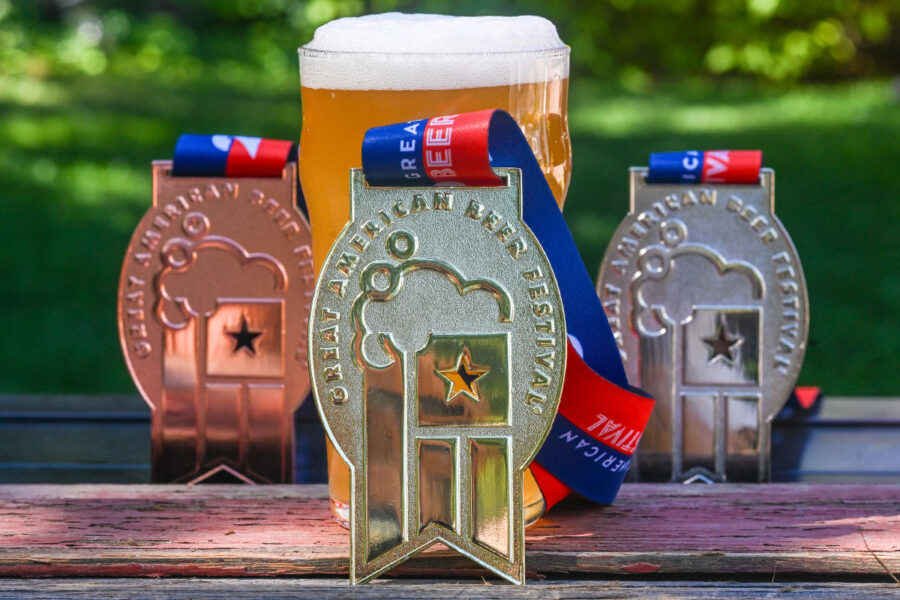
The redesigned GABF gold, silver, and bronze medals feature a larger size, bold new look, and updated ribbon, giving a hard-earned win the hardware it deserves.

For decades, a Great American Beer Festival medal has been one of the most coveted honors in brewing. This year, that achievement gets bigger hardware. The nation’s preeminent beer competition is introducing a larger medal, a bold new design, and a beefier ribbon. The award now matches the honor of earning it.

“A GABF medal has always been hard to earn. Brewers enter against thousands of beers from across the country, and every one is judged blind by professionals who know exactly what they’re looking for. The medal should reflect that. When a brewer walks off that stage, they should be holding something that looks like what it took to get there,” said Chris Williams, Brewers Association competition director.

From the Stage to the Shelf

The thinking behind the medal refresh starts with what happens after the celebration. Brewers know what a GABF medal means. We want more beer drinkers to recognize it, too, whether they’re choosing a six-pack or ordering their next pint.

“Bringing the medals and festival branding closer together gives that recognition a more consistent look, connecting the event consumers know with the achievement brewers work so hard to earn,” said Luke Trauwein, Brewers Association creative director. “Modernizing the medal was never the whole assignment. Helping it stand out on shelves and in taprooms is what gives the change its purpose.”

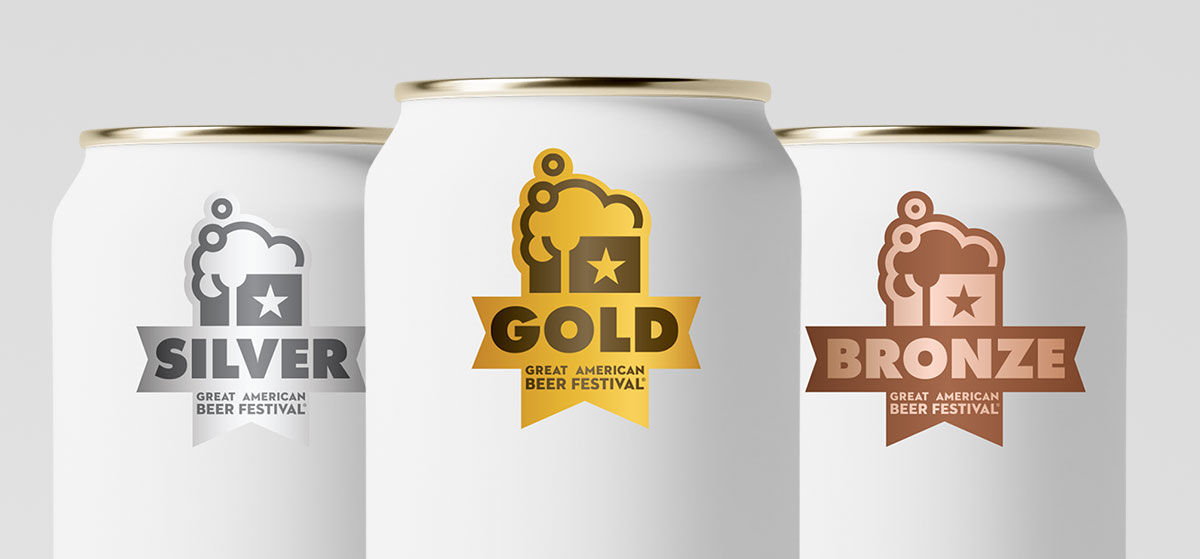
GABF Badges
New GABF gold, silver, and bronze award badges help breweries put their wins to work on packaging, in marketing materials, and wherever customers choose their next beer.

More Ways To Sell a Winner

To support that effort, the Brewers Association is launching a full set of promotional tools alongside the new medals. Winners will have award badges for packaging and marketing, social media assets, and materials for retailers and distributors, including shelf talkers, cooler clings, and shelf strips. These resources give breweries and their sales partners more ways to get a winning beer noticed without building every promotion from scratch.

This year’s winning breweries will also receive tap handles on stage that mirror the new medal design, putting their achievement front and center back home in the taproom.

Built To Sell Beer

It all comes back to a practical goal: helping craft brewers sell more beer. That means looking beyond the awards ceremony to the places where recognition can help a brewery earn a customer’s attention and business. The new hardware and promotional tools are part of a broader commitment to support small and independent brewers with the visibility and sales resources they need. You put the work into the beer. We’re putting more work behind the win.

A GABF win is worth making some noise about. Join us at the awards ceremony on Sunday, October 11, as this year’s winners take the stage to claim the new hardware.

SBA Proposes Changes to Its Small-Business Size Standards

The Small Business Administration (SBA) has proposed substantial changes to the way it sets size standards for small businesses. While the Brewers Association (BA) does not anticipate that these changes will materially change the competitive landscape for small and independent breweries, they will, if adopted, change how breweries are treated under some SBA programs.

As many small brewers know, the SBA can be an important ally to small businesses. Among its important programs:

  1. The SBA guarantees a portion of loans made by private lenders, making credit available where it might not be under ordinary commercial terms. These “7(a) loans” have helped start and support many small breweries. The SBA’s “504 loans” provide financing for major fixed assets such as a brewery building, brewhouse, packaging line, or other long-lived equipment.
  2. The SBA’s Manufacturers’ Access to Revolving Credit (MARC) program can provide up to $5 million in revolving credit or term loans to qualifying small manufacturers, including qualifying breweries.
  3. The SBA recognition of a business as “small” can bring advantages in seeking federal contracts, as many federal procurement programs include set-asides for small businesses. Thus, qualifying as small can help breweries compete for contracts to supply beer to the federal government. (Notably, however, the Army & Air Force Exchange Service and Navy Exchange Service Command are not subject to the ordinary Federal Acquisition Regulation (FAR)/Small Business Act set-aside regime, although both seek small-business suppliers.)
  4. Under the Regulatory Flexibility Act, federal agencies must consider the impact of many proposed regulations on small businesses and, when warranted, consider less burdensome alternatives. This can result in differing compliance requirements, longer implementation timetables, or exemptions for small businesses.

The SBA now proposes two notable sets of changes to its size-standard system. First, the SBA proposes to simplify the system by applying size standards at broader four- and five-digit North American Industry Classification System (NAICS) levels rather than generally at the six-digit level. According to the SBA, this would reduce the number of separate size standards from 978 to 338, a reduction of about 65%.

Second, the SBA generally proposes to expand the threshold for “small” to include somewhat larger firms. These changes vary from sector to sector. In some cases, mostly for service-oriented businesses, thresholds currently based on average annual receipts would be changed to thresholds based on average number of employees.

Packaging breweries are generally classified under NAICS 312120 — Breweries, covering establishments “primarily engaged in brewing beer, ale, lager, malt liquors, and nonalcoholic beer.” The current SBA size threshold is 1,250 employees. Under the pending proposal, breweries would remain NAICS 312120, but the SBA would apply the broader 3121 — Beverage Manufacturing size standard, increasing the threshold modestly to 1,400 employees. The SBA estimates that this change would result in one additional U.S. brewery qualifying as “small.”

Hospitality-focused breweries may fall under NAICS 722511 — Full-Service Restaurants or NAICS 722410 — Drinking Places (Alcoholic Beverages), depending on their primary activity. The current “small” thresholds are $11.5 million in average annual receipts for full-service restaurants and $9 million in average annual receipts for drinking places. Under the SBA’s pending proposal, a brewpub classified under 722511 would remain in that six-digit NAICS industry but would be subject to the broader 7225 Restaurants and Other Eating Places size standard of 850 employees. A brewpub or taproom classified under 722410 would remain in that six-digit industry but would be subject to the broader 7224 Drinking Places (Alcoholic Beverages) size standard of 700 employees.

As the numbers above illustrate, the vast majority of craft breweries already qualify as “small” for SBA purposes. The BA therefore expects that the proposal would produce only a very small increase in the number of craft breweries eligible for treatment as “small” under SBA programs. As such, the BA does not view the proposal as materially changing the position of small breweries. Moreover, because the SBA focuses on business issues and not specific alcohol policies (unlike, for example, the Alcohol and Tobacco Tax and Trade Bureau), applying the same SBA size standard to breweries and other beverage manufacturers does not give rise to any readily apparent dangers for our membership.

We will continue to monitor this proposal, which the SBA is accepting comments on through September 21, 2026. If you have a particular concern about these changes, we would like to hear from you.

The Yeast Nutrition Puzzle: What Your Yeast Really Needs

Yeast Nutrition

This article was originally published in the July/August 2026 issue of The New Brewer.

By Richard Preiss

As brewers, we spend a lot of energy on our recipe and process design. Many of us take a week out of our year to go to hop selection so we get exactly the right hops for our IPA. We obsess over grain bills, making sure we use the perfect Pilsner malt. But when it comes to yeast nutrition, a lot of folks just throw a generic scoop into the kettle and call it good.

In some ways, that approach is reasonable. However, most yeast nutrients themselves are generic, often designed for distillation or winery applications. Also, you’ve probably heard a brewer on a podcast talk about soluble zinc, or warn you about the risks of excess FAN (free amino nitrogen). All of this makes yeast nutrition a confusing topic.

Luckily, we can treat yeast nutrition through the lens of the Pareto Principle: this 80/20 rule states that 80% of outcomes often come from 20% of related inputs. In brewing fermentation, FAN and zinc are the 20% of your nutritional inputs that drive 80% of your fermentation and yeast health results. In this article, we’ll break down exactly how to manage them, why modern brewing trends like heavy dry hopping change the rules, and how missing the mark can ruin your beer with off-flavors. The goal is to help you demystify yeast nutrition so that you can get more efficient ferments in your cellar and stretch the value of your yeast through more generations.

The FAN Goldilocks Zone and Hidden Sources

Let’s start with FAN. For decades, the industry standard has focused heavily on making sure we have enough free amino nitrogen in the wort to prevent yeast stress, especially in adjunct-heavy macro beers. But in modern craft brewing, we are seeing a different issue: the consequences of excess residual FAN. In general, the target for beer stability is to have less than 50 ppm residual FAN. This is what most large breweries aim for.

UC Davis’ Dr. Glen Fox tested more than 100 commercial craft beers, and the results were eye-opening. (See Figure 1.) The average across all styles was over 100 mg/L of residual FAN in the finished product. Double IPAs, IPAs, and even standard lagers frequently peaked well above 250 to 400 mg/L.

Why do we care about excess FAN? Because amino acids left behind are fuel for spoilage organisms, and worse, can serve as direct chemical precursors to oxidation-related off-flavors. Through pathways like Strecker degradation,  amino acids break down into staling aldehydes. For instance:

  • Excess proline and lysine degrade into compounds that cause a mousy, breadlike off-flavor.
  • Leucine transforms into 3-methylbutanal, throwing a cocoa/almond stale note.
  • Methionine can impart dimethyl trisulfide, which smells exactly like cooked onions or skunk.
  • Unassimilated proline bonds directly with polyphenols to form permanent, unwanted hazes.

Where is all this extra FAN coming from? It’s not just modern malts. Another culprit in modern brewing is hops. When you massively dry hop a beer, hops can add significant amounts of amino acids to the cold side. Specifically, hops introduce massive loads of asparagine and arginine relative to your malt.

Furthermore, your process drastically changes how yeast consumes this nitrogen. For example, our data shows that multi-fill, multi-day tank filling practices reduce your mean FAN utilization compared to single-fill batches, leaving high amounts of residual FAN behind.

Fan Levels in Beverage Samples

Mind the Zinc Gap

Now let’s talk about the single most common micronutrient deficiency in brewing: zinc.

Zinc is a critical cofactor for more than 300 enzymes in the yeast cell, most notably alcohol dehydrogenase (ADH1). ADH1 is the zinc metalloenzyme responsible for turning acetaldehyde into ethanol and helping clean up diacetyl (VDK reduction). If your yeast lacks zinc, it cannot handle metabolic stress, it struggles during the stationary phase and storage, and its viability plummets, making it unsuitable for repitching.

So why is zinc usually low? Because of the malting process. Barley naturally contains zinc, but during germination, almost all the bioavailable zinc moves into the roots (rootlets) of the seed. When the malthouse cleans the malt, those rootlets are broken off and discarded. You are left with a malt loss that strips away almost 90% of the grain’s initial zinc.

This zinc gap becomes critical in heavily dry-hopped beers due to hop creep. When hop enzymes release new fermentable sugars on the cold side, the yeast needs to reactivate its metabolism to ferment them. If the yeast is starved of zinc, it cannot efficiently operate, which can lead to incomplete fermentations or high residual diacetyl.

How do you fix this? You have to add it back, but how and when matters. There are several options, including:

  1. Zinc sulfate heptahydrate: Precise and easy to dose as a sterile solution.
  1. Bio-bound zinc: Yeast hulls (inactivated yeast) packed with organically bound zinc that offer clean, assimilation-ready nutrition.
  1. Complex nutrient blends: Provide an insurance policy by adding zinc alongside other necessary vitamins and minerals.

If you add zinc to the hot side (kettle), it ensures excellent mixing, but you will lose a portion of it because zinc binds to proteinssoluble zinc directly to the cold side (fermenter), you maximize availability, but your sanitation and dosing calculations must be dialed in. In general, you want to target a fermenter zinc specification of 0.2 to 0.3 ppm.

Yeast Hulls and Zinc Sulfate Heptahydrate

Beyond the 80/20 Ryle: Magnesium and B Vitamins

What happens if you’re adding zinc, your FAN looks fine, but you’re still getting sluggish fermentations, diacetyl issues, or excessive sulfur production? This is where we look at the minor players that can make a major impact: magnesium and B vitamins.

Magnesium drives cell growth and yields faster, more complete fermentations while pushing your aroma profile toward pleasant esters and away from hot fusel alcohols.

The trick here is the magnesium-to-calcium ratio. In modern hazy IPAs, brewers often hammer the water profile with massive amounts of calcium chloride to get that soft mouthfeel. But if calcium levels are increased significantly over magnesium, it causes a competitive inhibition effect. The root cause of many stalled ferments, long lag phases, diacetyl spikes, and extended hop creep in juicy IPAs can be calcium blocking magnesium uptake. Adding magnesium sulfate (Epsom salt) improves fermentation kinetics in these high-calcium environments, particularly in hazy IPAs.

Finally, consider vitamins. Yeast vitamin needs are highly strain dependent. Some English strains as well as traditional lager strains are heavily reliant on biotin (Vitamin B7) and thiamine (Vitamin B1). High biotransformation strains often have a requirement for pantothenate (Vitamin B5). Have you ever had a beer with a perfectly healthy FAN level that still reeks of heavy, rotten-egg hydrogen sulfide? That is a classic symptom of a pantothenic acid deficiency. Without it, the metabolic pathway that builds sulfur-containing amino acids cannot function, and the yeast spits out pure hydrogen sulfide gas.

Because vitamin levels vary wildly across crop years and are absent from your malt Certificate of Analysis (COA), utilizing a complex nutrient blend can help ensure your yeast has the tools it needs. In our trials with a lager strain across 28 craft breweries, using a complete nutrient containing zinc and B vitamins brought beers to final gravity an average of two days faster and vastly improved yeast storage viability over a four-week period.

Action Items

So, what should you do in your brewery today?

  1. Start integrating a complex nutrient blend into your process to establish an insurance policy for the baseline of yeast nutrition.
  1. Spend a little cash on a wort analysis to measure your actual wort zinc level across three baseline batches. If you use a third-party lab for water analysis, they should be able to test your wort.
  1. Calculate your average zinc yield and adjust with precise, sterile soluble zinc sulfate in the fermenter if you aren’t hitting the target of 0.2 to 0.3 ppm.

Dial in your nutrition and your yeast will reward you with flavor stability and predictable repitching.

Richard Preiss is co-founder and CEO of Escarpment Laboratories in Guelph, Ontario, Canada.

Can I Make a Functional Health Claim on Hop Water?

Short answer? Probably not. At least not with the hop water most brewers are producing today.

While hops contain hundreds of compounds, and modern research has identified real therapeutic potential in several of them, it is important to remember that a functional health claim is not about beneficial compounds in the raw material. Instead, the claim represents the benefits received from the actual beverage when consumed.

Technically, a claim is possible—if you can back it up with scientific proof and can consistently deliver an effective dose of the beneficial compound in the product. For most brewers making hop water right now, that is too high a bar. Here’s what stands between you and it.

Dosage Matters

Therapeutic effect can be defined as the specific, intended beneficial response that a substance produces in the body. In research and trials, isolated compounds in hops have shown promising therapeutic properties. For many of these compounds, therapeutic effect can only be expected with highly concentrated dosages. Any beverage carrying a functional health claim must not only establish a realistic dosage that provides the therapeutic benefit but also must validate and document that the beverage contains the same dosage.

Is the therapeutic effect of the compound relatively immediate, as in the case of caffeine, or is the functional value achieved by measured dosages spread out over time? These, and other questions, are key to the brewers’ ability to make a legitimate functional health claim.

The Solubility Conundrum

Hop waters face a unique challenge. Ethanol is an excellent natural solvent, which dissolves, delivers, and stabilizes volatile oils and other functional compounds in a traditional fermented beer. (Although it is important to note that traditional beers also typically don’t contain enough hops to deliver any therapeutic value. Nor are health claims allowed for beverages containing alcohol.) In the absence of alcohol, the use of hop cones or pellets will rarely, if ever, provide enough concentrated compounds to deliver health benefits in a conventional size serving.

What Regulators Require

Dosage is the first obstacle. Substantiation is the second. The U.S. Food and Drug Administration (FDA) and the Federal Trade Commission (FTC) enforce the legal requirement that all functional health claims are substantiated. To legally justify a claim like “improves cognitive ability” or “promotes restful sleep,” the brand must back up the claim with competent and reliable scientific evidence.

Functional health claims need to be supported by research and clinical trials that demonstrate that the intended benefits are achieved through the actual dose in the product. Further, the actual dose in the product must be verified and match the dose used in clinical trials.

If a brand prints a functional health claim without reliable scientific evidence, there can be penalties enforced by the FDA and FTC along with the threat of civil litigation if a product does not deliver on the functional health claim.

The Potential Is Real

None of this means the interest in hops as a functional ingredient is misplaced. It is possible that some of the compounds in hops may be unique to only hops. A member of the hemp family, hops have long been identified in traditional cultures as providing health benefits among many other uses.

Traditional uses of hops as a treatment for a variety of ailments include coughs, fever, gastronomical ailments, liver ailments, headaches, toothaches, earaches, skin ailments, leprosy, tuberculosis, silicosis, sleeplessness, and even delirium tremens. As with other herbs and certain plants, traditional cultures recognized functional uses in hops without the benefit of modern science.

Modern science has allowed the compounds that create certain health benefits from Humulus lupulus to be identified. Recent studies have shown that the bittering compounds in hops have anti-inflammatory effects and improve cognitive function. Xanthohumol, found in the female hop cones, can act as a powerful antioxidant. Some studies suggest Xanthohumol can play a role inhibiting cancer cell proliferation. 8-PN, a prenylated flavanone, has been described as the most potent plant-based phytoestrogen and could play a role in female hormone replacement therapy. Hop oils have often been identified as a sedative and exhibiting antimicrobial properties. These are just a few of the substances in hops that have been identified to have therapeutic value.

The gap is not in the plant. It is in the delivery.

Research and Innovation

This challenge of solubility has given industry the opportunity to explore the development of new hop products that can isolate specific compounds and deliver them in specific doses. Further innovation has addressed the issue of stability. Natural emulsifiers have been developed that stabilize specific compounds, allowing consistent dosages.

As we learn more, it will become easier to develop hop products that deliver stable, measured doses of specific hop compounds. Brewers and beverage producers can use these products to their advantage to deliver alcohol-free hop water with concentrated and measured levels of the hop compounds that have therapeutic potential.

That is the path to a claim you can defend. It runs through documented dosing and scientific evidence—not through the hop bill.

For more information:

Corporate Transparency Act Reporting Ends for U.S. Companies

bartender using handheld POS system behind bar

The Financial Crimes Enforcement Network (FinCEN) issued a final rule that permanently removes Corporate Transparency Act (CTA) beneficial ownership information reporting requirements for U.S. companies and persons. The rule, which took effect August 14, 2026, largely adopts the interim rule FinCEN issued in March 2025.

Under the final rule, companies created in the United States are exempt from beneficial ownership information reporting. U.S. persons are no longer required to provide this information as beneficial owners or company applicants, and U.S. persons with a FinCEN identifier do not need to update or correct information they previously submitted.

Reporting requirements now apply only to companies formed under foreign law that register to do business in the U.S. and do not otherwise qualify for an exemption. Newly registered foreign reporting companies must file within 30 calendar days after receiving notice that their U.S. registration is effective.

FinCEN plans to conduct a one-time deletion of previously submitted information that it identifies as relating to U.S. persons or domestic entities that are now exempt. Companies and individuals do not need to request deletion, and FinCEN will post a public notice when the process is complete.

For most Brewers Association members, the final rule means no CTA filing or continuing reporting action is required. Businesses with foreign entities in their ownership or organizational structures should consult their attorney or other adviser to determine whether any entity remains subject to the reporting requirements. Additional information is available on FinCEN’s beneficial ownership information website.

From Tariff to Tap: How Aluminum Costs Reach Brewers

Aluminum prices in the United States are shaped by both the global price of the metal and the Midwest Premium, a benchmark used to establish the delivered price of primary aluminum in the U.S. market. Because the premium reflects U.S. market conditions, including tariffs on imported aluminum, it helps explain why tariff changes can affect brewers even when the cans they buy are made domestically. 

Pricing generally starts with the global market price, usually based on the London Metal Exchange (LME). Buyers of primary aluminum in the United States also pay the Midwest Premium, which reflects U.S. market specifics, such as domestic transport and the cost of bringing aluminum into the country. Manufacturers then add the cost of turning aluminum into products such as can sheet and finished beverage cans. 

The Midwest Premium is not a government fee or tax. It is a market benchmark based on transactions between aluminum buyers and sellers. Historically, the premium reflected costs such as freight, warehousing, and regional supply and demand. Tariffs have made it a much larger part of U.S. aluminum prices. Because the benchmark is quoted on a delivered, duty-paid basis, tariffs on imported primary aluminum are reflected in the premium. While comparisons over time are imperfect, the Midwest Premium has grown from roughly 18% of the U.S. aluminum price at the beginning of the Trump Administration to about 41% today, with tariffs accounting for roughly 30% of the current delivered price.  

The pricing structure has raised concerns among aluminum users. Unlike the LME price, which is established on a global commodities exchange, the Midwest Premium is an assessment published by S&P Global Platts, with no federal agency directly overseeing how the benchmark is set. For brewers, an opaque benchmark outside their control can have a significant effect on one of their largest packaging costs. 

Section 232 tariffs on imported aluminum magnify those concerns because the United States does not produce enough primary aluminum to meet domestic demand. Imports, particularly from Canada, are needed to fill the gap. U.S. reliance on imported primary aluminum is not new. USGS data show that 1980 was the last year domestic primary aluminum production exceeded apparent U.S. consumption. Production fell below consumption in 1981, and the domestic primary aluminum industry has contracted substantially since then. 

Tariffs raise the cost of the imported aluminum needed to supply the U.S. market, which in turn affects domestic pricing. If imported aluminum costs $1.00 before tariffs and a 50 percent tariff raises the effective cost to roughly $1.50, domestic suppliers no longer need to compete against $1.00 aluminum. They can price closer to the new U.S. market level. A domestic producer may never pay the tariff, but the tariff still changes the price at which aluminum trades. 

The result is unusual. A tariff may apply only to imported metal, yet the Midwest Premium can spread the higher, tariff-included price across the broader U.S. market. Producers and suppliers can therefore capture a tariff-related price increase on metal for which no tariff was ever paid although some or all of that increase may also be absorbed by businesses upstream in the supply chain rather than passed through to the brewer. A brewer’s higher packaging bill does not necessarily correspond to tariff revenue collected by the federal government. 

Brewers are especially exposed to the effect. Most small breweries do not import aluminum or finished cans directly. They buy cans manufactured in the United States, often with significant recycled content. The Midwest Premium itself applies to primary aluminum, not to every pound of recycled metal. Primary and recycled aluminum markets are nevertheless closely connected. Scrap is often priced at a discount to the Midwest transaction price, which combines the LME price and Midwest Premium. When the primary aluminum benchmark rises, the reference price for recycled material can rise with it. 

A brewer can therefore buy an American-made can containing American recycled aluminum and still face higher costs linked to tariffs on imported primary aluminum. The Midwest Premium is not necessarily applied dollar-for-dollar to the recycled content of a can, but a higher primary aluminum benchmark can influence the price of scrap, can sheet, and finished cans throughout the supply chain. 

Small breweries have limited ability to avoid or absorb those increases. Aluminum cans account for nearly 80% of off-premises volume in 2025 and are the dominant packaging format for craft beer. Small breweries purchase far fewer cans than large multinational brewers; lower purchasing volume generally means less leverage to negotiate prices or absorb sudden increases. A pricing change far upstream in the aluminum market can quickly translate into a higher per-case packaging cost for a neighborhood brewery. 

Recent movements in the Midwest Premium show how closely it responds to tariff policy. In 2026, the premium has at times approached or exceeded $1 per pound, far above historical levels. In August, it fell sharply following reports that the Administration might reduce tariffs on certain Canadian aluminum. Mining, smelting, and transportation costs had not suddenly changed. The market was reacting to the possibility of a lower tariff. 

For brewers, the aluminum tariff issue therefore extends well beyond whether a brewery or can supplier directly imports a tariffed product. U.S. dependence on imported primary aluminum means tariffs can raise the benchmark price across the domestic market, with higher costs flowing through rolling mills, can manufacturers, distributors, and ultimately breweries. 

While tariffs raise the cost of bringing primary aluminum into the United States, the Midwest Premium reflects the higher U.S. market price, and the primary aluminum benchmark can also influence recycled material and downstream products. Brewers can buy American-made cans, use highly recycled packaging, and still pay more because of tariffs on imported primary aluminum. 

The Brewers Association will continue to engage with government officials, monitor trade developments and advocate for the removal of barriers impacting independent craft brewers.  

Why Craft Culture Doesn’t Land With Gen Z

Understanding Gen Z

This article was originally published in the July/August 2026 issue of The New Brewer under the title “Understanding Gen Z”

By Mike Kallenberger

The earliest-arriving members of Generation Z crossed the threshold into legal drinking age about seven years ago. For those who have an interest in gaining insights into this cohort’s attitudes, values, and behavior—including almost anyone in the alcohol beverage business—the learning curve has been steep, but we’ve been mounting it reasonably rapidly. 

It’s clear that many members of Gen Z (born between 1997 and 2012) have a different relationship with alcohol beverages than previous waves of “entry level” drinkers. Beer, distilled spirits, and wine have all felt the impact in softer sales and in other ways. And a consensus has emerged on at least some of the causes: many Gen Zers are short on spending money; a significant portion of them not only have an interest in wellness but are acting on it; they seem to socialize less frequently than earlier young adult generations; and their alcohol occasions have veered from traditional drinks toward flavored beverages, including RTD cocktails. 

But craft beer has been hit particularly hard, and the above list offers only limited insight into reasons for any disproportionate impact. The craft category may in fact be suffering in part due to a misalignment, not just with Gen Z’s habits and taste preferences, but between this generation’s more abstract attitudes and values and traditional craft culture. 

In a previous article for The New Brewer, “Craft Brewing and the Evolution of American Culture” (March/April 2018), I argued that American culture had been influenced by a Millennial generation (born between 1981 and 1996) that saw many of their own values reflected in craft beer. The same may not be true of Gen Z’s emerging influence. In particular, Gen Zers are less likely to share the optimism and belief in personal agency that helped define young Millennials. An early harbinger of this transition: the rise and fall of Harry Potter.  

The Harry Potter Effect  

Understanding Gen Z

Trends in popular entertainment can often provide clues as to the attitudes, values, and motivations of a new young-adult generation beginning to assert its influence. When Millennials were growing up, there was no child character more prominent than Harry Potter. It’s not an exaggeration to say that the Harry Potter books and movies captured the zeitgeist of Millennials’ formative years.  

Those books and movies consistently tapped into narrative themes such as heroism, personal agency, and personal growth. These themes resonated with the aspirations (if not the reality) of young Millennials. It’s no coincidence that members of a generation who found a role model in a fictional heroic wizard also embraced craft beer culture, itself a repository of similar values. My earlier article cited themes in craft culture such as self-expression through work and creative rebellion, which are variations to one extent or another on Millennial aspirations such as personal agency and growth.  

To further illustrate how these trends in the entertainment industry can mirror what’s going on in categories like beer, it’s worth comparing the Harry Potter narrative with the thematic landscape of an earlier Gen X-oriented child character. Bart Simpson was in many ways the antithesis of Harry Potter: a wisecracking, “proud underachiever” who only wanted to have fun. And while 1990s-era Gen Xers (born between 1965 and 1980) were helping elevate The Simpsons to its peak of popularity, they were embracing similar values and motivations in their choice of beers.  

Bud Light was the beer category’s growth story of that decade, and it thrived by presenting a brand personality that arguably had a lot in common with Bart Simpson. Long-term ad campaigns for the then-leading light beer celebrated willfully mindless fun (think Spuds MacKenzie) or unambitious but clever people taking shortcuts to scam their way to a free beer (such as the phony Dr. Galazkiewicz).  

So, yes, it really may not be much of a stretch to say the fate of craft beer culture is intertwined with the rise and fall of Harry Potter. This is why a recent New York Times opinion piece about how and why the wizardly entertainment franchise has failed to resonate with many Gen Zers might give us pause, and even force us to rethink how craft beer culture may have to evolve as a result. 

Two Different Worldviews 

In her op-ed for The New York Times in January, journalist Louise Perry described how “the relevance of the [Harry Potter] franchise is waning.” She points out that the majority of the movie-going audiences for a 2016 launch of a spin-off series were over age 25 (i.e., mostly Millennials) while just 18% were children (in other words, Gen Zers or younger). Gen Z comedians and online influencers have been known to make fun of 30-something Millennials for their persistent love of Harry Potter.  

Perry goes on to find that the reason for the disconnect between the two generations’ attitudes about Harry Potter has its roots in their differing attitudes about life in general, which are in turn a product of how they experienced the world during their formative years. While Millennials’ worldview was forged during relatively optimistic times, Gen Z “came of age after the global financial crisis of 2008 and has since witnessed long periods of stagnant wages and declining state stability… They are a generation that has barely known an optimistic period of politics…a generation more likely than their predecessors to view their lives as controlled by external forces, rather than their own choices and will.” 

This latter point may be one of the key distinctions between Millennials and Gen Zers in terms of the latter group’s relative inability to relate to both Harry Potter and traditional craft beer culture. What Perry is describing here is what psychologists term an external locus of control. The presumption would be that young adult Millennials, in contrast, were more likely to have an internal locus of control—a belief that one’s own actions and decisions are the primary determinants of how your life unfolds. This is a more academic way to describe the sense of personal agency that characterizes aficionados of both Harry Potter (as teens) and craft beer (as adults)—they believe they can make a difference, and they relate to narratives that share that belief. In contrast, it’s a lot tougher to relate to values like self-expression through work or creative rebellion when you’re doubtful that your own choices can have an impact.  

And in fact, these differences in the views of Millennials and Gen Zers about their ability to control their own lives is not just a presumption. It’s been backed up by studies such as Grit and Optimism Among Millennials and Gen Z, by Christina Elson and Kylie King at Wake Forest University (cited in passing by Perry). The authors address their title bluntly when they state, “Millennials are grittier and more optimistic than Gen Z,” defining grit as “the ability to recover from failure and persevere in the face of challenges.” They also found that “[Gen Zers] demonstrate a weaker internal locus of control and lower self-efficacy, meaning they don’t feel confident their behavior will shape the direction of their life and the world around them.” (See Figure 1.) 

Figure 1:
Key Attitudes and Values of Millennials and Gen Z

Key Attitudes and Values of Millennials and Gen Z

My earlier article described three U.S. cultural trends as key enablers of craft beer culture’s rise: openness to new experiences, self-expression through work, and creative rebellion. All three relate to values of personal agency and growth. But if these values have declined, what might be replacing them as aspirations among Gen Z? Comfort, contentment, and fun will likely be a big part of the answer.  

Let’s check in on the status of each cultural trend and the implications for how craft beer culture may evolve.  

Openness to New Experiences  

New experiences are often a platform for personal growth. Gen Z can be very open to some types of new experiences, but it doesn’t appear that seeking variety in their beer drinking is one of them. Many craft brewers took advantage of earlier generations’ openness by stretching the boundaries of how beer was understood by drinkers, whether through style-based education, higher ABVs, increasingly intense flavors, and innovations like barrel-aging. This joy in variety-seeking, while not shared by all craft drinkers, nonetheless became a hallmark of craft beer culture.  

But comfort-seeking Gen Zers have been far more likely to embrace predictability rather than broaden their horizons through new-to-them beer styles. Of course, many craft brewers have already caught on to this, offering a lineup of familiar IPAs and eschewing boundary-pushing innovation in favor of craft lagers, Pilsners, and other seemingly “safe” choices.  

This doesn’t necessarily mean experimentation should fall by the wayside, but it will require that less familiar styles be presented with comfortable cues. One such cue might be nostalgia; the 1990s are big among Gen Zers, who see it as a simpler time. (This may explain all those Nirvana T-shirts we’ve been seeing on 20-somethings.)  

Gen Z’s comfort-seeking might also be a consideration in taproom and brewpub design. Is the industrial chic style of so many places in fact a better fit with a former era’s openness? We don’t know the answer to that. But it might be fair to speculate that even something as simple as installing warmer lighting or replacing benches with couches would enhance a brewery’s (and a brand’s) association with comfort. 

Self-Expression Through Work  

Young adult Millennials certainly sought careers that paid well, but they also wanted their work to reflect their own values, not just a way to fulfill the demands of the market. In this, they related to the narrative that craft brewers had themselves essentially rejected the mainstream in favor of celebrating more interesting, if not top-selling, styles.  

But labor market conditions over the past two decades have changed work-related aspirations markedly. As Elson and King point out, “many [Gen Zers] are concerned about being left behind economically. They choose practical careers and assume they will have to work hard to achieve financial goals while, at the same time, feeling less optimistic about their ability to achieve good outcomes.” It’s unlikely that opportunities for self-expression through work are a high priority for someone concerned about finding steady, reasonably good-paying work, period—arguably another way in which they prioritize comfort over growth.  

How might craft culture, or at least individual craft brewers, reframe the narrative to be more relevant in the Gen Z era? One approach might be found in the evolution of the third cultural enabler.

Understanding Gen Z

Creative Rebellion  

Creative rebellion was an important value for young Millennials. Unlike the traditional rebellion embraced by previous young adult generations (exemplified by iconic figures such as James Dean, Easy Rider, or Tupac), Millennial rebellion was directed less against authority and more against conformity. Craft beer culture has historically celebrated creativity and creative rebellion.  

But, like self-expression through work, creative rebellion appears to be less relevant to a generation that feels disempowered. Gen Z does have a rebellious streak, though the target of their rebellion is typically not conformity, but injustice. Hypothetically, this aversion to injustice may or may not be rooted in their own feelings of having gotten a bad deal simply because of the era in which they were born. But they take action on behalf of others seen as being treated unfairly. A majority of Gen Zers say they’ve attended a protest or volunteered for causes that are meaningful to them. 

And according to survey research firm Kantar, 57% of adult Gen Zers say they make an effort to buy products that support causes they care about; 79% agree that companies that make sincere efforts to invest in their community deserve their loyalty. Whether or not the entirety of craft beer culture could or should align itself with a specific cause, individual breweries (many of whom support such causes already) would likely be well-served by making those causes more central to their identity. 

An Evolving Landscape  

Are comfort, contentment, and fun some sort of new “big three” values for craft beer culture to embrace? That would be oversimplifying. At minimum, brewers intrigued by a potential move in this direction must be cognizant of how it would work in terms of their own established brand identity. If there’s a Gen Z archetype as significant as Bart Simpson or Harry Potter were to previous generations, they haven’t emerged yet. But for brands navigating the evolving landscape of consumer attitudes and values, “a little less Harry Potter” wouldn’t be a bad rule of thumb.  

Mike Kallenberger is senior advisor, marketing insights and strategy at First Key (firstkey.com), a brewery consulting firm. He is a longtime contributor to The New Brewer. 

The Graceful Exit: How Brewery Owners Plan Their Last Day

On a brewery’s first day of operation, the sky feels like the limit. That new brewery smell banishes all images about the brewery owner’s eventual last day. While it may be the last thing on the mind of a brewery owner, the truth is that everyone will eventually exit, even if the brewery does not. It’s just a matter of when, how, and what remains after the fact.

This post rounds out a series of three that explores the lifecycle of breweries from sunrise (brewery openings) to midday (sustained operations) to sunset (voluntary exits).

For many owners, the only exit strategy they consider in the early days is selling the brewery. While that’s a viable path for many, such a limited scope can make planning difficult when there is no obvious buyer, or when parts of the business end up being more valuable than the whole. To make the best decision, each brewery owner must determine what specifically they are trying to leave on their last day. Is it day-to-day management, business ownership, daily production, or the beer industry altogether?

Framed a different way, owners can ask: What do I want to preserve, and what am I ready to leave behind? The following is an exploration of three broad voluntary exit paths and which types of owners/businesses should consider each.

Pass It On

Passing it on means transferring ownership while preserving the brewery as an operating business. That could involve an outright sale, partner buyout, family transfer, employee-led purchase, or a merger. There are options such as seller financing which can expand the buyer pool, but it also lengthens the runway needed for the departing owner to actually leave. (Note that if the owner’s goal is simply to reclaim time, taking a step back and hiring a general manager may be enough in the short term.)

A brewery is more likely to attract a buyer when it has consistent cash flow, dependable records, documented processes, and a management team that has proven it can operate without the founder. A strong brand and favorable facility arrangement help too, of course.

Pamela Brulotte of Icicle Brewing Company

Icicle Brewing Company’s 2026 ownership transition offers a recent example of this path. Retiring founders Pamela and Oliver Brulotte sold their majority ownership to longtime family and hop-industry partners Shelley and Eric Desmarais. Icicle retained its management team, employee ownership, workforce, facilities, and independent status. The founders could step away while much of what they built carried forward.

Successfully executing this path relies on the brewery having value as an operating entity. “Passing it on” optimizes for preserving the brand, jobs, and community presence, but may sacrifice certainty in a turbulent and challenging market.

Strip It Down

A brewery can contain several business verticals under one roof: manufacturing, hospitality, intellectual property, and sometimes real estate. Each of those pieces do not always perform equally well. A profitable taproom may subsidize unprofitable distribution, while a strong brand may be paired with an inefficient production facility.

Stripping it down means identifying where value remains and removing the rest. A brewery could shift to contract production, retain brands while selling equipment, close a taproom, or sell the company in pieces for a full exit.

The Brewers Association (BA) defines a contract brewing company as a business that hires another brewery to produce its beer while generally handling marketing, sales, and distribution. This can eliminate production overhead, but introduces minimum runs, smaller margins (after the cut to the producing brewery), freight, scheduling, and quality-control dependencies. A 2025 Craft Brewers Conference (CBC) session on the ins and outs of contract brewing explores those arrangements.

Stripping down can also mean pruning underperforming locations. In late 2025, Künstler Brewing closed its Hemisfair Tap Haus after prolonged construction restricted access and traffic impacted the viability of that taproom. At the same time, its original San Antonio brewery remained open, and the owners said they would focus on prioritizing that location rather than seeking another satellite.

Choosing the path of “stripping it down” requires a brand, taproom, or customer base that remains valuable, but is elected when the current footprint no longer makes economic sense. It optimizes for lower fixed costs, reduced capital needs, and the possibility for continued participation in what still works. The tradeoff of course is less control (especially in divested areas) and new dependencies.

Wind It Down

Brewery closure can be a planned decision rather than an outcome imposed by crisis. A logical endpoint might be the end of a lease, an owner’s retirement, the payoff of debt, the expiration of a distribution agreement, or a major equipment-replacement decision. Each creates a moment to ask whether the next commitment is still worth making.

Some owners may choose a defined “harvest” period. In these periods, they stop major investments, but continue to operate while the brewery remains cash-positive, reducing inventory and obligations, and establishing a firm closing date. As with all slippery slopes, a thoughtful wind-down demands defined guardrails and a clear endpoint.

Boone Valley Brewing Company followed a retirement-driven version of this path in 2026. After more than 14 years, the Iowa brewery announced in May that it would close in June, marking the head brewer’s retirement. Customers had several weeks to share final pints and celebrate what the brewery had meant to the community.

An orderly timeline can create room to sell equipment, real estate, inventory, or intellectual property without accepting distressed prices. It also allows owners to help employees with next steps and to efficiently power down the facility.

Choose this path when continuing would demand more capital, labor, or risk than the owner wants to commit, and no viable successor or smaller model exists. Winding down optimizes for control, certainty, and protection against further losses. It may not preserve the operating brewery, but it can preserve financial value, personal well-being, and goodwill.

A Successful Ending

A sale is not the only successful exit, just as a closure is not automatically a failure. Finding the right successor, preserving the strongest portion(s) of a business, or finding the right way to close up shop can all be sound outcomes.

Exit planning works best before an exit becomes unavoidable. Identifying what is transferable, where value resides, and what constrains the timing preserves more choices.

No path preserves everything. The goal is to decide (while there is still time to decide) what deserves to continue and what does not.

IEEPA Tariff Refunds Bring Little Relief for Most Breweries

In February, the U.S. Supreme Court held that tariffs imposed in April 2025 under the International Emergency Economic Powers Act (IEEPA) were unlawful. The decision invalidated the administration’s broad reciprocal tariffs on imported goods. Approximately $166 billion was collected from more than 330,000 importers under the affected tariff programs. The decision does not cover the Section 232 tariffs on aluminum and steel since those duties were imposed under the Trade Expansion Act of 1962 rather than IEEPA.

Refunds Arriving Faster Than Expected

U.S. Customs and Border Protection (CBP) has established an administrative refund process through its CAPE and ACE systems. Importers of record must submit claims and supporting entry information. Instructions are available on CBP’s IEEPA Duty Refunds page.

Despite initial expectations of a slow and complicated process, refunds are already producing substantial corporate windfalls. As of July 31, CBP has received more than 252,000 applications and accepted $128.7 billion in refund claims for processing.

Prospects for Direct Relief

Breweries experienced most tariff-related costs indirectly, as refund rights belong to the importer of record (the party that paid the duties directly to CBP). A brewery that bought imported equipment, hops, or packaging from a domestic importer usually has no direct claim against the government.

Whether breweries benefit will depend primarily on their relationships and contracts with suppliers that are entitled to a refund. For example, if an equipment importer receives a refund, the money will not automatically flow to the brewery that purchased the equipment. Any recovery will depend on the parties’ contract terms or subsequent negotiations.

What Breweries Should Be Doing

Breweries should:

  • Determine whether they directly served as the importer of record for any goods subject to the invalidated IEEPA tariffs.
  • Ask equipment, ingredient, and packaging suppliers whether they are pursuing refunds and whether any savings will be passed through.
  • Review existing contracts for tariff-adjustment, rebate, or cost-sharing provisions.
  • Include provisions in future supply agreements specifying how tariff increases and subsequent refunds should be allocated.

For most breweries, relief is more likely to come through supplier credits, negotiated concessions, or future price reductions than through a direct government refund.

The Brewers Association will continue monitoring tariff developments and advocate for policies that relieve cost and supply chain burdens on members.

The Market Expansion/Sales Rep Conundrum

Too often, brands view a new state as a finish line rather than the beginning of another investment cycle.

Please log in to view this resource. Not a member? Join Now

Log In
Members Only Content

Get access to this article, and every article, and every technical resource with a Brewers Association membership.

Log In Not a Member? Join Now

How Worried Should We Be About Smoke Taint in Hops? 

Composite image: aerial shot of a wildfire and closeup of hop cones

Continued drought and wildfires in the Pacific Northwest and British Columbia have raised concerns about the potential effect of smoke taint on the 2026 hop crop. With two months left in the fire season, this year’s fires could rival the catastrophic 2020 season. 

Foundational Research on Smoke Taint in Hops 

Although the effects of wildfire smoke on grapes has been well documented, the effect of smoke taint in hops and finished beer didn’t gain much attention until a massive windstorm over Labor Day in 2020 ignited thousands of acres, covering the area in thick smoke during the peak of harvest. 

After the 2020 harvest, a study published in the Journal of the American Society of Brewing Chemists identified the chemical profile of smoke tainted hops, creating a foundation for additional research. A 2026 study from Oregon State University has shown hops exposed to simulated wildfire smoke during kilning have increased levels of volatile phenols, notably Guaiacol and 4-methylguaiacol, which are perceived as smoky and meaty flavors and aromas. The study also showed that as volatile phenols in the hops increased, citrus and overall hop aroma declined. 

Kilning hops involves relatively high volumes of airflow. If wildfire smoke is present during kilning, the hops are exposed to similar air quality and environmental conditions. Logically, if volatile phenols are present in the air, the hops will also be exposed to them. However, while the Air Quality Index (AQI) can be a good indicator of smoke taint potential, it doesn’t measure the smoke’s chemical composition and can be misleading. Finally, the impact of smoke during cone set, maturity, and harvest is less understood. More research is required to better understand the relationship between smoke and hops in the field. 

Identifying Smoke Tainted Hops 

Earlier this year, the American Society of Brewing Chemists published Sensory Analysis Method 20, Hop Sensory Evaluation Method for Detection of Smoke Taint. This new method provides a simple sensory approach to detecting smoke taint when sourcing whole leaf hops and hop pellets. The method is for evaluation of hops for smoke taint, and not an indication of flavor carryover to beer.  

Mitigating the Effect of Smoke Taint in the Brewery 

The Brewers Association published a brief on Hop Smoke Taint as part of the Off Flavor Management series. This paper identified proactive measures brewers could use to control hop smoke taint in the brewery. The brief notes that some brewers have observed that using smoke-affected hops during boiling for bittering additions did not result in noticeable smoky characteristics in the final beer. The opposite was true for dry hopping with the same hops. Clearly more research needs to be conducted examining flavor and aroma carryover of smoke taint characteristics in hops to beer. 

The Current Outlook 

The hop growing regions in the Pacific Northwest can reasonably expect variability in air quality during the harvest season due to changing weather patterns and likely continued drought. Atmospheric conditions can, and have been, changing daily, even at the farm level. The general consensus is that it is too early to make a prediction related to harvest quality. Brewers who are concerned about smoke conditions are encouraged to reach out to their suppliers directly to learn about their protocols and contingency plans. Growers and merchants will continue to monitor the situation and make adjustments, if necessary, to picking and kilning schedules to ensure the quality of the harvest and the safety of their workers.  

Further reading:  

CO2 Supply Chain Remains Tenuous 

Recent upstream disruptions in the southeastern United States have exposed the fragility of North America’s beverage-grade CO2 supply.

While supply has been relatively stable in most parts of the country for the past few years, many users of beverage grade CO2 in the southeastern U.S. are currently dealing with force majeures, unreliable delivery schedules, strict supplier allocations, and highly volatile pricing. 

The long-term outlook for the consistent supply of beverage grade CO2 is expected to remain volatile in the near future for many parts of the U.S. According to Gasworld, structural risks remain. Ammonia and hydrogen production economics, refinery operating rates, maintenance activity, transport and distribution constraints, regional supply concentration, and growing carbon-management demand continue to influence supply reliability. 

Below are links that provide easy access to Brewers Association resources that will help brewers prepare for and respond to potential disruptions in the supply of this critical product that serves both as an ingredient and process aid in the brewery. 

Maximize Efficiency 

Is Your Brewery Using CO2 Efficiently? Ensure your brewery is getting the most value per pound by using our calculator and comparing your use to your peers. 

How To Tune Up Your CO2 System for Max Efficiency. Get the most out of your supply. 

Contract Considerations When Changing Suppliers 

Carbon Dioxide (CO2) Contracting. Unlike hops and malt, CO2 is used by a much broader range of industries causing the availability of supply to be at a higher risk. Contracting is a smart way to manage that risk. 

Quality Considerations When Changing Suppliers 

Understanding and Ensuring CO2 Supply Quality for Brewery Use. Brewers have a role in ensuring their CO2 supply is free from contaminants and appropriately handled in the brewery. 

U.S. Merchant Carbon Dioxide Demand, Supply and Trends. This seminar provides an overview of the CO2 supply chain and presents a five-year supply-and-demand outlook. 

Safety, New Technologies, and More 

Brewing CO2: A ‘Supercritical’ Ingredient, Utility, and Byproduct. This four-part series covers a wide range of topics from safety and monitoring to new processes and technologies that can conserve or replace CO2. 

Protecting the CO2 Supply Chain 

The Brewers Association participates in a coalition that seeks to protect the CO2 supply chain. That coalition secured legislation last year putting CO2 re-use on parity with carbon sequestration for federal tax purposes. Work on implementing this law change is ongoing. 

Functional Beverages: Development and Production Challenges 

My last post covered labeling and regulatory issues around functional beverages. This post covers the development and production of these products—and the unique challenges therein.  

If a functional beverage is going to be effective in producing the desired health-related benefits, particularly if an authorized or qualified health label claim is made or nutrient content claim is declared, the product and the claim must be backed up by reliable research and validation. Development of a functional beverage can involve a complex interplay of substances that react very differently from traditional brewing ingredients, chemically and physically, singularly and in different combinations. In addition to research and validation, brewers must diligently adhere to effective manufacturing protocols. 

Solubility  

Functional beverages often contain ingredients that brewers may not be familiar with. Probiotics, prebiotics, botanicals, adaptogens, micro and macronutrients’ solubility can be affected by their polarity, temperature, pH, and oxygen levels. Different ingredients may react differently in different combinations.  The solubility of a functional ingredient, or ingredients, needs to be understood and controlled to meet dosing requirements and be effective in delivering the desired health benefit or to meet a specific nutrient content claim. 

Stability 

The concept of freshness takes on added importance in functional beverages, as functional ingredients must remain stable and at levels that will provide the desired health benefit to the consumer. As with solubility, temperature, pH, and oxygen levels can affect stability of the ingredients. Other issues can degrade the effectiveness of functional ingredients including hydrolysis, photolysis, flocculation, and stratification. Microbiological stability is also a major consideration. Finally, as aluminum cans are often the package of choice, evaluation and validation of the can liner material is critical to avoid scalping and corrosion issues. 

Sensory Outcomes  

Solubility and stability are important aspects of functional beverage development and production. Mastery of these elements is meaningless if the functional beverage does not have taste, color, and texture that appeal to consumers. Individual functional ingredients can have singular sensory outcomes that can be favorable or not at different concentrations. Different combinations of ingredients can have unintended interactions. Electrolytes are a good example. On their own, electrolytes can change both the flavor and texture of a beverage. Consider the addition of sodium chloride to a Gose. A small amount of salt can produce the benefits of both sodium and chloride while increasing the beverage’s texture and accenting certain flavors. Too much and it becomes undrinkable. Similarly, a small amount of calcium sulfate can accentuate the flavor and bitterness of hops, creating a crisp, flavorful beverage. Too much calcium sulfate can lead to harsh, chalky, minerally, and aggressively dry bitterness. 

The sensory outcomes mentioned above are familiar to brewers. Many functional beverages can be a complex mix of base ingredients, functional ingredients, natural or artificial flavors, solvents to facilitate solubility, emulsifiers, and possibly preservatives. Mastering the sensory outcomes of the individual components and the intricate interplay of these same ingredients to produce a beverage that is acceptable to consumers takes research, experience, and skill. 

Is Simple Better? 

Given the complexity surrounding many functional beverages, a simpler approach may be an easier route to enter this growing segment of the market. Making a structural claim about a singular ingredient or not making a label claim and letting the ingredient’s presence infer the health benefit to the consumer, can be a path to market. This path has its challenges as well. 

An important factor in driving consumer interest in functional beverages is how these beverages act as a bridge between supplements and food by transforming ingredients traditionally found in pills, powders, capsules, and everyday meals into accessible ready-to-drink formats. Another way to say this is that consumers depend on nutrient content claims and health benefit claims, structural or inferred, to be accurate and deliver the desired nutrition or therapeutic benefit as well as desirable sensory outcomes. 

Product Integrity 

It has been widely reported that consumers are losing faith in vitamin supplements. A 2012 investigation by the U.S. Department of Health and Human Services Office of Inspector General (OIG) examined the scientific backing behind structure/function claims on dietary supplement labels. It was found that a majority of the reviewed products lacked clinical research that backed the products’ claims. “Borrowing” research from others was also cited as a common practice. This, and lack of quality testing, inaccurate dosing, and exaggerated marketing claims have led to a growing mistrust of vitamin supplements. Despite efforts to tighten enforcement, these problems have persisted. 

Functional beverages have an advantage over vitamin supplements as they can double as daily sustenance or refreshment. However, functional beverages carry the same risk of losing consumer confidence if the products do not deliver the stated or inferred nutritional value or health benefit. Credible scientific backing, quality testing and documentation, adequate dosing, and honest marketing claims are essential for functional beverages to maintain product integrity and consumer confidence. 

Additional reading: Health Claims and Functional Beverages: Know the Rules

New Tutorial: Get More Out of Barley, Your BA Resource Assistant

Earlier this year, we released Barley, a chat assistant designed to help members like you quickly and painlessly find answers and insights among the BA’s vast library of content. While it’s easy to use from the jump, a few quick tips will help you get the most out of this tool.

Mastering Barley AI is a quick (~10-minute) tutorial that shows how Barley can solve brewery challenges and help you get the most out of your BA membership.

What you’ll learn in the tutorial:

  • See what Barley can (and can’t) do for you — and why it’s different from a generic search bar.
  • Get set up in seconds — find Barley and start asking it real questions.
  • Walk away with pro tips — shortcuts to get sharper, faster answers.

*The course can be found in the ‘BA Membership Tutorials’ section of the BA Training Center.

About the BA Training Center

The BA Training Center is a platform that offers BA members courses on brewing, business, and more. All Brewers Association members have free access to all courses on the BA Training Center.

Brewery Visits Are Up. Wait, What?

people enjoying beers outside at a craft brewery

A question came across my desk recently that made me do a double take. The inquirer asked if the total number of brewery visits was at its highest level ever. After a couple years of tough headlines, I thought “how could that be?”

While we do not collect this data directly, what are the backs of envelopes for if not this type of calculation? To come to a rough (but reasonable) estimate, I took the product of the number of legal drinking age (LDA) Americans (Census Bureau), the share of LDA who consume craft beer (NIQ Scarborough), and the average number of annual brewery visits by craft beer drinkers (Brewers Association/Harris Poll Consumer Survey). In this exercise, I didn’t have data for every year listed, so I made some estimates based on trends.

And while these results are based on estimates, they should help us at least compare years side-by-side. The TL;DR of it suggests 2026 is, in fact, poised to become the year with the most brewery visits in recent history.

Chart of estimated total number of brewery taproom visits by year (2018-2026)

How? In an environment where many breweries are feeling the struggle of declining taproom sales, how does this square?

A simple answer would be that NIQ Scarborough and Harris Poll are pulling non-representative samples, artificially inflating the share of LDA drinking craft and the visits per craft drinker, respectively. However, Scarborough receives over 20,000 responses while Harris Poll collects more than 2,000 responses. Based on their statistical approaches, we should assume the results are representative of the overall population.

There is, however, impact from outliers that influence the averages. In the 2026 Harris Poll, when removing upside outliers (i.e. the “power visitors”), the average number of annual visits becomes 3.5 rather than the 5.5 average with all survey respondents. This figure is still up notably from the 2018 average with outliers removed (2.4 annual visits). Consequently, removing outliers may bring down the overall estimate for annual visits, but it does so across the board and does not change the relative bump in 2026 compared to 2018. Craft drinkers simply appear to be visiting more breweries today than they did prior to the pandemic.

Chart of average annual brewery visits with and without outliers (2018, 2026)

Let’s not jump so quickly over the “power visitors.” It’s notable that between 2018 and 2026, the share of overall brewery visits from the power visitors has declined substantially. In 2018, 60% of visits were made by the top 10% of visitors (i.e. the people who got out regularly). As of 2026, that figure dropped to 47% of visits by power visitors. This could be why we’ve seen loyalty programs on the decline and can be a good reminder that developing a business model focused on “the regulars” may be a tougher sell these days.

So, what if the rising visit rates aren’t being felt by brewery owners because there are just more breweries operating (spreading out those annual visits)? This explanation does not hold up either. The number of operating breweries experienced slowing growth in past years, descending to the point of slight decline in 2025. This trend held for onsite breweries as well, leading the average visits per onsite brewery to increase for the past three years.

Chart of average taproom visits per onsite brewery (2019-2025)

Of course, the U.S. craft beer industry is not a monolith, so average visits per brewery does not mean all breweries would experience those gains. There’s wide variability based on where a brewery is located as well as what type of audience each business attracts.

As such, I took a look at the average number of visits by different demographic groups from the most recent Harris Poll (2026) compared to pre-pandemic in 2018. While both men and women are visiting more breweries now than in 2018, women are visiting fewer local breweries and instead opting for more while traveling. Craft drinkers aged 21-54 are visiting more breweries while drinkers 55+ are sinking further away from the population mean for visits. Regionality also seems to be playing a role with higher average visits in the West and South today than in 2018, accompanied by drops in the Midwest and Northeast.

Chart of average annual brewery visits by demographic groups (2018, 2026)

In short, the experience of increased brewery visitors is not uniform across the industry. Additionally, other challenges facing the industry could simply be outweighing the feeling of the slight bump in brewery visits. More people coming through the door may not move the needle against declining ticket sizes, rising operational costs, and all of the other factors working against breweries right now. And yet, while there are certainly breweries struggling, it’s also important to remember that there are breweries having their best year yet.

In such a large and diverse industry, there’s always nuance beyond the headline figure. The takeaway is that craft drinkers are still going out to breweries, seemingly more than ever. Figuring out how to position your brand and how to perfect your hospitality model, however, are the factors that will determine whether those visits will be at your taproom or at someone else’s.

Cincy Light Vs. Cold Time: Two Lager Brands, Two Very Different Paths

A tale of two lagers, and the different approaches two breweries took in their attempt to break into America's most competitive beer style.

Please log in to view this resource. Not a member? Join Now

Log In
Members Only Content

Get access to this article, and every article, and every technical resource with a Brewers Association membership.

Log In Not a Member? Join Now

Health Claims and Functional Beverages: Know the Rules 

A woman shopping for energy drinks at a grocery store.

For brewers exploring new paths to growth, the rapidly expanding “functional beverage” market has potential. This category is evolving from a niche segment to a mainstream phenomenon.  

What Is a Functional Beverage? 

A functional beverage is a drink that promises health benefits beyond hydration. Energy drinks being a trailblazing example. Others may offer benefits around gut health, stress relief, and mental clarity. These benefits are achieved by intentionally adding bioactive compounds, nutrients, or botanical ingredients designed to target certain bodily functions. 

While consumer interest in functional beverages is high, significant regulatory challenges exist for companies considering competing in this growing market.  

Health Claims Are Off-Limits on Alcohol

First and foremost, health claims are not allowed on beverages containing alcohol and regulated by the United States Tax and Trade Bureau (TTB) or the Food and Drug Administration (FDA). There are currently alcohol-containing beers in the market that consumers may perceive as healthier by the nature of their ingredients, but making explicit health claims on products containing alcohol is strictly forbidden. 

The FDA strictly regulates health claims on all other food and beverages to ensure that all claims are truthful, substantiated, and not misleading. Functional beverages are not required to have a health claim ,but if you plan to make a health claim, a thorough understanding of FDA regulations regarding such claims is critical to avoid the FDA’s legal authority to levy fines or require recall of misbranded products. 

Types of Health Claims 

The FDA considers a health claim as a statement that links a food or beverage or an ingredient with a disease or health related condition. The FDA categorizes health claims into four buckets: 

  • Authorized Health Claims provide a link between food or ingredients and the risk of a disease. These types of claims must meet strict criteria and be authorized by an FDA regulation or based on an authoritative statement from certain scientific bodies. 
  • Qualified Health Claims are based on emerging evidence of a relationship between a food or ingredient and a disease or health condition, but do not meet the strict standards of an authorized claim. In this case, the manufacturer can petition the FDA to use the claim. Qualifying language addressing the claim is required on the label.
  • Nutrient Content Claims describe the level of a nutrient in a food. They’re allowed only when the FDA has authorized the claim and the label follows the agency’s regulations.
  • Structure/Function Claims address general well-being or effects on the normal structure and function of the human body. For conventional foods, these types of claims do not require preapproval by FDA, but the manufacturer must have substantiation that the claim is truthful and not misleading. For conventional foods, disclaimers are generally not required.  

The Jelly Bean Rule 

It is also important to be familiar with FDA regulations regarding nutritional fortification of food and beverages, informally known as the “Jelly Bean Rule.” These rules prohibit food and beverages that are considered unhealthy to make health claims because of being low in certain ingredients, such as fat or sodium, or fortified with certain levels of vitamins and nutrients. In general, carbonated and non-carbonated beverages are affected by the Jelly Bean Rule, depending on sugar content, caloric thresholds, and legal categorization. 

Lastly, producers of non-alcoholic beverages must comply with subparts A, B, D, E & F of 21 C.F.R. § 117 ; including cGMP and record keeping requirements, as well as FDA ingredient and labeling requirements. It is important to note that nutrient content claims, such as “free,” “high”, or “low” have strict quantitative definitions and must be authorized by the FSA. 

As stated above, health claims are not required on functional beverages, but if health claims are made, it is critical to understand the rules and regulations. 

Watch for a follow-up to this communication which will detail some of the production challenges involved in the manufacturing of functional beverages. 

Hemp on the Hill: Congress Buys More Time

Congress is entering the August recess with federal hemp policy still unsettled, but the outlook shifted meaningfully last week. The immediate issue remains the looming limitations enacted in November 2025 and scheduled to take effect on November 12, 2026. That law, Section 781 of P.L. 119-37, significantly narrows the federal definition of hemp, including by moving to a total-THC standard and excluding final hemp-derived cannabinoid products containing more than 0.4 milligrams of combined total THC and similar-effect cannabinoids per container. It also excludes certain synthetic and manufactured cannabinoids. Products that fall outside the new hemp definition would lose their current federal hemp status and revert to the same status as federally-illegal cannabis.

Early Saturday, August 8, the Senate passed its FY27 continuing resolution (CR), H.R. 6500, by a 90-6 vote. The Senate package includes a limited extension of Section 781 from November 12 to December 11, 2026. Importantly, this is not a complete delay of every provision. Under the Senate text, through December 11 the Section 781 amendments would apply only to intermediate and final products containing cannabinoids that cannot be naturally produced by Cannabis sativa L. In practical terms, the 0.4 mg-per-container restriction and most of the broader changes affecting naturally occurring hemp cannabinoids would be delayed for approximately one month, while the exclusion for non-naturally occurring cannabinoids, such as delta-8 THC made from CBD, would still take effect in November. The measure still requires House approval when the chamber returns from recess and then the President’s signature, so the extension is not yet law.

On July 22, Reps. Andy Barr (R-KY) and Angie Craig (D-MN) introduced H.R. 9830, the Lawful Hemp Protection Act, representing the most comprehensive House proposal to replace Section 781 with a permanent regulatory structure. The legislation would establish separate categories for industrial hemp and consumable hemp products, set the threshold for the hemp plant at 1 percent total THC on a dry-weight basis, prohibit non-naturally occurring cannabinoids, require domestic cultivation and processing, establish a 21+ sales requirement, and impose federal testing, packaging, labeling and marketing standards. It would direct FDA to establish cannabinoid content limits, with statutory fallback limits if the agency does not act and would create a Treasury-regulated three-tier system for hemp beverages. The bill also proposes a 5-cent-per-milligram THC tax on beverages and a 5 percent retail tax on other THC-containing consumables. H.R. 9830 has been referred to Ways and Means, Energy and Commerce, Agriculture, and Transportation and Infrastructure, meaning there is significant jurisdictional work ahead before it can reach the floor.

Yesterday, Rep. Beth Van Duyne (R-TX) introduced the Beverage Regulatory Parity Act (H.R. 10079), a narrower approach focused specifically on hemp-derived beverages. The bill would preserve a federal pathway for hemp-derived beverages for consumers 21 and older, allowing up to 5 mg of total intoxicating THC per serving, and would establish a federal three-tier distribution system overseen by TTB, with permitting requirements for manufacturers and wholesalers. It would also regulate hemp-derived beverages as food under FDA and impose an 8-cent-per-milligram federal excise tax on intoxicating THC. States, localities and tribes would retain authority to impose stricter requirements or prohibit the products altogether. The Van Duyne approach focuses on the hemp beverage market, while Barr/Craig is designed as a broader framework for the consumable hemp market.

The Senate vote provides the industry with a potentially important, but very short, runway. It also demonstrated that there is bipartisan support for giving Congress additional time to address hemp, despite an organized bloc that wants Section 781 to take effect largely as written. The White House has separately called for Congress to revise the statutory treatment of hemp-derived products, particularly to preserve access to appropriate full-spectrum CBD products. Assuming the House accepts the Senate CR, attention will quickly shift from securing the one-month extension to whether lawmakers can use that window to negotiate a durable policy before December 11. At this stage, Barr/Craig is the principal comprehensive vehicle, while Van Duyne offers a potentially complementary path for the beverage category.

The Brewers Association government affairs team will continue to monitor developments and work with Congress to pursue legislation that supports independent craft brewers.

What Firestone Walker Brewing Company Can Teach Every Brewery About Social Media

"People connect with people before they connect with products."

Please log in to view this resource. Not a member? Join Now

Log In
Members Only Content

Get access to this article, and every article, and every technical resource with a Brewers Association membership.

Log In Not a Member? Join Now

What Does Community Really Mean … Or Why You Should Write for Your Trade Association

3 people enjoying craft beer in a brewery

Pre-AI, every year the membership team at the BA compiled qualitative feedback gathered over the course of the year — your emails, call notes, survey comments, and more. We used a method borrowed from contextual inquiry research to understand what the quantitative survey results weren’t telling us. Not that anyone asked, but we affectionately call this “the note card project” internally.

Photo for reference. 😊

BA staffers looking at notecards arranged on conference room table
The Notecard Project

We learned a lot from that project. Most notably, both small and large breweries don’t see themselves reflected in a lot of our resources and education. Breweries under 1,000 bbls felt that solutions were too expensive or sophisticated for their operations, while breweries over 15,000 bbls felt education was only aimed at companies much smaller than theirs. The takeaway? We can, and should, tailor our resources to specific audiences. It’s okay if something built for a small taproom doesn’t apply to a larger company, and vice versa. It’s better to be something to someone than to try to be everything to everyone.

Another finding was about the importance of community. Most of us equate “community” with being in person with our peers. But the note card project revealed a whole different layer of community. You all feel connected to each other year-round by sharing knowledge, data, and best practices. Your sense of community is tied to the ability to learn from one another, and that doesn’t require being in the same room. This community can exist wherever, whenever.

I find these findings fascinating, but let’s circle back to the point: you want to learn from each other, and that supports a different kind of community. So this is a call to action to serve that community by sharing your knowledge, thoughts, successes, and lessons learned. Which brings us back to the start: why you should write for your community.

Everyone wants to know what other brewers are thinking about—what’s working, what they’ve tried (especially what hasn’t worked), where they could improve. The list is endless. Do you enjoy putting proverbial pen to paper, and do you have something to say? I want to read it … and share it with 20,000 of our closest friends.

If you need inspiration, here are a few ideas:

  1. Did you take any big marketing swings that paid off? Care to share?
  2. How do you drive traffic to your taproom?
  3. What’s the secret sauce for your hospitality program?
  4. Have you successfully (or unsuccessfully) leveraged community relationships to bring in new clientele?
  5. Do you have fun with your social media? Do your staff help run it?
  6. Are you a seasoned sales rep with advice? What are your top five tips?
  7. How do you maintain relationships with your local accounts and/or distributor?
  8. Are you brewing low-ABV beer? Any technical tips or tricks?
  9. How is that low-ABV beer performing for you?
  10. Guild leaders — what’s happening in your state that you’d like to share?

For examples in the wild, check out the last two Membership Musings columns in The New Brewer. In the May/June issue, Jeremy Mathison of Broken Clock Brewing Cooperative writes about their partnership with Farm Aid. In July/August, Kayleigh Paladino of Asher Brewing Company reflects on moving on from their organic certification while continuing to live out their company ethos of sustainability.

This is your invitation. Scratch that creative itch and contribute to your community today. Have something written you want to pass along? Or simply an idea you want to share? My email is billiu@brewersassociation.org. I look forward to hearing from you.

Small Brewers Take Center Stage at NCSL Summit

Brewers Association representatives smiling at the National Conference of State Legislators

The BA Government Affairs team went to Chicago last week to exhibit at the annual National Conference of State Legislatures (NCSL) Summit, a gathering of state lawmakers and staff from across the country. Pouring beer samples, discussing issues, and introducing lawmakers to the Brews to Barns tax credit initiative led to a very busy booth at the conference and a highly successful off-site legislative reception at a local Chicago member brewery.  

The Summit, held annually in a different city, welcomed an estimated 7,800 attendees to Chicago, many of whom serve in elected office in their states. This conference, where the BA has exhibited and sampled local craft beer since 2022, creates value for our members by allowing us to make contact with lawmakers in a casual, laid-back environment, facilitating more direct and dynamic conversations than we can generally have during a legislative session.  

It was with that in mind that we led our discussions with Brews to Barns, an excise tax credit for brewers who donate their spent grain for agriculture uses. Response was very enthusiastic, with lawmakers from several states taking information and discussing the finer points with us, and in a few instances insisting that we send them model legislation so they can pre-file bills before the 2027 session gets underway.  

After the exhibit hall closed on Tuesday, we welcomed about 60 attendees to  Duneyrr Wine & Beer Company for a legislative reception. There, our conversations were able to deepen and expand, creating more opportunity for future partnerships in the states.  

It was a very successful NCSL Summit, and the BA will return for next year’s edition in Atlanta.  

Share Your Knowledge: Submit a Proposal for the 2027 Craft Brewers Conference

A woman speaking at the craft brewers conference.

Do you have practical insights, innovative ideas, or proven strategies that can help breweries succeed? The call for educational proposals for the 2027 Craft Brewers Conference® (CBC) in San Antonio, Texas is now open.

The CBC educational program is designed to provide attendees with actionable takeaways that improve brewery operations and business performance. We are seeking proposals for sessions that deliver real-world solutions across brewing, business, marketing, sales, operations, leadership, and more. Strong proposals clearly define what attendees will learn and the return on investment they can expect from the session.

Proposals will be reviewed on a rolling basis, so we encourage prospective speakers to submit early. The call for proposals will remain open through Friday, October 30, OR until the educational schedule is filled.

Before submitting, review the topic priorities, session types, and submission guidelines on the Call for Proposals page to ensure that you craft your submissions for the best chance of acceptance.

All proposal decisions will be communicated to submitters by Friday, December 18.

Shopping for Health Benefits? A Brewer’s Guide to Getting It Right

Brewery workers in a brewery

What to look for, when to make a change, and what’s shifting in the health insurance world this year.

If you’ve ever tried to make sense of a health insurance quote, you know it can feel like reading a recipe in a language you don’t speak. Plan types, deductibles, networks, renewals—there’s a lot of jargon between you and a simple answer to one question: is this a good deal for my team and my business overall?

Health benefits are one of the most effective tools a brewery has for attracting and keeping good people. In an industry that constantly deals with turnover, coverage gives your crew a real reason to stay, and gives you a recruiting edge over the taproom down the street. But offering benefits starts with understanding what you’re actually buying.

Here’s a practical breakdown for brewery owners weighing their options, whether you’re offering coverage for the first time or rethinking a plan you’ve had for years.

1. What To Look for When You’re Shopping for a Plan

Not all health plans work the same way, and the right structure depends on the size of your team, your budget, and how much predictability you want year to year. A few things worth understanding before you compare quotes:

Plan Structure (How the Plan Is Funded)

  • Fully insured: The traditional approach. You pay a set premium (cost per month for the insurance), and the carrier takes on the risk. Simple and predictable, but you have little control over rate increases at renewal.
  • Level-funded: A middle ground that’s grown popular with smaller employers. You pay a fixed monthly amount, and if your team’s claims come in low, you can get money back. It offers more cost control and more flexibility in plan design than a fully insured plan.
  • ICHRA (Individual Coverage HRA): Instead of buying one group plan, you set a monthly budget and reimburse employees tax-free for individual medical coverage they pick themselves. Think of it like a 401(k) for healthcare—you control the contribution, your team controls the plan.

Cost Sharing (Who Pays for What)

The premium is just the monthly price to keep coverage active. The real cost of a plan also lives in the deductible (what an employee pays before coverage kicks in), the copays and coinsurance (their share at the point of care), and the out-of-pocket maximum (the maximum on what they’ll pay in a year). A plan with a low premium and a sky-high deductible can look cheap on paper and feel expensive to the person actually using it. Look at the whole picture, not just the monthly number.

The Network (Which Doctors/Facilities Are Covered)

A great price means little if your team’s doctors and hospitals aren’t in-network. If you have employees spread across multiple locations or states, pay close attention to network reach. Some plans travel better than others.

State-Specific Considerations

Health insurance is regulated state by state, so available plans, pricing, and rules vary depending on where your brewery operates. Rate increases aren’t landing evenly across the country either—some states are seeing far steeper jumps than others. If you operate in more than one state, what works for one location may not be the best fit for another, so it’s worth comparing options market by market.

2. When It Might Be Time To Switch Plans or Providers

Sticking with the same plan out of habit is common. Switching feels like a hassle and sticking with what you know feels safer. But a few signals are worth paying attention to. If several of these sound familiar, it may be time to shop around:

  • Your premium trend keeps climbing. A modest annual increase is normal. Double-digit jumps year after year with no clear explanation are a reason to see what else is out there.
  • Your claims experience has changed. If your team’s health needs have shifted, your plan design may no longer fit. The right structure for a five-person taproom isn’t always right once you’ve grown to thirty team members.
  • Your employees are telling you something. If your crew is frustrated with their options, skipping care because of cost, or not enrolling at all, the plan isn’t doing its job. Employee feedback is one of the clearest signals you have.
  • Your relationship with your broker or provider has gone quiet. A good broker checks in, explains your renewal, and brings you options before you have to ask. If you only hear from yours when the bill goes up, that’s worth noting.


Switching doesn’t always mean a brand-new carrier. Sometimes it means a different plan structure, a different contribution strategy, or simply a partner who’ll walk you through what’s changed. The point is to make the decision on purpose, not by default.

3. What’s Changing in the Health Insurance World Right Now

The benefits landscape has shifted meaningfully in the last couple of years. A few trends are worth having on your radar as you plan:

Costs Are Still Rising—and Unevenly

For 2026, the median proposed premium increase in the small group market is around 11%, with insurers pointing to rising healthcare and prescription drug costs as the main drivers. Increases aren’t uniform, though; they vary widely by state and by plan, which makes shopping around more valuable than it’s been in years.

ICHRA Has Gone Mainstream

The individual coverage HRA was once viewed as experimental. Not anymore. Adoption has climbed dramatically over the past five years, and once employers move to ICHRA, the vast majority stick with it. Among employers offering an ICHRA in 2024, 92% kept it for 2025. For breweries with lean teams, multiple locations, or a mix of full-time and seasonal staff, the model’s flexibility and predictable employer cost are a big part of the appeal.

None of this means offering benefits has gotten easier. But it does mean there are more paths to coverage than there used to be, and more room to find one that fits your business.

Where To Start

Sorting through all of this on your own is a lot, especially when you’d rather be brewing. That’s where having a partner helps.

Through its partnership with the Brewers Association, Decisely helps breweries explore coverage options for their teams—from group health plans and level-funded options to ICHRA, plus dental, vision, and other voluntary benefits. They handle the setup, the employee guidance, and the compliance details, so benefits stay simple for you and accessible for your crew. You get real support from real people, and one online platform to manage it all.

Whether you’re offering benefits for the first time or just want a second opinion on the plan you have, it’s a low-pressure way to get a sense of the market and what’s possible for your business.

Explore your options with Decisely.

Learn more and request a free, no-obligation quote at brewershealthbenefits.com.

Free People-Management Training, Now Available to Members

Two women brewery employees talking in a brewhouse.

Managing People Is Hard. This Course Makes It Easier.

Foundations of Management for Breweries is a new online course available on the BA Training Center. Active Brewers Association (BA) members and their staff have free access to this course and all other courses in the training center. (If you are a member or an employee of a BA member business but do not have a login, please reach out to the BA Membership Team.)

This course gives you and your employees the tools and knowledge to build a high-performing, collaborative, values-driven team. Topics include:

  • Understanding your leadership style
  • Increasing employee engagement
  • Ensuring legal compliance
  • Navigating the full employee life cycle with practical, easy-to-implement solutions

Foundations of Management for Breweries is the perfect starting point to foster excellent management and leadership at your brewery.

Take It Further: Join a Live Cohort Session

BA members who take this course have the opportunity to attend an interactive online session that expands on the Foundations of Management for Breweries course. Under the guidance of the Brewers Association Human Resources Director Holly Haslam, attendees of the online session will be placed in a ~30-person cohort of brewery industry peers and have the opportunity to work with and learn from each other.

When: September 21, 2026 at Noon MT

Interested BA members can apply for the cohort using this form. The application period closes on August 17, 2026.

Note: People will be accepted into cohorts on a first-come, first-served basis. Applying does not guarantee acceptance. A BA representative will reach out to accepted applicants with more information and a suggested course completion date. There will be a waitlist if demand exceeds the cohort size.

Expanding Product Portfolios: Planning for Success

Brewer making cider

The recent Brewers Association member survey had several recurring themes. One of the more prevalent topics was a request for information and support on expanding a brewery’s product portfolio into other beverage types. I recently spoke with several breweries which have launched successful expansions into different types of “beyond beer beverages.” Although these breweries followed different paths to success, the foundation they built to support a successful product launch addressed the same underlying questions and considerations.

Adventurous Drinkers Create New Possibilities

Beverage drinkers are becoming more adventurous, seeking out new products and consuming across a wide range of beverage types. This tendency creates a plethora of opportunities. Hop water, soft drinks, tea, and functional beverages are some examples of non-alcohol products, including non-alcohol beer, that a brewer can consider. If a brewer prefers to continue to work in beverage alcohol, cider, spirits, and ready-to-drink (RTD) beverages are among the possibilities.

Planning for Success

The individual sections in this article are not intended to be a step-by-step guide. Nor are they a deep dive into solutions. Rather they are deliberations that when explored holistically will help you create new products with perceived consumer value that will allow you to compete. In other words, think your project through as if you were starting a new business with a new business plan.

Investing in the Future

If you have made a decision on exploring a particular beverage beyond beer, take a realistic look at the resources necessary to support the launch of a new product. Investigate market margins and unit pricing of the products you are considering. Research cost of goods, including labor, taxes, etc., to help determine different pricing models and potential profitability. Do you have the capital necessary to make investments in equipment, infrastructure, packaging, and marketing to successfully launch a new product? Just as critical, does your current staff have the necessary knowledge and experience to transition to the successful production of a high-quality beyond beer product? Do you need to consider bringing in expertise for product formulation or quality assurance? Quality concerns, process considerations, safety issues, and regulatory requirements for beyond beer beverages can be very different from brewing beer.

a bartender pushing hop water on a bar

Satisfying Regulatory Obligations

In transitioning into production of beyond beer beverages, regulatory requirements and obligations can be significantly different. Producing any non-alcohol beverage, including non-alcohol beer, subjects the producer to a different set of Food and Drug Administration (FDA) regulations, specifically all aspects of CFR 21 117 subpart C. Hop water is subject to the same regulations as carbonated soft drinks. Functional beverages are subject to FDA labeling regulations for health claims. Moving into production of alternate alcoholic beverages requires different licensing and reporting. Distilling spirits has very different safety considerations and may even have strict local building and fire codes. State and local licensing and regulations for different beverage types may apply.

Identify Your Target Demographic

Having a clear vision of who is the target market for an expanded portfolio is critical to the product’s ultimate success. Are you looking to expand the types of beverages you can offer to your existing customer base, or are you planning to expand your existing customer base? Understanding who is the potential consumer of your new product line is an important strategic decision in both on- and off-premise situations and will drive other important strategic decisions.

Consider Branding Opportunities

How you brand a new product may be one of the most critical decisions you will make when launching a new beyond beer beverage. Will the addition of a new product that shares your beer/brewery brand dilute the intrinsic value of your existing brand? Will the creation of a new brand position the product in a way that creates excitement with the targeted consumer? Or will the strength of your existing brand complement a new and different type of product? For example, hop water or a non-alcohol beer may benefit from the cachet of an existing beer brand. But the same beer brand may not create value for a new line of herbal tea which may have a different target demographic. Creating a new brand can sometimes lead to exciting opportunities.

Packaging and Presentation Sell Products

In choosing packaging for your new product, you need to consider the same type of decisions you do for branding. Will your current type of packaging work for the new product, or will the product require a different type of package? Using the same example as above, the aluminum can that you use for your beer may work well for a hop water, but may tarnish the image of an herbal tea. In many types of beverages, consumers associate quality with certain types of packaging. Product presentation in the on-premise can play the same role as packaging. A brewpub or taproom launching a new soft drink or hop water can serve the product in a distinctive glass with a unique garnish to help differentiate the new product.

Deliver a Message

In today’s crowded beverage market, even the highest quality and most exciting product will not sell unless people are aware of the product, and more importantly, given a reason to try it. Marketing campaigns are rarely one size fits all. Successful product introductions will consider the target demographic, the beverage type, the medium, and most importantly, the message. This is true in the on-premise, but critical in off-premise sales. Providing distributors and retailers the support of a strong marketing campaign should be considered a prerequisite in securing retail shelf space in today’s competitive market.

Research and Planning Lead to Success

Expanding your brewery’s production of beyond beer beverages presents both opportunities and challenges. Often you will find yourself competing with experienced and well-financed producers, who may have the advantage of scale. Thoughtful research and planning will help ensure that your new products are not only financially viable but differentiate themselves and drive consumer interest with quality and value.

Watch for future insights into the challenges and opportunities presented by specific beyond beer beverages.

Notice of Amendment to Bylaws

Assortment of beers in glassware with BA logo

Why the change? The Brewers Association Board of Directors has been involved in a longer-term process to reduce the number of board members to make the association more nimble and effective. This change continues that process by eliminating one elected seat.

The change: In July, the board approved a bylaws amendment that reduces the number of elected directors by one and merges the Pub Brewer and Taproom Brewer membership classes into a single class, called the Brewpub & Taproom class. Innovative business models in these classes have blurred lines between distinct classes and combining them offers the additional benefit of increased opportunities for more candidates and competitive elections.

Prior to the change, Packaging members elected six directors, Brewpub members elected four, and Taproom members elected three.

Under the new amendment, Packaging members will continue to elect six directors, and Brewpub & Taproom members will elect six directors combined. Board members currently serving as Pub Brewer or Taproom representatives automatically become representatives of the combined Brewpub & Taproom class for the remainder of their term.

The board of directors is continuing to evaluate additional changes to enhance organizational effectiveness and governance and increase the engagement of members in their organization.

2 Weeks Left to Self-Nominate for the 2026 Board Election

With these changes now in place, it’s a good time to consider running for the board yourself. Self-nominations for the 2026 election are open now. If you’ve ever thought about shaping the direction of the Brewers Association, this is your window — nominate yourself today.

🚩 Deadline to self-nominate: August 17, 2026

Craft Brewers Conference 2026 Session Recordings Now Available

People speaking at the Craft Brewers Conference and Brewexpo America

The session recordings, presentation decks, and other downloads from the 2026 Craft Brewers Conference® (CBC) in Philadelphia are now available to Brewers Association members in the Presentations archive.

Whether you missed a session onsite, want to revisit your favorite presentation, or weren’t able to attend CBC this year, you can now access all of the expert-led sessions on demand.

This year’s lineup covers the topics that matter most to today’s brewing professionals, including brewing science and quality, brewery finance and profitability, sales and marketing, distribution, taproom operations, leadership and people management, regulatory and legal issues, non-alcohol and beyond-beer beverages, AI and emerging technologies, sustainability, global market opportunities, and more. Each session is packed with practical strategies, real-world case studies, and actionable insights from industry experts and your craft brewing peers.

Explore the full collection of recordings and continue your CBC learning anytime, at your own pace. Log in to your Brewers Association membership to access today.

Federal Regulatory Update

Beer fermenters in a craft brewery

The federal government publishes a semi-annual regulatory agenda every six months, outlining the hundreds of rulemaking (regulation-making) projects underway within the federal government. For every pending project, the government briefly identifies the potential rule, what stage it is at (e.g., where the government has proposed regulations but not yet published final, binding rules, the rule is characterized as being in the final rule stage), and aspirational time targets for future steps in the rulemaking process.

It bears emphasis that the regulatory agenda’s projected times for next steps should be taken with a grain of salt. As an observer of federal regulatory projects for over thirty years, I have seen rulemaking projects’ timelines slip by years, even decades. In practice, most timelines slip, although projects identified as priorities for an agency generally get acted upon closer to announced timelines than other projects.

With that introduction, let’s turn to the most substantial rulemaking projects of interest to small and independent brewers.

  1. Modernizing the Marketing Regulations for Non-Alcoholic Beer: Back in January 2020, the Brewers Association (BA) petitioned the Alcohol and Tobacco Tax and Trade Bureau (TTB) to modernize the regulations governing the labeling and advertising of “non-alcoholic” and “alcohol free” beer. Most notably, the BA proposed changes that would allow the use of style identifiers like ale, porter, and stout, in labeling and advertising such products as long as such identifiers were qualified with the term “non-alcoholic” or “alcohol free”. The BA has continued to press TTB on this rulemaking project and were pleased to see that TTB has identified it as a priority in its Statement of Regulatory Priorities. According to the regulatory agenda, TTB expects to publish a Notice of Proposed Regulations (NPRM) in September 2026. An NPRM publishes actual regulations for the public to comment on – an important step toward creating or amending binding federal regulations.
  2. OSHA Heat Injury and Illness Rule: The last administration proposed a significant new Occupational Safety and Health (OSHA) rule designed to minimize heat injuries and illnesses on the job. The proposed rule would apply to most brewery operations, as brewhouses and outdoor serving areas, in particular, frequently exceed the temperature triggers set in the proposed rule. The BA submitted two written comments and testified about ways to make any final rule less burdensome on small and independent brewers. While the current administration has not abandoned this rulemaking project, as some expected, it appears likely to substantially revise the rule. According to the regulatory agenda, OSHA will publish a Supplemental NPRM in December 2026 – presumably to propose modified rules. Final regulations are expected later in 2027.
  3. Streamlining TTB’s Brewer’s Notice and Permit Applications: Another regulatory priority for TTB is streamlining and modernizing the processes and forms to apply for TTB brewer’s notices and permits. The BA submitted comments in support of TTB’s rulemaking effort in 2022 and TTB now expects to finalize new rules in March 2027.
  4. Streamlining TTB’s Tax Return and Reports: A third priority for TTB will simplify and streamline its current excise tax return and reporting forms and processes. The BA is working with TTB to identify brewers to help pilot these modernized forms and procedures, and the regulatory agenda anticipates an NPRM proposing final forms in March 2027.
  5. Updates to TTB Trade Practice Regulations: TTB first solicited comments on updating its trade practice regulations (governing exclusive arrangements, tied-house arrangements, commercial bribery, and consignment sales) in 2022. The BA filed two sets of comments urging TTB to modernize and strengthen these regulations to provide a more level playing field for small and independent producers. While many expect this rulemaking to receive a low priority under the current administration, the regulatory agenda sets September 2026 as a target date for publishing an NPRM on the subject.
  6. Mandatory Nutritional and Allergen Labeling: In 2024 TTB held listening sessions (informal hearings) on two proposals, one to add certain nutritional disclosures to the labels of alcohol beverages regulated by TTB and another to mandate the disclosure of major allergens on such labels. NPRMs proposing specific rules implementing each proposal were published in January 2025. The BA provided testimony during the listening session and two written comments on TTB’s proposals. According to the regulatory agenda, final rules are due in March 2027.
  7. Front-of-Package Labeling on FDA-Regulated Products: In early 2025 the federal Food & Drug Administration (FDA) proposed regulations to mandate a simplified disclosure of saturated fat, sodium, and added sugar on the front of most food and beverage packages regulated by FDA. While TTB regulations govern most beer labeling, FDA has primary labeling authority over some alcohol beverages, notably including most hard ciders and hard seltzers. The BA submitted comments on the proposed front-of-package rule advocating for an exemption of alcohol beverages. According to the regulatory agenda, a final rule may be published in December 2026.
  8. Implementation of the Craft Beverage Modernization and Tax Reduction Act (CBMTRA): The CBMTRA legislation championed by the BA took effect in 2017 and became permanent in 2020. Yet many TTB regulations still do not reflect its new provisions, a circumstance we have highlighted in several unfinished business letters to the agency. According to the regulatory agenda, TTB will publish an NPRM in December to amend its regulations in order to reflect the changes made by the CBMTRA.

The Brewers Association will continue to monitor the rulemaking projects above, as well as others that could substantially impact small breweries’ businesses.

Help Shape Future COLAs Online Improvements

Bartender passing craft beers across a bar

The Alcohol and Tobacco Tax and Trade Bureau (TTB) is conducting user research as part of the “myTTB” modernization effort, including future improvements to COLAs Online. Researchers are building a list of breweries interested in giving feedback on future COLAs Online design concepts later this summer and into the autumn.

The Brewers Association seeks breweries to voluntarily take part in this process, which we want to result in a more user-friendly, less burdensome system for the industry. Participation gives breweries an opportunity to help shape a system they rely on by sharing what would make COLAs Online clearer, easier, and less time-consuming to use.

TTB researchers are especially interested in hearing from breweries that manage COLAs Online submissions in-house (as opposed to filing through a lawfirm or compliance service). Owners, operations/compliance staff, and marketing or label/design staff who create, review, prepare, or submit COLA applications are encouraged to sign up. Newer and experienced users are both welcome.

Sessions will likely involve a voluntary 60-minute Zoom call to review early design concepts and provide feedback based on real experiences using COLAs Online. Participation is voluntary. Identifying information will not be shared, and responses will be anonymized.

Sign up here by August 6, 2026.

New Section 301 Tariffs Take Effect

Hop farming

On July 23, the Office of the United States Trade Representative (USTR) finalized new Section 301 tariffs covering most goods from 60 economies. The new duties took effect at 12:01 a.m. E.D.T. on July 24, immediately after a temporary 150-day 10% global import surcharge imposed in February expired. For many brewery-related imports, tariff costs will remain near their previous level, although Australian and New Zealand hops and many types of Chinese equipment now face a higher 12.5% rate.

Canada is an important exception. Canadian goods that qualify for and are properly entered duty-free under the United States-Mexico-Canada Agreement (USMCA) are exempt from the new tariff. Qualifying Canadian-grown barley, malt, and other originating goods should therefore remain free of the additional 10% duty. Goods that do not qualify under USMCA, or are not entered with the necessary documentation, may still be subject to the tariff.

Steel and aluminum articles already covered by Section 232 are excluded from the new Section 301 duties, although existing Section 232 tariffs remain in place.

Country by Country Impact

Source New Tariff Likely Brewery Imports
Australia 12.5% additional Hops
Canada 10% additional, but USMCA duty-free goods exempt Hops, equipment, parts
China 12.5% additional Brewhouses, fermenters, canning/packaging lines, pumps, controls, parts, steel kegs
European Union Standard tariff plus new Section 301 duty capped at 10% combined Hops, specialty malt, brewing and packaging equipment
New Zealand 12.5% additional Hops
United Kingdom 10% additional Specialty malt; hops; select equipment

What Breweries Should Do

Breweries purchasing imported ingredients or equipment should:

  • Ask suppliers to confirm the product’s Harmonized Tariff Schedule classification and country of origin.
  • Request documentation showing that Canadian products qualify for duty-free treatment under USMCA.
  • Confirm whether steel or aluminum products are covered by Section 232.
  • Review purchase agreements and supplier quotes to determine who is responsible for newly imposed duties.
  • Consult a customs broker when the classification or applicable tariff is unclear.

The Brewers Association recently urged USTR to avoid broad new tariffs on brewing ingredients and specialized equipment that may not be readily available from domestic sources. This final action will prolong tariff-related cost pressures for small and independent breweries.

The complete Federal Register Notice can be found here.

2026 Midyear Report: Pressure Persists as Signs of Stability Emerge

brewery worker among tanks in brewhouse

Craft production trends held steady at -4% in the first half of 2026, while the decline in operating breweries slightly increased and consumer engagement strengthened.

The Brewers Association (BA) today released results from its midyear survey, presenting an updated look at the craft beer industry. While the findings point to continued pressure, several indicators suggest the contraction may be moderating.

The BA estimates craft volume declined 4% in the first six months of 2026, compared against the same period in 2025. The estimate draws on survey responses from 600+ breweries representing roughly 20% of industry volume, along with triangulation with other industry resources. Because the survey sample of breweries outperformed the wider industry by 5.5 percentage points (pp) in 2025, the estimate accounts for the sample’s share of the industry and adjusts for response bias.

The number of operating breweries also continued to decline. There were 9,344 breweries operating in June 2026, down 1.8% from 9,515 a year earlier in June 2025. This represents a slight uptick in the rate of decline, from -1% in the first half of 2025. The number of regional breweries and microbreweries each declined 3%, followed by taprooms at 2% and brewpubs at 1%. Because taprooms and brewpubs are far more numerous, those smaller percentage changes still represent meaningful absolute numbers of closures.

For the first half of 2026, taprooms were the best-performing brewery type by volume change, outpacing other models by 1–2 pp. Additionally, when assessing by channel, distributed draught gained 0.5 pp of channel share, while distributed packaged product declined 0.4 pp and onsite sales declined 0.1 pp. This suggests craft brewers are finding opportunities to meet consumer need in draught amid wholesaler consolidation and portfolio rationalization.

Wider Beverage Alcohol Struggles

Retail scan data showed steeper declines than the BA estimate. Off-premise data from NielsenIQ (NIQ) shows BA-defined craft down 5.2% in the first half of 2026 across all channels (xAOC + Convenience + Liquor). By comparison, NIQ-defined craft was down 5.6% for the same period, and beer plus non-alcohol beer was down 4.0%. The shift from packaged to draught helps explain why the BA estimate for craft overall outperformed scan trends. When channels not measured by scan (i.e. draught and onsite) outperform packaged sales, the overall category estimate outperforms scan trends.

Beer continues to experience declines alongside other beverage alcohol categories. Wine & Spirits Wholesalers of America (WSWA) SipSource data showed spirits volume down 5.3% and wine down 9.2% for the 12 months ending May 2026. That period does not align perfectly with the first-half craft beer figures, but it offers the most recent comparison available.

Signs of Resilience

man pouring beer on draught in brewery taproom

The overall decline of craft volume is not the only story in these data. Among survey respondents, 54% reported growth, 43% reported declines, and 3% remained flat. Every craft brewery type had a greater share reporting growth than decline, with taprooms (57% growing) and regional breweries (56% growing) leading the charge. Among breweries producing more than 10,000 barrels, 59% reported growth and just 40% reported declines. While there’s likely positive-leaning sample bias (breweries are more likely to report when things are going well), this is an overall bump from 49% reporting growth in this survey last year.

Craft consumers offered another encouraging signal. In the 2026 Brewers Association and Harris Poll Consumer Survey of more than 2,000 adults, monthly craft consumption among craft drinkers reached 85%, up 10 percentage points year-over-year and up to its highest level since 2019–2020. Craft drinkers also visited breweries 5.5 times on average over the past year, up from 5.1 in 2025.

In spite of these bright spots, it is too soon to say whether craft has reached the bottom of the valley for trends in production volume or number of breweries. Still, after several years of figures moving in the wrong direction, that moderation may catalyze some cautious optimism for an industry of perseverant brewers. The world in which craft brewers operate hasn’t gotten any easier or more predictable in 2026, but perhaps the breweries that have weathered the storm so far are the ones that have best positioned themselves for storm weathering into the future.

Trump Administration Announces New Trade Actions

man buying craft beer

Yesterday, the Trump Administration announced two significant trade actions that could affect the craft brewing industry. The first invokes Section 338 of the Tariff Act of 1930, a rarely used authority, to impose a 50% tariff on certain Canadian imports beginning August 19 in response to Canadian provincial restrictions on U.S. alcohol beverages. The Administration argues that Canadian provinces have discriminated against American beer, wine, and spirits by removing U.S. products from government-controlled liquor stores while continuing to sell products from other countries. According to the White House, U.S. alcohol beverage exports to Canada fell approximately 81% between March 2025 and February 2026 because of the provincial bans. Canadian authorities restricted purchases of U.S. alcohol beverages last year following the U.S. imposition of tariffs on certain Canadian goods.

Canada has historically been the leading foreign destination for many independent craft breweries, particularly those located near the northern border. While the proclamation does not immediately reopen the Canadian market, it aims to pressure Canadian provinces to lift restrictions on U.S. alcohol beverages. Until those restrictions are removed, however, breweries that previously exported to Canada are unlikely to see near-term relief.

The Administration also issued a separate proclamation modifying its Section 232 aluminum tariff policy. The proclamation directs the Department of Commerce to create a new investment incentive program. Under the program, whose details remain unclear, companies that commit to building, expanding, or refurbishing U.S. primary aluminum smelters may receive permission to import a corresponding quantity of primary aluminum at a 25% tariff, compared to the otherwise 50% Section 232 tariff rate.

The aluminum announcement is unlikely to provide immediate relief for craft brewers, who continue to face elevated aluminum packaging costs from the existing Section 232 tariffs. Aluminum cans remain the dominant package format for independent breweries, making can prices one of the industry’s largest operating expenses. Because small breweries purchase significantly lower volumes than multinational competitors, they generally have less leverage to negotiate favorable pricing or absorb increases in packaging costs. If the new investment program ultimately results in additional domestic smelting capacity, it could strengthen the long-term aluminum supply chain and improve price stability for can manufacturers. Until that capacity comes online, however, most craft brewers should expect aluminum costs to remain elevated while ongoing Section 232, Section 301, Section 338, and United States–Mexico–Canada Agreement (USMCA) negotiations continue.

The Brewers Association will continue to engage with government officials to remove trade barriers impacting craft brewers.

Sysco Seeks to Purchase Restaurant Depot

Restaurant wholesaler Sysco recently made a bid to purchase the parent company of rival “cash-and-carry” restaurant wholesaler Restaurant Depot. The deal contemplates Sysco paying $21.6 billion in cash and 91.5 million Sysco shares, representing a total enterprise value of approximately $29.1 billion.

Many small and independent brewers rely on Sysco and Restaurant Depot for critical supplies to run a brewpub or taproom. These include both food and non-food items. Research by the Independent Restaurant Coalition suggests that Sysco and Restaurant Depot customers often compare prices between the two and may play one against the other in seeking the best quality and price. As such, combining the two companies could reduce competition, leading to higher prices and/or less quality.

The Federal Trade Commission (FTC) is reviewing the transaction and has issued a “second request,” signaling that the agency may see competitive problems with the proposed acquisition. In addition to the FTC, several state attorneys general are scrutinizing the proposed transaction for potential anti-competitive effects.

The Brewers Association is keeping a close eye on this merger and welcomes member feedback on how an acquisition of Restaurant Depot by Sysco could impact your brewery.

Your Servers Are Your Best Marketing — If You Train Them

bartender leaning on a taproom bar and giving a thumbs up

A well-trained bartender can sell more beer than your best label design. While off-premise sales depend on packaging and advertising to tell your story, brewpubs and taprooms have a direct line to the customer. Here’s how to turn that face-to-face moment into brand loyalty that keeps people coming back.

Sales and service points will be different across individual breweries and different brewery business models. This resource will focus on the singular aspect of staff education, teaching service staff to effectively communicate the unique qualities of your beers with your customers in a way that creates engaging guest experiences.

Have a Plan

Don’t leave training to chance. Have a set plan and agenda to train every new staff member. Printed training materials are always helpful not just to clarify execution of policies and procedures, but to develop consistency in messaging. To stress the importance of communicating the qualities of your beers to members, consider conducting training sessions that focus solely on describing and selling your beers.

Essential resource: Taproom Front-of-House Staff Training

Basics Matter. Brand Matters More.

Arm your staff with the basics: the difference between an ale and a lager, beer’s ingredients, and a fundamental understanding of the brewing process. But put the focus on your brands. Off-premise sales tell a brand’s story through packaging, marketing, and advertising. Don’t lose sight of the tremendous opportunity that direct interaction between your staff and the beer drinker provides. Focus your staff’s energy on your brand’s story and your beer’s flavor and freshness. 

Make Customers Your Brand Ambassadors

Train your staff to tell your brewery’s and your brand’s stories. Keep it simple but arm your staff with interesting anecdotes about your brewery and your brand. Do you support a particular charity? Does your building have a history? You can build loyal customers through these community connections. What can your staff tell your customers about your brewery and brands that they will repeat to their friends, essentially becoming your brands ambassadors?

Talk Flavor, Not Jargon

Most consumers are not interested in technical details about your beer, except perhaps alcohol content. Teach your staff to focus on flavor in terms that customers can relate to. Avoid terms like hoppy, bitter, or malty that the average beer drinker may not understand or have a preconceived notion of how they taste. Use more common terms like citrus, roasted, or crisp. Encourage staff to practice and share language and communication techniques with each other in casual, interactive sensory training sessions.

Focus on Freshness

The beer industry spent too long marketing beer as “aged to perfection” and other slogans that took beer drinkers’ minds away from the idea that beer is a food product and is best when it is served fresh. Brewpubs and taprooms have a built-in edge—their beer never has to survive distribution, a retailer’s backroom, or weeks on a shelf. Take advantage of one of the strongest selling points you have: fresh draught beer.

Read the Customer

For most servers, “reading the customer” is a skill that is learned and needs to be practiced. A critical aspect in creating an enjoyable and memorable experience for the customer is for the server to be able to recognize what and how much information the customer wants or needs. Serving staff that read and recognize what information the customer wants or needs can deliver a comfortable exchange rather than what might sound like a canned sales pitch. In many cases, less is more in shaping the customer experience.

Keep Training. Keep Staff.

An effective service staff is built through ongoing training programs that build on and sharpen existing skills. Brewpubs and taprooms naturally offer new learning opportunities for staff through the introduction of seasonal and special beers. The collaborative nature of craft brewing presets opportunities for collaborative brews and guest speakers from neighboring breweries to keep training sessions different and engaging. Seasonal beers in particular are the perfect opportunity to turn a visit to a local brewery into an experience or occasion for the beer drinker.

A well-trained service staff can drive additional sales, increase revenue and enhance customer experience. A longer-term benefit that comes from investing time in staff training is increased employee retention. Training instills confidence in the employee, creates pride in the products, and builds institutional loyalty in your brewery. The employee may even increase their tips by enhancing the guest experience.

The Brewers Association (BA) Taproom Front-of-House Staff Training program trains individuals working front-of-house service positions, including bartenders and servers. This 4-part online course supplements your taproom’s onboarding processes by providing crucial information and skills to engage and serve guests.

How To Make TikTok Content That Actually Works for Your Brewery

TikTok for Breweries is a practical, beginner-friendly course designed to help breweries use short-form video to build stronger connections with customers through authentic, engaging content.

Rather than focusing on expensive equipment or polished marketing, the course shows brewers how to plan, film, edit, and publish compelling TikTok videos using nothing more than a smartphone, while sharing proven best practices, real-world brewery examples, and actionable tips for creating content that grows engagement and showcases the personality behind their brand.

BA Members Get Access For Free

This course is available on the BA Training Center. BA members enjoy free access to this course, along with all other courses available on the training center.

Don’t forget you can add your company staff to your BA membership roster, which grants individuals their own access to the BA Training Center.

Co-Chair of the Small Brewers Caucus Meets with WA Brewers

Congresswoman Marilyn Strickland seated at a table at Well 80 Brewhouse in Olympia

Last week, members of the brewing community in the South Puget Sound region of Washington attended a Brewers Association (BA) event with Congresswoman Marilyn Strickland at Well 80 Brewhouse in Olympia. The roundtable discussion touched on a wide variety of topics, including affordability and challenges to small businesses due to increased cost of goods.

“As co-chair of the Small Brewers Caucus, I will keep working to advance policies that strengthen the industry for brewers, farmers, and manufacturers,” Congresswoman Strickland said in a statement.

Of note was the discussion of Brews to Barns, the BA initiative that would offer excise tax credits to brewers who donate their spent grain to agriculture interests, which is awaiting introduction in the U.S. House of Representatives. Other topics, from fuel prices to tariffs, were also discussed.

Congresswoman Marilyn Strickland at Well 80 Brewhouse in Olympia

“We appreciate Congresswoman Strickland taking the time to hear directly from Washington brewers,” said Daniel Olsen, Executive Director of the Washington Brewers Guild. “Conversations like these help strengthen the connection between our breweries, local agriculture, and rural communities.”

The BA will continue to hold events like this in districts across the country in support of both federal and state-level Brews to Barns efforts. If you would like to set up a meeting with your representatives, please reach out to our government affairs team.

Run for the BA Board

Black and white group shot of the current BA board, with the BA logo and text "Board of Directors call for nominations"

Aug. 3: Post edited to reflect the board’s July amendment to bylaws that eliminates one board seat and combines Brewpub and Taproom classes into a single Brewpub & Taproom class.

Self-Nominations for the 2026 Election Are Open

The Brewers Association is seeking self-nominations for the 2026 Board of Directors election. The deadline to self-nominate is Monday, August 17 at 5:00 p.m. MDT.  

There are three open seats: one for brewpub & taproom brewers and two for packaging brewers.

In July, the board approved a bylaw amendment that reduced the number of elected directors by one and combined the separate pub brewer and taproom brewer membership classes into a single class called the brewpub & taproom class. Currently there are six directors elected by packaging members, four directors elected by brewpub members, and three directors elected by taproom members. With the change, packaging members will elect a total of six directors and brewpub & taproom members will elect a total of six directors.  Current board members elected as pub brewer or taproom class representatives automatically become representatives for the combined brewpub & taproom class though the end of their term. The election will occur in the fall of 2026. Board terms are three years and start in February 2027.  

Why Run for the Board?

You’re busy. Running a brewery doesn’t leave much room for anything else, and a board seat will ask for more of your time. But it’s worth it. Here’s why.

  • It’s a challenge. Board members tackle some of the thorniest problems facing the industry—the ones without easy answers.
  • It’s fun. You’re working hand in hand with peers who care as much as you do. The people make it worth it.
  • It’s a chance to shape where the industry goes next—decisions that affect your business and everyone else’s.

What We’re Looking For

The board seeks nominees who have one or more of the following: 

  • Prior or current Brewers Association committee or subcommittee experience
  • Prior or current experience serving in an officer position with a state brewers guild
  • Unique perspectives, insights, or experience that will benefit the craft brewing community

Nominees must be a brewery owner, or the voting member representative designated by brewery ownership.

Note: Craft brewing is stronger when the people steering it reflect the people drinking it. We want a board that looks like the full range of this industry — and that means actively encouraging women, nonbinary folks, people of color, LGBTQ+ community members, people with disabilities, and veterans to run.

Submitting Your Nomination

Please include the following materials with your self-nomination:  

  1. 45-second video
  2. Photo
  3. Candidate Statement
  4. Short Answer Questions

Recommended reading: board candidates should review the association’s foundational documents and Board of Directors Expectations Agreement.

The Governance and Nominating Committee will propose and set the final slate based on organizational gaps, such as geographic, size, and candidate diversity, and achievements on behalf of the craft brewing community. 

Following the election, the Brewers Association will publicly announce the election winners as well as election result information, such as vote totals for each candidate.

Please reach out to Marc Sorini or Jessica O’Leary-Brennan with any questions.

USMCA Trade Agreement Not Renewed, Negotiations Continue

At a joint meeting on July 1, the United States declined to extend the United States-Mexico-Canada Agreement (USMCA) trade agreement for another 16 years. Fortunately, the administration stopped short of threatening withdrawal or taking other immediate action that would have destabilized North American trade. The decision means the agreement will now be reviewed annually. Unless all three countries eventually agree to an extension, the USMCA is scheduled to expire on July 1, 2036.

Why this matters: For small and independent brewers, continued stability in the North American trading relationship is crucial. U.S. breweries rely on integrated continental supply chains for Canadian barley and barley malt. Prolonged uncertainty, or the eventual loss of USMCA protections, could increase costs and complicate sourcing for breweries already facing substantial pressure from tariffs and other operating expenses.

Earlier in the year, businesses had prepared for the possibility that the review would become a major point of conflict between the U.S. and its two largest trading partners. Instead, international events and other foreign policy priorities have shifted attention away from the negotiations, allowing the meeting among the three countries to proceed with relatively little political drama.

The U.S. will meet again with Mexico on July 20 and remains engaged with Canadian officials. Canadian representatives have indicated that their immediate focus includes existing U.S. tariffs affecting steel, aluminum, automobiles, and lumber. Those duties remain a source of significant tension even though the USMCA continues to protect much of the trade occurring among the three countries.

For now, annual reviews and ongoing negotiations have replaced the immediate threat of a broader trade confrontation. The next several years will determine whether the three countries can reach a longer-term agreement before the current pact approaches its 2036 expiration date.

2026 Pre-Harvest Hop Roundup

hops growing in a field

As the start of harvest of the 2026 U.S. hop crop nears, here is a brief overview of what is going on in the hop growing region of the Pacific Northwest. 

2026 Crop Outlook 

After four years of declining acres of hops strung for harvest, 2026 showed only a minor decrease with 41,642 acres strung for harvest, a negligible drop from 2025. Growing conditions have generally been warm and dry with water management presenting the usual challenges. Disease pressures are reported as relatively low. General indications are the crop will be of average quality and yield, although the threat of extreme hot temperature during the remainder of the growing season remains.  

Wildfires/Smoke Taint 

While there are currently a few small fires in the major hop growing areas, current air quality is generally good. Hop cones seem to be more susceptible to smoke taint at maturity during harvest and during kilning. Forecasts call for a hot and dry end to the growing season for the hop growing regions, so the threat of wildfires and smoke taint remains. If wildfires become an issue, learn to recognize and mitigate smoke taint: Hop Smoke Taint. 

Contracting Remains Important for Brewers and Growers 

The decrease in acres planted over the past several years has not been evenly distributed across all hop varieties. Potential shortages have been reported in some varieties. We encourage brewers to clearly communicate their needs to growers and merchants and to ensure an adequate supply of hops needed for specific brands. Best practices for contracting hops and other ingredients are available here: Contracting for Brewers: Insights and Best Practices.

Don’t forget to contract for your share of the public hop variety Thora—to be featured in a special category in the 2027 Great American Beer Festival® competition.

Select the Best Lots 

Use BA member generated guidance to ensure you are picking the lots that best express the character of your beers. If you cannot make the trip to Yakima, ask your hop merchant if they conduct remote selection. 

USDA Breeding Program News

With the retirement of long-tenured Dr. John Henning from the USDA Agricultural Research Service’s Public Hop Breeding Station in Corvallis, OR, Dr. Kayla Altendorf has relocated from the Prosser station to Corvallis, where she will oversee both breeding stations. In good news, USDA ARS has announced it will backfill the vacated scientist position in Prosser, with interviews slated to begin in October.

Hopsource 2026: Noses Needed! 

The Brewers Association’s (BA) annual Hopsource sensory event will take place in Yakima, September 22-24, 2026, at Yakima Valley Hops. Stop by between 9:00 a.m. and 4:30 p.m. local time and lend your nose to evaluate new hop varieties! 

During this event, brewers and industry professionals visiting Yakima for hop selection will have a chance to assess up to 30 hop varieties. The BA encourages visitors to participate in multiple sessions, as the varieties sampled will change every day and every morning and afternoon. These varieties are currently under consideration for advancement in the USDA ARS Public Hop Breeding Program.  

The selection of hops available for assessment this year represents the culmination of diligent work by USDA ARS hop breeder Dr. Kayla Altendorf. The most promising new hop lines will be available for evaluation. The goal of Hopsource is to assess brewer interest in experimental public hop varieties. By bridging the gap between brewers and researchers, the aim is to enrich public hop breeding research and introduce new varieties that resonate with brewers. A recent example of the success of these collaborative efforts was the release of the public hop varieties Vera and Thora in 2025.  

Bonus Resources 

Quick Take: Injury Rates in Breweries

Canning line with PPE

Now that we’re past July 4th, I believe we’ve officially crossed into the Dog Days of Summer. For many American breweries, summer means more visitors and more consistent production, and so now seems as good a time as any to revisit safety.

You can kick back on your patio sipping an iced tea (or un-iced beer) while reviewing the extensive collection of safety resources available to Brewers Association members, but this brief post exists to assess how the industry is doing over time.

Bureau of Labor Statistics (BLS) injury data doesn’t break out craft from the overall “breweries” category, but since the vast majority of breweries are craft, I hope the following charts will still be useful for our industry.

The short of it is that trends are generally moving in the right direction over the past decade. Let’s take this as our regular reminder to keep that trend going.

Injury Rates by Business Type

Chart of injury rates by business type from 2016-2024

Brewery Injury Rates by Business Size

Chart of injury rates by brewery size (2017-2024)

Brewery Injury Rates by Severity

Brewery injury rate by severity 2016-2024

BA Urges USTR To Avoid New Section 301 Tariffs

BA Urges USTR to Avoid New Section 301 Tariffs

Earlier this week, the Brewers Association (BA) submitted comments to the Office of the United States Trade Representative (USTR) regarding proposed Section 301 tariffs tied to investigations examining whether other countries are doing enough to keep goods made with forced labor out of their markets. While the BA supports efforts to ensure lawful, transparent, and responsible trade, broad new tariffs could add further cost pressures for small and independent U.S. brewers.

Ingredients and Equipment at Risk

The proposed tariffs would increase costs on a range of unique foreign brewing inputs that are not always available from domestic sources. While North American-sourced barley malt forms the backbone of the supply for domestic brewers, certain specialty malt varieties cannot be readily replaced by U.S. alternatives. Similarly, many brewers rely on specific hop varietals from Australia, the EU, New Zealand, the UK to produce distinct flavors and aromas because their characteristics are tied to specific growing regions.

Specialized brewing, processing, and packaging equipment such as centrifuges, filters, separators, and dealcoholization systems often come from abroad, particularly the EU, and domestic replacements are not always available. In addition, some specialty beer packaging uses cork closures, which the U.S. does not produce in meaningful amounts.

The Existing Aluminum Tariff Burden

The filing also provided an opportunity to underscore the existing tariff burden from Section 232 tariffs on aluminum. Close to 80% of all beer produced by small and independent brewers is packaged and sold in aluminum cans. Because the U.S. remains reliant on imported aluminum for can-grade sheet and end stock, tariff volatility continues to increase costs for brewers and consumers. Recent changes to the Section 232 aluminum tariffs have placed U.S. brewers at an additional competitive disadvantage by exempting the value of aluminum used to can imported beer, while aluminum cans used by domestic brewers remain subject to tariff-related cost pressures.

Protecting North American Trade

Stable North American trade remains a top priority as Canada is a critical supplier of barley and barley malt for U.S. brewers. Independent domestic breweries source roughly 40% of their barley malt needs from Canada. Continued duty-free treatment for USMCA-origin barley and barley malt is essential, and should extend to Canadian sourced aluminum as well.

The BA urged USTR to refrain from imposing additional broad-based tariffs that would raise costs for small U.S. manufacturers, increase prices for consumers, and create further uncertainty across the beer supply chain. Maintaining predictable, stable trade remains essential to the competitiveness and long-term health of small and independent breweries across the country.

Read the full comments here.

How Craft Beer Learned to Pour — and Then Learned Again

Draught Beer

When Ken Grossman founded the Brewers Association’s Draught Beer Quality Subcommittee (DBQ) in 2007, the mission was simple: fix a broken system. Nearly two decades later, that same commitment to quality is leading craft brewers back to the very techniques DBQ once stood against — proof that even rigid standards can evolve.

A Culture in Need of Fixing

There was a culture around draught beer in the U.S. in the early 2000s — it just wasn’t a good one. Poorly maintained draught systems, dirty glassware, and air compressors pushing beer to the taps were the norm. The DBQ addressed these weaknesses. In addition to developing and disseminating best practices to deliver quality draught beer to the beer drinker, the group became a part of an effort to build a culture unique to the U.S. around draught beer service.

New Glassware, One Right Way to Pour

Draught pour with tulip glass

Some aspects of this newly developing culture were borrowed from other countries. For example, escaping the tyranny of the shaker “pint” glass and the constrictions of limited beer styles, craft beer experimented with different styles and shapes of glassware to accentuate the multitude of flavors and character of both traditional and uniquely U.S. styles of beer. This practice, of course, was copied from various European beer cultures. However, when it came to pouring beer, DBQ was dogmatic. A standard method of pouring beer at the tap was recommended across most, if not all, styles of beer.

Why Rigid Made Sense

This dogmatic approach to pouring was not without logic or merit. Unsanitary or wasteful methods of pouring were a part of the old, outdated draught beer culture. Development of a standard best practice pouring method was important to improving quality and profitability. DBQ even provides recommendations on types of taps. A seen in this video, the “right way” to pour that DBQ developed never allows the tap nozzle to touch the glass or be submerged into the liquid.

DBQ’s standard pour solved real problems, and for most draught beer, it still holds up. But the same curiosity that pushed craft brewers to explore new styles and ingredients eventually turned toward the pour itself. If a Belgian tulip glass could change how a beer is experienced, why not the tap, the angle, the foam? The next chapter of DBQ’s story wasn’t written by the subcommittee — it was written by brewers and bartenders borrowing from beer cultures with their own hard-won pouring traditions.

Alternative Pouring Methods

Three examples of different methods of pouring come to mind as playing a part, or having played a part, in contemporary draught craft beer service. Cask ale, dispensed through a beer engine, also called a hand pump, or gravity dispensed had its day in the development of craft. The Real Ale Festival in Chicago ran for seven years in the late 1990s until the early 2000s and attracted over 100 domestic and international cask ales. While there are currently smaller cask ale festivals across the U.S., real ale dispensed from a beer engine has become a niche product, especially in the face of a consumer trend towards lighter and more highly carbonated products.

Draught pour

A second method of pouring draught beer in the U.S. that has attracted growing interest over the past few years are the variety of Czech style pours. In Czech beer culture, the výčepní, or tapster, approaches serving the beer with the same level of seriousness that is given to brewing it. Czech side-pull taps allow finer control over flow rate and foam texture than standard taps. Different pours, such as hladinka, šnyt, mlíko, and others serve different purposes and can deliver very different sensory experiences from the same beer.

A third method that is currently gaining attention in the U.S. is the Japanese sharp pour. Designed to present a beer with locked in carbonation, flavor, and aroma using the “golden ratio” of 70% beer and 30% foam, a dense foam is created by intentionally overflowing the lighter foam on the top leaving dense foam that traps carbonation, flavor and aroma. This method typically is used for lighter beers that are served ice cold.

Elevating the Image of Beer

What these three methods of pouring draught beer have in common, in addition to creating a unique and different sensory experience, is the visual spectacle that enhances the beer drinkers experience. Different pouring methods can be a point of differentiation for craft brewery taprooms and brewpubs looking to stand out in a competitive market. Besides the visual and organoleptic aspects of these methods of pouring draught beer, delivering an experience that goes beyond the standard draught beer pour elevates the image of craft beer in the beer drinkers’ eyes and speaks to the brewer’s commitment to the product and the craft.

Another aspect that these three poring methods have in common is that all three violate a basic tenant of DBQ’s best practice recommendation for pouring draught beer. From both a quality and sanitary perspective, recommended best practice for pouring in the U.S. dictates that the tap never touch the beer or the glass. All three of the above methods require that the tap be submerged into the beer. Serving draught beer requires a constant and dedicated commitment to quality. Immersion pours, as detailed above, demand even more attention to detail. These pouring methods have worked for these beer cultures because of their commitment to detail and quality. Delivering the same level of dedication and pride to serving beer as craft brewers give to brewing beer will continue to elevate the culture of beer in the U.S.

Dig down into the details of how to serve quality draught beer in a way that surpasses the expectations of beer drinkers: Draught Beer Quality Manual, Fourth Edition.

What You Told Us: 2026 Member Survey Results

BA logo and beer

Major thanks to the members who took the time to fill out the member survey. I know surveys can be tedious, and we (along with every other organization) are always asking for more. It is extremely helpful to hear about your needs directly from the source.

As a thank you for participating, we thought we’d pass along the findings! Please do reach out if you disagree with any of the points below. The Brewers Association (BA) is your trade association and exists to serve your needs, and we very much want to hear if and when that isn’t happening.

And now, without further ado, the results!

What Is Top of Mind for BA Members Right Now?

First and foremost, brewery members are considering how to increase demand for their products. How can you bring more people into your taproom, rebuild local demand, support off-premise sales, and find and utilize effective marketing strategies? Based on survey comments, your peers are experimenting with events, switching up their product lineup, enhancing hospitality, and reaching new customers.

The second largest category is managing expenses and increasing margin pressures, typically in the form of labor, raw material costs, insurance, and utilities. Per the comments, you all feel like increasing operational costs are the new norm, not a cycle that will soon resolve itself. Members are considering structural decisions to accommodate this long term, like delaying investments, adjusting pricing, limiting payroll growth, and reducing owner returns.

Outside of expenses and revenue, production and operations are also top of mind. We are, of course, a beer manufacturing industry, so that makes sense. Members are thinking about beer quality, packaging, scheduling, inventory, equipment upkeep, and process efficiency. That said, members are looking for business guidance beyond just the brewing. The fact that beer production came in third is underlined by the comments: you all are concerned about, and asking for guidance on, how to run sustainable businesses.

Why Does This Matter?

For years, our industry (and your trade association) was focused on beer quality and education unique to breweries. Small business resources and information exist everywhere, but high-quality production of smaller-batch beer was unique to us. We are operating in a different environment now, and craft brewers are increasingly focused on challenges that are not unique to our industry. As your trade association, this feedback will help guide our content development, both at the Craft Brewers Conference® and year-round, to better meet these needs.

Insights on The New Brewer

You read The New Brewer.

A whopping 88% of respondents say they read the magazine, with most reading the print edition. Who said print is dead?

A significant number of you make buying decisions based on magazine ads.

Forty percent of readers said they make purchasing decisions based on ads in the magazine.

Why does this matter?

Printing and shipping a magazine is expensive, and print advertising is tricky because it can be hard to verify return on investment. Hearing that you regularly read and value the magazine is helpful for both BA staff and our valued advertisers.

That said, you’re interested in new content types in the magazine.

You are seeking actionable updates from the magazine, or information that helps you make better decisions. Members reported interest in technical, instructional, and cutting-edge content, as well as pieces that are interesting, thought-provoking, and inspiring. You’re also interested in new formats, such as case studies from successful breweries and “ask the expert” columns. Long form content still resonates, but time constraints make shorter/digestible formats desirable. There is a clear appetite for business content, focused on sales, finance, staffing, distribution, and taproom operations.

Why Does This Matter?

You read the magazine, which is great. But it sounds like there’s still room to evolve. Consider that feedback noted, and keep an eye out for new additions in future issues!

What Comes Next?

As you can see, this survey was heavily focused on understanding perceptions of The New Brewer. BA staff are reviewing your feedback and considering how to incorporate it and continue this valuable benefit despite increasing costs. Keep an eye out for updates!

On the general comments: this is great intel to help guide BA benefits and programming in future years. The BA is your trade association and is driven by member needs and feedback. Based on this survey, you all are asking us to diversify benefits and content to more holistically support your small businesses.

Thanks again to those who took the time to fill out the survey. Let me know if any of this feels off. I’d love to incorporate your feedback as well.

Keeping It Cool This Summer

craft brewer brewing beer, cool as a cucumber

All indications are that it will be a long, hot summer. Hot weather, whether extreme or not, can be a challenge for your staff, your equipment, and your product. Here are some tips and tricks to help everyone keep cool this summer.

The Number One Priority Is Staff Safety

Certain jobs in a small brewery, like working over a boiling kettle or cleaning out a mash tun, are hot any time of year. During a hot spell in the summer, those jobs can become dangerous and even deadly. Training and prevention are the first steps in addressing the challenges of extreme heat. Everyone on staff should be able to recognize the early warning signs of heat stress and take action to avoid progression to heat exhaustion or heat stroke. Prevention is the name of the game: hydration, frequent breaks, and wearing light, loose, quick-drying clothing are simple but effective methods to avoid heat stress. In the event of a heat illness, staff should be trained in effective treatment for mild cases and to recognize when to seek medical help.

Don’t Forget Your Service and Kitchen Staff

Even well-designed air-conditioning systems struggle to create more than a 25-degree temperature difference between the inside and outside air. Service employees are especially susceptible to heat illness if providing outdoor service. If you have a kitchen, you know how hot it can get! Take a few minutes to review the resource, Don’t Let the Heat Stress You Out: Tips for Keeping Employees Safe. In addition to detailed information on recognizing and preventing heat illness, this article has links to numerous information resources with additional tips.

Keep Your A/C Running Smoothly

It is important to keep your air-conditioning systems in top working order. Clean or replace filters monthly, keep condenser coils clean, and make sure condensate drains are clear and draining. If the air conditioning units are indoors, ensure there is adequate ventilation in mechanical rooms. For outside units, make sure nothing is obstructing air flow to the air intakes. Inspect mechanical parts, such as fan belts and motors, and replace as necessary. Routine maintenance will not only help create a cooler environment for customers and staff but will save money as the systems will operate more efficiently.

Protect Your Beer from the Heat

All the maintenance tips above apply to the product cooling systems in the brewery, with special considerations for glycol cooled systems. Measure your glycol mixture regularly to ensure it provides adequate cooling and freeze protection. Regularly top up your reservoir fluid level with a premixed solution to account for evaporation. Check the insulation on your lines and repair any damage. Avoid crashing multiple tanks at once to minimize strain on the system. Bleed air from your lines and tank jackets if you don’t have automatic venting. Apply these same steps to our draught lines glycol cooled system if you have one. And remember, only use USP-grade propylene glycol with corrosion inhibitors.

Stay cool and stay safe!

Learn More

Promising Draught Beer Trends To Watch

Craft Beer on Draught

Draught beer has long been a cornerstone to the success of many breweries of all sizes, and recent increases in on-premise sales are creating exciting opportunities for craft.

On-Premise Sales of Draught Beer Are Gaining Momentum 

After holding steady during most of the early 2010s, draught beer on-premise sales began to slip in 2017. This trend was exasperated by onset of the pandemic in 2020, when draught beer sales volume dropped below 50% of on-premise beer sales. But 2023 saw the trend turn around. With significant increases, draught beer’s share of on-premise sales in 2025 was over 53%. Indications are this trend will continue. 

Draught Beer Is a Very Profitable Segment for Retailers 

Draught’s advantages in the on-premise are numerous. For the retailer, draught beer earns substantially higher margins and earnings than packaged beer. According to a 2025 NielsenIQ (NIQ) and Draftline Technologies report, draught beer delivers nearly double the average value velocity (a measure of how quickly revenue is generated) of on-premise packaged product sales. That difference is even more striking in craft draught sales, where the average value velocity for retailers is over four times greater than for packaged products.  

Craft Draught Beer Has Consumer Appeal 

Draught Beer pouring

Consumer preferences give an extra boost to on-premise draught beer sales. Beer drinkers choose draught because of the perception of better flavor and greater freshness. Draught service in a glass also drives sales by providing a visual experience both with the pour and in the glass. The NielsenIQ (NIQ) and Draftline Technologies report also cites catching up with friends as the number one occasion for enjoying draught beer. Brewery taprooms and brewpubs are well positioned to take advantage of a growing consumer sentiment to put down their phones, get off social media, and spend real face time with their friends. All of these advantages of draught beer on premise play to the strengths of craft beer. 

Advantages of Draught for Craft Brewers 

On-premise sales of draught beer give craft brewers the opportunity to introduce new and unique products, another attribute that beer drinkers value. What’s more, draught beer also gives craft brewers an edge before the beer ever reaches the tap. Debates over whether bottles or cans are more sustainable become moot when a reusable steel keg and a glass are the delivery method. Kegging saves on packaging material, labor costs, and product waste during packaging — making it the most sustainable option from both an environmental and business standpoint.

Quality Equals Sales and Profits 

Maximizing draught beer sales and profitability — for both brewer and retailer — depends on maintaining draught systems so consumers keep coming back for the flavor, freshness, and value they expect. The Brewers Association Draught Beer Quality Manual and online courses give brewers and retailers the tools to put the right systems and staff in place. As the NielsenIQ (NIQ) and Draftline Technologies 2025 report puts it: cutting draught line cleaning means cutting revenue. Skipping maintenance doesn’t save money — it just shifts the cost to lost sales.

Satisfy Consumers’ Thirst for New Products and Experiences 

In today’s challenging beverage alcohol market, draught beer on premise offers craft brewers a rare growth opportunity. Whether maximizing profitable on-premise beer sales in a brewery taproom or brewpub or using the strong profit potential and consumer preference for draught beer to secure a tap in a neighborhood bar, craft brewers are poised to leverage one of the bright spots in the industry that is gaining market share. 

Go deeper:

What Saint Arnold Brewing Can Teach Every Brewery About Social Media

Saint Arnold Brewing Social

A Conversation with Lennie Ambrose, Chief Marketing Officer at Saint Arnold Brewing Company

When a friend sent me a Saint Arnold Brewing post, I did what I always do—went to the feed to see what the account was about. It was bright, colorful, and full of energy. Exactly the kind of feed that makes someone say, “I need to check this place out.” Immediately, I wanted to know what goes into Saint Arnold’s social. And that’s what this series is about—going behind the feed to find out what’s actually driving it.

When I reached out to Chief Marketing Officer, Lennie Ambrose, I found out that he’d been telling Saint Arnold’s story since the MySpace era. The oldest craft brewery in Texas had been building their presence on social media for nearly 20 years. What started as me wanting to understand the system behind a great feed became something bigger: what does it actually look like to have been telling this brewery’s story since before we even called it social media?

SG: You were at Saint Arnold at the very beginning of all of this—creating their MySpace page, then Twitter. What did that early era actually look like?

LA: I was in sports broadcasting before I started at Saint Arnold, and honestly, I didn’t even really understand MySpace. My wife had a personal page. I didn’t. In my first week or so, I remember kind of sheepishly walking into the owner’s office and saying, “I’m sure you already have a MySpace page, but if not, are you okay if I try to figure out ways to create one?” And he said, “We don’t have one. I don’t really know anything about it.” So we kind of learned together. Everybody was learning together.

It was sort of the same thing with Twitter. I had a couple of local Houston people who were a little more proficient in it walk me through it. At the time, we already had a very robust email newsletter—the owner had been building that since whenever email newsletters started; in the 90s he was already curating it as people got email addresses. So we actually used that newsletter to introduce Twitter to our audience. Step by step instructions on how to join it, what it was, how to sign up for alerts. That’s how we grew it. Which, when you think about it now, is kind of wild.

SG: What evolved from there?

LA: From there it grew into things like the TwittFace Pub Crawls—people had to follow us on Twitter and Facebook to find out where the stops were. And it just kept growing into what it is now. And what it is now is something I kind of hammer home with our team: whoever operates our social media has the loudest voice in the company every single day. Our owner, our sales reps, our brewers, our servers at the beer garden—no one is potentially talking to more guests, customers, future customers, existing customers than the person operating our social media.

So it cannot be throwaway. Yes, some posts we plan for longer—we set up a studio, buy supplies, get people in front of the camera. And some posts are just a picture of a pizza at the restaurant. But whatever that is, it is reaching the largest audience of anybody in the company, day in and day out.

What Intention Actually Looks Like

Saint Arnold Brewing Social Post

SG: You went from throwing darts in the early days to a much more intentional strategy. What’s stayed consistent, and what’s changed?

LA: I think one thing that has been consistent throughout is that we’ve always tried to be friendly and approachable. That is our brand. We want to be a place for everyone, a beer for everyone, and we want our social media to reflect that. Very friendly, very upbeat. We’re not doing a lot of snarky type stuff. Our responses are pretty upbeat. I don’t know if that came by accident or if it was just a natural thing from the start, but it’s always been there.

What’s changed is the need to be more intentional. Years ago, the algorithm was linear. You’d post something and most of your followers would see it. I did a presentation once where I asked our Facebook and Twitter audiences what new beer style they’d want to see—at the beginning of the presentation. Then we went and did the talk, came back, and there were hundreds of responses on just that one question. You just don’t get that anymore.

We have 103,000 Instagram followers right now, and sometimes a post gets 2,000 views. That’s a small fraction. So you have to be more intentional with what you’re creating.

SG: What does that intention look like in practice?

LA: We try to do two things at once. On one hand, we want well-staged, well-lit, beautiful shots. On the other hand, we want to be able to do the ridiculous trending audio and video content too. Both, as long as they’re done in a particular way. We don’t need an ultra-curated feed where it’s only staged photography. But we can also do the dumb, trending video things—as long as it still looks good and feels friendly and welcoming.

I think you can appeal to different people that way. Sometimes something really resonates one week and something else resonates another week. You don’t always know.

We also post a lot more than most people. We average somewhere in the high 40s to 50 posts per month. When people tell me I should post less, I always say: prove it. If there’s data to support that we’ll do better posting less, I’m willing to do that. I just haven’t seen it yet.

The Internal Audience Nobody Talks About

Saint Arnold Brewing Social Post

SG: You mentioned that every employee sees everything you produce on social. Can you say more about that?

LA: It’s something people don’t always think about. If a sales rep goes out and visits an account, we’re not personally seeing that. We don’t see every table a server is taking care of in the beer garden. We don’t see every packaging run. But everyone internally and externally sees what we produce on social. So all eyes are on us at all times.

That means if you misspell something in a graphic, it’s amplified. Our people inside are rightfully going to be the most critical of what we’re doing. And that creates real pressure, but also real purpose. I want every department represented. If you work in sales, I want you to see our brands being talked about out in the market. If you work in the beer garden, I want you to see that we’re trying to help promote what you do. That internal visibility is part of why we take it seriously.

Being a Place for Everyone

SG: When I look at your feed, it’s colorful, it’s upbeat—it really captures a vibe. Would you say it reflects what Saint Arnold is actually like as a place?

LA: It means our beer garden should be the kind of place where you can come if you’re a beer drinker—obviously—but also where your grandma can celebrate her birthday even if she hasn’t had a drink in 40 years and feel completely comfortable. Families. Kids. Adults who want to feel comfortable too. Everything we do on the service side is intentional about that, and we want to reflect it on the social side so people see it before they ever walk in.

Houston is one of the most diverse cities in the country, and I don’t think people really realize that. We want our social media to reflect that too. All types. You should feel as comfortable having our root beer or orange soda or hop water as you do having one of our award-winning traditional beer styles. We’re one of the most award-winning breweries in the South at the World Beer Cup and Great American Beer Festival, and we try to show that excellence on social too, but not at the expense of everything else we are.

And nothing we do is made up for social media. If we’re doing a food shoot, it comes right out of the kitchen. We don’t have a food stylist. It should look excellent and taste excellent when people actually get here.

The TV Station Mindset

Saint Arnold Brewing Social Post

SG: How do you think about what goes on the feed? With 40 to 50 posts a month, how does your team stay organized?

LA: At the end of each month I go through and categorize everything—how many brand-building posts, how many beer garden posts, how many on-premise event posts, how many outside event posts. That kind of audit helps keep us centered. Because the easiest thing is to just run down to the beer garden and take a picture of something quick. And sometimes you do that. But we want a really good mix.

It’s partly because of my background as a TV broadcaster, but I try to tell whoever’s in that chair: cover it like you’re a local TV station covering their community. They do news, weather, sports. Under news they’re doing community events, local government, all of it. Your job is the same—covering every aspect of the company.

Advice for the Taproom Doing This Alone

SG: For a brewery that doesn’t have a dedicated team—maybe it’s the taproom manager posting between pours—what’s the one thing you’d want them to hear?

LA: Batch your content. I know our team is sick of hearing me say it, but it’s the thing that makes this manageable. You don’t have to set up a shoot every single day. Think about it slightly in advance. Say to yourself: I need to get these six things done this week. And then do them all at once. Take all your shots at once. Plan it out.

What I would say to an owner: give that person six hours a week to do this. If you force them to generate content in between pouring beers, that’s what it’s going to look like. And if you have 15 people come through your taproom on a slow Tuesday, but you posted about it—look at your views. I guarantee more people saw that post than walked through your door that day. Those are the people you touched on social. Do you want that to be something completely throwaway, or do you want it to be something that makes someone want to come back?

The other thing I’ll say: don’t post just to post. If you’re putting out content with no intentionality behind it, it may end up looking worse than if you’d done nothing at all. There are so many free tutorials out there to help people do this better. Start there. Start with intention.

The Takeaway

One of the things that stuck with me most from this conversation is something Lennie said early on: whoever operates your social media has the loudest voice in the company. Most breweries think about social media as a visibility tool, a way to reach their audience. Saint Arnold has taken it a step further by using that visibility to improve morale by making their employees feel seen and supported through what they post. Spotlighting employees on social shows them that what they do matters and it’s part of the brewery’s story.

I also loved how Lennie thinks about their social as a TV station, covering every aspect of the company the way a local news team covers a community. I’ve heard someone say that journalists make some of the best social media managers. They both have the same instinct: find the story, cover the beat, show up for your audience consistently. 

Nearly 20 years ago, Lennie walked into an owner’s office and asked if he could try to figure out how to make a MySpace page. Nobody knew what they were doing then. What Saint Arnold has built since is the result of staying curious, staying consistent, and never treating the work as something that can be phoned in.

Applications Now Open for the CBC 2027 Working Group

CBC27 Working Group

Do you want to be a part of the team that plans the educational lineup at the Craft Brewers Conference® (CBC®)? Here’s your chance! Applications are now open to join the CBC 2027 Working Group (formerly known as the Seminar Subcommittee). Apply by Friday, July 17.

The CBC Working Group is a nine-month commitment—beginning in July 2026 and ending in April 2027. As a part of the subcommittee, you will be asked to:

  • Provide insights to help determine the important topics that need to be covered at CBC 2027
  • Suggest and help recruit potential speakers and educational formats for key topics
  • Review content proposals and make recommendations for selection
  • Help speakers refine their presentations by providing feedback on outlines, drafts, and other deliverables before the conference

Working Group activities include:

  • August-December 2026: Attending meetings every other week to discuss potential topics, speakers, and formats; reviewing submitted proposals between meetings during the call for proposals
  • January-March 2027: Reviewing session deliverables as assigned and providing feedback to speakers
  • April 2027: Attending CBC 2027 (if able) and providing post-event feedback

Applications due Friday, July 17

Membership Requirement: All members of the Seminar Subcommittee must be active Brewers Association (BA) members. Not yet a member? Learn about membership and join now. Not sure if your company is a member? Contact the Membership team for help.

Questions about the CBC 2027 Working Group? Reach out to MacKenzie Staples.

BA Joins Push to Rein In Swipe Fees Squeezing Breweries

Taproom bartender ringing up beer to-go as customer pays with credit card

The Brewers Association (BA) joined a broad coalition of small-business trade organizations in a letter to House Committee on Financial Services leadership for the June 24 hearing on “Future of Payments: Promoting Innovation and Fair Markets.” The coalition letter urges Congress to address one of the most persistent and fastest-growing costs facing small businesses: credit card swipe fees.

Current Situation

The credit card payment system is dominated by Visa and MasterCard, and merchants have few realistic alternatives to accept cards that do not run over those networks. That market power allows fees to increase with little to no competitive pressure. Since 2014, swipe fees have more than tripled, outpacing inflation twofold.

Every additional swipe fee increase cuts into revenue that could otherwise support employees, equipment purchases, expansion, community events, and reinvestment in the business. The unfortunate decision businesses face is whether to pass these fees on to the consumer. Annual total credit card fees are already estimated to amount to $1,200 to $1,800 per American family — a significant burden at a time of strained consumer purchasing power.

What the Credit Card Competition Act Would Do

The letter calls on Congress to support the Credit Card Competition Act (CCCA), which would introduce needed competition into the credit card market. The CCCA would require the largest credit card-issuing financial institutions, those with more than $100 billion in assets, to allow at least two unaffiliated networks to process covered credit card transactions. Rather than setting prices, the bill would give merchants routing choice and create an incentive for networks to compete on price, service, and security.

The coalition letter makes clear that real innovation cannot thrive in a market controlled by a small number of dominant players. Without congressional action, the dominant networks and banks could use their current market power to shape the next generation of payments in ways that preserve the status quo rather than create true competition. Congress has an opportunity to bring needed competition to the payments system before today’s dominant players become tomorrow’s entrenched monopolies.

Why This Matters

Independent breweries employ local workers, support farmers and suppliers, contribute to tourism, and serve as gathering places in communities across the country. Swipe fees are not a marginal cost for breweries. They are a recurring, unavoidable expense tied to nearly every taproom pint, food sale, and merchandise purchase made by card. Greater competition in payments would help keep more of each sale in these small businesses and provide brewers with more predictability in an already challenging operating environment.

The BA will continue to advocate for policies that reduce unnecessary costs on small and independent breweries and support fair competition in the marketplace.

7 New Entrants to the Low-Alcohol Trend

How a handful of new beers reveal the different bets that insurgents and incumbents are placing on the future of low-alcohol beer.

Please log in to view this resource. Not a member? Join Now

Log In
Members Only Content

Get access to this article, and every article, and every technical resource with a Brewers Association membership.

Log In Not a Member? Join Now

Mixed Signals: 2026 Consumer Survey

In one of my very favorite data dumps of the year, I’m pleased to present results from the 2026 Brewers Association and Harris Poll Consumer Survey.

As usual, there is a whole lot here.

And therein lies both the joy and the challenge of this survey. The datasets are a treasure trove of information, but they can quickly become a pile of disconnected facts. The challenge here is not finding a takeaway (there are plenty of those), it is instead figuring out which takeaways deserve the most attention.

So, rather than treat every finding as equally important, I want to sort this year’s results into a consumer SWOT of sorts: focusing on strengths, weaknesses, opportunities, and threats. Within each bucket, I’ll do my best to separate the signal (i.e. what matters) from the noise (i.e. what distracts).

This analysis is not meant to be a SWOT of “craft beer” broadly. It is more specific than that. This is an assessment of today’s reality of the current craft beer-consumer relationship.

Strengths

Let’s start with where craft is on steady footing. This section focuses on the survey results that show craft still has meaningful advantages with consumers.

The Signal

Among craft drinkers, the pendulum began its swing back towards positive trends in a few meaningful ways in 2026.

The clearest signal is that craft drinkers appear more engaged than they were a year ago. Monthly craft consumption among craft drinkers reached 85%, the highest it has been since 2019–2020, and up +10 percentage points (pp) from a year earlier. The share of craft drinkers saying they are drinking more craft beer than they were a year ago also increased, up to 28% from 23% in 2025. This halts a four-year slide in that metric. In both cases, these gains are driven by male consumers and 21-44 year old consumers, which pulled up the overall figures.

The on-site story also improved. Craft drinkers reported visiting craft breweries 5.5 times on average over the past 12 months, compared to 5.1 visits a year ago. Also encouraging, 58% of craft drinkers said they purchased more of a brewery’s product after visiting its taproom, up from 51% in 2025. The share who purchased less after visiting fell from 25% to 20%.

There was also a positive signal in variety. Half of craft drinkers (50%) now say they purchase three or more brands of craft beer monthly, up from 45% last year. That is the highest share purchasing three or more brands monthly since 2016, when it reached 53%.

Chart on drinking, purchasing, and visit trends of regular craft beer drinkers (2020-2026)

The Noise

Of course, one year does not make a trend. Survey respondents differ from year to year, and some of this movement could reflect the sample as much as the market. I would hesitate before declaring a consumer rebound based on one survey.

But I also would not dismiss it. After several years of tougher consumer data, craft drinkers showing more activity, more variety-seeking, and stronger post-visit purchasing is not nothing.

Weaknesses

The weakness side of the consumer SWOT is not necessarily about existential threats (at least not yet). It is about places where craft’s value proposition to the consumer has become strained.

The Signal

In contrast to the increases in frequency of craft drinker consumption, monthly craft consumption in the general population declined from last year. In 2026, 28% of the general population reported consuming craft beer monthly, down from 30% in 2025. This disparity suggests craft may be doing better with people already close to the category than it is with people farther from it.

Some of the Gen Z data sharpens that point. Compared with the overall population, 21-34 year old respondents were more likely to say they don’t drink more craft beer because their drinking companions do not drink craft beer, that craft is not available where they shop, that they are avoiding certain ingredients like gluten, and that they are cutting back on overall calorie consumption.

Chart of reasons young consumers and all consumers don't drink more craft beer

There is a related health and wellness signal, but it should be handled carefully. Among craft drinkers, we ask which “mindful drinking” attributes guide their craft beer purchasing decisions. In 2026, the only mindful drinking characteristic that saw a notable year-over-year (YOY) uptick was whether a craft beer “aligns with my fitness goals,” which rose 6pp to 21%.

Chart of mindful drinking choices among craft beer drinkers from 2025-2026

The Noise

While this alignment with fitness goals is worth keeping an eye on, many other health and wellness measures remained steady YOY. As such, I would be careful about building too much of a strategy around a single response.

The same caution applies to flavor. Among adults who drink alcohol but do not drink craft beer, 54% say they do not drink craft because they do not like the flavor. That sounds definitive. But when non-craft drinkers were asked what flavor profiles they think of when they think of craft beer, 32% said they are “not at all sure,” up from 28% in 2025.

That is both an education opportunity and a self-awareness check. Some consumers may not dislike craft so much as dislike what they think craft is. But the industry also helped create some of those associations. If craft is perceived as too bitter, too heavy, too complicated, or too niche, it’s up to the industry to reframe those expectations.

Opportunities

The opportunity section is where we can help chart a constructive path forward.

The Signal

One promising standout from this year’s data is that younger consumers are still drinking beverage alcohol more frequently than older age groups. The 21–34 and 35–44 age groups are the only ones with higher-than-average monthly-or-more drinking across all beverage alcohol categories.

For craft specifically, 45% of 21–34-year-olds drink it at least several times per month, while 41% of 35–44-year-olds do. Then the numbers fall sharply among older cohorts: 21% for 45–54-year-olds, 22% for 55–64-year-olds, and 10% for those 65 and older. That does not mean younger consumers are easy to reach, especially with the industry’s old playbook. It does, however, mean that the youth have not abandoned the category.

Chart of frequency of craft beer consumption by age cohort

Alcohol content is another opportunity, though not unidirectionally. In 2026, the survey recorded the highest share of craft consumers seeking both high alcohol content and low alcohol content in the 11 years this survey has run. Two-thirds of craft consumers (66%) said they seek high alcohol products, up +6pp from 2025. At the same time, 44% said they seek low alcohol content, up +5pp YOY.

The survey also shows that craft still has some strong occasion-based opportunities. When eating out at a restaurant, craft is tied with wine as the most go-to beverage among that category’s consumers, at 47%. When drinking at a friend’s house, craft is the top choice at 52%, narrowly ahead of domestic non-craft beer at 51%.

The Noise

The survey includes questions about flavor profiles for both craft drinkers and the general population, and those findings are always interesting. But, a word of caution. Flavor preferences can be influenced by context, including something as simple as the weather or diet on the day someone answers the survey. Those results are probably more useful as longer-term trend indicators than as immediate brew schedule instructions.

Threats

Threats are pressures that could intensify existing weaknesses and should therefore be monitored closely.

The Signal

In the survey, craft has fallen behind in some notable occasions. Craft is at 34% of drinkers who consume it during outdoor activities, behind domestic non-craft beer at 38%, and behind imports, flavored malt beverages, and seltzers, all at 36%. For special occasions such as birthdays and weddings, craft is at 37%, well behind wine at 49% and spirits at 44%.

Chart of consumption of different beverage alcohol categories at outdoor activities and special occasions

This could mean that craft’s place as an outdoor beverage of choice and as an ultra-premium product may be evolving. However, evolution need not be seen as all bad; there are far more casual get-togethers than formal celebrations, after all. But if craft becomes less associated with special occasions, that simply changes how consumers understand its role in the beverage alcohol zeitgeist and craft brewers need to react accordingly.

Another threat is polarization among younger consumers. Across all craft consumers, 28% say they are drinking more craft than a year ago, while 27% say they are drinking less. Among 21-34 year old craft consumers, the split is sharper: 38% are drinking more, 28% are drinking less, and only 34% are drinking about the same amount. While the youngest drinkers always are a bit more fickle, the effect seems to be growing. For context, pre-pandemic in 2019, the 21-34 year old cohort had 34% drinking more craft, 16% drinking less, and 50% about the same. The youngest legal-drinking-age consumers today appear more movable in both directions, which creates both upside and risk.

Chart of those drinking more, less, or the same amount of craft beer than the year prior by age cohort

The Noise

The unhelpful side of the “threats” conversation is in trying to identify an external villain in craft’s pursuit of consumers. It is probably not accurate to say craft’s consumer challenge is all about spirits, or seltzer, or health and wellness, or price, or younger drinkers, or distribution, or taproom traffic. The reality is more fragmented and, unfortunately, more complicated.

That said, this reality should also put more of the agency on craft brewers to address these changes, rather than simply waiting on “the world to settle down.” Craft is facing more competition for the same drinking occasions, and consumers have more ways to satisfy their evolving needs.

The Takeaway

The biggest signal from this year’s survey is that craft has to work harder to earn the same occasions, dollars, and attention it used to receive more easily.

The strength is that current craft drinkers still reward variety, taproom experiences, and brand engagement. The weakness is that craft is less automatic for the broader population. The opportunity is that younger consumers and key social occasions are still very much in play. The threat is that craft is competing in a more crowded, more occasion-specific, and more polarized beverage market.

Take your own crack at the data and let me know what stands out from the noise.

GABF Debuts a Craft Malt Category in 2026

The Brewers Association has created a special one-time category at the 2026 Great American Beer Festival® (GABF®) for beers brewed with craft malt, giving small, local malthouses and the brewers who work with them a chance to share the awards stage.

“Craft maltsters are in the unique position to be able to provide a link from growers to brewers all the way to consumers, while also creating opportunities for active collaborations in the supply chain which results in differentiation, innovation and ultimately new and exciting beers,” said Steve Clark, president of the Craft Maltsters Guild and co-founder of Troubadour Maltings in Fort Collins, Colorado. “This special GABF category provides the opportunity for craft maltsters and brewers to showcase their quality and craftsmanship.”

Category Details

Beers entered in this category are required to contain at least 50% of the grain bill produced at a craft maltster. A craft maltster as defined by the Craft Malt Guild produces fewer than 10,000 metric tons per year with over 50% of grains grown within a 500-mile radius of the malthouse. Brewers may choose to indicate an underlying/traditional base style for the beer. Color, clarity, aroma, flavor, and body may deviate significantly from a stated style in an effort to highlight character of craft malt(s) used.

Brewers are encouraged to collaborate closely with the craft maltster in the development and formulation of beer. Brewers will be asked to share information on the craft maltster so they are able to share in the accolades provided a medal-winning beer.

How To Enter

Registration for the 2026 Great American Beer Festival competition opens June 23, 2026. Join the Brewers Association to save $240 per beer entry and compete for a spot on the October awards stage.

A complete category description is available here.

Brewers Association and American Cider Association Announce Co-Location of CiderCon and the Craft Brewers Conference in 2027

Craft Brewers Conference and Cider Con logos with the Alamo in the background

Independent Beverage Alcohol Communities to Gather Together in San Antonio, April 5–7, 2027

Boulder, Colo. — The Brewers Association (BA) and the American Cider Association (ACA) today announced that CiderCon® and the Craft Brewers Conference® & BrewExpo America® (CBC®) will co-locate in San Antonio, Texas, April 5–7, 2027.

The collaboration brings together two leading gatherings for independent beverage alcohol producers while maintaining the distinct identities, communities, and educational experiences that attendees value most.

“Independent beverage producers are navigating many of the same opportunities and challenges, from evolving consumer preferences to operational pressures and innovation across categories,” said Bart Watson, president and CEO of the Brewers Association. “By bringing these communities together under one roof, we can create more opportunities for learning, connection, and business growth while preserving the unique culture and purpose of each event.”

CBC will continue to serve as the premier gathering for craft brewers, featuring world-class education, North America’s largest brewing trade show, and opportunities to connect with peers and suppliers from around the world. CiderCon will continue to provide dedicated cider-focused education, networking, and community-building tailored specifically to the needs of independent cider producers.

“This partnership reflects the increasingly collaborative nature of the independent beverage alcohol industry,” said Christine Walter, president of the American Cider Association Board of Directors and owner of Bauman’s Cider in Gervais, Oregon. “Co-locating CiderCon with CBC creates exciting new opportunities for cidermakers through expanded networking, educational resources, and trade show access, while still preserving our cider-specific technical education tracks, Cider Share, and the traditions our community has built over the years that make CiderCon so special.”

The co-location is expected to deliver expanded value for attendees, exhibitors, and sponsors alike by creating broader networking opportunities, increased exposure to new products and services, and enhanced educational experiences across adjacent beverage alcohol segments.

Additional details about programming, registration, special events, and how both conferences will operate together will be announced in the coming months.

About the Craft Brewers Conference & BrewExpo America

The Craft Brewers Conference & BrewExpo America, hosted by the Brewers Association, is the nation’s premier gathering for beverage alcohol professionals and the largest beverage alcohol conference and trade show in the U.S. The Craft Brewers Conference features exceptional educational seminars and keynote addresses critical to running a successful business. BrewExpo America hosts hundreds of exhibitors displaying the latest and greatest product innovations, supplies, and services. The World Beer Cup®, the most prestigious beer competition in the world, is held annually in conjunction with the Craft Brewers Conference.

About the American Cider Association

The American Cider Association is the national trade organization supporting the U.S. cider industry through advocacy, education, and community building. The ACA organizes CiderCon, the premier conference for cider professionals and industry partners.

Media Contacts

Brewers Association
Jessie Vandenhouten (on behalf of the Brewers Association)

American Cider Association
Jennie Dorsey, Director of Education and Program Development

Beer, Bacon, and Baseball: BA Strengthens Federal Advocacy Ties

On June 10, the BA government affairs team co-hosted a reception alongside the National Pork Producers Council (NPPC) at Bluejacket Brewery ahead of the Congressional Baseball Game in Washington, D.C., bringing together congressional staff and industry partners for an evening of relationship building and engagement.

The partnership with NPPC reflects the strong connection between America’s brewers and agricultural producers. From barley and hop growers to livestock producers who benefit from brewers’ spent grain, brewing remains deeply connected to the broader agricultural economy. This relationship was highlighted throughout the event and reinforces the message behind BA’s Brews to Barns initiative, which showcases the many ways breweries support farmers and rural communities.

Events like these provide valuable opportunities to engage policymakers and staff in an informal setting, strengthening existing relationships and establishing new connections that support the brewing industry’s advocacy efforts. Throughout the evening and during the Congressional Baseball Game, BA staff connected with congressional offices and committee staff on issues important to brewers while reinforcing the industry’s economic contributions and policy priorities.

The Congressional Baseball Game remains one of Washington’s premier bipartisan events, offering a unique venue for meaningful conversations and long-term relationship building. The BA will continue to leverage opportunities like this to advance industry priorities and maintain strong connections with elected officials.

UPDATE: Pennsylvania Brews to Barns Advances to Senate

Pennsylvania lawmakers this week advanced House Bill 2234, the Pennsylvania Brews to Barns Act, through its final hurdles in the lower chamber. The bipartisan effort received 196 Yes votes on third reading and final passage, with only six members voting no. If passed through the Senate and signed by the Governor, the bill would provide an excise tax credit for brewers who donate their spent grain to agriculture interests in the state at a rate of 16 cents per dry weight pound, up to $30,000 in credits per brewer annually. The bill has a $5M annual cap on total credits, but excess credits can be rolled over for up to five years. Additionally, the language was paired with a longtime priority for the Brewers of Pennsylvania, the brewers guild in the state, that would allow the existing malt beverage tax credit to be sold to other producers in the state, creating more relief for brewers during a difficult market.

The bill was referred to the Senate Finance Committee for consideration.

Brews to Barns, one of the core pieces of legislation worked on in 2026 by the Brewers Association (BA) at both the state and federal level, developed out of a similar bill introduced in Texas in 2025. 

“Pennsylvania has a long history of supporting its breweries,” said Jason Lavery, president of Lavery Brewing Company in Erie and chair of the BA Government Affairs Committee. “Brews to Barns will help small and independent brewers in the state navigate the current turbulent environment with tariffs, fuel prices and aluminum prices all going up.” 

The Brewers of Pennsylvania (BoP) added, “Craft breweries are pillars of their communities and take pride in supporting many endeavors that make their neighborhoods a better place to work, live and play.  Giving craft brewers a tax break for donating their spent grain to local farms encourages an activity that is beneficial to both the environment and local farmers who make good use of this highly nutritious byproduct of the brewing process.” 

Pennsylvania is the second largest beer state in the country with more than 2 million barrels of beer produced, ranks second in economic impact from craft, and ranks 14th in breweries per capita.  

Style Spotlight: Mexican-Style Lager

Mexican lager in glass with World Beer Cup logo

Sin maíz, no hay país. “Without corn, there is no country.” As important as corn is to Mexico’s rich cultural heritage, it’s equally important for brewing an authentic Mexican-style lager. 

The style was added to the World Beer Cup style guidelines in 2026, with Mexican-Style Light Lager (Category 55) drawing 33 entries and Mexican-Style Pale Lager (Category 60) reaching 114 entries. The Mexican-Style Pale Lager category had 148 entries in its debut at the 2025 Great American Beer Festival competition. 

“We are grateful to the BA for letting it be its own category,” said Alex Ancona, founder and director of Beer’s Cool – Escuela de Cerveza in Playa del Carmen, Mexico, who participated in a panel on the style at the Craft Brewers Conference in Philadelphia—Exploring Mexican Lagers. “It’s exciting to see the category continue to evolve and generate deeper conversations beyond the ‘easy adjunct lager’ perception.”

Alex Ancona, founder and director of Beer’s Cool – Escuela de Cerveza

The panel outlined four substyles of Mexican lager (light, pale, amber, and dark) and emphasized the importance of: 

  • Maize
  • A highly disciplined fermentation profile
  • Noble hop restraint
  • Drinkability shaped by climate and culture  

“In many ways, corn is one of Mexico’s greatest contributions to global agriculture and food culture,” Ancona said. “In Mexico, corn is much more than a crop or an ingredient—it became the foundation of entire civilizations, cuisines, art, economies, and cultural systems.” 

Different forms of corn can be used in a recipe (up to 40% of the grain bill), including flaked corn, with malted corn adding the most expression. Rice can also be used in a Mexican-style lager.

“In brewing terms, both rice and maize certainly contribute technical effects like attenuation and drinkability, but culturally, corn adds context, intention, and authenticity to the style,” said Ancona. “Corn can help build the dryness and refreshing character expected in the style, but it still requires careful process control, especially regarding yeast health, FAN (free amino nitrogen) availability, sulfur management, and overall fermentation quality.”

Ogden Beer Company in Ogden, Utah, won gold at the 2026 World Beer Cup in the Mexican-Style Light Lager Category with its Cultura Cerveza.

“Cultura Cerveza was the third beer brewed after we opened,” said Ogden head brewer Jacquie King. “The recipe has been constantly evolving since then.”

Jacquie King, head brewer at Ogden Beer Company

Cultura Cerveza is carefully brewed to exemplify the hallmarks of the style. “A Mexican style light lager should have a light malt profile, and subtle hints of corn sweetness both in flavor and aroma,” King said. “The hop profile is most likely noble with very low to no bitterness. It should be light in body, have good carbonation, and a nice dry finish. The key is finding a balance between the light body and malt profile.”

King offers the following insight for brewing the style:

“At Ogden Beer, we treat the style as a German lager with North American ingredients,” she said. “We blend both Continental and North American malt. We’re using all German hops. Water is also such an important ingredient. We add a little gypsum and adjust pH, but other than that we want to let our water set our beer apart.  

“We spund our beers and use a lenticular filter for clarity. Since we stress our yeast by spunding, we try to baby it as much as possible in other ways by slow crashing and doing yeast dumps after capping. Process is so important with lagers.” 

King uses flaked corn for the recipe, “but less of it than you would think. In a light lager, you want it to be in perfect balance with all the other ingredients.” 

Balance is always the goal, agreed Ancona, “and what we called during the panel ‘staple drinkability’—the kind of beer you instinctively want another sip of.” 

Go deeper: Brewers Association Style Guidelines 

New Forced-Labor Tariffs Could Hit Imported Hops, Malts, and Equipment

Barley

On June 2, the Office of the United States Trade Representative (USTR) issued a notice of findings from its three-month investigation into other nations’ alleged failure to impose and effectively enforce a prohibition on the importation of the products of forced labor.

  • The investigation found that many major U.S. trading partners, including Canada, Mexico, the European Union, the United Kingdom, and China, had failed to impose and/or effectively enforce prohibitions on the importation of such products.
  • As a result, USTR recommends imposing 10% and 12.5% tariff duties on most products imported from those countries, although the finding includes a lengthy appendix of exceptions.

Upshot: If the recommendation is implemented, brewers could see additional tariffs imposed on a variety of imported goods, although USTR’s recommendations would not impose additional tariffs on aluminum or steel, or on duty-free Canadian barley and barley malt.

Background

The investigation and subsequent findings arise out of Section 301 of the Trade Act of 1974. The Act permits the United States to impose tariffs in response to unreasonable, discriminatory, or unjustifiable trade activities by other nations. This month’s findings relate to forced labor, such as slave labor, that remains common in some parts of the world. According to USTR, because the countries investigated have not done enough to keep the products of forced labor out of their markets, this inaction gives those economies an unfair advantage against the U.S.

USTR’s decision to launch the investigation is widely seen as a response to the Supreme Court’s February 20, 2026, decision to strike down the so-called “reciprocal” tariffs imposed by the Administration in April 2025 on many U.S. trading partners. Those tariffs, imposed under the International Emergency Economic Powers Act (IEEPA), were found to exceed the administration’s statutory authority by the Supreme Court. Immediately after the decision, the Administration indicated that it planned to re-impose broad tariffs using other legal authorities. The investigation under Section 301 concerning forced labor practices was announced several weeks later.

The USTR investigation found that some countries, including Canada, Mexico, the European Union, and the United Kingdom, impose restrictions on the products of forced labor or have undertaken to impose restrictions in recent agreements with the U.S., but have failed to adequately enforce restrictions to date. For such countries, USTR recommends the imposition of 10% tariffs on all goods from those markets, subject to a variety of exemptions. In the case of countries that do not impose restrictions on the products of forced labor, USTR recommends the imposition of 12.5% tariffs, subject to the same exceptions.

What This Means for Brewers

Brewers can breathe a sigh of relief over two important aspects of USTR’s recommendations. First, goods currently subject to so-called national security tariffs (imposed under Section 232 of the Tariff Act) would not be subject to the proposed additional tariffs. This category of goods includes imported aluminum, steel, and “derivative” products made from aluminum and steel, all of which already are the subject of 50% tariffs. So although the recent announcement does not provide relief from the tariffs that already have caused increases in the prices of aluminum cans, steel kegs, and other equipment, it does not add additional tariffs on such goods.

Second, goods currently coming into the U.S. duty-free under the United States-Mexico-Canada Agreement (USMCA) are not implicated by USTR’s findings and proposed remedies. This category of goods includes Canadian barley and barley malt, which U.S. craft brewers rely upon for adequate supply. While a future change in USMCA treatment may still occur, for now USTR does not propose any alteration to the duty-free status quo.

Nevertheless, a host of goods that craft brewers rely on, such as imported hops, specialty malts, equipment, and chemicals, may now be subject to 10% or 12.5% duties. Notable trading partners subject to these tariffs include:

  • The European Union – 10%
  • The United Kingdom – 10%
  • China – 12.5%
  • Japan – 12.5%
  • Australia – 12.5%
  • New Zealand – 12.5%

The USTR findings published on June 2 include a lengthy appendix of proposed exemptions from the recommended new tariffs. Notably, however, those exemptions do not cover hops or barley for malting purposes. To understand whether the additional Section 301 tariffs may be applied to other imported goods that a brewery may be purchasing, we recommend checking with your customs broker (if the brewer is importing directly) or your supplier.

The Brewers Association plans to file comments with the USTR on its recent findings and recommendations and will continue to educate government officials about the negative impact tariffs have on members’ small U.S. manufacturing businesses.

CHEERS Act Reintroduced in Senate and House

Bipartisan legislation aimed at helping bars, restaurants, and taprooms invest in draft beer equipment was reintroduced in the Senate on June 4, building on companion legislation already introduced in the House earlier this year.

On June 4, Senators Tim Sheehy (R-MT) and Maggie Hassan (D-NH) reintroduced the Creating Hospitality Economic Enhancement for Restaurants and Servers (CHEERS) Act (S. 4688). Companion legislation (H.R. 7620) was introduced in the House by Representatives Darin LaHood (R-IL), Steven Horsford (D-NV), Claudia Tenney (R-NY), and Suzan DelBene (D-WA) in February.

The legislation would make it easier for bars, restaurants, and entertainment venues to invest in draft beer equipment by allowing them to recover those costs more quickly through the tax code. Eligible equipment includes kegs, draft containers, tap systems, and related equipment made from stainless steel or aluminum. The changes would apply to qualifying equipment installed after December 31, 2025.

The legislation recognizes the importance of the on-premise marketplace and the role draft systems play in delivering high-quality beer to consumers. Providing more favorable tax treatment for draft infrastructure can encourage investment in keg and draft systems, strengthen on-premise beer sales, and support the use of reusable packaging. Craft beer over-indexes in the on-premise draft market, so strengthening draft infrastructure would particularly benefit small and independent brewers.

The bill defines qualified energy-efficient draft alcohol property as stainless steel or aluminum containers and related commercial draft equipment installed in U.S. buildings and principally used by restaurants, bars, or entertainment venues. Guidance from the Treasury Department on implementation, including rules governing leased or rented equipment, will come after passage.

The CHEERS Act was first introduced in the 118th Congress as bipartisan, bicameral legislation designed to encourage investment in draft beer infrastructure through modifications to Section 179D of the Internal Revenue Code. It was reintroduced earlier in the 119th Congress; however, following passage of the One Big Beautiful Bill Act, which substantially revised and limited the scope of Section 179D, it was revised to use an accelerated depreciation treatment for qualified draft alcohol property.

The Brewers Association will continue working with our partners at the Beer Institute and the National Beer Wholesalers Association to secure passage of the CHEERS Act as a way to create more infrastructure for draft beer and defend beer’s place in the market.

How To Compete and Win at GABF

Here are some tips to give your beer the best chance of impressing the judges and earning recognition for technical acumen, style adherence, and overall excellence.

Please log in to view this resource. Not a member? Join Now

Log In
Members Only Content

Get access to this article, and every article, and every technical resource with a Brewers Association membership.

Log In Not a Member? Join Now

State Government Affairs Roundup: Colorado, Nebraska, and Vermont

Vermont State House
Vermont passed H. 921 providing enhanced self-distribution for small brewers, allowing those who produce less than 3000 barrels per year to self-distribute without starting a separate wholesale entity.

As legislatures across the country continue to wrap up operations for the year, your association has been busy working on behalf of the craft beer industry.  

In Colorado, the legislature passed Senate Bill 26-134 with strong margins to eliminate credit card swipe fees on taxes assessed in a sale. BA State Government Affairs Director Sam DeWitt joined the Colorado Brewers Guild to work closely with the Colorado Restaurant Association and other stakeholders to support this important, money-saving legislation, and were pleased when it headed to Governor Jared Polis’s desk for signature. Unfortunately, despite heavy outreach from stakeholders across the spectrum, Polis vetoed the bill. The coalition of stakeholders will have to begin anew in 2027, with a new legislature and a new governor. 

Next door, in Nebraska, BA Vice President of Government Affairs Marc Sorini traveled to Kearney in support of enacting franchise reforms in the state to allow brewers more freedom of movement between wholesalers. His testimony was provided to give lawmakers and regulators an update on the current market realities, particularly in light of wholesaler consolidation nationally and how that is affecting access to market for small brewers. Efforts will continue through the interim, with hopes for more progress in 2027. 

Vermont passed H. 921 providing enhanced self-distribution for small brewers, allowing manufacturers the ability to self-distribute 3000 barrels per year without starting a separate wholesale entity.  This could be a lifeline for small Green Mountain State brewers who are seeing their routes to market shrink with continued wholesale closings and consolidation. The governor is expected to sign the bill into law. 

Vermont also passed a fifteen month adjustment to their container deposit law, increasing for one year the redemption value by one penny. Per the legislation, once the state gets its Producer Responsibility Organization online (as established under H.915), the redemption value will reduce to the original $.035. It is unknown if the governor will sign. 

Efforts to move Brews to Barns legislation in Florida and Pennsylvania continue as both states move toward their budget processes. We hope to have some concrete updates in the June/next wrap-up. 

Your Brewery’s Digital First Impression: What Customers See Before They Visit

A craft brewer on a computer

Before someone ever walks into your taproom, they’ve already formed an opinion about your brewery. It happens in seconds, usually on their phone while they’re scanning search results, photos, and reviews, trying to decide where to go. 

They might not even make it to your website. 

Instead, they’re looking at: 

  • Your Google listing
  • Your photos
  • Your reviews
  • Maybe your Instagram  

That’s your digital first impression. And in many cases, it determines whether someone chooses you or the brewery down the street. 

What Customers Actually See 

When someone searches “brewery near me,” they’re not digging deep. They’re comparing quickly. 

Typically, they’ll see: 

  • Your name
  • Star rating
  • Number of reviews
  • A few photos
  • Whether you’re open
  • How far away you are  

That’s enough for them to make a decision. Which means your job isn’t to say everything, it’s to make those few elements count. 

Photos Do More Than You Think 

Photos are often the deciding factor. People don’t just want a good beer, they want to know what the experience feels like. 

What helps: 

  • Taproom shots with people in them (energy matters)
  • Clear, well-lit beer photos
  • Outdoor space, if you have it
  • Events or busy moments  

What to avoid: 

  • Dark, empty taproom photos
  • Only posting beer cans or labels
  • Outdated images that don’t reflect your current space  

A good rule of thumb: show what it feels like to be there on a good day. 

Your Google Listing Is Your Front Door 

For many customers, your Google Business Profile is your brand. Before they ever click your website, they’re deciding based on: 

  • Your rating
  • Your photos
  • Your hours
  • Your overall activity  

Make sure: 

  • Your hours are accurate (especially today’s hours)
  • Your photos are recent
  • Your description clearly says what you are and where you are
  • You’ve posted something in the last few weeks  

If your listing looks outdated or inactive, people notice, even if they can’t explain why. 

Reviews = Trust at a Glance 

Most people won’t read every review but they’ll notice patterns. 

  • A strong rating builds confidence
  • A high number of reviews adds credibility
  • Recent reviews signal you’re active  

Even just a few recent, positive reviews can tip the decision in your favor. 

And responding helps too—it shows you’re paying attention. 

Your Website Still Matters (But Keep It Simple) 

Not everyone will click through but the ones who do are usually closer to deciding. When they land on your site, they’re looking for quick answers: 

  • Where are you?
  • When are you open?
  • What kind of beer do you have?
  • Is it worth the stop?  

Your homepage should make that easy: 

  • Clear location (city + neighborhood)
  • Hours and address
  • A visible tap list or menu
  • A short, simple description  

If people have to hunt for basic info, they’ll often just go somewhere else. 

Consistency Builds Confidence 

One thing customers won’t consciously notice but will react to is consistency. 

If your: 

  • Hours match everywhere
  • Address is the same across platforms
  • Photos reflect your current space  

… your brewery feels more trustworthy. 

If things don’t match, it creates hesitation. And hesitation usually leads to a different choice. 

A Simple Test 

Try this: search “brewery near me” on your phone. Look at your listing next to others and ask: 

  • Do my photos stand out?
  • Does my rating hold up?
  • Do I look active and current?
  • Would I choose my brewery?  

It’s a quick exercise, but it’s often eye-opening. 

Final Thought 

You don’t get a second chance at a first impression and for most customers, that first impression happens online. 

The breweries that win these moments aren’t necessarily the biggest or best-known. They’re the ones that look active, welcoming, and easy to visit. 

Get those pieces right, and more people will choose your brewery before they’ve even walked through the door. 

🍺 Digital First Impression Checklist

Use this to quickly assess what customers are seeing. 

📸 Photos 

  • Taproom photos show energy and people
  • Beer photos are clear and well-lit
  • Images reflect your current space
  • At least a few recent uploads  

📍 Google Listing 

  • Hours are accurate (including today)
  • Description includes your city and what you offer
  • Photos are up to date
  • Recent activity (posts or updates)  

⭐ Reviews 

  • Strong overall rating
  • Recent reviews (within the past month)
  • You’ve responded to recent feedback  

🌐 Website Basics 

  • Location clearly stated
  • Hours and address easy to find
  • Tap list/menu accessible
  • Mobile-friendly and easy to navigate  

🔁 Consistency 

  • Hours match across platforms
  • Address is identical everywhere
  • Branding and photos feel aligned  


Does Kevin Warsh Like Craft Beer?

Kevin Warsh with Federal Reserve logo

If you’ve elected to read this post on purpose, you’re nerdier than I gave you credit for (high praise coming from me). If you’ve stumbled here by some other twist of fate, you’re likely wondering who the hell Kevin Warsh is, and I imagine you’re not alone.

Kevin Warsh is the newly confirmed chair of the Board of Governors of the US Federal Reserve System. Among other duties, he is tasked with leading the Federal Open Market Committee (FOMC) which sets the target range for the federal funds rate. The federal funds rate is then baked into interest rates around the American economy from small business loans to mortgages to yields on savings accounts.

To answer the title of the post directly: I have no idea. Allegedly he slung kegs as a summer job as a high schooler in Upstate New York, but he has not gone on the record about his beverage preferences. And since I’m an economist, not an investigative reporter, I’ll leave that to speculation and instead try to tease out what his Chairmanship could mean for craft brewers.

We’re exactly fourteen days into Warsh’s four-year term, so let’s try to read some central bank tea leaves, shall we? Here are some areas to watch.

Central Bank Independence

Warsh’s Senate confirmation hearing was spicy (as many are these days), with more references to “sock puppets” than you might predict in the upper chamber of Congress. The concern raised by critics was that a Fed chair who would bow to the whims of a President would remove global faith in the independence of the US central bank.

The FOMC has a dual mandate in setting its monetary policy of pursuing low inflation and high employment. Any deviation from that mandate would have significant negative impacts. If the Fed set a low target rate for the political gain of the sitting party, Americans might experience lower interest rates in the short term, but would expect sizeable inflation hot on its tail.

Taken further, politically-motivated monetary policy decisions could lead to the severe devaluation of the dollar as global markets switch to a more trusted currency. Also, bond yields would need to rise to convince buyers to invest in treasuries, leading to a further ballooning of the national debt.

Prediction: Warsh will continue the long history of Fed independence. A short-term favor to the President would not be worth the potential disastrous consequences. Plus, Warsh is just one of twelve voting members of the FOMC, so he couldn’t do it alone.

Communication

Historically, the Fed has hinted well enough about its intended direction for the target rate that any changes are often already baked into the economy by the time the announcement is made. This has helped spread any ripples from changes out over time, so that those changes are felt less by businesses, consumers, and investors.

Warsh indicated during his confirmation hearings that he expects to roll back much of the communication that has taken place in the past. He has said that the Fed will offer fewer press conferences and give fewer speeches that indicate the direction of monetary policy moves ahead of time.

Prediction: The higher level of uncertainty will lead to more sudden swings in interest rates across the economy. For brewers, this could mean markedly different terms offered from one day to the next. In a world with a whole lot of uncertainty already, this move by the Fed would heap on more.

Metric Shift

Despite what this section title might imply, there’s no evidence that Warsh has any desire (or authority) to shift the US to the metric system (sorry for any dashed hopes). Instead, it points to the fact that he is going to be looking at different economic benchmarks than previous Fed chairs, particularly around inflation.

Without getting too deep into it, the Fed under previous chair Jerome Powell would look at the Consumer Price Index and the Personal Consumption Expenditures Index, the latter being its preferred method for assessing inflation. Warsh has expressed discontent with both those metrics, and doesn’t believe they should carry as much weight in Fed decision-making.

Prediction: Whether the shift is founded or not (a discussion for a taproom full of PhD economists), the change would mean moving some of the goal posts that have enabled markets to anticipate Fed moves in the past. This would lead to more… say it with me here… uncertainty.

The Takeaway

It is unlikely that Kevin Warsh’s term as Fed chair will lead to any conditions that are materially worse for US craft breweries. There is always a transition period between Fed leaders and the market has a history of being quite effective at using new patterns to predict future actions.

The most significant way Warsh could prove me wrong is by disrupting global faith in Fed independence. But again, despite the lofty title, he’s just one of twelve votes on the FOMC. Plus, his predecessor (Powell) is notably hanging around as one of the other voting members, presumably to help with continued faith in the system. Plus, it would just be a generally really bad idea and the optimist in me thinks he knows better.

At the end of the day, the decisions of the Fed always impact brewers. Lower interest rates can help with refinancing debt, new loan terms, and investments in materials and equipment. The balance is ensuring inflation doesn’t get out of control to the point where consumers are unwilling to spend on beer.

UPC Barcodes Are Changing: Challenges and Opportunities for Craft Brewers

GS1, the organization that develops and maintains standards for barcodes, has announced a new initiative to transition from 1D UPC barcodes to 2D barcodes.

A simple way to envision 2D barcodes is to consider them more like QR codes, which are able to convey much more information. Currently, 1D single line barcodes only provide simple price look up and inventory tracking.

The Transition Timeline

This change is not a regulatory mandate. The first phase of the initiative, Sunrise 2027, is designed to help retailers transition point-of-sale hardware and software to be able to scan and process the new 2D barcodes by the end of 2027.

GS1 then envisions an “organic” transition by brand owners to the 2D barcodes with the gradual elimination of the current 1D barcodes. This would be similar to the introduction and nearly universal adaptation of the 1D barcode, which took almost two decades.

2D barcodes

The Market May Move Faster Than the Plan

The market may speed up the transition. Older hardware and software that can read the 1D barcodes will be retired or become obsolete. Retailers, who drove the adaptation of the 1D barcodes, and distributors will demand that brands adapt the new 2D codes to gain access to information that will help them operate their businesses more efficiently.
The transition is already underway. Several global brand owners are already planning implementation of the 2D barcode on their products while phasing out the use of the 1D barcode. While the change to 2D barcodes is not mandatory or imminent for small brand owners like craft brewers, it is not too early to consider how this transition may affect your business and what opportunities the new 2D barcodes may bring.

What Brewers Will Need to Navigate

Converting to 2D barcodes will present challenges, but managing existing packaging inventory carefully during the changeover can ease the transition and reduce waste. GS1 currently suggests printing both 1D and 2D barcodes on products during the transition period, which would add to the cost of design and production of new labels. The devil is always in the details, such as insuring brands’ existing Global Trade Item Numbers (GTINs) are included in the new 2D barcode to ensure continuity of scan data. Unintended and unforeseen challenges will undoubtedly arise.

Opportunities for Craft Brewers

The new 2D barcodes will provide certain advantages. Brewers currently utilizing both a QR code and a 1D barcode on their packaging will be able to eliminate the 1D barcode and gain valuable space on their labels. The 2D barcodes will give consumers more information and improve traceability of products through the supply chain. Just as there are unforeseen challenges, new innovations will create new opportunities.

The Brewers Association will continue to monitor this transition and provide best practice guidance and share innovative ideas from its members on how to best leverage the new opportunities that this change will bring.

The Distribution Blueprint: Turning Great Beer into Scalable Growth

Distribution Blueprint

The biggest mistake a brewery can make in distribution is not understanding what distributors actually need from a brand to prioritize it, invest in it, and build with it.  

Great beer is the foundation, and most craft breweries in this country have that part down. What far fewer have figured out is how to build the distribution relationships that give that beer the investment and support it deserves. That is the gap between a brewery that merely survives and one that drives growth.  

The craft beer boom created a generation of exceptional brewers who, for nearly a decade, didn’t need much more than great liquid and an eye-catching label to build a following and move product. What many didn’t realize was that the market was giving them a false positive. The success they were experiencing wasn’t a validation of what it takes to build a successful brand—it was a reflection of a cultural moment that was never going to last.

When that moment passed, the breweries that had ridden the wave of the craft boom found themselves struggling to stand out in a crowded market, facing consumers who were no longer drawn in by novelty. At the same time, distributors who had welcomed craft brands into their portfolios were coming to a difficult realization: most of these brands were making their businesses more complex and inefficient. Despite higher margins, it had become nearly impossible to build sustainable revenue and growth for brands that lacked the foundational structure to support it.  

Building a Distribution Blueprint 

Distributors are not brand builders. They are force multipliers, and that distinction matters more than most breweries realize. Every distributor in the country is managing a portfolio of dozens of brands, each competing for the same finite resources: sales rep time, dollar support, and retailer attention. In that environment, the brands that get prioritized are not necessarily the ones with the best liquid—they are the ones that offer clear and distinct value to a distributor’s business, and arrive with a clear plan for making that value a reality.  

That means coming to the relationship with clear answers to three foundational questions:  

  • Who is your target consumer?
  • What competing brands are they currently drinking? 
  • What is your strategy to convert them?  

When a brand can answer those questions, a sales rep can walk into any account with a specific, credible, and repeatable 30-second pitch. When a brand cannot, the sales team will quietly shift its attention to the brands that can. During eight years of running an independent wholesaler, the brands we invested in most were never the ones with the most interesting beer. They were the ones that handed us a roadmap to succeed and supported us in executing it.  

To use an example from the beverage alcohol industry, Cidery X knows that their target consumer is the casual drinker looking for a sweeter, approachable alternative to beer and wine, especially for those desiring a gluten-free option. A large portion of this target audience is currently drinking Cidery Y. Cidery X’s strategy to convert them was offering a higher quality, better-tasting product at a similar price point. The answers to those questions equip their distributor teams to create repeatable wins in the market. A distributor sales rep can target every bar currently selling Cidery Y on tap. They walk in and say, “I’ve got a better-tasting cider made with real fruit from a third-generation family farm, and it’s only a few dollars more per 1/2 keg.” That’s a sales pitch that sets a distributor up to achieve wins and scale a brand.  

A distribution blueprint is far more than a sales deck or a one-page brand overview. It is the playbook that gives a distributor everything they need to go into the market with a brand confidently and win. It defines what products to lead with, who to sell them to, which competing brands they are displacing, and what support the brewery is committing to make that execution successful.  

A distribution blueprint is built around three core components: a brand calendar, a brand strategy, and an execution roadmap. A brand calendar establishes the strategic rhythm of the brand throughout the year, aligning production, marketing, and sales into a single unified push that distributors and retailers can plan around. A brand strategy answers those three questions every sales rep needs before walking into an account. An execution roadmap pulls both together into concrete goals, programs, and support commitments.  

The difference that clarity makes in practice is undeniable. Consider a brewery that enters a new market with a solid brand calendar, a defined target consumer, a clear strategy built to win in a specific competitive set, and a concrete commitment to the programs and support needed to make that execution successful. The distributor’s sales team doesn’t have to figure out how to sell that brand. They already know where to sell it, how to sell it, and who to sell it to. They know what success looks like. That clarity is what turns a distributor’s sales team from passive order-takers into active partners working to create success for a brand, and it represents the single greatest opportunity available to craft breweries in today’s market. 

Opportunity Knocks 

The craft beer market has never been more competitive, and the industry narrative surrounding it makes it easy to believe that the window for building something meaningful has already closed. It has not. There is not a distributor in the country who isn’t looking to grow their business and create efficiency and value in their craft portfolio. Few brands in the segment currently offer the tools to make that a reality, and it has created a significant opportunity for craft brands willing to do the work.  

When a brewery can clearly communicate the value it offers to a distributor’s business and provide an effective plan to realize that value, it doesn’t just stand out in a crowded portfolio. It becomes the brand that distributors call, support, and build with. Those are the brands that will define the next generation of craft beer success.  

Great beer got you here. The right blueprint for distribution is what unlocks your brewery’s limitless potential.

Reminder: FDA Food-Contact Rules Apply to Grain Conveyance Equipment

We recently learned that some breweries may be using non-food grade polyvinyl chloride (PVC) piping in grain conveyance equipment, sometimes in conjunction with augers to move the grain. Using non-food grade PVC does not comply with U.S. Food and Drug Administration (FDA) regulations, and we urge member breweries to examine their PVC piping and, if necessary, act to bring their brewery into compliance with FDA regulations.

The FDA regulates food-contact materials as “indirect food additives.” The relevant FDA regulations do not regulate PVC as a finished product. Instead, they regulate chemical substances and polymer formulations that may safely contact food. In the case of PVC, this means the resin formulation complies with applicable 21 CFR Part 177 provisions, the extractables/leachables are at acceptable levels, and the material does not adulterate the product and consists of substances authorized for food-contact use.

Key points:

  • A brewer must be able to show that material used is suitable for food contact under normal use in accordance with FDA regulations.
  • In the case of PVC, the designation NSF 51 denotes that the piping’s material formulation complies with applicable FDA food-contact requirements.
  • Other options for grain conveyance include stainless steel, other food-grade plastics, and mild steel fully sealed with FDA-approved coatings. When in doubt, the supplier of brewery equipment should be able to provide documentation that its equipment meets FDA requirements for use in food production.

One misconception worth addressing: because brewing kills pathogens — sometimes called a “kill step” — some brewers assume FDA requirements don’t apply to surfaces that contact ingredients before brewing. They do. FDA food safety requirements are designed to control hazards beyond pathogens, and apply to any materials that come into contact with brewing ingredients at the brewery, including prior to the brew itself.

The following resources can help breweries understand and meet their food safety obligations:

  • Good Manufacturing Practices for Craft Brewers: These easy-to-understand and execute standards allow companies to operate with confidence that their facility is acting in good faith to satisfy requirements from any regulatory body that may come and inspect the facility.
  • Food Safety Planning for Craft Brewers: Familiarize yourself with the requirements of the Food Safety Modernization Act (FSMA) and learn practical guidance on implementing FSMA requirements.
  • Food Safety Plan for Craft Brewers: provides guidance for craft breweries to design and implement a food safety program.
  • Here’s How Traditional Brewing Processes Keep Beer Safe To Drink: Every brewer should leverage these five things to keep beer safe from food-borne pathogens, and you’re probably already doing them.
  • 21 CFR 117.3 Definitions: Food-contact surfaces are those surfaces that contact human food and those surfaces from which drainage, or other transfer, onto the food or onto surfaces that contact the food ordinarily occurs during the normal course of operations.
  • 21 CFR 117.40 Equipment and Utensils: Equipment and utensils must be designed, constructed, and used appropriately to avoid the adulteration of food with lubricants, fuel, metal fragments, contaminated water, or any other contaminants. “All plant equipment and utensils shall be so designed and of such material and workmanship as to be adequately cleanable and shall be properly maintained …” and “shall not adulterate food.”
  • 21 CFR 177.1980 Vinyl chloride-propylene copolymers

Q2 2026 Export Development Program News

A Successful Return to Europe’s Beer & Food Attraction Show

In February, the EDP participated in the 2026 Beer & Food Attraction (BFA) in Rimini, Italy, for what has evolved into one of the most impactful trade shows on the EDP roster. BFA attracts key trade members from all over Europe, and while the broader show includes beer, food, beverages, mixology, and the HoReCa sector, the mix of attendees attracted by these components is a strong fit for EDP members. Collectively, the 2026 program was effective in promoting American craft beer to the European trade audience through building meaningful connections between US brewers and qualified importers and distributors.

Taking a closer glance:

  • 145 buyers attended from 45 countries.
  • Total attendance reached between 43,000 and 45,000 visitors.
  • 600 exhibitors participated from 16 countries.
  • Overall attendance increased by 7%, continuing two consecutive years of growth.
  • EDP connected with industry buyers from Denmark, France, Finland, Germany, Italy, the Netherlands, Mexico, Spain, Sweden, and Ukraine.

The EDP booth was highly visible and benefited from an expanded footprint in a high-traffic area of the importer hall, keeping it busy throughout the show. Importantly, the BFA booth was also the debut of the EDP’s new American craft beer branding, which stood out on the crowded trade show floor. In total, 18 US breweries were represented, showcasing 52 beers, with five US brewery representatives attending in person. Throughout the show, the booth served as a central meeting point for importers, distributors, retailers, brewers, buyers, and media interested in American craft beer.

In an attempt to boost awareness for American craft beer at the show, two additional events left a lasting impression. The first, a media-focused Sunday masterclass, featured beers from six EDP member breweries and drew around 50 attendees. This was a strong showing on a busy tradeshow agenda and demonstrated positive interest in American craft beer. Beyond the masterclass, no trip to Italy would be complete without a healthy focus on cheese, and the EDP team once again delivered in this regard with a highly popular beer-and-cheese tasting session at the booth on both days.

Overall, EDP was pleased with the show’s outcome. Importer engagement was strong, and the collective effort left a strong impression for American craft beer in the minds of a diverse group of the European trade.

The Great American Craft Beer Showcase at Korea International Beer Expo

Just prior to the Craft Brewers Conference, the EDP team organized a trade mission to Korea to attend the Korea International Beer Expo (KIBEX), held April 16–18. As South Korea’s only beer-specialized trade fair, KIBEX brings together the full beer value chain—from production and ingredients to packaging, distribution, and retail. The EDP operated its booth in partnership with the USDA Agricultural Trade Office (ATO) in Seoul and the local importer community, using the event to connect US craft breweries with importers, distributors, retailers, media, and consumers while promoting the quality, diversity, and innovation of American craft beer under the banner of the “Great American Craft Beer Showcase.” The showcase featured 28 member breweries from 12 states, including 15 that were new to the South Korean market.

In total, 260 exhibitors participated, with roughly one-third focused exclusively on beer. More than 25,000 people attended, including 5,000 trade professionals. These strong attendance figures kept the EDP booth busy throughout the show and created meaningful opportunities for importer engagement and direct brewer-to-buyer connections. US craft beer also received extensive media and public relations exposure through Korean news outlets, industry publications, live interviews, US Embassy Seoul social media promotion, and attendee-generated online content.

Prior to the trade show, the trade mission delegation’s time in market included a visit to the United States Agricultural Trade Office (ATO) and a market tour that provided insight into South Korea’s beverage landscape. Two presentations helped EDP representatives better understand current market conditions, which offer some notable headwinds in the form of currency depreciation relative to the US dollar, energy cost increases, and developing competition. Site visits to a large grocery store and two premium alcohol retailers exhibited these dynamics, offering a practical view of how beer is positioned in the market today.

Taken together, KIBEX 2026 was a productive event for American craft brewers. Four of the 9 new-to-market breweries developed preliminary business partnerships with Korean importers, with more likely to follow. The show reinforced South Korea’s continued interest in premium American craft beer while also underscoring the increasingly competitive local beer environment. Even with those challenges, American craft beer continues to stand out in Korea for its innovation, quality, and stylistic diversity, and importer engagement remained strong throughout the event.

Importer Trade Mission and Export Seminars at Craft Brewers Conference

Now that the EDP has had a chance to catch its breath after a whirlwind Craft Brewers Conference (CBC), it is looking back on another highly productive event. The trade mission featured 13 attending importers from 11 countries, and over 100 meetings between importers and EDP members. While export success is a long road, importer and member feedback alike indicates that the CBC and GABF trade missions provide a headstart on that path. Both parties can meet with more contacts in one place than would otherwise be possible without substantial travel time and investment. The trade mission also offers an opportunity for the EDP, gaining insights into market dynamics through face-to-face meetings with members of the importer delegation and offering a forum for discussion on challenges, opportunities, and the efficacy of in-market programming.

Beyond importer meetings, the team hopes that you were able to attend some of the export-focused seminars that the EDP organized. The diverse track of seminars, including a China market overview, an overview of different segments of the UK craft beer market, a Japan market overview, and a Mexican importer panel.  These seminars offered a glimpse into the dynamics of what it takes to be successful in each market, and if you weren’t able to join, the slide decks from each seminar will be made available in the EDP member resources area later this year.

While the ensuing weeks since it left Philadelphia has proven sufficient time for the EDP team to begin missing Philly cheesesteaks again, we’ve also begun planning for the next trade mission at the Great American Beer Festival in Denver in October. Stay tuned for more info, and we look forward to sharing a beer with you this fall!

Southeast Asia Market Reports

The EDP is pleased to announce that it has added another Southeast Asia market report to its lexicon, with Singapore serving as the most recent release. EDP members can now access Southeast Asia market reports covering Malaysia, Singapore, and Thailand under the Market Research & Launch Plans tab of the EDP Member Resources area. These reports provide timely, practical insights to help members stay informed, evaluate opportunities, and plan for international market entry.

No spoilers, but each country’s report includes:

  • Market overview
  • Regulatory frameworks and market entry requirements
  • Distribution structure
  • Market pricing and pricing mechanics
  • Competitive landscape
  • Logistics considerations
  • Strategic market entry guidance

Please reach out with any questions. To those of you who registered to send beer on the upcoming Southeast Asia shipment or participate in the upcoming trade mission to Thailand, we hope these reports are helpful as you plan your next moves in the region.

Australian International Beer Awards Results

The EDP supported member participation in the 2026 Australian International Beer Awards (AIBA), held May 5–8. The program covered competition entry fees for up to three brands per brewery, helping breweries present their beers in a well-respected competition that garners international recognition.

Winning an award increases the visibility of American craft beers in the market. The EDP is pleased to report another successful year for US craft brewers, with American craft breweries earning 86 awards, including 8 gold, 26 silver, and 52 bronze medals. These results not only elevated individual breweries but also helped reinforce the broader reputation of US craft beer among importers and consumers across the region.

See this year’s winners

New USDA Grant Expands EDP Funding

The last EDP newsletter announced the submission of a new grant funding application for the America First Trade Promotion Program, and now with this newsletter, we are pleased to announce the award. The EDP received an additional $850,000 that will be put to use in expanding or reinforcing EDP initiatives. This sales and trade focused program will help expand the reach of American craft breweries in key markets, offering a boost to members as they look to secure new business in an increasingly challenging global export environment.

Despite this recent win, the team is hard at work drafting its application for the next round of Market Access Program funding, which has long been the mainstay of EDP funding. Taken together, the resources at the EDP’s disposal now contribute to a more formidable program than ever before.

Looking Ahead – the 2026 Market Development Event Calendar

With a variety of exciting events lined up for the rest of 2026, we encourage you to stay tuned for more details. These upcoming opportunities will help you promote American craft beer globally and expand your reach through expos, festivals, and trade missions. We look forward to your participation!

See below for upcoming program timing:  

Event   Dates 
London Craft Beer Festival & Brewer Mission to the U.K.  July 17 – 18
European Beer Star  August 4 – September 11
American Craft Beer Trade Mission to Thailand  August 12-16
Importer Trade Mission to Great American Beer Festival  October 10 – 11
Stockholm Beer & Whisky Festival & Brewer Trade Mission  October 22 – 25
Brussels Beer Challenge  October 27 – 30
American Craft Beer Experience & Trade Mission to Japan  November 6 – 8

How to Optimize Your Brewery Website for Local Search (Without a Redesign)

Two brewery employees looking at their laptops in a brewery taproom

For a lot of small breweries, the website gets built once … and then mostly left alone. That’s not necessarily a problem. You don’t need a full redesign or a big budget to make your site more effective. 

But if your website doesn’t clearly tell Google (and customers) where you are and how to visit, you’re missing out on one of the easiest ways to show up in local search. The good news: a few small updates can make a real difference. 

What Your Website Is Actually Doing 

When someone searches “brewery near me,” your website plays a supporting role behind the scenes. 

Google looks at it to confirm: 

  • Where you’re located
  • What kind of business you are
  • Whether your information is clear and consistent  

At the same time, customers might click through to your site to answer one simple question: “Should I go here?” Your job is to make that decision easy. 

Start With the Basics: Can People Find Key Info in 5 Seconds? 

Open your homepage on your phone and look at it like a first-time visitor. Within a few seconds, you should be able to answer: 

  • Where is this brewery?
  • When is it open?
  • What can I expect?
  • How do I get there?  

If any of that is unclear, that’s your first fix. 

1. Clearly State Your Location (More Than Once) 

One of the simplest and most overlooked improvements is adding your location in plain language. 

Make sure your site includes: 

  • Your city and state (not just your address)
  • Your neighborhood, if relevant  

Where to include it: 

  • Homepage headline or intro
  • Footer
  • Contact/location page  

Example: “Visit our brewery in Glendale, Colorado, for fresh IPAs and lagers.” This helps both customers and search engines connect your brewery to local searches. 

2. Make Hours and Address Impossible to Miss 

You’d be surprised how many brewery websites bury this information. 

Your hours and address should be: 

  • Visible on the homepage
  • Easy to read on mobile
  • Consistent with Google and other listings  

Bonus points if you: 

  • Include a Google Map embed
  • Add a “Get Directions” button  

If someone has to hunt for this, there’s a good chance they’ll just move on. 

A lot of customers are looking for one thing: what’s on tap. 

Make it easy. 

  • Add a clear “Tap List” or “Menu” link in your main navigation
  • Keep it updated
  • Avoid PDFs if possible (they’re harder on mobile and less helpful for search)  

This also reinforces to Google what kind of business you are. 

4. Use Natural Language (Not Marketing Speak) 

You don’t need to “optimize for keywords” in a complicated way. Just write how people actually search. 

Instead of: 

“We offer a curated selection of craft beverages…” 

Say: 

“We’re a brewery in [City] serving IPAs, lagers, and seasonal releases.” 

Simple, clear language helps search engines—and real people—understand you faster. 

5. Make Sure Your Site Works on Mobile 

Most “near me” searches happen on phones. 

Open your site on your phone and check: 

  • Does it load quickly?
  • Is text easy to read?
  • Are buttons easy to tap?
  • Can you find hours and directions easily?  

If the experience is frustrating, people won’t stick around. 

6. Add a Dedicated Location Page (If You Don’t Have One) 

Even for a single location, this helps. 

Include: 

  • Full address
  • Hours
  • Parking info (if helpful)
  • A map
  • Nearby landmarks (optional but useful)  

This gives Google a clear signal about where you are and gives customers confidence they can find you. 

7. Keep It Updated (Small Changes Matter) 

Your website doesn’t need constant attention but it shouldn’t feel stale. 

A few easy ways to keep it current: 

  • Update hours for holidays
  • Refresh your tap list
  • Add or rotate photos occasionally  

It’s less about volume and more about showing that your business is active. 

A Quick Reality Check 

Your website doesn’t need to win design awards. 

It just needs to: 

  • Clearly show where you are
  • Make it easy to visit
  • Match the information people see elsewhere  

If it does those things well, it’s doing its job. 

Final Thought 

You don’t need to rebuild your website to improve your local search presence. 

Most of the time, it comes down to small fixes: 

  • Make your location obvious
  • Make key information easy to find
  • Keep things current  

Do that well, and your website becomes a much stronger part of how customers find—and choose—your brewery. 

🍺 Website Optimization Checklist (Quick Audit)

Use this to spot quick improvements. 

📍 Location & Visibility 

  • City and state mentioned on homepage
  • Address listed clearly (not buried)
  • Location info appears in footer  

⏰ Hours & Access 

  • Hours visible on homepage
  • Hours match Google and other listings
  • “Get Directions” or map included  

🍺 Tap List / Menu 

  • Easy-to-find menu or tap list link
  • Up to date
  • Mobile-friendly (not a hard-to-read PDF)  

📱 Mobile Experience 

  • Site loads quickly on phone
  • Text is readable without zooming
  • Buttons/links are easy to tap  

🧭 Content Clarity 

  • Clearly states what kind of brewery you are
  • Uses simple, natural language
  • Includes a “visit us” message  

🔄 Freshness 

  • Hours updated for current season
  • Tap list refreshed recently
  • Photos feel current  

Codex Committee Does Not Advance New Alcohol Labeling Work

Purchasing Craft Beer

In May, the Codex Committee on Food Labelling (CCFL) met in Ottawa and considered a proposal from the World Health Organization (WHO) and Tanzania to begin developing new international labeling provisions for alcoholic beverages. While new Codex recommendations would not directly apply to the U.S., international bodies like the WHO and Codex are often viewed as authoritative sources as lawmakers, regulators, and the media consider the issue.

After discussion by member governments and observers, the committee did not reach consensus to proceed with this initiative. As a result, no new Codex work on alcohol beverage labeling will move forward at this time, nor will an electronic working group to narrow the scope of the proposal be established. This is a favorable outcome for brewers and the broader beverage alcohol sector.

During the discussion, several governments raised concerns about the proposal’s scope, potential overlap with existing standards, and the trade and regulatory implications of creating new international provisions for alcohol labeling. Supporters of the proposal argued that fragmented national rules and the absence of standardized warnings create both public health and trade concerns.

The topic will remain in the committee’s inventory for possible future consideration, and member states may choose to submit another discussion paper at the next CCFL meeting, the date of which has not yet been confirmed.

The Brewers Association (BA) is a member of the World Brewing Alliance (WBA) an organization that closely monitors activities related to beer around the world, and advocates for policies that recognize beer’s positive economic and social contributions. Through this membership, the BA is able to keep abreast of developments like these and anticipate global policy trends, which often originate outside the United States.

When AI Picks the Brewery: Why PR and Credible Coverage Are Beneficial for Small Brewers

When AI Picks the Brewery

This article was originally published in the March/April 2026 issue of The New Brewer.

By Eeva Redmond

Elder Piper Beer & Cider, named for one of my husband’s ancestors, is located in the rural northern Michigan town of Petoskey, where I grew up. The brand is rooted in our personal history. The beers and ciders we make reflect the places we have called home and the two decades we spent learning our craft at breweries all over the country.

When we opened Elder Piper in 2024, I had visions of using my background in brewery marketing and communications to write blog posts and fill YouTube channels with long-form stories about our beers, ciders, and the people behind our brand. However, as many brewery owners know, there is so much more than marketing involved in operating a small brewery.

I need to be efficient and squeeze every ounce of productivity out of my days to keep our new business moving forward. When it comes to marketing, I will admit that I was intrigued by the webinars and articles on how generative AI (dubbed “gen AI,” a type of AI that can create new content and solve problems when prompted) could do my marketing busy work and make my storytelling process more efficient.

I watched webinars and experimented with large-language-model formats such as ChatGPT and Google Gemini. Over the last two years, I’ve also tried AI-powered integrations with browsers and with Adobe Creative Suite programs. While none of these tools has been a game changer for my productivity and efficiency, I continue to use AI tools in my brewery marketing to gain perspective and hone my messaging.

Elder Piper Beer and Cider

Uses for Generative AI

A Deloitte survey from September 2025 found that 53% of consumers are now either experimenting with gen AI or are using it regularly. Additionally, 47% of consumers use AI for product recommendations, according to a recent Adobe survey cited in Forbes.

Beer drinkers are using AI to choose which brewery to visit and what beer to buy. The practice is changing the way brewery communications professionals such as Kevin York of Kevin York Communications work to help breweries get their message out, too.

“Consumers are turning to these tools for recommendations, sometimes even before asking friends, using prompts like ‘what breweries should I visit in Chicago?’ or ‘What are the best hazy IPAs in Virginia?'” York said. “That shift changes how breweries can effectively reach new audiences and should factor into decisions around awareness, visibility, and traffic.”

Recently, I was in a new city to deliver kegs and wanted to know where to go for lunch. I typed “best lunch spots” into my search engine. An AI summary of the search results at the top of my screen showed the best options in an easy-to-read bullet-point list. I didn’t scroll further down the screen to the actual search results — I made my selection from the AI-generated recommendations and had a nice lunch.

I also use gen AI for creative ideas. We name our beers after native plants and local landscape features. I use Google Gemini to brainstorm with queries such as “Make me a list of 25 possible names for new beers that fit in with our brand” or “Act as a marketing expert and create a list of 25 names for a brewery yoga class.” I use ChatGPT to validate that our messaging is reaching area visitors with queries such as, “best brewery to visit in Petoskey.” The results tell me how well my message is getting out there and where I have opportunities to tell our story.

AI Prompts To Get You Started
To learn more about the way AI depicts your brewery, type your brewery name into a generative AI chatbot such as ChatGPT or Google Gemini and ask questions about your brand, such as:
• How would you describe this brewery?
• What makes this brewery different from others near it?
• Who is this brewery for?
• Which are the best breweries in the area for visitors?

The Importance of PR & Media

While social media remains an excellent way to nurture the community around our brewery, it is not the primary source for AI models to gather information. Generative AI models primarily pull data from information that is freely and openly accessible on the internet such as news articles, review sites, forums, journals, and brewery websites.

“This means PR and media relations have taken on a new level of importance,” emphasized York. “Coverage is no longer just something that reaches readers in the moment; it becomes part of the long-term data layer AI uses to answer consumer questions. In many cases, it’s the most reliable way to influence what these tools say about your brewery.”

Breweries will often need to do the groundwork to steer this coverage in the right direction.

Elder Piper Beer and Cider Taproom Menu

“The breweries that will benefit most from AI-driven discovery aren’t chasing shortcuts,” York believes. “They’re doing the foundational work: telling their story well, earning credible coverage, and consistently showing up in trusted outlets.”

An article referencing our brand in an online or print publication not only helps get the word out, it also boosts our search engine optimization (SEO) score, as it is a credible third-party source referencing our brewery. AI tools bring a new layer of value to these media hits through generative engine optimization (GEO). GEO focuses less on keywords than SEO and more on credible, authoritative long-form content that can be quoted directly by AI-generated responses to queries. This includes long-form text in an article that features your brand.

Making Connections

Where do these media hits come from, and how can breweries get started making these connections?

Grace Lee-Weitz, senior content editor for Hop Culture magazine and Untappd, offers a beer media perspective on how breweries can work with publications to tell their stories in this age of AI. First, she commented that Hop Culture is not really using AI tools at the magazine beyond a few headline brainstorms. “There’s only so much AI can do,” she noted. “It can’t replace original reporting. You can’t replace a conversation that you have with someone. I like that human imprint.”

Elder Piper Beer and Cider Taproom

Going beyond social media to publications such as magazines and newspapers can help seed that online content. “I think publications have more of a chance to tell your story,” said Lee-Weitz. “Print journalism is a bit overlooked. We have, for the last decade, saturated social media. We started to use that as the end-all, be-all of getting your story out there.”

That, however, is no longer the case. “I like to think the 90s are back, baby! Print journalism still has a place to tell your story in a way that an ever-changing social media algorithm just can’t.”

Pitching your brewery’s stories in the current digital landscape can be daunting, but Lee-Weitz said the process shouldn’t be intimidating. She receives 15 to 20 pitches a day, and the story ideas that get her attention are the ones that have a human touch. “The best way [to pitch] has that human element of connection,” she explained. “Even if it’s just a two-sentence, personal connection to us, that is way more impactful than a one-pager from a PR firm.”

The story ideas also need to have a why. “The stories that really catch my attention are the ones that have a specific hook. And you kind of have to ask yourself, why would you want someone to read this?” said Lee-Weitz.

Getting your story out there requires legs. “AI is a guide,” said Lee-Weitz. “It’s like a legend on a map. You still have to get out there and walk it for yourself.”

The Human Touch

One of my big takeaways from talking with York and Lee-Weitz about AI is how much more valuable those moments of personal connection have become to all of us. As a brewery owner and marketer, I am trying to share those moments that spark curiosity for the beers and ciders we make with a lot of love and human effort up in northern Michigan.

I thought I was going to increase my productivity and efficiency by off-loading marketing work onto chatbots. I found that AI tools give me a new perspective that helps refine my messages and source new opportunities to connect with people who might care about our beers and ciders. Those tools do not do any of that work for me.

Craft beer has never been about efficiency or productivity — it’s about process and quality and care. If you’re planning to add AI tools to your communications kit, keep the humans at the heart of the stories you tell.

Eeva Redmond is the co-founder and creative director at Elder Piper Beer & Cider in Petoskey, Mich. She is a Certified Cicerone, beer competition judge, and communications consultant with over 15 years of experience working in marketing, sales, and communications for breweries including Sierra Nevada and Highland Brewing Company.

New Online Course for Taproom Front-of-House Staff Training

taproom bartender handing customer a beer

The Brewers Association (BA) is piloting a new online course to onboard and train staff for front-of-house taproom service positions. This course is in response to feedback from many BA members who identified a need for assistance with training materials for general taproom functions and skills.

The first four modules include:

  • Foundations of Hospitality
  • Foundations of Beer Knowledge
  • Beer Service & Draft System Essentials
  • Responsible Alcohol Service

The course is now available for free to all BA members: Front-of-House Staff Training Course

We Want Your Feedback!

This program is currently in the pilot phase, and we would like to hear Brewers Association members’ feedback. We are looking for your thoughts on the following:

  • Overall, what did you think? Did the course feel valuable? Did it miss the mark? Tell us your general thoughts!
  • What’s missing in the current modules? Are there topics that these modules should cover that we aren’t? 
  • Do you have corrections? Did you notice inaccurate information? Is a link not working? See a rogue spelling error?
  • What modules should we consider adding in the future? If we were to expand this program and add more modules on areas and topics not currently covered in FOH staff onboarding and training, what would you like us to pursue next?

The feedback form is linked at the beginning and end of every module, and you can also access it here.

About the BA Training Center

The BA Training Center is a platform offering online courses on quality, safety, draft systems, and more.

All Brewers Association members have free access to the Front-of-House Staff Training Course, along with all other courses on the BA Training Center.

No One Likes Podcasts

Beers and Spotify

Don’t worry, I know that’s not true. The internet tells me more than half of US adults are monthly listeners. The not-new popularity of audio content has been a hot topic at BA HQ for years. Should we have a podcast? Is there something no one else is doing that we simply must do to support our industry? Is there anything that hasn’t already been done? Do members even want another podcast? The questions keep piling up! So, for now, I’m trying a different approach.

I’m guessing you also get regular podcast recommendations from avid listeners in your life (shout out to the fans of Ologies and Good Hang). Bart Watson is great at this — he’ll randomly send staff episodes he liked and thinks will resonate. That’s honestly the only way I consume podcasts: when someone sends me a direct link and says, “listen to this one.”

I want to give you that same experience. Instead of reinventing the wheel, let us curate podcast playlists for you. There’s a wealth of knowledge already out there — covering our industry, business practices, leadership, and the inspiration to tackle it all for another day. Let us do the legwork of sorting through it, and you can just listen at your leisure.

You can access our pilot list here or check out the list below. Give it a follow if you want to see more or check back for updates. Have your own recommendations? Send them my way.

Looking for solid recommendations unrelated to work life? Here are a few from BA staff: Women’s Work; Thirst Gap; Wind of Change; Bag Man.

What Argenta Brewing Can Teach Every Brewery About Social Media

One brewery account I love following is Argenta Brewing located in Portland, Maine. For anyone who has ever wondered what happens in the brewhouse on a day-to-day basis or what it’s like to run a brewery, Ryan Dunlap is your guy. He’s the owner at Argenta, and you’ll see from this conversation, using social media to build his brand was on his mind before opening their doors.

What I love about Dunlap’s approach is he shows how powerful documenting what’s already happening in your brewery can be. Not only does this bring people into your world, but it’s an approach that saves you time while also serving up interesting content for your audience. Keep reading to dive into great advice and insight from Dunlap.  

A Conversation with Ryan Dunlap, Owner of Argenta Brewing

SG: What does Argenta Brewing stand for, and how do you make that come through in your content?

Ryan Dunlap, owner of Argenta Brewing

RD: Originally, what I really wanted when I started this place—I was really shooting for a couple things. One, to be very transparent with our customers, our staff, and our community. That stemmed from bad experiences working for other businesses myself. We’ve all had bad bosses and worked for companies that just didn’t sit right with us. So from day one, it was just being transparent about anything and everything—the good stuff, the bad stuff, any issues we’re having, and not really leaving anyone in the dark.

Part of that too was trying to treat employees well, trying to pay them as well as we can, and making sure they’re the number one priority for the business. When employees are treated well, they’re most likely going to treat customers well. It kind of trickles down like that.

The other piece was differentiating ourselves in the Portland, Maine market—making lagers versus what a lot of people were leaning into with hazy IPA styles for the past decade. If we were going to open up, even if we were making fantastic IPAs, we’re already years behind all the other great breweries in our area who are already making those styles damn near to perfection. So for us it was like, we need to do something else. Almost all of our beers are under 5%, fermented cold, clean, really drinkable. Nothing too crazy on the palate. We found a lot of people appreciate that because they’re kind of getting burnt out on crazy craft beer styles.

Homespun by Necessity

SG: What’s your approach for using social media for your business?

RD: For maybe three or four years before we even opened, [using social media] was kind of an idea in my head. I was always taking notes on things I liked at different breweries, bars, or restaurants. I noticed that a lot of hospitality businesses tended to only post very done-up pictures of their food or drinks, which I think used to work, but hasn’t really worked in a while—at least not on the scale that people wanted.

I knew we didn’t have a big budget going into this. I couldn’t blow money on marketing or get ad agencies to help us. And I knew I can make social media videos for basically free, and you can reach millions of people on a video that took you five minutes to make. So the upside is there, the downside is pretty minimal.

About five months in, I started posting much more consistently on TikTok—just Day in the Life videos of a 27-year-old brewery owner. Me brewing beer, scrubbing the floor, cleaning the bathroom—little b-roll clips. Those started to take off after I did a couple of them. That first summer in 2024, a lot of people would come in like, ‘Oh, we found you on TikTok’—over and over and over from customers. I just had real-life feedback from people who saw a video that took me 15 minutes to make for free, came in, and bought a couple of beers, bought a shirt. I realized this is real. This works.

Planting the Seed

SG: Can you share more about moments where you could point to social media and say “that did something for my business”?

RD: When someone comes in and directly tells you that’s how they found you—and if that’s happening a dozen times a week, there might be two dozen or more people who actually came in and just didn’t tell you. Even if it’s just the people who told you, that’s a dozen more people who came in that wouldn’t have come in because they didn’t know you existed.

Other things that have happened—I’ve gotten interviews, been invited on beer podcasts. Doug Veliky, the @beeraficionado on Instagram, did a video on us that got some traction. All those little things compound. The more different accounts that are talking about you, posting about you, the more likely you’re going to reach more people. Being in a tourist place, people from all over the country and world come here in the summertime. You’re planting that seed. When they do come here, you’re on their list of places to visit.

A lot of people only look at it in terms of direct sales numbers that week—post a video on Monday, how much money did we make from it? But you need to look at a business like this as something that might be around for 10 plus years. How much trust are you building with your customers that might take years to build, but will pay off a lot more in the long run? A lot of people are so focused on sales-oriented social media posts that they really neglect the brand side of things. You’re just building that trust. People see you over and over, and eventually that’s going to lead to a sale. It’s just inevitable.

Don’t Overthink It

SG: How do you create content while juggling everything else you have to do as an owner and do you have a team helping you?

RD: My thought process is coming from the standpoint of: let’s document what we’re doing every day. Let’s not try to show people a certain image.

I’m cleaning a fermenter every Tuesday. So I’ll just set up a tripod and get different shots of me cleaning the tanks—aesthetically pleasing cleaning videos that people like to watch—then figure out a way to edit it together so it’s fairly quick cuts, the video is like a minute long, put a little song over it, and then some sort of caption on screen at the beginning. Switch it up, and just do that every time. And if you notice one video seems to overperform—okay, this one got 2,000 likes and 60,000 views, why is that one different? Then you can analyze: what time was I posting it? Is the on-screen text super visible? Is the music relevant or trendy? There’s a billion factors.

The biggest thing for most of the content that’s done really well for us: don’t think about it. Just do what you’re doing, edit it, post it. That has been hands down the best strategy I’ve used. The stuff that’s done the best is literally just film yourself working.

As far as team—when we first opened, I hired someone who was kind of running that stuff for me, and the format wasn’t exactly what I was hoping for. I ended up being the one doing it because it was easier. But what I’ve learned is that being the face behind the camera as an owner—or some sort of authority figure—gives you credibility. People put the face to the brand. That’s really important, especially for a smaller company. Having that face to the brand is huge.

A Documentary Approach

SG: What advice would you give to breweries looking to do something similar?

RD: Do what feels simple, easy, and natural as far as what you want to share. I’ve gone a bunch of different directions with this. For a while I was sharing our monthly or weekly sales data—what were our best selling beers, what were our biggest expenses for the month, difficulties like that. I think that’s a fun angle if you’re willing to be transparent. From my experience, people really appreciate that we’re sharing that information.

You could do the aesthetic cleaning videos where you’re just filming yourself scrubbing the floor, cleaning a tank. You could do quick-cut pouring videos. You could talk about ingredients. It’s almost endless. You just need to pick one and try it. It might not work right away, but if you just keep trying to make it a little better every time, something is going to work, something’s going to pop on one of the apps—and then you’ll get that confidence like, okay, this is real, I can keep making content.

For a lot of people it’s just: don’t overthink it. If you’re even asking what to do, you’re already overthinking it. Pick a couple things, film yourself doing it, and go from there. Posting something is always going to be better than not.

The Takeaway for Smaller Breweries

Here’s what I want you to take from this conversation: start documenting what’s already happening in your brewery. Don’t be afraid to test out new things. Take the time to learn from your content, whether it performed well or not. And lastly, don’t be afraid of video. Video is an easy way for people to connect with you and your brewery. Even if you’re teaching yourself to edit, the first few times might take a while, but the more you edit, the faster and better you’ll get. 

But before you jump into creating, it’s important to think about what you want your audience to know about you. What do you stand for? For Dunlap, transparency is a big part of his brand, and that shows up in his content over and over again. 

Start with what makes you different from the brewery, restaurant, or bar down the street. Go beyond making quality beer and think of why you started the brewery, what you value, and what your guests already love about you. Look for ways to show people who you are and what you stand for online. That’s the key to building a brand that people love and want to consistently spend their money with.

Export Development Program Helps U.S. Brewers Secure 86 Awards in Australia

Australian International Beer Awards

American craft brewers earned 86 awards at the 2026 Australian International Beer Awards (AIBA), the region’s largest annual beer competition, including eight gold, 26 silver, and 52 bronze medals.

Run by Melbourne Royal, the 2026 competition attracted nearly 2,200 entries from 22 countries. A total of 84 judges served across 15 judging panels, including 14 international judges representing New Zealand, China, Japan, the United States, Spain, Germany, Ireland, Indonesia, Singapore, and Korea.

The Brewers Association (BA) Export Development Program (EDP) views international competitions as an important platform for elevating the visibility of US craft beer and helping participating breweries gain attention and distribution in key export markets. To support brewery participation, the BA covers the cost of a consolidated airfreight shipment to judging sites and entry fees for up to three brands per brewery in select international competitions for both EDP and Competition-Only EDP members.

Beyond recognizing individual brewery achievements, these results help strengthen the reputation of American craft beer among importers, distributors, retailers, and consumers throughout the region.

Congratulations to all of this year’s winners.

The 2026 Australian International Beer Awards results for American craft brewers are as follows:

Brewery Name Beer Category Award
Trumer Brewery Helles 2A – Munich Style Helles (Best European-Style Lager) Bronze
Hardywood Park Craft Brewery Richmond Lager 3H – Contemporary American-Style Lager (Best International Lager) Bronze
Sierra Nevada Brewing Co Pilsner 4A – German Style Pilsner (Best Pilsner) Bronze
Hardywood Park Craft Brewery Pils 4A – German Style Pilsner (Best Pilsner) Bronze
Trumer Brewery Doppelgänger Northern Lager 4D – Contemporary American Style Pilsner (Best Pilsner) Bronze
Outer Range Brewing Alpen Pils 4E – International Style Pilsner (Best Pilsner) Bronze
Firestone Walker Brewing Co. Pivo 4G – Italian Style Pilsner (Best Pilsner) Bronze
Shiner Beers Shiner Bock 5C – American Style Amber Lager (Best Amber / Dark Lager) Bronze
The Virginia Beer Company Cold Drinking Beer 8F – Golden or Blonde Ale (Best International-Style Pale Ale) Bronze
No-Li Brewhouse Corner Coast Golden Ale 8F – Golden or Blonde Ale (Best International-Style Pale Ale) Bronze
Firestone Walker Brewing Co. DBA 9C – Extra Special Bitter (Best British and European Style Ale) Bronze
Firestone Walker Brewing Co. Union Jack 10A – British Style India Pale Ale (Best Traditional India Pale Ale) Bronze
Reuben’s Brews Crikey IPA 10B – American Style India Pale Ale (Best Traditional India Pale Ale) Bronze
Hardywood Park Craft Brewery Great Return IPA 10B – American Style India Pale Ale (Best Traditional India Pale Ale) Bronze
River North Brewery I Didn’t Hear No Bell 10E – West Coast Style India Pale Ale (Best Traditional India Pale Ale) Bronze
Night Shift Brewing Santilli 10E – West Coast Style India Pale Ale (Best Traditional India Pale Ale) Bronze
Wormtown Brewery Be Hoppy 10E – West Coast Style India Pale Ale (Best Traditional India Pale Ale) Bronze
Destihl Brewery DeadHead IPA 10E – West Coast Style India Pale Ale (Best Traditional India Pale Ale) Bronze
No-Li Brewhouse Big Juicy 10E – West Coast Style India Pale Ale (Best Traditional India Pale Ale) Bronze
Sloop Brewing Juice Bomb 11A – Juicy or Hazy India Pale Ale (Best Modern India Pale Ale) Bronze
Shiner Beers Shiner Off 11A – Juicy or Hazy India Pale Ale (Best Modern India Pale Ale) Bronze
Samuel Adams Brewery New England Juicy IPA 11A – Juicy or Hazy India Pale Ale (Best Modern India Pale Ale) Bronze
Bent Water Brewing Co. Sonic Bloom 11A – Juicy or Hazy India Pale Ale (Best Modern India Pale Ale) Bronze
Outer Range Brewing The Goat 11A – Juicy or Hazy India Pale Ale (Best Modern India Pale Ale) Bronze
Reuben’s Brews Hazealicious IPA 11A – Juicy or Hazy India Pale Ale (Best Modern India Pale Ale) Bronze
No-Li Brewhouse Cascade Fog Hazy IPA 11A – Juicy or Hazy India Pale Ale (Best Modern India Pale Ale) Bronze
No-Li Brewhouse Apollo Squatch 11A – Juicy or Hazy India Pale Ale (Best Modern India Pale Ale) Bronze
Revision Brewing Company Disco Ninja 11A – Juicy or Hazy India Pale Ale (Best Modern India Pale Ale) Bronze
Sierra Nevada Brewing Co Hazy Little Thing 11A – Juicy or Hazy India Pale Ale (Best Modern India Pale Ale) Bronze
Uinta Brewing Company Wyld Juicy IPA 11B – Session IPA (Best Modern India Pale Ale) Bronze
The Virginia Beer Company Trail Magic 12D – English Style Brown Ale (Best Amber / Dark Ale) Bronze
River North Brewery Bucket Of Bolts 12H – Strong Ale (Best Amber / Dark Ale) Bronze
Reuben’s Brews Robust Porter 13C – Robust Porter (Best Porter or Stout) Bronze
Diatribe Brewing Company American Porter 13C – Robust Porter (Best Porter or Stout) Bronze
River North Brewery Hello Darkness 13D – American Style Imperial Porter (Best Porter or Stout) Bronze
Lakefront Brewery My Turn AIDAN 13L – American-Style Stout (Best Porter or Stout) Bronze
FX Matt Brewing Company Saranac Weekend Warrior Hazy IPA 14A – Reduced / Low Alcohol Ale (Best Reduced / Low Alcohol) Bronze
Shiner Beers Shiner Bock Non 15A – Non-Alcohol Ale or Lager (Best Non-Alcohol Beer) Bronze
Rationale Brewing Mexican Lager Style 15A – Non-Alcohol Ale or Lager (Best Non-Alcohol Beer) Bronze
Samuel Adams Brewery Just the Haze 15A – Non-Alcohol Ale or Lager (Best Non-Alcohol Beer) Bronze
Deschutes Brewery Black Butte Non 15A – Non-Alcohol Ale or Lager (Best Non-Alcohol Beer) Bronze
Trumer Brewery Dunkelweizen 16D – German Style Dunkel Weizen / Dunkel Weissbier (Best Wheat Beer) Bronze
Shiner Beers Shiner Lemonade Shandy 18A – American Style Fruit Beer (Best Fruit Beer) Bronze
Lakefront Brewery My Turn SARA 18A – American Style Fruit Beer (Best Fruit Beer) Bronze
Wormtown Brewery Be Berry 18A – American Style Fruit Beer (Best Fruit Beer) Bronze
StillFire Brewing Orange Diva Blood Orange Belgian Witbier 18C – Belgian Style Fruit Beer (Best Fruit Beer) Bronze
Sun Lab Brewing Craze 18D – American Style Fruited Sour Ale (Best Fruit Beer) Bronze
49th State Brewing Coconut Rum Barrel 19A – Wood / Barrel-Aged Beer (Best Wood / Barrel-Aged Beer) Bronze
Templin Family Brewing Tomatillo Beer 20ZA – Experimental Beer (Best Specialty Beer) Bronze
Quarter Celtic Brewpub A Clean Pair Of Schwarz 20ZC – Other Strong Ale or Lager (Best Specialty Beer) Bronze
Griffin Claw Brewing Company The Macchiato 21A – Dessert or Pastry Beer (Best Flavoured Specialty Beer) Bronze
Malibu Brewing Company Hatch Green Chili Lager 21F – Chili Pepper Beer (Best Flavoured Specialty Beer) Bronze
Lakefront Brewery Dive Beer 3G – Contemporary American-Style Light Lager (Best International Lager) Gold
Breakside Brewery Pilsner 4C – American Style Pilsner (Best Pilsner) Gold
Sun Lab Brewing Haze 11A – Juicy or Hazy India Pale Ale (Best Modern India Pale Ale) Gold
Alaskan Brewing Company Smoked Porter 13E – Smoke Porter (Best Porter or Stout) Gold
49th State Brewing Nitro McCarthy Stout 13F – Dry Stout – Classic Irish Style (Best Porter or Stout) Gold
No-Li Brewhouse Wrecking Ball Imperial Stout 13H – British Style Imperial Stout (Best Porter or Stout) Gold
Sierra Nevada Brewing Co Trail Pass Hazy IPA 15A – Non-Alcohol Ale or Lager (Best Non-Alcohol Beer) Gold
Malibu Brewing Company Canyon Rosé Rice Lager 20ZA – Experimental Beer (Best Specialty Beer) Gold
49th State Brewing 8 Star Lager 2A – Munich Style Helles (Best European-Style Lager) Silver
Jack’s Abby Craft Lagers House Lager 2A – Munich Style Helles (Best European-Style Lager) Silver
Deschutes Brewery Kirkland Signature Helles Lager 2A – Munich Style Helles (Best European-Style Lager) Silver
Quarter Celtic Brewpub Vienna Festbier 2C – Vienna Style Lager (Best European-Style Lager) Silver
Shiner Beers Texas Special 3A – American Style Lager (Best International Lager) Silver
Samuel Adams Brewery American Light Lager 3F – American Style Light Lager (Best International Lager) Silver
Trumer Brewery Trumer Pils 4A – German Style Pilsner (Best Pilsner) Silver
Diatribe Brewing Company Schwarzbier 5B – German Style Schwarzbier (Best Amber / Dark Lager) Silver
Revision Brewing Company Revision IPA 10B – American Style India Pale Ale (Best Traditional India Pale Ale) Silver
Breakside Brewery Beer That Benefits 10E – West Coast Style India Pale Ale (Best Traditional India Pale Ale) Silver
Outer Range Brewing Colorado Cou Cou 11A – Juicy or Hazy India Pale Ale (Best Modern India Pale Ale) Silver
Night Shift Brewing Fluffy 11A – Juicy or Hazy India Pale Ale (Best Modern India Pale Ale) Silver
Destihl Brewery Deadhead IPA Series: Tourbus Hazy IPA 11A – Juicy or Hazy India Pale Ale (Best Modern India Pale Ale) Silver
Night Shift Brewing Double Parked 11C – Juicy or Hazy Imperial or Double India Pale Ale (Best Modern India Pale Ale) Silver
River North Brewery Mr. Sandman 13H – British Style Imperial Stout (Best Porter or Stout) Silver
Alaskan Brewing Company Sentinel Strong Ale 17B – Belgian Style Dark Strong Dark Ale (Best Belgian / French Style Ale) Silver
49th State Brewing Golden Dall 17F – Belgian Style Tripel (Best Belgian / French Style Ale) Silver
Shiner Beers Shiner Prickly Pear 18A – American Style Fruit Beer (Best Fruit Beer) Silver
Samuel Adams Brewery Samuel Adams Summer Ale 18B – Fruit Wheat Beer (Best Fruit Beer) Silver
Destihl Brewery Wild Sour Series: Blackberry Gose 18D – American Style Fruited Sour Ale (Best Fruit Beer) Silver
The Virginia Beer Company Scotch Waypost 19A – Wood / Barrel-Aged Beer (Best Wood / Barrel-Aged Beer) Silver
Breakside Brewery The Opposite Of Talking 19A – Wood / Barrel-Aged Beer (Best Wood / Barrel-Aged Beer) Silver
Breakside Brewery Sted Sarandos 19A – Wood / Barrel-Aged Beer (Best Wood / Barrel-Aged Beer) Silver
Templin Family Brewing Tripple Brett 20P – Brett Beer (Best Specialty Beer) Silver
Diatribe Brewing Company Hazelnut Imperial Stout 21E – Field Beer (Best Flavoured Specialty Beer) Silver
Templin Family Brewing Coconut Guava 21E – Field Beer (Best Flavoured Specialty Beer) Silver

Reflections on Aging

A beer in a craft brewery

A few days ago, my youngest turned 1 year old. In addition to celebrating with taste-free, infant-friendly cupcakes, I’ve been reflecting a bit on the inevitable march of time.

The rumination brought a few age-related craft questions to mind, and I thought I’d share the charts that came out of that exploration. Not much reading on this one, just a couple of pretty (nerdy) images.

#1 Brewery Survival Rate by Cohort

GRAPH: Brewery survival rate by cohort

#2 Evolution of Operating Year Closure Rates

GRAPH: Share of brewery closures in each year of operation by cohort

#3 Age by Brewery by Type

GRAPH: Quartiles of age by brewery type as of May 2026

“The process of growing older is an extraordinary journey where you become the person you always should have been.” – David Bowie

How Breweries Can Show Up in “Near Me” Searches

Worthy Brewing Co.
© Worthy Brewing Co.

When someone searches “brewery near me,” they’re not just killing time—they’re trying to decide where to go right now. 

Those searches happen every day, often within a few miles of your taproom. The question is whether your brewery shows up—and if it does, whether it looks like the obvious choice. 

The good news: you don’t need a big budget or technical expertise to improve your visibility. Most of it comes down to keeping your information accurate, active, and consistent across a few key places. 

Start With Google (Because That’s Where It Happens) 

If there’s one thing to prioritize, it’s your Google Business Profile. This is what powers: 

  • Google Maps  
  • “Brewery near me” searches  
  • The listings people compare before choosing where to go  

If your profile is incomplete or outdated, you’re less likely to show up and less likely to get picked. 

Make sure your profile includes: 

  • Correct name, address, and phone number  
  • Accurate hours (especially same-day hours)  
  • Category set to “Brewery” or “Brewpub”  
  • A working website link  
  • A link to your tap list or menu  
  • A solid set of photos (beer, taproom, people)  

One simple habit that helps: update it regularly. Add a photo, post a quick update about a release or event—anything that shows you’re active. 

Reviews: They Matter More Than You Think 

When people are deciding between a few breweries, reviews are often the deciding factor. 

They also influence how Google ranks you. 

What helps most: 

  • A steady flow of recent reviews  
  • A strong overall rating  
  • Responses to reviews (especially recent ones)  

You don’t need a complicated system to get more reviews. Often it’s as simple as training staff to say: 

“If you had a good experience, we’d really appreciate a quick Google review. It helps people find us.” 

That small ask, done consistently, adds up quickly. 

Don’t Stop at Google: Listings Still Matter 

Google is the main player, but it’s not the only place people look. Your brewery should also be accurate and up to date on: 

  • Yelp  
  • Untappd  
  • Facebook  
  • Apple Maps  

These platforms still show up in search results and are often used for decision-making, especially by people new to the area. 

The key here isn’t doing anything fancy. It’s just making sure your information is correct and your photos aren’t outdated. 

Consistency Is What Ties It All Together 

One of the most overlooked factors is consistency. Your brewery’s basic information: name, address, hours, should match everywhere it appears online. Even small differences can create confusion or weaken your visibility. 

A simple fix: 

  • Copy and paste your address and hours across platforms  
  • Don’t retype them slightly differently each time  

It’s not glamorous, but it’s effective. 

Think About What People Actually See 

When someone searches “brewery near me,” they’re scanning quickly. They’re looking at: 

  • Star rating  
  • Number of reviews  
  • Photos  
  • Distance  
  • Whether you’re open  

This isn’t deep research. They’re making a quick call. So it’s worth asking: If my brewery shows up in that list, would I choose it? If the photos are outdated, the reviews are sparse, or the hours look unclear—that decision often goes to someone else. 

Small Actions, Real Impact 

This isn’t about mastering SEO. It’s about sending clear signals that your brewery is open, active, and worth visiting. And the good news is most of the work is simple: 

  • Keep your info accurate  
  • Stay a little active  
  • Encourage reviews  
  • Make a strong visual impression  

Done consistently, that’s enough to improve how often you show up—and how often people choose you. 

🍺 Quick Checklist: “Near Me” Visibility Audit

Use this to quickly check where you stand. 

Google Business Profile 

  • Name, address, phone number are correct  
  • Hours are accurate (including today)  
  • Category is set to Brewery or Brewpub  
  • Website and menu links work  
  • 10+ quality photos are uploaded  
  • At least one recent update or photo  

Reviews 

  • 4+ star rating  
  • Recent reviews in the past month  
  • You’ve responded to recent reviews  

Listings (Beyond Google) 

Check: 

  • Yelp  
  • Untappd  
  • Facebook  
  • Apple Maps  

Make sure: 

  • Address matches exactly  
  • Hours are consistent  
  • Photos are current  

First Impression Check 

Search: “brewery near me” 

  • Do you show up?  
  • Would you click your listing?  
  • Do your photos and reviews hold up against competitors?  

Quick Wins (Do This This Week) 

  • Add 5 new photos  
  • Respond to 3 reviews  
  • Double-check your hours  
  • Ask 2–3 regulars for reviews  

Final Thought 

“Near me” searches are some of the highest-intent moments you’ll ever get. You don’t need to outspend anyone to win them, you just need to be accurate, active, and easy to choose. Do that well, and more of those searches turn into people walking through your door. 

A Look Inside American Drinking Places

Pouring beers at a bar

Whenever possible, I like to get straight to the source, trying great craft beer in the same building it was produced. But sometimes it’s late at night, or sometimes I just need to shoot pool, or sometimes I have the inexplicable urge to sing in front of a room full of strangers, and so I visit my local bar.

The one down the road from me has no kitchen, Minnesota sports memorabilia plastered across its walls, crushed velvet bar seats (#classy), and karaoke plenty of nights per week. It also has a very solid local craft tap list.

Last time I stopped in, it got me wondering: what’s happening in American bars these days, and what does that mean for the craft brands showing up on their taps?

Draft + Craft

For many craft brewers, if they’re distributing into on-premise drinking places, they’re making inroads on the tap list. So, let’s begin with a look at draft. Pop quiz: how much of total beer volume at drinking places is sold on draft vs. packaged?

If you’re anything like me, you default to thinking of brewery taprooms and you’d overestimate draft share. In fact, according to Nielsen’s CGA dataset, draft made up just 49% of overall beer volume sales in 2025.

This is actually somewhat higher share than during (and prior to) the COVID pandemic, when draft share hovered from 46-47% from 2017-2022. Craft has had a somewhat similar trajectory with recent years outperforming the late 2010s.

The notable difference, though, is that craft continues to significantly over-index on draft compared to beer overall. Whereas beer overall has sold less than 50% draft by volume each year since 2017, craft has hovered around 80% draft at bars over the past decade.

Chart of draft share of on-premise volume sales (2015-2025)

At the same time, craft’s share of on-premise beer sales (both draft and packaged) tells a slightly more complicated story. It held relatively steady pre-pandemic (23-24% of volume between 2016-20), dropped meaningfully in the years immediately after (21% between 2021-22), surged back in 2023 (26%), and has since stepped downward to closer to where it was in 2019.

Chart of craft share of total beer on-premise (2015-2025)

One way to read that: craft drinkers didn’t rush back to bars post-pandemic, but when they eventually returned in 2023, they came back in force. And it’s worth remembering that craft’s share of beer overall at on-premise drinking places has been consistently 10+ percentage points higher than across all channels (13.3% in 2025).

What’s Moving in Bars?

Of course, there is some variability in what’s successful at drinking establishments. Pale lager is still the dominant style on-premise drinking places, accounting for about 63% of volume. But that’s down from the 68% just a few years ago (2021 and 2022). It’s also notably lower than the 82% of off-premise sales volume that’s accounted for by pale lager.

Most other major styles have declined versus pre-pandemic benchmarks, including many of the usual craft suspects. There are a few exceptions that have found growth (namely, stout and blonde/golden ale), but it’s not a long list.

Chart of on-premise volume sales change of select beer styles (2019-2025)

Here’s that same chart with Low/Non Alcoholic Beer overlaid. Volume was up roughly 5x from pre-COVID levels, more than 2.5 times the growth of the next best performing style group.

Chart of on-premise volume sales change of select beer styles, including low and non-alc (2019-2025)

Changes to “Drinking Place” Composition

Looking at drinking places broadly, the total number of these establishments seems to be stabilizing after more than a decade and a half of steady decline.

Chart of number of Drinking Places in US from 2001-2024

Not all drinking places are evolving the same way, however. CGA data from Q1 2026 shows the number of neighborhood bars (+0.4%) and sports bars (+5.1%) growing modestly year-over-year, while casual nightclubs (-3.4%) and premium bars (-26.9%) are declining.

This evolution matters because the environments that are growing aren’t the ones that have necessarily leaned into craft. Of course this varies establishment to establishment, but this trend puts more impetus on brewers to tell a compelling story for how their products can achieve meaningful velocity in neighborhood and sports bars.

Additionally, employees per establishment at drinking places have been rising for years. There are a few possible explanations: consolidation into larger concepts, more labor-intensive offerings (cocktails, food), or just the economics of running a bar in 2026 with more employee-friendly labor laws.

Chart of number of employees per establishment at drinking places over time (2001-2024)

Whatever the cause, the direction seems clear: fewer, more heavily-staffed drinking establishments. The surviving drinking places are often higher-volume, less-specialized accounts, while the more curated, premium environments are under pressure. This of course has implications for what gets poured and how often it rotates.

The Big Picture: A Stable (Not Expanding) Channel

Zooming out, the number of drinking establishments in the U.S. appears to be stabilizing after a long, steady decline. That’s the good news.

The less good news is that a steady state does not necessarily afford easy access to craft brewers seeking new points of distribution. The space for both draft and packaged beer in the on-premise is not currently an expanding pie. For breweries (and their wholesale partners), that means the game isn’t about riding channel growth. It’s about competing within that relatively fixed pool.

None of this is catastrophic, but it is hopefully helpful in setting expectations. Bars still matter, especially for draft and especially for craft. But, winning in on-premise is less about getting into more places, and more about performing once you’re there.

If this information is helpful and you’d like me to take a similar look at restaurants in a future post, let me know. There’s a different set of dynamics at play there that may be just as interesting for craft brewers.

A Brewery Owner’s Guide to Local SEO (Without the Jargon)

Craft Brewer on a Computer

When someone types “brewery near me,” “IPA near me,” or “brewery open now” into their phone, they’re not casually browsing—they’re trying to decide where to go next. 

The question is simple: does your brewery show up, or does someone else’s? 

That’s really all local SEO (search engine optimization) is. It’s making sure your business appears in those high-intent moments—and looks appealing enough that someone chooses you. 

The good news is you don’t need a marketing agency or technical background to improve it. A few small, consistent actions can go a long way. 

So What Is Local SEO, Really? 

At its core, local SEO just helps your brewery appear in places like: 

  • Google Maps  
  • “Near me” searches  
  • Local search results  

Google mainly looks at three things: 

  • Relevance: Does your brewery match what someone is searching for?  
  • Distance: How close are you to them?  
  • Prominence: How active, credible, and well-reviewed do you look online?  

You can’t do much about distance. But relevance and prominence? Those are very much in your control. 

The 5 Things That Actually Move the Needle 

If you only focus on a handful of things, make it these. 

1. Your Google Business Profile 

This is the big one. If your Google listing is incomplete or out of date, you’re already at a disadvantage. 

Make sure it’s dialed in: 

  • Correct name, address, and phone number  
  • Accurate hours (especially same-day hours)  
  • Category set to “Brewery” or “Brewpub”  
  • Working website and menu links  
  • A solid set of photos (aim for at least 10–20)  

One simple habit that helps: update it once a week. Add a photo, post a quick update—something that signals you’re active. 

2. Reviews (and Staying Current) 

Reviews matter for two reasons: they influence customers, and they influence how Google ranks you. 

What helps most: 

  • A steady flow of new reviews (not a big burst once a year)  
  • Recent activity  
  • Responses to reviews—good and bad  

This doesn’t have to be complicated. Train your staff to say something simple like: 

“If you had a good experience, we’d really appreciate a quick Google review—it helps people find us.” 

That alone can make a noticeable difference over time. 

3. Consistency Across Platforms 

Your brewery’s basic info should match everywhere it appears: 

  • Google  
  • Yelp  
  • Untappd  
  • Facebook  
  • Apple Maps  

Even small differences—like “St.” vs. “Street”—can create inconsistencies. 

The easiest fix? Copy and paste your address and hours instead of retyping them each time. 

4. Your Website (Simple Beats Fancy) 

You don’t need a complicated website. But you do need one that’s clear and easy to use. 

On your homepage, make sure people can quickly find: 

  • Your city and neighborhood  
  • Your hours and address  
  • A clear invitation to visit  
  • A link to your tap list or menu  

Something as simple as: “Visit our brewery in Glendale, Colorado for fresh IPAs and lagers” … goes further than you might think. 

5. Staying Active 

Google tends to favor businesses that look active and up to date. That doesn’t mean posting every day. It just means showing signs of life: 

  • New photos 
  • Occasional updates about events or releases  
  • Recent reviews  
  • An updated tap list  

Think of it as reinforcing the message: we’re open, we’re current, and people are coming here. 

What Customers Actually See 

When someone searches “brewery near me,” they’re scanning quickly. Usually they’ll see: 

  • Your star rating  
  • Number of reviews  
  • Photos  
  • How far away you are  
  • Whether you’re open  

That’s it. And they’re making a decision in seconds. It’s worth asking: If I saw my listing next to a few others, would I pick mine? 

Quick Wins (If You’ve Got 30 Minutes This Week) 

If time is tight, start here: 

  • Add 5 new photos to your Google profile  
  • Respond to a few recent reviews  
  • Double-check your hours  
  • Update your description to include your city and what you’re known for  
  • Ask a couple of regulars to leave a review  

None of these take long, but together they can noticeably improve how often you show up. 

Common Mistakes 

A few things that tend to hurt more than people realize: 

  • Outdated hours → frustrates customers and hurts trust  
  • No recent activity → makes your business look inactive  
  • Relying only on social media → doesn’t help with search visibility  
  • Weak or missing photos → people choose places they can picture  

The Simple Way to Think About It 

Local SEO isn’t about gaming an algorithm—it’s about being clear, consistent, and active. 

If your brewery: 

  • Has accurate information everywhere  
  • Looks active and up to date  
  • Has strong, recent reviews  
  • Clearly shows what you offer  

… you’re in a much better position to show up—and to get picked. 

Final Thought 

Every day, people nearby are searching for a place to grab a beer.  Local SEO just helps make sure your brewery is part of that decision. 

You don’t need to overcomplicate it. Keep your info accurate, stay active, and make a good first impression. 

Do that consistently, and more of those searches turn into people walking through your door. 

Staff Drinking Policies: Three Things Breweries Often Miss

a craft beer in a brewery

A definite perk of working in the brewing industry, besides the envy of all your friends, is the common practice of free or discounted beer. Brewery owners benefit from these practices as well. A taproom or brewpub gains familiarity with the brewery’s products, allowing them to engage customers with confidence, creating extra sales. In a production environment, participating in sensory evaluation and product development helps to develop a sense of teamwork and workplace pride.

The flip side is that workplace consumption of alcohol carries risks and dangers. I recently read through an online discussion where brewers were sharing drinking policy details at their various places of employment. They shared a few success stories of effective and fair policies. However, accounts of ineffective policies, inconsistent enforcement, and even wholesale disasters were the norm.

Reading through the entire thread, I was struck by the lack of discussion on three key elements that are critical to the successful and legal implementation of a brewery alcohol consumption policy. The following three considerations are foundational when building a staff drinking policy.

1. Safety Concerns

Safety first! Just because it is an overused cliché doesn’t mean it has lost its importance. I was astounded at the number of mentions in the thread of drinking on duty, which was sometimes sanctioned by ownership or management and sometimes not. The dangers of operating brewing and packaging equipment in the production environment should be obvious. However, drinking on the job in the taproom environment is not without its own hazards. Disregarding one’s own safety is irresponsible. Disregard for the safety of coworkers and customers is unacceptable.

2. Insurance Risk

The second consideration is insurance. In accidents involving alcohol, workman’s compensation claims can be at risk for both the employer and the employee. Ambiguous or poorly enforced policies can easily create a situation where an owner could face skyrocketing premiums or even cancelled policies, both workman’s comp and general liability. It is critical that any employee drinking policy be communicated clearly to insurance carriers and aligns with the insurance coverage.

Last but not least, regulatory considerations come into play. Local and state laws addressing employee drinking policy vary and are sometimes affected by other license types held, such as liquor by the drink. There are situations where employees are not allowed to drink on premises, on or off duty. On the federal level, the United States Department of Labor Occupational Safety and Health Act, through the General Duty Clause, recognizes the use of alcohol in the workplace as a known hazard, which creates risks for both employees and patrons of the establishment. Employers must do their due diligence to ensure compliance with laws and regulations specific to the company’s situation and location. Employee drinking privileges are not always a given.

The Brewers Association Safety Subcommittee keeps the premise of safety simple: minimize risk and prevent harm to people, products, and facilities. Of course, the devil is always in the details. Developing and executing a safe and effective employee drinking policy is a complex undertaking. The three foundational considerations mentioned above are only the beginning. The Brewers Association has several resources to help brewery owners develop and implement safe practices and policies that minimize the risk of employee drinking while maximizing the potential benefits.

Additional Resources

Craft Beer’s Vibe Shift, Quantified

A large group of people at the Craft Brewers Conference and BrewExpo America®

At the Craft Brewers Conference (CBC) this year, there was cautious optimism floating in the ether and flowing from the main stage in Bart Watson’s State of the Industry. After years of doom and gloom (bookended by more doom), something felt different this year and that sentiment was palpable. But, if there were “good vibes,” where did they come from?

As a data-centric, oft-cynical optimist myself, I like the challenge of finding out. How do you quantify something that is as inherently qualitative as “vibes?” How do you take something ethereal and give it structure? How do you solve a problem like Maria?

Let’s get down with our bad selves and give it a shot.

Brewer Sentiment

Much of the discussion of industry positivity started in Philly. While not always a direct proxy for overall sentiment, we ask attendees at the end of the conference how likely they are to attend a future CBC. We can assume that likelihood of future attendance would be connected with current contentment. If that’s the case, CBC attendees left the conference feeling markedly more content than in previous years.

Chart of "How likely are you to attend CBC in the future?" responses from 2024-2026

Also notable is that this year, out of several hundred survey responses, there was not a single person indicating that they would “definitely not” attend CBC in the future. If misery loves company, perhaps the lack of negative vibes was as palpable as the good ones.

Of course, sentiment extends beyond the walls of CBC and BrewExpo America. In a world where just 39% of brewers experienced year-over-year production growth (despite significant headwinds) and the craft industry saw 5% volume decline, how could brewers feel good? As has been pointed out elsewhere, production trends may no longer be the only factor in determining what makes a “successful” brewery.

At the same time, it may be worth looking at production another way. In these trying times that we collectively occupy, what would feel like a success on the production side? Let’s say for argument’s sake that it’s not growth but it’s instead maintaining at or above -5% decline. Well, 62% of breweries hit that metric in 2025. If we’re more generous and say at or above -10%, that jumps to 74%.

Chart of share of craft breweries by year over year production change (2025 data)

For the median brewery in the country producing right around 300 BBL annually, a 10% drop would take that figure to 270 BBL annually. In the face of wild economic turbulence, rapidly changing consumer behavior, and more competition than ever, dropping just 30 BBL could be tied to a sentiment of “holy crap, we might just be making it through this.”

The Case of Closing Breweries

If there’s one aspect of the craft industry that gets outsized media airtime, it’s the closing of breweries. Now, the fact is that 481 breweries closed in 2025. That’s significantly more than the 300 that opened in 2025 and each of those 481 hurt acutely for the owners, employees, and community of consumers who loved those spaces and products. It’s an easy story to write that is nearly guaranteed to garner clicks and eyeballs.

But, what if things feel different within the beer industry due to alternative framing? For every five breweries that closed last year, another 92 remained operational cranking out world-class beer, while another three opened their doors for the very first time. Where are those stories? Because those other 95 businesses deserve their tales to be told as well.

And, also, let’s spend a minute discussing the overall number of breweries. In 2025, there were 9,578 production craft breweries operational in the U.S. Admittedly, this is down 2.9% compared to 2024. It is also up 66% from a decade ago in 2016 and up 656% from the number operating in 2006. This translates to orders of magnitude more people who get to work in this great industry as well as staggeringly more access to craft for the American consumer.

Forgive this industry for being proud of how far it has come and having the long view to take short-term dips in stride.

Consumers

Craft beer starts and ends with the people who drink it.

And for the taproom and brewpub models, there’s opportunity right now. Consumers are continuing to spend on-premise (compared to off-premise) by historic margins. While food and beverage store spending has flatlined since the pandemic, consumer spending at food service and drinking places bounced right back out of the COVID valley and has continued climbing.

But what of the realities of a changing consumer-base? Naturally, we all know that young people don’t drink anymore. Just don’t tell young people that.

In the BA’s annual consumer poll, in 2025 there was a full 60% of consumers aged 21-34 who drink craft beer several times a year or more often, only trailing the 35-44 year old cohort (63%). And when looking at those drinking craft beer several times a month or more often, the 21-34 cohort has the highest rate at 45%.

So, they’re already drinking at solid rates and they’re still pretty far from their peak earning potential. Of course, there’s plenty of precedent for consumers drinking less as they age past their 20s and 30s, but Gen Z is the largest generation in history, so capturing a portion of that spending power will be impactful. According to an NIQ report, when Gen Z turns 25, “their mean and median spending per capita in the U.S will outpace prior generations.”

Additionally, 2026 has come with notably fewer extreme views in the public domain about alcohol and public health. It wasn’t too many months ago that a small group of loud voices were getting a lot of airtime demonizing even the moderate consumption of alcohol. Then, in early January of this year, the USDA and HHS released its Dietary Guidelines for Americans which confirmed that moderate alcohol intake is better than excessive consumption. Since that time, the public health conversation has resumed a more measured and science-based tone.

The Vibe Check Reality Check

It may be helpful to note that this post of positivity does not negate the major challenges the industry faces. For those in the room in Philly, you’ll recall that Bart didn’t say the vibes today are quite as high as they were in the gravy days when any homebrewer could hang a shingle on a converted warehouse and find at least moderate success. And as anyone in the industry will tell you, our “vibe benchmark” (an important and assuredly real metric) over the past few years was a “soft comp.”

But dammit! If the industry is feeling itself (even a little bit) for the first time in the 2020s, the BA is here to be cheerleaders with megaphones and enthusiastic hand waving.

Let’s freaking go.

We Love Beer—That Doesn’t Mean You Should Ask About It in Interviews

“What’s your favorite beer?” It seems like an innocent question, right? And when you’re interviewing for a role in the beer industry, it makes perfect sense. However, this simple conversation starter might be putting your hiring practices, and organization, at risk.

Interviewing candidates may seem like a simple task. I mean, you’re just chatting with people and gauging whether they would be a good fit for your team. However, seemingly harmless questions can quickly open you up to risk of discrimination or bias claims. In 2026, most people understand why you wouldn’t ask someone what church they attend, or if they have reliable daycare for their children. Those are pretty clear no-no’s and can quickly lead to discrimination of protected classes, such as religion or sex. But, what about the questions that are meant to help you gauge “culture fit”?

Intent vs. Impact

Liability is less about intent and more about impact. You might be asking “what’s your favorite beer?” to learn about the candidate’s ability to judge products, to get an idea of what they may recommend to consumers, or just to make small talk. The risk though, comes from what you might unintentionally learn, especially if that person doesn’t drink.

There are many reasons a person may not consume alcohol — religion, health conditions, alcohol dependency or a family history of it. All of which can very easily look like discrimination if that person doesn’t get the job. And if you’re looking at that list and thinking “alcoholism isn’t a protected class” — think again! Recovering from alcohol dependency is protected under the Americans with Disabilities Act.

Perhaps your candidate doesn’t drink beer because they just don’t want to. While that may not be legally protected, it does create the perception of an exclusionary work environment — “if I don’t drink, my colleagues won’t accept me.” Either way, it’s not a good look.

A Better Approach

So, what can you ask instead? It’s first helpful to think about what knowledge is necessary to do the job. If it’s a role that requires product or industry related knowledge, try something like:

  • “How do you stay informed of trends in craft beer?”
  • “What styles do you think are the most desired among consumers currently?”

Bottom line: If you can reasonably tie your question to an actual function or requirement of the job, you’re generally in safe territory, but a candidate’s personal drink preferences usually don’t hold up under the pressure test.

Wins, Losses, and Work Still To Do: A Q1 State Legislative Recap

Many state legislative sessions have ended and more will end shortly. Let’s take stock of the state legislative issues your association has been involved with in recent months. 

Brews to Barns 

The Brewers Association’s top state priority is currently Brews to Barns legislation, an excise tax credit of $0.08 per dry weight pound for brewers who donate their spent grain for agricultural uses. When implemented, in some states it could remove a brewery’s state excise tax liability altogether and in others it could substantially reduce that burden. This makes Brews to Barns a direct financial relief for members and reinforces breweries’ strong working relationships with agriculture.  

Florida’s Brews to Barns bill has the support of the state’s Department of Agriculture, which opted to move its effort through the budget process. That process has been scheduled for the middle of May. They seek a higher per dry weight pound credit ($0.25), so the BA and the Florida Brewers Guild will watch closely to see the reaction from lawmakers and be ready to adjust accordingly. 

Pennsylvania has a bill (H.B. 2234) that will also go through budget reconciliation. Their process will begin in early June, and the bill needs to clear its first committee hurdle with a completed fiscal note by then, before they enter budget negotiations. 

After the promise of advancing through two committee hearings, the Tennessee Brews to Barns (alternatively named “Ferment to Feed”) effort did not progress any further. The BA is working with the Tennessee Craft Brewers Guild and their team to establish how we can make a stronger push in 2027. 

The BA is working with several other state guilds to introduce Brews to Barns in other states in the 2027 legislative session. 

Franchise Reform 

In Nebraska, the BA supported continued guild efforts to advance franchise reform legislation by testifying at a Liquor Control Commission hearing on May 5, laying the groundwork for further work on modernizing Nebraska’s laws next year. BA testimony focused on changes in the market since Nebraska’s franchise law was enacted in 1989, on successful franchise reform in other states, and on how such reform does not threaten wholesale businesses or effective regulation. A Study Commission on Nebraska’s liquor laws will further explore these issues over the coming months. 

Direct-to-Consumer Shipping 

Missouri saw multiple direct-to-consumer shipping bills introduced this year, all of which allow for the shipping of both beer and distilled spirits. Leveraging the BA’s resources on the topic, the Missouri Craft Brewers Guild led negotiations with wholesalers and lawmakers to find a compromise that would work for everyone. Unfortunately, the bill will be held for this year and revisited in 2027. 

Defensive Efforts 

With the support of the BA, the Hawaii Craft Brewers Guild faced down two serious threats to small business: the first, a change in the excise tax to assess that tax using alcohol by volume (ABV), and a second to lower the blood alcohol content for driving while intoxicated from .08 blood alcohol content (BAC) to .05 BAC. With resources, testimony, and experiences from other states that have looked at these options, we were able to defeat these threats this year, although we expect the same or similar legislative proposals next year. 

Colorado saw two bills introduced that would effectively raise its excise tax to fund mental health services. Called a “fee” by bill sponsors, the money would be levied on brewers at the same time and through the same department that collects taxes. A strong coalition including the BA, the Colorado Brewers Guild, wholesalers, retailers, and the Beer Institute came together to push back on this misguided and costly proposal.  

Washington state has become an annual battleground for the tax fight and for .05 BAC efforts, and the BA is once again involved in pushing back on legislation that would harm small businesses. Along with a coalition of partners, the BA worked closely with the Washington Brewers Guild and defeated both measures, though they are expected to come back next session. 

Finally, a municipal effort in Kansas City, Missouri, to ban certain single-serve alcohol beverages in certain districts unfortunately passed through the city council with support from the mayor. The BA worked with larger beer producers and wholesalers to push back on this policy (similar to local policies introduced about 20 years ago in Seattle), but the council was dedicated to that effort. The BA will work with guilds and other allies to respond to similar proposals elsewhere. 

*    *    * 

In the states, the BA works closely with local guilds, brewers, and, where possible, other stakeholders to influence legislation and get results that protect small and independent breweries. Members can check out the state bills we’re actively working on or legislation we’re currently monitoring—simply click on the State Bills tab. 

Cannabis and Intoxicating Hemp Products: the Federal Landscape

The Continuing Appropriations and Extensions Act of 2026, signed into law on November 12, 2025, fundamentally redefined hemp at the federal level and set a timeline to close the “Farm Bill loophole.”

First, it shifted from a delta-9 THC standard to a “total THC” standard, capturing compounds such as delta-8 and THCA that had previously avoided regulation. Second, it imposed a strict cap of 0.4 milligrams of THC per container for finished products, a threshold far below what most hemp-based beverages currently contain. Third, it explicitly excluded synthetic and chemically converted cannabinoids from the definition of legal hemp.

Taken together, these changes will render illegal the vast majority of existing hemp-derived cannabinoid products should enforcement begin as scheduled on November 12, 2026. The policy represents the most significant federal shift since 2018, effectively moving toward prohibition of intoxicating hemp rather than regulation.

As Congress hurtles towards November, lawmakers are advancing several competing legislative approaches that reflect different philosophies: prohibition, delay, state-led flexibility, and comprehensive federal regulation. The Brewers Association views these bills through our Principals for Cannabis and Intoxicating Hemp Products.

Hemp Safety Enforcement Act (S. 4315). Introduced by Sens. Rand Paul (R-KY) and Amy Klobuchar (D-MN), the Hemp Safety Enforcement Act seeks to preserve state and Tribal authority over hemp and hemp-derived products rather than impose a uniform federal ban. While it promotes coordinated federal-state regulation, the bill fails to establish strong national baselines for age-gating, labeling, production standards, health claims, and potency limits. The Brewers Association views these safeguards as central to a responsible market.

Hemp Planting Predictability Act (S. 3686/H.R. 7024). The Hemp Planting Predictability Act, introduced in the House by Reps. Jim Baird (R-IN), James Comer (R-KY), Gabe Evans (R-CO), Tim Moore (R-NC), and Angie Craig (D-MN), alongside Sens. Amy Klobuchar (D-MN), Rand Paul (R-KY), and Jeff Merkley (D-OR), would delay implementation of the FY2026 agriculture appropriations hemp restrictions from November 12, 2026, to November 12, 2028. This bill is best understood as a timing measure, not a full regulatory framework. It would give farmers, processors, retailers, and regulators two additional years to adjust, but it would not create national rules on product safety, labeling, youth access, manufacturing, enforcement, or taxation. Against our criteria, it scores well on predictability and market stability, but poorly on consumer protection unless paired with broader legislation.

Cannabinoid Safety and Regulation Act (CSRA) (S. 3474). The Cannabinoid Safety and Regulation Act, introduced by Sens. Ron Wyden (D-OR) and Jeff Merkley (D-OR), takes the most comprehensive federal regulatory approach. It would keep hemp-derived products legal while establishing a federal system for manufacturing controls, testing, truth-in-labeling, and age restrictions. But the CSRA does not establish an excise tax system or container size limits, allows hemp products to be misclassified as dietary supplements, does not create trade practice safeguards, and features a weak, reactive enforcement model.

Hemp Enforcement, Modernization, and Protection (HEMP) Act (H.R. 7212). Introduced by Reps. Morgan Griffith (R-VA), and Marc Veasey (D-TX), the HEMP Act would create an FDA pathway for cannabinoid hemp products intended for human use. Like the Cannabinoid Safety and Regulation Act, it moves toward a national regulatory structure rather than prohibition. It addresses safety, sanitation, labeling, and consumer information, but questions remain about whether FDA rulemaking would include meaningful potency standards, age restrictions, balanced enforcement, and market-access protections for smaller businesses.

FY26 Farm Bill (H.R. 7567). The House-passed 2026 Farm Bill highlights Congress’s fragmented approach to hemp policy by supporting industrial hemp production while declining to address or delay the pending federal crackdown on intoxicating hemp-derived THC products, allowing the November 2026 restrictions to move forward unchanged. This omission misses an opportunity to create a coherent national framework distinguishing non-intoxicating hemp from regulated intoxicating products.

Overall, the strongest path would combine definitional clarity, federal-state coordination, 21-plus sales rules, potency limits, national labeling, FDA-level health-claim review, enforceable safety standards, fair market access, and proportionate taxation. Delay alone is not enough; prohibition alone risks illicit-market growth. A durable solution should regulate intoxicating hemp like a socially sensitive consumer product.

The Brewers Association will continue to engage with lawmakers as the landscape evolves.

Rice Lagers: Tips from World Beer Cup Award Winners

In response to growing popularity, rice lager made its first appearance at the World Beer Cup® in 2026. The category attracted a strong 91 entries, reflecting the growing demand for lighter, yet flavorful, beers.

A Grain with Pedigree

The use of rice in beer is not new. Japanese brewers, heavily influenced by German brewing traditions, often added rice to their lagers out of necessity, as domestic barley production could not keep up with demand. The lighter body and color from the addition of rice created a beer that some would regard as more delicate and elegant than a pilsner. Not all Japanese beers use rice as an adjunct, but the practice is common.

The use of rice in the U.S has a long history as well. Adolphus Busch was reputed to vastly prefer rice over corn to lighten the body of Budweiser beers, a practice that has been maintained since the beer was introduced in 1876. It probably didn’t hurt that St. Louis is located near the vast rice fields in eastern Arkansas. Budweiser is the largest end user of rice in the U.S.

Rice has been a part of the evolution of craft brewing as well. Brewers in the upper Midwest experimented with wild rice in their beers in the 1990s. Some sources credit these beers as those that inspired the use of various grains and adjuncts in later craft beers.

Winning Recipes

Which brings us back to current times and the World Beer Cup. Rice beers can vary greatly with the percentage of rice used in the beer as well as the form, variety, and processing of the rice. What tips and tricks can the World Beer Cup medal winning breweries share?

Cloudburst Brewing, in Seattle, took the inaugural gold medal in the Rice Lager category at the 2026 World Beer Cup. Steve Luke, head brewer and owner, says, “We used a base of the lightest pilsner malt we could find and added rice syrup solids to the kettle (5 to 10 pounds per barrel). I didn’t want the addition of rice to mess with our normal process and run off. Hence, rice solids to the kettle.”

Steve Luke, head brewer and owner of Cloudburst Brewing, celebrates his World Beer Cup gold for rice lager with Brewers Association President & CEO Bart Watson, dressed for the occasion.

Luke goes on to say, “We used ‘softer,’ lower alpha, floral hops varieties throughout the boil to about 20 IBUs and included yeast nutrient. Lastly, we gave that beer seven plus weeks from brew date to package date. I can’t over-emphasize giving lager beer plenty of time, at least six weeks, especially when you’re a small brewery with no filter, centrifuge or brite tanks, like Cloudburst.”

pFriem Family Brewers of Hood River, Oregon, won the bronze medal with their beer Japanese Lager. Campbell Morrissy, director of brewery operations at pFriem, believes there are two important components in producing a successful rice lager: rice processing and malt selection.

Campbell Morrissy of pFriem Family Brewers in Hood River, Oregon

“There are a number of rice products brewers can use: raw, malted, flaked, and syrups,” says Morrissy. “pFriem originally used rice syrup solids, but since moving to our new brewhouse we now use raw rice in a traditional adjunct lager brewing double mash. The rice undergoes a complete cereal cook before being combined with the main mash. We find that provides a distinct, but clean rice character at a 15-17% inclusion rate.

“I think there’s an assumption that adjunct lagers should be devoid of malt character. I find real Japanese lagers have a distinct malt flavor and, from our conversations with peers, have found that many of the commercial examples have high malt inclusion rates and use relatively dark base malts. For the malt portion of our beer we use a 50/50 blend of a low color pilsner at ~1.5°SRM and a darker malt that comes in at 2.0-2.1°SRM. The beer has a rich malt character that adds to the complexity, while keeping the beer light bodied with high drinkability.”

What could be more illustrative of craft brewing? Two different sized breweries utilizing different processes and ingredients while achieving a similar result — high-quality, award-winning beer.

What a Brewery Founder Would Do Differently

Melissa Walter, founder of Love City Brewing, shares advice based on her eight-year journey in the craft brewing industry.

Please log in to view this resource. Not a member? Join Now

Log In
Members Only Content

Get access to this article, and every article, and every technical resource with a Brewers Association membership.

Log In Not a Member? Join Now

5 Reasons to Pour at the 2026 Great American Beer Festival

For the first time in more than 40 years, the Great American Beer Festival (GABF®) is moving outdoors in 2026, shifting from the Colorado Convention Center to Denver’s Levitt Pavilion October 10-11. Tickets go on sale in June.  

While the spirit of GABF remains unchanged—hundreds of breweries, thousands of beers, and a nationwide showcase of innovation—moving outside is a natural evolution for a festival rooted in exploration, connection, and a sense of place. It also reflects how festivals have changed, as attendees increasingly look for experiences that feel immersive, comfortable, and distinctly local.  

Festival booths are FREE and registration is now open to Brewers Association (BA) member breweries that have won an award in the GABF or World Beer Cup competitions in the last five years (2020-2025 for GABF, 2020-2026 for World Beer Cup). Registration will open to other BA member breweries in June. Here’s why your brewery should snag a spot in Denver this fall:

1. Be part of the festival’s new chapter

Pouring at the new outdoor GABF is a unique moment in craft beer history and an opportunity to be included in the story as the festival evolves.  

2. Reach the most engaged craft audience in the country

GABF draws attendees eager to explore breweries outside their regular circles. By pouring, your brand can connect with engaged fans and broaden your brand beyond your local market. 

3. A more dynamic layout

Open-air tasting zones, live music, a reenvisioned PAIRED event, and an environment designed for exploration make it easier for attendees to wander, sample, and discover breweries they didn’t know about when they arrived.  

Levitt Pavilion Denver
Denver’s Levitt Pavilion is GABF’s new home.

4. Stronger storytelling and brand presence

The outdoor setting creates a relaxed, social atmosphere, making it easier for attendees to engage in longer conversations at your booth. With brewery staff at the booth for all sessions, you’ll strengthen your brand story and create memorable moments. 

5. Real industry connections in one place

GABF provides valuable opportunities to network with fellow brewers, exchange ideas, and establish industry relationships. The outdoor format encourages more informal and dynamic connections throughout the event. 

Be part of GABF’s new future! Learn more about festival booth registration here. 

BA Urges FDA to Maintain Current Gluten Labeling Framework

Earlier this month, the Brewers Association (BA) submitted comments to the U.S. Food and Drug Administration (FDA) in response to the agency’s request for information on labeling and preventing cross-contact of gluten in packaged food. The BA urged the agency not to expand existing gluten disclosure requirements and emphasized that the current federal framework already provides clarity for both consumers and industry.

Any new gluten-related requirements should be clearly grounded in federal law and should not blur the distinction between food allergen labeling and the existing federal rules for “gluten-free” claims. Since celiac disease is an autoimmune condition and not a food allergy, that distinction is important when FDA considers whether additional labeling requirements are appropriate.

The FDA should maintain its long-standing 20 parts per million (ppm) gluten threshold for foods labeled “gluten-free”, noting that the industry has substantial investments in reliance on that standard. Changing it without compelling scientific evidence would create avoidable regulatory and operational disruption.

For alcohol beverages, additional FDA action is unnecessary because the Alcohol and Tobacco Tax and Trade Bureau (TTB) already has a separate framework governing gluten content statements. Additionally, TTB is considering allergen labeling through its ongoing rulemaking process and new FDA action could duplicate or interfere with that work.

Any additional federal action risks creating overlap, confusion, and unnecessary burden rather than a meaningful public-health benefit.

Read the Brewers Association’s full comments here.

Federal Government Starts Tariff Refund Process, but for Brewers Many Questions Remain

Brewer walking amid pallets of canned beer

In February, the U.S. Supreme Court held that the tariffs first imposed in April 2025 under the International Emergency Economic Powers Act (IEEPA) were unlawful. This effectively invalidated a broad set of so-called “reciprocal” duties imposed by the President on imported goods. Roughly $165-$170 billion in tariffs were collected under IEEPA.

Filing for a Refund: What Importers Need to Know

Following the Supreme Court’s decision, the U.S. Court of International Trade directed the federal government to begin issuing refunds. U.S. Customs and Border Protection (CBP) has since launched an administrative process—through its CAPE/ACE systems—to allow importers to file claims. A link to CBP’s portal for filing claims is found here. Importers must file claims through CBP’s designated systems and provide supporting documentation, including entry summaries, tariff classifications, and duty amounts. Although refunds are expected to include interest, processing timelines remain uncertain and may extend beyond several months. If disputes arise—for example, if claims are denied or only partially paid—importers may need to pursue relief through the Court of International Trade. In sum, while CBP has established a refund process, the speed of claim processing, refund eligibility across tariff categories, and other questions remain.

Why Most Brewers Will See Little Direct Relief

More fundamentally, although most brewers have felt the impact of tariffs on their businesses through rising costs, IEEPA refunds will likely provided very limited relief. While IEEPA tariffs were imposed on a great many imported goods, the tariffs on aluminum and steel, which have impacted the price of aluminum cans and steel brewing equipment, were imposed under a different law. The IEEPA process offers no relief for importers subject to such tariffs, where were imposed under Section 232 of the Trade Expansion Act of 1962. Moreover, brewers have felt most of tariffs’ impacts indirectly, as importers pass on the cost of tariffs in the guise of higher prices.

For businesses that did not directly pay the tariffs—such as breweries purchasing imported equipment, hops, or packaging from third party importers—any possible relief is more constrained. U.S. law generally ties refund eligibility to the “importer of record,” meaning the party that actually paid the duties to CBP. As a result, downstream buyers generally do not have a direct claim against the government. Instead, such downstream buyers’ ability to recover any portion of the additional costs caused by illegally imposed tariffs depends largely on private commercial arrangements. If a brewery purchased a brewhouse from a U.S. equipment importer that paid illegal IEEPA tariffs, the refund will flow to that importer, not to the brewery. Whether the brewery can realize any benefits from the importers’ refund claim depends on contract terms or subsequent negotiations. The same dynamic applies to inputs like imported hops: the importer or distributor of such hops may receive a refund, but most breweries will not see direct payments unless their hop supply agreements require a pass-through.

What Brewers Should Do Now

Given these limitations, in most cases brewers should expect any benefit from the IEEPA refund process to come indirectly through future price adjustments or supplier concessions. Going forward, breweries should consider revisiting supply contracts to address how tariff changes—whether increases or refunds—are allocated, as this issue has now proven to carry significant financial consequences.

The Brewers Association will continue monitoring tariff developments and advocate for policies that relieve cost and supply chain burdens on members.

Philadelphia Freedom: An Economist’s Takeaways from CBC 2026

In a world that’s not lacking in CBC retrospectives, I’m not one to miss a party.

In the run-up to the Craft Brewers Conference (CBC) for your average Brewers Association (BA) staffer, there’s hustle and chaos and preparation and nary a moment to take it all in.

Philadelphia gave us (and the wider craft beer industry) a moment to breathe and take stock. And when I had the time to listen, what I heard across sessions, hallway conversations, and exhibit hall exchanges convinced me of what I had suspected: this industry is both at an inflection point and brewers are feeling more agency in determining the outcome.

Yes, the past few years have brought declining production volumes, net negative brewery counts nationally, and an evolution in consumer behavior that hasn’t been easy to predict coming out of the pandemic. And yet, the questions brewers were asking at CBC this year weren’t the questions of an industry in retreat. They were the serious questions of an industry that expects serious long-term success (and that also doesn’t take itself too seriously).

Here is a sampler platter of some of the topics this beer economist is walking away from Philly thinking about.

Financial Fundamentals

A recurring theme was financial literacy. And I don’t mean in a Finance 101 way, but in a “how do I get to the next level in optimizing my operations” way. Brewery owners want to understand how to best structure their lease terms. They want to be able to negotiate supplier contracts from a position of expertise, even if they don’t have the buyer power of larger companies. They want wage benchmarking data that lets them compare apples to apples not just against other breweries, but against hospitality and manufacturing employers competing for the same workforce in their metro area.

Owning the Consumer Narrative

Craft beer has slowly acquired a perception problem that industry leaders are unwilling to ignore. For too many younger and non-traditional craft drinkers, craft beer has been reduced to IPAs or “something my dad drinks.” Of course, the industry knows it boasts a portfolio that is far broader than that framing suggests, and I got the sense in Philly that brewers are actively working on how to close that gap. The host state’s push to brand itself as “the craft lager state” was a sharp example of intentional differentiation. I had the pleasure of sharing the stage with Lawson’s Finest Liquids, a powerhouse brand that demonstrated what it means to stand out in a crowded market. Whether at the brand level, the company level, or the regional level, there appears to be growing energy around telling a more complete story about what craft beer is (and is becoming).

Sharing Wins in Trying Times

The conversation happened once, then twice, then thrice and so on. And it always began the same. It would start with a lowering of voices and a scan of who’s in earshot before candidly sharing with me that their brewery actually had a pretty solid 2025.

I was taken by how breweries seemed reluctant to talk openly about success. After years of shared difficulty, some brewers seem to feel uncomfortable broadcasting that there are things that are working — perhaps not wanting to jinx it or perhaps not wanting to gloat. I understand that instinct on a personal level, but I’d challenge the community to push through it. The industry needs its success stories shared as loudly as its challenges. There are breweries thriving right now. There are styles tracking, concepts resonating, programming strategies (including happy hours, experiential events, etc.) that are genuinely connecting with new audiences. Those wins deserve airtime.

Speaking of community, I also heard desire for tighter, more specific community building: brewery owners who want to connect not just with peers broadly, but with people who share their circumstances. For example, I came across a solely women-owned brewery seeking to connect with other solely women-owned breweries. There also appears to be appetite for job function-specific communities. Fortunately, these are already in the works at the BA, so stay tuned..

The Bottom Line

The ten-year arc of this industry shows a market that has been forced to reckon with the fact that things aren’t how they were. Where the industry stands in another ten years won’t be determined by macroeconomic forces alone. It will be shaped by the brewers who understand they are the main characters in their own story; the ones who take today’s hard-won knowledge about consumers, operations, and hospitality, and build something forward-looking with it.

I’m walking away from CBC feeling more energized and more optimistic than my energetic and optimistic baseline. These conversations have offered great guidance for my upcoming queue of Insights & Analysis posts, hopefully providing the opportunity to answer some of these tough questions.

This industry of tinkerers and dreamers is at it again. The brewers who are ready to own their future are already doing the work.

Postscript: I’m interested in what you took away from CBC and what analysis you’d like to see next. Please shoot me an email at matt@brewersassociation.org with your thoughts. Hope to hear from you!

Low ABV Comes Out Firing in 2026. Should You Join The Fight?

Low Alcohol Beers

Low-ABV and mid-strength beer is emerging as the biggest craft beer trend of 2026. Whether this trend evolves into a full-blown category is still unclear.

Please log in to view this resource. Not a member? Join Now

Log In
Members Only Content

Get access to this article, and every article, and every technical resource with a Brewers Association membership.

Log In Not a Member? Join Now

Understanding TTB Rules for Natural and Artificial Flavors in Beer

A male brewer looking at a clipboard in a brewhouse

Adding flavors to beer is increasingly common. Navigating TTB’s rules around them is increasingly important.

The use of flavors in alcoholic beverages, meaning those ingredients not added in their whole form, such as a concentrate or as a juice, creates different regulatory requirements, including disclosures, approvals, and labeling, than beers brewed with ingredients and processes exempt from formula approval.

How TTB Defines Natural, Artificial, and N&A Flavors

From a regulatory and labeling perspective, TTB classifies flavors as either “natural” or “artificial,” with a subset of flavors classified as “N&A” (natural and artificial). The TTB defines natural flavors, in layman’s terms, as essences from natural sources such as plants and animals. Synthetic compounds produced in a lab are considered artificial flavors even if the molecule in question is identical to the molecule found in a natural flavor. Nevertheless, a flavor is considered N&A and may be labeled (according to TTB requirements) as “natural” if it contains less than 0.1% artificial components (“topnote”).  TTB requires a flavor to be identified as “artificial” if it contains more than 0.1% artificial components.

You can find TTB guidance on the use of flavors in alcohol beverages here: Flavors Used in Alcohol Beverages.

When Does Adding a Flavor Require a Formula?

Under current TTB policy, a formula is required when almost any flavor, natural or artificial, will be added. These include extracts (other than hop extract), essential oils, syrups (other than syrups made from formula exempt ingredients such as maple syrup), or flavors made with multiple inputs (so-called “compounded flavors”). Where a malt beverage (the TTB term for beer under its labeling rules) contains a flavor (other than hop extract) containing alcohol, TTB requires that the product’s label bear an alcohol content statement.

Brewers may request a TTB determination regarding the use of a particular ingredient in writing or online, or proceed with submitting a formula with the ingredient(s) in question.The TTB will make a determination either way and will mark the formula as rejected/not required if the flavoring proves to be exempt. Brewers can also quickly see if their beverage needs formula approval by using this tool: Which Beer and Malt Beverages Require Formula Approval.

Compounded Flavors and the Flavor Ingredient Data Sheet (FIDS)

A common example of a natural flavoring used in beer would be terpenes extracted from a botanical source other than hops. Flavors and compounded flavors may contain stabilizers, emulsifiers, and sometimes preservatives that are not on the TTB’s list of exempt ingredients. TTB currently requires brewers to apply for formula approval when adding these types of flavors to their beverages and include a Flavor Ingredient Data Sheet (FIDS) with the application. FIDS are provided by the flavor supplier.

You can find TTB guidance about Flavor Ingredient Data Sheets, along with examples, here: FID Sheet: Guidance and Examples.

Labeling Requirements for Malt Beverage Specialty Products

Manufacturers selling compounded flavors to producers of beverage alcohol must disclose to the TTB the composition of the flavor and obtain TTB approval for its use in a beverage alcohol product. TTB requires approval regardless of whether those flavors contain alcohol. Brewers purchasing flavors to produce alcohol beverages should make sure that the TTB has approved those flavors. Brewers should also be aware that some retailers, for example, Whole Foods, may not allow certain ingredients found in flavor compounds to be used in the products they purchase for resale, even if the compounds are approved for use in natural flavors by the TTB. Examples include certain artificial colors, artificial sweeteners, and preservatives.

TTB’s list of ingredients and processes exempt from formula requirements are found here: Ingredients and Processes Exempt from Formula Requirements for Malt Beverages.

Malt beverages that contain non-exempted flavoring, coloring components, and/or compounded flavors, or otherwise require a formula under 27 CFR 25.55, are considered malt beverage specialty products. The labels of these products must bear a distinctive or fanciful name together with an adequate and truthful statement of composition of the product. The statement of composition may require the disclosure of certain color ingredients and additives. Additionally, an alcohol content statement must appear on the label if the malt beverage derives alcohol from any added flavor or other added non-beverage ingredient, other than hop extract. Once the formula is approved, TTB will provide additional information on disclosures or labeling requirements with their decision.

As a reminder, most malt beverages produced using a non-exempt ingredient must file formula approval, whether or not a Certificate of Label Approval is required.

Additional Resources

This Was CBC26: Craft Brewers Conference® & BrewExpo America® Recap

Philadelphia, PA | April 20–22, 2026 

If you could bottle the energy of the craft brewing industry, it might taste a lot like CBC 2026. 

This year, 7,000-8,000 brewing professionals gathered in Philadelphia for the Craft Brewers Conference & BrewExpo America, turning the convention center into a high-voltage hub of ideas, innovation, and good old-fashioned beer camaraderie. 

Because CBC isn’t just an event, it’s where the industry shows up. 

Where the Brewing World Comes Together 

From first-time attendees to seasoned veterans, CBC felt like what it always does: a reunion of the brewing community. 

Hugs in hallways. Deals on the trade show floor. Deep conversations over pints. 

It’s where you reconnect with old friends, meet future collaborators, and realize—again—that this industry runs on people as much as it runs on beer.  

“We met last year at CBC in Indianapolis and picked right back up where we left off. This is the authentic part of the conference… the lasting connections made. Beer friends are the best kind of friends.“

“CBC 2026 gave us more than a great show presence – it gave us real connections. The best part of the event was the conversations, the shared ideas, and every moment spent with people who care deeply about this industry.”

Big Ideas, Fresh Thinking, Real Takeaways 

CBC delivered a packed lineup of education designed to meet the moment. 

Across brewing, business, marketing, and operations, attendees dove into sessions focused on what matters most right now: 

  • Doing more with less (efficiency is king)  
  • Innovating without losing identity  
  • Understanding today’s drinker (and tomorrow’s)  
  • Building businesses that can weather anything  

From the opening keynote to the final session, the message was clear: this industry is evolving—and CBC is where you learn how to evolve with it. 

BrewExpo America: Where the Future Is on Tap 

If education fuels ideas, BrewExpo America fuels action. 

With hundreds of exhibitors and nearly 500 vendors, the show floor was a playground of possibility packed with the latest in equipment, ingredients, technology, and services. 

Want to upgrade your system? Solve a production challenge? Discover something you didn’t even know you needed? 

This is where it happens. 

Moments You Had to Be There For 

The conference brought the kind of moments you can’t quite replicate anywhere else: 

  • A high-energy kickoff that set the tone for the week  
  • A keynote from Will Guidara that had the room leaning in  
  • The buzz of opening the BrewExpo America floor  
  • The always-anticipated State of the Industry  
  • And of course, the World Beer Cup Awards, celebrating the best of the best  

Plus countless side conversations, spontaneous meetups, and late-night “one more round” moments that make CBC … CBC. 

The Magic Ingredient: Sharing 

At its core, CBC still runs on one thing: the willingness to share. 

Knowledge, lessons learned, hard truths, big wins—it all gets passed around. Freely. Generously. 

Whether it’s a hallway tip that saves you months of trial and error, or a session that sparks a whole new direction, CBC delivers those “aha” moments in spades. 

“Brewing like a Czech…wow!“

Shorter, Smarter, Still Packed 

New for 2026, CBC rolled out a streamlined three-day format—and it delivered. 

Less time away, more focus, and a tighter, more efficient schedule that made it easier than ever to get maximum value from every hour onsite. 

Same Spirit, Next Stop 

As the conference wraps, one thing is certain: the craft brewing community is as passionate, collaborative, and forward-thinking as ever. 

And if this year proved anything, it’s that when this industry comes together, big things happen. 

Stay connected. Keep learning. And start planning your next CBC now. We’ll see you next year at the 2027 Craft Brewers Conference & BrewExpo America April 5-7 in San Antonio, Texas. 

Brewing Excellence Shines at 2026 World Beer Cup, Marking 30 Years of Global Competition

Two World Beer Cup winners from China pose with their award

A total of 353 medals awarded to 273 producers worldwide 

Philadelphia —The World Beer Cup® (WBC), the world’s most prestigious beer competition, today celebrated three decades of brewing excellence by awarding 353* medals to breweries and cideries across the globe.  

Organized by the Brewers Association (BA)—the not-for-profit trade association representing small and independent American craft brewers—the 2026 World Beer Cup, now in its 30th year, recognized the very best in beer and cider across 118 categories, while continuing to set the global standard for technical excellence, innovation, and creativity rooted in both tradition and progress. 

“Thirty years in, the World Beer Cup remains a powerful reflection of how far global brewing has come—and where it’s headed,” said Chris Williams, World Beer Cup competition director. “Even in a year that challenged beverage alcohol producers to evolve, this year’s winners demonstrated that innovation, precision, and passion for craft are stronger than ever.” 

An international panel of 255 judges from 50 countries evaluated 8,166 entries using rigorous, blind-tasting protocols. The 2026 competition brought together 1,644 breweries representing 50 nations, underscoring the event’s role as a truly global benchmark for quality. 

The World Beer Cup awards ceremony capped off the Craft Brewers Conference® & BrewExpo America®, held at the Pennsylvania Convention Center, where between 7-8,000 brewing, fermentation, distilling, and packaging professionals gathered for education, collaboration, and connection across the beverage alcohol industry. 

Download PDF

A woman poses with two World Beer Cup awards

World Beer Cup Competition Statistics

  • 17th competition (skipped 2020; annualized starting 2022)  
  • Entries:  8166 
  • Breweries:  1644 
  • Countries:  50 
  • Top 5 entering countries: United States, Japan, Canada, China, Brazil 
  • First-time brewery entries:  295 
  • Judges:  255 
  • International judges:  128 
  • Judge countries:  37 
  • Judging sessions and days:  14 sessions and 7 days 
  • Style categories:  113 beer | 5 cider 
  • Beer styles: 186 (includes all subcategories)   
  • Avg number of beers in each category:  69 

Winners in Top 5 most entered style categories: 

Category 114: West Coast-Style India Pale Ale, 293 entries 

  • Gold – Project Alpha 81, Cannonball Creek Brewing Co., Golden, CO 
  • Silver – Mosaic Madness, Crystal Springs Brewing Co., Louisville, CO 
  • Bronze – Electric Eagle, Firestone Walker Brewing – Propagator Marina del Rey, CA 

Category 113: Juicy or Hazy India Pale Ale, 274 entries 

  • Gold – Because Science, Bend Brewing Co., Bend, OR 
  • Silver – Bolo Season, Zilker Brewing Co., Austin, TX 
  • Bronze – Shifted Visions, everywhere, Orange, CA 

Category 112: Classic India Pale Ale, 205 entries 

  • Gold – Immutable Dawn, ISM Brewing, Long Beach, CA 
  • Silver – Hop-Fu!, North Park Beer Co., San Diego, CA 
  • Bronze – Shred IPA, Shred Beer Co., Rocklin, CA 

Category 43: German-Style Pilsner, 201 entries 

  • Gold – 801 Pilsner, Uinta Brewing Co., Salt Lake City, UT 
  • Silver – Southern German Style Pilsener, Craft Beer Base, Osaka, Japan 
  • Bronze – Pilsner, Hop Dogma Brewing Co., Half Moon Bay, CA 

Category 45: Munich-Style Helles, 156 entries 

  • Gold – Wander Back Lager, Wander Back Beerworks, Vineland, NJ 
  • Silver – Lager, Noble Twist, Saugatuck, MI 
  • Bronze – Kirkland Signature Helles Lager, Deschutes Brewery, Bend, OR 

*Out of a total possible 354 awards, 353 were awarded. A bronze was not awarded in Category 75, Belgian-Style Witbier. 

Editor’s note: Photos for media use are available on the WBC website. A recording of the awards ceremony can be viewed here. Previous years’ winners can be viewed here. 

The 2026 World Beer Cup competition was made possible by the generous support of its sponsors: Fermentis, First Key, John I. Haas, Jenrey Ltd., Rahr Malting Co., Sahm Glass, and Siemens.

Media Contact: Jessie Vandenhouten (on behalf of the Brewers Association)

brewerspr@backbone.media 


ba logo

About the Brewers Association

The Brewers Association (BA) is the not-for-profit trade organization representing more than 9,300 small and independent American brewers, their beverages, and the community of craft beer enthusiasts. The BA champions the independent craft brewer seal—a trusted symbol that helps consumers identify beer brewed by small and independent producers.

The BA organizes some of the industry’s most influential events, including the World Beer Cup®, Great American Beer Festival®, Craft Brewers Conference® & BrewExpo America®, and American Craft Beer Week®. It also publishes The New Brewer® and through Brewers Publications®, remains the country’s leading publisher of brewing literature. Beer lovers can explore the world of craft beer at CraftBeer.com and follow the BA on Facebook, Instagram, and LinkedIn. 

The Brewers Association is an equal opportunity employer and does not discriminate on the basis of race, color, national origin, gender, religion, age, disability, political beliefs, sexual orientation, or marital/familial status. The BA complies with provisions of Executive Order 13672 and the rules, regulations, and relevant orders of the Secretary of Labor.


About the World Beer Cup®

Known as “the Olympics of beer,” the World Beer Cup® is the most prestigious beer competition in the world, held annually by the Brewers Association (BA) in conjunction with the Craft Brewers Conference™ & BrewExpo America®. Hundreds of judges from across the world assess entries by category, and award beers and ciders on how accurately they exemplify the specified style, and how they display the proper balance of taste, aroma, and appearance. Developed in 1996 to celebrate the art and science of brewing, this global competition continues to raise greater consumer awareness about various beer styles and flavor profiles, while promoting international brewing excellence.  

From the Floor: This Year’s CBC Feels Different

Will Guidara delivers the keynote address at the 2026 Craft Brewers Conference

Every year at the Craft Brewers Conference, the same questions come up: What were people talking about? And how did it feel?

Here’s one (unsolicited) take from the floor.

Sometimes a Message Lands

Will Guidara‘s keynote on Unreasonable Hospitality was the right message at the right moment. Not because it was feel-good or inspirational in a generic sense, but because it named something breweries already know and sometimes forget to say out loud: it’s all about delivering great experiences. Beer brings people together. It always has. The taproom, the bar, the brewhouse — these are places where something real happens between people.

At a time when so much of the industry conversation circles around operations, margins, and efficiency, a message that recenters the delight-delivering dimension of beer doesn’t feel abstract. It feels like a corrective. And based on what I heard Monday night and throughout Tuesday, it landed.

Financial discipline matters. Efficiency matters. But the differentiator — the thing no dashboard or algorithm can replicate — is the fact that people genuinely love this thing. That’s the superpower. And the way attendees responded to that message, it set the tone for everything that followed.

A Shift in Mindset

That theme kept surfacing — in sessions, in hallway conversations, in the background chatter you catch walking the floor. This year feels different.

There’s a sense that many in the industry have turned a corner. The last few years brought constant change, uncertainty, and, at times, fatigue. But what I’m hearing this week feels more focused. More intentional. Even energized.

There’s a renewed focus on what makes beer beer — its role as a social object, a community builder, a reason to be in the same room as another person.

A session on three-tier challenges and placement made this concrete. The conversation kept drifting from tactics toward something less quantifiable: the value of actually showing up, checking in, having honest conversations. Building real relationships. For all the data, tools, and dashboards available, that’s still the thing that moves the needle. And it’s still the thing that only people can do.

Realism, With a Dose of Optimism

There’s also a noticeable lightness this year — not naivety, but something more like acceptance. A collective this is where we are, so what do we do with it?

The hard questions — how to innovate, how to reach new drinkers, how to rethink what success looks like — haven’t gone away. But the prevailing attitude is that people are up for it. It’s as exciting as it is challenging.

Maybe it’s perspective that comes with time, but there’s a maturity to the mood right now. A steady kind of optimism. The kind that makes you excited not just for the next day of the conference, but to get back home and get to work.

Because at the end of it all, that underlying truth hasn’t changed — we’re all in this thing together. We always have been. And beer still has a unique way of bringing people along for the ride.

“Okay, but What Are People Actually Talking About?”

Fair. Not everything can be a vibe check.

Here are a few of the more concrete threads that came up in conversations:

  • Reframing “craft”: There’s growing interest in decoupling craft beer from a single style — especially IPA — and better communicating the full breadth of what the category offers.
  • Understanding today’s (and tomorrow’s) drinker: On-site operators are especially focused on connection: what resonates with Gen Z beyond beer itself, and how to engage older consumers who may have spending power but are drinking less.
  • Looking ahead: Questions around long-term outlooks are top of mind. What does the next 5–10 years look like for breweries of different sizes and stages?
  • Closing the gaps: From distribution to taproom operations to brand positioning, there’s candid conversation about where things have fallen short — and a genuine appetite for iterating quickly. The lessons aren’t always comfortable, but people are leaning in.

So, How Does It Feel?

After a whirlwind first couple of days, the short answer: energized.

There’s a kind of momentum here that’s hard to replicate outside of CBC. And whether folks traveled across the country or just down the road, the sentiment I keep hearing is the same…

Glad I made the trip.

Let’s Talk About Toilet Paper

Group Purchasing Toilet Paper

TL;DR: There may be an opportunity to save money on things like toilet paper through group purchasing … but it ultimately comes down to your brewery’s buying habits and preferences. Please take a moment to fill out this survey so we can better understand the landscape.

Let’s start with the obvious: our industry operates on tight margins. Even small savings on regularly used products can make a meaningful impact. Members have been raising the potential of leveraging their collective buying power to unlock discounts since I started at the BA in 2016.

Some industries (such as healthcare) use group purchasing to access bulk rates, even on smaller orders. A group purchasing organization (GPO) negotiates pricing based on the combined purchasing power of its members. A single small company might not qualify for the lowest rate, but hundreds of small companies, working together, can.

This approach clearly has benefits, so why hasn’t the BA launched a program like this for its members? The short answer: it’s complicated, especially when trying to serve 5,000 locations across all 50 states. That said, if you have thoughts on GPOs, please send them my way.

There are groups already serving our industry. The Independent Brewers Alliance and Beverage Federation have been active for years. A newer group, the Craft Brewery Purchasing Organization (CBPO), is run by Eric Ruta of Magnify Brewing Company in New Jersey.

Of course, group purchasing organizations aren’t the only way to reduce costs. For example, coordinating raw material shipments can lower freight expenses. Another approach is standardizing commonly used products so more companies are buying the same SKUs—which brings us back to toilet paper.

Group Purchasing Paper Towels

A logistics company whose primary goal is to work with our industry recently reached out. It believes there may be real savings opportunities through coordinated logistics. Specifically, if members are willing to order items such as toilet paper, paper towels, and common cleaning products through a shared system, we may be able to unlock savings.

Programs like this can sound great on paper, but whether they work in practice depends on your preferences and purchasing behavior.

Should we explore this concept further? Please fill out the survey. Your input will help us better understand the current landscape and any potential savings.

What Allagash Brewing Can Teach Every Brewery About Social Media

A collage of photos from Allagash Brewing

When I tell breweries that Allagash Brewing is one of the best examples of social media done right in the industry, I almost always get the same response: “They have a big team and a big budget. That doesn’t apply to us.”

I understand the hesitation. Allagash is not a small brewery. But what I’ve come to believe—after years of working in and around brewery social media—is that people are looking at the wrong thing. They see the beautiful photography and miss that there’s a ton of strategy underneath it.

Q&A with Liz Wilson, Allagash’s Senior Marketing Manager

There’s so much we can learn from how Allagash approaches content. So I sat down with Elizabeth “Liz” Wilson, Allagash’s Senior Marketing Manager, to talk about how they actually think about content and why most of what they do is more replicable than it looks.

Stephanie Grant: When I recommend Allagash as a social media example, one of the first things I hear is, “they have a whole team.” How big is your social team, and what does it actually take to do this well?

Liz Wilson: Our team right now is three people. So in the grand scheme of big teams, we’re not that big. I think what it actually takes is curiosity—being an active participant in as many areas of the brewery as possible. If you don’t get out of your own little marketing bubble, then you’re responsible for coming up with all of it on your own when, likely, it’s happening over there. The stories are always happening around you. You just have to go find them.

Finding Stories Worth Sharing

SG: Let’s talk about strategy. How do you decide what to post—what does Allagash stand for and how do you translate that to social media?

LW: The way we think about content is in three giant buckets: we’re a good company, we want you to drink our beer, and we want you to come visit us. When I think about every option out there for what to post, having those categories as my filter—does this fit in any of these three?—is a really helpful way to figure out if it makes sense for us. As a reflection of that, our content feels fairly consistent, even though the posts themselves may be talking about all sorts of specific things. They all ladder up to these three big ideas.

And then, I hate to say it because it’s kind of boring, but you back out from there. You take a lot of the guesswork out of creating content. Here we try to put out four pieces of social content a week. I know I want to talk about our flagship beer once a week. Maine is a huge part of our story, so I want to make sure I post a couple times a month about Maine. As you sort of tick through the stories you want to tell, it makes the actual week feel less stressful because you’re not doing that “oh my gosh, it’s Wednesday, what am I going to post?” feeling. Knowing the stories you want to tell, and backing out your plan from there, is how I approach it.

SG: How does your team actually find the stories worth telling? What does that process look like day to day?

LW: Being an active participant in as many areas of the brewery as possible is really key. We have a weekly internal newsletter, and in it I can often see what’s happening—oh, we’re packaging a new beer this week, so if I want a production shot, I can run over there. Or we’re going to fill up the foeders—we don’t do that that often, so maybe I want to capture that.

The other thing that’s opened up a lot of fun ideas is our sustainability report. I was looking at a draft recently and thinking about how we take this dense content—stuff we’re really proud of—and make it social in a way that’s fun and easy to digest. 

There was a story about a single loose valve in the brewery that was throwing one of our measurements out of spec, and the production and engineering team were searching high and low for it. In my mind, I’m like, oh my gosh—I can see this like a mystery story. 

It ladders up to the sustainability work we do, but told in a way that’s entertaining and true to us as a brewery. That would have never come across my desk if I wasn’t poking around, talking to people, seeing what they were up to.

I also think not feeling like things have to be perfect is important. Sharing that story feels real and interesting. At worst, maybe it just entertains you and makes you like us a little more.

The Business Case

SG: Have there been moments where you could point to social media and say: that did something for the business?

LW: I think the easiest way to track it is events. We’ve certainly hosted events that we promoted and then had great turnout, and I think that points to: okay, this is reaching people, and it is driving sales for us as a business. But I think, as a marketer, you get really protective of your audience and knowing how much of that you can get away with is really important. 

I think your last piece for the Brewers Association was so important about social’s role in driving business. Because to your point, posting a trivia graphic every week—no one’s going to see that, no one’s going to respond to that. It’s tempting, and I empathize with people who get asked to do that for their breweries, but knowing that that is just not what the platform really excels is something to be aware of. For us, it’s important that we try to drive engagement and relevance and continue to show up in feeds in ways that people respond to. 

We certainly can drive business, and we certainly have, but we try not to sell things directly so often that people feel like they’re just getting sold to all the time. We’re trying to build loyalty and bring new people into the brand with social in general.

I also want to share the importance of building your database as part of your overarching communication strategy. Our newsletter is something that we place a pretty significant amount of focus and effort and care on, because those are our people. And that can’t just be mysteriously ripped away from us one day. So we try to maintain and grow our newsletter base too, in a way that feels fun and connected.

SG: For a brewery owner who isn’t sure the storytelling investment is worth it — what would you tell them?

LW: For me, a lot of the proof comes when it gets played back to us. We heard about a post we did about buying two million pounds of grain—that story helped us have conversations with retailers, showed up in speaking engagements. That storytelling originated on social and came back to us in ways we didn’t expect.

The way people find brands now is not necessarily going to websites. It’s seeing something on social. And spending the bandwidth of a team member to help tell your story in a way that connects with people is really powerful, especially compared to a radio buy or a significant media spend just to get your message out.

I feel deeply passionate about it. The almost untapped potential of building your fan base is largely online these days.

Beyond Follower Count

SG: The algorithm has shifted pretty significantly—away from followers and toward interest and intent. How has that changed how you think about your content?

LW: It’s one of the most interesting challenges right now. We built our audience, and we sort of know what they want—we want to deliver for them. But now there’s always this potential of: this is going to be seen by a bunch of non-followers. What do you want that impression to be?

For us, when we talk about Maine in particular—Portland is such a tourism city—we see a spike in non-followers when we do Maine content. What that signals to me is: is there a way to introduce the brand in a not-hit-you-over-the-head way that reaches new audiences and brings them in? Oh, Maine, Allagash White—I should think of those things together. That’s where I’ve been as we go into summer, thinking through how we can make content that achieves both things at once.

And I also think forever and ever we were told: get more followers, follower growth. But that just doesn’t even make sense anymore to some degree, because it’s not how consumer behavior on the platform works right now. Keeping track of what is actually happening on these platforms technically can help explain a lot of what you feel in your gut when you’re looking at your content.

Authenticity Will Take You Far

SG: Any advice for the brewery social media manager who’s doing all of this alone?

LW: Get yourself a mini mic and talk to the camera. It’s not my vibe personally—I get that many people aren’t comfortable with it—but it is a way to bypass feeling like you need production and the perfect shot. People can be pretty forgiving when it’s just you showing up real at your brewery: “Come look at this cool thing that’s happening today.” Cut out the awkward pauses. That honesty and transparency—”I wasn’t a video editor, but here I am showing you this”—people respond to that.

And text on images. Pick a single backdrop and tell a story with the carousel. A lot of it is trial and error, but tools like Canva can give you a really solid place to start. And there are tools that don’t cost a ton of money that, if you have your strategy dialed in, can make a very daunting piece of the business a little easier.

Oh—and does the post ladder up to your buckets? Or does it bring you joy? That is a great reason to do it. If something makes you really happy to think about and create, there’s something behind it. There’s some passion there. That’s one of our very official measures of success.

The Takeaway for Smaller Breweries

When you don’t have a plan, everything feels overwhelming. You have so many options, so many things you could post about, and no clear way to decide what matters. That feeling isn’t a creativity problem. It’s a strategy problem.

When I was managing social at a brewery, knowing what message I wanted to share with our audience made storytelling much easier. It gave me clarity and focus, and it’s something I still come back to in my own work.

That’s what Allagash has built. And it’s not out of reach for a team of one.

The algorithm will keep changing. Platforms will keep shifting how they work. But a brewery that knows its story, and shows up to tell it with curiosity and intention, will always have something worth following.

A Year of Correction for Craft Beer, With Early Signals of Recovery

Annual Craft Brewing Industry Production Report

Annual Report Includes Release of 2025 Production Data and Top 50 Brewery Rankings

UPDATED May 29, 2026*: The U.S. craft brewing industry continued to adjust to a challenging market in 2025, posting a 4% decline in production amid broader softness in beer sales. Despite these headwinds, craft brewers slightly increased market share and demonstrated resilience in key segments. 

Production Declines, but Craft Outperforms Beer Overall 

Total craft production (22,034,000 bbls) fell 4% in 2025, with 60% of breweries reporting declines, 39% reporting growth, and 1% holding steady. 

By business model: 

  • Brewpubs: -1.7% 
  • Taprooms: -3.9% 
  • Microbreweries: -8.9% 
  • Regional breweries: -4.1% 

Craft beer outpaced the overall beer category, which declined 5.7% by volume, highlighting relative resilience within a contracting market. 

Market Share Edges Up 

Craft’s share of the beer market by volume increased slightly from 13.2% to 13.4%, reflecting continued consumer demand for independent brewers despite overall category declines. 

Craft beer’s retail dollar value declined 2.8% year-over-year in 2025, to a total of $28.0 billion. While reduced sales volume contributed to the drop, the impact on dollar sales was less pronounced due to higher average beer prices and a continued shift toward on-site consumption models such as taprooms and brewpubs where there is a higher unit price. As a result, retail value proved more resilient than volume trends alone might suggest. 

Craft maintained a 24.8% share of total beer retail dollar sales, up slightly from the prior year, reinforcing its stable position in the broader market despite ongoing headwinds. 

Employment Adjusts with Industry Shift 

The craft brewing workforce declined to 191,000 jobs, down 6,000 (-3%) year-over-year. Employment held up better than production, supported by the relative stability of hospitality-focused brewery models and the higher rate of employees per barrel produced in those models. 

Fewer Breweries, Slower Openings Mark Industry Reset 

The number of operating U.S. craft breweries fell to 9,578, a 2.9% net decline from 2024. 

Breakdown by type: 

  • Microbreweries: 1,994 (-4.4%) 
  • Brewpubs: 3,525 (-2.5%) 
  • Taprooms: 3,784 (-2.7%) 
  • Regional breweries: 275 (-0.4%) 

New brewery openings dropped sharply to 300 in 2025 (down from 518 in 2024), while closures also declined to 481 (from 591). The slowdown in openings signals a shift toward a more mature, competitive market with fewer untapped opportunities for new market entrants. 

Performance varied across regions. The East North Central Census division posted the strongest trend, finding growth of +0.4%, followed by the Mountain division (-1.5%), both outperforming national trends. 

Breweries with strong brand identity and clear market positioning continued to outperform, with brands like Garage Beer and Outlaw (by Tivoli Brewing Company) among notable gainers. 

Hospitality-driven models, i.e., brewpubs and taprooms, remained comparatively resilient, particularly those offering differentiated value to budget-conscious consumers. 

Looking Ahead: Cautious Optimism 

Key trends shaping the future include a potential rebound in consumer attitudes toward beverage alcohol, continued momentum for strong and differentiated brands, and the growing importance of experience-driven brewery models that offer value beyond the product itself. 

“The industry outlook points towards cautious optimism, as shifting trends offer hope for a more stable path forward after several challenging years,” said Matt Gacioch, staff economist at the Brewers Association. “While it’s probably premature to say the industry has settled into a ‘new normal,’ there are many indications that we are moving in that direction. What’s nearly guaranteed is that success going forward will come down to creating something meaningful and memorable for consumers. Breweries that deliver consistent quality, human connection, and unique experiences will stand out.”

Top 50 Craft Brewing Companies

RankNameCityState
1D.G. Yuengling & Son IncPottsvillePA
2Sierra Nevada Brewing CoChicoCA
3Boston Beer CoBostonMA
4Tilray Beer BrandsNew YorkNY
5Duvel Moortgat USACooperstownNY
6Athletic Brewing CompanyMilfordCT
7GambrinusShinerTX
8Brooklyn BreweryBrooklynNY
9Monster BrewingLongmontCO
10Deschutes BreweryBendOR
11Artisanal Brewing VenturesCharlotteNC
12Garage Beer CoColumbusOH
13New Glarus Brewing CoNew GlarusWI
14Matt Brewing CoUticaNY
15Georgetown Brewing CoSeattleWA
16Gordon Biersch Brewing CoSan JoseCA
17Fiddlehead BrewingShelburneVT
18Tivoli Brewing CompanyDenverCO
19Rhinegeist BreweryCincinnatiOH
20Narragansett Brewing CoPawtucketRI
21Allagash Brewing CompanyPortlandME
22Tröegs Brewing CoHersheyPA
23Barrel One CollectiveBostonMA
24August Schell Brewing CompanyNew UlmMN
25Three Floyds BrewingMunsterIN
26Great Lakes Brewing CompanyClevelandOH
27Hendler Family Brewing CompanyFraminghamMA
28Stevens Point BreweryStevens PointWI
29Creature Comforts Brewing Co.AthensGA
30Great Frontier HoldingsEugeneOR
31Pittsburgh Brewing CoPittsburghPA
32Odell Brewing CoFort CollinsCO
33Maui Brewing CompanyKiheiHI
34Abita Brewing CoCovingtonLA
35BrewDog Brewing CoCanal WinchesterOH
36Alaskan Brewing Co.JuneauAK
37Kona Brewing HawaiiKailua-KonaHI
38Saint Arnold Brewing CoHoustonTX
39Revolution BrewingChicagoIL
40Summit Brewing CoSt. PaulMN
41Pizza PortCarlsbadCA
42New Trail Brewing CompanyWilliamsportPA
43pFriem Family BrewersHood RiverOR
44Russian River Brewing CoSanta RosaCA
45The Florida BreweryAuburndaleFL
46Maine Beer CompanyFreeportME
47Surly Brewing CompanyMinneapolisMN
48BJ's Restaurants, Inc.Huntington BeachCA
49Coronado Brewing CoCoronadoCA
50Fat Head's BreweryMiddleburg HeightsOH

City/State: Corporate headquarters or largest production facility.

Top 50 Overall Brewing Companies

RankNameCityState
1Anheuser Busch InBevSt. LouisMO
2Molson CoorsChicagoIL
3ConstellationChicagoIL
4Heineken USAWhite PlainsNY
5DiageoNorwalkCT
6Pabst Brewing CoLos AngelesCA
7D.G. Yuengling & Son IncPottsvillePA
8Kirin-LionFort CollinsCO
9FIFCO USARochesterNY
10Sierra Nevada Brewing CoChicoCA
11Boston Beer CoBostonMA
12Tilray Beer BrandsNew YorkNY
13Sapporo-Stone BrewingEscondidoCA
14Duvel Moortgat USACooperstownNY
15Athletic Brewing CompanyMilfordCT
16Mahou San MiguelGrand RapidsMI
17GambrinusShinerTX
18Brooklyn BreweryBrooklynNY
19Monster BrewingLongmontCO
20Deschutes BreweryBendOR
21Artisanal Brewing VenturesCharlotteNC
22Garage Beer CoColumbusOH
23New Glarus Brewing CoNew GlarusWI
24Matt Brewing CoUticaNY
25Georgetown Brewing CoSeattleWA
26Gordon Biersch Brewing CoSan JoseCA
27Fiddlehead BrewingShelburneVT
28Tivoli Brewing CompanyDenverCO
29Rhinegeist BreweryCincinnatiOH
30Narragansett Brewing CoPawtucketRI
31Allagash Brewing CompanyPortlandME
32Tröegs Brewing CoHersheyPA
33Barrel One CollectiveBostonMA
34August Schell Brewing CompanyNew UlmMN
35Three Floyds BrewingMunsterIN
36Great Lakes Brewing CompanyClevelandOH
37Hendler Family Brewing CompanyFraminghamMA
38Stevens Point BreweryStevens PointWI
39Creature Comforts Brewing Co.AthensGA
40Great Frontier HoldingsEugeneOR
41Pittsburgh Brewing CoPittsburghPA
42Odell Brewing CoFort CollinsCO
43Maui Brewing CompanyKiheiHI
44Abita Brewing CoCovingtonLA
45BrewDog Brewing CoCanal WinchesterOH
46Alaskan Brewing Co.JuneauAK
47Kona Brewing HawaiiKailua-KonaHI
48Saint Arnold Brewing CoHoustonTX
49Revolution BrewingChicagoIL
50Summit Brewing CoSt. PaulMN

City/State: Corporate headquarters or largest production facility.

*UPDATE Note: Following the release of the 2025 Beer Industry Production Survey (BIPS) data in May 2026, the Brewers Association (BA) has revised production figures for a small number of regional craft brewers. While post-release revisions are a normal part of the BA’s annual process, this year’s adjustments are more extensive than usual. These updates affect several key metrics, including overall craft beer production and its year-over-year change; regional segment production and year-over-year change; craft market share; craft retail value; job estimates; production volumes in four states; and modeled economic impact figures for all states. The BA relies on self-reported data from its annual survey and periodically identifies figures that require updates. The organization remains committed to publishing the most accurate industry data possible as new information becomes available.

For additional insights, visit Insights & Analysis on the Brewers Association website. The complete 2025 industry analysis will be published in the May/June 2026 issue of The New Brewer, highlighting regional trends and production by individual breweries.

**Figures do not include FMBs, or wine- or spirits-based RTD/RTS beverages.

1An American craft brewer is a small and independent brewer. Small: Annual production of 6 million barrels of beer or less (approximately 3 percent of U.S. annual sales). Beer production is attributed to a brewer according to the rules of alternating proprietorships. Independent: Less than 25 percent of the craft brewery is owned or controlled (or equivalent economic interest) by a beverage alcohol industry member that is not itself a craft brewer. Brewer: Holds a Brewer’s Notice issued by the Alcohol & Tobacco Tax & Trade Bureau, or its successor, or control the intellectual property for one or more brands of beer, has that brand or brands brewed for it in the United States, and have as its primary business purpose the resale of the brand or brands it controls.

2Absolute figures reflect the dynamic craft brewer data set as specified by the craft brewer definition. Growth numbers are presented on a comparable basis.

3Volume by craft brewers represents total taxable production. 

4Figure based on companies that met the craft brewer definition for all or part of 2025. 

View and download the lists of the top 50 producing craft brewing companies and the top 50 producing overall brewing companies.

View a list of brands included under the companies in the overall brewing category.

Media Contact: Jessie Vandenhouten (on behalf of the Brewers Association) 970-963-4873 ext. 1220.

Philadelphia’s Craft Scene Runs Deep

Todd and Laura Lacey at Attic Brewing Company in Germantown.

Our recent feature covered some standout breweries in the Philadelphia area — but let’s be real: the city’s craft scene runs deeper than any single article can capture.

Here are a few more Brewers Association member breweries near the Pennsylvania Convention Center worth adding to your itinerary. Each plays a role in shaping the fabric of a vibrant, historic, and ever-evolving beer city.

Germantown plays host to Attic Brewing Company, a woman-owned neighborhood staple that pairs welcoming, laid-back vibes with a strong lineup of award-winning beers – five GABF medals and counting! Enjoy their taproom, spacious beer garden, and takes on a range of classic styles.

If your ideal stop involves both great beer and a solid meal, you’ve got options. Head to Cartesian Brewing for pale ales and pizza pies. Sure, they have more than that, but … alliteration. Chestnut Hill Brewing Co brings wood-fired pies and a diverse tap list to the table. Bonus points for their Newfoundland mascots, which you should definitely look up on their website.

Nick Mata and Sean McGuire of Future Days Beer Company.

Looking to get further out? Conshohocken Brewing Co has a strong presence, with multiple locations to the north and northwest of the city, along with a couple of World Beer Cup medals to its name.

Back in the city, the Evil Genius taproom is worth a visit for its sheer variety. Rotation is the name of the game here, with a lineup that spans everything from hop-forward IPAs to saisons, kölsches, sours, and the occasional barleywine. With that range of options, it’s an easy crowd-pleaser no matter who you’re traveling with. Equally close to the convention center, Future Days Beer Company offers cool rustic taproom vibes and a thoughtfully curated rotation of styles.

Not every brewery experience requires a taproom visit. My Local Brew Works operates with a unique model, and while you’ll want to dig into their story on your own, their beers are out in the wild – popping up on tap lists at bars around the city if you know where to look. Similarly, Space Cadet Brewing Company is currently contracting while they search for a brick-and-mortar space. That said, you can still find their beers in and around the city, both in bars and retail spots.

And if you’re stringing together multiple stops near the Pennsylvania Convention Center, Wissahickon Brewing Company’s Olde Kensington location is not to be missed. With multiple locations in the state and a World Beer Cup medal for their Devil’s Pool Imperial IPA, they’re another example of the depth this fantastic beer city has to offer.

Philadelphia’s beer scene is as diverse as the city itself, and this list is just one more window into what’s out there. Cheers, and we can’t wait to see you in Philadelphia. (You’re registered, right?)

10 Tips for Building a Balanced Portfolio in Your Brewpub or Taproom

In a beverage market that seems to be evolving faster every day, is it time to re-evaluate your product mix to satisfy changing consumer preferences?

Craft beer naturally delivers two things beverage consumers say they want: simple ingredients and flavor variety. Beer’s short ingredient list and wide variety of styles check both boxes. Here are some ideas to keep in mind when considering rebuilding your taproom or brewpub portfolio to meet changing consumer preferences.

  1. Understand the demographics of your local and/or regional consumer base to build a balanced core of styles that satisfy a broad swath of your target market. Offer a range of basic styles within your core brands that suit your customer base. See also: Types of Customers, 9 Things Breweries MUST Know About Today’s Consumers, Consumer Data Sets (Harris Poll results).
  2. Brew core brands and popular styles more frequently rather than offering similar brands with minor style variations. Focus on quality and consistency that ensure brand loyalty and quick inventory turns that will guarantee optimal freshness and maximize profitability. See also: Beer Freshness Series.
  3. Brand loyalty coexists with a desire for something new. Complement your core brand with a well thought out lineup of special beers. Find a rhythm that allows you to create excitement by bringing a new special beer on tap on a regular cadence.
  4. Plan to brew seasonal beers for “beer holidays” like Saint Patrick’s Day and Oktoberfest season.
  5. Large tap lists risk staleness for slower moving products. Consider brew length, inventory turns, and overall sales volume when determining the total number of in-house beers to offer on draught.
  6. Establish and ensure the shelf life of your brands. If you can’t sell through a batch before the product does not deliver optimal drinker enjoyment, do not add it to your product mix.
  7. Keep your draught lines for your best-selling products to preserve your brand and maximize profit margins. You can offer something for everyone, but you don’t have to make it in house. Supplement your portfolio with packaged products, such as ciders or non-alcohol beers or short run guest taps that typically have lower sales volumes. See also: Beyond Beer: Decoding Consumer Preferences for Alcohol and Non-Alcohol Beverages.
  8. If food service is part of your business, consider styles that pair well with and support your menu items. See also: Beer & Food Course, Craft Beer and Food Pairing Guide.
  9. Evaluate your product mix regularly using data including sales volume by style, inventory turns, ABV preferences, and seasonal trends. Adjust as necessary.
  10. Above all, educate your service staff to educate and guide your customers. A well-trained staff drives guest experience, brand reputation, and revenue. See also: Beer Ingredients course.

Consumer preferences are shifting, but craft beer is well-positioned to meet them. A versatile in-house portfolio builds core loyalty, creates excitement through seasonal and specialty releases, delivers fresh and flavorful beverages, and drives real revenue growth.

Brewers Association Announces 2026 Industry Award Winners

2026 industry award winners Tod Mott, Dr. Tom Shellhammer, and Jamie Floyd

The Brewers Association is proud to announce the recipients of its 2026 Industry Awards: Jamie Floyd, Tod Mott, and Dr. Tom Shellhammer. All three will be officially honored at the Craft Brewers Conference® (CBC®), April 20–22 in Philadelphia.

“Each of this year’s award recipients has made a profound and lasting impact on the craft brewing community,” said Bart Watson, president and CEO of the Brewers Association. “From advancing brewing science and quality, to shaping iconic beers and advocating for independent brewers, Jamie Floyd, Tod Mott, and Dr. Tom Shellhammer represent the very best of our industry. We are proud to recognize their contributions and celebrate their careers.”

2026 Industry Award Recipients 

Jamie Floyd

FX Matt Defense of the Industry Award
Jamie Floyd

This award, named for the late F.X. Matt of F.X. Matt Brewing Co., is presented to an individual or company for their contributions and efforts in championing the small brewing industry.  

Jamie Floyd, founding brewer of Ninkasi Brewing Co. and Great Frontier Beverages in Eugene, Oregon, is recognized for his longstanding leadership and advocacy for independent brewers.

Floyd has spent more than 30 years in professional brewing and 23 years on the Oregon Brewers Guild board of directors, including eight years as president. He remains co-chair of the guild’s legislative action committee and serves on the Brewers Association Technical Committee as co-chair of the Quality Community. He is also a former president and member of the Hop Quality Group executive team.

A Certified Cicerone and Master Cicerone examiner, Floyd has judged the Great American Beer Festival, World Beer Cup, and homebrew competitions. He is a member of the American Society of Brewing Chemists and the Master Brewers Association of the Americas. He also supports industry education and philanthropy through the Glen Hay Falconer Foundation, Eugene Beer Week, and the Sasquatch Brewfest fundraiser, while continuing to contribute across brewing, innovation, and business operations at Ninkasi.

Tod Mott

Russell Schehrer Award for Innovation in Craft Brewing
Tod Mott

This award is presented in honor of Wynkoop Brewing Company’s founding partner, Russell Schehrer, to an individual or company for their innovative contributions to the brewing industry.  

Tod Mott is honored for a career defined by innovation, creativity, and influence on American craft brewing.

Mott began brewing in the mid-1980s after receiving a homebrew kit. He entered the industry in 1990 as an apprentice at Catamount Brewery. In 1991, he joined Mass Bay Brewing Co., now Harpoon Brewery, where he developed Harpoon IPA in 1993, the brewery’s flagship beer.

He later led brewing operations at Commonwealth Brewing, Back Bay Brewing, and Portsmouth Brewery. At Portsmouth, his imperial stout “Kate the Great” gained national attention in 2007 and became one of the first beers to inspire large release-day lines. In 2014, Mott co-founded Tributary Brewing Co. with his wife, Galen, where he continued to brew a wide range of styles and mentor brewers.

After 35 years in craft brewing and helping to guide the company through industry challenges and the pandemic, Mott and his wife transferred ownership to their son in 2026. He will retire later this year.

Dr. Tom Shellhammer

Brewers Association Recognition Award
Dr. Tom Shellhammer

This award is presented to an individual, company, or group whose inspiration, enthusiasm, and support have contributed to the craft brewing movement.  

Dr. Tom Shellhammer, Nor’Wester Professor of Fermentation Science at Oregon State University, is recognized for his contributions to brewing science, education, and industry collaboration.

For more than two decades, Shellhammer’s research has advanced the understanding of hop chemistry, beer flavor, and quality. His work integrates analytical chemistry and sensory science to address practical challenges faced by brewers and hop growers, improving consistency and product quality.

Through his teaching at Oregon State University and numerous industry courses and workshops, Shellhammer has trained and mentored generations of brewers. He is widely known for translating complex scientific concepts into practical knowledge for industry application.

His collaborations with breweries, hop growers, and suppliers have strengthened the connection between research and brewing practice, helping elevate quality standards across the global brewing community.

About the Brewers Association Industry Awards

The Brewers Association Industry Awards recognize individuals who have made significant contributions to the craft brewing community through leadership, innovation and service. Award recipients are nominated by their peers.

More: Past award winners and award criteria.

Restructured Aluminum Tariffs Continue to Pressure Craft Brewers

Yesterday, President Trump announced changes to the existing Section 232 tariff framework, including federal tariffs on steel, aluminum, and copper, which are likely to keep costs high for craft brewers, particularly when it comes to cans, kegs, and brewing equipment.

The updated policy clarifies goods covered under at the 50% tariff rate, including sheet aluminum (HTS 7606) and finished aluminum cans (7612), but moves some derivative products such as aluminum lids (8309.90) to a lower 25% rate.

Already strained packaging processes will continue to be impacted, as the updated schedule includes aluminum sheet (7606), foil (7607) and containers (7612). Despite finished aluminum lids falling to the lower 25% rate, higher input costs are likely to flow through from suppliers.

However, the policy also creates new uncertainty. The government can add additional derivative products to the tariff list at any time, including metal containers, even when they are filled with other goods. That means packaging commonly used in beer distribution could face new tariffs in the future.

There are some elements that could benefit beer importers. Beer (2203.00.00) is now exempt from the Section 232 tariffs, so importers will no longer pay tariffs on the value of aluminum in imported cans. Lower tariff rates also apply to products made entirely with U.S.-produced metals, which could incentivize new supply chain arrangements and partnerships.

Despite the policy being designed to strengthen domestic metal production, those benefits will take time to materialize. In the near term, the overall impact for craft brewers remains clear: continued high packaging costs for cans and possibly kegs, expensive equipment (tanks and brewhouse components), and volatility as the tariff scope can expand over time. While these updates aren’t necessarily beneficial for small brewers, it’s a positive sign that the administration continues to make updates in response to industry input.

The Brewers Association continues to engage with the administration and Congress to emphasize tariffs’ effects on craft brewers and suggest policy updates.

Tapping into Training: How to Build a Sales-Ready Team

Beertender handing over a beer at the bar

By Jacki Hannon

This article was originally published in the Jan/Feb 2026 edition of The New Brewer

Training is a sales strategy. It’s not a one-and-done event; it’s the heartbeat of your brand’s success story. Whether it’s your taproom staff welcoming guests or field reps calling on chain buyers, the ability to communicate your brand’s story, values, and products with clarity and enthusiasm determines whether a casual customer becomes a loyal patron and then, in the best-case scenario, an enthusiastic fan.

Training often consists of a manual or computer program that is completed during onboarding. In a taproom, the new employee may shadow another beertender or server and that veteran follows the newbie for a night too. For sales reps in the market, there is usually a shadow day with a manager and then that manager does a ride-along once a quarter or so to see how things are going. The rest is assessed through CRM (customer relation management) tools and volume. But what if training didn’t stop there?

Common Training Pitfalls

Often, training fails when it is a checklist of items to be completed rather than a true assessment of the individual’s ability. There are many pitfalls to training, including:

  1. Too much, too fast. We tend to overwhelm new employees with heaps of data and outdated materials, skipping the storytelling that helps connect it all. Add in HR policies and compliance checklists, and the real learning gets buried. Keep training focused on what matters most—brand, behaviors, and the guest experience—and handle HR housekeeping separately.
  2. It’s not reinforced. According to German psychologist Hermann Ebbinghaus and his theory of the “forgetting curve,” we forget up to 70% of what we learn within 24 hours if we don’t revisit it, and that figure can climb to 90% after just one week without repetition.
  3. It lacks connection. Trainees remember stories and experiences, not facts and figures, just like your guests and partners. Give context and get hands on!
  4. It is missing mentors. New hires are often left on their own after a few shifts or weeks, with little follow-up or support. They need a cheerleader, a coach—someone who can celebrate with them and hold them to task.

Today’s workforce—especially Millennials and Gen Z—expects interactive, short, and meaningful learning that connects purpose (the “why”) to performance. To build a sales-ready team, we must teach with intention, engagement, and structure.

Structuring Training for Success

A great training plan has rhythm. It’s important to gauge the appropriate flow of information at the appropriate time. For example:

  • Days 1–3 could consist of what must be learned right away (e.g., safety, guest experience, brand identity). Each day should have new information and skills tests of the previous days’ trainings.
  • Weeks 1–4 could be the time to layer in deeper skills (e.g., upselling, sensory training, product knowledge, data use). Again, repeat assessments of previous learning. How can that prior knowledge be integrated with the new information? Remember, everyone is different. Take time to get to know your employees, how they learn, and their specific timeline.
  • Ongoing. Keep it alive with reinforcement, refreshers, role playing, and gamified instruction. These activities must be scheduled! If it is not on the schedule and truly part of an ongoing development program, it will fall away. As the saying goes, “You play like you practice.” Continually set new goals, create pathways for advancement through additional acquired skill sets, and follow up

Engage All the Senses: Multi-Modal Learning

Read it. Write it. Hear it. Say it. Do it.

Every learner absorbs information differently. Using multiple senses activates more neural pathways and boosts memory retention.

  • Visual learning can consist of storyboards, taproom visuals, shelf sets, point-of-sale (POS) photos, training videos, draft beer quality posters, example sell sheets or PowerPoint decks, and industry magazines.
  • Auditory learning can be accomplished with team meetings, brand podcasts, Craft Brewers Conference (CBC) seminars, oral quizzing, and pre-shifts.
  • Tactile learning can incorporate pouring, sampling, brewing, quality testing, line cleaning, keg changing, food and beer pairing, role playing, mock sales calls, and display building. (See the sidebar on page 42 for an example of sensory learning.)
  • Written learning can involve checklists, quizzes, flashcards, tasting sheets, note-taking, and peer feedback.

When training touches multiple senses, the learning sticks, and so does your brand.

Tell The Story, And The Why

When you can paint a picture—whether you’re a server describing a beer tableside or a rep helping a buyer visualize success— you’re helping to tell your story more effectively. The same is true for training. Storytelling activates the brain, linking emotion to memory so lessons last. These lessons can include:

  • Why clean, proper glassware matters.
  • Why the variety of beer styles available on tap is important.
  • Why asking which beer style a person usually orders leads to better conversation.
  • Why knowing the history of the brewery will connect you to your guest or partner.
  • Why it’s important to understand what a non-Duchenne (non-genuine but polite) smile is —and how smiling even over the phone can change the guest experience.
  • How to use the Sullivan nod—that subtle, confident gesture—to close more sales.

When people know the why behind each behavior, they don’t just follow procedures— they believe in them.

Spaced Repetition

As mentioned previously, the forgetting curve shows that most people forget up to 70% of new information within 24 hours— unless it’s reinforced.

Spaced repetition is the solution: brief, repeated exposure to material over time. Spaced repetition can involve:

  • Including short refreshers at pre-shift meetings.
  • Having tools accessible for different learners and generations. Typically, flashcards on apps such as Quizlet or Anki work best for Gen Z and Millennials and physical flashcards are more effective for Gen X trainees. (For more on this, see the sidebar.)
  • Using new tools such as StudyFetch to create interactive video games.
  • Implementing “Beer of the Week” knowledge check-ins on time and attendance apps.
  • Scheduling role playing into ongoing training and letting trainees practice in a safe space.Everyone hates the idea of role-playing—until they learn something new every single time they do it. Role playing builds that sales muscle.
  • Incorporating incentives you may be using for sales with training and knowledge incentives, so you are creating the most well-rounded employees.

Repetition doesn’t have to be boring; when it’s built into culture, it feels natural. Think of it as muscle memory for your brand.

Make Training Part of Your SOP

The best training doesn’t sit on a shelf; it lives in daily practice as a standard operating procedure (SOP). There are several ways in which this can be accomplished, such as:

  • Starting every shift or sales call with a two-minute tidbit. This could include one minute of new information and one minute of review.
  • Spotlighting great service or sales wins. Share what worked and connect it back to training principles.
  • Updating materials quarterly and rotating topics to keep interest high.
  • Encouraging cross-training. Employees who walk in each other’s shoes gain empathy,reducing silos and strengthening teamwork.
  • Emphasizing learning from each other, including highlighting and showcasing team members’ strengths.

Training the Trainers

Repetition and continual knowledge checks are important for veterans too, especially your trainers. Explain the “why” behind how the development program is structured.

Explain learning theories, such as behaviorism (learning through repetition), constructivism (building new knowledge by connecting it to prior experience) and experiential learning (learning by doing, reflecting, and applying) so that trainers can fully understand that how they train is as important as what they train.

Offer trainers opportunities to hone their craft with techniques such as supplying a library of leadership and training books and incorporating role playing into their “train the trainer” program. Incentivize your trainers to take their training knowledge and skills to the next level.

Develop leaders by giving them the opportunity to guide and grow less-experienced team members. A structured mentorship program strengthens culture, increases engagement, and builds a pipeline of future leaders.

  • Empower experienced employees to share their knowledge, insights, and career lessons in a way that makes a tangible impact.
  • Design the program for mutual benefit, with guardrails, not walls, allowing room for authentic connection and individual strengths to shine.
  • Keep the cycle going. Mentorship deepens involvement, boosts retention, and ensures your team always has the next generation ready to step up.

Training Taproom Teams

The goal of a successful taproom team is to turn every server, bartender, and host into a brand ambassador. These team members are the face of your brewery. The way they describe your beer, share your brand values, and handle guest questions is your live marketing. Turn them into storytellers.

What to teach first:

  • Core beers and how to describe them in guest-friendly language.
  • Brand story and values—the “why” behind your brewery.
  • Proper glassware, pouring technique, and presentation standards.
  • Sales skills—upselling and anticipating guest needs, and reading and responding to their behavior.
  • A little extra—teach the Sullivan nod. Have the server practice making eye contact with a gentle nod while talking.

Ongoing learning ideas can include:

  • Story of the Month. Feature a brand origin, a collaboration, or an employee.
  • Sensory Saturdays. Implement quick tasting exercises before shift start.
  • Team Competitions. Create trivia nights or a leader-board for sales or knowledge.
  • Shadow Shifts. Pair newer employees with veterans to learn tone and rhythm.

Keep lessons short, lively, and visual.

Training Field Sales Reps

The goal here is to build confident storytellers who sell with insight and influence.

Sales reps are the bridge between production and the consumer. Their success depends on product expertise, relationship building, and the ability to blend data and storytelling.

What to teach first:

  • Brand portfolio and differentiators (the “why us”).
  • Key account priorities and buying cycles.
  • The sales process—discovery, storytelling, closing, and follow-up.
  • Route mapping and CRM tools.
  • How to uncover “golden cases.” When you’re already in the area for a sales call or followup, take a few extra minutes to connect with nearby accounts and expand your reach, or sell in additional SKUs at your existing accounts.
  • A little extra—build mutual value propositions by showing genuine curiosity, caring about your customer’s business, and acting as a problem solver and partner. Look for opportunities that benefit both sides to create long-term partnerships rather than quick, transactional sales.

How to measure return on investment (ROI):

  • Track retention rates before and after implementation of the upgraded training program.
  • Include surveys and feedback from trainees and trainers.
  • Track check average or bartender ring, route sales totals, customer comments, or partner feedback.
  • Create key performance indicators (KPIs) and incentivize based on success in attaining them.

Putting It All Together

Sales development is your ultimate success tool. It is not just a checklist of SOPs, but a system that builds skills, reflects local trends, considers the new person’s skill sets, and fosters curiosity. Keep it bite-sized, story- driven, sensory-focused, and ongoing. It should include activities such as role-playing and should always have a consistent feedback loop with an open two-way flow of information.

These practices spur increased confidence. Increased confidence leads to increased performance, which of course facilitates increased revenue. It can also lead to positive energy for the salesperson, creating an environment where they can test out new techniques, have the space to develop relationships, and search out mutual value propositions with the customer. When this happens, you have an opportunity to win loyal guests and fans for life.

Jacki Hannon is national accounts manager for New Belgium Brewing and Bell’s Brewery.

Additional Resources

Extended Producer Responsibility Deadlines Approaching

Plastic 4 pack holders on craft beer.

Extended Producer Responsibility (EPR) programs are historically tied to products that are hazardous or difficult to recycle. In seven states, new EPR legislation requires producers of high volume waste to take financial responsibility for recycling the packaging associated with their products.

If your brewery sells packaged beverages using cans, glass or plastic bottles, cartons, cardboard carriers, etc., these regulations and financial obligations may apply to you. 

View states with EPR laws and their near-term deadlines.

Key Details

  • California, Colorado, Maine, Maryland, Minnesota, Oregon, and Washington have active EPR programs with near term deadlines for producer registration and/or reporting. Learn more.
  • While specific regulations vary significantly by state, a producer is defined as the owner of the brand name on the package. In these seven states, the producers’ obligations apply where the product is sold, not where it is produced.
  • In each of these states, the registration process and the producer’s responsibility varies. In general, the producer registers and pays fees to a Producer Responsibility Organization (PRO). The Circular Action Alliance (CAA) is operating as the single PRO in California, Colorado, Maryland, Minnesota, Oregon and Washington.
  • Most EPR programs include exemptions for certain producers. Small producers may qualify based on global revenue or the volume of packaging sold into a state. Even if your brewery qualifies for an exemption and owes no fees, you may still be required to register and document your status.

Thanks to Eco Beverages for their insights and input on this communication. Founded by craft beer industry professionals, Eco Beverages is the subject matter expert on EPR compliance, from assessing obligations and collecting packaging data to registering with the CAA and submitting reports.

Tennessee Brews to Barns Bills Advance Through Committees

Tennessee State Capitol with a Brews to Barns logo overlayed.

In Nashville this week, Tennessee lawmakers advanced companion bills in their first House and Senate committees that would give brewers an excise tax credit for donating spent grain byproduct to agricultural interests within 100 miles of the brewery. The credit would be assessed on an $.08 per dry weight pound basis, with a cap on the effort of either $30,000 per year, or the total of that brewery’s state excise tax obligation. Some brewers could see their state excise tax completely erased, keeping hard-earned money in their pockets.

This effort, kicked off by the Brewers Association’s Brews to Barns initiative, has been labeled “Ferment to Feed” in the Volunteer State. It has received unanimous, bipartisan support from the House Government Operations Committee and the Senate State and Local Government Committee.

House Bill 1901 will be heard in the Finance, Ways and Means Subcommittee on April 1. Senate Bill 2339 will likewise head to the Finance, Ways and Means Committee, but has not yet been scheduled for a hearing.

Learn more about the Brews to Barns efforts across the country.

Music Licensing Is Getting More Complicated. Here’s Where Things Stand.

A busycraft brewery

Music licensing has long been a source of confusion and frustration for small breweries. Increased federal attention to Performance Rights Organizations (PROs) could eventually lead to positive changes, but, in the short term, it might add to that confusion.

Note: Please don’t take any of the following as legal advice or as an official summary of legal requirements or current legislation. That said, I’ll do my best to provide some clarity.

Why is music licensing getting federal attention?

Answer: Because the proliferation of PROs is creating added complexity and expense for businesses (including breweries). There are no limits on how many PROs can exist, and new ones continue to emerge. Songwriters, composers, and publishers have a choice of which PRO they want to affiliate with. Songwriting is often a collaborative process, so many times you will have multiple songwriters writing one song and each may be affiliated with a different PRO.

If breweries want to ensure they are fully compliant for the public performance of music playing in their business, they technically need licenses from every PRO representing the music being played. That can become very expensive, particularly as a precautionary measure.

The U.S. Copyright Office acknowledged these complexities and issued a Notice of Inquiry related to PROs. This is an area where the BA government affairs team is actively engaged. Our focus is on improving transparency and making the licensing process more manageable for small business owners. Ideally, we would like to see a federally mandated database of all licensed works, along with a safe harbor that provides legal protection for licensed users (like breweries) that rely on that database.

Hot tip: If you work directly with a PRO, you don’t necessarily need a business streaming service to play music within that PRO’s catalog. For example, you could host a vinyl night or play personal playlists as long as the songs are fully covered by the licenses you hold.

I heard PROs are partnering. Does that mean I don’t need to work with all of them?

Answer: To give everyone’s favorite answer: it depends.

Sometimes businesses do need licenses from multiple PROs, but not always. For example, if you host Wu-Tang Wednesdays, Phish Fridays, and play Grateful Dead all weekend, you would likely need licenses from multiple PROs because those artists’ catalogs are represented by different PROs (BMI, ASCAP, and SESAC).

However, collaboration among PROs is improving transparency. Songview, a shared catalog database created by ASCAP and BMI (with upcoming participation from SESAC and GMR), helps identify which songs are represented by which PRO. Unfortunately, even with the pending expansion of the Songview database, it will not cover the catalogs of all PROs operating today.

Most importantly, ASCAP and BMI identify songs that are 100% within their catalogs. Many businesses license with multiple PROs simply because it’s unclear who controls the rights to a particular song. Greater catalog transparency helps reduce that uncertainty.

Technically, you could use this information to curate playlists that only include music from a single PRO, but songwriters do have the ability to switch affiliations when their annual contract with one PRO is up, meaning a song that was fully covered at one time may be affiliated with another PRO at a later time. A curated playlist would require regular updates to ensure it is still 100% controlled by the single PRO.

This becomes especially important with live music. Some brewery owners assume bands are responsible for licensing their music, or that the business isn’t liable if a band plays something unexpected. Unfortunately, neither is true. If music is performed at your business, the responsibility to obtain the proper permissions ultimately falls on the business owner.

Still, tools like Songview may create opportunities to be more selective with PRO partnerships as transparency improves.

I’m hearing from a PRO that isn’t involved with Songview. How do I know if I should license with them?

Answer: All PROs should be able to provide information about their catalog and who they represent. Asking a few questions can help determine whether their catalog aligns with the music played in your brewery:

  • What are your top 50 most-played songs?
  • Who are your top 20 songwriters?
  • How large is your catalog?
  • What percentage of the current Top 200 songs does your catalog cover?

Music licensing is evolving, and the details remain somewhat murky. The BA team is here to answer questions, so feel free to send them our way. We’re also working behind the scenes to help clarify and simplify the process wherever possible.

Learn more about the mechanics and requirements of music licensing here. And as a reminder, we’ve partnered with BMI to provide discounted rates for BA members – check out the details here.

New GABF Category Puts Craft Malt in the Spotlight

Great American Beer Festival Medal

The Brewers Association is dedicating a special one-time category at the 2026 Great American Beer Festival® (GABF®) to beers brewed with craft malt, giving small, local malthouses and the brewers who work with them a chance to share the awards stage.

The number of craft malt houses has grown significantly since the early 2010s. These small businesses play an important role in diversifying independent brewers’ barley malt supply chain. They produce local and unique alternatives to the long-established traditional sources of barley malt. A craft maltster as defined by the Craft Malt Guild produces fewer than 10,000 metric tons per year with over 50% of grains grown within a 500-mile radius of the malthouse.

Category Details

Beers entered in this category are required to contain at least 50% of the malt produced at a craft maltster. Brewers may choose to indicate an underlying/traditional base style for the beer. Color, clarity, aroma, flavor, and body may deviate significantly from a stated style in an effort to highlight character of craft malt(s) used.

We encourage brewers to collaborate closely with the craft maltster in the development and formulation of beer. Brewers will be asked to share information on the craft maltster so they are able to share in the accolades provided a medal-winning beer.

A complete category description is available here.

This addition follows the model pioneered by the Vera Hop Category at the 2025 GABF. The 2027 GABF will feature the new public hop variety Thora. These special categories highlight the unique creative and collaborative energy of independent brewers and their supply chain partners.

How To Enter

Registration for the 2026 Great American Beer Festival competition opens June 23, 2026. Join the Brewers Association to save $240 per beer entry and compete for a spot on the October awards stage.

Please reach out to Chris Williams or Chuck Skypeck with questions or comments.

Hop Stocks Continue To Fall

Hop Stocks

The United States Department of Agriculture announced that inventory of hops held by growers, brewers, and dealers totaled 147 million pounds—down 13% from 2025.

The USDA’s March 2026 Hop Stocks Report marks the fourth consecutive year of declining stocks, down 25% from a record high of 196 million pounds in March of 2022. March stocks are at their lowest level since March of 2018.

The continuing decline in hop stocks represents a major market adjustment. The hop industry continues to adapt to slower beer sales following a period of over planting. While the market is moving towards a better balance, we anticipate that hop acres will continue to decline in 2026, leveling out with perhaps modest growth in 2027.

With planted acreage down nearly 31% from its 2021 peak, availability of certain varieties has tightened considerably. We advise brewers to communicate their future needs to growers and merchants, primarily through the execution of contracts, to ensure availability of specific hops.

Additional Resources

For guidance on contracting for a wide variety of brewing raw materials, visit Contracting for Brewers: Insights and Best Practices.

Do you think you are too small to contract? Learn how even the smallest breweries can benefit from contracting at this session at the 2026 Craft Brewers Conference: Contracting Ingredients to Lower Costs and Improve Beer Quality. Register by April 7, 2026, for Smart Saver Pricing.

BA Testifies Against Excise Tax Increase in Colorado

Colorado State Captiol

The Brewers Association was active this week in Colorado, testifying against an excise tax increase and in favor of alternating premises legislation. The outcome for both was favorable for breweries.

In the House Health & Human Services Committee, BA state government affairs director Sam DeWitt testified in opposition to House Bill 1271, which would create three new enterprises and collect fees (effectively a tax) from alcohol beverage producers wholesalers to support recovery specifically related to alcohol abuse in the state. While the BA supports increased funding of recovery services, the state of Colorado will receive $880 million in opioid settlement funds over the next 18 years, $130 million of which has already been distributed, and we believe the state should utilize those funds before levying new taxes on our members.

Working alongside a coalition of beverage alcohol interests, we were able to successfully defeat the bill with an 8-5 bipartisan vote.

In the Senate, BA vice president of government affairs Marc Sorini provided testimony in support of Senate Bill 94. The bill, heard in the Senate Labor & Technology Committee, would align Colorado statutes with federal standards, authorizing alternating premises between beer, wine, and distilled spirits manufacturing operations without the need for an expensive and time-consuming license amendment process. It accordingly will facilitate breweries sharing their space to produce non-beer products either for themselves or others, providing less downtime and more revenue opportunities. 

The bill passed out of the Labor & Technology Committee on a unanimous, 5-0 vote, and now goes to the Appropriations Committee in the Senate for a hearing.

The BA will continue to work on behalf of its members in statehouses across the country as new challenges and opportunities arise.

Playing the Long Game: Why Brand Building Beats the Direct Sale Mindset in Social Media

Build Brand Social Media

One of the biggest mistakes you can make with social media is not understanding how it works or what it was created for. Social media is a tool for connection. While it can support sales, it does not function particularly well as a direct-response sales tool—especially when you have a product that cannot be purchased online.

For breweries, this often shows up as frustration that Instagram posts do not translate directly into taproom traffic. It can be difficult to equate a specific post with sales in a brick-and-mortar location. If you measure success only through immediate revenue, social media may appear to be underperforming.

Instead of focusing on direct sales, look for signals of connection—comments, shares, direct messages, and people mentioning your brewery when making plans. These signals indicate that people are paying attention to your brand. Over time, that attention builds familiarity, and familiarity builds loyalty. When someone asks, “Where should we go?” the breweries they already feel connected to are often the first ones that come to mind.

Social media will not create that connection overnight. It takes time to build an audience and develop a community around your brand. The goal is to create content that acts as a digital representation of your brewery online. Someone scrolling your feed should be able to quickly understand what your space feels like, who spends time there, and what kind of experience they can expect.

Show People the Experience

Many brewery Instagram feeds end up looking very different from the human-centered content that builds strong brands.

Social media sits on a long list of responsibilities for breweries. As a result, feeds gradually become a place to post event announcements or promote upcoming releases.

Sharing events is important. Your audience needs to know what is happening at your brewery. However, when social media is used only as a promotional bulletin board, it often struggles to generate meaningful engagement.

Posts about trivia night, for example, frequently underperform because they are presented as event flyers rather than experiences. People scrolling on Instagram are rarely looking for announcements—they are looking for content they can relate to.

There are many places where people can drink beer today, from other breweries to neighborhood bars and even their own refrigerator at home. Your goal is to help people understand why your taproom is worth choosing.

Instead of simply promoting an event, show people what makes attending that event at your brewery unique. Why should someone spend their afternoon in your taproom instead of somewhere else? 

A more effective approach is to show what the experience actually looks like. Instead of posting a flyer for trivia night, show people gathered around tables laughing and competing. Instead of only posting a finished pint of beer, show the process behind creating it. Take your audience behind the scenes and let them see the work, care, and creativity that go into brewing.

Content that highlights your team, your customers, and the atmosphere of your taproom helps viewers imagine what it would be like to visit. This type of content helps people feel like they already know your brewery before they walk through the door.

Also, giving people a clear sense of what they can expect to experience in your space makes a much stronger impression than simply posting an announcement.

Start With What Your Customers Already Love

One of the easiest ways to create content that resonates with your audience is to pay attention to what your customers are already saying about you.

Read your online reviews or ask your customers why they enjoy coming to your brewery. Sometimes their reason may be different from what you originally expected.

It might be the beer, but it could also be the natural light in the taproom, the atmosphere, the seating, or the welcoming environment your team creates.

When you highlight the things your existing customers already love, you create content that naturally resonates with others who value the same experience.

Your Instagram Is Part of the Taproom Experience

For many first-time visitors, your Instagram feed provides a quick snapshot of who you are as a brand and what kind of experience they can expect.

Studies show that 76% of people look up a business on social media before visiting in person. That means your digital presence is often the first impression someone has of your brewery.

When used well, social media does more than promote events—it helps people feel connected to your brand long before they order their first pint.

Brewers Association Seeks Contributors for New Front-of-House Training Program 

beertender offering a pint

The Brewers Association is developing a new e-learning program to help breweries train front-of-house (FOH) taproom staff. 

Many BA members have identified onboarding FOH staff as an area where additional resources would be helpful, whether bringing new hires up to speed or refreshing existing staff on core responsibilities. 

We’ve begun outlining the curriculum and building lesson plans. Now we’re looking for input from the brewing community to help ensure the training reflects real-world taproom operations. 

Share Your Expertise 

We’re looking for contributors and subject matter experts to help shape the program. 

Contributors can help: 

  • Develop portions of the lesson plan
  • Add real-world context and examples
  • Review draft course materials

Whether you’re a brewery owner, taproom manager, current FOH staff member, or a former taproom employee, we’d love to hear from you. 

Interested in Contributing? 

If you have experience or insight in the following areas, please reach out to Duncan Bryant.

Foundations of Hospitality & Service  

  • Greeting standards (slow vs. high-volume shifts)
  • Engaging different guest types (regulars, first-time visitors, tasters)
  • Order accuracy and efficiency
  • Handling trays and service mechanics
  • Make-right philosophy and complaint resolution
  • Conflict de-escalation
  • Managing rushes and team coordination

POS & Transaction Procedures 

  • Clocking in/out 
  • Opening and closing tabs 
  • Splitting checks 
  • Discounts and gift cards 
  • Cash handling and end-of-shift procedures 
  • Merchandise sales and inventory awareness 

Cleanliness, Sanitation & Health Standards 

  • Daily bar cleaning 
  • Restroom checks 
  • Glass and equipment sanitation 
  • Health code basics 
  • Opening and closing checklists 
  • Side work responsibilities 

Safety & Emergency Procedures 

  • Fire extinguisher locations 
  • Emergency exits 
  • Severe weather plan 
  • Incident reporting process 

A Note from the BA Vice President of Membership, Sarah Billiu 

The BA is your membership organization. We want our resources to meet member need and be driven by member voices. This is one of many opportunities to volunteer to serve … and maybe scratch a underutilized skillset. Interested in lending your expertise, but not sure this is the right opportunity? Keep an eye out for updates coming soon!   

No Hops, No Barley, No Beer: Brewers Association Advocates for Federal Research Funding on Capitol Hill

Capitol Hill Beer Meetings

Last week, Brewers Association (BA) staff members Marc Sorini, Michael Mohr-Ramirez, and Chuck Skypeck joined with supply chain partner organizations — the National Barley Improvement Committee (NBIC), the Hop Growers of America (HGA), and the Hop Research Council (HRC) — on Capitol Hill to advocate for United States Department of Agriculture Agricultural Research Service (USDA ARS) research funding and favorable agricultural policies at the federal level.  

Central to a long list of projects and successful initiatives that the NBIC supports, the priority focus for barley in fiscal year 2027 is the Resilient Barley Initiative (RBI). In fiscal year 2026, the RBI received its first $1 million in federal funds. The RBI strengthens research capacity to address increased resiliency of the barley crop in the face of environmental stressors that dramatically impact the yield and quality of barley. This critical initiative is a multi-disciplinary and multi-institutional collaborative research project of USDA ARS and university programs, involving scientists across 15+ states. 

HGA and HRC also have a long list of policy initiatives that are critical to the viability of the hop industry that are as diverse as international trade issues to labor availability. More directly related to brewery operations is the continued federal funding of the USDA ARS Public Hop Breeding programs in Corvallis, OR, and Prosser, WA. Both breeding stations are primarily supported by federal funds. The stations focus on developing disease resistance, water use efficiency, and other agronomic considerations in new genetic material that benefits the entire brewing industry.  

Working with key executives from partner organizations, growers, researchers and other end users, the NBIC completed over 100 visits with key congressional offices and USDA administrators. Representatives from the hop industry made over 30 similar visits. 

Bigger picture: Brewers Association collaboration with NBIC, HGA, and HRC’s advocacy demonstrates shared commitment to creating a viable future for the cultivation of barley and hops and ensuring a stable source of high-quality raw materials for brewers to continue producing world class beer. 

Save on Your Water Bill with Smart Wastewater Deductions

Water running from spigot in brewery

For most breweries, wastewater treatment fees are even higher than the cost of incoming water. But brewers who account for water lost to evaporation, spent grain, and packaged beer are successfully negotiating lower bills.

Reducing Costs

Not all the water that enters a brewery leaves as wastewater. Significant amounts of water leave as product, evaporate, or are lost in other streams. Proactive brewers in many locations are negotiating decreased wastewater treatment costs with their city or local wastewater treatment facility that account for these streams that are not going down the drain.

Case Study

Christian Ettinger of Hopworks Brewery, in cooperation with the City of Portland Bureau of Environmental Services (BES), developed a simple system to deduct three key components from the wastewater volume portion of the brewery’s bill for water that leaves the building and does not go to the treatment plant.

Ettinger, using agreed upon calculations, determines the amount of kettle evaporate, spent grain moisture, and finished beer volume that does not find its way to the treatment facility. He sends a worksheet to the BES a week before the billing date who then deducts the volume from his monthly wastewater treatment bill. Result? Hopworks Brewery saves thousands of dollars a year.

Other Opportunities

Other opportunities may exist if brewers are exploring other streams that divert water from treatment facilities. These opportunities include diverted high strength wastewater streams, such as spent yeast, and water used for landscaping or irrigation.

Be Proactive

It is worth noting that most municipalities consider a brewery, no matter the size of the operation, to be an industrial user subject to the often strict and restrictive regulations governing the strength and volume of the facility’s wastewater. Brewery wastewater is often high in biological oxygen demand (BOD) and total suspended solids (TSS) which are difficult and expensive for treatment plants to process to stay within their discharge regulation parameters. As populations continue to increase and aging wastewater treatment facilities struggle to stay in compliance, the Brewers Association recommends all brewers maintain clear and open communication with their local wastewater treatment facilities. Refer to the Wastewater Management Guidance Manual for tips on how to proactively work with your local treatment facility.

Looking for a variety of water efficiency projects to decrease your brewery’s water use? Check out the Water & Wastewater Sustainability Manual.

Value Quest: 2025 Packaging Trends

Packaging Trends Craft Beer

Many times in the trade media and beyond, we default to off-premise scan data as a proxy for the state of the industry. And for good reason. It is accessible, covers significant volume, and can tell us about high level consumer behavior (e.g. styles) without pulling trickier data from taprooms.

Also, nearly seven in ten taproom or brewpub respondents to the Brewers Association’s (BA) Beer Industry Production Survey (BIPS) distribute at least some portion of their production. So, even for breweries with a primary focus on on-premise business, packaged beer remains relevant.

At the same time, reports on scan data tend to compress packaged craft into a few high-level trend lines, missing important nuance. Enter: my annual deep dive into how packaged craft performed in the market last year.

Before we kick off in earnest, let’s set context. BA-defined craft (i.e. small and independent companies) represented 5.7% of NIQ’s off-premise dataset in 2025, down from 5.9% in 2024. NIQ-defined craft (i.e. full-flavored beer), the broader “craft” definition, accounted for 9.2% of volume, down from 9.4%. For the purposes of this report, I focus on BA-defined craft unless otherwise mentioned.

And if you’re interested in following along, much of this information is available in the 3 Tier/NIQ Dashboard that is available to all BA members.

Container Type: Aluminum Takes Further Share

Cans continue to dominate BA craft. In 2025, aluminum cans accounted for 78% of packaged volume, up two percentage points from last year. Accordingly, glass sits at just 22%. NIQ-defined craft is similar, with cans at 76% of volume.

Chart of share of cans vs. bottles in craft beer 2022-2025

While it’s hardly newsworthy that cans are the package of choice, it’s worth noting that share growth is slowing. Whether it’s because there is limited glass left to convert, consumer acceptance of aluminum is largely established and/or we’re seeing the impacts of aluminum tariffs, it appears that the industry may be close to a current steady state where four of five packaged craft beers are canned.

State variation remains significant. The top five states by can share are Rhode Island (92%), Vermont (89%), Montana (87%), Washington (87%), and Utah (87%). The bottom five are Mississippi (56%), Kansas (58%), Louisiana (58%), Nebraska (59%), and South Dakota (65%).

Map of can volume of off-premise craft sales by state (2025)

Those differences possibly reflect occasion. In states where craft consumption is inextricably linked to outdoor activities, cans dominate. On the other hand, where craft is positioned around more special occasions and the ritual of opening a bottle still holds appeal (feels “fancy”), bottles retain share. There is also a somewhat weak, though directional correlation (R^2=0.275) between states with higher can share and states with higher percentages of their populations residing in urban areas.

Scatter plot of can share against urban population by state (2024-2025)

Pack Size: Value Quest Pushing to Extremes

Six-packs retain the largest share of pack size in BA craft at 45% of volume and dollar sales, though that is down from 47% in 2022.

In that same period (2022-2025):

  • 12-packs gained one percentage point, up to 31% share
  • 1-packs gained one percentage point, up to 8%
  • 24-packs gained one percentage point, up to 2%
  • 4-packs lost one percentage point, down to 11%
Chart of share of craft sales by format over time (2022-2025)

Despite reallocation of share of the total pie, the pie is shrinking. From 2024 to 2025, every major pack size declined in volume except 24-packs (a small share of total), which grew 6%.

These shifts to the extremes in pack sizes reflect a financially conscious consumer seeking purchases that feel justifiable in a tight time. While some consumers are seeking lower register spend through purchases of singles (often higher ABV), others are prioritizing value per container through 12- and 24-packs.

Singles

The belle of the ball in last year’s report, singles now account for 8% of BA craft volume. Although they have gained share over the past four years, volume declined 1% year over year in 2025, with flat dollar sales. The bulk of the volume sold in singles is hoppy with 69% being imperial IPA (26%), IPA (22%), hazy IPA (16%), and imperial hazy IPA (5%).

Within singles, 19.2-ounce cans continue to consolidate share. The “stovepipe” now represents 60% of single-pack volume (up from 55% a year ago) and grew 7% volume from 2024 to 2025. Twelve-ounce singles fell to 15% share (-2 pp YoY), and 16-ounce singles to 11% (-2pp YoY). The larger single-serve format continues to strengthen even as total single volume softens.

12-Packs

Twelve-packs now account for nearly one-third of BA craft volume, but growth in the pack size is concentrated. Over a third (34%) of 12-pack volume comes from two manufacturers: Sierra Nevada Brewing Co. and Boston Beer Co. Athletic Brewing Co. is adding 12-pack volume faster than any other supplier, up over 70% year-over-year (YoY) to achieve 4% share of 12-packs in 2025.

Meanwhile, 85% of manufacturers tracked in NIQ selling 12-packs posted negative volume growth of that pack size in 2025. At the same time, the average case price rose just 1.3% year over year, compared to 1.6% across BA craft overall. A significant portion of 12-packs are seasonal (14%) or assorted (13%), only led in volume sales by IPA (21%).

24-Packs

Twenty-four packs represented only 2% of overall BA craft volume in 2025, but was the only major pack size to grow year over year. Even more concentrated than 12-packs, 40% of 24-pack volume comes from New Glarus Brewing and Boston Beer Co. This “Spotted Cow Effect” is reflected in the fact that the largest style by volume sales was saison/farmhouse (24%) follow by seasonal (13%) and assorted (12%). The strongest growth came from Tilray Brands and Boston Beer.

As for price, the average case price for 24-packs declined 4.6% YoY (again compared to +1.6% overall). This average price drop accompanied a 6.4% increase in 24-pack volume sold. In an era of continued inflation across the economy, this decline represents both the value orientation and the scale of the breweries offering this format.

Channel: Differences in Extent, Not Trend

Across all U.S. retailers, BA craft volume declined 6.6% in 2025, with dollar sales down 5.2%. Convenience (-5.4% in volume) and food (-5.0%) channels slightly outperformed the total market. In both, single-pack volume grew +2%, and 12-packs declined -4%, holding up better than 6- and 4-packs.

Liquor stores saw a steeper decline with BA craft volume down -11.4% and dollar sales down -9.2%. Historically a stronghold for craft, liquor is losing share in many markets as consumers shift alcohol purchases toward chain food and convenience retailers.

Chart of craft format year-over-year performance by channel (2024-2025)

Across channels, the trends by package are largely consistent. Singles had the best YoY performance, followed by 12-packs, followed by 6- and 4-packs.

Putting a Bow on It

Packaged craft is not moving in just one direction, but there are patterns.

Aluminum share seems to be leveling off after years of steady growth. Six-packs remain the go-to, but are gradually giving ground. Growth, where it exists, is concentrated in value-driven formats. Channel performance is varied, with liquor under particular pressure.

At the end of the day, there’s much to keep track of in this time of rapid evolution. If anything in this report brought questions to mind, I invite you to explore the 3 Tier/NIQ Dashboard (available to all BA members) or to reach out to me directly.

Phones Down. Beers Up!

National Beer Day (Tuesday, April 7) is a celebration of the first major victory in the battle to repeal Prohibition. It’s also an untapped opportunity for brewers. It’s a chance to show pride in what we do, and some swagger about who we are and what we contribute.

Neighborhood taprooms and brewpubs like yours are some of the last great gathering places we have. There are powerful forces threatening the spirit of these community spaces: our phones. Wonderful as these devices may be, they can get in the way of one of the most important traditions we share as Americans: communing over beer.

April 7 is our moment to flip the script: put the screens down and pick the pints up.

When breweries move together, people notice. A shared message. A coordinated post. Taprooms are buzzing on the same day in towns and cities across the country. That kind of alignment builds real momentum. It reminds customers that beer is local, independent, and stitched into the fabric of their communities. Behind every glass is a team of real humans who show up early, stay late, and care deeply about what’s in it.

Let’s own April 7 as a full-on craft beer movement. Download the toolkit. Make it your own. Rally your regulars. Show up together. Show up loud, show up proud, and make it matter.

Lower Protein, Better Beer: The Brewers Association’s Case for Rethinking Barley Breeding

Brewers Association Selective Breeding

As climate stress drives barley protein levels higher and craft brewers face mounting pressure to deliver consistent, shelf-stable beer, the Brewers Association (BA) is making a direct ask of the people who grow the grain: breed for lower protein.

The BA recently sent a memo to the American Malting Barley Association (AMBA) calling for further revisions to their Guidelines for Malting Barley Breeders, a set of quality targets that guide barley breeders toward varieties that meet the needs of end users — craft brewers like you. Here’s what changed, why it matters, and what the BA is pushing for next.

A Brief History: How Craft Brewers Changed Barley Breeding

Early craft brewers recognized the challenges of such limited options in the domestic barley supply, and as the industry grew their voices began to be heard. These rumblings culminated with the 2014 publication of the Brewers Association’s white paper Malting Barley Characteristics for Craft Brewers, which highlighted the “malt supply mismatch as a potential impediment” to the success of the craft brewing industry. The document was aimed towards all members of the supply chain but specifically highlighted the challenge of using contemporary barley varieties for all-malt brewing and called for the development of those that met the unique needs of craft brewers. The message was well received and that same year AMBA expanded their guidelines to include a category specifically for all-malt brewing (distilling specific guidelines came later). As a result, barley varieties geared for all-malt brewing gained prominence and now plays a larger role in breeding programs across the country.

Brewers Association Selective Breeding

The 2025 Update and Why More Is Needed

Early in 2025, the guidelines were updated once again to the further benefit of craft brewers, most notably by lowering the grain protein target and other metrics associated with more moderate modification. However, despite these wins, the reality is that various agronomic factors are placing pressure on malting barley while a more dynamic beer market is forcing brewers to place increasing emphasis on beer quality and shelf stability. The recent updates to the All-Malt category showed that AMBA is committed to the needs of craft brewers and thus the timing was right for a new explicit directive from the BA to add further guidance of the needs of craft brewers. A working group within the BA Supply Chain Subcommittee was formed to evaluate the current guidelines and draft a memo to AMBA to encourage further revisions. This group represented a broad swath of BA membership: from brewpubs and taprooms to large national brewers producing over one million barrels across multiple facilities. Over a number of months, they discussed the guidelines, their respective challenges, and their desires for the next generation of barley varieties.

What Craft Brewers Are Asking For

The main theme from the group was the need to prioritize lower protein barley varieties that express more moderate modification patterns. There is a positive correlation between heat and/or drought stress and grain protein, and the outlook is that the average protein will continue to rise. The goal is to encourage breeders to select low-protein material that is more resilient to abiotic stress and can thrive even under dryland conditions. These desires arise from the challenges of working with high-protein barley and the impact of the artifacts of proteolysis on flavor stability of all-malt beers. The consensus was to encourage selection of barley varieties that modify more gradually and thus have lower free-amino nitrogen (FAN) and other short chain peptides that negatively affect beer flavor. The group proposed expanded ranges for β-glucan, FAN, and the soluble to total protein ratio (S/T or Kolbach Index) in order to broaden the breeder’s selection pool.

  • Barley Protein: further reduce upper limit to 11.5% 
  • β-glucan: raise upper limit to 150 mg/L 
  • FAN: reduce lower limit to 120 mg/L 
  • S/T: reduce the lower limit to 36% 

For a deeper understanding of how barley quality parameters affect modification and subsequently flavor stability, refer to the references below.

Putting DMS on the Radar

In addition to changes to metrics, the most recent round of guideline updates included mention of di-methyl sulfide (DMS) and specifically it’s precursor in malt (S-methylmethionine or DMSp), but only in the general comments. This is a great step forward in promoting breeders to be aware of this brewer concern but more intentional direction is warranted. It is understood that this trait is a measurable and heritable phenotype and hope this note encourages further research on the effect of genetic and environmental factors of DMSp formation in relation to other proteins and peptides. Further, including DMSp data on breeding lines would be beneficial in making selections and the hope is that eventually quantification of DMSp will be included in line evaluation and becomes more commonly reported on standard certificates of analysis.

The Road Ahead

The craft brewing industry thrives on collaboration across the supply chain and continued engagement between brewers, maltsters, growers, and breeders is critical to ensuring collective success. The BA will continue to communicate craft brewers’ specific quality requirements for barley varieties to AMBA that will allow the continued production of the highest quality and flavorful beers.

Additional Resources

From the Brewhouse to Capitol Hill: Brewers Meet with Congress

Brewers Association Hill Climb

Small and independent brewers were the toast of the town in Washington, D.C., on February 25, when close to 100 brewery representatives, guild leaders, and supplier partners came to the city to advocate for small and independent breweries at the Brewers Association’s (BA) annual Hill Climb. 

Participants covered a wide array of interests impacting our industry and many of our supply chain partners. The lead topic of the day was the Brews to Barns Act, a federal initiative that, if enacted, would reduce small brewer excise taxes by approximately $38 million per year. Other topics included common-sense regulatory and tax modernization, the Credit Card Competition Act to reduce credit card fees, the CHEERS Act to revitalize draft infrastructure at on-premise establishments, impacts from tariffs, as well as appropriations requests for the Alcohol and Tobacco Tax and Trade Bureau (TTB) and hops and barley research. 

The day before, many attendees participated in the inaugural Leadership Summit which brought together industry leaders to connect, share insights, and explore what’s next for beverage alcohol. This intimate, interactive event blended structured programming with meaningful peer-to-peer conversations. Attendees were also provided with an in depth federal, state, and regulatory update from BA vice president of government affairs Marc Sorini and federal affairs manager Michael Mohr-Ramirez. 

Brewers Association Hill Climb

At the 211 meetings with lawmakers, members of Congress and their staff learned firsthand about the issues impacting breweries in their state and congressional districts and connected with industry leaders. Outgoing BA chair Leah Cheston and Marc Sorini also met with the leadership of the Alcohol and Tobacco Tax and Trade Bureau (TTB) to discuss small brewer issues and priorities. Later that evening, senators, representatives, and their staff shared beers from across the U.S. with Hill Climb attendees at a private reception on Capitol Hill.

The following day, state guild leadership met at an off-site location to foster collaboration and knowledge-sharing. Through educational sessions and peer discussions, attendees gained insights to strengthen their guilds and the breweries they represent. Panel topics included rethinking the traditional festival model, alternative income opportunities, social media strategies, and managing membership retention.

Events like the BA Hill Climb are fantastic opportunities for guilds and brewery owners to build and maintain relationships with their elected officials. As American manufacturing businesses, breweries have a broad impact on issues ranging from production to hospitality. The Hill Climb gives a voice to all small and independent breweries.

Save the date for next year’s Hill Climb: February 24, 2027.

What the Data Says About Conference ROI

Collage of business man carrying a brief case with CBC branding

[Editor’s note: A lengthier version of this article will appear in the forthcoming issue of The New Brewer. We’re giving you an early look because it might be relevant to your decision-making now … ]

If you’re reading this, you’ve probably already attended the Craft Brewers Conference® (CBC®) or at least thought about it. You know the selling points: camaraderie, great beer, and a few days with thousands of people who speak your language.

But in an era where every expense is scrutinized, “fun” isn’t a sufficient justification on its own. Travel, registration, and time away from the brewery all carry real costs. So I wanted to dive into the literature to find out whether the value proposition of conference attendance holds up when viewed through an economic lens.

Professional Development

Let’s begin with the most straightforward justification: professional development. CBC is built on a backbone of educational programming. A large meta-analysis in Human Resource Management Journal found that training is directly and positively related to organizational performance, with no meaningful differences by sector or duration. The mechanism at CBC is similar: focused skill acquisition and exposure to best practices. For breweries navigating cost pressures and rapidly shifting consumer preferences, even a few days of targeted learning can have outsized impacts on efficiency, quality, and profitability.

Networking

Research shows that professional networks “facilitate resource exchange, collaboration, skill development, and career progression” — and also enable the transfer of tacit knowledge, the kind that doesn’t show up in any onboarding manual. A longitudinal study in the Journal of Applied Psychology tracking professionals over multiple years found that networking behaviors were positively related to both salary growth and career satisfaction — not just as outcomes, but as trajectories.

For breweries, that can mean supplier introductions, collaboration opportunities, shared solutions to common problems, or simply learning how another operator solved something you’re currently wrestling with. These wins are hard to predict beforehand, but the success stories are abundant after the fact.

Stepping Away

This one may be the least intuitive but is no less important. Time away from day-to-day operations can feel indulgent when tanks need filling. Still, organizational research shows that psychological detachment from work improves both well-being and job performance. A large meta-analysis covering nearly 100,000 participants found that “relaxation” and “mastery” experiences away from work are positively associated with job engagement, performance, creativity, and satisfaction.

In practical terms: structured learning plus psychological distance from the daily grind can unlock better decision-making once you’re back at the brewery. You might return with a rethought process, a reprioritized task list, or simply renewed focus and energy.

The Bottom Line

None of this is to say attendance should be automatic. Like any business expense, the return depends on the investment. That means choosing relevant sessions, actively engaging with peers, having strategic conversations with suppliers, and starting with the mindset that what you learn needs to translate into action back home.

But once the commitment is made, the research says the tangible benefits are real. So if the cheesesteaks, the Ben Franklin impersonators, and Philadelphia’s semiquincentennial aren’t enough to get you jazzed — consider this your data-backed business case. Register for CBC and join is in Philly!

Sources: Garavan et al., Human Resource Management Journal (2021) · Spann et al., Journal of Clinical and Translational Science (2025) · Wolff & Moser, Journal of Applied Psychology (2009) · Schabram et al., Academy of Management Discoveries (2023) · Headrick et al., Journal of Business and Psychology (2023)

How Much Does THC Take from Beer?

Cannabis leaf with beer in glassware

When California legalized medical marijuana in 1996, few in the beer industry were modeling its long-term impact on alcohol sales. Recreational legalization in Colorado and Washington followed in 2012. Today, 43 states have legalized medical marijuana and 25 have legalized recreational use in some form. More recently, hemp-derived THC products (often containing Delta-9 (D-9), Delta-8 (D-8), or other cannabinoids) have stepped onto the scene.

These products have entered the market through what some describe as a loophole in the 2018 Farm Bill. Whether loophole or not (and whether or not it will be closed in 2026), there are some markets around the country where these products have proliferated rapidly.

In today’s beer market with volumes under pressure, cannabis and hemp-derived THC are frequently cited as culprits, a major factor in the decline of beer sales. The narrative is simple: as access to THC expands, consumers substitute away from beer. It’s a tidy explanation, but tidy explanations deserve scrutiny.

And so, I wanted to look at what the data actually say.

Some Background

In May 2024, a study published in Addiction provided fodder in the discussion about cannabis and alcohol substitution. Those claiming substitution are prone to circulating the following chart from that study.

Chart of daily or near daily alcohol and cannabis use from 1975-2022
Source: Addiction, Volume: 119, Issue: 9, Pages: 1648-1652, First published: 22 May 2024, DOI: (10.1111/add.16519

The implication drawn from the research is that cannabis legalization has directly led to reduced alcohol consumption. Back in November 2024, Bart Watson addressed this claim head-on in his own post (Craft Beer and Cannabis).

In the time since Bart’s post was published, we have another year plus of shipment data and there has also been a boom in hemp-derived THC products flooding many new markets. The fact that legalization has happened piecemeal across the country has created something of a natural experiment where we can compare how beer is faring across different THC landscapes.

Recreational Cannabis

In the years since states have legalized recreational marijuana, we have seen, on average, slightly steeper declines in beer shipments than in states without recreational legalization.

Over the past 10 years (2016-2025), non-recreational states saw shipments decline by -0.7% annually, compared to -1.9% in recreational states. Over five years (2021-2025), the figures were -2.9% and -3.8%, respectively. And when considering the recent past three years (2023-2025), non-recreational states saw beer shipment declines of -3.2% versus -4.0% in recreational states.

At first glance, that difference seems meaningful. But context matters. Across all states, the overall averages for those same time periods were -1.3%, -3.3%, and -3.6%, respectively. In the same periods standard deviations hovered around 1.2–1.3 percentage points. In other words, the differences in shipment trends between recreational and non-recreational states sit comfortably within one standard deviation of the mean. Statistically speaking, that’s not a large divergence suggesting that if there is an effect, it is marginal relative to broader industry trends.

And there’s another wrinkle. Not every state with legal recreational marijuana today had it 10 years ago, or even five. So, I next looked at states only during the years in which recreational cannabis has been legal within their borders.

Across the 25 states with recreational marijuana, legalization has ranged from 3-14 years. Comparing each state’s beer shipment trend since legalization against the U.S. average over those same years yields an average difference of -0.7 percentage points. While this is not a large enough difference to suggest a strong statistical effect, it’s something we’ll be watching over the coming years. Again, some of the other structural pressures already facing beer seem to have more of an impact at the moment, including consumer behavior, increased competition across beverage alcohol, and broader changes in social occasions.

Hemp-Derived THC Products

The more recent entrant into the conversation is hemp-derived THC products such as beverages. Enabled by the 2018 Farm Bill and subsequent state-level interpretations, these products have expanded rapidly over the past several years.

While every state has different rules, each state can be broadly grouped into one of five categories based on their regulatory stance toward hemp-derived THC products: fully legal, legal with some restrictions, mixed, heavily restricted, and illegal.

Over the past three years (the period in which these products have gained meaningful visibility) states with at least some legal status for hemp-derived THC products have performed almost exactly in line with the national average. Beer shipments declined -3.5% in fully legal states and -3.6% in states that are legal with some restrictions, compared to -3.6% nationally.

There is somewhat more variability among states with heavy restrictions or outright illegality. Heavily restricted states saw a -4.2% decline, while illegal states declined -3.1%. But when simplifying the analysis into two broad buckets — “legal” (-3.6%) and “not legal” (-3.5%) — the difference effectively disappears.

In other words, hemp-derived THC beverages do not appear to be carving out a dramatically different trajectory for beer in the states where they have gone mainstream.

One more approach to considering this data is combining the two factors of recreational cannabis legalization and hemp-derived THC legalization. In those cases, over the past three years, the average beer shipments were down most sharply in states with both legalized (-4.1%), then in states with legal recreational and no hemp THC (-3.8%), then hemp THC and no recreational (-3.2%), and least in states with no legal cannabis or hemp-derived THC (-3.0%). It’s worth pointing out that there are only six states with legalization of both, a small sample size that includes some of the most populous states where other factors could be at play.

Substitution and Occasion

None of this means cannabis and beer never compete. At the individual consumer level, substitution absolutely happens. Some consumers may choose a THC beverage instead of a beer on a given night. Others may use cannabis in addition to alcohol, or in entirely separate contexts. And, alternatively, beer can take from cannabis occasions.

Beer remains however, fundamentally, a social lubricant. It’s a product often shared in public spaces and with existing friends or brand-new ones. On the other hand, many THC occasions are solitary or done privately. The overlap of occasions exists, but it may not be as large as casual commentary suggests. That said, there remains an opportunity for beer to focus on creating more social occasions to combat industry contraction.

The larger takeaway is that beer’s recent performance challenges are broad-based. States with and without cannabis access are declining. States with hemp-derived THC beverages are tracking close to the national average. The differences that do exist are generally small relative to overall category contraction.

So, What Does THC Take From Beer?

Based on beer shipment data, not much (at least not at a scale that meaningfully alters state-level trends).

That doesn’t make the topic irrelevant, and it is not an excuse to not be at the table. Educated by our members who have entered the cannabis space (or are thinking about it), the BA continues to represent the interest of craft brewers as an active participant in the Hemp Beverage Alliance and through maintaining communication with the Hemp Roundtable and the Coalition for Adult Beverage Alternatives. And by diving into the numbers for you here.

So, the next time cannabis comes up in taproom discussions, distributor meetings, or industry panels, help ground the debate in data rather than assumption. And know that as the industry continues to evolve in the coming months and years, the BA has you covered.

Squeezing More Value from Your Mash Tun

Squeezing-More-Value-from-Your-Mash-Tun

Cutting malt costs through better mash efficiency

Brewers can cut costs and boost profits by making their mashing and lautering operations more efficient. If the extract efficiency in the mash tun and lautering operation is less than 80%, the opportunity for savings can be substantial.

Mashing and lautering at first glance are simple and elegant processes. Dig a little deeper and it is clear they are complex operations where subtle nuances can make a significant difference in quality and efficiency. However, there are simple and inexpensive steps a brewer can take to increase extract efficiency and reduce ingredient cost.

Understanding Parameters

The amount of information provided on a malt Certificate of Analysis (COA) can be daunting. While each of the values provided by a COA has a story to tell, a brewer wanting to take the first steps towards increasing efficiency can focus on two parameters, extract and assortment. When you ready to lower your cost of goods, dive into Understand Malt COAs: A Guide for Small Breweries Focused on Efficiency. This short primer provides a basic understanding of critical aspects in your COA along with additional links to deeper dives into increasing efficiency.

Establishing a Baseline

Understanding current efficiency and establishing a baseline for improvement is the next step. The Brewers Association (BA) Brewhouse Efficiency Calculator is a quick and easy way to measure of the amount of extract recovered from the wort compared to the amount of extract available in the malt, expressed as a percentage. Accurate measurements are critical. Brush up on your basic skills with these quick videos; ASBC Beer Method 3b: Apparent Extract Determination Using Hydrometers and ASBC Beer Method 2b: Specific Gravity Determination Using a Digital Density Meter.

Tracking your Savings

Once you have established a baseline, you can take a deeper dive with the BA’s Waste Less, Gain More: A Brewhouse Efficiency Tool. This tool provides two ways to track brewhouse efficiency across different batches and recipes and provides a bonus calculator that annualizes savings. The introductory page to the Brewhouse Efficiency Tool also provides a list of resources that deliver tips and tricks to increase extraction rates.

Efficiency Matters

Increasing the extract efficiency can result in real savings. A 10% increase in extract efficiency could lead to a similar reduction in the amount of malt used. As an example, depending on the beer’s parameters, a 10% increase in extract efficiency could result in using one less 50-pound bag of malt in a seven-barrel batch.

Philadelphia’s Craft Beer Scene Is Ready for Its Close-Up

Note: This article will appear in the March/April issue of The New Brewer. We’re giving you an early look so you can plan your play!

If you came to Philly for the Craft Brewers Conference in 2016, the nonstop rain may have kept you from seeing much outside the Pennsylvania Convention Center. When you come for CBC April 20–22, use this guide to help discover just how sunny the region’s 100-strong brewery scene can be. Most breweries serve food and Pennsylvania wine and spirits, but don’t forget to check hours.

(Author’s note: The following is not intended to be an exhaustive list or description of the Philadelphia craft beer scene. Get out and have fun exploring the many other options that are not mentioned in this article.)

10 Years Later: What’s Changed Since CBC 2016?

Yards Brewing

Craft beer pioneer Tom Kehoe marks the most blockbuster change to the city’s beer skyline with the latest iteration of Yards Brewing (500 Spring Garden St), a bilevel brewery and restaurant that spans a full block of the Callowhill neighborhood. Catch a game on TV while sampling a flight of Yards icons such as Philadelphia Pale Ale, Brawler, ESA, and nitro Love Stout. Yards also has an outpost in Terminal A of Philadelphia International Airport.

Mainstay Independent Brewing

Acclaimed former Sly Fox brewmaster Brian O’Reilly has set up shop at Yards’ old location with Mainstay Independent Brewing (901 N Delaware Ave). He and bar mogul Avram Hornik (Liberty Garden, Morgan’s Pier) have converted the former warehouse into Craft Hall, a 500-seat destination that contains the brewery, a smokehouse, a live-music stage, a kiddie playground, and a game room. O’Reilly carries on his legacy as a brewer who favors traditional European styles, namely clean German lagers and understated English ales.

Human Robot

Working out of a 19th century brewery’s horse stable that later became the shuttered St. Benjamin’s Brewing, Human Robot (1710 N 5th St) has popularized and patented Philly’s version of the Czech-style “milk pour” chug of thick foam—the mlíko pour, as the Czech call it—that professional beermakers travel the world to try. What’s more, owner Ken Correll of Memphis Taproom fame pours lagers out of a Lukr side faucet with a Czech-style option to sip a hladinka, šnyt, or mlíko level of head. (See the November/December 2024 issue of The New Brewer to learn more). Even if you’re not hungry, you will certainly regret passing by the Poe’s Sandwich Joint window without ordering a chicken cutlet, an Uncle Tony ribeye and cheese whiz, or an equally overstuffed vegan hoagie. Human Robot has also commandeered the former Crime & Punishment Brewing in Brewerytown (2711 W Girard Ave) and operates a taproom in South Philly (1646 S 12th St) and two suburban Pennsyvania locations (Jenkintown; New Hope).

Dock Street Brewery

Brooklyn’s Other Half Brewing (1002 Canal St) has planted a formidable flag in the middle of Fishtown’s entertainment district. Occupying the slick brewery, restaurant, and kid-friendly lawn first built by Chicago’s Goose Island Beer, Other Half serves its renowned IPAs alongside assorted in-house brews. Wear red during baseball season—Phillies fans fill the dining room for televised games.

Dock Street Brewery (1229 N Front St), owned and operated by the illustrious Rosemarie Certo for most of its 40-year lifespan, now occupies a compact space under the Fishtown “El” train tracks. The tasting room, run largely by her daughter, replaces the bricks in West Philadelphia but adds to the family’s extant beer/coffee/smoothies cafe in South Philly at 2118 Washington Ave. Order the old favorite Man Full of Trouble Porter in Fishtown after finishing a snack of grilled cheese and tinned fish.     

Fortunately, the 120-year-old firehouse first renovated by Dock Street didn’t sit empty for long. Two highly decorated brewers forged Carbon Copy, the city’s first combo brewery/winery (701 S 50th St). Though hardly a copy of Dock Street, the popular new brewery serves thin-crust pizza from the wood-fired brick oven originally imported by Certo and pairs the fare with light twists on traditional beers. Less than a year ago, the team opened a second location in Port Richmond at 3124 Richmond St serving the historically Polish neighborhood’s traditional pierogies.

4/16 update: Good news! Iron Hill Brewery + Restaurant owner Mark Edelson has confirmed that the landmark Center City brewpub across the street from the Convention Center will reopen in time for CBC after closing last year. Food and freshies will be served along with kegs of The Cannibal, a two-time World Beer Cup-winning Belgian golden strong ale originally brewed by beloved head brewer and Philly icon Chris LaPierre before he passed away in 2024.

Close to the Convention Center

Love City Brewing

Practically mirroring each other in appearance and ethos, the independently owned Triple Bottom Brewing (915 Spring Garden St) and Love City Brewing (1023 Hamilton St) make for a feel-good mini-brewery crawl. Both fronted by female co-owners from mental health and social work backgrounds, the two offer lots of lagers and a welcoming sanctuary from a sometimes less-than-inclusive world. The semi-barren blocks of David Lynch’s old abode in Eraserhood may not offer much in the way of sightly scenery, but palpable indicators of civic engagement resound inside the breweries’ historic industrial architecture. In addition to beers brewed by former Iron Hill icon Kevin Walter, Love City’s whimsical beer garden enlivens a corner lot.

Newish and Notable by Neighborhood

Old City

SUCCESSION Fermentory (127 Spruce St) blends old and older in Philadelphia’s only operating pre-Revolutionary War tavern. Based on a 5-bbl farm in the suburbs, Succession’s annex reopens the colonial-era A Man Full of Trouble Tavern for the first time since 1994. The mixed-culture saisons, blended sours, and Berliner weisse beers all age for at least six months before they win their independence.

Northern Liberties/Fishtown/Kensington

These hip bordering neighborhoods house a tight concentration of breweries.

Pedigreed brewer-about-town Andrew “Ruby” Rubenstein brews collabs with the likes of the War on Drugs band at Sacred Vice Brewing’s (120 W Berks St) new location in Fishtown. Nestle into the living room-like tasting room, spin some vinyl, and sip on a grisette with Huell Melon hops aged five years, or a double IPA hopped and dry hopped with nine different varieties.

Brewery ARS has had beer lovers talking since it opened in a restored South Philly mechanic’s shop (1927-29 W. Passyunk Ave). So when twin brothers Andy and Sean Arsenault birthed a second garage brewery in Fishtown (2223 Frankford Ave), the beer cognoscenti revved their proverbial engines. Everything from standard pub ale to a salted caramel coffee stout to a West Coast Pilsner make their hearts race.

In 2020, New Jersey’s Source Farmhouse Brewery opened Source Urban Brewery (1101 Frankford Ave) to bring farm-to-taproom beer and food to Fishtown. Farmhouse ales, sours and lagers pour off 32 taps, including four Lukr side pulls and two nitro faucets.

Fermentery Form (1700 N Palethorp St) blessedly reopened after the pandemic and now actually posts regular hours instead of simply turning on the green light in their front alleyway when they feel like inviting in the public. For funky mixed-culture fermentations, descend to the delightfully dusty cellar. But don’t bring a crowd—the tasting room is barely big enough to cram in a few tiny tables and a pyramid stack to age and blend barrels à la the Champagne-style solera method.

South Philly

Relieved beer lovers released a collective sigh when Curt Decker opened Second District Brewing (1939 S Bancroft St) to replace his Nodding Head brewpub. With Second District, he and beer bar proprietor John Longacre (South Philadelphia Tap Room, Brew) moved the new brewpub’s operations to just off Passyunk Avenue. They offer carefully thought-out IPAs, Belgians, and quirky offerings such as Nitro Vietnamese Coffee Stout enhanced with locally foraged chicory.

Art Museum Area

Victory Brewing

Old-guard Victory Brewing (1776 Benjamin Franklin Pkwy) expands its empire to the museum district with a modern multi–story beer and food hall. Numerous bars beckon a lively bunch, while a rooftop patio peeps views as sprawling as the building. Exclusive “Brewed in Philly” beers pour next to taps spilling forth staples such as DirtWolf IPA made at Victory’s two original facilities in the ‘burbs in Downingtown and Parkesburg.

West Philadelphia

Two Locals

Two Locals (3675 Market St, Suite 100) brings Pennsylvania’s first Black-owned brewery to the University City district. Brothers Richard and Mengistu Koilor return to their childhood neighborhood with flavors from their Liberian and Jamaican homelands. Honor their heritage with Nubian brown ale and Sunday Dinner sweet potato imperial amber ale, plus events such as gospel karaoke.

OG Breweries Still Going Strong

After 20 years, Philadelphia Brewing Company (2440 Frankford Ave) still pumps out classics from the Kensington complex built for Weisbrod & Hess Oriental Brewing in 1885. PBC founders Nancy and Bill Barton pour flagships Walt Wit and Kenzinger (“beer-flavored beer”) from a beer garden and an eclectic, dimly lit taproom.

After 30 years, Brewery Techne’s Tom Baker still concocts a constantly evolving array of experimental recipes and almost-gone-but-not-forgotten creations from his earliest days at New Jersey’s dearly departed Heavyweight Brewing. He and wife Peggy Zwerver pour his wee heavies, California commons, and lemon meringue IPAs from an intimate on-site brewpub called Bar Hygge (1720 Fairmount Ave) that ensconces you in the environment of an early 20th century Parisian salon. If available, get the mythical Perkuno’s Hammer Baltic porter for a taste of Tom’s Heavyweight-era thumb.

Pizza cheese and dozens of toppings lie lovingly atop a sourdough crust cultivated, naturally leavened, and baked with the help of a brick oven at Urban Village Brewing (1001 N 2nd St). But don’t stop at the ‘za at this Northern Liberties stronghold. Co-owner and head brewer Dave Goldman dials in favorites such as The Wolf schwarzbier—brewed with local Deer Creek malt—and Wrong Way IPA, a hazy first sold in 2017.

Suburban Spots Worth the Train Fare

It’s worth taking time to check out some of the world-class breweries in the burbs. Access some by commuter rail, others by car.

von C Brewing

The sixth generation family of brewers at von C Brewing (Norristown) draw from the towering legacy of third-great-grandfather Christian Schmidt, who produced 4 million barrels a year at the Christian Schmidt Brewing Co. he founded in 1860. (The Northern Liberties complex is now home to Urban Village.) Today the family welcomes all generations to its suburban taproom and beer garden for the Legendary Philly Lager they base on a 160-year-old Schmidt’s recipe.

2SP Brewing partner-brewmaster Bob Barrar keeps accumulating hardware for The Russian imperial stout decades after he first began racking up GABF medals for Iron Hill. You can try that and the famed Delco Lager at the brewery tasting room in Aston or pair it with fare from Philly’s Two Stones Pub at the outpost in Chadds Ford. Six miles from Aston, Sterling Pig Brewery (Media) marries smoked pork and brisket by the pound with acclaimed beers such as World Beer Cup silver medalist Shoat Pilsner.

Mutual Respect Brewers Co-op (Bensalem) brings together familiar industry faces Jeremy Myers, Mike “Scoats” Scotese, and Jason Macias with the musicians behind Broken Goblet Brewing for the country’s first brewing and distilling collective, restaurant, and music venue.

A quick commute to New Jersey takes you to both Tonewood Brewing locations, whose Fuego IPA and Freshies pale ale set a quality standard for the region (Oaklyn; Barrington). While you’re in the Jerz, peek into Farm Truck Brewing’s brand-new taproom in Audubon for chef-driven flavors such as oyster stout and wit conditioned on fresh-squeezed OJ.

Day or Overnight Trips

For a longer day or overnight trip, The Referend Bier Blendery (Kutztown), Tröegs Independent Brewing (Hershey), and Yuengling (Pottsville) are all exceptional in their own ways, as are The Seed (Atlantic City, N.J.) and Rabbit Hill Malt family farm (Shiloh, N.J., by appointment). And no long-distance brewery visit to the region is fully complete without a pilgrimage to Dogfish Head’s four famously off-centered locations in Lower Delaware (Milton; Rehoboth Beach; Lewes).  

Bars Within Easy Walking Distance

Pay homage to Monk’s Café (264 S 16th St), the nation’s premier Belgian bar. World-renowned for its two tap lists, Belgian mussels and frites, and old-school European vibe, Monk’s co-owner Tom Peters keynoted the last Philly CBC. Not far is McGillin’s Olde Ale House (1310 Drury St), the city’s longest continuously operating tavern. 

Don’t leave Philadelphia without buying lunch from one of the 80 vendors at the Reading Terminal Market (1136 Arch St), the city’s oldest indoor market since 1893. Leave time for crowds, shopping, and a draft at Molly Malloy’s. Around half of the pub’s three dozen taps pour Pennsylvania-brewed brews, and all-day breakfast sources from the market’s fresh food stands and Pennsylvania Dutch (aka Amish) section.

The most surprising beer bar close to the convention center may be Bar-Ly, an Asian fusion restaurant in Chinatown that rocks 60 taps, including Russian River’s Pliny the Elder when available. In the Gayborhood (aka Midtown Village), Strangelove’s sells beers mostly from Pennsylvania and New Jersey, along with 30 flavors of wings and a video arcade.

Inviting bar/restaurants line the sidewalks of tony Rittenhouse Square. Perhaps most notable are The Dandelion, a cozy English pub, and Tria, a classy yet unfussy wine-and-cheese bar that’s emphasized the importance of beer as an elegant tableside accompaniment since 2014.

In Old City, you’ll find Khyber Pass Pub, a live-music joint that feels deliciously divey despite spending several decades serving the world’s hardest-to-get beers. The food menu retains its legendary bacon grease popcorn, but is otherwise updated to New Orleans-style selections. And though Standard Tap and Johnny Brenda’s may require a quick Lyft ride to Fishtown, the gastropubs owned by longtime Philly Beer Week chairman Will Reed first made their name by introducing local beers to the locals, and rumor has it, originating the term “gastropub” in America.

[Editor’s note: Do you need to register for CBC? Join us in Philly.]

Supreme Court Rules Against Tariffs

United States Supreme Court

(Updated 2:15 pm MT, February 20, 2026)

The Supreme Court ruled Friday that the administration exceeded its authority under the International Emergency Economic Powers (IEEP) Act of 1977 by imposing broad tariffs on imports from a wide range of countries.

The court ruled that the president must have clear congressional authorization to impose tariffs, and that the IEEP, which doesn’t mention tariffs, does not provide that authorization. Notably for brewers, this ruling only covers tariffs imposed using the IEEP as their basis for authority and does not include tariffs imposed under other statutes, such as the “section 232” tariffs imposed on steel and aluminum.

What Happens Next: New Authorities Under Consideration

While the 6-3 ruling curtails one pathway for broad tariffs, the administration has already signaled it intends to pursue alternative statutory authorities to reinstate many of the measures.

Among the options reportedly under consideration:

Section 122 of the Trade Act of 1974. This provision allows the president to impose tariffs of up to 10% for 150 days to address balance-of-payments concerns. After that period, congressional action would be required to extend the tariffs. While more limited in scope and duration than the IEEP tariffs, Section 122 could be used to quickly reimpose broad-based duties while setting up a potential legislative battle.

Section 301 of the Trade Act of 1974. The administration could also initiate or expand Section 301 investigations into alleged unfair trade practices. Section 301 tariffs are more targeted and must be tied to findings following an investigation by the U.S. Trade Representative. However, prior 301 actions have affected wide categories of goods and extended for years, so the practical reach of this authority can be significant.

While both of these moves would fall within executive authority, the administration is broadly signaling it retains the authority to implement the President’s tariff policies, potentially setting up another legal confrontation that could again test the courts’ willingness to constrain tariff powers absent explicit congressional direction.

In short, while the Supreme Court’s decision limits the use of emergency powers, it does not mark the end of tariff uncertainty.

Impact on Ongoing Trade Negotiations

The threat of IEEP-based tariffs was central to several recent trade negotiations. With that authority curtailed, trading partners may reassess previously negotiated agreements or harden positions in ongoing talks.

If the administration moves forward with Section 122 or 301 authorities, the dynamic could shift again, potentially prolonging uncertainty for importers and manufacturers, including brewers that rely on global supply chains.

What This Means for Tariffs Already Paid

It remains unclear how the ruling affects tariffs already collected under the IEEP framework. Some importers have begun preparing claims for potential refunds, but the legal and administrative process is uncertain and could take considerable time to resolve.

Brewers who believe they may be affected should stay in close communication with their importers, customs brokers, and legal counsel as further guidance emerges.

Congress’s Role Going Forward

The Court’s ruling underscores that Congress holds constitutional authority over tariffs. Whether Congress chooses to assert that authority more actively remains an open question.

Section 122, in particular, would force Congress to decide within 150 days whether to extend any new broad-based tariffs. That could create a meaningful policy debate about the role of tariffs in U.S. trade policy and their impact on domestic manufacturers.

The Brewers Association Hill Climb is next week, and members will discuss the impact of tariffs — including those imposed under Sections 232, 301, and any new authorities — with hundreds of Congressional offices. Communicating the real-world impact of tariff instability on small and independent brewers remains critical.

Next Steps

Your Brewers Association government affairs team continues to work to lower your cost of doing business, including tariffs, as a top priority, and we’ll be keeping members updated accordingly as we learn more.

Shaping U.S. Aluminum Policy: Our Priorities and Path Forward

Canning line with colorful background

A brief update on aluminum tariffs and our ongoing engagement with the administration

Over the past month, we have seen a major announcement of investment in new aluminum capacity in the United States. While welcome, any new capacity will take some time to come online. Accordingly, we are hopeful that there may be increasing opportunities for the Trump administration to evolve its aluminum policy in ways that lower costs for consumers and support domestic manufacturers. 

In recent conversations with key stakeholders, we have reiterated several priorities: 

  • Primary aluminum destined for U.S. cansheet production remains our top advocacy priority. 
  • Certain downstream derivatives—particularly can ends and lids—are also relevant, though secondary to securing competitively priced primary input. 
  • Any effort to lower tariffs on imported derivatives to reduce consumer prices should be matched by ensuring that American brewers can access U.S. cans at globally competitive prices. 

We have framed this simply: it is encouraging to see investment in aluminum capacity, and we welcome interest in lowering prices for American consumers by adjusting tariffs on some derivatives used in American manufacturing. At the same time, it is important to ensure that U.S. manufacturers can access essential inputs at competitive costs so they can compete effectively with imported finished or semi-finished products. 

As a next step, we anticipate engaging with the administration on its evolving approach and outlining considerations to further support domestic manufacturing as policy positions continue to take shape. 

We will continue engaging constructively and keep you informed as discussions progress. 

Safety Is Good Business

The Hidden Price Tag of Unsafe Workplaces

The financial impact of workplace injuries can be significant. Reliable sources estimate that employers in the U.S. pay out more than $1 billion every week for direct workers compensation costs for non-fatal workplace injuries. Add in lost work time, decreased productivity, and fatal injuries, the annual cost to employees and individuals can exceed $1 trillion.

Brewing Up Hazards

Avoiding injuries is a simple way to avoid unwanted expenses. The process of brewing beer has a long list of inherent dangers, including burns, pressure, chemical exposure, and many other potential sources of serious injury. Even a taproom, which seems relatively benign, has its safety challenges such as trips and falls, broken glass, musculoskeletal injuries, even armed robbery. In general, smaller businesses tend to have higher rates of injuries than larger businesses.

The ROI of Safety

With these risks, there is also opportunity. Brewery owners who invest in effective training and safety programs can help to reduce workplace injuries, and reduce the costs associated with them. Prioritizing workplace safety as demonstrated by detailed, written procedures and documented, and effective training programs can lead to a direct reduction in workers’ compensation premiums.

Tools to Get You Started

Developing an effective safety plan and establishing an environment that minimizes the possibility of workplace injuries is, of course, easier said than done. Small brewery owners often lack financial resources and face difficult demands on their time. However, there are resources that offer help.

  • The Small Business Safety and Health Handbook is a one stop shop that provides self-inspection checklists for employers to identify workplace hazards, and reviews key workplace safety and health resources for small businesses.
  • Too busy to read the 98-page Handbook? The OSHA-NIOSH Small Business Checklist App is a free tool for busy owners and managers that features checklists and other workplace safety and health resources for small businesses.
  • Looking for brewery specific information? The Brewers Association Hazard Assessment Principles is a great place to start when developing or improving brewery safety programs.

Proactive safety practices that protect employees help reduce financial risk. Safety improvements can also lead to greater productivity and profitability. Keeping your workers safe is not just a compliance issue; it’s a smart business decision.

BA Testifies in Georgia and Nebraska to Support Small Brewery Distribution Rights

Testifying in Georgia and the Nebraska State Capital

Advocating for Limited Self-Distribution and Elimination of the Daily To-Go Cap in Georgia

I traveled to Atlanta last week to lobby and testify in support of Senate Bill 456, a bill that would allow brewers to self-distribute up to 1,000 barrels of production in the county in which they operate, as well as lift the cap on off-premise retail sales from 288 ounces per person per day to become unlimited.

Georgia small brewers often have a difficult time getting attention from wholesalers. The National Beer Wholesalers Association (NBWA) Beer Purchasers’ Index shows that wholesalers are buying fewer craft products than other segments, which leads to increased difficulty in getting new brands distributed.

Self-distribution addresses this issue perfectly, offering an outlet for small brewers to find a market and build brand awareness, while wholesalers can prioritize their larger brands.

On February 9, the Georgia Craft Brewers Guild hosted a day at the capitol for their members. Brewery attendance was strong, and discussions were very positive. Unexpectedly, the Senate Regulated Industries Committee announced a hearing for SB 456 the next day.

While it is difficult to quantify the success or failure of a no-vote hearing like this one, the interaction from lawmakers with members was more inquisitive than it has been in past legislative sessions. Testimony was delivered by guild executive director Joseph Cortes, two member breweries, and yours truly. Additionally, the chairman indicated that it will be the subject of another hearing and possibly a vote as soon as next week.

We will look out for a potential action on the bill in the coming weeks and continue to work with the small number of states where brewers are still unable to self-distribute.

Pushing for Franchise Law Reform in Nebraska

On February 9, vice president of government affairs Marc Sorini joined Nebraska small businesses in testifying in support of L.B. 1115, which would modernize Nebraska’s beer franchise law. Like most beer franchise laws, Nebraska’s was enacted at a time when there were almost no small breweries and most beer wholesalers were very small local businesses. Today, the law locks small breweries into perpetual contracts that only wholesalers can exit.

The pending bill would exclude brewers producing 20,000 barrels or less per year from the existing franchise law. It would restore balance and fairness to relations between small breweries and Nebraska wholesalers. Larger suppliers, representing roughly 97-98% of the Nebraska distributed beer market, would remain covered by the franchise law.

Two Nebraska small breweries, two hard cider makers, and two specialty beer retailers joined the Brewers Association (BA) at the hearing. Each explained how the current one-size-fits-all franchise law hurts their businesses.

Nebraska’s General Affairs Committee has, at the time of writing, not yet voted on L.B. 1115. Regardless of the outcome, the BA will continue to support guilds and brewers seeking to reform beer franchise laws.

Now Available: Brewers Association 2025 Annual Report

2025 Brewers Association Annual Report

The Brewers Association’s Annual Report takes a look back at our accomplishments in 2025. You’ll see what we published, where we advocated, how our conferences performed, and how we managed our finances.

“The Brewers Association is your association, and as such, we believe in being transparent in how we go to work for you,” said Bart Watson, president and CEO. “We hope you like what we see and welcome your feedback on what we should be doing next to support your business.”

Q1 2026 Export Development Program News

EDP Japan Embassy group

Your Help Needed: Complete the Annual Export Survey

The Export Development Program (EDP) is wrapping up its annual export survey. Thank you to all the breweries that have already taken the time to participate—we truly appreciate your support.

If your brewery hasn’t completed it yet, please do so by Friday, February 13.

Your participation matters. The data you provide allows us to share the most accurate export statistics with brewers like you and helps ensure ongoing USDA support for American craft beer in international markets.

American Craft Beer Takes Center Stage in Tokyo

The American Craft Beer Experience returned to Tokyo in late 2025, marking 10 years since its debut. The EDP’s own flagship American festival has taken various formats across a range of venues. In a bid to introduce new Japanese consumers to American craft beer, this year’s ACBE was built upon an expanded partnership with other USDA food and agriculture organizations that showcased the harmony between American barbecue and craft beer. This expanded “American Festival” took place in Hibiya Park, a highly visible outdoor venue in central Tokyo, and featured beautiful weather and a picnic-like atmosphere. More than 12,000 attendees enjoyed more than 120 U.S. craft beers from 41 U.S. breweries, alongside live entertainment and a diverse array of American barbecue dishes. Altogether, the 2025 edition of the ACBE was highly successful, and sets the stage for continued partnership with Japanese craft beer importers and U.S. agricultural exporters.

Read more about ACBE in Tokyo.

Japan International Beer Cup

The ACBE wasn’t the only event taking place in Japan recently: the EDP facilitated member participation in the 30th annual International Beer Cup, organized by the Japan Craft Beer Association. One of the country’s most respected beer competitions, the International Beer Cup has played a key role in expanding market access for U.S. brewers and attracts Japanese craft beer consumers seeking the world’s best beers.

Among the 1,562 entries from 385 breweries across 22 countries, U.S. breweries earned 30 medals at the 2025 competition: six gold, 13 silver, and 11 bronze.

See all 2025 JIBC winners.

Craft Beer, Community, and Connection in Ukraine

Great tasting American craft beer extends its reach far and wide, with EDP support making its mark with several initiatives in Ukraine in 2025. In partnering with a Ukrainian importer, the EDP was able to facilitate a presence for member breweries at two festivals, Bad Boy Beer Festival in Lviv and Creative Beer Fest in Kyiv. Beyond festivals, member beers were promoted through a range of other campaigns, including a “Product of the Week” loyalty program and Black Friday activation, wholesale activities, exclusive tastings and pairings at bars, advent calendar references, and additional promotions through influencer marketing channels.

This work helps raise the profile of U.S. craft beer, building familiarity among consumers, even during difficult circumstances.  Through these promotional efforts, BA was able to lend some levity, normality, and support to the Ukrainian craft beer trade and craft beer fans alike, while helping to cultivate a long-term export destination for U.S. craft beer.

EDP Importer Trade Mission Returns to the Craft Brewers Conference (CBC)

The EDP is looking forward to seeing you in Philly for the return of its importer trade mission. Registration is now open for the upcoming CBC, occurring from April 20-22. A diverse crew of importers from around the world will be looking to organize meetings with EDP members, with representatives from Europe, the Asia Pacific, Canada, and Latin American already slated to attend. The importer trade mission to CBC has quickly evolved into one of the EDP’s most productive events, facilitating significant new business for member breweries and enabling a scale of interaction that would otherwise be impossible without significant travel time and investment.

Beyond the importer trade mission, the EDP will be hosting educational seminars. Attending brewers can sit in on market overviews for China and Japan, along with an export panel focusing on the UK. The EDP team is looking forward to this informative schedule of seminars which should impart some valuable insights into doing business in these key markets.

We look forward to seeing you there, and don’t forget to sign up to attend the CBC here. Participation in importer meetings requires a separate registration by March 6.

Media Magic from American Craft Beer Ambassador to Europe

It’s was a busy 2025 for Lotte Peplow, the Brewers Association’s American Craft Beer Ambassador to Europe. When she’s not fronting major international beer events such as Beer & Food Attraction in Italy, London Craft Beer Festival, and Stockholm Beer & Whisky Festival, judging prestigious competitions like the Brussels Beer Challenge, or supporting trade missions at Craft Brewers Conference and the Great American Beer Festival, Lotte is hard at work behind the scenes. Her focus: crafting compelling news releases and articles that keep American craft beer front and centre across UK and European media.

Over the past year, the campaign generated 126 pieces of media coverage, reaching a global audience of nearly 10 million across 12 countries—nine of them in the UK and Europe. Media outreach continues to be a highly effective way to engage beer enthusiasts and industry professionals who may be unable to attend events in person

Beyond media relations, Lotte’s behind-the-scenes work includes ongoing liaison with importers and close collaboration with the U.S. Embassy’s Foreign Agricultural Service in the UK and EU, helping to maintain a strong and visible profile for American craft beer across the region.

2025 media highlights include:

Lotte is passionate about championing American craft beer across the UK and Europe through media engagement and looks forward to building on the momentum of 2025 as the programme of activities moves into 2026.

New Funding on its way for American Craft Beer

The EDP has just completed its application for the America First Trade Promotion Program (AFTPP), which will usher in a new injection of funding. AFTPP is geared towards short-term impacts on sales-oriented programs. This funding will help improve the efficacy of EDP programs that support new business opportunities for your brewery, while simultaneously extending the shelf life of its other grants and securing a dependable future for EDP programming.  The EDP looks forward to the beginning of the AFTPP program in early summer 2026, and to putting it to good use in pursuit of expanding the exports of member breweries.

Upcoming EDP Events and Deadlines

Plans are already in motion for a diverse and impactful slate of upcoming activities this year. See below for confirmed events, dates, and deadlines. We look forward to seeing you there! See EDP Member Resources for more details.

Event Registration Deadline Event Dates
Beer and Food Attraction Europe Closed February 15-17
Korea International Beer Expo February 20 April 16-18
CBC Importer Trade Mission March 6 April 20-22
Australian International Beer Awards March 13 May 5-8
US Craft Beer Showcase – Southeast Asia  May 8  Q3 2026
London Craft Beer Festival May 27 July 17-18
European Beer Star June 2026 August (TBD)
GABF Importer Trade Mission August 2026 October 10 & 11
Stockholm Beer & Whiskey Festival September 2026 Oct 23-25
Brussels Beer Challenge September 2026 November (TBA)
Japan ACBE Festival August 2026 November (TBA)

Ball: 2026 Can Production ‘Sold Out’

Stacks of unprinted cans in warehouse

Demand for Aluminum Cans Stays Strong; Supply May Become Constrained

Ball Corporation, the world’s largest metal beverage container manufacturer, recently announced that 2026 production is “sold out.”

Demand for aluminum cans continues to rise, according to Ball corporate officials. During a recent Q4 earnings call, new Ball CEO Ron Lewis indicated demand for aluminum cans growing in the U.S. at roughly 2% in 2025 with global demand growing at an even faster pace.

Added Capacity on the Way

Ball plans to add capacity with the opening of a new Millersburg, Oregon, manufacturing facility, but will be “capacity constrained” until the new location comes online later in 2026. They recently closed older operating plants in New York, Arizona, and Minnesota.

Ball also announced plans to bring their production of can ends to the U.S. Consumer preference for aluminum cans as the package of choice continues to grow. Nielsen IQ estimates that roughly 75% of packaged craft beer is in aluminum cans.

What You Can Do Now

We encourage Brewers Association members to be proactive in communicating with their can supplier in order to secure an adequate supply in what could be a year of constrained availability.

Meet Barley: Your New Guide to Brewers Association Resources

TL;DR: Meet Barley, the Brewers Association’s new chat assistant. Trained exclusively on our content, Barley helps members find resources fast. Ask questions and get answers in seconds. Barley fetches everything from brewing techniques to industry data. Log in to try Barley. You’ll find him in the lower right corner of your screen.

We’re excited to introduce the newest member of the Brewers Association team: Barley, our friendly chat assistant who’s here to make your life easier.

Why We Built Barley

Let’s be honest—we know there’s cynicism around AI chatbots. This isn’t us jumping on a trend. It’s about solving a real problem: the Brewers Association has a ton of resources for members, but finding exactly what you need hasn’t always been straightforward. That changes with Barley.

Fast Answers When You Need Them

Barley is a smart “dog” who fetches answers and resources fast. No more hunting for that needle in a haystack. Just ask Barley a question, and you’ll get what you need in seconds—not after clicking through page after page wondering if you’re even looking in the right place.

Trained on Trusted Content

Barley was trained exclusively on Brewers Association content. The information you get comes from a trusted, vetted source—not random internet articles or questionable forums. Unlike other chatbots that pull from God-knows-where, Barley only draws from our vast library of expert resources. As we add new content to our library and members ask more questions, Barley continues to learn and improve.

Save Time, Get More Done

You’re busy running a brewery. Barley can instantly pull together resources on any topic—technical brewing information, legislative updates, industry data, regulatory guidance, and more. What used to take 20 minutes of searching now takes 20 seconds. This adds real value to your membership by giving you easier access to the benefits you’re already paying for.

What Members Are Asking Barley

Curious about what Barley can help with? Here’s a peek at what members have been asking in just the last few days. (Don’t worry—while we can see the questions, we can’t see who’s asking them. If you don’t know the difference between cold IPA and IPL, your secret is safe with Barley.)

  • Where can I find industry standards for salaries?
  • How do I build a yeast program?
  • Can you tell me how many BA members provide health care and how much they subsidize it?
  • I’m looking for resources to train my staff on how to manage draft beer
  • What can you tell me about brewing with spruce tips?
  • What are the best practices for handling the accounting of your own beer for your taproom
  • How to a run a zero waste brewery?
  • I’m looking for production volumes for breweries in mn

Help Barley Get Better

Barley is still a puppy, so don’t be discouraged if he doesn’t always get it right on the first try. Every day Barley improves, and our team is hands-on to identify gaps in his knowledge and make him smarter. And he’s always learning from your feedback, so if he falls short, tell him! Use the thumbs up and thumbs down icons on every response. Your honest input makes him better for everyone.

Ready to Try Barley?

Log in to your member account and you’ll find Barley in the lower right corner, ready to fetch whatever you need so you can get back to brewing great beer and running your business.

Hop Water: Production and Labeling Regulations

The growing popularity of hop water gives brewers the opportunity to add a new non-alcohol product to their portfolios. Hop water meets expanding consumer desire for a beer-like, alcohol-free option and is recognized as a distinctly different product than non-alcohol beer. Since hop water is not defined as a malt beverage by the Federal Alcohol Administrative (FAA) Act, production and labeling requirements differ significantly from the requirements for malt beverages. This primer provides an overview of the federal regulations governing hop water production and labeling.

FDA Production Regulations

The United States Food and Drug Administration (FDA) regulates the production of non-alcohol beverages like hop waters. Described by the FDA as “carbonated soft drinks,” manufacturers must comply with all subparts of 21 CFR Part 117. This differs from the requirements for malt beverages, which allows for an exemption from 21 CFR Part 117 Subpart C – Hazard Analysis and Risk-based Preventive Controls. In layman’s terms, this means producers of hop water and other non-alcohol beverages must comply with all FDA regulations required to produce products for human consumption. It is the producer’s responsibility to stabilize non-alcohol products through pasteurization or other stabilization methods. To ensure a food safe product, it is advisable to work with a Process Authority.

Exemptions for Small and Qualified Businesses

Exemptions may apply for very small or qualified businesses. Refer to the Brewers Association FDA Registration & Food Safety Modernization Act (FSMA) Compliance Flow Chart for more complete information. See the resources listed at the end of this article for details on compliance with 21 CFR Part 117 when producing non-alcohol products.

FDA Labeling Requirements

Similarly, the labeling requirements for hop water follow FDA regulations for food products rather than those of the Alcohol and Tobacco Tax and Trade Bureau (TTB). The most significant difference from labeling malt beverages is the requirement for a Nutritional Facts Panel and a listing of ingredients, in descending order by weight. In most cases, the first ingredient is “carbonated water” or “water with carbonation.” The Nutrition Facts Panel on carbonated soft drinks typically includes the serving size and the nutrients provided in a serving: calories, total fat, sodium, total carbohydrates, sugars (if present), and protein. Similar to TTB regulations for the labeling of malt beverages, specific font and formatting requirements apply. For complete details, refer to 21 CFR 101.9 – Nutrition Labeling of Food and the FDA’s Food Labeling Guide.

Additional Considerations

Additional Resources

Wine & Spirits 2025: A Retrospective

RTD cocktail, wine and whiskey on a wooden table.

Wine and spirits faced a challenging year in 2025, but the story is more nuanced than simple decline. This retrospective examines how wine & spirits performed across price points and product types, with RTDs emerging as a key growth engine. Drawing on industry data and consumer insights, this piece places wine & spirits trends in context for a beer-focused audience, highlighting where pressures are shared across beverage alcohol and where innovation is still breaking through. For brewers, understanding wine & spirits isn’t about leaving your lane, it’s about understanding the full beverage alcohol landscape your customers navigate.

Please log in to view this resource. Not a member? Join Now

Log In
Members Only Content

Get access to this article, and every article, and every technical resource with a Brewers Association membership.

Log In Not a Member? Join Now

Sensorypalooza at the 2026 Craft Brewers Conference

Looking for something more than the highly engaging, extremely valuable sessions conducted during the educational experiences at the Craft Brewers Conference® (CBC)? If you answered yes, the 2026 CBC in Philadelphia, April 20-22, is for you.

Each of the three brewery production experiences—small, microbrewery, and regional—have at least one interactive sensory component included in the program. Hops, malt, cider, beer, and even thiols are on the schedule to help you expand your understanding of these key products.

Explore the Science of Thiols

Thiols! Tying It All Together: Linking the Science of Thiols to Sensory and Practical Brewing will include a live sensory exercise to gain a deeper understanding of how measured amounts of thiols translate to aroma quality and intensity in beer and explain how to effectively use science and sensory to craft better beer.

Dive Deep into Craft Malt

Maximizing Craft Malt: Harnessing Sensory to Make Award Winning Beers will build upon the Hot Steep Method, the established sensory approach to evaluate malt, by taking the method to the next step, steeping an entire malt bill. In this session, attendees will get to taste individual hot steeps of an array of malt types.

Beyond Beer: Cider Tasting

Ready to go beyond beer? Understanding Cider Styles Through Guided Tasting will identify the distinguishing characteristics of four major cider styles and teach participants practical evaluation tools to assess cider quality and detect common flaws. After attending this exercise, attendees will be able to describe cider styles and quality factors to staff and customers.

Meet the Newest Public Hop Varieties

attendees at the craft brewers conference participating in hop sensory activity

We saved hops for last: Hop into the Future: Meet Vera and Thora, The Latest Public Hop Releases from USDA-ARS features two new public hop varieties that were released in 2025, Vera and Thora, from the United States Department of Agriculture’s (USDA) Agricultural Research Service (ARS) public hop breeding program. The session will include hands-on sensory of Vera, Thora, and other lines within the public program.

Also, another come and go session, Public Hop Sensory Evaluation, is an exclusive opportunity to taste and evaluate seven beers, crafted by Firestone Walker using the same base beer recipe and brewed with seven different USDA-ARS experimental hops from the Hop Quality Group. This is an interactive experience utilizing Sample Ox to collect participant feedback. Afterwards, relax with a beer brewed with the new public variety, Thora, while you network with your fellow CBC attendees.

Take advantage of these opportunities to hone your sensory skills and expand your brewing horizons: register now for the 2026 Craft Brewers Conference.

Brew Better, Smarter: Small Brewery Production at CBC 2026

At the 2026 Craft Brewers Conference® (CBC®), taking place April 20–22 in Philadelphia, the Small Brewery Production Experience* brings together brewers facing the same challenge: doing more with less. Connect with peers, learn efficiency strategies, and explore innovative brewing techniques—all designed for teams balancing limited time, staff, and equipment.

*At CBC 2026, education and networking is organized by job roles and business models—creating focused “experiences” rather than traditional subject-based tracks. This approach connects you with peers facing similar challenges.

Innovation in Styles and Ingredients

Learn how to expand your portfolio efficiently with Exploring Mexican Lagers and Kernel to Kettle: Practical Brewing with Corn, two complementary sessions on introducing new styles and ingredients to your lineup. World-renowned Belgian brewer Yvan De Baets (Brasserie de la Senne) will share practical insights in Understanding Saisons: Practical Tips for Brewing a True-to-Style Belgian Farmhouse Ale. In Maximizing Craft Malt, taste individual malt steeps, design unique bills, and evaluate results—hands-on experience led by craft malting experts.

Quality, Efficiency, and the Bottom Line

Discover how operational excellence drives both quality and profitability. Think Big, Brew Small: A Stability Playbook for Better Beer and Pitch to Profit show how stability protocols and smarter yeast management improve both your beer and your margins.

Learn from Award Winners

The How I Won This: A Roundtable Discussion features Great American Beer Festival® (GABF®) medal winners sharing the strategies that earned them recognition at competitions like GABF and World Beer Cup®.

Join fellow small brewery professionals who understand your challenges and share your passion for making exceptional beer with limited resources. Register now for discounted rates.

Lobbying Activities Percentage of 2025 Dues

Assortment of beers in glassware with BA logo

For 2025, the percentage of non-deductible dues pertaining to your tax return is 4.1%. This non-deductible percentage represents the amount that cannot be claimed as a business expense by Brewers Association members on their 2025 tax returns.

Lobbying funds for the professional division in 2025 were related primarily to communications to educate elected federal representatives, senators, and their staffs on issues affecting small and independent brewers. Learn more about our federal affairs efforts.

Your dues payment as a business expense for the year 2025 will be limited by the percentage of dues that went towards supporting lobbying activities, and only the remaining portion of your dues can be claimed as an expense on your federal tax return. Contact your tax professional to determine the deductibility of your membership dues.

If you have any questions about the implications of this information, we recommend you discuss with your accountant(s). If you need further information regarding this topic, please contact us.

Oversupply Isn’t the Whole Story

Drinking beers in a brewery

“The problem with the beer market and the alcohol beverage market is a supply problem, and we need to put that first and stop pointing our finger at the economy and the consumer.”

Lester Jones, VP of Analytics and Chief Economist, National Beer Wholesalers Association (NBWA)

The comment above came in a webinar titled “2025 Beer Industry Q4 Update” (Jan. 22, 2026). In that webinar, Lester shared a perspective that the industry is overly concerned with the demand side of beer’s recent declines, and should instead focus on oversupply.

I’m compelled to begin this response to that sentiment by saying I respect the hell out of Lester. He has a uniquely creative way of distilling complex industry dynamics into pithy perspectives. But, that doesn’t mean I never disagree with him, and that’s where we find ourselves today.

It’s not that he’s entirely wrong, only that the singular focus (notably pushing the focus away from wholesalers) is serving to “pass the buck” rather than to address industry issues head on.

Throwing Craft Under the Bus

Before we get to the heart of the issue, let’s consider craft’s place in the framing of this problem.

Lester said, “This [over-investment in capacity] was fueled by cheap money. This is fueled by local economic development offices giving people loans to set up in urban areas to make more craft beer.”

Let’s put aside that I’ve got a short list of a thousand breweries who would’ve loved to have money thrown at them by economic development offices. But really? The issue was in “more craft beer?”

Granted, between 2021 and 2024 craft beer volume dropped 6.5%, representing a far from insignificant 1.6 million-barrel decline in annual production. The demand for craft certainly has not matched what the industry is able to supply.

And yet! Over the same period, non-craft macro beer volume sunk 9.4%, or 15.4 million barrels. For those keeping track at home, that’s nearly 10 times the volume craft lost and is the equivalent of two-thirds of the entire craft beer industry volume dropped in four years. Oversupply is not just a craft problem.

Turns Out, Consumers Matter

It feels obvious to the point of insulting to highlight that the fortunes of the beer industry are tied to the behaviors of the people purchasing the product (or not).

One need look no further than per capita beer consumption to understand the impact. Between 2010 and 2024, per capita consumption dropped over 20% from 29.0 gallons per legal drinking age adult to 23.1 gallons/adult annually. Over the same period, U.S. adult population grew 14% and beer volume dropped 9%. Consumers are clearly drinking differently.

We also have data that shows reduced frequency of beer consumption among a growing cohort of beer consumers. On a related note, there’s evidence that beer consumers are spreading their beverage alcohol dollars more broadly across categories in an era of extreme beverage alcohol product expansion. Oh, and American consumers are feeling angsty about the economy, causing discretionary spending as a whole to take a hit, even if those same consumers are still shelling out for bread and gas and utilities.

Then there’s shifting demographics of the adult population, the evolving sentiment about health impacts of alcohol, large swaths of the consumer population spending less time socializing in a social media-dominated and politically-charged environment, explosion of online sports betting that pulls from the same discretionary pot as alcohol, and the list goes on. These factors matter.

Moving Forward

You’d be hard-pressed to find anyone in the beer business who would argue that there is not too much supply for the current demand in the market. Many brewers only need to look as far as the empty tanks in their own brewhouses to see real challenges in the manufacturing business model.

I also think to identify oversupply as the primary issue facing beer is to gloss over the complexity of a highly-regulated industry by scapegoating one of the three tiers. This incomplete narrative may help members of the other two tiers sleep better at night, but that doesn’t drive the industry forward.

Rather than passing the buck for today’s challenges to manufacturers, it’s important (on an existential level) that all three tiers work together to right-size supply, optimize beer’s messaging, streamline the entire supply chain from brewery inputs to beer buyer, and demonstrate the value of the product to today’s consumers in a way that lands with them.

We all have stake and responsibility in making this industry thrive.

Domestic Barley Production Continues Decades of Decline

Combine in barley field with moody sky

The United States Department of Agriculture (USDA) National Agricultural Statistics Service (NASS) released the annual crop production report earlier this month.

Key takeaways:

  • Nationally, a record low 2.3 million acres were seeded in 2025. Production was around 141 million bushels, one of the lowest annual levels aside from 2021, when severe drought in the major growing areas affected the harvest.
  • 2025 data reflects the continuing downward trend of barley production in the United States that began in the mid-1980s when annual barley production in the U.S. was around 600 million bushels.
  • One bright spot from the report estimates that record yields were recorded in Delaware, Idaho, Maryland, North Dakota, and Wyoming. Nationally yields were up over 3% per acre.

Twenty-three states are included in the report. Over 80% of the reported production is concentrated in the three leading barley producing states: Montana, Idaho, and North Dakota. Wyoming, Colorado, Washington, Pennsylvania, Maryland, California, Minnesota, and Delaware produced smaller but significant amounts, all over a million barrels. These states are important for local and domestic production of malting barley.

The Big Picture

Growers and maltsters use NASS reports to help guide their planting and contracting decisions. As beer sales and the demand for many of beer’s ingredients continue to decline, Brewers Association encourages members to clearly communicate their future needs to suppliers, primarily through contracted commitments.

Note: The NASS Crop Production 2025 Summary provides comprehensive data on many U.S. crops in addition to barley. Brewers using other grains as adjuncts, such as wheat and oats, may find the full report to be of interest. As an example, both production and yield of rice were down in 2025 from 2024 numbers.

Great American Beer Festival® Heads Outdoors

Rendering of the Great American Beer Festival, showing a crowd outside at Levitt Pavilion in Denver

In 2026, the iconic festival will be held at Denver’s Levitt Pavilion

Boulder, Colo. — The Great American Beer Festival (GABF®) is stepping outside. The nation’s favorite craft beer celebration will move outdoors on Saturday, October 10, and Sunday, October 11, 2026, relocating from the Colorado Convention Center to Denver’s Levitt Pavilion.

The move signals a bold new chapter for GABF, blending its legendary beer lineup with live music, open skies, and a more immersive festival experience.

“The Great American Beer Festival has always reflected where American craft beer is headed,” said Ann Obenchain, vice president of marketing and communications of the Brewers Association. “Taking the festival outdoors lets us reimagine what’s possible and we’re excited to bring fresh energy to the festival and provide an experience that feels uniquely Colorado.”

Located in Denver’s Ruby Hill neighborhood, Levitt Pavilion is a nonprofit music venue offering expansive green space, panoramic city views, and a built-in amphitheater that unlocks new creative possibilities, from live music to open-air tasting zones, and an evolved PAIRED event.

“Levitt Pavilion is proud to be the new host venue for the Great American Beer Festival, and to welcome the festival’s many brewers, partners, and attendees to Ruby Hill Park this fall,” said Meghan McNamara, executive director of Levitt Pavilion Denver. “Our founding purpose is to build community through music and shared experiences, and partnering with the Brewers Association expands that vision for both our organizations.”

The setting may be new, but the spirit of GABF remains unmistakable: hundreds of breweries, thousands of beers, and a nationwide showcase of award-winning craft beverages, now amplified by fresh air, room to roam, and a renewed social spirit that only an outdoor festival can deliver.

“This isn’t just a venue change for us, it’s an evolution,” Obenchain added. “We’ve listened to our attendees, and we’re creating an outdoor festival that invites people to explore, discover, and celebrate craft beer in a completely new way—one that’s all about gathering your friends, finding your spot on the lawn, and enjoying great beer and good times together.”

After more than four decades as a cornerstone of American beer culture, GABF’s move outdoors signals a time of adaptation for craft beer, and a future that’s bold, vibrant, and open to change. Tickets will go on sale starting in June 2026. For more information or to sign up for ticket alerts, visit GreatAmericanBeerFestival.com.

Event Details

Dates: October 10 and 11, 2026
Time: 12 p.m. to 4 p.m.
Location: Levitt Pavilion, Denver
Tickets: Starting at $60, on sale June 2026

Media contact: Jessie Vandenhouten (on behalf of the Brewers Association)


ba logo

About the Brewers Association

The Brewers Association (BA) is the not-for-profit trade organization representing more than 9,300 small and independent American brewers, their beverages, and the community of craft beer enthusiasts. The BA champions the independent craft brewer seal—a trusted symbol that helps consumers identify beer brewed by small and independent producers.

The BA organizes some of the industry’s most influential events, including the World Beer Cup®, Great American Beer Festival®, Craft Brewers Conference® & BrewExpo America®, and American Craft Beer Week®. It also publishes The New Brewer® and through Brewers Publications®, remains the country’s leading publisher of brewing literature. Beer lovers can explore the world of craft beer at CraftBeer.com and follow the BA on Facebook, Instagram, and LinkedIn. 

The Brewers Association is an equal opportunity employer and does not discriminate on the basis of race, color, national origin, gender, religion, age, disability, political beliefs, sexual orientation, or marital/familial status. The BA complies with provisions of Executive Order 13672 and the rules, regulations, and relevant orders of the Secretary of Labor.

The State of Non-Alc

A man buying non-alcohol beer at a beer store.

Whether your January is feeling dry, damp, or soaking wet, there’s a relatively new entrant in the craft beer landscape that is almost certainly making its way into your consciousness this first month of 2026.

When I first joined the craft beer industry in 2010, “non-alc” was a miniscule and oft forgotten corner of the beer industry. Most of my exposure to the category had been in my dad begrudgingly buying a case to abstain from alcohol during Lent. Back then, it was real self-sacrifice (bordering on self-loathing) to trade “real beer” for the non-alcoholic (NA) alternative.

What a difference 15 years makes. Whether or not you’ve dipped a toe into NA production yourself, it’s almost certainly on your radar. The Adult Non-Alcoholic Beverage Association (ANBA) estimates that more than 90% of consumers who purchase NA products are also buying alcoholic beverages. In other words, many of your customers are already drinking NA.

And while this piece could be published at any point in the year, I’ve chosen to explore the topic in January. The concept of Dry January has continued its stubborn hold on the minds of consumers, with some polls finding that more Americans than ever were considering participation this year. Whether intent is realized come mid- to late-January is another story.

Even outside of January, the majority of American adults in 2025 reported intent to cut back on alcohol consumption in the coming year (see chart below). Additionally, the 2025 BA Consumer Survey (conducted by Harris Poll) found that 14% of regular craft beer drinkers are consuming less craft because they’re drinking more NA. Within the industry, there’s also expectation that NA will be around for the long haul as 40% of BA newsletter survey respondents felt craft NA has staying power (compared to 31% who says it doesn’t).

All this to say, consumers are looking to non-alcoholic options, whether full-time, for parts of the year, or for certain occasions and it would be short-sighted for craft producers to ignore that demand. And while not every small brewery will be able to produce their own, every brewer can decide whether to accommodate new customers and new occasions by serving NA products out of their taprooms or brewpubs.

Chart showing adult intent to cut back on alcohol in the coming 12 months by demographic groups

Let’s spend a few minutes acquainting ourselves with where NA stands as we kick off 2026

Non-Alcohol Overall

Over the past few years, sales of NA products haven’t felt the drag of beer overall. While beer has been down low single digits, NA has experienced double-digit growth in both sales ($) and volume each year for at least the past four. In fact, from 2021 through 2025, volume sales of NA lifted 111% while dollar sales exploded +159% over that period. Although NA accounted for just 2.5% of beer sales by volume in 2025, this share has more than doubled in half a decade (1.1% in 2021).

Chart of sales volume over time indexed to Q1 2021

And while much of this growth is attributed to existing NA producers (92% of volume in 2024-2025 came from NA brands launched prior to 2024), there’s no shortage of newcomers entering the space. (Author’s note: when drafting this post in Word, it suggested I change the preceding sentence to “…there’s no shortage of newcomers entering space.” While accurate, let’s stick to the topic at hand.)

NIQ tracked 213 companies producing NA brands in 2025, up 134% from 2021 when there were just 91. It’s important to note that NIQ’s definition of Non-Alcoholic includes NA beer, hop water, NA cider, and NA cocktails produced by beer companies. It also does not include any NA brands produced and sold onsite at brewery taprooms (i.e. not at typical off-premise retailers). And while the number of companies has climbed over the past four years, the rate of brand growth has accelerated even faster.

In 2021, NIQ tracked 173 NA brands being sold around the country. By 2025, that number had shot up 180% (to 484 brands). You’ll notice that the brand growth rate has outpaced sales growth for NA, indicating that just because there have been a lot of attempts to enter the market, it does not mean they’ve all found success. While the median was one NA brand per producer, the average was two, lifted by some companies that leaned hard into NA. In fact, the largest portfolio of NA products by one company was 13 distinct brands across NA beer and canned cocktails.

Non-Alcohol Craft

If NA is cool, you can consider craft NA to be Miles Davis. As shown in the chart above, craft NA is over-indexing in terms of sales and volume growth. It also represents the vast majority of growth in new NA producers and brands. All of this combined makes craft a share-taker of the NA category. In 2025, craft made up 31% of NA sales volume and 36% of NA dollar sales. The studied among you will be able to compare that to craft’s roughly 13% share of beer overall.

Chart of craft's share of NA sales over time

While craft NA’s growth has been steady, it has not been uniform across the country. In 2025, the fastest growth in craft NA dollar sales was in the Mountain Census Division (AZ, CO, ID, MT, NM, NV, UT, and WY) at +27% year over year (YOY), compared against +20% nationally. Volume growth of craft NA was +21% across the country with the Mountain Division tied with the East South Central Division (AL, KY, MS, and TN) with the highest YOY growth rate of 28%. Slowest growth areas (though still growing) were the +15% volume sales in the West North Central Division (IA, KS, MN, MO, ND, NE, and SD) and +19% in the Pacific Division (AK, CA, HI, OR, and WA). The markets with the highest share of craft NA volume in 2025 were the Pacific Division at 24%, the South Atlantic Division (DC, DE, MD, FL, GA, NC, SC, VA, and WV) at 19%, and the East North Central Division (IL, IN, MI, OH, and WI) at 13%.

What To Expect for NA in 2026

With so much momentum, it’s easy to see a path toward continued growth in the year ahead. Especially with more effort (read: marketing dollars) being injected into the category by large multinational brewers, expect overall sales to continue growing even if it means a slight drop in craft’s share of the pie.

In closing, I feel compelled to reiterate that most NA beer drinkers are also alcoholic beer drinkers. The messaging around these products can be directed towards the sober crowd, but it’d be leaving plenty of consumers behind to ignore the group that seeks out sober occasions (rather than full-time sobriety). Finding the balance of quality product with effective branding will be key to continue craft’s strong performance in the NA category.

Credit Card Competition Act Returns in the 119th Congress

Current Situation

This week, Sens. Roger Marshall (R-KS) and Dick Durbin (D-IL), alongside Reps. Lance Gooden (R-TX) and Zoe Lofgren (D-CA) reintroduced the Credit Card Competition Act (CCCA) in the 119th Congress. The move comes as part of renewed bipartisan efforts to address rising credit card swipe fees and limited competition in the electronic payments market, and gained momentum this week by earning the support of President Donald Trump. Credit card processing costs remain one of the highest and least controllable operating expenses for taprooms, brewpubs, and on-premises retail operations.

Independent breweries rely heavily on direct-to-consumer sales, with the vast majority of transactions conducted via credit cards. Swipe fees typically range from 2 to 4 percent per transaction, disproportionately affecting hospitality businesses that depend on high-volume, small-dollar purchases such as beer, food, and merchandise. Unlike debit cards, where Congress acted in 2010 through the Durbin Amendment to allow routing choice and place caps on fees for large issuers, credit card fees remain unregulated.

The credit card market is currently dominated by two major payment networks that together handle more than 80 percent of all transactions nationwide. These networks update their fee schedules annually, often increasing costs for small businesses with little notice and few alternatives, a trend that has drawn bipartisan concern in Congress.

What the Credit Card Competition Act Would Do

To address rising costs, the CCCA focuses on introducing competition rather than imposing direct price controls. It features:

  • Routing choice for merchants: The CCCA would require the largest credit card-issuing banks to enable at least two unaffiliated payment networks on their cards. This would allow merchants to choose the most cost-effective and secure routing option for each transaction, mirroring the competitive system already in place for debit cards.
  • Market-driven pricing: The bill seeks to foster competition so pricing is shaped by the market rather than by a small number of dominant networks.
  • Bipartisan support: Both the current and previous versions of the legislation have been led by a bipartisan group of lawmakers, reflecting shared concerns about market concentration and the financial burden swipe fees place on small and Main Street businesses.

Why This Matters to Independent Brewers

For independent breweries, credit card processing fees are not a marginal expense. They directly affect day-to-day operations and long-term business planning. High-volume, small-dollar transactions mean swipe fees consume a significant portion of taproom and brewpub revenue. Increased routing competition could meaningfully reduce these costs, keeping more dollars in the business. As card-based and contactless payments become increasingly common, and often carry higher rates, additional routing options could help stabilize and strengthen margins across beer, food, and merchandise sales. One study estimates that greater competition would have reduced credit card fees by roughly $17 billion in 2024, putting money back in the pockets of retail businesses like BA members.

With only two major networks dominating the market, breweries have few alternatives when fees rise. Competition would provide greater long-term cost stability, improving predictability for staffing, equipment investments, and expansion decisions. Independent breweries support local jobs, suppliers, and tourism. Reducing swipe fee burdens allows more revenue to remain in local communities rather than being absorbed by processing networks.

Stay Engaged

The Brewers Association supports the CCCA and will provide updates as the legislation makes its way through Congress. To ensure your perspective is represented, consider attending the 2026 Hill Climb in Washington, D.C., this coming February 24 & 25. Participation provides an opportunity to engage with lawmakers on the issues most critical to your business and to the future of independent brewing.

Hop Acreage and Production Continue to Decrease

Tractor between hop bines

The United Stated Department of Agriculture National Agriculture Statistics Services (USDA NASS) has published their 2025 National Hop Report. The report details hop production (pounds), area harvested (acres), yield (pounds per acre), and value of production for major hop varieties in the three major hop producing states, Washington, Oregon, and Idaho.

In response to continued oversupply and weak beer sales volume, acres harvested and total production continued the downward trend that began in 2022:

  • Total hop production in 2025 was 83 million pounds, down 5% from 2024.
  • Harvested acres in 2025 declined 7%, with decreases in all three states.
  • Idaho had the largest percentage decrease in average at 12%. Washington showed the largest overall decrease in acreage with slightly more than 2,000 fewer acres harvested.
  • Yield per ace was up slightly from 2025 to 1,996 pounds per acre. Organic hops experienced a 15% decrease in acres harvested but saw a 19% increase yield per acre.

Outliers

Most individual varieties experienced declines in acreage and production close to the overall averages. Notable exceptions were the popular aroma variety Citra®, with production increases in all three states, and Cascade, which continued a significant decline. Production of Cascade in Washington has dropped over 40% since 2023. For complete details access the USDA NASS National Hop Report.

Key Takeaway

The recent downward trend in acres harvested and overall production has begun to reverse the large overage of hops in inventory that peaked in 2022. As acres are taken out of production and growing decisions are being made, it is even more important for brewers to clearly communicate their needs to growers and merchants, primarily through contracted commitments. In this way brewers can be assured that they will be able to procure the quality, and more importantly, the varieties of hops they need to brew their beers.

For more information on contracting hops and other brewing ingredients, check out Contracting for Brewers: Insights and Best Practices.

2026 Beer Style Guidelines Now Available

rice lager craft beer

We’ve released the 2026 Beer Style Guidelines with one new style addition: Rice Lager. This update reflects how your product portfolios continue to diversify to meet evolving consumer preferences while maintaining the innovation that defines craft brewing.

Rice Lager

Rice Lagers have been growing in popularity as consumers trend toward lighter bodied, easier drinking options. While rice lagers aren’t new, craft brewers are putting their own spin on this familiar style by exploring the diverse flavors available from different rice varieties. These sessionable beers work especially well in warmer weather and pair nicely with rich or spicy foods.

Adding Rice Lager as its own category continues our effort to respond quickly to emerging trends in beer styles, similar to recent additions like West Coast-Style Pilsener, Italian-Style Pilsener, and Czech and Mexican-Style Lagers.

Other Updates

Beyond the Rice Lager addition, we’ve made adjustments to numerous style descriptions based on feedback from Great American Beer Festival® and World Beer Cup® judges, brewers, and beer enthusiasts worldwide. The 2026 guidelines include particular attention to Belgian and German styles, with updates to better reflect both traditional brewing practices and how these styles continue to evolve.

Background

Since 1979, we’ve provided these style descriptions as a reference for brewers and competition organizers. Our guidelines draw from commercial brewing industry sources, beer analyses, and consultations with industry experts and knowledgeable enthusiasts.

Access the full Brewers Association Beer Style Guidelines.

2025-2030 Dietary Guidelines for Americans Published

2026 food pyramid

The U.S. Department of Health and Human Services and the U.S. Department of Agriculture have released the latest edition of the Dietary Guidelines for Americans, which provide science-based recommendations to promote health and well-being across the lifespan.

The updated guidelines echo the 2020 version by urging “less alcohol for better health,” although they do away with the previous recommendation that men limit their intake to two drinks or less per day and women to one drink or less. The guidelines are updated every five years. 

The Brewers Association supports moderation and responsible consumption, ideas that are reflected in the new dietary guidelines. Beer, when enjoyed responsibly, remains the beverage of moderation and a valued part of many people’s balanced lifestyle. 

The Brewers Association is also a signatory to a coalition statement on alcohol guidance in the new Dietary Guidelines for Americans, issued on January 7, 2025, by a broad group of agriculture, beverage, and hospitality organizations. The coalition statement noted that the guidelines’ “longstanding, overarching advice is that if alcohol is consumed, it should be done in moderation,” and emphasized that the updated guidance is “underpinned by the preponderance of scientific evidence.” Read the full coalition statement.

The Brewers Association and more than 85 organizations have also joined the Science Over Bias effort, which calls for a transparent, balanced, and evidence-based approach to alcohol-related research and policymaking. More information on this initiative.

Responsible consumption of alcohol has been a part of human society for thousands of years. Breweries, brewpubs, taprooms, bars, social clubs, and other similar gathering places play an important role in society and in our local communities. These spaces are often the ‘living rooms’ of the community, convening and hosting numerous activities and groups that build a sense of belonging and bolster societal well-being. 

Independent craft brewers remain committed to promoting responsibility, supporting consumer choice, and fostering welcoming community spaces across the country. The Brewers Association will continue to engage constructively in discussions around nutrition policy and public health, guided by sound science and respect for moderation. 

OSHA Injury Reporting Deadlines Approaching

It’s the time of year to collect and document your occupational injury data from 2025 and, if applicable, submit it to the Occupational Safety and Health Administration (OSHA). 

Injury and illness data assists OSHA in identifying unsafe conditions and workplace hazards that may cause occupational injuries and illnesses. Recognizing these hazards will help detect ways to control or prevent them and reduce future injuries. This data helps OSHA to protect workers and ensures their health and safety throughout their working day.

Read on to determine what is required by whom and when.

Who Does This Affect?

If your establishment(s) has 10+ employees you must keep records of serious work-related illnesses and injuries for five years, AND you must visibly post Form 300A data in the workplace by February 1, 2026. OSHA defines your number of employees by the maximum number of workers at any point during the previous calendar year, including full-time, part-time, temporary, and seasonal staff.

  • You must submit Form 300A data by March 2, 2026, if your establishment meets one of the following criteria:

Submitting OSHA Forms

All forms for injury and illness data (listed below) can be found on the OSHA Illness & Injury Recordkeeping Forms page.

  • OSHA Form 300: Log of Work-Related Injuries and Illnesses
  • OSHA Form 300A: Summary of Work-Related Injuries and Illnesses
  • OSHA Form 301: Injury and Illness Incident Report

For more information on who must submit data, visit OSHA’s ITA Coverage Application page.

To submit data, visit OSHA’s Injury Tracking Application (ITA) page.

Reference the Brewers Association’s resource on Making Sense of OSHA’s 300, 300A, and 301 Forms for more information.

Additional Information

Not posting the OSHA 300A Summary is a violation, as is failing to keep the detailed OSHA 300 Log. Failure to do so can lead to significant OSHA penalties, potentially thousands of dollars per violation, with fines increasing for repeated or willful failures.

For more on all things safety, read Matt Stinchfield’s book, Brewery Safety: Principles, Processes, and People, available for purchase from Brewers Publications.

Join the Club?

mug club at a craft brewery

Do brewery membership programs still make sense in today’s market? Using data from 140 breweries, this analysis examines what membership programs generate in revenue and who’s actually participating. Exploring differences between monthly and annual tiers, the findings reveal how loyalty, pricing, and commitment intersect in modern craft beer. For breweries looking to drive taproom traffic, retain regulars, or rethink their membership program strategy, the data offers practical insight into what’s working, and why.

Please log in to view this resource. Not a member? Join Now

Log In
Members Only Content

Get access to this article, and every article, and every technical resource with a Brewers Association membership.

Log In Not a Member? Join Now

U.S. Copyright Office Cites BA Comments on Music Licensing

Last spring the U.S. Copyright Office solicited input on the role of performing rights organizations (PROs) in music licensing. The Brewers Association (BA) has long advocated for a more transparent and fair music licensing system. The BA accordingly submitted comments to the Copyright Office, as did the MIC Coalition, of which the BA is a member.

The Copyright Office evaluated the 5,000+ comments received and recently sent a letter and summary of comments to Congress summarizing its findings. The BA’s comments were cited twice, including the primary citation for the BA’s request for the creation of a central, comprehensive PRO repertoire database. Comments of the MIC Coalition were also cited multiple times by the Copyright Office.

The letter does not require Congress to legislate on this subject. Nevertheless, the BA is pleased that the letter reiterates the Copyright Office’s central principles with respect to music licensing:

  1. Music creators should be fairly compensated for their contributions.
  2. The licensing process should be more efficient.
  3. Market participants should have access to authoritative data to identify and license sound recordings and musical works.
  4. Usage and payment information should be transparent and accessible to rightsowners.

Despite considerable opposition from the music industry and some PRO organizations, the BA will continue to advocate for changes in federal policy towards PROs to mitigate the proliferation of required music licenses and the lack of transparency needed to understand what PRO covers what artists and songs.

American Craft Beer Takes Center Stage in Tokyo

Two women with American craft beer

The Brewers Association’s Export Development Program (EDP) returned to Japan in November for a series of marketing and trade-building activities designed to support U.S. brewers in an important market for American beer. Japan ranked fifth for U.S. craft exports in 2024, and more breweries shipped beer to Japan than any other country. The multi-pronged effort combined competition support, an expanded flagship festival, an inbound trade mission, and a coordinated consumer and media campaign to strengthen the presence and perception of U.S. craft beer in Japan. Here are the highlights:

Japan International Beer Cup

The activities began earlier in the month with the 30th anniversary of the International Beer Cup, organized by the Japan Craft Beer Association. As one of Asia’s most respected beer competitions, the International Beer Cup remains an important platform for quality recognition in the Japanese market. EDP members received entry-fee coverage and logistical support as part of the program’s ongoing efforts to support American beer on the global stage.

U.S. breweries earned a total of 30 medals at the 2025 competition, including six gold, 13 silver, and 11 bronze awards

Read more about this year’s winners here.

Visitors enjoying beer at the American Craft Beer Experience 2025 in Tokyo

American Craft Beer Experience Evolves into the American Festival

First launched in 2015, the American Craft Beer Experience (ACBE) is the EDP’s own flagship American craft beer festival, produced in partnership with Japan’s leading importers of U.S. beer. Over the past decade, the event has evolved across multiple formats and venues in response to changing market conditions and consumer behavior.

In 2025, the festival reached a pivotal turning point. To significantly expand consumer reach and strengthen awareness-building efforts, the EDP partnered with fellow U.S. food and agriculture market development organizations—including representatives from the U.S. meat, soy, and rice industries—along with the U.S. Embassy in Tokyo. Together, these partners launched an expanded, integrated American Festival celebrating U.S. food and beverage exports. As part of this new approach, the event was relocated to Hibiya Park, a highly visible outdoor venue in central Tokyo. This shift created a unique opportunity to engage not only dedicated craft beer enthusiasts but also first-time and casual consumers who may not otherwise have encountered U.S. craft beer.

The result was a three-day festival that more than doubled in both size and scope. Over 23 hours across three days, the event welcomed more than 12,000 attendees—more than twice the turnout of the previous year—drawing a diverse audience that included both seasoned craft beer fans and first-time tasters.

The festival showcased 41 U.S. breweries pouring more than 120 different beers, highlighting the depth, diversity, and quality of American craft brewing. Six U.S. craft beer importers exhibited their portfolios, alongside a dedicated festival stand featuring beers not yet available in the Japanese market. This special showcase offered attendees a preview of potential future offerings while introducing new brands for importer consideration.

The expanded festival format also featured a live entertainment stage with local bands and DJs, creating a dynamic and approachable atmosphere that encouraged longer stays and repeat visits. U.S. food partners further enhanced the experience by serving classic American dishes made with U.S. agricultural products, including burgers and Cubanos, barbecue platters, gumbo, and grilled steak—reinforcing the natural pairing of American craft beer with U.S. cuisine.

As part of the opening ceremonies, the festival welcomed a special appearance by U.S. Ambassador George Glass, who led the opening toast and spent several hours touring the event and engaging directly with participating breweries, partners, and attendees. His presence underscored both the significance of the festival and the broader importance of the U.S.–Japan trade relationship on the heels of a recently renewed trade agreement.

EDP inbound trade mission participants

Inbound Trade Mission

In parallel with the consumer-facing festival, the EDP organized an inbound trade mission that brought 21 U.S. brewery representatives to Tokyo. Participating breweries supported the festival while also engaging in targeted market-development activities, including tap takeovers, market visits, and meetings with buyers and industry partners.

Ahead of the festival, delegates and the EDP team visited the U.S. Embassy in Tokyo for a briefing from the Agricultural Trade Office (ATO). The session provided an overview of the U.S.–Japan trade relationship, regulatory considerations, and the current Japanese craft beer landscape, equipping participants with valuable context for navigating the market and building long-term partnerships.

Coordinated Marketing, Promotions, and Media Outreach

Festival promotion and consumer education efforts were anchored by USCraftBeer.jp, which served as the central hub for event information, educational content on U.S. craft beer styles, and information on where to find your favorite US craft beer in Japan. A key component of the digital outreach was the “My Beer Style” campaign, which ran on Instagram and Japan’s LINE platform. The campaign targeted consumers less familiar with traditional beer styles, helping them identify U.S. beers aligned with preferred flavor profiles and directing them to points of purchase within Japan.

As the festival opened, the EDP hosted a guided media tour for local food and beverage journalists, offering opportunities to discuss emerging trends in U.S. craft beer and highlight the people and partnerships responsible for bringing American beer to the Japanese market.

Looking Ahead

The expanded American Festival, combined with the surrounding trade mission and marketing efforts, delivered a strong result for U.S. brewers. Japan remains one of the most important export markets for American craft beer, with Japanese consumers purchasing beer from more U.S. craft breweries than any other international market.

Through continued investment in collaborative promotion, trade engagement, and on-the-ground market development, the Brewers Association’s Export Development Program remains committed to supporting U.S. brewers and sustaining growth in this critical market.

Brewers Association members are invited to join the EDP today and be part of next year’s market development efforts.

BA Supports AGRITOURISM Act Introduced in the Senate

beer poured at a brewery and tractor in a hop field with BA logo

The Brewers Association (BA) applauds the introduction of legislation in the U.S. Senate that would support and strengthen agritourism. The AGRITOURISM Act (S. 3392) was introduced by Sens. Ron Wyden (D-OR) and Ted Budd (R-NC) with 14 bipartisan cosponsors. The bill aims to improve coordination among federal programs that support agritourism and rural businesses while strengthening connections between producers, hospitality based agricultural businesses, and USDA resources.

For many small and independent breweries, agritourism plays a meaningful role in driving visitation, supporting local agriculture, and strengthening rural economies. BA President and CEO Bart Watson welcomed the legislation, saying, “The Brewers Association supports the AGRITOURISM Act, which recognizes craft breweries as vital contributors to America’s agricultural and rural tourism economies. This legislation will strengthen local supply chains, expand opportunities for small and independent brewers, and help communities thrive.”

The AGRITOURISM Act would designate a senior USDA official to coordinate agritourism related activities and serve as a central point of contact. It would also improve awareness and accessibility of existing federal programs that support rural development and tourism.

The BA will continue to engage with lawmakers as the bill moves forward and advocate for policies that recognize the role craft brewers play in agricultural innovation and local tourism economies.

2026 BA State Legislative Preview

Beer with Brewers Association logo

The Brewers Association (BA) is gearing up for an active and consequential 2026 legislative season in statehouses across the country. From expanding access to market, to securing meaningful cost savings for small brewers, to defending our industry from harmful tax and regulatory proposals, the landscape is broader, and the opportunities greater, than ever.

Brews to Barns: A Major Opportunity in 2026 and Beyond

One of the BA’s signature initiatives beginning in 2026 will be Brews to Barns, an excise tax credit proposal we announced earlier this year that rewards breweries for donating spent grain to the agricultural sector. By enabling brewers to receive an excise tax credit based on the per pound dry weight basis of their donated spent grain, we’re putting real money in the pockets of our members, helping the circular economy, and continuing to benefit our agricultural partners. It’s the ultimate win-win-win. Inspired by a bill introduced in Texas and championed by the Texas Craft Brewers Guild in 2025, this program strengthens brewing and farming, two key parts of the local economy, while reducing waste and creating tangible financial benefits for brewers.

We have assembled a national working group of guild leaders to collaborate on strategy, stakeholder outreach, and anticipated talking points. Early engagement with lawmakers and regulators has been extremely positive, and we’re optimistic that this initiative can deliver meaningful, immediate relief for breweries navigating rising costs and tightening margins.

Offensive Priorities: Expanding Access to Market

Access to market remains our central focus as we head into 2026 and beyond. We are working to modernize outdated franchise laws that prevent small brewers from negotiating fair, balanced relationships with their distributors. In several states, lawmakers are also weighing new self-distribution privileges for small brewers, an essential tool for small and independent breweries that need flexibility in getting their beer to consumers and grow their businesses responsibly.

Across all these efforts, the BA supports state guilds with strategic funding, expert testimony, research, and coordinated advocacy. These reforms represent some of the most impactful, long-term opportunities to strengthen the business climate for small and independent brewers.

Defensive Priorities: Protecting the Industry

Excise Tax Increases: As federal funding tightens, many states are searching for ways to fill budget gaps, too often by looking to alcohol excise taxes. We have already seen proposals emerge in states like New Mexico and Oregon and have successfully battled against them. The BA will work closely with guilds and other allies to push back, making clear to lawmakers that craft breweries are economic engines, employers, and community gathering places. Tax hikes threaten that vitality.

Extended Producer Responsibility (EPR): States are also exploring EPR programs that shift recycling and waste-management costs to beverage and other consumer goods producers. While well-intentioned, many of these bills lack exemptions for small producers, such as brewpubs that sell much of their product in reusable glassware, or breweries with significant food and draught-focused operations. With coordinated advocacy, the BA has helped secure those critical exemptions in multiple states, ensuring small brewers are not saddled with disproportionate costs.

We urge you to join us. Please visit our resources to learn more and get involved.

2025 Japan International Beer Cup Winners Announced

winner at the 2025 Japan International Beer Cup

American brewers continued their record of international success in global competitions—this time in Japan—where U.S. breweries captured top honors at the 2025 International Beer Competition (IBC).

Hosted by the Craft Beer Association of Japan, the IBC brings together breweries from around the world to celebrate quality, creativity, and craftsmanship. The 2025 edition attracted 1,562 entries from 385 breweries across 22 countries, evaluated over three days in Osaka by a panel of 99 international beer experts—representing a 10% increase in total entries compared to the previous year.

U.S. breweries earned a total of 30 medals at the 2025 competition, including six gold, 13 silver, and 11 bronze awards. Trap Door Brewing stood out among the winners, taking home six medals across multiple hop-forward categories.

International competitions continue to serve as an important platform for small and independent brewers to compete on a global stage, build brand recognition, and increase familiarity in international markets. Through its Export Development Program, the Brewers Association supported member brewery participation in the 2025 IBC by covering entry fees and providing quality-focused shipment assistance to the judging site in Osaka.

Congratulations to all of the 2025 IBC medal winners.

Winners and judges at the 2025 Japan International Beer Cup
Brewery Beer Category Medal
Bootstrap Brewing Wreak Havoc Imperial Red Ale Strong Red Ale Bronze
Breakside Brewery Pilsner American Style Pilsner Bronze
Breakside Brewery Learning from Las Vegas Wood- and Barrel-Aged Strong Stout Silver
Great Lakes Brewing Company Elliot Ness Amber Lager German-style Bock or Maibock Bronze
Great Lakes Brewing Company Edmund Fitzgerald Porter Export Stout Gold
Heater Allen Brewery Gold Dot Beer Dark Lager Münchner-Style Dunkel Silver
Hinterland Brewery Saving Gracie Gluten Free Sour Berry Gluten-Free Beer Silver
Lakefront Brewery My Turn Opis Vienna Lager Vienna-Style Lager (Bottle/Can) Bronze
Lakefront Brewery Black Bird IPA American Style Stout Bronze
Little Beast Brewing Folkvanr Free-Style Dark Ale Bronze
Little Beast Brewing Bes American Style Stour Silver
Malibu Brewing Company First Point IPA American-Style Strong Pale Ale Silver
Malibu Brewing Company Hatch Chili Lager Chili Beer Silver
North Coast Brewing 2025 Old Stock Ale Old Ale or Strong Ale Silver
Reuben’s Brews Robust Porter Robust Porter Silver
River North Brewery West End Squirrels English-Style Brown Ale Bronze
River North Brewery Rheinzeit is 20/20 Düsseldorf-Style Altbier Gold
River North Brewery Hello Darkness Other Strong Beer Gold
River North Brewery Bucket of Bolts Old Ale or Strong Ale Gold
River North Brewery Mr. Sandman British-Style Imperial Stout Silver
Templin Family Brewing Templin Family Helles Munich-Style Helles (Bottle/Can) Bronze
Templin Family Brewing Rice Lager Rice Lager Bronze
The Virginia Beer Company House Rules Bohemian-Style Pilsener (Keg) Bronze
Trap Door Brewing Fresh Day Beer American-Style India Pale Ale (Keg) Bronze
Trap Door Brewing Trap Door IPA American-Style Strong Pale Ale Gold
Trap Door Brewing Day Beer Hoppy Lager Silver
Trap Door Brewing Glowed Up Juicy or Hazy Strong Pale Ale Silver
Trap Door Brewing Fresher than Fresh American-Style India Pale Ale (Keg) Silver
Trap Door Brewing D.R.E.A.M. Imperial India Pale Ale Silver
True North Ale Company Milk Mustache Coffee Beer Gold

Season’s Greetings and a Look Ahead from President & CEO Bart Watson

Happy holidays from all of us at the Brewers Association. As I reflect on my first year as President and CEO, one of the things I’m most thankful for is our committed and engaged membership. It’s not hyperbole to say that there is no way we could do what we do without all of you. 

As we look back on 2025, I see a year filled with challenges but also resilience. The industry and the economy are changing, perhaps more rapidly than ever, but your breweries are adapting to those changes. It’s only fitting that your association change as well, evolving to fit the needs of your businesses today. 

We’ll continue that evolution in 2026. As we plan for our coming year, our focus is on ways to add tangible value to your business. I hope you’ll see that in some of the changes coming next year. Your national conference is going to be shorter and more cost-effective to attend, while hopefully providing more value than ever. Our government affairs team will be focused on ways to save you money and reduce regulatory burdens. Our membership team will work to provide education and benefits that reduce costs or level up your hospitality, brewing, and business in ways that help your bottom line. And we’ll continue to evolve the ways we promote beer and neighborhood breweries through our marketing efforts, our competitions, and more. 

As we evolve, we hope you’ll see the value of being a member of your association grow, and invite you to engage with us in the coming year. Join a committee, attend the hill climb, learn and commune at CBC, or just reach out and let us know what you’re thinking or how we can help. We work for you, and I couldn’t be more proud to show you all of the ways we plan to do that in the coming year. 

Happy holidays and best wishes on a productive 2026! 

Cheers,  

—Bart 

The 2025 Year in Beer

Boulder, Colo. — In the waning days of 2025, the Brewers Association (BA)—the not-for-profit trade association dedicated to small and independent American craft brewers—recaps a year of continued contraction, punctuated by creativity and innovation. 

The headwinds facing the industry did not diminish compared to a year ago, and in some areas only strengthened. Measured in July in the BA’s midyear survey, craft volume was estimated to be down 5%, a somewhat steeper decline than the full-year trend of 2024 (-4%).  While full 2025 production numbers will not be finalized until the Beer Industry Production Survey in Q1 2026, scan data for Q3 2025 suggests a continued weakening in the back half of 2025. As such, we may expect contraction slightly beyond that midyear figure for the full year of 2025. 

Barring a drastic change in the last few weeks of the year, 2025 will be the second consecutive year in which brewery closings outpace brewery openings. Throughout the year, the BA has tracked 268 new brewery openings and 434 closings. While striking in headlines, closings still represent a relatively low percentage (4.4%) of total operating breweries, especially when compared against leisure and hospitality businesses broadly. 

“If the craft beer industry is a ship, we can comfortably say we’re no longer in the safety of a harbor. The days of relative calm are behind, and brewers are getting their sea legs in this new, challenging open water,” said Matt Gacioch, staff economist at the BA. “Changing consumer behaviors, retailer rationalization, cost increases due to inflation and tariffs, and more competition than ever have been compounding difficulties in 2025. And still, brewers are stepping up to meet today’s challenges head on by adjusting their offerings and, sometimes, their entire business models.”

Here’s a look at some other statistical highlights defining this Year in Beer. 

Craft Beer by the Numbers 

  • Count: The number of small and independent breweries in operation in the U.S. in 2025 totaled 9,778. 
  • Employment: The craft beer industry supported over 443,000 jobs nationwide, fostering local economies and creating opportunities. 
  • Economic Impact: Craft beer’s contribution to the U.S. economy reached $72.5 billion, demonstrating its vital role in the broader beverage market. 
  • Consolidation: This year, there was a continued democratization and expansion of what it means to be a “brewer.” With acquisitions, mergers, and collaborations, the stainless tanks in the background may not be as important as the brand story. 
  • New Approaches to Hospitality: As consumers increasingly seek meaningful opportunities to connect, craft breweries are leaning into their role as community “third spaces.” Whether through more substantial food offerings, an expanded range of beverage types, or more targeted programming, breweries are diversifying their revenue streams by appealing to specific consumer groups. 
  • Growth in Low ABV: In addition to non-alc’s continued growth streak, there has also been significant expansion in the low- to mid-strength segments (typically defined as <4.0% ABV). Brewers are seeking to capture more occasions that call for great flavor without the buzz. 

Major Events of 2025 

  • Great American Beer Festival® (GABF®): October’s GABF welcomed more than 28,000 attendees and featured 2,000+ beers from 386 beverage producers across 46 states and D.C. Producers highlighted the best American craft beer, ciders, ready-to-drink cocktails, hard teas, and, for the first time, spirits.  
  • World Beer Cup® (WBC): Known as “The Olympics of Beer,” the 2025 WBC evaluated 8,300 entries with breweries from 49 countries across the globe. 
  • Beer Weeks: Communities across the U.S. celebrated American Craft Beer Week® in May, strengthening the bond between breweries and their fans. 

A Look Ahead 

While many of the headwinds currently facing the industry aren’t expected to disappear in 2026, there may be reason for cautious optimism in some areas. With interest rates expected to continue declining, the opportunity for measured expansion will become more viable. The Supreme Court may issue guidance shortly on the legality of certain tariffs, potentially reducing some of the ambiguity in procurement planning. Some consumer research also indicates that consumers are expecting to socialize more in the year ahead—always a good sign for craft beer. 

“The craft beer industry has always been characterized by creativity and resilience. Brewers today know that success comes through exceptional products, efficient operations, and connections with consumers,” said Gacioch. “The path ahead will not be without its bumps, but I’d never bet against the steady tenacity of the people behind the beer.”


ba logo

About the Brewers Association

The Brewers Association (BA) is the not-for-profit trade organization representing more than 9,300 small and independent American brewers, their beverages, and the community of craft beer enthusiasts. The BA champions the independent craft brewer seal—a trusted symbol that helps consumers identify beer brewed by small and independent producers.

The BA organizes some of the industry’s most influential events, including the World Beer Cup®, Great American Beer Festival®, Craft Brewers Conference® & BrewExpo America®, and American Craft Beer Week®. It also publishes The New Brewer® and through Brewers Publications®, remains the country’s leading publisher of brewing literature. Beer lovers can explore the world of craft beer at CraftBeer.com and follow the BA on Facebook, Instagram, and LinkedIn. 

The Brewers Association is an equal opportunity employer and does not discriminate on the basis of race, color, national origin, gender, religion, age, disability, political beliefs, sexual orientation, or marital/familial status. The BA complies with provisions of Executive Order 13672 and the rules, regulations, and relevant orders of the Secretary of Labor.

Q4 2025 Export Development Program News

Beer poured into a tasting glass at the 2025 Great American Beer Festival

GABF Trade Mission Recap

In October, the Export Development Program (EDP) completed another successful reverse trade mission to the Great American Beer Festival (GABF), bringing together 20 importer contacts from 15 companies across nine countries—including the United Kingdom, Italy, Mexico, Japan, New Zealand, the Dominican Republic, China, Denmark, and Canada. These importers met with 24 EDP member brewery representatives, resulting in more than 100 meetings and early indications of both meaningful new business and opportunities to engage with existing international partners.

GABF also offered valuable engagement beyond formal meetings. EDP staff connected with international judges, beer writers, and social media influencers to generate future promotional projects, while discussions with member breweries provided insights that will guide EDP priorities in the year ahead.

Overall, this year’s inbound mission delivered strong value for participants and reinforced the program’s record of helping member breweries secure new or expanded international placements. Both importers and brewery representatives reported productive conversations that signal promising outcomes.

The EDP extends its appreciation for another successful GABF importer mission and looks forward to welcoming members to the next inbound trade mission during the Craft Brewers Conference in Philadelphia, April 20–22, 2026.

Export Development Program members in Sweden

Driving Momentum for American Craft Beer in Sweden

For more than 20 years, the Brewers Association’s Export Development Program has worked to strengthen the presence and performance of American craft beer in Sweden—now the second-largest European destination for U.S. exports. This October, the EDP returned to Stockholm to continue that work through a coordinated program centered on an American craft beer pavilion featuring 16 member breweries at the Stockholm Beer & Whiskey Festival. The visit brought nine brewery representatives together for trade meetings, a targeted media beer-and-food pairing, and the release of a U.S.-focused special edition of Sweden’s national brewing magazine—all designed to reinforce U.S. craft beer’s leadership in innovation and quality while deepening relationships with the local trade and Systembolaget.

Read all about this year’s efforts in Sweden.

Two women with American Craft beer cans

Southeast Asia Marketing Update

Exciting developments are underway in Southeast Asia, where 2025 marked the Brewers Association’s first coordinated year of activity in a region long dominated by Australian, New Zealand, European, and Japanese imports. Working with Beer Asia—our local partners with deep roots and strong craft beer credentials—the EDP launched foundational efforts to build awareness and open new opportunities for U.S. craft beer. An initial sample shipment representing 16 EDP members supported a series of trade shows, retail pilots, culinary collaborations, and consumer festivals across Thailand, Singapore, and Malaysia, giving American craft beer its broadest regional exposure to date. Early responses from importers, retailers, and media have been strongly positive, with growing interest from premium retail channels such as Tops and Villa Market in Thailand, FairPrice in Singapore, and QRA Foods in Malaysia. These encouraging signals, combined with Southeast Asia’s young, fast-urbanizing population and evolving F&B landscape—as well as favorable economic conditions and potential trade improvements—underscore the region’s significant long-term growth potential for U.S. craft beer. A few updates since our Q3 report:

Brewnanza Singapore:

The 2025 Brewnanza Beer Festival at Marina Bay Sands offered a major platform for expanding U.S. craft beer visibility in Singapore, one of Asia’s most influential premium markets. Working alongside Beer Asia, the EDP used the festival as a hub for trade engagement, market tours, tastings, and masterclasses—including a culinary-focused session led by EDP Ambassador Adam Dulye—all of which helped strengthen relationships with leading local trade such as TSA Wines, Beerstyle, Smith Street Taps, GULP, Drinkery, Eastern Craft, and Bad Decisions. The American Craft Beer booth drew thousands of consumers and strong importer interest, supported by extensive media amplification from festival organizers, major outlets like Channel NewsAsia, top influencers, and lifestyle and industry publications across the region. This activity delivered strong exposure for U.S. craft beer and reinforced Singapore’s growing appetite for high-quality American offerings—insights that will guide continued engagement in the market and the broader Southeast Asia region.

Events in Malaysia:

The Beer Asia team operated the next steps in the EDP’s Southeast Asia promotional calendar with September visits to Kuala Lumpur, Malaysia for two separate events. Both were successful, generating strong enthusiasm as conversations with importers and consumers alike expressing excitement about the excellent slate of U.S. craft beers on offer. While trade barriers and structural challenges remain, EDP came away from this work highly encouraged to continue developing the market.

  • Discover American Craft Beer at House of Hops: Two sold-out events were held at the House of Hops, drawing in 33 guests on the first day and 32 on the second, surpassing the daily target of 30 both days. Guests were offered nine different beers in each 2.5-hour session, in which they were highly engaged and demonstrated a clear desire to learn more. Notably, this two-day event represented the first multi-brewery craft beer tasting in Malaysia.  
  • Kura’s Backyard BBQ: the EDP participated in an outdoor consumer festival, complete with live music, food stalls, and beer stations: a perfect environment for promoting U.S. craft beer. Attendance likely exceeded 500, and more than 900 liters of beer across 46 SKUs were consumed. The event generated significant exposure through strong social media coverage, which served to further reinforce U.S. craft beer as the premium option for beer among Malaysian consumers.

Stay tuned for announcements regarding a sample shipment to supply 2026 promotions in the Southeast Asia region.

Retail promotions of Americna craft beer

EDP Funds Retail Promotions in South Korea and Canada

In recent years, the EDP has focused some of its promotional attention on working with importers in support of retail activations for member breweries. These programs build familiarity for consumers through engaging displays and sampling opportunities, which drives demand and boosts sales to the benefit of both importers and breweries alike. Recently, EDP implemented retail promotions in South Korea and in Canada.

South Korea:

In August, EDP worked with a local importer to conduct a multifaceted promotion with the Hyundai department store chain in Seoul. Most notably, this program featured a Hawaiian-themed pop-up bar inside a department store, where attendees were able to sample a variety of U.S. craft beers. The events prompted favorable responses from participating consumers, who noted that they enjoyed the beers and were interested in trying them again. The importer also communicated that the event was a success on their end, with the additional revenue demonstrating strong sales viability to the retailer. Further activities are planned with the EDP’s importer partner, through GS25, a national convenience store brand, and with the high-end wine and beverage retail chain Wine & More.

Canada:

Currently, the province of Alberta represents one of the few channels in Canada still importing American alcohol, following the year’s ongoing trade dispute. Within that limited framework, the EDP is working with a Canadian importer to implement some small-scale retail and sampling promotions, on top of additional efforts to maintain strong relations with Canadian trade throughout the year. Tastings for a few different member breweries are to begin soon, along with signage and POS materials. While U.S.-Canadian relations are still tense, beer is a traditional favorite in both countries and serves as an effective connection point, making it an excellent conduit for rebuilding a positive image of U.S. products that will enable breweries to rebound with higher exports when conflicts ease.

Winners at the 2025 European Beer Star

U.S. Brewers Celebrate Big Wins in Europe Competitions

The EDP supported member participation in two major European competitions this fall—the European Beer Star and the Brussels Beer Challenge—covering entry fees and logistics. Many participating breweries earned medals and positive recognition, showcasing the quality of American craft beer and elevating its profile across international markets. These wins not only highlight the excellence of EDP members but also help position their beers more prominently with importers and consumers throughout Europe.

See this year’s winners.

Crowd tasting beer at an event to promote American craft beer

Preview of 2026 Calendar

As 2025 winds down, the EDP team has begun laying the groundwork for 2026—shaping a robust lineup of expos, festivals, and other market development initiatives that will continue elevating U.S. craft beer on the global stage. Below you’ll find a preview of key dates and opportunities, and we look forward to connecting with you in the new year.

Event Name Registration Deadline 2026 Event Date
Beer & Food Attraction Italy December 17, 2025 February 15–17, 2026
Korea International Beer Expo February 20, 2026 April 16–18, 2026
CBC 2026 Inbound Trade Mission March 6, 2026 April 20–22, 2026
Australian International Beer Awards March 13, 2026 May 5–8, 2026
U.S. Craft Beer Showcase – Southeast Asia Q2 2026 Q3 2026
London Craft Beer Festival May 2026 July 17–18, 2026
European Beer Star June 2026 August (TBD)
GABF Inbound Trade Mission August 2026 October 8–10, 2026
Stockholm Beer & Whiskey Festival September 2026 October 23–25, 2026
Japan International Beer Cup August 2026 October (TBD)
Brussels Beer Challenge September 2026 November (TBD)
Japan ACBE Festival September 2026 October / November (TBD)

Philadelphia to Host 2026 Craft Brewers Conference® & BrewExpo America®

Philly's famous "Love" sculpture with the CBC logo

Registration is open for America’s premier beverage alcohol industry conference 

Boulder, Colo. — The Craft Brewers Conference & BrewExpo America (CBC®) will take over the Pennsylvania Convention Center in Philadelphia, April 20-22, 2026. The Brewers Association (BA) announced today that registration is open, and industry members are encouraged to secure their attendance at America’s largest gathering for beverage alcohol producers.

Pennsylvania is home to 533 breweries, making it the third largest beer-producing state in the country, behind California and New York. According to the 2024 Brewers Association data, craft beer contributes $72.5 billion in economic impact in the United States, and Pennsylvania plays a significant role in the national success of craft beer, producing the second-highest volume in the U.S. at more than 2.6 million barrels annually. It also ranks second in overall economic impact, contributing $5.2 billion to the national economy. 

will guidara
Will Guidara

With a refreshed schedule in 2026, CBC will deliver a more streamlined program that better matches the needs of today’s beverage professionals while fostering a more structured conference experience. This year’s conference kicks off with the highly anticipated keynote address by Will Guidara, co-founder of Make It Nice and bestselling author of Unreasonable Hospitality: The Remarkable Power of Giving People More Than They Expect, leaving attendees with lasting insights from a globally respected figure in hospitality. The opening day continues with a BrewExpo America preview and closes with the Welcome Reception featuring local entertainment, Pennsylvania breweries, and signature Philly dishes.  

The BrewExpo America trade show on Tuesday and Wednesday will feature curated educational sessions and sponsor activations, marking a more personalized approach to professional development that lets every attendee follow content aligned with their specific challenges and goals. The renewed format maintains producer engagement and networking opportunities throughout the event, alongside reducing travel time and costs for attendees.  

Market expert and BA president and CEO Bart Watson will present the State of the Industry address, reflecting on the challenges, wins, and future of the beverage alcohol industry. Immediately following Watson’s industry keynote, the renowned World Beer Cup® awards ceremony commences at 5:30 pm local time, celebrating brewing excellence on a global stage and closing out the CBC 2026 gathering. 

Registration opens today, December 2, 2025, with early bird discounts available until February 6. Industry professionals are encouraged to register at CraftBrewersConference.com. One badge provides attendees entry to all conference programming, the trade show floor, networking functions, sponsor activations, and special events.  

Media interested in attending and covering the 2026 Craft Brewers Conference & BrewExpo America and World Beer Cup at the Pennsylvania Convention Center must apply for media credentials here. Please direct any questions related to the 2026 Craft Brewers Conference & BrewExpo America and World Beer Cup to brewerspr@backbone.media. 


ba logo

About the Brewers Association

The Brewers Association (BA) is the not-for-profit trade organization representing more than 9,300 small and independent American brewers, their beverages, and the community of craft beer enthusiasts. The BA champions the independent craft brewer seal—a trusted symbol that helps consumers identify beer brewed by small and independent producers.

The BA organizes some of the industry’s most influential events, including the World Beer Cup®, Great American Beer Festival®, Craft Brewers Conference® & BrewExpo America®, and American Craft Beer Week®. It also publishes The New Brewer® and through Brewers Publications®, remains the country’s leading publisher of brewing literature. Beer lovers can explore the world of craft beer at CraftBeer.com and follow the BA on Facebook, Instagram, and LinkedIn. 

The Brewers Association is an equal opportunity employer and does not discriminate on the basis of race, color, national origin, gender, religion, age, disability, political beliefs, sexual orientation, or marital/familial status. The BA complies with provisions of Executive Order 13672 and the rules, regulations, and relevant orders of the Secretary of Labor.

Hospitality Visionary Will Guidara To Deliver Keynote at 2026 Craft Brewers Conference® in Philadelphia

Will Guidara and CBC logo

Celebrated restaurateur and author of Unreasonable Hospitality to headline CBC’s opening session

Boulder, Colo. — The Brewers Association (BA)—the not-for-profit trade association representing small and independent American craft brewers—announced today that hospitality entrepreneur and bestselling author Will Guidara will deliver the keynote address at the 2026 Craft Brewers Conference® & BrewExpo America® (CBC®), taking place April 20–22, 2026, in Philadelphia. 

Guidara, co-founder of Make It Nice and former co-owner of the world-renowned Eleven Madison Park, is the author of Unreasonable Hospitality: The Remarkable Power of Giving People More Than They Expect. His philosophy—rooted in empowering teams, creating unforgettable guest experiences, and leading with purpose—has reshaped the way industries think about service and culture. 

“Will Guidara’s message transcends hospitality—it’s about leadership, creativity, and building meaningful connections,” said Ann Obenchain, vice president of marketing and communications at the Brewers Association. “In a time when breweries are navigating evolving consumer expectations, Will’s insights on service and generosity are especially relevant. His keynote will set an inspiring tone for CBC 2026.” 

In addition to Guidara’s keynote, Brewers Association President and CEO Bart Watson will deliver the State of the Industry address on Wednesday, April 22, offering data-driven insights on market performance, consumer trends, and the forces shaping the future of small and independent breweries. The conference will conclude that evening with the World Beer Cup® Awards Ceremony, the most prestigious beer and cider competition in the world, celebrating the best beers and brewers across the globe. 

A Reimagined Conference Experience 

The 2026 Craft Brewers Conference introduces a streamlined schedule and enhanced programming designed to maximize engagement while minimizing time and cost demands. 

  • Monday, April 20: Opening Keynote with Will Guidara, BrewExpo America® Preview, and the Grand Welcome Reception. 
  • Tuesday–Wednesday, April 21–22: Full conference programming, trade show, sponsor activations, Bart Watson’s State of the Industry address, and the World Beer Cup® Awards Ceremony. 

CBC 2026 will also feature curated education experiences tailored to brewery roles and business stages, a new All-Access Pass providing entry to all events and activations, and expanded networking opportunities, including a First-Timers Reception. 

Hosted in Philadelphia—a city rich in history and innovation—CBC 2026 will coincide with the 250th anniversary of American independence, offering a fitting backdrop for the craft brewing community to celebrate its own spirit of independence and collaboration. 


ba logo

About the Brewers Association

The Brewers Association (BA) is the not-for-profit trade organization representing more than 9,300 small and independent American brewers, their beverages, and the community of craft beer enthusiasts. The BA champions the independent craft brewer seal—a trusted symbol that helps consumers identify beer brewed by small and independent producers.

The BA organizes some of the industry’s most influential events, including the World Beer Cup®, Great American Beer Festival®, Craft Brewers Conference® & BrewExpo America®, and American Craft Beer Week®. It also publishes The New Brewer® and through Brewers Publications®, remains the country’s leading publisher of brewing literature. Beer lovers can explore the world of craft beer at CraftBeer.com and follow the BA on Facebook, Instagram, and LinkedIn. 

The Brewers Association is an equal opportunity employer and does not discriminate on the basis of race, color, national origin, gender, religion, age, disability, political beliefs, sexual orientation, or marital/familial status. The BA complies with provisions of Executive Order 13672 and the rules, regulations, and relevant orders of the Secretary of Labor.

Big Win for Barley and Brewers

Two men adding grain to a brew kettle to brew beer

The funding bill that recently reopened the U.S. government included support for the United States Department of Agriculture. This appropriation bill contains great news for the barley community and the end users of barley, including brewers.

In a year where many programs are being cancelled or pared back, the barley industry’s three major initiatives received:

All three initiatives are critical to ensuring an adequate and high-quality supply of barley for all end users, including brewers. Of particular interest is the establishment of the Resilient Barley Initiative (RBI) that is designed to address the challenges of the cultivation of barley with changing growing conditions in the major growing areas. Highlights of the RBI include exploration of new winter barley varieties that will expand barley’s cultivation footprint into different areas which supports local supply chains, benefiting small and independent brewers.

The success in securing this funding is in no small part due to the work of the National Barley Improvement Committee (NBIC), a coalition representing the U.S. barley community of growers, researchers, processors, users, and allied industries. The NBIC works to secure both funding and favorable agricultural policies at the federal level.

The Brewers Association has played a significant role in the NBIC for the past decade with staff representation on the NBIC and participation in the organization’s annual Hill Climb. NBIC’s next Hill Climb will occur March 9-11, 2026, and will include nearly 30 barley stakeholders advocating in 90+ congressional offices over the three-day trip.

TTB Shares Timeline and Tips for Faster Approvals After Shutdown

Alcohol and Tobacco Tax and Trade Bureau Logo in front of beer cans.

The Alcohol and Tobacco Tax and Trade Bureau (TTB) has issued a message to industry stakeholders acknowledging the impact the shutdown has caused for day-to-day operations for brewers. The agency is now working to restore normal processing times with updates being posted on TTB.gov as recovery efforts progress.

TTB’s Immediate Priorities

The TTB is taking several steps to reduce the backlog and stabilize service levels by:

  • Streamlining internal review processes to move applications more efficiently
  • Shifting staff into the highest-need areas
  • Authorizing overtime to accelerate turnaround times

How Brewers Can Help Speed the Recovery

The TTB asks industry members to take a few actions of their own to ease the backlog:

  • Withdraw outdated or unnecessary applications
  • Wait to submit new applications until formulations or labels are final
  • Double-check that all submissions are complete and accurate
  • Use TTB.gov resources before calling or emailing to reduce inquiry volume

Driving Momentum for American Craft Beer in Sweden

EDP hosted a beer and food experience designed to raise awareness and appreciation of American craft beer among Swedish media.

The Brewers Association’s (BA) Export Development Program (EDP) has supported American craft beer in Sweden for more than 20 years, continually working to strengthen the presence, perception, and performance of U.S. breweries in this mature and competitive market. Sweden remains the second-largest European destination for American craft beer, accounting for 5.4% of global exports.

In October, the EDP returned to Sweden to build on its ongoing market-development efforts. Centered around an American craft beer pavilion at the Stockholm Beer & Whiskey Festival, the program featured multiple layers of engagement, including a trade mission with nine brewery representatives and a high-impact beer-and-food pairing experience for Swedish media. Together, these activities aimed to position American craft beer as a leader in innovation and quality, strengthen relationships with the local beer trade and Systembolaget (Sweden’s government monopoly retailer), and expand long-term awareness and opportunities for U.S. craft brewers in the market.

Highlights from the trade mission:

Beer & Food Pairing Media Event

Beer and food pairing events have proved a successful strategy for generating media coverage in other markets and this year the EDP decided to apply this winning formula to Sweden by hosting a showstopping beer and food experience designed to raise awareness and appreciation of American craft beer among Swedish media.

Beers and food at Sweden pairing media dinner

Commissioning a local marketing specialist to identify a beer/lifestyle audience, a unique, one-off event took place at the acclaimed Portal restaurant in Stockholm. The event showcased the complimentary nature of seasonal Swedish cuisine and American craft beer, and was attended by 18 of Sweden’s top beer, beverage, lifestyle and consumer journalists, influencers and writers.

US beers served at Sweden media pairing dinner

Stockholm Beer & Whiskey Festival

The 2025 Stockholm Beer & Whisky Festival, one of Scandinavia’s largest trade and consumer events, marked the Brewers Association’s 21st year of participation and continued to serve as a strong platform for promoting both established American brands and breweries exploring the Swedish market for the first time.

More than 7,000 visitors attended the two-day event, including leading importers and buyers from Systembolaget. Positioned at the entrance to the hall, the BA booth was one of the most visible and heavily visited areas of the festival. Twenty EDP member breweries participated, pouring 60 different American craft beers for an enthusiastic audience.

EDP members at the Stockholm Beer & Whiskey Festival

Festival highlights included a press conference celebrating two decades of American craft beer in Sweden; a newly expanded “Meet the Brewer” sampling area; three sold-out Masterclass tastings, each drawing a full audience of 50 consumers; and a series of productive importer meetings and discussions focused on future Systembolaget listings.

EDP at the Stockholm Beer & Whisky Festival

The EDP also covered entry fees for all participating members to have their beers evaluated in the festival’s annual competition. Congratulations to Toppling Goliath Brewing for earning a gold medal for Cyber Sue, and to Night Shift Brewing for taking silver for Santilli IPA in the Modern Ale category. Additional congratulations go to AleSmith Brewing’s Speedway Stout (silver) and Griffin Claw Brewing’s The Macchiato (bronze) in the Porter and Stout category.

American Craft Beer Special Edition – Alt Om Whisky et Ol Magazine

In the months leading up to this year’s festival, the EDP sponsored the production of a special edition of Tasty Beer, a magazine published by Alt Om Whisky et Øl. This issue set out to tell the story of American craft beer—highlighting the people behind it, as well as the innovation and commitment to quality that make it unique. The digital edition was distributed to 10,000 subscribers and further shared with members of the Bishops Arms consumer club, representing 39 pub locations across Sweden. Check it out!


The EDP’s mission to Sweden played an important role in strengthening importer relationships and facilitating potential new listings in Systembolaget. It helped raise media awareness for American craft beer among both dedicated beer drinkers and the wider lifestyle audience, and helped reinforce American craft beer’s reputation for world-class quality, creativity, and brewing expertise.

U.S. craft brewers are encouraged to engage with the EDP to take advantage of ongoing international marketing initiatives, including a planned return trade mission to Stockholm in 2026. Further details will be shared as the programming develops.

The work of the BA EDP is made possible by grants from the United States Department of Agriculture. The BA is committed to increasing trade relationships, enhancing media visibility, and raising consumer awareness of American craft beer in Sweden and internationally via festival participation, trade conferences, retail promotions, media campaigns, and international beer competitions.

GABF 2025: A Statistical Retrospective

happy winners at the great american beer festival awards ceremony

The 2025 Great American Beer Festival is in the books—but the story doesn’t end with the awards ceremony. From coast to coast, the data reveals fascinating patterns across states, styles, and brewery types.

Please log in to view this resource. Not a member? Join Now

Log In
Members Only Content

Get access to this article, and every article, and every technical resource with a Brewers Association membership.

Log In Not a Member? Join Now

U.S. Brewers Celebrate Big Wins in Europe Competitions

Winners at the 2025 Eruopean Beer Star

American craft brewers shone brightly on the world stage this fall with an impressive haul of medals at two prestigious international beer competitions: Brussels Beer Challenge and European Beer Star.

Each year, the Brewers Association’s (BA) Export Development Program (EDP) supports a wide range of market development initiatives for American craft brewers, including trade shows, festivals, missions, seminars, and media outreach. EDP members receive financial support for entry fees and shipment logistics to select international beer competitions—an essential platform for boosting the visibility of U.S. craft beer and opening doors to distribution opportunities in key global markets.

Winners and judges at the 2025 European Beer Star competition

European Beer Star

Held annually in Nuremberg, the European Beer Star returned in August for its 22nd edition, celebrating authentic, high-quality beers rooted in traditional European brewing techniques. The competition received 2,202 entries judged by 145 judges from 35 countries.

American craft brewers secured 19 medals, five gold, three silver, and nine bronze.

Brewery Beer Category Award
Fifty Fifty Brewing Co. Tahoe Pilz Bohemian-Style Pale Lager Silver
pFriem Family Brewers Mexican Lager International-Style Lager Gold
Icicle Brewing Company Icicle Premium Pilsner International-Style Lager Silver
Quarter Celtic Brewpub A Clean Pair of Schwarz German-Style Schwarzbier Bronze
Monkless Belgian Ales Four Devils Belgian-Style Strong Blond Ale Gold
Taxman Brewing Company Deduction Belgian-Style Dubbel Bronze
Fifty Fifty Brewing Co. C.A.P.A. Pale Ale Gold
Firestone Walker Brewing Company Firestone IPA Pale Ale Bronze
Destihl Brewery Deadhead IPA India Pale Ale Silver
Hodad’s Brewing Company Turtle Town Hazy India Pale Ale Gold
No-Li Brewhouse Spartan Squatch Imperial India Pale Ale Bronze
Firestone Walker Brewing Company Double Barrel Ale English-Style Bitter Gold
Olde Hickory Brewery Forest Hills English-Style Strong Ale Gold
Olde Hickory Brewery Irish Walker English-Style Strong Ale Bronze
Urban Roots Brewing No Tricks Stout Gold
River North Brewery Nightmare Fuel Flavoured Or Pastry Stout Bronze
River North Brewery Mr. Sandman Imperial Stout Bronze
49th State Brewing Smōk Franconian-Style Smoke Beer Bronze
North Coast Brewing Co., Inc. Laguna Baja Vienna Stlye Lager Bronze

Brussels Beer Challenge

A judge smells a beer at the 2025 Brussels Beer Challenge

The 14th edition of the Brussels Beer Challenge was held in Marche-en-Famenne, Belgium, in early November 2025. Over three days, 1,701 beers from 36 countries were evaluated by a panel of 78 international judges. The beers were categorized by origin, specificity, and style, ensuring a comprehensive and fair judging process.

American craft breweries performed strongly in the competition, winning a total of 28 medals (up from 19 in 2024), including six gold, eight silver, and 14 bronze. Special mention goes to Firestone Walker Brewing Co. for Union Jack, which was awarded the title of Best American Beer in the competition.

Brewery Beer Category Award
Taxman Brewing Company Deduction Dark Ale : Abbey Style Dubbel Bronze
The Virginia Beer Company Trail Magic Dark Ale : Brown Ale Silver
River North Brewery Midnight Hike Flavoured beer : Chocolate Bronze
River North Brewery Nightmare Fuel Flavoured beer : Coffee Bronze
Diatribe Brewing Company Hazelnut Imperial Stout Flavoured beer : Field beer Bronze
Trademark Brewing A La Playa Flavoured beer : Fruit Beer Silver
River North Brewery Honey Kölsch Flavoured beer : Honey Beer Bronze
Alesong Brewing and Blending Showstopper ’25 Flavoured beer : Imperial Stout Barrel- or Wood Aged Bronze
Pfriem Family Brewers Fruited Spontanée Flavoured beer : Old style Fruit-Lambic Silver
Quarter Celtic Brewpub A Clean Pair of Schwarz Lager : Dark/Dunkel Bronze
Heater Allen Brewing Gold Dot Export Lager Lager : German-Style Märzen Silver
The Virginia Beer Company Oktoberfest Lager : German-Style Märzen Bronze
Pfriem Family Brewers Lager Lager : Helles Gold
Heater Allen Brewing Gold Dot Helles Lager : Helles Bronze
Firestone Walker Brewing Co. Pivo Lager : Italian Style Pilsner Gold
Pfriem Family Brewers Pale Pale&Amber Ale : American Pale Ale Silver
Night Shift Brewing Whirlpool Pale&Amber Ale : American Pale Ale Bronze
Revision Brewing Company Looking Down On You – Hazy DIPA Pale&Amber Ale : Double IPA Bronze
Firestone Walker Brewing Co. Union Jack Pale&Amber Ale : English IPA Gold
Firestone Walker Brewing Co. Double Barrel Ale Pale&Amber Ale : Light Bitter/Bitter/Best Bitter/ESB Silver
Wren House Brewing Spellbinder Pale&Amber Ale : New England IPA Bronze
Night Shift Brewing Santilli Pale&Amber Ale : Pacific IPA Silver
Pfriem Family Brewers West Coast IPA Pale&Amber Ale : Pacific IPA Bronze
Monkless Belgian Ales The FNG Pale&Amber Ale : Strong Amber Gold
The Monk’s Cellar Diabolique Pale&Amber Ale : Strong Blonde Gold
New Glarus Brewing Company Champ du Blanc Speciality Beer : Other Sour Ale Gold
StillFire Brewing Hoochie Momma Stout/ Porter : Export Stout Bronze
AleSmith Brewing Company Speedway Stout Stout/ Porter : Russian Imperial Stout Silver

Winners of the 2025 Brussels Beer Challenge

Lotte Peplow, the Brewers Association’s American craft beer ambassador for Europe, said: “Year after year, American craft brewers excel on the world stage, winning top honors at prestigious European beer competitions. Such success creates a point of difference and drives awareness, helping to develop distribution opportunities in global export markets. This year’s impressive medal haul is a true reflection of the skill and creativity of American craft brewers, the world-class quality of their beers, and their innovative, boundary-pushing approach to brewing. I couldn’t be prouder of every one of them.”

Congratulations to all the winners!

The work of the Export Development Program is made possible by grants from the United States Department of Agriculture. The BA is committed to increasing trade relationships, enhancing media visibility, and raising consumer awareness of American craft beer internationally via festival participation, trade conferences, retail promotions, media campaigns, and international beer competitions.

2025 Harvest Recap: Hops and Barley

Hop and barley fields

Harvest results are in for the two main agricultural inputs in beer: hops and barley. Following is a high-level summary addressing the quality and quantity of the 2025 harvests in North America.

Hops

hop field with tractor at work

In response to the continued high level of stocks, 2025 saw a 6% decrease in acres strung for harvest. The continuing effort to reduce the levels of stock resulted in a 15% reduction in inventories from a year ago. The yield was average to good with forecasted production to be down around 6%. Overall quality was good with only minimal potential smoke damage. In spite of the overall high level of stocks, there is some tightness in certain varieties. Brewers are encouraged to continue to contract with growers in order to clearly communicate their needs and help growers to make planting decisions that match brewers’ requirements.

Barley

Barley field

The U.S. barley industry continued its decades long downward trend in production; with a record low 2.3 million acres planted in 2025. Harvested acres were down 7% to 1.76 million acres. These declines were partially offset by a modest increase in yield per acre.

Variations in temperature and precipitation across the barley growing region in the U.S. created variation in the quality of the 2025 harvest. Generally the harvest was of good quality with lower protein levels. Certain areas, particularly western Montana, suffered from pre-harvest sprout due to rainfall at the end of the growing season.

Because of the U.S. dependence on Canadian barley imports, a summary of the 2025 North American harvest is not complete without a mention of the harvest up north. Higher yields across the Canadian growing region led to a modest increase in production in spite of a decrease in harvested acres. Overall quality good with lower-than-average protein content and high levels of plump. As with the U.S. crop, there was some variation in quality due to variations in growing conditions across the region.

For an in-depth look at the 2025 harvests from a global perspective, make sure and check out the November December issue of the New Brewer®, the annual raw materials issue.

Congress Passes Government Funding Bills

United States Capitol Building with Craft Beer Cans as the background

Current Situation

Congress has passed legislation to reopen the federal government. This includes a continuing resolution (CR) that funds the government through January 30, 2026, and three full-year appropriations bills, including the Agriculture, Rural Development, Food and Drug Administration, and Related Agencies bill.

Two agencies critical to brewery operations, the Alcohol and Tobacco Tax and Trade Bureau (TTB) and the Small Business Administration (SBA), are returning to full functionality, clearing the way for approvals and financing that have been on hold since the shutdown began.

Implications for Brewers

The reopening of the federal government means that the TTB is once again fully staffed and processing applications. Key TTB functions resuming include Certificates of Label Approvals (COLAs), formula approvals, issuance of brewer’s notices, and other permitting functions.

In addition to the TTB’s reopening, the SBA will resume processing new and pending loan applications. During the shutdown, no new SBA loans were approved, and existing applications were left unprocessed, causing financing bottlenecks for breweries planning expansions, equipment purchases, or facility upgrades. With government funding restored, brewers can once again access critical SBA programs, including section 7(a) and 504 Loan Programs for capital investment and expansion, microloans for smaller financing needs, and Disaster Assistance Loans for breweries affected by weather or other operational disruptions.

The USDA’s full-year appropriation includes several adjustments to Agricultural Research Service (ARS) funding: a $500,000 increase for the Wheat & Barley Scab Initiative, a $250,000 increase for the Barley Pest Initiative, and a $1 million increase for the Resilient Barley Initiative. These programs support research on disease resistance, pest control, and climate resilience in barley production, factors essential to maintaining a stable, high-quality supply of malting barley used by brewers nationwide.

Stay Engaged

Shutdowns and other federal legislative developments directly affect breweries and the industry at large. To ensure your perspective is represented, consider attending the 2026 Hill Climb in Washington, D.C., this coming February 24 & 25. Participation provides an opportunity to engage with lawmakers on the issues most critical to your business and to the future of independent brewing.

Congress Redefines Hemp: Major THC Limits Ahead for Brewers

A hemp leaf next to two craft beers.

Current Situation

Congress has passed the FY 2026 Agriculture, Rural Development, Food and Drug Administration, and Related Agencies Appropriations Act, which includes major updates to federal hemp policy. The new rules take effect in one year.

The 2018 Farm Bill created a definition of hemp, excluding the plant from the definition of marijuana in the Controlled Substances Act and accordingly paving the way for the current market for intoxicating THC products derived from hemp. The new legislation revises the 2018 Farm Bill’s definition of hemp.

Under the new legislation, the amount of THC in finished products derived from hemp is capped at 0.4 mg, substantially lower than most products currently on the market. In addition, the revised definition would prohibit synthetic cannabinoids derived from the hemp plant.

The one-year implementation delay allows the USDA, the FDA, and state regulators to update rules and issue guidance before enforcement begins in late 2026. We expect substantial activity in Congress over the next year to craft a federal regulatory framework for intoxicating hemp products as an alternative to the current bill’s effective prohibition on intoxicating hemp products.

Implications for Brewers

The new definitions clearly separate industrial hemp used in human food, animal feed, and fiber from intoxicating hemp-derived products.

For brewers, unless Congress further alters the law in the next year, this means that intoxicating hemp products (those with more than 0.4 mg of THC) will become illegal in one year. Hemp grain, seed, and oil can still be used as ingredients under federal law.

The transition period gives brewers and suppliers time to adjust their business policies before the new, more restrictive standards take effect. It also will likely offer an opportunity for industry engagement with federal lawmakers to develop an alternative to prohibition via a federal regulatory framework for this new category of product.

Stay Engaged

Federal policy changes like these directly shape the operating environment for small and independent brewers. To help ensure the brewing community’s interests are represented, consider participating in the 2026 Hill Climb in Washington, D.C., this February 24 & 25. The event provides a critical opportunity to meet with lawmakers and discuss how evolving federal regulations, including hemp policy and related ingredient standards, affect your business and the broader craft brewing industry.

Brewers Association Welcomes Michael Mohr-Ramirez as Manager of Federal Affairs

Michael Mohr-Ramirez - new hire at the brewers association

The Brewers Association is pleased to announce that Michael Mohr-Ramirez has joined the organization as manager of federal affairs. In his new role, Mohr-Ramirez will help lead the association’s federal advocacy efforts in Washington, D.C., on behalf of America’s small and independent craft brewers. 

“We are eager to harness Michael’s experience working on Capitol Hill and put it to work to protect the interests of America’s small and independent brewers,” said Marc Sorini, vice president of government affairs at the Brewers Association. 

Mohr-Ramirez brings experience in legislative strategy, advocacy, and coalition building to the Brewers Association’s government affairs team, which represents the interests of more than 9,000 small and independent breweries across the country. 

BA Urges Protection of Duty-Free Canadian Materials in USMCA Review

Composite image with barley closeup and stack of aluminum beer cans

Earlier today, the Brewers Association (BA) submitted formal comments to the Office of the U.S. Trade Representative (USTR) in advance of the upcoming United States–Mexico–Canada Agreement (USMCA) joint review. The BA’s comments advocate for the protection of duty-free access to key Canadian materials for U.S. small and independent breweries.

Key asks included:

  • Preserving duty-free access for U.S. brewers to Canadian barley and barley malt, which account for a significant portion of U.S. brewing inputs.
  • Making Canadian-origin aluminum duty-free, given its critical role in can production for what is now the dominant packaging type for craft beer.
  • Maintaining supply-chain certainty for smaller breweries that depend on Canadian sourcing for other items such as bottle caps, closures, fittings, specialty parts, and brewing equipment components.

The BA stressed that beer production is sensitive to supply cost shifts, and that any tariff or trade-rule changes affecting Canadian sourced materials could disproportionately impact smaller breweries operating on already narrow margins. The BA will continue to monitor developments and engage with USTR to safeguard the interests of the U.S. small and independent brewing industry.

Read the BA’s Full Comments

BA Submits Responses to OSHA’s Proposed Heat Safety Rule

Brewery scene with OSHA logo overlayed

Earlier today, the Brewers Association submitted responses to OSHA’s questions following the July 1 hearing on proposed Heat Injury and Illness Prevention regulations at which vice president of government affairs Marc Sorini testified. In summary:

  • Brew kettles pose comparatively low risks unlike high-heat industrial heat sources. While some of the largest more sophisticated brewers may measure radiant heat directly, most brewers do not and instead only measure the radiant heat within their brewing systems.
  • Regarding employee breaks, nearly all breweries have temperature-controlled spaces such as dedicated break rooms or public-facing taprooms. The BA suggests revising OSHA’s proposed “as needed” break language to a clearer, more objective standard based on sound industry practices and reasonableness. This would provide clarity and prevent a de facto strict liability standard.
  • A mandated two-hour break schedule for very small breweries is not feasible as operations often hinge on one worker managing time-sensitive processes. Many members already rely on OSHA’s model safety plans, while larger breweries usually maintain proprietary ones.
  • Breweries can reasonably monitor temperatures every two hours since temperature tracking is already integral to the brewing process. Most breweries rely on wall thermometers for indoor readings and online weather services for outdoor conditions.
  • Most members have ice makers or freezers, especially those offering food service. Packaging-only breweries may not have these for food service purposes, but since they tend to be larger most would at least have an ice maker in a break room.

In conclusion, the BA and its members are committed to worker safety and welcome practical, industry-tailored guidance to help them accomplish that goal.

Read the BA’s Full Comments

“Brews to Barns” Tax Credit: Turning Brewery Waste Into Agricultural Value

Collage-style graphic featuring a cow, grains from brewing, and a glass of beer

Every year, American breweries produce millions of pounds of spent grain—the primary byproduct of brewing beer. While it leaves the brewhouse as “waste,” at a farm it arrives as valuable feed and soil additive. This simple act of reuse shows the circular economy in action: what fuels our brewing culture can also fuel America’s food system.

Brewing Byproducts, Agricultural Benefits

Brewers in the U.S. generate about 4.7 million metric tons of spent grain annually. Roughly 90% of that material is already put to good use, primarily as livestock feed or compost. For every barrel of beer brewed, 15–20 pounds of grain can go directly to agriculture. That adds up quickly—an estimated 20 billion pounds each year.

Many brewers, especially small and independent ones, already donate their spent grain to local farmers. It’s a partnership that reduces farm input costs, keeps valuable organic matter out of landfills, and strengthens local economies. Still, a significant amount of spent grain is wasted, often ending up in landfills where there is no commercial benefit and contributes to greenhouse gas emissions.

A Policy Solution: The Excise Tax Credit

In 2025, the Texas Craft Brewers Guild spearheaded an effort to encourage this practice by offering brewers an excise tax credit on their spent grain donations. This effort, nicknamed “Beers for Steers”, fell short in the statehouse on its first try, but will return for the 2027 session.

To encourage more of these beneficial donations, the Brewers Association supports a state excise tax credit tied to the dry weight of spent grain donated. The proposal is simple: when brewers give their byproducts to farmers and ranchers, they would earn a credit against their state excise tax bill.

  • Benefit to brewers: Currently the value on the open market of spent grain is roughly $40 per wet ton, which breaks down into approximately 8 cents per dry weight pound. Using these numbers, even a small brewer – most of the BA’s membership base – would see a significant benefit to their bottom lines, helping to offset rising costs of inputs. To focus the benefit on small producers without the scale to participate in the feed market, we recommend capping the credit at the amount of excise tax paid, up to $30,000 per year.
  • Benefit to agriculture: By lowering feed costs with donations, the credit should boost donations, helping farmers and ranchers weather volatile markets. Feed prices hit their ninth-highest mark on record in March 2025, making affordable inputs especially critical.
  • Benefit to the environment: When spent grain decomposes in landfills, it releases methane — a greenhouse gas many times more potent than CO₂. Just one ton of spent grain in a landfill produces the equivalent of 513 kilograms of CO₂, roughly the same as driving a gas-powered car from Phoenix to Chicago. Redirecting this material significantly cuts emissions.

Why Now?

Small brewers are being squeezed from multiple directions: inflation, tariffs and supply chain pressures, state budget shortfalls, new and proposed regulatory mandates, and increasing operating costs. Farmers are dealing with global price shocks in feed and inputs. Meanwhile, states are searching for practical, bipartisan policies that support local economies, reduce environmental impacts, and create maximum value from waste streams.

The “Brews to Barns” credit does all three. It gives small businesses breathing room, helps farmers manage costs, and keeps organic waste out of landfills. Most importantly, it encourages collaboration between two sectors that are both central to the American economy and way of life.

A Win-Win-Win

Passing a tax credit for spent grain donations isn’t just good policy—it’s common sense. Brews to Barns supports small brewers who keep our communities vibrant, farmers and ranchers who keep America fed, and an environment that belongs to all of us.

The Brewers Association wants to work with lawmakers to advance this legislation.

Hopsource Event Returns to Support Public Hop Breeding

Woman doing hop sensory analysis at Hopsource 2025, an event that supports public hop breeding
© Yakima Valley Hops

The Brewers Association hosted the 8th annual Hopsource, a crowd-sourced sensory evaluation of experimental hop varieties, September 23–25 at Yakima Valley Hops (YVH).

Hopsource connects brewers directly with the U.S. Department of Agriculture’s Agricultural Research Service (USDA-ARS) Public Hop Breeding Program, giving them a hands-on role in shaping the future of public hop development. Participants provide sensory feedback that helps breeders identify the most promising new hop varieties before they’re released to the industry.

This year’s event generated more than 1,000 individual assessments across 30 experimental hops—15 each from the USDA-ARS breeding facilities in Corvallis, Oregon, and Prosser, Washington. All selections displayed exceptional agronomic traits and disease resistance. The sensory insights gathered guide which hops advance toward public release. Case in point: the newly released Vera hop earned consistently high marks during its three years in the program.

“Hopsource—and the brewer feedback it provides—is absolutely critical for making selection decisions within the public hop breeding program.”
– Kayla R. Altendorf, USDA-ARS Hop Breeder

The Brewers Association extends heartfelt thanks to Yakima Valley Hops, whose generous support has made every Yakima-based Hopsource possible since the program’s inception.

Wacky Headlines and Silly Claims Are Saving Craft Beer?

Screenshot of New York Times article titled "Wacky Labels and Silly Names Are Killing Craft Beer"

A Fact-Based Response to an Opinion in the New York Times

I’ll start by saying I want to sit down for a beer with Mark Robichaux.

Robichaux is the former Wall Street Journal reporter who recently published an opinion piece in The New York Times on what’s “killing craft beer.” If you’re anything like me, this article has been swirling in your orbit this week. Maybe your father-in-law sent it to you, too.

If Robichaux and I were to pony up at a neighborhood taproom, the first thing I’d say would be “thank you.” An honest and thoughtful take on shortcomings of craft beer from the perspective of a loyal consumer should always be accepted with open arms. As an industry, we must understand that perception is reality when the perspective comes from the people drinking craft beer.

That said, when perception and reality don’t align, there’s an opportunity for illumination. As someone with the great pleasure of working day-in and day-out in a sea of craft beer data, I would like to take the opportunity to provide context around some of the claims in Robichaux’s piece.

It’s true that the craft beer industry needs to evolve to current conditions, and that has always been the case. The evolution today is well underway. When we dive into the data, we see that many decisions brewers are making are in direct response to consumer and market demands.

Claim #1: The World Doesn’t Need Any More IPAs

IPA is what sells (at least in the off-premise). Per the most recent 3 Tier Beverages/NIQ numbers, the IPA style group (inclusive of IPA, double IPA, hazy IPA, etc.) made up 51.3% of craft dollar sales over the past 52 weeks. The next closest style group in IPA’s rearview was wheat ale at 9.2% of dollar share. Setting aside IPA’s volume dominance for the moment, it’s also one of two style categories taking share from the year prior (up from 49.9%). The only other growth style group in craft is lager, up from 8.1% to 8.4%

As a craft beer consumer who also happens to be a nostalgic romantic, I don’t disagree that it’d be nice at times to see some of the styles that got me hooked on the segment in my 20s. Heck, I gave a Paul Hollywood-style handshake to the only brewer I met pouring a Brown Ale at the Great American Beer Fest last week. But, looking at the numbers, IPAs are what today’s consumers are paying for, and breweries make their money by selling product (less so from fanboy handshakes).

Claim #2: Beer Names Are Getting Outrageous

This is the point where, if Robichaux and I were friends, I would do my best Lebowski and say “You’re not wrong, Walter.” The outlandishness of some beer names is simultaneously true and nearly unavoidable. As anyone who has gone through the exercise of trademarking a beer name knows, there are a whole lot of descriptive names already taken. Per NIQ data, over the past five years, there were an eye-popping 22,094 craft brands sold at the stores that feed that dataset. And, since you can only have one of each beer name (e.g. just one Hazy Little Thing), there are real limitations.

Of course, the alternative would be for every brewery to follow the convention of naming beers purely by style (e.g. Sierra Nevada Pale Ale), but that becomes tough if there’s more than one of the same style per brewery. And in a crowded marketplace, sometimes the eye-catching matters.

Claim #3: Visual Language on Craft Beer Packaging Is Overstimulating

Speaking of catching eyes, I sympathize with Robichaux on the point that his “beer aisle now looks like a vertical Comic Con merch table.” Like any graphic design, the visuals on packaging are vitally important in directing consumers to purchase any product (ask literally every Proctor & Gamble brand on literally every Walmart shelf). In fact, it’s such an important topic, it warranted a seminar at a past Craft Brewers Conference.

Breweries need to be thinking not just about how their labels look on their own in the vacuum of their own glam shots, but also how they show up on a busy shelf. What is going to attract a prospective customer’s eye among the noise? How will they know in a one-second glance what the product is and the value it is going to create for them? Since craft consumers choose what they’re going to buy while they’re at the store 70% of the time (vs. beforehand), being more than a face in the crowd can make all the difference.

Claim #4: Forget 4-Packs

This is an interesting topic that I’m glad Robichaux raised. We know that consumers—and especially younger legal drinking age consumers—are moving toward less frequent alcohol consumption. Even when they are reaching for beverage alcohol, less ethanol per serving is gaining momentum. As such, a 12-ounce beer may just be the right serving size for a day in the park compared to 16 ounces. Where in 2021, 4-packs made up 9.8% of the NIQ volume sold (and 6-packs at 49.2%), by 2024 4-packs were 10.7% of volume and sixers were 43.5%. However slight the 4-pack uptick was over those four years (+0.9pp), most of the 6-pack share was taken by the even more value-focused 12-pack (+2.7pp).

On the other hand, craft beer—like all beverage alcohol—is seeking to capture different occasions. Sometimes those are going to be special occasions where 16 ounces (aka a pint) is going to be just perfect for that romantic or platonic candlelit dinner. Also, a quick Google search offers a retailer called “Amazon” that can get you that 16-ounce coozie shipped overnight.

Claim #5: Craft Breweries Need To Stop Making All 18% Beers

Mark. My friend. This one was just a touch lazy.

Cherry-picking the example of Dogfish Head’s 120-Minute IPA is light years from the norm today (and pretty darn far from the norm ever). I’ll grant you that there’s substantial high(er) alcohol craft volume sold in single packs. In 2024, 52% of singles were 7%+ ABV, compared to 27% of 6-packs. But let’s not throw the baby out with the beer water. In 2024, only 26% of total craft beer volume sold was 7%+ and just a miniscule 0.8% of volume was 10%+.

An Invitation for Another Round

A parting thought in this unsolicited response is to rethink the headline describing the “killing” of craft. In most contexts, an industry experiencing low single-digit volume declines (while reaching a greater number of consumers than ever before) would hardly evoke imagery of death.

While that imagery is provocative, I choose to pursue a perhaps duller reality. It’s no secret that the craft industry is facing market headwinds. In fact, rising input costs and tariffs probably have more potential to “kill” craft breweries than wacky labels do (which, by the way, cost more than they used to). Yet, breweries are adjusting accordingly. A mature industry is not one of explosive growth or precipitous “death,” it’s one where producers make data-driven strategic decisions to find their niche in meeting consumer need.

And still, keep the opinions coming. Ours is an industry of innovators and mad scientists and tinkerers. Open feedback like this helps keep those creative minds adapting to a changing environment and pushing toward the future. All craft fans should feel empowered to provide their perspective to their favorite breweries (even if they aren’t afforded the platform of the Times).

Are You Prepared for CO2 Supply Disruptions?

Woman hooking up kegs CO2 lines

Although the supply of commercial beverage grade CO2 has been relatively stable for the past year, recent circumstances in California have illustrated how tenuous the supply of beverage-grade CO2 remains. Permanent and temporary closures and disruptions of major sources of commercial CO2 has left many brewers in California facing force majeure clauses in their contracts that allow severe allocations and increased pricing.

Why CO2 Supply Could Tighten Again

Many regions in the U.S. could face similar disruptions in the coming years. The long-term outlook for the availability of beverage grade CO2 remains fragile. The recent North American CO2 Summit in Denver, Colorado, cited decreasing supply and increasing demand. Refinery closings in California and current plans to sequester CO2 from both ethanol production and natural well sources, such as the Jackson Dome, are examples of commercial sources of CO2 that are being removed from the market.

At the same time, there is a growing demand for commercial CO2 from emerging industries such as sustainable aviation fuel and dry ice applications. New sources of CO2, such as direct air capture, biogenic and fuel cell gas recovery are being explored, but converting to these new technologies will be a major challenge for suppliers. Volatile policy decisions around the 45Q and 45Z tax credits are creating additional uncertainty.

What Brewers Can Do Now

The unavailability of CO2 has the potential to bring production to a halt. Brewers are advised to consider both their short-term and long-term options in the event of a CO2 shortage in their region. Consider familiarizing yourself with the following resources to help you prepare for CO2 shortages that many experts feel are an eventuality.

Helpful Tools and Resources

Unlock the Benefits of the BA’s New State Legal Resources

Beer with government building a text "Beverage Alcohol Laws Database"

The Brewers Association (BA) has launched a powerful new tool for your business. Members now have direct access to a set of four searchable databases that make the nation’s complex alcohol laws more accessible.

Instead of combing through dense statutes or hiring costly consultants at the onset of your research, you can now more easily:

  • Plot your growth strategy by comparing producer licenses across various states and seeing exactly what privileges (on-premise, off-premise, self-distribution, production limits) come with each.
  • Negotiate smarter with wholesalers by understanding their legal protections before you sit down at the table.
  • Expand your reach by learning where and how you can sell directly to consumers, whether in your own state or across borders.
  • Forecast profitability by modeling how state excise taxes, or control state mark-ups, will affect your pricing.

This database is not only essential compliance data, but also a competitive advantage. Whether you’re eyeing new product lines like cider or spirits, or simply looking to ship more beer to more enthusiasts, these resources help you see the legal landscape clearly before making a move.

We will continue to update the databases annually, so you’ll always have the latest information as laws evolve. These tools will empower you to make faster, smarter, and more confident business decisions.

Disclaimer: No database can replace legal advice from a qualified attorney, and the BA advises members not to rely solely on its state legal resources when making important company decisions.

Government Shutdown Now in Effect: What Brewers Should Know

Government Shutdown

Current Situation

As of October 1, 2025, the federal government has officially entered a shutdown after funding lapsed. With no continuing resolution or full-year appropriations in place, many non-essential federal operations are now suspended or operating under severe constraints. No single consensus exists among political observers as to when the shutdown is likely to end.

Why Brewers Should Care

The brewing industry will see immediate disruptions to key regulatory services. The Alcohol and Tobacco Tax and Trade Bureau (TTB) has scaled back to only essential staff. As a result, Certificate of Label Approvals (COLA), formula approvals, issuance of brewer’s notices, and other permitting functions are suspended until the agency is fully staffed again.

New or pending Small Business Administration (SBA) loan applications are stalled, as the SBA is largely non-operational during the shutdown. Payments on existing loans and federal excise tax collection will continue.

What Brewers Can Do

Be prepared for significant delays in approvals even after the shutdown ends. The TTB will likely face a deluge of pending applications once normal operations resume.

Stay in touch with agency contacts. Ask whether your projects or applications may be prioritized when staffing returns. Understanding which lines will be cleared first can help you plan.

Continue meeting statutory obligations. If you have excise tax payments or brewer’s reports due during the shutdown, those obligations still stand. The government’s temporary closure does not relieve you of any pending legal responsibilities.

Monitor legislative developments. Keep an eye on Congressional action and announcements about reopening or funding resolutions. The speed and terms of any deal will directly influence how quickly agencies like the TTB resume full operations.

Be ready to act fast when operations return. Have documentation and applications at the ready to resume activity quickly once the shutdown ends.

Stay Engaged

Shutdowns and other federal legislative developments directly affect breweries and the industry at large. To ensure your perspective is represented, consider attending the 2026 Hill Climb in Washington, D.C., this February. Participation provides an opportunity to engage with lawmakers on the issues most critical to your business and to the future of independent brewing.

9 Things Breweries MUST Know About Today’s Consumers

Mural depictions of beer concepts

Consumer habits are shifting fast, and breweries need to keep up. Understanding these shifts isn’t just good business, it can be the key to staying relevant in a rapidly-evolving beverage landscape.

Please log in to view this resource. Not a member? Join Now

Log In
Members Only Content

Get access to this article, and every article, and every technical resource with a Brewers Association membership.

Log In Not a Member? Join Now

TTB Moving to all Electronic Payments and Disbursements

hands working at computer with TTB logo overlaid

This article was originally published on July 25, 2025. It was most recently updated on September 25, 2025.

Update: Reminder that this new process goes into effect next week. The article has been updated to include links to the new forms.

Effective September 30, 2025, and in accordance with Executive Order 14247, the Alcohol and Tobacco Tax and Trade Bureau (TTB) will mandate electronic disbursements for all transactions. They will cease issuing paper checks for all disbursements, including tax refund and drawback claims. They also plan to require that all payments be made electronically, as soon as practicable. This process will occur directly through your bank and detailed instructions on how to add, edit, or change your account can be found on TTB.gov.

The following forms will be updated to include sections for providing banking information:

To pay your excise taxes, the TTB encourages transitioning to electronic payments through Pay.gov or other electronic funds transfer as soon as possible. Note that payments must be made by 8:55pm Eastern Time the business day prior to the due date.

While the Executive Order outlines some exemptions, none appear to readily apply to refunds and payments of excise tax.

Health Benefits Season: Brewing Up Better Coverage for Your Team

Woman smiling while brewing

Running a brewery means long days, tight margins, and a lot of elbow grease. Your people are at the center of it all—whether they’re brewing, packaging, or pouring pints. Health benefits season is the perfect time to make sure the benefits you offer are keeping pace with the hard work your team puts in.

Through our partnership with Decisely, the Brewers Association helps members access affordable, comprehensive health coverage designed for small and independent breweries. But health benefits season is more than just renewal time—it’s an opportunity to reassess, adjust, and add value.

Why Benefits Matter in Brewing

Brewing isn’t an office job. It’s physical work with real risks—lifting kegs, working with hot equipment, late nights behind the bar. Offering strong health coverage shows employees you’re invested in their well-being beyond the brewhouse. It’s also a powerful recruiting and retention tool in a competitive labor market. (See also: Employee Turnover Calculator)

Three ways to make the most of this season:

  • Check in with your crew: Ask your team what matters most. For some, lower deductibles are key; others may want better family coverage or mental health support. A quick survey can reveal what’s missing.
  • Balance cost with long-term value: Health coverage isn’t cheap, but investing now can reduce turnover, cut absenteeism, and build loyalty. Decisely’s brewery-friendly plans let you compare options and tailor coverage without blowing up your budget.
  • Communicate clearly: Even the best plan won’t help if no one knows how to use it. Take time to explain what’s covered, how to access providers, and what perks—like preventative care or telehealth—are included. Clear communication prevents confusion and maximizes the value of your investment.

A Stronger Foundation for Your Business

Your beer is only as strong as the team behind it. By making health benefits a priority, you’re not just checking a box—you’re building a healthier, more resilient brewery for the long haul.

Ready to explore your options? Visit Brewers Health Benefits to see how Decisely can help your brewery brew up better coverage this season.

Note: The Brewers Association does not earn revenue from our partnership with Decisely. Our goal is simply to provide members with access to vetted resources and options worth considering.

Potential Government Shutdown Looms

Exterior of U.S. Capitol with don't walk pedestrian sign

Current Situation

Congress is approaching a fiscal deadline of September 30, after which existing federal funding will expire unless a stopgap funding measure is passed. Earlier today, Republican leadership in the House approved extending government funding at current levels through November 21, while Democrats are pushing for alternative legislation that includes additional healthcare spending. The two parties are expected to remain deadlocked, increasing the risk that non-essential federal services may be disrupted if an agreement is not reached before the deadline.

Why Brewers Should Care

A government shutdown could create serious challenges for small producers across the brewing industry. The Alcohol and Tobacco Tax and Trade Bureau (TTB) would lose “non-essential” personnel, disrupting services such as label and formula approvals, brewer’s notices, and other types of permits and approvals. While the collection of federal excise taxes would continue, other essential administrative functions would likely be delayed or suspended.

If you are starting or expanding your business, new or pending Small Business Administration (SBA) loans could be stalled, as banks may not receive loan approvals during a shutdown. Payments on existing loans would continue.

What Brewers Can Do

Preparation is the most effective tool to mitigate these risks. Submitting applications to the TTB well in advance can reduce potential delays. Although the agency’s goal to turnaround label and formula approvals is 15 days, current processing times are considerably shorter (approximately two days for malt beverage labels and one day for formulas). Acting early ensures that your brewery is better positioned if a shutdown occurs.

Brewers should also proactively engage with other federal agencies they work with. Reach out to your agency contacts and ask whether contingency plans are in place and whether your business will be directly affected. Having this information now can provide peace of mind and allow you to focus on broader industry challenges.

Stay Engaged

Shutdowns and other federal legislative developments directly affect breweries and the industry at large. To ensure your perspective is represented, consider attending the 2026 Hill Climb in Washington, D.C., this February. Participation provides an opportunity to engage with lawmakers on the issues most critical to your business and to the future of independent brewing.

BA Submits DOJ Comments on State Laws That Hurt Business

Beer being loaded onto truck

On Monday, the Brewers Association (BA) submitted comments to the Department of Justice (DOJ) on state laws that have significant adverse effects on the national economy and on interstate commerce, highlighting how outdated state alcohol laws stifle competition, raise costs, and harm consumers.

Many state regulations that were originally designed to prevent alcohol abuse now serve to protect wholesalers at the expense of small breweries. These laws limit consumer choice, restrict market access, and make it nearly impossible for small brewers to compete fairly.

Key Issues

  • Franchise Laws: Once intended to protect small wholesalers, these laws now lock small breweries into long-term, one-sided relationships with wholesalers. Small brewers often cannot change wholesalers, even if the wholesaler neglects their brand.
  • Three-Tier Mandates for Small Brands: In many states, even small brands of beer must pass through a wholesaler before reaching retailers. This restricts direct-to-consumer sales, limits consumer access, and reduces opportunities for innovation and growth.
  • Mandated Exclusivity: Many states force breweries to give wholesalers exclusive rights in specific territories, preventing competition and leaving retailers with no choice of supplier.

Call for Federal Action

Federal law, including antitrust statutes, can override state alcohol laws that harm competition. The BA urges the DOJ to use its authority to restore balance and fairness to the beer market through closer scrutiny of mergers and effectively addressing harmful state laws.

The BA is committed to ongoing work with federal regulators to modernize alcohol policy and ensure a competitive marketplace for America’s small and independent craft breweries.

Read the full comments here.

Why Gen Z Isn’t Drinking Your Beer (And What You Can Do About It)

Woman serving beer over bar to empty bar seats.

Gen Z is transforming the alcohol market, spending less overall yet shaping trends with their unique preferences. They seek authenticity, moderation, and flavors that go beyond craft beer stereotypes, while rejecting messaging that feels forced or outdated.

Please log in to view this resource. Not a member? Join Now

Log In
Members Only Content

Get access to this article, and every article, and every technical resource with a Brewers Association membership.

Log In Not a Member? Join Now

Q3 2025 Export Development Program News

a night of flavors beer dinner

It’s That Time of the Year: Renew Your EDP Membership Today

On behalf of the Export Development Program (EDP) and the Brewers Association, thank you for your support of work to promote American craft beer abroad this past year. In today’s unpredictable global trade environment—shaped by shifting regulations, tariffs, and supply chain disruptions—the EDP helps small and independent craft brewers stay competitive, resilient, and ready to seize new opportunities worldwide. Your participation ensures your brand remains visible, supported, and strategically positioned as international markets evolve.

Our next program year kicked off on September 1, 2025, with another exciting calendar of EDP activities ahead.

USDA Engagement Updates

In mid-July the EDP attended the United States Export Development Council (USAEDC) annual conference in Washington, D.C., where it engaged with members of USDA offices from around the world and discussed challenges and opportunities for U.S. craft beer exports. USADEC is a crucial touch point, fostering strong relationships with the Foreign Agricultural Service (FAS) staff that support many EDP events, along with gathering valuable updates on the export development grants that fund the EDP. At the conference, the EDP met with FAS officers from China, Taiwan, Thailand, Korea, Japan, and Canada. While the export landscape among these markets varies greatly, conversations were productive and the EDP team is looking forward to implementing the programming ideas and insights it gained at the USAEDC conference at upcoming events around the world.

The other key area of focus at the USAEDC conference was the announcement of new export development grant funding, scheduled to begin in 2027. While concrete details remain scarce at present, the program will operate similarly to the Market Access Program funding that enables much of the EDP annual promotional schedule, and is slated to be funded at a rate of $285 million per year. The EDP looks forward to applying for funding in the spring of 2026, which will bolster marketing programming for American craft beer around the world and stimulate export opportunities on behalf of members. Stay tuned for updates!

Explore Aruba, Bahamas & Dominican Republic Craft Beer Markets

In partnership with the Brewers Association’s Caribbean representative, Strategos Consulting Group, the EDP has developed market research reports covering Aruba, the Bahamas, and the Dominican Republic. The reports gathered important information, including key market data, craft beer market insights, labeling and export requirements, challenges and opportunities, and key trade contacts. Full reports can be found in the Market Research section of the EDP Member Resources area.

The EDP is looking forward to building a more robust presence in the Caribbean on behalf of members in the year ahead.

Flying the Flag for American Craft Beer in the United Kingdom

The London Craft Beer Festival took place July 18-19, welcoming over 20,000 attendees to the Magazine event space in Greenwich, London. The event is the U.K.’s premier craft beer event, making it an important opportunity for U.S. craft brewers looking to connect with beer enthusiasts and trade professionals. A delegation of 14 U.S. brewery representatives traveled to take part in the event. In total, the American Craft Beer pavilion featured 22 member breweries and 56 beers to complement the more than 800 beers from 100 U.K. brewers, and visitors eagerly explored the quality, creativity, and style diversity of America’s small and independent craft breweries.

busy craft beer pavilion at london event

Read all about this year’s trade mission.

Accelerating US Craft Beer Momentum in Southeast Asia

The EDP is advancing American craft beer promotional activity across Southeast Asia with targeted trade and consumer touch points designed to convert interest into sustainable growth.

This work builds on the EDP’s expanded presence in the region and the appointment of Beer Asia as the Southeast Asia partner to drive on-the-ground execution.

Following the first shipment of member beers, Chris Roberts and Oliver Woods from Beer Asia launched a series of trade and consumer activations across Thailand, Singapore, and Malaysia.

american craft beer booth in southeast asia

Read the full update

Upcoming EDP Events

Several opportunities remain to promote your beers on the international stage.

Event Deadlines Event Dates
Great American Beer Festival Trade Mission • Contact Steve Parr if interested Oct. 8-11
Brussels Beer Challenge • Sept. 12: Registration deadline
• Sept. 23: Beer due at consolidation warehouse
Nov. 2-5
Stockholm Beer & Whisky Festival • Sept. 12: Registration deadline
• Sept. 23: Beer due at consolidation warehouse
Oct. 23-26
American Craft Beer & BBQ Experience Festival (Japan) • Sept. 12: Beer registration deadline
• Sept. 15: Export Certificates and MSDS Submission Deadline
• Oct. 20: Beer due at consolidation warehouse
Nov. 20-25
Japan International Beer Cup • Oct. 2: Registration deadline
• Oct. 2: Export Certificates & MSDS due
• Oct. 10: Entries due at consolidation warehouse
Nov. 15-18

Certain Tariffs Ruled Unlawful

View into brewhouse

On August 29, a U.S. Court of Appeals for the Federal Circuit ruled that tariffs imposed under the International Emergency Economic Powers Act (IEEPA) exceeded the president’s authority and were issued illegally.

The IEEPA allows the president to declare a national emergency to address “unusual and extraordinary” threats to the nation’s security, foreign policy, or economy. The court, however, found that the IEEPA does not grant the authority to impose tariffs.

Key points:

  • The affected tariffs remain in place until October 14, which gives time for the government to appeal the ruling to the U.S. Supreme Court.
  • The ruling would affect the so-called “reciprocal” tariffs levied on most countries and the special tariff rates imposed on (non-United States–Mexico–Canada Agreement (USMCA)-compliant) Canadian, Mexican, and Chinese goods.
  • The ruling does not affect tariffs imposed under Section 232 of the Trade Expansion Act, which includes tariffs imposed on aluminum, steel, and their derivative products.

The Brewers Association will continue monitoring the situation and bring you the latest news as it develops.

Accelerating U.S. Craft Beer Momentum in Southeast Asia

busy expo booth

The Brewers Association’s Export Development Program (EDP) is advancing American craft beer promotional activity across Southeast Asia with targeted trade and consumer touch points designed to convert interest into sustainable growth.

This work builds on the EDP’s expanded presence in the region and the appointment of Beer Asia as the Southeast Asia partner to drive on-the-ground execution.

Following the first shipment of member beers, Chris Roberts and Oliver Woods from Beer Asia have worked to activate a series of trade and consumer activations across Thailand, Singapore, and Malaysia.

While in early stages, the events have generated significant consumer excitement and qualified importer conversations, sample requests, and strong visibility in markets. The team has seen strong engagement for hop-forward offerings, plus solid interest in lighter, fruit-forward and experimental styles.

The first activation was a booth at Pub & Bar Asia, Thailand’s only international trade show dedicated to pubs, bars, and nightlife, at BITEC from July 24-27. Organizers estimated attendance of around 15,000 people across bar groups, importers, and hospitality buyers.

  • Booth impact: A prominent, branded booth experience sustained traffic through close each day and supported both casual sampling and seated conversations. BA and EDP member branding featured prominently on entry signage for added visibility.
  • Peer-led discovery: Respected Thai brewers, trade figures, and enthusiasts brought peers to taste, creating periodic “crowd moments” and opening doors to importer and F&B group discussions.
  • Outcome: Multiple requests for follow-up and pricing from importers and F&B operators who expressed a clear desire to see more U.S. craft options in-market.

August saw us partner with the California Milk Advisory Board and the ATO for the California Jack Cheese Launch & Craft Beer Pairing Event. Sixty attendees including buyers from CP Group (Makro, Lotus’s, 7-Eleven), USDA representatives, media and industry partners sampled cheeses paired with selected EDP member beers. The experience underscored the shared appeal of both categories to a similar consumer demographic, internationally minded, higher-income buyers.

Group cheersing

To tap into the buzz generated from Pub Bar Asia, Beer Asia partnered with American-owned Two Palms Taproom for an exclusive 30-seat tasting targeting craft enthusiasts and importers. Content creators including Beer People amplified reach to an audience far beyond those in attendance.

Chris had the opportunity to attend two events in Singapore: The Great American BBQ on August 18 hosted by the ATO and an industry roundtable with the head of merchandising for Fairprice grocery store group on August 19 in the U.S. Embassy along with new Regional Agricultural Counselor Alicia Hernandez, which strengthened relationships and provided insight into what is driving the decisions of Singapore’s largest grocery store group.

The next major activation is Brewnanza, Singapore’s largest craft beer festival, taking place from August 29-31. The American Craft Beer Experience booth will showcase EDP member beers to a range of local and international guests, plus over 80 journalists and influencers, and will feature two masterclasses hosted by BA Executive Chef Adam Dulye.

The BA has already generated significant visibility prior to the event, including on Channel News Asia, Augustman, Honeycombers, Prestige and Spirited Asia.

In September, the EDP will launch three activations in Kuala Lumpur to introduce Malaysian buyers and consumers to reinforce premium positioning, cold-chain integrity, and quality narratives As momentum builds, the Beer Asia team wishes to express their sincere thanks to members who shipped beer for the U.S. Craft Beer Showcase. Your support makes this possible: samples, training, and festival visibility all flow from having quality beer on the ground. Chris and Oliver look forward to sharing updates following upcoming activities around Southeast Asia as momentum continues to build.

What the Latest Taproom Data Reveals

Beertender in sunglasses serving beer at bar

New data from thousands of craft breweries reveals surprising shifts in taproom consumer behavior that could impact brewery bottom line.

Please log in to view this resource. Not a member? Join Now

Log In
Members Only Content

Get access to this article, and every article, and every technical resource with a Brewers Association membership.

Log In Not a Member? Join Now

Can Ends and Lids Added to Section 232 Aluminum Derivatives List

Man working canning line

The Brewers Association (BA) is alerting members to a recent trade development impacting the brewing industry. The U.S. Department of Commerce recently added can ends and lids to the Section 232 list of aluminum derivatives.

Section 232 measures were originally put in place in 2018 to address national security concerns tied to aluminum and steel imports. These tariffs and quota-based restrictions have since affected a wide range of products used by brewers, including beverage cans, can sheet, and now, specifically, the ends and lids critical to beer packaging.

What this means for brewers:

  • Importers of can ends and lids may now be subject to tariffs or licensing requirements under Section 232.
  • This change could contribute to higher packaging costs and added supply chain complexity.
  • Brewers should review procurement strategies and engage with suppliers to understand potential impacts on cost and availability.

The Brewers Association continues to monitor developments around aluminum trade policy and advocate for the needs of small and independent brewers. We will provide updates as more details become available, including any changes in tariff rates, licensing procedures, or country exemptions.

Next steps:

  • Stay informed: The BA will share timely updates through our newsletters and website.
  • Share your perspective: If your brewery is directly impacted, we encourage you to reach out so we can ensure your voice is represented in ongoing discussions with policymakers.
  • Learn more.

Aluminum remains the single largest input cost for most breweries’ packaging operations. The BA will continue to advocate for fair and transparent trade policies that minimize unnecessary burdens on small and independent breweries.

As Dining Shifts, Draught Beer Takes a Hit

Hazy beer being pouring from tap

The shift from full-service to non-full-service restaurants has cut into draught volumes.

Please log in to view this resource. Not a member? Join Now

Log In
Members Only Content

Get access to this article, and every article, and every technical resource with a Brewers Association membership.

Log In Not a Member? Join Now

The BA Submits Comments on TTB Proposed Rulemaking

stacks of cans with TTB logo

On August 15 the Brewers Association (BA) filed comments on two important Alcohol and Tobacco Tax and Trade Bureau (TTB) rule making projects. TTB Notice 237 would impose “alcohol facts” nutritional labeling on most beer that moves in interstate commerce (i.e., crosses state lines). Notice 238 would impose mandatory allergen disclosures on beer containing any of the “big nine” allergens that moves in interstate commerce.

The Brewers Association’s (BA) comments on nutritional labeling stress the potential impact of any final rules on small and independent brewers. The BA applauded the proposed rules’ greater tolerances for nutritional and alcohol content statements, as well as its proposed five-year implementation period after any regulations become final. Nevertheless, the BA stressed that a final rule will impose burdens on struggling craft brewers. Among other things, the BA’s comments renew its call for TTB to adopt a different rule or exemption for small batch products or the products of small businesses.

The Brewers Association’s (BA) comments on allergen labeling reaffirm the association’s longstanding support for label disclosure of the presence of any of the major food allergens as established by Congress. The BA’s comments, however, advocate for a number of changes to the proposed regulations that would reduce the burden of mandatory allergen labeling on the craft beer industry.

Beyond the Company Plan: 3 Health Insurance Alternatives You Should Know About

Brewer hooking up hose in brewhouse

When most people think about health insurance, they picture the traditional employer-sponsored plan, often a one-size-fits-all PPO or HMO that comes with limited options and rising premiums. But there are also more flexible (and affordable) alternatives.

Brewery owners have been asking us for years to identify affordable health care solutions. What that looks like will be different per each company, their employees, and their individual needs. Check out our traditional plans, sponsored by Decisely, or see below for three alternatives.

Note: The Brewers Association partnered with Decisely in response to member interest in affordable coverage options. We don’t make money on this program or earn a commission. Our goal is to provide you with options to explore, not steer you in a particular direction.

ICHRA

The Individual Coverage Health Reimbursement Arrangement (ICHRA) is a flexible alternative to traditional group health plans. Instead of offering a one-size-fits-all policy, employers provide a fixed monthly allowance that employees can use to buy their own individual health insurance plan through the marketplace or directly from a carrier.

Why it matters:

  • Choice and portability: Employees can choose plans that meet their specific health needs and keep coverage even if they change jobs.
  • Cost control for employers: Predictable monthly costs with no group plan negotiation headaches.
  • Tax advantages: Contributions are tax-free for both employers and employees.

ICHRA is especially popular among small and mid-sized businesses or those with a dispersed workforce. It offers a balance between support and flexibility without the administrative complexity of managing a group plan. Learn more about ICHRA.

Telemedicine

Telemedicine surged during the pandemic, but many don’t realize it can function as a low-cost, standalone supplement for those between (or without) insurance plans.

Some services now offer virtual primary care memberships, often for less than $50/month. These platforms typically include:

  • Unlimited virtual visits with doctors or nurse practitioners
  • Prescription refills
  • Mental health counseling
  • Chronic condition management

For individuals with relatively basic medical needs, telemedicine can dramatically reduce out-of-pocket costs and fill critical gaps in care especially when paired with a catastrophic or high-deductible plan.

Government Subsidies Through the ACA Marketplace

The Affordable Care Act (ACA) marketplace plans can be cost-effective especially when subsidies are in play. Individuals could potentially qualify for tax credits and cost-sharing reductions, even if their income is higher than previous limits. This is a worthwhile option to explore, but might not be available in the future. Some subsidies are set to sunset at the end of this year, so plan costs could increase. If your access is impacted, consider pinging your employer about traditional plans, ICHRA, or telemedicine.

Final Thoughts: Rethinking Health Insurance

Traditional employer-sponsored insurance isn’t going away anytime soon, but it’s no longer the only path. Whether you’re an employer looking to offer smarter benefits or an individual exploring affordable options, understanding alternatives like ICHRA, telemedicine memberships, and ACA subsidies can help you find alternatives that meet your needs.

Flying the Flag for American Craft Beer in the UK

craft beer ambassadors posed at american craft beer event

The Brewers Association’s (BA) Export Development Program (EDP) launched a targeted effort to boost the presence of U.S. craft beer in the United Kingdom, a key international market. With the U.K. representing the third-largest global destination for American craft beer exports, accounting for a significant 8.2% of all shipments, the BA’s strategy focused on a two-pronged approach: strengthening trade relationships and engaging consumers directly. The initiative included both a high-profile festival presence and a series of educational tasting sessions for U.K. importers and media. As part of these efforts, a delegation of 14 U.S. brewery representatives travelled to London to support the activities and investigate new opportunities with domestic partners and importers.

Highlights from the trade mission:

London Craft Beer Festival

The centerpiece of the mission was the U.K.’s premier craft beer event, London Craft Beer Festival. This year, the festival welcomed over 20,000 attendees to its new venue at Magazine, in Greenwich, London. The American Craft Beer pavilion was a constant hub of activity, drawing enthusiastic crowds of discerning beer drinkers and trade professionals.

busy counter at craft beer event in london

Now in its fifth year of attendance, the BA’s enhanced pavilion featured 22 member breweries and 56 beers to complement the more than 800 beers from 100 U.K. brewers. Despite the unpredictable British weather, which ranged from hot and sunny one day to cool and rainy the next, visitors eagerly explored the quality, creativity, and style diversity of America’s small and independent craft breweries. In addition, two exclusive tastings within the festival arena, led by EDP brewery representatives, offered packed audiences an intimate look into their unique beers and brewing techniques.

Beer and Food Pairing Media Event

A key strategy for securing media coverage for U.S. craft beer is through a carefully curated beer and food pairing experience. This year’s event, held at the highly-regarded Italian restaurant Manteca in Shoreditch, was themed around the concept of ‘beer and temperature.’

The event comprised a five-course menu expertly paired with seven beers, curated by BA executive chef Adam Dulye in collaboration with Manteca head chef Chris Leach. A full house of media attendees was educated on the nuances of how serving and beer temperature affect flavor when pairing. The event generated positive early results, with coverage already secured in the following publications:

Looking Forward

Despite a competitive landscape and changing consumer trends, the U.K. market remains a strong opportunity for U.S. brewers. American craft beer continues to stand out for its quality, with continued consumer interest in sessionable and distinctive styles complemented by an improving exchange rate environment for export. As cost-of-living pressures ease, premiumization gains momentum, and the potential for positive trade developments unfolds, American brewers are well-positioned to capture the U.K.’s strong affinity for high-quality, distinctive beer.


The work of the Brewers Association Export Development Program is made possible by grants from the United States Department of Agriculture. The BA is committed to expanding trade relationships, increasing media visibility, and enhancing consumer awareness of American craft beer in the U.K. and internationally through festival participation, trade conferences, retail promotions, media campaigns, and international beer competitions.

U.S. craft brewers are encouraged to engage with the EDP to take advantage of ongoing international marketing initiatives, including a planned return trade mission to London in 2026. Further details will be shared as the programming develops.

Follow Your Nose to Hopsource 2025

hopsource logo

The Brewers Association’s (BA) annual Hopsource sensory event will take place in Yakima, September 23-25, 2025, at Yakima Valley Hops. Stop by between 9:00 a.m. and 5:00 p.m. local time and lend your nose to new hops!

During this event, brewers and industry professionals visiting Yakima for hop selection will have a chance to assess up to 30 hop varieties. The BA encourages visitors to participate in multiple sessions, as the varieties sampled will change every day and every morning and afternoon. These varieties are currently under consideration for advancement in the esteemed United States Department of Agriculture (USDA) Public Hop Breeding Program, a program backed financially by the BA.

The selection of hops available for assessment this year represents the culmination of diligent work by USDA hop breeders Dr. Kayla Altendorf and Dr. John Henning. They have identified the most promising hop lines, which will be on display for evaluation.

Brewers Supporting Public Hops

The goal of Hopsource is to assess brewer interest in experimental public hop varieties. This is part of a broader initiative to revitalize public hop research. By bridging the gap that has often existed between brewers and researchers, the aim is to enrich public hop breeding research and introduce new varieties that resonate with brewers. A recent example of the success of these collaborative efforts was the release of the public hop variety Vera in 2025.

Supreme Court Says Hiring Fairness Cuts Both Ways

Beertender pouring draught beer

Employers must apply the same standard of fairness to all employment decisions—regardless of whether an employee is in a majority or minority group

In June, the U.S. Supreme Court issued a rare unanimous decision in Ames v. Ohio Department of Youth Services. The case clarified an important point for employers: under Title VII of the Civil Rights Act of 1964, workers in the majority group (such as heterosexual employees or men in many workplaces) are entitled to the same legal protections against discrimination as members of minority groups.

A Quick Title VII Refresher

Title VII prohibits employment discrimination based on race, color, religion, sex, and national origin. Many states and cities also protect additional traits like sexual orientation or gender identity. The law applies equally to all employees—but until now, some courts had applied a higher standard of proof for “reverse discrimination” claims brought by majority-group members.

What Happened in Ames v. Ohio DYS

Marlean Ames, a heterosexual woman, worked for years at the Ohio Department of Youth Services (DYS). She applied for a promotion, but the position went to a gay woman. Later, Ames was demoted, her pay was cut, and her old position was filled by a gay man. Ames filed a complaint with the EEOC alleging discrimination based on sexual orientation.

The Supreme Court ruled that there is no heightened standard for reverse discrimination claims. As Justice Ketanji Brown Jackson wrote: “Title VII does not impose such a heightened standard on majority-group plaintiffs.”

In other words: employers must apply the same standard of fairness to all employment decisions—regardless of whether an employee is in a majority or minority group.

Why It Matters for Your Business

This ruling underscores the importance of consistent, bias-free hiring and promotion practices, and the implications are numerous. It’s not enough to avoid discrimination against underrepresented groups; you must ensure decisions are equitable across the board.

Practical Steps for Compliance and Fairness

Job Posting to Cast a Wide Net

Attract a diverse, qualified applicant pool by using inclusive, transparent, and expansive job posting strategies.

  • Audit the Language: Use bias-free tools (like Textio or Datapeople) to ensure the job description is inclusive and welcoming to underrepresented candidates.
  • Clarify the Essentials: Separate must-have qualifications from nice-to-have to avoid unnecessarily filtering out capable candidates.
  • Platform Diversity: Post across a wide range of channels like DEI-focused boards, community-based job networks, and industry-specific forums.
  • Internal Equity: Ensure internal employees and ERGs are aware of open roles; encourage referrals with intention.

Reframing Your Recruitment & Hiring Practices

Shift from a traditional hiring mindset to one that centers on alignment, equity, and long-term organizational growth.

  • Skills Over Resumes: Focus on demonstrated competencies and learning agility vs. pedigree or job title history.
  • Structured Interviewing: Use consistent behavioral and situational questions tied to core competencies and values.
  • Panel Calibration: Train hiring managers and panelists in reducing bias, documenting feedback, and scoring objectively.
  • Candidate Experience: Treat the process as a brand moment and communicate transparently, follow up promptly, and show respect at every step.

Hiring Compliantly While Matching Organizational Values

Align recruitment decisions with legal compliance (EEO, ADA, OFCCP) and cultural fit through the lens of values-based hiring.

  • Stay Legally Grounded: Ensure all questions are job-related and non-discriminatory. Keep documentation and decisions defensible.
  • Define “Values Fit”: Don’t default to personality match. Clearly define what organizational values look like in behavior and decision-making.
  • Create Accountability: Track diversity data (where allowed), analyze where drop-off occurs, and hold hiring teams accountable for equitable outcomes.
  • Balance Mission and Metrics: Evaluate whether the hire supports your long-term strategy and brings perspective needed to evolve your organization.

Bottom line

The Ames decision doesn’t mean abandoning equity goals—it means ensuring that every applicant, regardless of background, is evaluated on merit using the same fair process. Consistency is not just a legal safeguard; it’s a best practice for building trust and attracting top talent. See these Brewers Association resources for tools to eliminate Bias in Hiring and ensure that interview processes are effective and legally compliant.

No Taxes on Tips or Overtime? Here’s What It Means

Bustling taproom

The One Big Beautiful Bill Act introduces tax breaks on tips and overtime. This guide explains what’s changing and how it impacts workers and employers.

Please log in to view this resource. Not a member? Join Now

Log In
Members Only Content

Get access to this article, and every article, and every technical resource with a Brewers Association membership.

Log In Not a Member? Join Now

Craft Brewers Conference 2025 Seminars Now Online

Craft Brewers Conference logo and speaker

Brewers Association members and Craft Brewers Conference 2025 attendees now have exclusive access to the seminar presentation recordings.

Access the seminars here.

New Tariffs To Begin August 7

combined image of hops kegs malt and cans

On July 31, President Trump signed an Executive Order imposing new tariffs slated to begin on August 7 (notable exceptions listed below). Products that fall under the U.S.-Mexico-Canada Agreement (USMCA) are excluded from tariffs, including Canadian-grown barley malt and hops. The industry-specific 50% tariff on aluminum and steel remains in place and supersedes the rates below (unless otherwise noted):

Canada: The 25% tariff on most Canadian goods has been increased to 35%, effective August 1.

Mexico: A 25% tariff is currently in place on most Mexican goods. An additional 90-day extension on reciprocal tariffs was provided while negotiations continue.

European Union: A 15% tariff is in place on most European goods including malt and hops. The aluminum and steel tariff rate will eventually be replaced by a quota system to be determined at a later date.

United Kingdom (UK): Products originating from the UK will be subject to a 10% tariff including barley malt and hops. Aluminum and steel are subject to a temporary exemption tariff rate of 25% and will eventually be replaced by a quota system to be determined at a later date.

China: A 30% tariff is in place on most Chinese goods. The original deadline of August 12 for a trade deal has been extended by 90 days.

Please note that this list is not comprehensive and that the Executive Order contains the full list of countries affected by tariffs.

CBC Short: Your Brewery Website Needs a Hidden Page

beer and computer in a brewery setting

CBC Shorts distill full-length Craft Brewers Conference® (CBC®) seminar recordings into shorter-format audio clips highlighting major points and key takeaways.

In We Need To Talk About Your Brewery’s Website, Alison Wisneski (Director of Marketing, Lady Justice Brewing) explains how an effective website can boost taproom traffic and sales for your brewery. Wisneski covers everything from conceptualizing your site, must-have features, and common pitfalls to avoid.

In this CBC Short, we focus on one specific tip Wisneski shares. While seemingly simple, the suggestion to have a hidden page to bridge your social media accounts with your website can have several benefits, all of which help get more people in your taproom with a drink in their hand.

This short includes:

  • The pitfalls of using a third-party Link in Bio tool
  • The benefits of hosting your own Link in Bio page
  • Why your Link in Bio page needs to be hidden
  • How to set up a Link in Bio page on your website
  • Domain authority and search engine optimization (SEO)
  • A real-world example of a custom Link in Bio page (LadyJusticeBrewing.com)

If you’re ready to dive into the full 90-minute seminar or want to explore the hundreds of other seminar and webinar recordings, visit the CBC Presentations Archive.

States Brace for Federal Cuts … What Members Need to Know

state building interior

President Trump’s “One Big Beautiful Bill,” combined with other federal legislative moves, is having an impact on state bottom lines, and brewers need to be vigilant about lawmakers seeking to replace those funds.  

States from coast to coast are forecasting massive shortfalls on programs from Medicare/Medicaid to education to nutrition assistance. As federal COVID-19 recovery funds dry up, states may look to plug budget gaps by raising excise taxes on beer, wine, and spirits — even as revenues decline and producers face mounting pressure. Members should stay alert to these efforts at the statehouse.

A July 7 article from The New York Times runs through statements from both Republican and Democratic governors across the country, and one theme emerged: painful changes are ahead.  

“They can scale back their investments in health and food assistance that are directly affected by the federal legislation,” said Carl Davis, the research director at the Institute for Taxation and Economic Policy. “They could shuffle money around to preserve health insurance — ‘Hey, we don’t want 600,000 North Carolinians to lose health insurance, but we’re going to take money away from education to do it.’” 

“Or,” he said, “we can see tax increases.” 

Some states will use “a mix of all three,” Davis added. 

A common target when states aim to refill coffers are so-called “sin taxes”—taxes on things like cigarettes, gambling and, yes, alcohol beverages.  

Colorado, New Mexico, and Oregon have in recent legislative sessions seen attempts to raise taxes on alcohol beverages to pay for various state programs. Those efforts came before the federal budget cuts became a reality.  

So what can you do to be prepared for these fights should they come to your state?  

  1. Connect with your elected officials and encourage other brewers to do likewise. Start educating them on the realities of your business: thin margins, rising cost of inputs, shrinking market share. Casual conversations with your representatives at the statehouse can pay dividends later. Remember: Everything is theoretical to a lawmaker until they have a story to lean on. Make the story yours. 
  2. Keep on top of state legislative happenings and conversations. If you’re not already keeping abreast of discussions that affect the craft beer industry in your state, now is the time to pay attention. Key words like “revenue raisers” or “offset cuts” should make you take notice. 
  3. Engage with counterparts at other breweries and your state guild’s government affairs team. Start the conversations now and socialize the idea of a legislative fight with your legislative committee and rank and file. You’ll need their buy in early to be involved from the start.  
  4. Stay in touch with your Brewers Association and state guild government affairs team. We’re tracking bills all across the country, and when something moves we’ll know quickly and can help you strategize. 

As ever, your BA Government Affairs Team is here to help. Do not hesitate to reach out if something catches your eye.  

What the EU Trade Deal Means for Brewers

Grid of barley, kegs, cans, and hops

Plus: Friday Deadline Looms for Canada and Mexico

On Sunday, the United States and the European Union agreed to a 15% tariff on most European goods, preventing the original threat of a 30% rate of being enacted if no deal was reached by August 1. The 15% tariff will not be not added to any existing industry specific duties.

What we know:

  • European sourced malt and hops would fall under the 15% tariff rate.
  • Aluminum and steel will remain at the 50% tariff rate and will eventually be replaced by a quota system to be determined at a later date.

What we don’t know:

  • Wine and spirits tariffs are still being negotiated, and there has been no mention of beer.
  • “Certain chemicals” will be tariff-free, but it is unclear whether these might include items relevant to brewing such as CIP chemicals.

Canada and Mexico

Tariffs are scheduled to rise for Canadian and Mexican goods that do not fall under the U.S.-Mexico-Canada Agreement (USMCA) on August 1. Canada would face a 35% rate and Mexico would face a 30% rate. Canadian-grown barley and barley malt falls under the USMCA so we do not anticipate a tariff change on those products. Canada is currently in an “intense phase” of negotiations with the U.S. in advance of the Friday deadline, according to Prime Minister Mark Carney.

Know Your Market: Consumer Data Sets User Tutorial

Consumer data sets tutorial screen grab

To accompany the newly released 2025 Brewers Association Consumer Survey Data Sets, here is a short tutorial video on getting started. With guidance on where to find the data sets and how to use them, this brief intro should provide the little boost needed to wade into the consumer survey waters.

Brewers Association Urges FDA to Exempt Beverage Alcohol from Proposed Labeling Rule

cans of cider on canning line

In January, the Food and Drug Administration (FDA) proposed a rule to require front-of-package (FOP) nutrition labels on foods that must bear a Nutrition Facts label. Most beverages produced at breweries fall under the jurisdiction of the Alcohol and Tobacco Tax and Trade Bureau (TTB) and would not be subject to this rule. An FDA rule would, however, affect two categories of beverage alcohol:

  • Fermented grain products made without malted barley or without hops, which includes most hard seltzer products; and
  • Wines containing less than 7% alcohol by volume, which includes most hard cider products.

In an effort to prevent undue burdens on breweries and other producers of these products, and to avoid confusion for consumers, the BA recently submitted comments to the FDA. In summary, we asked the FDA to exempt beverage alcohol from any FOP labeling mandate. And in the absence of a full exemption, we stressed that at least kegged products should be exempt, and that the FDA should coordinate the effective date of a final rule with any new labeling changes potentially mandated by the TTB. In separate comments to the FDA and to the Department of Health & Human Services, the Small Business Administration adopted the BA’s position and also advocated for the removal of beverage alcohol from any final FOP labeling rule.

We will continue to work hard to ensure that the voices of small and independent brewers are heard to protect our members’ interests.

Read full comments here.

2025 Midyear Report: Headwinds Persist, but So Do Successes

Woman adding hop pellets

Despite declines in volume and operating breweries, nearly half of respondents reported production growth—especially among small on-site models

The Brewers Association (BA) today released insights from its midyear survey, offering a perspective on the state of the craft beer industry and providing members with the most up-to-date data.

With closings continuing to outpace openings, the number of craft breweries operating in June 2025 (9,269) was down 1% from the number operating in June 2024 (9,352). By business type, the smaller distribution-focused microbreweries experienced the largest drop-off at -3%, followed by taprooms at -1%, and brewpubs and regional breweries with no change year-over-year.

This decline in the number of breweries is accompanied by a somewhat larger drop in volume produced as well. The Brewers Association estimates craft volume down 5% year-over-year compared to 2024. Although the sample in the survey outperformed this estimate, the result represents an adjustment for response bias and triangulation with other supporting data.

Unlike a year ago when there wasn’t much variation between business models, the on-site models in 2025 (i.e. taprooms and brewpubs) have slightly outperformed distribution models (i.e. microbreweries and regionals) by 1-2 percentage points in the first half of 2025. There were negligible changes in channel share, without much motion among distributed draught, distributed package, or onsite sales.

Wider Beverage Alcohol Struggles

Scan data tracks with Brewers Association survey results, with Nielsen IQ showing BA-defined craft down 4.1% in volume for the first half of 2025, a hair better than beer overall (-4.2%). Retailer and wholesaler rationalization, increased competition for limited shelf space, and consumers becoming tighter with their proverbial pocketbooks are all contributing to craft contraction in the off-premise channel where the bulk of beer is sold. This bears out as well in the Beer Purchasers Index where craft has remained in contraction territory for over three consecutive years.

This decline in beer volume occurs in a difficult moment across the beverage alcohol universe. Per Wine & Spirits Wholesalers of America SipSource data, spirits volume was down 4.2% over the 12 months ending May 2025, while wine was down 7.7% for the same period.

Overall, the results of this midyear survey indicate that for many breweries, the challenges they’ve faced over the past few years have either continued or accelerated. Some breweries that found marginal growth in 2024 experienced slight decreases in the first six months of this year.

Green Shoots

There are still plenty of signs of life in the industry: 49% of survey respondents reported growth while 47% reported a decline in production (the rest stayed flat). Many of the growth stories came from some of the smallest taprooms and brewpubs. That two-point spread becomes seven points (50% growth, 43% decline) for breweries producing less than 1,000 barrels annually. Although taprooms and brewpubs make up just a small percentage of the overall volume in the industry (15% in 2024), they represent an outsized 73% of craft businesses.

On the consumer side, there are more craft beer drinkers than ever before. Per 2024 data from Scarborough, 9.8% of legal drinking age adults consumed craft beer in the past 30 days, up from 6.6% in 2013. Frequency of consumption has been on the decline, but the reach of craft has never been greater.

It’s worth mentioning too that many brewers have expanded beyond beer production, the volume of which is not captured in the midyear survey. Swapping some beer production for other products has been a way for brewers to diversify their revenue by meeting the needs of their ever-evolving consumers.

Brewers Bring Priorities, Concerns, and Beer to Capitol Hill

ba 2025 hill climb attendees standing in group on capitol steps

Small and independent brewers were the toast of the town in Washington, D.C., on July 16, when 85 brewery representatives, guild leaders, and supplier partners came to the city to advocate for small and independent breweries at the Brewers Association’s (BA) annual Hill Climb.

Participants covered a wide array of interests impacting our industry and many of our supply chain partners. Topics of the day included the industry’s support for the U.S.P.S. Shipping Equity Act, the Credit Card Competition Act, tariff concerns, as well as appropriations requests for the Alcohol Tobacco Tax and Trade Bureau (TTB) and hops and barley research.

The day before, attendees heard a state of the industry update from the BA’s president and CEO Bart Watson; the Beer Institute’s chief economist Andrew Heritage; and the National Beer and Beverage Distributor’s analytics and chief economist Lester Jones. They were also provided with an in depth federal, state, and regulatory update from BA vice president of government affairs Marc Sorini.

At the 186 meetings, members of Congress and their staff learned firsthand about the issues impacting breweries in their state and congressional districts, and connected with industry leaders. Later that evening, senators, representatives, and their staff shared beers from across the U.S. with Hill Climb attendees at a private reception on Capitol Hill.

Events like the BA Hill Climb are fantastic opportunities for guilds and brewery owners to build and maintain relationships with their elected officials. As American manufacturing businesses, breweries have a broad impact on issues ranging from production to hospitality. The Hill Climb gives a voice to all small and independent breweries.

Stay tuned for an exciting new update to the 2026 Hill Climb.

Inside Voices: 2025 Consumer Survey

woman considering beer sample in taster flight

"Well, what do you think?" It’s a simple question that you and your staff probably ask a hundred times a day after sliding a taster across the bar to a thirsty patron. At which point, that customer will give you a thumbs up or thumbs down. Now, imagine you could jump fully into that patron’s head to understand what they really think.

Please log in to view this resource. Not a member? Join Now

Log In
Members Only Content

Get access to this article, and every article, and every technical resource with a Brewers Association membership.

Log In Not a Member? Join Now

“One Big Beautiful Bill” Provides Benefits for Brewers

Two rows of brewing equipment

The passage of the “One Big Beautiful Bill” has transfixed Washington observers over the past two months. A centerpiece of President Trump’s agenda, the bill, now signed into law, provides a number of benefits for brewers. These include:

  1. Making permanent Section 199A of the Internal Revenue Code. That provision provides a 20% credit to “pass through” entities like LLCs and S corporations and helps level the playing field between such entities and other corporations. The BA believes that over 90% of all craft brewers are pass-through entities.
  2. For research and development (R&D) expenses incurred domestically, authorizing brewers to immediately deduct R&D costs in the year incurred or capitalize and amortize costs over the useful life of the research.
  3. Reinstating 100% first-year “bonus depreciation” for many business expenses.
  4. Amending Section 45Q of the Code to put CO2 utilization on the same tax footing as CO2 sequestration. This mitigates the potential that the tax incentive for CO2 sequestration could create shortages for CO2 end-users like brewers.
  5. Creating a tax credit for tipped workers to offset taxes on up to $25,000 of tipped income. This provision will increase the take-home pay of tipped workers like brewery retail staff, although it will only benefit workers making enough to pay federal income tax in the first place.

BA Testifies at Hearing on Proposed OSHA Heat Standard

steam in brewhouse with osha logo

On Tuesday, July 1, Brewers Association (BA) Vice President of Government Affairs Marc Sorini testified at a hearing on a proposed Occupational Safety and Health Administration (OSHA) rule on heat injuries and illnesses. The rule would impose a variety of safety standards on employers of workers who may face exposure to high or very high temperatures—defined as above 80º and 90º Fahrenheit. The rule accordingly would cover most brewers as the brewing process creates a heat source within the brewery, and many outdoor retail areas will exceed the threshold during warmer months.

The rule was proposed near the end of the last administration and the BA had already provided OSHA with written comments. Although some expected the current administration to quickly rescind the rule, it appears that the Trump Administration is more interested in modifying the heat rule than in killing it outright. During testimony, the BA questioned the continued viability of the rule considering the administration’s mandate to agencies to repeal ten rules for every one adopted. The BA also pointed out provisions of the rule that would be particularly unfavorable to small businesses, such as the fatally ambiguous mandate that employers provide rest breaks “as needed.”

During the hearing, OSHA officials asked multiple questions, and the BA plans to follow up with additional information to help inform OSHA and protect the interests of small and independent brewers. Notably, during the question-and-answer period with another witness, an OSHA official referred to the BA’s written comments, showing that OSHA pays attention to the concerns of our industry.

This New Hop Variety Represents a Huge Win for Craft Brewers. Here’s Why.

Closeup of Vera hop

The United States Department of Agriculture-Agricultural Research Service (USDA-ARS) has announced the release of a new aroma hop variety called USDA-ARS Vera, which has tropical, stone-fruit, and citrus characteristics.

Why It Matters

The release of Vera is more than a new hop—it’s a win for hop growers, merchants, and brewers. There has been tremendous innovation in private varieties in recent years, providing brewers with unprecedented options and flavors, and new public hops complement those innovations. As a publicly developed variety, Vera is IP-free and designed with broad industry feedback at every step. This kind of innovation doesn’t happen in a vacuum: the entire hop industry helps support the USDA’s public hop breeding program. For its part, the Brewers Association has provided and advocates for federal funding, gathers sensory data, and helps ensure that new hops—like Vera—are tailored to brewer needs.

The key takeaway? When brewers come together to support public hop development, the result is a more sustainable, more accessible, and more flavorful future for the entire industry.

What’s In a Name?

The hop is named for Vera Katherine Charles, one of several female mycologists employed by the USDA in the early decades of the twentieth century, as a tribute to the significant contributions these women made to the long-term sustainability of the hop industry.

What Else Is Cool About Vera?

Vera is a diploid, female hop which resulted from a bi-parental cross made in 2011 between Brewers Gold, a wild Manitoba hop, and a powdery mildew resistant male hop of Wild American descent.

The variety initially gained interest due to its aroma profile. Vera consistently ranked highly among other experimental public hops in annual data gathering. This inspired the establishment of two small on-farm commercial trials in Washington and Idaho. The aromas—tropical, stone-fruit, and citrus—are consistent between the dry rub and final beer.

Brew with Vera: Vera is available for purchase from the Hop Research Council through the Lupulin Exchange.

Compete with Vera: The 2025 Great American Beer Festival competition will include a special one-time category featuring Vera. Brewers can enter any beer style in the category provided the hop aroma and flavor from the Vera hop variety play a leading role. Registration closes June 27.

Principles for Cannabis and Intoxicating Hemp

cans with cannabis leaf

Cannabis and hemp products, including intoxicating beverages, are now prevalent in markets across the country, stemming from the 2018 Farm Bill which defined their legal use. Unfortunately, regulation of this new and emerging market has lagged behind their proliferation.

The Brewers Association (BA) views the status quo as chaotic and unsustainable for such socially sensitive products, and urges federal and state lawmakers to enact legislation establishing clear and transparent regulatory structures that protect the public while offering a pathway for commerce in cannabis and hemp products. With many BA members already participating in production, co-packing, and sales of cannabis and intoxicating hemp beverages, we created our guiding principles for examining legislation and regulation of these new products.

The BA looks forward to working closely with state brewers guilds to navigate the evolving landscape of intoxicating hemp beverages and support clear, consistent regulations that prioritize safety, quality, and market stability.

Read the BA’s Principles for Cannabis and Intoxicating Hemp

New Freight Rules for Beer and Other Beverages Are Coming—Here’s What You Need to Know

pallets with kegs ready for shipping

Shippers Must Now Provide Exact Pallet Specs to Accurately Classify Goods and Avoid Fees

Starting July 19, 2025, major updates to how freight is classified in the United States will take effect. Under the Freight Classification Docket 2025-1, the National Motor Freight Traffic Association (NMFTA) will eliminate the traditional four-factor model—handling, stowability, liability, and density—and move to a density-only system for determining LTL (less-than-truckload) freight classes.

The new system provides concise categorization for specific beverage types like beer, wine, spirits, and low-alcohol carbonated beverages. Under the new structure, classification is based primarily on density. Goods with higher density will fall into lower freight classes with lower shipping costs.

Key takeaways:

  • Shippers must now provide exact pallet dimensions (length, width, and height) and weight to accurately classify goods.
  • Failure to comply could lead to misclassification fees, while proper implementation could reduce disputes and streamline shipping operations.
  • If you transport beverages like beer, wine, spirits, or non-intoxicating alternatives, understanding this update is key to properly classifying your shipments and avoiding unnecessary expenses.

Accuracy matters. It is important to ensure the measurement weight of your shipment is accurate to avoid loads getting labelled with a re-class rebilling. An accurate height is essential to calculate the correct density. In addition, some LTL carriers have specific requirements related to pallet heights with additional charges on shipments that cannot be stacked.

Communicate closely with your freight partners and carriers to clarify how these changes may affect rates, shipment timelines, or handling procedures.

Thanks to Adrian, Brandon, and Louise at Brew Movers for their input on this communication. For more information, check out their blog post 2025 Freight Classification Changes and Their Impact on Shipping.

Taproom Clarity, Shipping Bill for Brewers Passes in Nevada

Nevada flag waving against blue sky

The Brewers Association (BA) is proud to announce that in the final hours of the last day of the 2025 Nevada Legislative Session, Assembly Bill (AB) 404 passed through its final hurdle, securing final passage on a 19-2 vote. This bill was the result a year of negotiation and stakeholdering between the Nevada Craft Brewers Association, the BA, the wholesalers’ lobby, and organized labor.

While the final bill does not contain everything we were hoping for at the outset, it accomplishes several important goals. The bill explicitly authorizes satellite taprooms, ending longstanding uncertainty and protecting substantial opportunities for the state’s craft brewers. It also authorizes Nevada brewers to ship beer directly to consumers outside of the state, allowing them to engage consumers in the states that authorize such shipments. The original bill language also included limited self-distribution, some provisions governing special events permits, and direct-to-consumer shipping within Nevada as well.

“Assembly Bill 404 is a step—a small, small step—forward to help Nevada brewpub operators,” said Senator Edgar Flores (D-Las Vegas) in his floor statement announcing the bill for the final vote.

“We are pleased after a long road of negotiations that our bill, AB 404, passed without opposition,” said Wyndee Forrest, co-owner of CraftHaus Brewing in Henderson and former President of the Nevada Craft Brewers Association. “It brings much-needed modern tools for our breweries to open additional channels of distribution with shipping direct-to-consumer and ensures our taprooms can grow and flourish. We plan on continuing to champion the Nevada brewing community for many sessions to come.”

The bill now heads to Governor Joe Lombardo, where he is expected to sign the measure into law.

Aluminum and Steel Tariffs Set to Double

aluminum cans in canning line

President Trump has announced plans to double the tariffs on aluminum and steel from 25% to 50%, effective this Wednesday, June 4. These increases will likely be taken under Section 232 of the Trade Expansion Act, which authorizes the president to impose tariffs for national security reasons. As such, the pending legal cases involving the president’s authority to impose tariffs in the case of emergencies will not affect these tariffs.

Aluminum tariffs hit brewers particularly hard due to the reliance on aluminum cans to package most beer (approximately 76% of all U.S. packaged beer comes in cans). While small brewers typically source cans domestically from domestically rolled can sheet, a portion of the raw aluminum used to make U.S. can sheet is imported, mostly from Canada. Aluminum prices (as established by the “Midwest Premium”) already have increased since the president’s announcement of increasing the tariff on aluminum.

Steel tariffs also will increase the price of supplies relied on by America’s small and independent brewers. Most steel kegs used in the U.S. are sourced from European Union countries. Brewing equipment and components of brewing equipment are often made in China or the European Union. While the Brewers Association would welcome more domestic production of steel kegs and brewing equipment, developing the domestic manufacturing capability for such items will take time.

Of course, the president might delay or roll back the planned aluminum and steel increase, as he has with several other recent tariffs. Brewers should work with their suppliers to assess and mitigate the impact of these increased tariffs on their businesses. The Brewers Association will continue monitoring the situation and bring you the latest news as it develops.

Support the Credit Card Competition Act

man paying for beer with credit card

This month, Senators Roger Marshall (R-KS) and Richard Durbin (D-IL) offered the previously introduced Credit Card Competition Act (CCCA) as an amendment to the financial services-related GENIUS Act, which is up for consideration in the Senate, potentially in early June.

The CCCA amendment would require the largest credit card issuing financial institutions in the country—those with assets over $100 billion—to allow at least two unaffiliated credit card networks (at least one of which must be outside of the top two largest networks) to be used to process credit card swipe fee transactions.

Credit and debit card swipe fees have continued to increase significantly. Studies have found that swipe fees increased from an average of 2.26% in 2023 to 2.35% in 2024. Approximately $187 billion in swipe fees were collected from U.S. businesses on card transactions in 2024. One study estimates that greater competition would have reduced fees by roughly $17 billion in 2024, putting money back in the pockets of retail businesses like BA members.

The Brewers Association supports the reintroduction of the Credit Card Competition Act and the passage of this legislation as offered as an amendment to the GENIUS Act.

Reach out to your elected officials to support the Credit Card Competition Act.

Export Development Program News – May 2025

u.s. craft beer ambassadors at tradeshow in korea

Export Survey Results

Thank you to all Export Development Program (EDP) members who completed the export survey. Your input is essential for our United States Department of Agriculture (USDA) reporting, which helps determine future grant funding. We also use this data to showcase the impact of EDP programs, track craft beer export trends, and identify opportunities in emerging markets.

In 2024, total U.S. craft beer exports reached $47 million, representing a nearly 15% decline compared to the 2023 total of $55 million. The EDP attributes much of this decrease to persistent global economic pressures. While inflation has begun to ease in many regions, the lasting impact of several years of elevated prices has weakened consumer purchasing power across key international markets. Shipping remains expensive, as are ingredients, making U.S. craft beer more expensive to produce in the first place.

2024 American Craft Beer Market Share of Exports infographic

Additionally, U.S. craft brewers continue to face growing competition from a diverse range of beverage categories, including ready-to-drink cocktails, highballs, and other alternative alcohol beverages. The global trend toward moderation and reduced alcohol consumption has also affected overall volume. However, this shift may present new opportunities for craft brewers, as consumers who drink less frequently are placing greater value on premium, high-quality products—an area where U.S. craft beer continues to stand out.

Among the top ten markets for U.S. craft beer exports were Canada, China (Mainland), the United Kingdom (U.K.), the Netherlands, Japan, Sweden, South Korea, Ireland, Mexico, and Italy. Canada remained the largest export market by value at $15.15 million. Several markets showed notable growth, highlighting strong potential for future development. The broader Asia-Pacific region, which includes China, Hong Kong, South Korea, Singapore, Taiwan, and Thailand, experienced a 23% year-over-year increase in export value, making it the strongest performing region in 2024. China saw an 18% increase in U.S. craft beer imports, while Japan reported a 13% rise. Additionally, Mexico posted a 22% increase, signaling strong momentum. These positive results in key markets demonstrate the resilience of U.S. craft beer exports and offer a promising outlook for future growth.

While the total export value declined in 2024, the easing of inflation, combined with strong performance in the Asia-Pacific region and Mexico, highlights promising opportunities for the future of U.S. craft beer exports. As inflation slows and consumer spending begins to stabilize, U.S. craft beer producers are well-positioned to capitalize on growing demand across its slate of export markets.

EDP Returns to Italy’s Beer & Food Attraction

From February 16 to 18, 2025, your EDP staff and ten member breweries comprised the trade mission delegation to the tenth edition of Beer & Food Attraction (BFA) in Rimini, Italy. The event was very well attended with 600 exhibitors across 12 pavilions and nearly 44,000 visitors, a 5% increase on last year’s figure. BFA hosted 130 buyers from 47 countries, and visitors from 82 countries. Given the diverse range of buyers and exhibitors, the event not only reaffirms its status as a leading European gathering for the beverage alcohol industry, but a top destination for U.S. craft brewery exporters.

craft beer ambassadors in Italy

The U.S. delegation featured 16 breweries pouring 48 different American craft beers, with ten brewers traveling from the United States using EDP stipends. The Brewers Association (BA) booth benefited from a prime location on the show floor, leading to consistent and high traffic throughout the three-day event. The booth gave European importers and industry professionals excellent opportunities to explore a diverse range of American craft beers and engage in meaningful conversations with delegation members. For the EDP, and especially the breweries present at the event, it was a valuable chance to connect with a broad network of European importers all in one centralized setting.

Amplifying the exposure for traveling breweries, the EDP organized U.S. Craft Beer Seminar, which featured representatives from each member of the delegation. The seminar attracted a full room of media professionals and industry experts who were eager to learn about the latest trends in U.S. craft. The panel highlighted the unique attributes of U.S. craft brews, and the session was well received, generating several media articles and sparking increased interest in expanding craft beer offerings.

Another popular feature at the booth was a beer and cheese pairing session organized by the BA. This activity attracted steady foot traffic and offered an engaging way to introduce U.S. craft beer to attendees through a familiar and approachable format. Supplies ran out quickly, though the EDP will look to expand this program next year, hoping to match the strong European appetite for excellent beer and cheese!

Taken together, the event’s international reach and central location offered U.S. craft brewers valuable exposure and firsthand insight into the evolving European market. Both U.S. brewery representatives and European importers shared enthusiastic feedback, noting the high quality of conversations and the strong potential for new business. With meaningful engagement, a steady flow of industry professionals, and growing interest in American craft beer, the 2025 Beer & Food Attraction reinforced the region’s importance as a dynamic growth market and underscored the event’s ongoing value in expanding U.S. craft beer’s global footprint.

The EDP Hits the Road: Japan & United Kingdom Road Shows

In March, the EDP hosted two road shows, one in Japan from March 13 to March 20 and another in the United Kingdom from March 26 to March 30. These events offered U.S. craft breweries an excellent opportunity to build brand awareness, connect with key trade partners, and introduce their products to a broader audience. Though relatively new, road shows are becoming a core function of the Export Development Program, providing tangible avenues for generating new business and strengthening relationships in international markets. Critically, these events attract bar owners, restaurant operators, and trade professionals, giving them firsthand experience with the strong sales potential of U.S. craft beer brands.

craft beer enthusiasts in Japan

The Japan road show featured GOAL Brewing and Marlowe Artisan Ales. The delegation made its first stops with tastings at Two Fingers Craftbeer and Beer Shoku in Tokyo, where local trade partners and consumers expressed strong interest in American IPA styles and dessert stouts. On March 16, they traveled to Nagoya for an event at Endoji Brewing, gaining insights into local flavor preferences and pricing expectations. On March 18, they showcased their beers at Beer Club Popeye in Tokyo, leading to discussions on flavor trends and import potential. The road show concluded on March 19 at Taproom Oam in Kobe, where the breweries received positive feedback on their hop-forward beers. These tastings helped build brand awareness, strengthen trade relationships, and stimulate demand across Japan.

The U.K. roadshow took place from March 26 to March 30, 2025, with brewery representatives from four U.S. breweries. The delegation began in London, visiting several trade accounts and hosting tap takeovers and meet-the-brewer events. Notably, Allagash White was served on draught for the first time in the U.K. at a successful event at Ghost Whale in Putney. Across the city, a concurrent tap takeover event featured two of our four breweries pouring at legendary craft beer pub, The Rake. On March 28, the group met informally with the U.S. Embassy, sharing insights on the U.S. craft beer market, discussing trade opportunities, and exploring ways to increase interest in American craft beer. The delegation then traveled to Manchester, where they visited Café Beermoth and experienced a traditional pub setting at the Peveril of the Peak. The roadshow concluded with a tap takeover and meet-the-brewer event at Café Beermoth, drawing a full crowd of craft beer enthusiasts. These events provided valuable opportunities for the U.S. brewers to connect with trade partners and consumers, generating strong interest and reinforcing the appeal and sales viability of American craft beer in the U.K. market.

U.K. roadshow participants in front of beer coolers

Stay tuned for upcoming road show announcements—this is an event format we’ll continue to offer as part of our ongoing commitment to expanding U.S. craft beer in international markets.

Korea International Beer Expo

The Korea International Beer Expo (KIBEX), held from April 10 to 12, 2025, in Seoul, served as a key opportunity for American craft brewers to reengage the South Korean market. Operated in collaboration with the Agricultural Trade Office (ATO), the BA booth featured 16 U.S. breweries pouring 55 different beers. Seven brewery representatives traveled to Seoul to participate in the event, which drew strong attendance from both trade professionals and consumers throughout the three-day show.

During the event, the U.S. booth featured designated pouring stations for traveling brewery representatives, allowing them to introduce their beers and engage directly with importers, retailers, and media. The first day of the show was reserved for trade visitors, creating a focused environment for professional networking and distributor outreach. The second and third days welcomed both trade and consumers, generating steady interest in the range of American craft beer styles on display. Throughout, the EDP facilitated meetings between participating breweries and the importers who shared the booth space. Both groups remarked positively on the number of promising interactions and the likelihood for new business.

craft beer ambassadors posing in Korea with cans

Ahead of the show, the EDP partnered with ATO Seoul and its local team to deliver a well-rounded market tour, offering participants a valuable look into the current craft beer landscape in South Korea. The day began with informative presentations at the ATO office, providing insights into market trends and consumer behavior. This was followed by visits to key retail and on-premise locations, including a self-pour taproom, a specialty alcohol retailer, and a wine shop that prominently features U.S. craft beer.

Adding to the slate of activities outside of the show, the EDP organized a media dinner, where American craft beers were thoughtfully paired with traditional Korean dishes. Each delegation member presented one of their beers, highlighting stories about their breweries or what makes them love craft beer. The event created a memorable platform to engage with local media and highlight the quality and versatility of U.S. offerings. Coverage of the pairing event and the pairing dinner is beginning to roll in, further elevating awareness of American craft beer in Korea. Here are a few highlights:

Despite ongoing challenges in the Korean market, including high import costs, growing competition, and evolving consumer preferences, the response to American craft beer at KIBEX was overwhelmingly positive. Importers showed strong interest in the participating breweries, and many attending members without existing distribution reported high potential for in market representation. The show provided excellent visibility for U.S. craft beer, opened the door to promising new relationships, and offered firsthand insight into a dynamic and fast-evolving market.

Untappd Reports Available

EDP members can now access a range of international market reports in the EDP Member Resources area, offering timely insights into key export markets for American craft beer. These reports are a valuable part of your membership, helping you stay informed and better positioned for global opportunities.

CBC Trade Delegation Takes Over Indy

The EDP recently wrapped another highly successful trade delegation visit to the Craft Brewers Conference® (CBC) in Indianapolis, with 16 importers attending from nine countries. Though the trip to Indianapolis included the rare opportunity to kick a field goal on a professional football field, the real highlight was the sheer number of strong meetings. EDP members packed their schedules with importers from all over the world, accomplishing more export-focused meetings in a week than might be possible with a year’s worth of travel. Though finding the right match can be tough, importers and members alike reported promising conversations and strong potential for new business.

Outside of brewery meetings, the EDP team hosted three export-focused seminars and sat down with many of the attending importers to discuss the status of their markets, challenges, opportunities, and the potential for new and impactful programming. CBC Indy also offered a first introduction for many to the Export Development Program’s new Craft Beer Ambassadors, Fradbelin Escarraman of Strategos Consulting and Christopher Roberts and Oliver Woods of Beer Asia. These new ambassadors will expand a presence for U.S. craft beer in the Caribbean and Southeast Asia. Be on the lookout for new programming coming your way in each of these markets as the EDP seeks to develop dependable new destinations for U.S. craft exports.

With another CBC in the books, don’t worry if you missed interacting with attending importers; the EDP will be hosting another dynamic importer delegation at the Great American Beer Festival® in October. We look forward to seeing you there!

The EDP Highlights Key Points with USDA

Lotte Peplow, the BA’s American Craft Beer Ambassador to Europe, recently had the opportunity to meet with newly appointed U.S. Secretary of Agriculture, Brooke Rollins. Lotte highlighted the success and growth of American craft beer exports in Europe, and spoke about the BA’s efforts in the region, including successful trade missions and showcase events in the U.K.

She shared the impressive journey of U.S. craft beer, which has grown from $3 million in exports in 2005 to over $46 million in 2024. Today, more than 100 small and independent U.S. breweries are reaching consumers in over 45 countries, with USDA grants playing a key role in helping them break into international markets.

Craft Beer reps meeting with USDA

A key focus of the conversation was the importance of bringing U.S. brewers to these international markets. In a relationship-driven industry like craft beer, face-to-face interactions provide critical insights into how local markets operate and open doors to new business opportunities. The EDP was proud to showcase the strong work of U.S. craft brewers and highlight the importance of USDA market development funding.

American Brewers Take Top Honors Down Under at 2025 AIBA

beer glass with australian international beer awards logo over top

Australia’s largest international beer competition, the Australian International Beer Awards (AIBA), was held this May. The 2025 competition, run by Melbourne Royal, attracted nearly 2,300 entries from 391 breweries from 22 countries. They were judged by 82 beer experts from around the globe. Among the 14 gold, 29 silver, and 56 bronze medals awarded to U.S. brewers, several standout honors were achieved. Diatribe Brewing Company earned the Best Amber/Dark Lager Major Trophy for its Schwarzbier, as well as the prestigious Gary Sheppard Memorial Trophy for Best New Exhibitor. Meanwhile, 49th State Brewing was awarded the Champion Medium International Brewery Trophy. Competitions like this provide excellent opportunities for brewers to showcase their beers while elevating the image of U.S. craft beer internationally.

See this year’s winners.

2025 Event Calendar

With a variety of exciting events lined up for the rest of 2025, we encourage you to stay tuned for more details. These upcoming opportunities will help you promote U.S. craft beer globally and expand your reach through expos, festivals, and delegations. We look forward to your participation!

American Brewers Take Top Honors Down Under at 2025 AIBA

australian beer awards logo

American craft brewers were awarded 104 awards at the 2025 Australian International Beer Awards (AIBA)—the region’s largest annual beer competition. The 2025 competition, run by Melbourne Royal, attracted nearly 2,300 entries from 391 breweries from 22 countries. They were judged by 82 beer experts from around the globe.

Among the 14 gold, 29 silver, and 56 bronze medals awarded to U.S. brewers, several standout honors were achieved. Diatribe Brewing Company earned the Best Amber/Dark Lager Major Trophy for its Schwarzbier, as well as the prestigious Gary Sheppard Memorial Trophy for Best New Exhibitor. Trumer Brewery of Berkeley, California, won Best Pilsner for its Trumer Pils and also took home the coveted Champion International Beer Trophy. Meanwhile, 49th State Brewing was awarded the Champion Medium International Brewery Trophy.

shots of beer service and judging at the 2025 Australian International Beer Awards

The Brewers Association (BA) Export Development Program (EDP) views international competitions as a key mechanism by which to generate publicity for the U.S. craft beer industry and assist EDP subscribers with gaining attention and distribution for their brands in select target markets. As such, the BA covers the cost of a consolidated airfreight shipment to judging sites and entry fees for up to three brands per brewery in select international competitions for its member breweries.

Congratulations to all the winners.

2025 Australian International Beer Awards American craft brewer awards are as follows:

Brewery Beer Category Award
Sketchbook Brewing Co The Cooldown Australian Style Lager Bronze
49th State Brewing Alaska 8 Star Lager Munich Style Helles Bronze
Trumer Brewery Vienna Lager Vienna Style Lager Bronze
Jack’s Abby Craft Lagers Porch Fest German Style Oktoberfest / Wiesn Bronze
FX Matt Brewing Company Utica Club American Style Lager Bronze
Hardywood Park Craft Brewery Richmond Lager American Style Lager Bronze
Hendler Family Brewing Company Modern Pale Modern Lager Bronze
Samuel Adams Brewery American Light Lager American Style Light Lager Bronze
Hardywood Park Craft Brewery Pils German Style Pilsner Bronze
Hendler Family Brewing Company Modern Pils German Style Pilsner Bronze
Maui Brewing Co Pau Hana Pilsner Bohemian Style Pilsner Bronze
Trumer Brewery Doppelgänger Northern Lager Contemporary American Style Pilsner Bronze
Hodad’s Brewing Company Surf Punk International Style Pilsner Bronze
Trumer Brewery Bock German Style Bock Bronze
Hinterland Brewery Galaxy Zest Australian Style Pale Ale Bronze
Outer Range Brewing Apex Australian Style Pale Ale Bronze
Hodad’s Brewing Company Hesher Juicy or Hazy Strong Pale Ale Bronze
True North Ale Company Willowdale American Style Pale Ale Bronze
No-Li Brewhouse Corner Coast Golden Ale Golden or Blonde Ale Bronze
Hinterland Brewery Alpenwald Altbier Bronze
Uinta Brewing Company Sum’r Kölsch Bronze
Trumer Brewery Kölsch Kölsch Bronze
Mother Road Brewing Company Tower Station India Pale Ale American Style India Pale Ale Bronze
Hardywood Park Craft Brewery Great Return IPA American Style India Pale Ale Bronze
Outer Range Brewing Aerials American Style India Pale Ale Bronze
Reuben’s Brews Crikey IPA American Style India Pale Ale Bronze
Revision Brewing Company Revision DIPA American Style Imperial or Double India Pale Ale Bronze
Hopworks Brewery Overland IPA West Coast Style India Pale Ale Bronze
No-Li Brewhouse Big Juicy West Coast Style India Pale Ale Bronze
Rahr & Sons Brewing Company Rahr’s Dadgum IPA West Coast Style India Pale Ale Bronze
Knee Deep Brewing Company Breaking Bud West Coast Style India Pale Ale Bronze
Maui Brewing Co Big Swell IPA West Coast Style India Pale Ale Bronze
Reuben’s Brews Hazealicious IPA Juicy or Hazy India Pale Ale Bronze
No-Li Brewhouse Cascade Fog Hazy IPA Juicy or Hazy India Pale Ale Bronze
Bent Water Brewing Co Sluice Juice Juicy or Hazy India Pale Ale Bronze
Samuel Adams Brewery Samuel Adams New England Juicy IPA Juicy or Hazy India Pale Ale Bronze
Wren House Brewing Co Spellbinder Juicy or Hazy India Pale Ale Bronze
BierKraft Irish Red Irish Style Red Bronze
The Bold Mariner Brewing Company Red Maiden Red Ale American Style Red Bronze
BierKraft Pomorskie Porter Baltic Style Porter Bronze
No-Li Brewhouse Wrecking Ball Imperial Stout British Style Imperial Stout Bronze
Lakefront Brewery My Turn NOLAN Export Style Stout Bronze
FX Matt Brewing Company Trailblazer Non Bronze
Samuel Adams Brewery Samuel Adams Just the Haze Non Bronze
Hendler Family Brewing Company Modern Hefe German Style Hefeweizen / Hefeweissbier Bronze
StillFire Brewing Suwanee Devil Belgian Style Strong Blonde Ale Bronze
Hinterland Brewery Can Splitter Belgian Style Dubbel Bronze
The Virginia Beer Company Easy Peasy American Style Fruit Beer Bronze
Spoetzl Brewery Shiner Lemonade Shandy American Style Fruit Beer Bronze
FX Matt Brewing Company Blueberry Blonde Ale American Style Fruit Beer Bronze
Maui Brewing Co Pineapple Mana Wheat Fruit Wheat Beer Bronze
Hopworks Brewery POG Tropical Sour American Style Fruited Sour Ale Bronze
Sketchbook Brewing Co Catharina American Style Fruited Sour Ale Bronze
Hinterland Brewery Saving Gracie Brown Ale Gluten Free Beer Bronze
Lakefront Brewery New Grist IPA Gluten Free Beer Bronze
Uinta Brewing Company Was Angeles Craft Beer American Style Cream Ale Bronze
Trumer Brewery Trumer Pils German Style Pilsner Gold
The Bold Mariner Brewing Company Lucky Cat Pilsner American Style Pilsner Gold
Diatribe Brewing Company Schwarzbier German Style Schwarzbier Gold
Malibu Brewing Company First Point IPA American Style India Pale Ale Gold
Hendler Family Brewing Company Santilli West Coast Style India Pale Ale Gold
Revision Brewing Company Disco Ninja Juicy or Hazy India Pale Ale Gold
River North Brewery Uptown Squirrel Regular / Brown Porter Gold
Diatribe Brewing Company American Porter Robust Porter Gold
Hendler Family Brewing Company Shamrock Stout Sweet Stout Gold
49th State Brewing Golden Dall Belgian Style Tripel Gold
Breakside Brewery Somebody New in the Old West Wood / Barrel Gold
Breakside Brewery Life British Style Barley Wine Ale Gold
Spoetzl Brewery Shiner Bock Session Beer Gold
Knee Deep Brewing Company Simtra Other Strong Ale or Lager Gold
Diatribe Brewing Company Schwarzbier Best Amber / Dark Lager – Major Trophy Major Trophy
Deschutes Brewery Kirkland Signature Helles Lager Munich Style Helles Silver
True North Ale Company Holy Schnitt! Munich Style Helles Silver
49th State Brewing Smōk Smoked Lager Bamberg Style Märzen Rauchbier Silver
Spoetzl Brewery Texas Special American Style Lager Silver
Spoetzl Brewery Shiner Light Blonde American Style Light Lager Silver
Bent Water Brewing Co Chill American Style Light Lager Silver
Spoetzl Brewery Texas Special Light Contemporary American Silver
True North Ale Company Gran Paradiso Italian Style Pilsner Silver
The Bold Mariner Brewing Company Frogman Lager American Style Amber Lager Silver
Malibu Brewing Company Big Rock Amber Lager American Style Amber Lager Silver
The Virginia Beer Company Cold Drinking Beer Golden or Blonde Ale Silver
Wren House Brewing Co Wrenovation West Coast Style India Pale Ale Silver
Malibu Brewing Company Hippie Van Hazy Juicy or Hazy India Pale Ale Silver
Outer Range Brewing In the Steep Juicy or Hazy Imperial or Double India Pale Ale Silver
Mother Road Brewing Company Tower Station Roadside Grove IPA Experimental India Pale Ale Silver
River North Brewery Bucket of Bolts Strong Ale Silver
Reuben’s Brews Robust Porter Robust Porter Silver
Sketchbook Brewing Co Bud’s Corvus Dry Stout Silver
49th State Brewing Nitro McCarthy Stout Dry Stout Silver
Knee Deep Brewing Company Prison Blues Dry Stout Silver
River North Brewery Mr. Sandman British Style Imperial Stout Silver
Spoetzl Brewery Shiner Rodeo Golden Brew Non Silver
Deschutes Brewery Black Butte Non Non Silver
Deschutes Brewery Patagonia Provisions Non Non Silver
Rahr & Sons Brewing Company Paleta de Mango American Style Fruit Beer Silver
Hinterland Brewery Grand Cru 22 Belgian Style Fruit Beer Silver
StillFire Brewing 5 Barrel Master Blend Wood / Barrel Silver
Diatribe Brewing Company English Barleywine British Style Barley Wine Ale Silver
The Virginia Beer Company Espresso Waypost Coffee Beer Silver
Trumer Brewery Trumer Pils Champion International Beer Trophy Trophy
49th State Brewing Champion Medium International Brewery Trophy Trophy
Diatribe Brewing Company Gary Sheppard Memorial Trophy For The Best New Exhibitor Trophy
Trumer Brewery 8434 – Trumer Pils, BOTTLE (4S): 1 Best Pilsner – Major Trophy Trophy

Debunking Franchise Law Myths

pallets of beer cans

Franchise laws impact thousands of small and independent brewers nationwide, yet misconceptions persist. In this article we highlight five of the biggest myths about the brewer-distributor relationship.

Please log in to view this resource. Not a member? Join Now

Log In
Members Only Content

Get access to this article, and every article, and every technical resource with a Brewers Association membership.

Log In Not a Member? Join Now

Tax Provisions in Congressional Budget Negotiations Update

U.S. Capitol building with images on cash in the sky

On May 13, 2025 the House Ways and Means Committee met to mark up the tax provisions of the House Republican budget reconciliation proposal. The markup began at 2:30pm ET and continued late into the evening.

Following the release of the final legislative language and a final approval vote of 26-19, the following provisions of particular interest to small and independent brewers were included:

  • Standard deduction made permanent with a temporary boost on levels from 2025-2028
  • Section 199A qualified business income for pass-through entities made permanent at a rate of 23% from 20%
  • Exclusion on taxation on tips and overtime as previously reported in W2 forms
  • Full expensing for research and development extended from 2025-2029
  • 100% bonus depreciation for business investment from 2025-2029
  • 100% expensing of construction projects in manufacturing and agriculture sectors for which construction begins before the end of 2028 and placed in service date occurs before the end of 2032

The bill now heads to the full House of Representatives, where some negotiations will likely occur on issues such as the State and Local Tax deduction (SALT) before final House consideration and then Senate consideration.

PFAS Compounds Found in Beer

sight glass showing wort in beer line

Brewers Association (BA) staff has recently reviewed a new study (published April 24, 2025) that found polyfluoroalkyl substances (PFAS) chemicals in beer brewed at various breweries in the U.S. PFAS represents a group of man-made chemicals used in many consumer and industrial products. They are known as “forever chemicals” because they don’t break down in the environment and can persist for long periods. BA staff have also been monitoring media interest in the new study, with several media reports published in early May.

The study focused on areas of the country where PFAS compounds are found in high concentrations in drinking water. Due to their “forever” nature, these chemicals can easily be transferred into beer if they are present in a brewery’s source of water. According to the study, “approximately 18% of breweries operating in the United States are located within zip codes served by public water supplies with detectable PFAS in drinking water.”

In 2024, the Environmental Protection Agency (EPA) finalized a national drinking water regulation for six PFAS compounds. Due to the “forever” nature of PFAS compounds, this chemical contamination is not an issue unique to the brewing industry. Contact your municipal or private water supplier to ascertain if the water your supplier provides meets the EPA allowable limits. Breweries that source their water from private wells are advised to test their water to ensure all regulations for primary drinking water are satisfied.

Common filtration methods used in breweries can, when systems are well maintained, help minimize PFAS contamination. Reverse osmosis and activated carbon filtration have been shown to be somewhat effective in removing longer-chain PFAS compounds.

See the following links for more information:

How To Score a Free Booth at the Great American Beer Festival (and a Free Competition Entry!)

Composite image of Great American Beer Festival booth and medal winners at awards ceremony

It’s crazy-easy:

  1. Make sure your Brewers Association brewery membership is current.
  2. Register between May 13-June 3.
  3. That’s it!

These freebies—a booth and competition entry—are valued at $435. It’s an incredible opportunity to put your business in the spotlight at the biggest event in the beer industry.

What’s New for 2025?

Last year, we made some exciting changes, and the response was overwhelmingly positive. We’re keeping the best parts—like themed experience areas and expanded beverage options—and making some tweaks based on your feedback (yes, we heard you about the lighting!).

Spirits Make Their Debut!

As brewers explore new beverage types, we’re expanding GABF to match. Last year, we introduced cider, hard seltzers, kombucha, and ready-to-drink cocktails. This year, we’re bringing craft spirits into the fold.

The Distilling Experience will showcase breweries producing spirits, giving you the chance to introduce your craft spirits to a new audience and network with other innovators. If your brewery makes spirits and distributes them in Colorado, we want you!

Note: Space is extremely limited and available on a first-come, first-served basis.

Learn more.

The Big picture

GABF is evolving and it’s the perfect stage to showcase your business and products. Don’t miss out on this incredible opportunity to highlight what you do best—and give your team a memorable experience!

  • Festival dates: Oct. 9-11, 2025
  • Early booth registration (members only): May 13-June 3, 2025
  • Open booth registration: June 4-July 11, 2025
  • Competition registration: June 10-27, 2025

View all competition and festival information.

TTB Announces Tax Simplification Pilot Program for Brewers

beer next to clipboard in brewery with TTB logo

Last week, the Alcohol and Tobacco Tax and Trade Bureau (TTB) announced they are expanding their pilot program to test new streamlined tax forms for breweries. Based on feedback they received to make tax filing easier, they created the Tax Simplification initiative to update operational reports and excise tax returns.

Working in phases, and beginning with breweries, they are designing new forms that combine the excise tax return and the specific operational report(s) filed by each business type. Wineries and distilleries will be introduced in future phases. If adopted, the new forms are expected to simplify the filing process.

An earlier pilot period with a small group of brewers sought feedback which was incorporated into two new forms. The TTB is now ready to expand the next phase of the pilot program to include any breweries interested and eligible to participate.

For more information, including instructions on how to participate, the new pilot forms, and video walkthroughs of the new forms, visit the Beer Tax Simplification page.

New Mexico Excise Tax Hike Vetoed

new mexico and us flags against sky

The Brewers Association (BA) is celebrating today as New Mexico Senate Bill (SB) 378, a bill that would have increased the excise tax on beer sold in the state up to 49 cents per gallon, was vetoed by Governor Michelle Lujan Grisham.

The long and arduous stakeholder process on SB 378 took the bill through multiple iterations, eventually reduced to a slightly lower excise tax rate for locally brewed beer. Even that rate represented a significant tax hike and also harmed out-of-state craft brewers. In the end, the tax increase was incorporated into House Bill 14, an omnibus update to the tax code. That bill passed all committees, both chambers, and landed on the Governor’s desk where she heard opposition from the New Mexico Brewers Guild, the BA, and other stakeholders, subsequently vetoing the entire package.

This bill, or similar iterations, has been introduced by anti-alcohol activists in nearly every legislative session in the state since 2012, and we expect a similar bill to return in the next full session in 2027. In that session, there will be a new Governor in place, so the BA intends to remain vigilant in the Land of Enchantment.

Brewers Association Reports 2024 U.S. Craft Brewing Industry Figures

2024 Annual Craft Brewing Industry Production Report

Annual Craft Brewing Industry Production Report and Top 50 Producing Craft Brewing Companies

Boulder, Colo.— (Updated May 6, 2025) The Brewers Association (BA)—the trade association representing small and independent American craft brewers1 —today released its annual production figures for the U.S. craft brewing industry2, highlighting the new realities of a maturing market in a rapidly evolving environment.

Craft brewers produced 23.1 million barrels of beer in 2024, a 3.9% decrease from 20233. Craft’s market share by volume dropped slightly to 13.3% as the overall U.S. beer market* declined by 1.2% in volume.

Employment in the craft brewing sector increased to 197,112 in 2024, a 3.0% rise from the previous year. The rise was driven by the shift toward hospitality-focused models such as taprooms and brewpubs, which create more jobs in local communities.

Craft beer’s retail dollar value rose to an estimated $28.8 billion, a 3% increase over the previous year. This growth reflects pricing adjustments and steady performance in onsite sales, which outpaced distributed sales in many markets. Craft beer accounted for 24.7% of the total beer market in retail dollar sales.

In 2024, there were 9,796 operating U.S. craft breweries, including 2,029 microbreweries, 3,552 brewpubs, 3,936 taproom breweries, and 279 regional craft breweries. 2024 was the first year since 2005 that the number of breweries that closed outpaced brewery openings nationwide. Yet, the total number of breweries in the U.S. increased to 9,922, up from 9,838 in 2023. Over the year, 430 new breweries opened while 529 closed. Although openings declined for the fourth consecutive year—reflecting a maturing and highly competitive industry—the closure rate remained relatively low at approximately 5%.

“In a mature market, not every year is going to be defined by substantial growth,” said Matt Gacioch, the Brewers Association’s staff economist. “While progress may not come in additional production volume, it can still come in honing operations, business practices, and world-class beer. Even in this challenging environment, small brewers have demonstrated that they have the skills and resilience to fight through this period to be better positioned for the months and years ahead.”

Small brewers are already grappling with rising ingredient costs, shifting consumer preferences, and increased competition in a saturated market. Tariffs on imported brewing equipment, steel kegs, aluminum cans, and key ingredients such as hops and malt only exacerbate these financial pressures. These added costs can be particularly challenging for small and independent breweries, which often operate on tight profit margins. As a result, many are forced to delay expansion plans, raise prices, or absorb losses—further compounding the headwinds already challenging the craft beer industry.

“There is still plenty of room for optimism in our industry,” added Gacioch. “Brewers’ proven ability to connect with their customers’ evolving preferences will lead to more opportunities for craft beer success stories into the future.”

The Brewers Association also published its annual rankings of the top 50 craft brewing companies4 and overall U.S. brewing companies by beer sales volume. In 2024, 41 of the top 50 overall U.S. brewing companies were small and independent craft brewers.

“While distribution is only becoming more competitive, the top 50 list reflects some of the strongest, most emblematic companies in craft beer,” said Gacioch. “Enduring brands continue to resonate with drinkers—regardless of size or location. In 2024, eight new breweries moved into the top 50 craft list since the year prior—evidence that brewers are still finding ways to lean into what’s working.”

Top 50 Producing Craft Brewing Companies

Top 50 Craft Brewing Companies

RankCompanyCityState
1D.G. Yuengling and Son IncPottsvillePA
2Boston Beer CoBostonMA
3Sierra Nevada Brewing CoChicoCA
4Tilray Beer BrandsNew YorkNY
5Duvel Moortgat USACooperstownNY
6GambrinusShinerTX
7Matt Brewing CoUticaNY
8Athletic Brewing CompanyMilfordCT
9Brooklyn BreweryBrooklynNY
10Monster BrewingLongmontCO
11Deschutes BreweryBendOR
12New Glarus Brewing CoNew GlarusWI
13Barrel One CollectiveBostonMA
14Georgetown Brewing CoSeattleWA
15Gordon Biersch Brewing CoSan JoseCA
16Rhinegeist BreweryCincinnatiOH
17Craft ‘Ohana (Maui/Modern Times)KiheiHI
18Great Lakes Brewing CompanyClevelandOH
19Narragansett Brewing CoPawtucketRI
20Tröegs Brewing CoHersheyPA
21Allagash Brewing CompanyPortlandME
22August Schell Brewing CompanyNew UlmMN
23Fiddlehead BrewingShelburneVT
24Stevens Point BreweryStevens PointWI
25Pittsburgh Brewing CoPittsburghPA
26Three Floyds BrewingMunsterIN
27Odell Brewing CoFort CollinsCO
28Great Frontier HoldingsEugeneOR
29Abita Brewing CoCovingtonLA
30BrewDog Brewing CoCanal WinchesterOH
31Creature Comforts Brewing Co.AthensGA
32Hendler Family Brewing CompanyFraminghamMA
33Alaskan Brewing Co.JuneauAK
34Summit Brewing CoSt. PaulMN
35Saint Arnold Brewing CoHoustonTX
36Revolution BrewingChicagoIL
37Kona Brewing HawaiiKailua-KonaHI
38Pizza PortCarlsbadCA
39Surly Brewing CompanyMinneapolisMN
40pFriem Family BrewersHood RiverOR
41Fremont BrewingSeattleWA
42The Florida BreweryAuburndaleFL
43BJ's Restaurants, Inc.Huntington BeachCA
44Russian River Brewing CoSanta RosaCA
45Shipyard Brewing CoPortlandME
46New Trail Brewing CompanyWilliamsportPA
47Zero Gravity Craft BreweryBurlingtonVT
48Fat Head's BreweryMiddleburg HeightsOH
49Drake's Brewing Co./Bear RepublicSan LeandroCA
50Rogue Ales BreweryNewportOR

City/State: Corporate headquarters or largest production facility.

Top 50 Overall Brewing Companies

RankCompanyCityState
1Anheuser-Busch IncSt. LouisMO
2MolsonCoorsChicagoIL
3ConstellationChicagoIL
4Heineken USAWhite PlainsNY
5Pabst Brewing CoLos AngelesCA
6DiageoNorwalkCT
7D.G. Yuengling and Son IncPottsvillePA
8Kirin-LionFort CollinsCO
9FIFCO USARochesterNY
10Boston Beer CoBostonMA
11Sierra Nevada Brewing CoChicoCA
12Tilray Beer BrandsNew YorkNY
13Duvel Moortgat USACooperstownNY
14Sapporo-Stone BrewingEscondidoCA
15Mahou San MiguelGrand RapidsMI
16GambrinusShinerTX
17Matt Brewing CoUticaNY
18Athletic Brewing CompanyMilfordCT
19Brooklyn BreweryBrooklynNY
20Monster BrewingLongmontCO
21Artisanal Brewing VenturesCharlotteNC
22Deschutes BreweryBendOR
23New Glarus Brewing CoNew GlarusWI
24Barrel One CollectiveBostonMA
25Georgetown Brewing CoSeattleWA
26Gordon Biersch Brewing CoSan JoseCA
27Rhinegeist BreweryCincinnatiOH
28Craft ‘Ohana (Maui/Modern Times)KiheiHI
29Great Lakes Brewing CompanyClevelandOH
30Narragansett Brewing CoPawtucketRI
31Tröegs Brewing CoHersheyPA
32Allagash Brewing CompanyPortlandME
33August Schell Brewing CompanyNew UlmMN
34Fiddlehead BrewingShelburneVT
35Stevens Point BreweryStevens PointWI
36Pittsburgh Brewing CoPittsburghPA
37Three Floyds BrewingMunsterIN
38Odell Brewing CoFort CollinsCO
39Great Frontier HoldingsEugeneOR
40Abita Brewing CoCovingtonLA
41BrewDog Brewing CoCanal WinchesterOH
42Creature Comforts Brewing Co.AthensGA
43Hendler Family Brewing CompanyFraminghamMA
44Alaskan Brewing Co.JuneauAK
45Summit Brewing CoSt. PaulMN
46Saint Arnold Brewing CoHoustonTX
47Revolution BrewingChicagoIL
48Kona Brewing HawaiiKailua-KonaHI
49Pizza PortCarlsbadCA
50Surly Brewing CompanyMinneapolisMN

City/State: Corporate headquarters or largest production facility.

View and download the lists of the top 50 producing craft brewing companies and the top 50 producing overall brewing companies.

Note: Numbers are preliminary. For additional insights, visit Insights & Analysis on the Brewers Association website. The complete 2024 industry analysis will be published in the May/June 2025 issue of The New Brewer, highlighting regional trends and production by individual breweries.

* Figures do not include FMBs/FSBs

1An American craft brewer is a small and independent brewer. Small: Annual production of 6 million barrels of beer or less (approximately 3 percent of U.S. annual sales). Beer production is attributed to a brewer according to the rules of alternating proprietorships. Independent: Less than 25 percent of the craft brewery is owned or controlled (or equivalent economic interest) by a beverage alcohol industry member that is not itself a craft brewer. Brewer: Holds a Brewer’s Notice issued by the Alcohol & Tobacco Tax & Trade Bureau, or its successor, or control the intellectual property for one or more brands of beer, has that brand or brands brewed for it in the United States, and have as its primary business purpose the resale of the brand or brands it controls.

2Absolute figures reflect the dynamic craft brewer data set as specified by the craft brewer definition. Growth numbers are presented on a comparable basis.

3Volume by craft brewers represents total taxable production.

 4Figure based on companies that met the craft brewer definition for all or part of 2024.

View a list of brands included under the companies in the overall brewing category.

Media Contact: Jessie Vandenhouten (on behalf of the Brewers Association) 970-963-4873 ext. 1220

###


ba logo

About the Brewers Association

The Brewers Association (BA) is the not-for-profit trade organization representing more than 9,300 small and independent American brewers, their beverages, and the community of craft beer enthusiasts. The BA champions the independent craft brewer seal—a trusted symbol that helps consumers identify beer brewed by small and independent producers.

The BA organizes some of the industry’s most influential events, including the World Beer Cup®, Great American Beer Festival®, Craft Brewers Conference® & BrewExpo America®, and American Craft Beer Week®. It also publishes The New Brewer® and through Brewers Publications®, remains the country’s leading publisher of brewing literature. Beer lovers can explore the world of craft beer at CraftBeer.com and follow the BA on Facebook, Instagram, and LinkedIn. 

The Brewers Association is an equal opportunity employer and does not discriminate on the basis of race, color, national origin, gender, religion, age, disability, political beliefs, sexual orientation, or marital/familial status. The BA complies with provisions of Executive Order 13672 and the rules, regulations, and relevant orders of the Secretary of Labor.

Comments Submitted on Performance Rights Organizations

2 musicians performing on stage

In February, the U.S. Copyright Office issued a Notice of Inquiry relating to Performing Rights Organizations (PROs), which license artists’ copyrighted works to concert halls, bars, and other music venues, including breweries. The recent proliferation of PROs and related developments have presented challenges for small businesses and craft breweries alike. Feedback from our members highlighted the general frustration of having to deal with multiple PROs along with specific issues related to fractional licensing, bullying tactics, and one size fits all pricing models.

Earlier today, the Brewers Association submitted comments to the Copyright Office to highlight these challenges and frustrations.

D.C. Update from the President & CEO

bart still shot with capitol building

Hi everyone – I was in Washington D.C. again this week and want to provide three updates on what we’re doing to support small and independent brewers.

First, I joined a panel with other trade association leaders at the National Beer Wholesalers Association (NBWA) Legislative Conference. It’s great to see the beer industry’s alignment on topics like protecting our federal excise tax rates and dietary guidelines.

Next, the Brewers Association (BA) just joined a broader coalition of beverage alcohol associations in signing a letter to Treasury Secretary Bessent explaining the Alcohol and Tobacco Tax and Trade Bureau’s (TTB) importance to our industry and weighing in prior to any potential cuts to the agency.

Finally, we conducted in-person interviews for our new Federal Affairs Manager, whom we hope to introduce soon.

In all, the Brewers Association continues to have your back in Washington, D.C.

Stay tuned to our website or join our webinar next Thursday, April 17 for the latest on tariffs.

And if you’re on the fence about joining us at the Craft Brewers Conference, I hope you’ll come. We’ve invested a lot of time in making it a valuable and engaging experience.

Country-Specific Tariffs Lowered to 10% for 3 Months

quadrant images of kegs, hops, barley, cans

Excerpt reprinted from INSIGHTS Express by Beer Marketer’s Insights, publisher of leading U.S. beer industry trade newsletters since 1970. Find out more and subscribe at beerinsights.com.

Tariffs applied to imports from most U.S. trading partners, announced a week ago and effective this morning, were lowered to a standard 10% rate for 90 days, President Trump announced on social media earlier today. Tariffs on imports from China, however, were increased to 125%. Though described as a “pause,” the more modest tariff rate remains in place, applying only to so-called “reciprocal” country-by-country tariffs announced last week.

Potential impacts on the U.S. beer industry remain somewhat murky. Even before the announcement, USMCA compliant goods – those wholly produced or substantially transformed within the U.S., Mexico, and Canada – can still be considered exempt with the correct paperwork and subject to a 0% tariff. That’s presumably still the case even though many imports from Mexico and Canada will still be subjected to the new lower 10% tariff rate during the 90-day “pause.” However, the separate 25% tariff levied on the aluminum content in all imported canned beer and empty cans wasn’t mentioned in today’s change of course. After initial uncertainty, it eventually became clear that only the aluminum content in imported beer cans, not the beer itself, would be subjected to that 25% tariff, as we wrote last week. Yet INSIGHTS understands that tariff supersedes USMCA exemptions (meaning even compliant goods are subject).

TTB Extends Comment Period for Proposed Labeling Rules

beer next to clipboard in brewery with TTB logo

The comment period on proposed rules mandating alcohol facts and content information, and mandatory disclosure requirements for the nine major allergens (milk, eggs, fish, crustacean shellfish, tree nuts, wheat, peanuts, soybeans, and sesame) has been extended by 120 days to August 15, 2025. These two rulemaking projects remain active even after the March withdrawal of the proposed ingredient labeling rulemaking.

The Brewers Association (BA) plans to submit comments just prior to the deadline, including feedback from our members to build upon our comments and testimony previously submitted to the TTB.

The BA continues to work hard to ensure that the voices of small and independent producers are heard in order to protect their interests.

Trump Administration Slapping 25% Tariffs on Canned Beer Imports and Empty Can Imports from Across the Globe

empty cans with opens tops

Reprinted from INSIGHTS Express by Beer Marketer’s Insights, publisher of leading U.S. beer industry trade newsletters since 1970. Find out more and subscribe at beerinsights.com.

Today the Trump Administration said it’s imposing a 25% tariff on all canned imported beer and empty aluminum cans, not just those from Mexico and Canada, per a Federal Register notice from the U.S. Department of Commerce filed hours before the President’s announcements. This document updated Administration’s initial Feb 10 notice on aluminum tariffs and is slated to go into effect on Friday, Apr 4 “effective with respect to goods entered for consumption, or withdrawn from warehouse for consumption.”

Cans are under 40% of imported beer, 38.5% in 2024 or 16.1 million barrels, according to U.S. Department of Commerce data published by the Beer Institute. Bottles were 23.56 million barrels and 56.4% of imports. And draft at 2.15 million barrels, 5.1% of the mix. At today’s press conference, President Trump also announced 10% baseline tariff on all imports coming into the U.S. and 20% on goods from the EU. Unclear if those will be in addition to aluminum tariffs that came out earlier or how they’ll play out on bottles and draft. The confusion continues at press time.

In the updated notice, both “beer” and “empty aluminum cans” were added to a list of derivative products subject to sweeping 25% aluminum tariffs that went into effect last month. But it lists only the tariff code for beer made from malt and “makes no mention of a subordinate code for beer imports in glass containers,” Reuters points out. Any way you slice it, the tariffs will mark a big extra expense for imports and a competitive shift in favor of beer brewed in U.S.

Constellation is the primary player in the crosshairs as it accounts for 72% of all imported beer, NA beer, FMBs and hard cider. But the impact on beer suppliers stretches well beyond North America. Major importers like Heineken and Diageo are now also sent scrambling to implement contingency plans. Beer imports exceeded $7.5 billion in 2024, per U.S. Census Bureau data, with Mexico being the vast majority at $6.3 billion followed by Netherlands ($683 mil), Ireland ($192 mil), and Canada ($73 mil).

With the overarching cost increase on aluminum, domestic suppliers could also see overall input costs increase, albeit to a lesser degree. Spirits and wine will also take tariff hit, though the magnitude remains to be seen. But as America braces for retaliatory blow-back, duration of tariffs will surely be subject of further discussions. Many other important questions quickly arise. Will import suppliers eat tariffs or raise prices and pass increased cost on to consumers? How much beer have importers already shipped into America in preparation for this day? What will be the marketplace effect of the tariffs? Stay tuned.

Proposed TTB Ingredient Labeling Rulemaking Withdrawn

TTB and FDA logos overlaid on blank cans

On March 21, 2025, proposed ingredient labeling rulemaking—which would have explored required ingredient labeling for malt beverages, distilled spirits, and wine—was withdrawn. The rulemaking could have resulted in mandated ingredient disclosure on all beers that qualify as “malt beverages.”

While ingredient labeling is off the table, proposed rules on mandated alcohol facts and content information, and mandatory disclosure requirements for nine major allergens (milk, eggs, fish, crustacean shellfish, tree nuts, wheat, peanuts, soybeans, and sesame) remain pending and are open for comments through April 17, 2025. The Brewers Association (BA) plans to submit comments prior to the deadline, building not only on our comments and testimony previously submitted to the TTB, but also with the inclusion of member feedback.

If either of those regulations are approved, a five-year phase-in period would allow most producers to use up existing label and can inventories before any new rules become mandatory. Additionally, the proposal would permit those label changes to be made without the need for a new federal Certificate of Label Approval (COLA).

The BA continues to work hard to ensure that the voices of small and independent producers are heard in order to protect their interests.

Submit Your Feedback on Issues Related to Performing Rights Organizations

musicians performing on stage

Last month the U.S. Copyright Office (USCO) published a Notice of Inquiry (NOI) on issues related to performance rights organizations (PROs) in the Federal Register. The NOI states that the USCO is collecting information regarding issues related to PROs and the Copyright Act’s public performance right for musical works. This NOI was issued at Congress’s request as a way to gather information on questions related to the increasing number of PROs and their licensing revenue distribution practices.

Seventy-four percent of small and independent breweries fall under the categories of taprooms and brewpubs, which means that a certain percentage of their revenue comes from own-premise sales. Simply put, they make revenue when people come to visit their brewery. These businesses often play music, whether it is in the background, hosting open mic nights and karaoke, or letting musicians and bands use their space as a concert venue. In short, music and craft breweries go hand in hand. Part of having music at your brewery, in any form, requires that you have a license to play that music.

PROs like Broadcast Music, Inc. (BMI) and the American Society of Composers, Authors, and Publishers (ASCAP) have been around for decades and work closely with breweries and other hospitality businesses to build licenses that work for their business model, but in the past few years an influx of new PROs entered the industry. Each of these individual PROs requires a license to play music written and performed by the artists they represent. Paying someone to use their product is fair, but in the case of PROs there is significant confusion about what exact product a business gets from holding a license.

  • An artist and songwriter of a popular song might have a different PRO licensing their work. When there were only a few PROs in the industry, purchasing licenses from all of them was practical. Today the growing number of PROs in the marketplace makes universal licensing a much bigger financial burden for a small business.
  • No single, clear database provides information about which PRO owns licenses to which music. What currently exists isn’t updated in a timely fashion, putting brewers at risk of believing a PRO covers an artist or song, but the singer/songwriter switched to a new PRO, leaving the brewery open to fines and lawsuits.

The Brewers Association plans to submit comments to the USCO in response to the NOI. To assist us in preparing comments, we would like to hear from members about their recent experiences in licensing music from PROs. Provide your feedback here.

Steel and Aluminum Tariffs Go Into Effect Globally

steel brewing equipment and stacks of aluminum cans

After significant back and forth that involved the threat of raising tariffs on aluminum imported to the U.S. from Canada to 50%, the Trump administration finalized across-the-board tariffs of 25% on aluminum and steel imports. No countries are exempt from the tariffs which went into effect March 12.

U.S. craft brewers could see the impacts from the U.S.-imposed tariffs and potential retaliatory tariffs.

  • The U.S. imports more aluminum from Canada than from any other country. Even with Canada excluded from the 232 tariffs in 2018, there were price increases on raw aluminum, impacting the price of aluminum cans. With no countries exempted from the tariffs, prices for aluminum are likely to increase.
  • Both producers and consumers of craft beer have been steadily choosing cans as a packaging method. In 2023 the use of aluminum cans as a packaging method grew almost 4% by volume compared to the year prior, reaching 68.4 share by volume for the year. In early 2025 sales data, aluminum cans accounted for approximately 75% of packaged craft beer’s volume and revenue.
  • In a statement earlier this year, the Aluminum Association shared that the “U.S. industry sources around two-thirds of the primary aluminum it uses every year from Canada, since all U.S.-based smelters, even running at full capacity, cannot produce nearly enough metal to meet demand. And about 90% of U.S. scrap imports come from either Canada or Mexico. It would take billions of investment over decades to make the United States fully self-sufficient for its metal needs.”
  • Like aluminum, Canada is the largest supplier of steel to the U.S., followed closely by Mexico. The two nations account for close to 40% of steel imported into the country. 25% tariffs could have a broad impact on aluminum prices across the world, and a direct impact on U.S. manufacturing companies that make a variety of steel products.
  • U.S. small and independent brewers have already started to see retaliatory effects even without tariffs on beer. Brewers that export beer to Canada have had products pulled off the shelves and had shipments cancelled. Canada imports 37.5% of American craft beer exports, making it our industry’s largest export market. If other trade partners decide to retaliate, breweries could see similar impacts in markets like the European Union (EU) and China.

The EU was quick to respond, announcing that retaliatory tariffs are set to go into effect in phases. On April 1, they will reinstate tariffs on U.S. goods that were initially part of the response to tariffs in 2018 and 2020, this includes steel and aluminum products and items like bourbon and whiskey. The second phase of tariffs is expected to be implemented on April 13. Though beer is on the list of proposed items to tariff, it will not be finalized until they receive input from their stakeholder countries.

Though the impact of tariffs might not be immediate, the Brewers Association (BA) has been meeting with members of Congress and sharing with the administration the long-term negative effect that these tariffs could have on the more than 9,500 small and independent breweries across the country. BA members are encouraged to connect with BA staff and to share how their brewery is being affected by tariffs.

Concerned about tariffs and other federal legislative issues? Make your voice heard in Washington, D.C., by registering for and attending the Brewers Association Hill Climb July 15-16, 2025.

Potential Government Shutdown: The Sky Isn’t Falling…Yet

black and white capitol building

This article was originally published on Feb. 20, 2025. It was most recently updated on March 11, 2025.

Update: On Tuesday March 11, 2025 House Republicans passed a continuing resolution that would fund the government through September 30, the end of the fiscal year. The bill passed mostly along bipartisan lines 217-213, with one Democrat voting with the Republican majority. The bill now heads to the Senate where it will need bipartisan support of 60 senators to avoid a filibuster before a final vote. Senate Democrats have not stated whether they will support the legislation, though members of their party have drafted a shorter one-month extension. The Senate has until midnight on March 14 to pass the legislation, or face a government shutdown.


Remember at the end of 2023 when Congress kicked the proverbial can on funding the federal government to the next year? Well, the deadline is approaching. Congress has until March 14, 2025 to pass a continuing resolution or legislation that will fully fund the government through September 30, 2025. To date, negotiations have not been going well. Republican leadership, who control both the House and Senate in the 119th Congress started with aggressive goals, but internal discussions have not been going as smoothly as they would have hoped.

The most likely scenario is that a continuing resolution is passed, extending the deadline again. But there have been rumblings that if Republicans can’t come to an agreement in their own party, a government shutdown could occur. In the past Democrats have stepped in to ensure the legislation passed, but if Republicans are unable to secure enough votes from their members to keep the government funded, they shouldn’t rely on Democrats to save them.

Why Should Brewers Care?

If there is a government shutdown small producers will be impacted by a loss of “non-essential” staff at government agencies. The Alcohol and Tobacco Tax and Trade Bureau (TTB) will lose personnel that handle label and formula approvals, as well as those who issue brewers notices and other types of permits. Collection of federal excise taxes will continue. If you are starting or expanding your brewery and have applied for a small business loan your bank might not be able to get approval on a Small Business Administration loan.

What Can Brewers Do?

“Knowledge is power.” “An ounce of prevention is worth a pound of cure.” “Preparation is the key to success.” Pick whichever quote works for you and start submitting items you need the TTB to address sooner than later. The standard turnaround time for label and formula approvals is 15 days. Though, as of this post, the malt beverage approval process for labels was around one day and formulas five days. Submitting these applications early could save you some pain if a government shutdown does occur.

If you are working with any other government agencies, reach out to your point of contact and ask if they have a shutdown plan or if your business with them will be impacted by a shutdown. Then, with the peace of mind you gained, you’ll only need to worry about tariffs, inflation, congress failing to raise the debt ceiling, etc.

If shutdowns and other federal legislative issues matter to you, register for the 2025 Hill Climb in July in Washington, D.C., and take action on the issues that impact your brewery.

Other federal issues impacting small brewers:

Update: Tariffs on Canada, Mexico, and China Slated for March 4

kegs and pallets of aluminum cans

This article was originally published on March 3, 2025. It was most recently updated on March 6, 2025.

On March 6, the Trump administration announced that they would be delaying the 25% tariffs on certain goods from Mexico and Canada. The updated modifications include:

  • 25% tariffs on goods that do not satisfy U.S.-Mexico-Canada Agreement (USMCA) rules of origin
  • A lower 10% tariff on those energy products imported from Canada that fall outside the USMCA preference
  • A lower 10% tariff on any potash imported from Canada and Mexico that falls outside the USMCA preference
  • No tariffs on those goods from Canada and Mexico that claim and qualify for USMCA preference

How Does This Impact Breweries?

The USMCA Rules of Origin found within General Note 11 of the Harmonized Tariff Schedule of the United States say that “agricultural and horticultural goods grown in the territory of a USMCA country shall be treated as originating in territory of that USMCA country even if grown from seed, bulbs, rootstock, cuttings, slips or other live parts of plants imported from a non-USMCA country.” Based off of that language, the Brewers Association believes that barley and malt that originates in the Canada or Mexico would be exempted from 25% tariffs under these modifications.


On Thursday, Feb. 27, the Trump administration announced that they plan to enforce tariffs on all goods from Mexico, Canada, and China beginning March 4. These tariffs were initially proposed in early February but the potential tariffs on Canada and Mexico were given a one-month reprieve as negotiations between the two countries and the United States continued. Similar to when they were announced in February, the administration pointed to fentanyl and other illicit drugs coming across the border as the reason for imposing the tariffs on these countries.

The proposed amounts of the tariffs being discussed are 25% tariffs on all goods from Mexico and Canada (Canadian energy imports tariffs will be levied at 10%), and an additional 10% on all goods from China (on top of the 10% that went into effect in February). There have been ongoing negotiations between the U.S. and affected countries, and negotiations have resulted in delays and lower tariff rates in the past, but as of Monday the administration seemed adamant that they would go into place at the current proposed rates on Tuesday, March 4.

The Brewers Association believes that some of the following goods could be impacted if the tariffs go into place on March 4:

  • Barley
  • Aluminum
  • Oil and energy costs
  • Reciprocal tariffs on U.S. beer and other alcohol beverages sold in Canada and Mexico

Breweries should connect with their suppliers. The companies who supply the brewing industry have likely been preparing for this. Reach out to them to learn about their strategy for dealing with tariffs and to learn how it could directly affect your brewery.

Other tariff action discussed by the administration:

  • 25% tariffs on steel and aluminum imported into the U.S. were delayed but could go into effect on March 12. How broadly these tariffs would be implemented is still unknown.
  • The Secretaries of Treasury, Commerce, the U.S. Trade Representative, and other agencies were instructed to investigate reciprocal tariffs, which could be imposed on countries who place tariffs or fees such as discriminatory taxes on U.S. goods imported into their country are proposed to go into effect on April 2.

In the last Trump administration, the threat of tariffs was often used a negotiating tool, so until they go into effect these are simply proposals. Countries can negotiate for exemptions and, in the case of broad tariffs, businesses are often given the ability to apply for exclusions. The Brewers Association will provide updated information if the administration allows businesses to request exclusions for certain goods and products.

Additional information about tariffs:

Beneficial Ownership Requirements Suspended

person in brewery looking at paperwork

On Sunday, March 2, the U.S. Department of Treasury announced that it will not enforce any penalties or fines associated with the beneficial ownership information (BOI) reporting requirements put into place under the Corporate Transparency Act (CTA). Since the CTA passed, the BOI requirements have been the subject of multiple lawsuits resulting in several delays and reinstatements. Prior to the Treasury’s announcement, the deadline to comply was March 21, 2025. The press release announcing the suspension also stated that “not only will it not enforce any penalties or fines associated with the beneficial ownership information reporting rule under the existing regulatory deadlines, but it will further not enforce any penalties or fines against U.S. citizens or domestic reporting companies or their beneficial owners after the forthcoming rule changes take effect either.”

Earlier this year the Brewers Association (BA) joined a letter supporting the repeal of the BOI requirements in the CTA due to upfront costs to small business owners, the excessive penalties, and the fact that small and independent breweries already must provide similar ownership information to the Alcohol and Tobacco Tax and Trade Bureau.

The BA and our members support compliance and reasonable regulation but the BOI filing requirement under the CTA is redundant and its penalties draconian. The Treasury’s decision not to enforce these requirements is a step in the right direction, but without a legislative fix, the requirements could be enforced at a later date or by a different administration. We will continue to support legislative efforts to repeal the requirements altogether.

Additional information about the CTA:

Now Available: Brewers Association Annual Report

Pilsner glass with text Brewers Association 2024 Annual Report

In keeping with its commitment to transparency, the Brewers Association (BA) published its 2024 Annual Report summarizing its work in the past year to support the craft brewing community. The report provides an overview of the association’s resources, programs, finances, and accomplishments.

“The Brewers Association is here to solve problems you can’t solve yourself. As your lobbyist, your market expert, and your business and technical advisor, we like to think of the Brewers Association as the right side of your brewer’s brain,” said Bart Watson, president and CEO.

“With the collective force of the Brewers Association and its 5,600+ members behind you, you can focus on doing what you do best: making great beer and creating welcoming gathering spaces for your community.”

Submit Your Input on Proposed TTB and FDA Labeling Regulations

TTB and FDA logos overlaid on blank cans

In January both the Alcohol and Tobacco Tax and Trade Bureau (TTB) and the Food & Drug Administration (FDA) published proposals for new labeling regulations that would substantially impact America’s small and independent brewers, as well as other producers and importers of alcohol beverages. We now seek input from members in order to best protect the interests of small and independent brewers.

In keeping with normal practice in rulemaking proceedings, the Brewers Association (BA) plans to submit its written comments to the TTB near the deadline for filing comments. In the case of the two TTB rulemakings on “alcohol facts” and mandatory allergen labeling, comments are due on or before April 17, 2025. In the case of the FDA’s front-of-label requirement, which would apply to products like fermented hard seltzers and most hard ciders, the comment deadline is May 16, 2025. Interested parties can request an extension of any comment period, but there is no guarantee that an agency will grant such requests.

Filing comments is important, as agencies like the TTB and FDA review them and may adjust the final regulations based on input received during the comment process. Whether the comments seek a change from what an agency proposed or support the proposal, comments give interested parties a chance to have their say.

To assist us in preparing and filing comments on these rulemaking proposals, the BA has prepared a survey for members to gather key information that will better inform our comments and the agencies in question. We ask members to fill out this survey on or before April 10, 2025 so that we can best protect craft brewer interests through the comment process.

The BA’s summary of those proposals, as well as our comments during the process leading up to the TTB’s rulemaking notices, can be found at the links below.

TTB Releases Fact Sheet for the Beer Industry

beer glass with TTB resources sheet

The Alcohol and Tobacco Tax and Trade Bureau (TTB) recently released an easy-to-use Fact Sheet for the Beer Industry.

Additional Fact Sheets for cider, mead, and wine, along with other topics such as alcohol advertising, disaster relief, and trade practices can be found on the TTB website.

These fact sheets complement existing TTB beer industry resources for the beer industry that include information on obtaining a brewer’s notice, labeling, taxes and filing, formula approval, importing and exporting, and other laws and regulations.

Hawaii Direct-to-Consumer Shipping Bill Heads to House Floor

hawaii state capitol building with glass of beer

Hawaii House Bill (HB) 108, a bill that would authorize direct-to-consumer (DTC) shipping for beer and distilled spirits, passed through the Hawaii House Finance Committee unanimously on Friday, February 21. The bill now heads to the floor for consideration and final passage before moving to the state Senate.

Testimony from Hawaiian Craft Brewers Guild members and Brewers Association (BA) government affairs staff was impassioned, urging movement on a bill that has been introduced in prior legislative sessions but failed to advance in time for consideration.

“It has been really great to see our local community come together for the success of HB108,” said Naehalani Breeland of Ola Brew Company, with locations in Hilo and Kona. “This is an exciting time, and the benefit to our local craft producers and our loyal consumers, both here and in the continental U.S., will be immeasurable if we can pass this bill into law.”

A floor vote has yet to be scheduled, but brewers are calling their lawmakers to urge movement on the bill.

The BA will continue to advocate in states like Hawaii for more routes to market for craft brewers.

Georgia Introduces Senate Bill 122

Georgia government building paired with beer

Georgia’s craft brewing industry is struggling under outdated regulations. Senate Bill (SB) 122 will begin to modernize these laws, allowing small breweries to thrive, support local economies, and better serve consumers.

By allowing limited self-distribution, small breweries could begin selling a limited amount of their beer directly to retailers, giving them the opportunity to grow. This would bring Georgia’s statute into line with most states in America.

Additionally, SB 122 removes the daily to-go sales cap so customers can purchase as much locally brewed beer as they want, just like in neighboring states, and would permit brewers to make direct charitable contributions, strengthening their community impact.

This bill will allow Georgia’s craft brewing industry to generate more in tax revenue and support thousands of jobs, while removing barriers to further growth. It will also allow Georgia brewers to better compete with neighboring states, while giving consumers more choice.

The Brewers Association is supportive of this effort, providing resources and data to back the Georgia Craft Brewers Guild in their fight in Atlanta.

Sarah Billiu Named Vice President of Membership

Sarah Billiu pictured against colorful background wall with BA logo

We’re pleased to announce that Sarah Billiu has been promoted to vice president of membership. Formerly membership director, Billiu brings eight years of tenured experience and insight to the role.

“We are thrilled to elevate Sarah as our new vice president of membership,” said Bart Watson, president and CEO of the Brewers Association. “Sarah brings a wealth of knowledge from her years with the BA’s membership team and has demonstrated an effort to understand, engage with, and welcome new members. Sarah has shown an unwavering passion for supporting and growing our member community. Her leadership will be instrumental in enhancing member support and engagement.”

In her new position leading the membership and member resources teams, Billiu will address strategies to maximize the association’s relevancy and value for members.

“I am honored to continue to serve the industry in my new role as the vice president of membership,” said Billiu. “Challenging times for small brewers make it all the more important to listen and support our incredible community, ensuring that every member experiences the value of being part of the Brewers Association. I look forward to continuing to lead the membership team as we aim to enhance member benefits, foster meaningful connections, and drive growth for the association and the industry as a whole.”

Billiu will start in the new role effective immediately and will join the association’s senior management team. She looks forward to connecting with members in person at the 2025 Craft Brewers Conference® & BrewExpo America® in Indianapolis from April 28 to May 1. She invites members to reach out to her directly via membership@brewersassociation.org.

Trump Administration Announces New Tariffs on Aluminum and Steel 

Composite image of aluminum cans and steel kegs

President Trump announced that he would be imposing 25% tariffs on steel and aluminum imported into the country set to go into effect on March 12, and shared that he was planning on introducing reciprocal tariffs on foreign countries that currently impose tariffs on goods from the U.S.

The administration has already used the threat of tariffs as a negotiating tactic, as recently as last week proposing tariffs on Canada and Mexico that were put on pause for 30 days after both countries agreed to increase their presence at the U.S. border to help stem the flow of immigrants and fentanyl.

This act mirrors one made under the first Trump administration which in 2018 introduced the section 232 tariffs on aluminum and steel under the authority of the Trade Expansion Act of 1962, which is used to determine the effect of imports on national security. Trading partners like Canada, the European Union, and South Korea received exemptions from those tariffs. Both the tariffs and the exemptions remained in place throughout the Biden administration and are still in effect today. The President has stated that those counties will not be exempt from these newly announced tariffs.

How Does This Impact Small and Independent Brewers?

  • The U.S. imports more aluminum from Canada than from any other country. Even with Canada excluded from the 232 tariffs in 2018, there were across the board price increases* on raw aluminum, impacting the price of aluminum cans. Including Canada in tariffs on aluminum will undoubtedly increase prices on aluminum products.
Graph showing the producer pride index of aluminum cans 2016-2024
  • Both producers and consumers of craft beer have been steadily choosing cans as a packaging method. In 2023 the use of aluminum cans as a packaging method grew almost 4% by volume compared to the year prior, reaching 68.4 share by volume for the year. In early 2025 sales data, aluminum cans accounted for approximately 75% of packaged craft beer’s volume and revenue.
  • Like aluminum, Canada is the largest supplier of steel to the U.S., followed closely by Mexico. The two nations account for close to 40% of steel imported into the country. 25% tariffs could have a broad impact on aluminum prices across the world, and a direct impact on U.S. manufacturing companies that make a variety of steel products, including kegs, steel tanks, brewhouses, and building materials.
  • Even without retaliatory tariffs, small and independent breweries that export beer to Canada have already seen the impacts of tariffs, with some provinces canceling shipments of U.S. alcohol beverage products or encouraging consumers to buy Canadian-made products. Canada imports 37.5% of American craft beer exports, making it our industry’s largest export market. If Canada, Mexico, and other trade partners decide to retaliate, breweries could see tariffs on their exported beer.

The status of tariffs can change quickly. As the association that represents small and independent American craft beer producers, the Brewers Association understands the importance and value of buying American and supporting local. We continue to advocate on the industry’s behalf and to educate Congress and the administration about the potential impact on America’s craft brewers. We look forward to working with the administration on taxes and other issues that could benefit the businesses that make their products in the U.S. The Brewers Association will make sure that our members are kept up to date on tariffs and other actions by the administration and legislature that can impact our industry.

*In the 118th Congress, the Brewers Association supported the False Claims Enhancement Act, which would penalize actors who charged misleading fees to collect money they claim is owed to the federal government, ensuring that tariff fees could not be imposed on non-tariffed products.


Concerned about tariffs and other federal legislative issues? Make your voice heard in Washington, D.C., by registering for the Brewers Association Hill Climb July 15-16, 2025.

Brewers Association Supports Repeal of Corporate Transparency Act

stacks of binder-clipped paperwork

The Brewers Association (BA) recently joined other trade associations in signing a letter supporting the reintroduction of legislation led by Senator Tommy Tuberville (AL) and Representative Warren Davidson (OH-08) to repeal the Corporate Transparency Act (CTA). This repeal would eliminate the burdensome beneficial ownership reporting requirement for small and independent breweries, as well as other small businesses.

What Is the Corporate Transparency Act?

The CTA applies to nearly all nonprofit corporations, limited liability companies, and other business entities, including small and independent breweries. It requires them to report their beneficial ownership information to the Financial Crimes Enforcement Network (FinCEN), a division of the U.S. Department of Treasury.

For most existing businesses, the CTA was set to go into effect in January 2025 but has faced delays due to multiple court injunctions.

Why Is the BA Opposing the CTA?

The BA has outlined several concerns regarding the CTA:

1. Upfront Costs to Small Producers

While there is no direct fee to file a Beneficial Ownership Information (BOI) Report, FinCEN estimates that:

  • The cost of filing an initial BOI can range from $85.14 to $2,614.87, depending on the complexity of a business’s ownership structure.
  • Filing an updated BOI could cost between $37.84 and $560.81 per report.

These costs represent a significant financial burden for small businesses like independent breweries.

2. Duplicative Regulation and Excessive Penalties

The BA argues that the CTA creates redundant requirements and imposes harsh penalties:

  • Duplicative Regulation: Breweries already provide much of the information required under the CTA to the Alcohol and Tobacco Tax and Trade Bureau (TTB), another division of the Treasury Department, when applying for a brewer’s notice and then reporting ownership changes.
  • Excessive Penalties: Businesses that fail to meet the CTA’s reporting requirements face severe consequences, including:
    • Civil penalties of up to $591 per day for ongoing violations (adjusted for inflation).
    • Criminal penalties of up to two years in prison and fines of up to $10,000.

Why Does this Matter?

Breweries are among the most heavily regulated businesses in the U.S. While the Brewers Association supports compliance with reasonable laws, the BOI filing requirement under the CTA is redundant and time-consuming.

The Brewers Association recognizes that both money and time are limited resources for its members and is committed to advocating on behalf of breweries to protect their businesses from unnecessary regulatory burdens.

Previous BA updates on the CTA:

Trump Administration Prepares to Levy Tariffs on Canada, Mexico, and China

Exterior of the United States Capitol with money in background

On Saturday, February 1, President Trump announced that he would be imposing 25% tariffs on all goods from Mexico and Canada (Canadian energy imports tariffs will be levied at 10%), and an additional 10% on all goods from China, implementing them with the International Economic Emergency Powers Act (IEEPA). Tariffs were a key campaign issue for the president and have been an ongoing topic since he was sworn in.

In the last Trump administration, the president often used tariffs as a negotiating tactic, and it appears to be similar this time around. On Monday, February 3, the administration announced that the U.S. tariffs on Mexican and Canadian imports would be paused for one month.

In exchange for a pause on tariffs, Mexico agreed to send 10,000 troops to the U.S. Mexico border to help stem the flow of illegal drugs and Canada, and the U.S. agreed to continue negotiations on a border deal.

Both countries had swift responses to the threat of tariffs, with some Canadian provinces pulling U.S. alcohol products from shelves and planning targeted retaliatory tariffs on goods from Republican-run states like bourbon from Kentucky and orange juice from Florida. The 10% tariff increase on goods from China is expected to go into effect on February 4. China has mentioned that it plans to challenge the tariff increase through the World Trade Organization but is also expected to have a call with the president in the next 24 hours.

How Could This Impact Small and Independent Breweries?

Though the immediate direct costs are unknown, the Brewers Association (BA) believes that some of the following goods could be impacted if the tariffs go into place:

  • Barley
  • Aluminum
  • Oil/energy costs
  • U.S. beer and other alcohol beverages sold in Canada and Mexico

The 301 tariffs on China have been in place for the past two administrations and cover everything from brewhouses to aluminum cans. Breweries can expect to see an additional tariff increase on these goods.

What Is The Brewers Association Doing?

Craft beer manufactured by BA members is made in America, and it can’t be made anywhere else, but that doesn’t insulate the industry from tariffs. Some of the ingredients and materials we use to make beer can only be imported from other countries. The BA has been actively lobbying legislators on both sides of the aisle, sharing economic information with the administration, and connecting with suppliers who would be impacted by tariffs. We also continue advocating for legislation that will benefit small and independent breweries, like extending or making permanent tax cuts that benefit small producers with Section 199A and allowing for research and development depreciation in the year it occurs.

What Can Brewers Do?

Because these tariffs will be put into place with the IEEPA, Congress does not need to vote for them to go into effect. The BA has not implemented a grassroots advocacy campaign at this time but may do so in the future. Right now, we advise brewers to:

  • Connect with your suppliers. Information is always helpful in times of uncertainty. The companies who supply you with products imported from the countries where tariffs will be imposed have likely been preparing for this. If you haven’t heard from your suppliers, reach out to them to learn about their strategy for dealing with tariffs.
  • Talk with your accountants and attorney. Preparation is always helpful. Talk with your accountants about budgeting and tax breaks that could mitigate the long-term impacts of tariffs and attorneys about applying for tariff exclusions if the opportunity arises.

Additional Resources on Tariffs:

Online Courses Now Free for Producer Members

man working canning line

If you love powerful educational tools but hate extra fees, we’ve got great news: our online courses are now free for Brewers Association (BA) producer* members. That’s right—no more additional fees. Woohoo!

*Are you a producer member? If your company makes beverages, then yes!

“Access to high quality online learning is a tool that can have enormous impact for small and independent producers,” said J. Jackson-Beckham, director of member resources. “We’re happy to fold these popular courses into the larger benefit package of Brewers Association membership.”

If you haven’t taken a course yet, now’s the time to dig in. If you already have one or two under your belt, we invite you to double down on your personal beer-education journey.

Our library contains 25 expert-led courses across five categories: beer ingredients, beer quality, brewery safety, draught beer, and human resources. All of them are/include:

  • Self-paced, 100% online
  • Interactive education (read: not boring)
  • Certificate of completion

Dedicating time for continued education is always a good thing, and it’s doubly important when times get tough. You’ve already invested in BA membership (smart move). Now’s the time to get even more value from your dues!

Choose your own adventure:

Beer Ingredients (1 course)

The Intro to Ingredients course is a self-guided, beginner-friendly online training resource that doesn’t require a technical brewing background. Learn more

Beer Quality (3 courses)

This one-hour foundational beer quality training is intended for brewing industry professionals who oversee and support the production of beer as the brewer intended. Learn more

Brewery Safety (14 courses)

This collection includes six hours of safety training in brewery operations for production managers and employees. Learn more

Draught Beer (5 courses)

These five online courses offer content tailored specifically for line cleaning operators and beer service professionals. Learn more

Human Resources (2 courses)

This two-hour crash course and certificate program is in intended for people managers and human resources (HR) practitioners. Learn more

Note: If you’re a BA member but your company isn’t in the beverage-making space, you still enjoy discounted course prices as a member benefit. For information on bulk-purchasing course access for your staff or students, please reach out to Duncan Bryant.

FDA Proposes Front-of-Packaging Labeling Mandate

man at labeling area in brewery

In the waning days of the Biden Administration, the Food & Drug Administration (FDA) proposed a sweeping new rule that would mandate front-of-label (FOP) disclosures of certain nutrients on most packaged foods regulated under the Federal Food, Drug, and Cosmetic Act (FD&C Act). For products made by brewers, the FDA’s primary labeling authority covers fermented sugar hard seltzer products, as well as wines below 7% alcohol by volume, a category that includes most hard cider products. The Brewers Association (BA) plans to monitor the rulemaking and submit comments aimed at protecting the interests of small and independent brewers.

Under the proposal, most packaged foods would bear a new “Nutrition Info box” on the front of its label. The Nutrition Info box would appear in the upper one-third of the label (the “Principal Display Panel” in FDA nomenclature). The proposed regulations include special rules for foods packaged in sealed packages containing several different products (e.g., sealed mix packs).

The Nutrition Info box would provide information on the percentage of the recommended daily values per serving for:

  • Saturated Fat
  • Sodium
  • Added Sugars

In addition to showing the percentage daily value, the Nutrition Info box would characterize each measure as low, medium, or high. The proposed regulations include standards for when a food or beverage is low, medium, or high in one of the three nutritional categories.

The proposed regulations contain a myriad of exemptions and special rules. Most notable in the case of fermented sugar hard seltzer and low-alcohol wine products are:

  1. Food whose packaging has a total surface area of 40 or fewer square inches (likely the case for most bottles or cans of hard seltzer or hard cider) may display a truncated Nutrition Info box that omits the percentage daily value number and instead simply states that saturated fat, sodium, and added sugars are low, medium, or high.
  1. Food whose packaging has a total surface area of 12 or fewer square inches (likely the case for very small containers but not 12-ounce bottles or cans) would not need to bear the Nutrition Info box on each individual container.
  1. Food sold in bulk containers must bear a Nutrition Info box that is visible to consumers at the point of purchase. This might be interpreted as requiring a consumer-visible Nutrition Info box on or near draught lines, although the FDA’s rulemaking notice does not appear to specifically address the application of its rule to products dispensed in kegs.
  1. Foods packaged by retailers with total gross sales below $500,000 annually, or less than $50,000 on total food sales annually are exempt. This provision could exempt the packaged products of smaller brewpubs and taprooms.
  1. Foods packaged in volumes of less than 100,000 units per year and made by enterprises employing fewer than 100 full time equivalent employees during the year are exempt from the Nutrient Info box requirement. This provision could exempt the packaged products of smaller breweries.

The public and the industry will have an opportunity to comment on the proposed regulations, with a comment deadline of May 16, 2025. The FDA might extend this deadline at a future date. If finalized, the regulations would allow entities with $10 million or more in food sales three years to comply with the new mandate, while smaller entities would have four years to bring labels into compliance.

The position of the new Trump Administration on the FDA’s proposal are still unclear. Several Trump Administration appointees, however, have expressed a desire to tackle U.S. health issues through nutrition, an approach that seems to align with the FDA’s FOP labeling proposal.

The Brewers Association will comment on this FDA rulemaking project, as it would impact many members producing fermented hard seltzers and low-alcohol wine products like hard cider. We will work to ensure that the voices of small and independent brewers are heard.

Export Development Program News – January 2025

craft beer export development ambassadors on stage

A Tremendous Return to Tokyo for ACBE 2025

The Brewers Association (BA) Export Development Program (EDP) returned to Tokyo for the latest edition of its American Craft Beer Experience (ACBE) in what proved to be another successful event. This year, the festival ran November 1–3, and despite inclement weather causing an early end to the second day, ACBE 2024 was one of the best attended to date. Most breweries ran out of beer by the end of the event due to high consumer demand. Craft beer lovers from Tokyo and beyond were able to get their fill at what was certainly the best short-term assortment of craft beer options available in the city. In total, 53 beers were poured from 22 breweries, with seven participating importers and the EDP’s new-to-market beer truck. Taken together, ACBE 2024 was another successful display of the quality and variety of U.S. craft beer.

Preceding the festival, the EDP team and the attending delegation of U.S. craft beers made several stops as part of a market tour, beginning with a visit to the U.S. embassy in Tokyo for a presentation from Foreign Agriculture Service (FAS) staff on the Japanese craft beer industry. The presentation was followed by lunch at a local craft beer bar, and a visit to Titans Craft Beer Bar, owned by AQ Bevolution’s Albert Kuwano. The market tour was informative and illustrated the diverse array of craft beer options already available in-market. This signified both opportunity and the high level of competition present in cities like Tokyo. Additionally, the market tour helped to underscore what a key market Japan is for U.S. craft beer exporters and elevated the importance of this annual touch point with both trade and consumers.

collage of photos - ACBE craft beer event in Japan

As ACBE continues to grow in popularity, looking for a new venue has become a necessity. Towards the beginning of the trip, Steve Parr and Adam Dulye worked with the EDP’s event management partners, Tokyo Wine Complex, and explored several potential new venues. The team will be working diligently to secure a new venue ahead of next year’s event, which will hopefully be less susceptible to inclement weather and just as beautiful of a space for yet another exciting showcase of U.S. craft beer. Stay tuned for more details, and cheers to another successful ACBE!

U.S. Beers Excel at European Beer Competitions

european beer star awards

U.S. brewers claimed top prizes in European beer competitions again in 2024, continuing to elevate American craft among the best in the world. The EDP funded entries into both the Brussels Beer Challenge and the European Beer Star competitions in the fall of 2024. Brussels Beer Challenge was held in Ghent, Belgium, and attracted 1,705 entries from 39 countries, judged by a panel of 72 international judges. U.S. craft excelled with 19 medals in total: five gold, seven silver, and seven bronze. River North Brewing Co’s Uptown Squirrel Porter also won Best American Beer in the competition. At the European Beer Star Awards in Nuremberg Germany, U.S. craft brewers impressed the panel of 140 judges, winning 32 medals, with 13 gold, 10 silver, and nine bronze. This was eight more than in 2023. These competitions raise awareness for the excellence of U.S. craft beer, and garner attention from both trade and consumers in the international beer community.

View European Beer Star and Brussels Beer Challenge winners.

2024 Japan International Beer Cup Winners Announced

American craft brewers continue to stand out on the international stage, recently highlighted at the International Beer Cup held in Sapporo, Japan, last month. Organized annually by the Craft Beer Association of Japan, the International Beer Cup aims to raise consumer awareness of the quality and diversity of beer in Japan and around the world. The 2024 event featured 1,423 entries from 370 breweries across 20 countries, judged over three days by 90 international beer experts—a 17% increase over the 2023 competition.

beer judges evaluation beers

American brewers won 33 medals in the 2024 competition, including 12 gold, 9 silver, and 12 bronze. Notably, both Breakside Brewery and Sketchbook Brewing were recognized as Category Champion Winners in their respective categories.

EDP Team Expands in 2025

The EDP is pleased to announce the addition of two new representatives, Beer Asia and Strategos Consulting Group, who will represent EDP interests and programming in Southeast Asia and the Caribbean, respectively. Made possible through its Regional Agriculture Promotion Program (RAPP) funding, these new partnerships will help the EDP embark on an expanded presence in new regions, creating more opportunities for exporters of U.S. craft beer.

Beer Asia, headed by craft beer veterans Christopher Roberts and Oliver Woods, will help spearhead a new frontier of EDP activity in Southeast Asia. The team is hard at work and has already begun interviewing importers, engaging with FAS, and making plans for initial activations. Though the EDP has explored some limited standalone activities in the region in the past, it sees strong potential to expand the foothold of U.S. craft beer, and is pleased to have the Beer Asia team by its side in that endeavor.

headshots of new ambassadors
Pictured from left to right: Oliver Woods, Fradbelin Escarraman, Christopher Roberts

Strategos Consulting Group will head up a similar effort in the Caribbean, focusing primarily on the Dominican Republic, Aruba, and the Bahamas. Fradbelin Escarraman will lead the effort in-market from his base in Santo Domingo and has already begun to work with local importers in an in-depth market assessment project which will illuminate opportunities for future programming. Two EDP team members traveled to Santo Domingo for a brief but informative visit in December, which shed new light on the availability and distribution of U.S. craft beer in the market. Strategos Consulting Group will be the boots on the ground that continues this exploratory effort and will contribute to plans for activations that will boost existing availability and create room and desire for new listings of U.S. craft.

Brau Beviale Sustainability and Quality Mission

Chuck Skypeck, BA technical brewing project director, traveled to Nuremberg, Germany to attend the Brau Beviale trade show. He participated in several roundtable presentations, including one on “Clean Hops: The Challenge of Environmentally Friendly and Economically Viable Hop Cultivation in the Face of Tightening Pesticide, Herbicide, and Fertilizer Regulations” and another on “Strategies for Saving the Future of Brewing Barley,” which focused on Maximum Residue Level requirements and the development of new, quality, and sustainable varieties of barley. At the show, Chuck was also able to network with fellow craft beer industry personnel and shared the insights he gained into the larger European craft market with the EDP. After the show concluded, Chuck traveled to Wolnzach, Germany to participate in the German Hop Research Society’s Panel of Experts. The hop-focused discussions were informative as well, both with upcoming German varietals and how they might compare to developments in the U.S. hop industry. Altogether, these events helped garner valuable insights into the market and highlighted future engagements for EDP members.

Canadian Retail Tastings and Signage Spur Growth

The EDP funded a 2024 retail promotion in Canada, complete with in-store sampling, point-of-sale materials, displays, and a billboard across several provinces. As a result, the importer the EDP worked with reported strong increases in sales. The impact this promotion has had is especially positive given the trend towards reduced alcohol consumption in Canada and provides a boost to U.S. craft in an otherwise challenging environment.

craft beer tasting setup in canada

These types of promotions have become a key focus for the EDP. They provide greater awareness for U.S. craft beer, drive sales, and build on existing relationships. Additionally, they provide the EDP with the ability to make a meaningful impact without being physically present in the market, which expands the EDP’s ability to replicate these efforts elsewhere. EDP members are encouraged to reach out to work with the BA on coordinating similar projects with their import partners.

United States Department of Agriculture Grant Updates

The EDP is pleased to announce an additional round of funding via the Regional Agriculture Promotion Program (RAPP), which will continue to expand its footprint and deepen the impact of its programming around the world. The EDP was awarded $2 million in Tranche II funding. The first RAPP tranche afforded the ability to explore new regions like Southeast Asia and the Caribbean, and the second tranche will provide lasting staying power, sustaining the initial efforts and making programming in these regions a core part of the EDP portfolio for years to come.

The EDP also welcomes the return of Market Access Program (MAP) funding, its core funding source. Despite a brief delay following the expiration of the Farm Bill, Congress passed an extension that will enable another year of MAP-funded market development work. Grant allocation paperwork will be finalized soon, and once it is back online, the EDP will continue its MAP-funded export-oriented programming on behalf of member breweries.

Europe Ambassador 2024 Media Coverage Highlights

lotte beer ambasador headshot

While the EDP’s programming helps to raise awareness for U.S. craft beer all around the world, much of the day-to-day presence in Europe is handled by its American Craft Beer Ambassador to Europe, Lotte Peplow. Lotte has had a busy year as she traversed the continent, broadening and deepening the impact U.S. craft beer has on the larger European market. That included participating in the Beer and Food Attraction Show in Italy, showcasing the 20-year partnership between the BA and the Stockholm Beer and Whiskey Festival, planning and working at the American craft beer booth at the London Craft Beer Festival, judging at craft beer competitions such as the Brussels Beer Challenge, hosting European importer delegations at the Craft Brewers Conference® (CBC®) and Great American Beer Festival® (GABF®), and conducting trade servicing and outreach work throughout, alongside regularly engaging with the Foreign Agricultural Service. It was a busy and exciting year!

Beyond her work with EDP events, Lotte also drafted numerous articles on U.S. craft beer for both trade and consumer audiences, and helped drive further media hits from other writers, resulting in 95 media hits in the U.K. and across Europe. We won’t detail them all here, but here are a few highlights:

These articles provide an even greater reach for American craft beer, spreading information to readers who can’t make it to trade events or promotions but are still interested in engaging with U.S. craft beer. Lotte looks forward to starting work on the upcoming 2025 calendar of activities, which will build further on the progress made in 2024.

Upcoming EDP Events in 2025

craft beer ambassadors at booth

The calendar of activities for the EDP is already packed with exciting opportunities to connect with trade and consumers across the globe. Up first, the 2025 Beer & Food Attraction trade show will take place next month February 16–18 in Rimini, Italy, drawing in buyers, retailers, and the HORECA sector for a premier global fair dedicated to craft beer, food, and beverages. Next is the 2025 Korea International Beer Expo (apply by February 7 to receive travel assistance), which will be held in Seoul April 10–12. As the country’s only beer-specialized fair, attendees can gain the full experience of the beer industry from production to consumption all in one place. Stay tuned for more information on upcoming events as updates become available, and please keep the following on your radar as we proceed into 2025:

The EDP team looks forward to your participation in these events and wishes you a happy and productive 2025!

2024 Government Affairs Year In Review

gavel with law books

Alcohol and Tobacco Tax and Trade Bureau (TTB)

As the primary federal regulator of most beer products, the TTB has an enormous impact on small and independent brewers. In 2024 the TTB kept Brewers Association (BA) staff busy on several projects.

Early in the year the TTB announced plans for “listening sessions” (basically hearings) and the solicitation of written comments on potential new labeling rules. Possible regulations under consideration would mandate label disclosure of:

  1. Major food allergens
  2. Alcohol content (already mandated for distilled spirits and most wines)
  3. Certain nutritional information
  4. Ingredients

The BA staff testified at the listening sessions and submitted written comments to the TTB. Our messaging stressed the need to avoid imposing undue burdens on small producers and small-batch products. Of paramount importance is to preserve brewer flexibility, protect innovation, and not favor large producers whose large-batch products enjoy economies of scale.

blank cans awaiting label

2024 also saw the TTB re-open a rulemaking on possible changes to “standards of fill,” which restrict container sizes used for distilled spirits and wines regulated under the TTB’s Federal Alcohol Administration Act authority. The primary reason behind re-opening comments on this issue was the increasing popularity of certain can sizes (especially 16- and 19.2-ounce) for packing hard cider and spirits-based cocktails, often by craft brewers. After studying the issue and seeking member feedback, the BA opted to stay neutral on this rulemaking.

December brought a holiday gift from the TTB in the form of an Industry Circular exempting 24 more ingredients from the TTB’s mandatory formula submission and approval requirements. Prompted by petitions submitted by the BA in 2021 and 2023, the TTB’s Industry Circular extends our track record of reducing paperwork burdens on brewers.

During the year we also met regularly with TTB staff and welcomed their participation at the Craft Brewers Conference® and BrewExpo America®.

Dietary Guidelines for Americans

The process for reviewing the Dietary Guidelines for Americans continued throughout 2024. In December the National Academies of Sciences, Engineering, and Medicine (NASEM) released a comprehensive Review of Evidence on Alcohol and Health, which concluded that moderate alcohol consumption is associated with lower risks of all-cause mortality and cardiovascular disease, compared to never consuming alcohol. The review also found that, compared with never consuming alcohol, moderate alcohol consumption is associated with an increased risk of breast cancer, but it did not find such associations for other types of cancer. This review will play a part in determining the 2025 dietary guidelines.

Antitrust

shopping cart in grocery store

At the start of 2024 the BA could applaud the adoption of new Merger Guidelines by the Department of Justice and Federal Trade Commission (FTC). The revised guidelines reflect the more restrictive views of the Biden Administration, and the BA submitted supportive comments in 2023. The newly revised guidelines were recently cited approvingly by a federal court issuing an injunction against the proposed Kroger-Albertsons merger (see below), but many expect the incoming administration to review and revise the guidelines to roll back some of its more restrictive positions.

In December, small brewers could breathe a sigh of relief after two different courts blocked the proposed merger of supermarket giants Kroger and Albertsons, causing the deal to fall apart days later. The BA had concerns that the merger would make the already challenging on-premise chain grocery market even less hospitable to the products of small and independent producers. We brought those concerns to the FTC staff soon after the merger was announced, and were gratified when the FTC decided to file suit rather than let the tie-up proceed.

Other Federal Agencies

Spring 2024 brought welcome news that the federal Food & Drug Administration (FDA) would not likely require additional documentation for brewers and maltsters to demonstrate that a “kill step” would be applied for barley used in brewing. This position departed from a prior FDA proposal that would have required annual written documentation from the industry, ostensibly to promote safety in the barley malt supply chain.

The Corporate Transparency Act (CTA) caused us some whiplash in 2024. The CTA was enacted several years ago to give the Financial Crimes Enforcement Network (FinCEN) a tool to combat money laundering and other illegal movements of currency, requiring a mandatory beneficial ownership information filing by virtually all corporations, limited liability companies, and other entities operating in the U.S. Slated to become effective for existing entities at the end of 2024, in early December a federal court issued an injunction against the law. A court of appeals reversed that decision a few days before Christmas, then a different panel of that same court of appeals re-instated the injunction the day after Christmas. Expect further news in the new year.

Franchise

The BA has long believed that so-called beer franchise laws do not treat small brewers fairly. Enacted at a time of few, mostly giant brewers and many, mostly small, wholesalers, beer franchise laws aimed to counteract the (then) huge economic bargaining advantages between brewers and wholesalers. In today’s market of consolidated wholesalers, it does not make sense for these state laws to treat small brewers the same as a large, multinational brewer.

In 2024 the BA, working with the Wyoming Craft Brewers Guild, secured the passage of a law providing franchise law relief to all U.S. brewers producing less than 25,000 barrels per year. Under the new law, qualifying small brewers can terminate a wholesaler without cause by following a process for wholesalers to receive compensation for the lost brand.

missouri capital building

Later in the year, the U.S. Court of Appeals for the Tenth Circuit sided with the BA and other supplier trade associations in reversing a jury verdict against German liqueur importer Jägermeister USA under Missouri’s franchise law (which applies to beer, wine, and distilled spirits). The decision re-affirms the principle that under Missouri’s alcohol franchise law, a supplier and wholesaler must share a “community of interest” before the franchise law applies to a relationship. While each case will turn on specific facts, we expect that the relationship between most small brewers and their generally larger wholesalers will not meet the community of interest test.

Self-Distribution

The BA believes that small brewers should have the right to distribute to retailers, allowing them to establish a market for their products before needing to sign with today’s giant, consolidating wholesalers. In 2024 the BA filed comments in support of proposed regulations to authorize limited self-distribution by Delaware breweries. We were gratified when the Delaware Alcoholic Beverage Control adopted those regulations, giving Delaware brewers more options to access the market.

self-distribution

The BA also supported the Rhode Island guild in defending the longstanding right of Rhode Island brewers to obtain a wholesale license and self-distribute. This ability provides an important market access option in the state, and was threatened by a bill that would impose a mandatory three-tier requirement in the state where none had existed before. While the bill did not progress, we stand ready to assist any guild in defending these important market access rights.

Excise Taxes

With state budgets generally tightening as federal COVID-19 relief funds run out, the BA recognized that pressure would grow to increase excise taxes on beer. We weren’t wrong: In 2024 tax increase proposals appeared in Colorado, Hawaii, New Mexico, New York, and the city of Chicago. We supported the guilds in several of these states to help defeat the tax increase proposals. Expect more tax increase measures to be introduced in the new year.

empty cans

Solid Waste Recycling Legislation

The past several years has seen a wave of legislation aimed at tackling solid waste, with the most common being so-called Enhanced Producer Responsibility (EPR) laws. If your state does not have an EPR regime yet, expect one; in 2024 we saw Minnesota enact new legislation, and bills were introduced in sixteen other states. While we are not categorically opposed to solid waste recycling rules, the BA has assisted guilds to ensure that the needs of small brewers are accommodated when enacting such legislation.

TTB Proposes Sweeping New Regulations Mandating Alcohol Content, Allergen, and Nutritional Information on Labels

stacks of beer cans awaiting labels

On Friday, January 17, 2025, the federal Alcohol and Tobacco Tax and Trade Bureau (TTB) will publish two important Notices of Proposed Rulemaking (NPRMs) proposing changes for the labeling of alcohol beverages, including beer and “malt beverages”—the Federal Alcohol Labeling Act term for beer under the TTB’s regulatory authority. The Brewers Association anticipated both rulemakings and submitted written comments and provided testimony on the subjects covered by them last year.

The two NPRMs, if they become law, would make substantial changes to the labeling of products regulated by the TTB. While Brewers Association staff continues to analyze the draft regulations, what follows summarizes the broad outlines of what the TTB has proposed.

Proposed “Alcohol Facts” Regulations

One NPRM addresses what it calls “alcohol facts” statements on alcohol beverage labels, and it would mandated nutrient disclosures on most beers (those that qualify as “malt beverages”) and mandate alcohol content statements, covered in the next section, for all beer.

Under the proposal, alcohol beverages regulated under the TTB’s Federal Alcohol Administration Act (“FAA Act”) authority would have to bear an alcohol facts statement. That statement would disclose:

  • Serving size
  • Number of servings per container
  • Alcohol content
  • Number of ounces of pure alcohol per serving
  • Calories per serving
  • Number of grams per serving of carbohydrates, fat, and protein

Because the FAA Act definition of malt beverage does not include fermented grain products not made with malted barley or not made with hops, many hard seltzer products would not be subject to these rules. As products subject to the primary labeling jurisdiction of the federal Food & Drug Administration (FDA), however, such hard seltzer products already must disclose nutritional information as mandated by FDA regulations. Similarly, wines below 7% alcohol by volume (ABV), a category that includes many hard cider products, would continue to be subject to the FDA’s nutritional labeling regulations under the proposal.

Another implication mandating regulations under the FAA Act effectively exempts products not moving in interstate or foreign commerce. The FAA Act passed under Congress’ Commerce Clause power at a time when that power was construed narrowly. As a result, a malt beverage produced in a state that will not cross state lines will not be subject to the new alcohol facts requirement, except for alcohol content (see next section).

On serving sizes, the TTB proposes to establish 12 ounces as the standard serving size for malt beverages below 7% ABV. A serving size of five ounces is proposed for malt beverages above 7% ABV but not more than 16% ABV. The proposal includes even smaller serving sizes (2.5-ounce and 1.5-ounce) for very strong malt beverages.

Where a bottle or can contain between 100% and 200% of the TTB established serving size, the label would have to list the alcohol facts on a per-container (not per serving) basis. So, for example, a 6% ABV beer in a 16-ounce can would need to list its alcohol content, calories, and other information per 16 ounces. Bottles or cans containing 200% or more of the established serving size could list serving sizes as part of a multi-serve container.

One of the most novel proposals would require statement of total pure alcohol per serving. This would need to be stated to the nearest tenth of an ounce.

The alcohol facts calorie statement would need to list calories to the nearest 10 calories in the case of products containing over 50 calories per serving (i.e., most beers). For products containing 50 calories or less per serving, the listing would be to the nearest five calories. A plus or minus 20% tolerance would apply when measuring calories.

The proposed regulations would require carbohydrate and protein statements in grams, rounded to the nearest gram. Special rules would apply when those measures are extremely small. As with calories, a 20% tolerance up or down would apply.

In the case of fat (rarely present in most malt beverages), the statement would need to be in grams. Fat disclosures would round to the nearest half gram for products with less than five grams of fat per serving, and to the nearest gram for products that contain five grams per serving or more. Again, a plus or minus 20% tolerance would apply.

The regulations provide two options for the alcohol facts information: a panel or “linear display.” The panel would look similar to those commonly found on products whose labels fall under the primary labeling authority of the FDA. The linear display could place the information in lines of text. Even a linear display, however, would need to be set apart, surrounded by a text box, bold certain information, and meet minimum size requirements.

Proposed Alcohol Content Regulations

As noted above, the proposed regulations would mandate alcohol content information within each label’s alcohol facts statement. Alcohol content disclosures would be rounded to the nearest tenth of a percent, with a plus or minus one percent ABV tolerance for products containing more than 0.5% ABV.

The one percent tolerance rule, however, would not apply when it comes to determining what products qualify as “non-alcoholic” (less than 0.5% ABV) or “alcohol free.” In determining whether products meet those thresholds, the tolerance would not apply.

The proposed regulations also would retain a number of features from the TTB’s existing alcohol content regulations. Among them are the size limitations prohibiting an alcohol content statement appearing in font of larger than four millimeters (mm) for packages over 40 ounces, or a font larger than three mm for packages of 40 ounces or less.

A curious feature is the TTB’s decision to continue not recognizing “ABV” as an acceptable term to denote alcohol content. Instead, the TTB retained the familiar existing rules permitting “alcohol percentage by volume” or “alc/vol.”

Perhaps most significantly, the proposed alcohol content rules would not apply only to products within the TTB’s FAA Act jurisdiction over malt beverages. Most of the proposed new alcohol content regulations appear in the TTB’s FAA Act regulations, such as requiring alcohol content within the new alcohol facts statement. But the TTB also invokes its labeling authority arising under the Internal Revenue Code to mandate alcohol content labeling on kegs and containers of beer falling outside of the TTB’s FAA Act authority.

The implications of this jurisdictional stretch would require alcohol content even on beers that never enter interstate or foreign commerce; i.e., do not cross state lines. Moreover, it would apply to fermented hard seltzer products falling within the FDA’s primary labeling authority.

Proposed Allergen Regulations

The TTB’s second NPRM of the day would impose mandatory label disclosure requirements for the nine “major” allergens identified as such by Congress. Promulgated under the TTB’s FAA Act labeling authority, these would apply to malt beverages, as well as most wine and all distilled spirits. Alcohol beverages regulated under the FDA’s primary labeling authority, such as fermented sugar hard seltzers and wines below 7% ABV, are already subject to mandatory allergen labeling under FDA regulations.

The nine major allergens according to the federal government are:

  • Milk
  • Eggs
  • Fish
  • Crustacean shellfish
  • Tree nuts
  • Wheat
  • Peanuts
  • Soybeans
  • Sesame

The proposed disclosure would state: “Contains Major Food Allergen(s):”, followed by a list of the allergens contained in the product. The proposed regulations explicitly require the listing of allergens used as “incidental additives”—those that are used during processing and do not remain in the final product. In the case of such ingredients, however, the label disclosure may include a parenthetical statement indicating that the allergen in question is used as, for example, a processing aid.

Other Important Proposal Points

The TTB rejected calls to create a separate compliance rule or higher tolerances for small producers or low-batch products. In some cases (e.g., alcohol content), however, tolerances were increased for all producers and products. The proposed rules also offer up several measures the TTB contends will ease the burden on small businesses.

Perhaps most significantly, the TTB proposes a five-year phase-in period for the new regulations. This would likely allow most producers to use up existing label and can inventories before any new rules become mandatory.

In addition, the proposal would permit label changes mandated by the new regulations to be made without the need for a new federal Certificate of Label Approval (COLA).

The NPRMs give the industry 90 days from their date of publication (expected on January 17, 2025) to comment on the proposed rules. In the next several weeks the Brewers Association will formulate plans to respond, building on the written comments and testimony submitted to the TTB on these subjects in 2024.

Although we have not fully formulated our position, the Brewers Association is extremely disappointed with some aspects of the NPRMs. In comments and in submitting testimony in 2024, we and most other trade associations advocated for a rule allowing information disclosures via an on-label QR Code—an approach embraced by the European Union in its recent wine labeling regulations. The TTB rejects the QR Code solution, implicitly favoring large companies who can spread the cost of new labels or cans across many units.

We will work hard to ensure that the voices of small and independent brewers are heard in order to protect our members’ interests.

Brewers Association Submits Comments on Proposed OSHA Heat Safety Standard

steam escaping from brewing equipment with osha logo

In August 2024, the Occupational Safety and Health Administration (OSHA) proposed a new standard: Heat Injury and Illness Prevention in Outdoor and Indoor Work Settings. The standard would require employers to create a plan to evaluate and control heat hazards in the workplace, and would set forth employer obligations and necessary measures to effectively protect employees from hazardous heat.

On Tuesday, the Brewers Association (BA) submitted comments addressing specific concerns arising from the proposed regulations. The BA recognizes the importance of minimizing heat-related injury and illness at the workplace and hopes that OSHA will draft a final rule that avoids placing undue burdens on America’s small and independent breweries.

While the comment period closes today, OSHA’s proposed heat injury standard may face substantial alternations or may be abandoned completely by the incoming administration.

Standards of Fill: TTB Issues Final Rule for Wine and Spirits

barrels overlaid with TTB logo

The Alcohol and Tobacco Tax and Trade Bureau (TTB) has issued a final rule, effective January 10, 2025, that changes the “standards of fill” (permitted consumer packages) for wine and distilled spirits. The new rule authorizes a total of 28 additional standards of fill (13 for wine containers and 15 for distilled spirits containers). The rule also removes the distinction between standards of fill for distilled spirits in cans vs. other packaging.

For wine, the following standards of fill may now be used: “180, 300, 330, 360, 473 (16 oz.), 550, 568 (19.2 oz), 600, 620, 700, and 720 milliliter sizes and 1.8 and 2.25 liter sizes. These are in addition to those that had already been approved and listed in 27 CFR 4.72.”

For distilled spirits, the following standards of fill may now be used: “187, 250, 331, 350, 355, 475, 500, 570, 700, 710, and 945 milliliter sizes and 1.5, 2, 3, and 3.75 liter sizes. These are in addition to those that had already been approved and listed at 27 CFR 5.203. All standards of fill for distilled spirits are now approved for cans and containers other than cans.”

The final rule will impact members making non-beer products, particularly by authorizing the 16 oz. and 19.2 oz. size for wine (including hard cider containing 7% alcohol by volume or greater), and very close size analogs for spirits. Brewers packaging spirits in cans may wish to explore whether existing 16 and 19.2 oz. can sizes can be used to meet the newly-authorized 475 ml and 570 ml fill sizes through adjustments to fill levels.

The Brewers Association elected not to submit comments based on member feedback. You may read a full list of comments at Regulations.gov.

Surgeon General Labeling Recommendations

close up of the tops of blue aluminum cans

On Friday, January 3, the U.S. Surgeon General released an advisory on alcohol and cancer risk, a follow-up to the 2016 report on alcohol, drugs, and health, which discussed alcohol misuse’s impact on seven types of cancer. The recently released advisory expands on that information and recommends pursuing “changes to label characteristics to make the warning label more visible, prominent, and effective in increasing awareness about cancer risks associated with alcohol consumption.”

The surgeon general’s label seen on alcohol beverage products currently says that “women should not drink alcoholic beverages during pregnancy because of the risk of birth defects, and that the consumption of alcoholic beverages impairs your ability to drive a car or operate machinery and may cause health problems.”

The information in the advisory is a recommendation, changing the language on the label would require an act of Congress. The 119th Congress was sworn in this week, and the presidential inauguration will be held on January 20, 2025. The Brewers Association will provide additional updates on the advisory if/when they are made.

The Brewers Association and small and independent breweries support the responsible and moderate consumption of alcoholic beverages. Adults of legal drinking age should be mindful of the amount of alcohol they are consuming and ensure that they are making what is the best decision for themselves based on their lifestyle and family health history.

Pour Love into Local: New Campaign Encourages Brewery Visits During Dry January and Beyond

Pour love into local graphic

Boulder, Colo. — This winter, breweries across the country are inviting beer lovers and non-drinkers alike to visit their taprooms and “Pour Love into Local.” This new collaborative messaging campaign developed by the Brewers Association—the not-for-profit trade association dedicated to small and independent American craft brewers—and a coalition of state brewers guilds encourages customers to support local breweries after the holidays, a historically slow period for business. The “Pour Love into Local” initiative highlights how breweries serve as a gathering place to foster connections between people and meet the needs of their communities by serving up diverse, creative, and innovative offerings beyond traditional beers.

The campaign’s advocates are promoting the importance of the social brewery experience during the typically slower winter months and encouraging everyone to continue to gather at and support their local breweries to kick off the New Year and beyond. It’s no longer necessary for Dry January participants to give up their weekends and social lives when local breweries serve as community hubs for gathering with innovative alcohol-free alternatives available for all.

“Breweries are more than just places to grab a pint—they’re hubs of creativity and community,” said Ann Obenchain, vice president of marketing and communications at the Brewers Association. “With ‘Pour Love into Local,’ we’re encouraging everyone to explore what their local brewery has to offer, whether it’s a warm space to gather with friends, a chance to try a new NA creation, or simply a way to support a small business during the slower winter months.”

“We strive to promote a culture of welcoming and inclusivity in our breweries,” said Mary MacDonald, executive director of the Ohio Craft Brewers Association. “For Dry January, that means meeting people where they are, honoring their choices and inviting them to ‘Pour Love into Local,’ no matter what beverages are in their hands.”

Despite a slight uptick in onsite sales (USD) at small and independent breweries during the first quarter of the year, January through March remain the slowest months, accounting for just 22% of 2023’s annual sales. Compounding this challenge, the American Time Use Survey (Bureau of Labor Statistics) reveals a more than 20% decline in daily socialization time among adults aged 25-54 between 2003 and 2023. This convergence of reduced social activity and seasonal slowness adds to the pressures faced by on-premise businesses.

“It’s a very difficult time for small businesses, especially in the beverage and hospitality sector, and it historically gets worse in January and February,” said Caroline Wallace, executive director of the Texas Craft Brewers Guild. “With the help of our colleagues at the Brewers Association and other state brewers guilds, we’re helping our member breweries by encouraging people to ‘Pour Love into Local’ by visiting their local breweries to gather and connect with friends, whether they’re observing Dry January or not. This campaign celebrates the craft brewing community’s diversity, creativity, and resilience.”

Breweries interested in joining the campaign can visit the Brewers Association website to download free promotional materials and support. Customers can visit participating breweries to discover their winter offerings and share their favorite experiences on social media with the campaign hashtag.

For more information about the Pour Love into Local campaign, visit BrewersAssociation.org or follow #PourLoveIntoLocal.

Media contact: Jessie Vandenhouten (on behalf of the Brewers Association):

Corporate Transparency Act: Enforcement Temporarily Halted Again

man doing paperwork in warehouse office

This article was originally published on January 5, 2024. It was most recently updated on January 2, 2025.

If you’re feeling whiplash about the pending requirements, you’re not alone. The preliminary injunction from December 3, 2024 that temporarily prohibited the federal government from enforcing the Corporate Transparency Act (CTA) was briefly stayed on December 23, 2024 by a panel on the U.S. Court of Appeals for the Fifth Circuit. Beneficial ownership reporting obligations were to begin again with extended deadlines. However, on December 26, 2024, another panel on the same court vacated the order granting a stay of the original injunction. Reporting companies are once again no longer required to adhere to the filing deadlines outlined below. The Brewers Association will continue to monitor developments around the CTA and keep members informed.

Ownership Information Filing Requirements

The Corporate Transparency Act is a new law that requires certain companies formed or operating in the United States to report information about their beneficial owners to the Department of the Treasury’s Financial Crimes Enforcement Network (FinCEN).

The law aims to safeguard the financial system from illicit use, combat money laundering and its related crimes including terrorism, and promote national security. FinCEN is now accepting beneficial ownership information reports.

Beneficial ownership information refers to identifying information about the individuals who directly or indirectly own or control a company. Those companies required to report this information are referred to as “reporting companies” and are defined below:

  • Domestic reporting companies are corporations, limited liability companies, and any other entities created by the filing of a document with a secretary of state or any similar office in the United States.
  • Foreign reporting companies are entities (including corporations and limited liability companies) formed under the law of a foreign country that have registered to do business in the United States by the filing of a document with a secretary of state or any similar office.

A reporting company created or registered to do business before January 1, 2024, will have until January 1, 2025, to file its initial beneficial ownership information report.

A reporting company created or registered on or after January 1, 2024, and before January 1, 2025, will have 90 calendar days after receiving notice of the company’s creation or registration to file its initial report.

Members are urged to visit the FinCEN website to determine whether your company falls under the reporting requirement provisions and to access complete information on the filing requirements. The site contains an excellent Frequently Asked Questions (FAQ) resource to quickly access answers to reporting and filing questions.

As with all legal matters, please consult your attorney or other advisor should you have any questions about your responsibilities in reporting beneficial ownership information.

House Signs Bill to Temporarily Avert a Government Shutdown

Ominous Government building with "do not walk" sign lit

Update: The House of Representatives came to a last minute deal to keep the government open through mid-March. The bill also includes a one year extension of the Farm Bill, $100 billion in disaster aid, and $30 billion in aid for farmers. The legislation, which passed with a bipartisan vote of 366-34, still needs to pass the Senate, but it could be approved before the midnight deadline. Even if the legislation isn’t signed before the deadline, the Brewers Association does not anticipate any major impacts on small and independent brewers.


On December 19, the House of Representatives failed to pass a continuing resolution (CR) that would have funded the government through March of 2025. It included language to raise the debt ceiling, a key priority for the incoming administration. The legislation, which needed two-thirds of the House to pass, fell short with a vote of 174-235. The CR that passed in September only funded the government through December 20, so the chances of a government shutdown are high.

As we have warned in the past, any length of shutdown will impact “non-essential” operations at the Alcohol and Tobacco Tax and Trade Bureau (TTB). Based on past experience when shutdowns have actually occurred, the TTB will not review or approve labels, formulas, or brewers notices until the government reopens. And, for some time after reopening, longer approval times will result from the larger than normal backlog of applications.

Given the current uncertainty, breweries can prepare by submitting any upcoming approval requests or applications as soon as possible to avoid longer wait times on the other end of any shutdown. Additionally, if you are scheduled to pay federal excise taxes or to file a brewer’s report of operations during the shutdown you must still pay and file. If a shutdown occurs, it could also impact businesses who have applied for Small Business Administration loans if the loan processors are deemed non-essential employees.

A government shutdown impacts a broad range of government agencies and services. The issues mentioned above are a few of the ways that a brewery could be impacted by a shutdown.

There is still time for legislators to try and avert a government shutdown. They could try to vote on the same legislation again or hold a vote on bipartisan package that the incoming administration opposed. There is also the option of passing a short-term CR to give the House and Senate more time to negotiate.

The Brewers Association will continue to monitor the situation and provide information as it becomes available.

Recapping a Dramatic Week in Federal Antitrust Developments

shopping cart being pushed in a grocery store

The past week saw a flurry of antitrust news with implications for small and independent brewers. Most notably, two different courts issued preliminary injunctions blocking the proposed Kroger-Albertsons merger—a win for small and independent brewers, as well as other suppliers to the grocery category. Later in the week, the Federal Trade Commission (FTC) filed a suit against wine and spirits wholesale giant Southern Glazer’s Wine & Spirits alleging price discrimination in violation of a rarely enforced federal law. All of this occurred with a backdrop of coming changes at the top of the federal government’s antitrust enforcement agencies.

Proposed Kroger-Albertsons Merger Blocked

Antitrust law aims to preserve competition and helps ensure that the market does not become too tilted in favor of the biggest players. Consolidation at all three tiers of the alcohol beverage industry certainly has tilted the playing field against small producers for decades. Most relevant to last week’s developments, chain grocery, with its category management practices and tendency to prefer widely distributed products, already presents a formidable challenge for small and independent brewers to get on shelves. Combining the two largest national chain supermarket groups into one would mean even less opportunity for small suppliers. The Brewers Association had concerns about the potential anti-competitive impact of the merger when it was announced in the fall of 2022 and communicated those concerns to FTC officials. Our concerns were shared by many others throughout the grocery supply chain, as well as many state attorneys general.

On Tuesday, December 10, two different courts sided with the FTC and issued preliminary injunctions against the proposed merger between grocery giants Kroger (owner of supermarket chains including Kroger, King Soopers, QFC, Fred Meyer, Ralphs, Fry’s, Mariano’s, and Harris Teeter) and Albertsons (owner of supermarket chains including Albertsons, Safeway, Vons, Jewel Osco, Shaw’s, Haggen, Star Market, and Tom Thumb).

The extensive December 10 opinion by the U.S. District Court for the District of Oregon largely sided with the positions of the FTC, which was joined in the lawsuit by Arizona, California, Illinois, Maryland, Nevada, New Mexico, Oregon, Wyoming, and the District of Columbia. While the opinion addresses a non-final motion—whether or not to issue a preliminary injunction against the merger pending a separate FTC administrative proceeding on the merits—the court’s detailed explanation was significant on a number of key issues in the case:

  1. The court accepted the FTC’s narrow view of the relevant “market” as “supermarkets,” including traditional supermarkets and supercenters and excluding a host of other venues (natural food stores, “club” stores, etc.) that also sell groceries, but have a different business model than supermarkets like Kroger and Albertsons.
  2. The court also evaluated the transaction using a somewhat broader market definition of “large format stores,” consisting of traditional supermarkets and supercenters, plus natural and gourmet food stores (e.g., Whole Foods), club stores (e.g., Sam’s Club), and limited assortment stores (e.g., Aldi).
  3. The court found that “the merger would lead to undue market concentration in multiple geographic markets in both the supermarkets and large format stores markets that would presumptively lessen competition[.]”
  4. The court used the FTC’s 2023 Merger Guidelines as persuasive (non-binding but relevant) authority, rejecting arguments that the older, less stringent 2010 version of the Merger Guidelines should apply.
  5. The fact that Kroger and Albertsons engaged in substantial head-to-head competition warranted a finding of anticompetitive effects of the merger, even when crediting Kroger’s claim that it viewed Walmart as the chain’s biggest competitor.
  6. The purported efficiencies allegedly to be generated by the transaction were not sufficiently proved to justify setting aside the competitive concerns.
  7. The proposed divestiture of roughly 600 stores to distributor C&S Wholesale Grocers was insufficient to mitigate the anti-competitive harm of the transaction.

The one significant point where the court did not fully agree with the FTC involved the agency’s attempt to look at labor markets (i.e., competition with respect to worker wages and benefits) as grounds to block the proposed merger. The court agreed with the FTC that the antitrust laws could be used to preserve competition in labor markets. But, given the relative lack of analysis of these markets for antitrust purposes, the court did not rely on labor market competition as a basis for issuing its preliminary injunction. Nevertheless, the court’s other findings with respect to harm to competition in the supermarkets and large format stores markets were sufficient for the District of Oregon to issue a preliminary injunction blocking the transaction.

Unlike most state attorney general’s offices, Washington State pursued its own separate action attempting to block the Kroger-Albertsons merger. On the same day that the District of Oregon issued its opinion, Washington State’s King County Superior Court announced its own decision to enjoin the merger. According to press reports about the hearing, the judge ruled that competition between the two companies in the state was “fierce” and that a planned divestiture to C&S would “not be able to replicate the ferocity of that competition.” Notably, the Washington State court rejected arguments that it lacked the authority to issue a nationwide injunction.

Immediately following these court decisions, multiple news outlets reported that Albertsons formally terminated the proposed merger and filed a complaint against Kroger in Delaware Chancery Court (the complaint was filed under seal). Albertsons’ suit reportedly seeks billions in damages, claiming that Kroger violated the parties’ merger agreement. In a news release, Albertsons said Kroger broke its merger agreement “by repeatedly refusing to divest assets necessary for antitrust approval, ignoring regulators’ feedback, rejecting stronger divestiture buyers and failing to cooperate with Albertsons.”

The FTC Files Lawsuit Against Southern Glazer’s Wine & Spirits

As if this weren’t enough antitrust activity for one week, on Thursday, December 12, the FTC filed its long-awaited lawsuit against Southern Glazer’s Wine & Spirits—the country’s largest wine and spirits wholesaler. The lawsuit, filed in the U.S. District Court for the Central District of California, alleges that Southern’s pricing practices violate the Robinson-Patman Act (R-P Act). In simplified terms, the R-P Act prohibits differential pricing by a seller of goods to commercial buyers unless the differential prices are justified by actual costs (e.g., differences in freight efficiencies) or by the need to meet a competitor’s lower pricing. At the center of the controversy is the widespread practice, often explicitly authorized in state alcohol beverage codes, of offering quantity discounts, which benefits large retail buyers.

On the books since 1936, the FTC has not brought a case under the R-P Act in decades, largely reflecting the fear that enforcement of the law results in higher prices to consumers. The current administration’s antitrust leadership, led by FTC Chair Lina Khan, has advocated for a return to R-P Act enforcement as a way to combat inequality in the economy. By filing the complaint, the FTC is attempting to substantially shift the landscape of antitrust enforcement in the United States.

The shift in policy on R-P Act enforcement, and perhaps other aspects of the Biden Administration’s tougher antitrust stance, now face an uncertain future given the results of November’s presidential elections. Current Chair Khan’s term is at an end, and President Elect Trump last week announced that he wants Andrew Ferguson to become the next Chair of the FTC. Ferguson already sits on the five-person commission and notably dissented from last week’s decision to file a case against Southern. The new Republican commissioner President Elect Trump has named, Mark Meador, is currently in private practice and has written positively about enforcing the R-P Act. It accordingly remains unclear whether the FTC, as changed by the incoming Administration, will or will not continue with its R-P Act case against Southern.

The Brewers Association remains engaged and will continue to monitor changes as the incoming Administration puts its stamp on antitrust policy matters.

Bart Watson Named President and Chief Executive Officer of the Brewers Association

Photo of Bart Watson, President and CEO of the Brewers Association in a craft brewery holding a beer

Established industry voice to lead the Brewers Association beginning in 2025

Boulder, Colo. — The Brewers Association—the not-for-profit trade association dedicated to small and independent American craft brewers—announced today the appointment of Bart Watson to president and chief executive officer (CEO) of the trade association. As the current vice president of strategy and membership and the former chief economist of the Brewers Association, Bart is a well-known and respected voice in the industry.

“Bart’s in-depth understanding of the craft beer industry and landscape and his decade-plus of experience within the Brewers Association makes him uniquely poised to step into the president and CEO role on day one with a strategic vision and plan,” said Leah Cheston, board chair. “The board of directors is excited for the next chapter and looks forward to working with Bart to chart the path forward for our members and our industry.”

The Brewers Association Board of Directors confirmed Watson’s selection at their December 12 board meeting in Atlanta after conducting a national recruitment process via executive search agency Kittleman & Associates. His start date as president and CEO will be January 6, 2025. Watson will succeed Bob Pease, who will retire from the organization on January 3.

In his new position leading the Brewers Association, Watson will address legislative and regulatory issues impacting independent craft breweries and producers, champion their voice in the media and across industries, oversee the development of events and resources to benefit member businesses and support the board’s ongoing development as a strategic governing body.

Before joining the Brewers Association in 2013, Watson was a visiting assistant professor at the University of Iowa Department of Political Science, a postdoctoral research fellow at the Berkeley Roundtable on the international economy, and a University of California Berkeley School of Public Health lecturer. He is a graduate of Stanford University and holds master’s and PhD degrees in political science from the University of California, Berkeley.

“I am honored to be chosen to lead the Brewers Association, and I look forward to building on the strong foundation laid by the leaders before me,” said Watson. “Craft has been going through a difficult period and I am committed to finding ways to help our members navigate those challenges. Our members are incredibly innovative and adaptable entrepreneurs, and I’m ready to work with them and for them to support their businesses and bring excitement back to the category.”

Photos of Bart Watson can be downloaded here.

For interview requests, please contact brewerspr@backbone.media.


ba logo

About the Brewers Association

The Brewers Association (BA) is the not-for-profit trade organization representing more than 9,300 small and independent American brewers, their beverages, and the community of craft beer enthusiasts. The BA champions the independent craft brewer seal—a trusted symbol that helps consumers identify beer brewed by small and independent producers.

The BA organizes some of the industry’s most influential events, including the World Beer Cup®, Great American Beer Festival®, Craft Brewers Conference® & BrewExpo America®, and American Craft Beer Week®. It also publishes The New Brewer® and through Brewers Publications®, remains the country’s leading publisher of brewing literature. Beer lovers can explore the world of craft beer at CraftBeer.com and follow the BA on Facebook, Instagram, and LinkedIn. 

The Brewers Association is an equal opportunity employer and does not discriminate on the basis of race, color, national origin, gender, religion, age, disability, political beliefs, sexual orientation, or marital/familial status. The BA complies with provisions of Executive Order 13672 and the rules, regulations, and relevant orders of the Secretary of Labor.

Solid Waste Management Manual Updated

PakTech can holders overlaid with solid waste manual cover

The Brewers Association (BA) has published the second edition of the widely regarded Solid Waste Management Manual, originally published in 2014 as the “Solid Waste Reduction Manual.” BA staff and members of the Sustainability Subcommittee worked together to update and revise the original manual that was created with the sustainability management consulting team from Antea Group.

As recognized leaders in sustainable business operations, it is no surprise that many craft breweries and craft beverage producers have created new and innovative solutions for creatively addressing solid waste management challenges that have arisen since the original manual was published. The revised manual offers foundational information for setting up an effective solid waste management program and includes advice on how to address new challenges in brewery solid waste management. These challenges include plastic wraps and pressure-sensitive labels for aluminum cans, new materials used in packaging, new regulatory drivers such as Extended Producer Responsibility (EPR) legislation, and new demands from consumers to conform to sustainable initiatives like zero waste programs.

The manual’s content reaches beyond a simple reduction of waste to landfills and explores financial incentives that can lead to operating cost reductions and new sources of revenue. Guidance is provided for those who are just beginning to explore solid waste reduction programs as well as those looking to improve a well-established program.

“Actively reducing and eliminating waste, alongside responsible waste management, is a cornerstone of operating a sustainable brewery and often a great start to your sustainability journey. Updated and modernized with best practices and insight from brewers that have established successful zero waste programs and processes, this manual offers a comprehensive overview and approach to rethinking waste.”

Mandi MacKay, Chief Sustainability & Social Impact Officer at Sierra Nevada Brewing Company

The Solid Waste Management Manual is one of a series of manuals that address sustainable practices in brewing and beverage production. Similar revisions are planned for the Energy Usage, Green House Gas Reduction, Efficiency and Load Management Manual, Water and Wastewater: Treatment/Volume Reduction Manual, Wastewater Management Guidance Manual, and Sustainable Design and Build Strategies for Craft Brewers Manual.

TTB Clarifies and Refines Social Media Advertising Policy

generic technology with beer and TTB logo

The Alcohol and Tobacco Tax and Trade Bureau (TTB) recently published an Industry Circular on social media, Industry Circular 2024-1. It supersedes a 2022 Industry Circular on the same subject and is one in a line of updates in which the TTB clarifies the application of its advertising regulations to new forms of media. Most notably, this industry circular clarifies the TTB’s position on using links to satisfy the regulations’ “mandatory information” requirements and provides more specific guidance related to various types of social media content:

  • Websites and Mobile Websites
  • Social Network Services (Facebook, LinkedIn, etc.)
  • Media Sharing Sites (Instagram, YouTube, etc.)
  • Blogs
  • Microblogs (X, Tumblr, etc.)
  • Crowdsourcing/Crowdfunding Sites (Kickstarter, GoFundMe, etc.)
  • Mobile Apps
  • Linked Content/Quick Response Codes/Augmented Reality
  • Social Media Influencers

The TTB views an industry circular as an explanation or clarification of existing law and regulations. While a few industry circulars arguably create new obligations and therefore would be vulnerable to a legal challenge if questioned, most clarify the TTB’s view on the application of existing regulations to particular circumstances, technologies, or fact patterns. The TTB views Industry Circular 2024-1 in that light.

The TTB’s advertising regulations, on their face, state that they apply to electronic media. The fact that an advertisement appears on an Instagram account instead of a company website logically should not matter. Moreover, and as underlined by the industry circular’s discussion of social media influences, if the brewery compensates or otherwise causes a third party to post positive things about the brewery, the TTB will view the post as an advertisement.

While we will not attempt to replicate every part of Industry Circular 2024-1 here, a notable feature is the TTB’s authorization of links, in many circumstances, to satisfy TTB’s mandatory statement requirement for malt beverage advertisements, found in the regulations at 27 C.F.R. § 7.33. To oversimplify, that regulation requires advertisements to list the “responsible advertiser” for the ad (e.g., “XYZ Brewery, Boulder, Colo.”) and a statement of the malt beverage’s class/type (e.g., beer, lager, ale), although class/type is not necessary if the advertisement refers to multiple products.

With respect to websites, the industry circular expressly states that mandatory information does not need to appear on every page of a website. Instead, it states: “TTB views the entire page or site (i.e., the “home” page and all sub or tabbed pages directly associated with the ‘home’ page) as a single advertisement. Accordingly, mandatory statements need only appear once on the page, either on the ‘home’ page or on any sub or tabbed pages directly associated with the ‘home’ page[.]”

The industry circular extends this consolidation of mandatory information approach to social media. In the case of sites like Instagram, the “TTB considers such sites and posts on them to be a single advertisement[,]” eliminating the need for mandatory information on every post. In the case of X (formerly Twitter), to take another example, a brewer can satisfy the TTB’s mandatory statement requirement by including such information on their profile page or using a descriptive link that takes the user directly to a separate webpage containing the mandatory statements.

A few other points in Industry Circular 2024-1, while not new positions of the TTB, should be highlighted to craft brewers. First, when a brewer decides to link to an outside source (e.g., an article), the TTB will treat the article as an advertisement of the brewer for purposes of its advertising regulations. So, for example, should a brewery link to an article asserting that the consumption of beer has health benefits, the TTB will view that situation as if the brewery itself posted an advertisement making those claims about health benefits. The TTB cannot, of course, censor the article, but it can take action against the brewer for using that article as part of its advertising.

Second, and as briefly mentioned above, the industry circular reaffirms the TTB’s position towards “influencer” advertising. Where an influencer posts content on behalf of a brewery, even on the influencer’s own website, TTB will consider the influencer’s post advertising by the brewery.

The Brewers Association will continue monitoring developments at the TTB and keep its members informed.

American Craft Brewers Claim Top Honors in European Beer Competitions

close up of european beer star award

This fall, American craft brewers once again made their mark on the global stage, securing medals from several prestigious international beer competitions including the Brussels Beer Challenge and European Beer Star.

Each year, the Brewers Association’s (BA) Export Development Program (EDP) supports a wide range of market development initiatives for American craft brewers, including trade shows, festivals, missions, seminars, and media outreach. EDP members receive financial support for entry fees and shipment logistics to select international beer competitions—an essential platform for boosting the visibility of U.S. craft beer and opening doors to distribution opportunities in key global markets.

Brussels Beer Challenge

The 13th edition of the Brussels Beer Challenge was held in the historic city of Ghent, Belgium, in November 2024. Over three days, 1,705 beers from 39 countries were evaluated by a panel of 72 international judges. The beers were categorized by origin, specificity, and style, ensuring a comprehensive and fair judging process.

judge evaluating beer and beer judges posed together in stairwell

American craft breweries excelled in the competition, winning a total of 19 medals, including five gold, seven silver, and seven bronze. A special mention goes to River North Brewing Co’s Uptown Squirrel Porter, which was awarded the title of Best American Beer in the competition.

Brewery Beer Name Category Award
Firestone Walker Brewing Co. Oaktoberfest Lager : Vienna Lager Gold
Firestone Walker Brewing Co. Union Jack Pale&Amber Ale : English IPA Gold
Pfriem Beer Japanese Lager Lager : International Style Pilsner Gold
River North Brewery Uptown Squirrel Stout/ Porter : Porter Gold & Best American Beer Trophy
The Virginia Beer Company Oktoberfest Lager : German-Style Märzen Gold
Breakside Brewery & Taproom La Maison du Bang! Flavoured beer : Imperial Stout Barrel- or Wood Aged Silver
Hodad’s Brewing Company Turtle Town Pale&Amber Ale : New England IPA Silver
Reuben’s Brews Crikey IPA Pale&Amber Ale : English IPA Silver
River North Brewery Midnight Hike Flavoured beer : Chocolate Silver
River North Brewery Nightmare Fuel Flavoured beer : Coffee Silver
StillFire Brewing Suwanee Claus Lager : German-Style Eisbock Silver
True North Ale Company Festbier Lager : German-Style Märzen Silver
Allagash Brewing Company Allagash Tripel Pale&Amber Ale : Belgian style Tripel Bronze
BierKraft BierKraft Grodziskie Flavoured beer : Smoked Beer Bronze
DESTIHL Brewery DeadHead IPA Pale&Amber Ale : American IPA Bronze
Mother Road Brewing Company Tower Station Turbo Tower IPA Flavoured beer : Fruit Beer Bronze
No-Li Brewhouse Wrecking Ball Imperial Stout Stout/ Porter : Russian Imperial Stout Bronze
Pfriem Beer West Coast IPA Pale&Amber Ale : Pacific IPA Bronze
Wren House Brewing Wrenovation Pale&Amber Ale : American IPA Bronze

European Beer Star

The European Beer Star Awards, one of the world’s most respected beer competitions, celebrates authentic and high-quality beers rooted in traditional European brewing techniques. This year marked the 21st edition of the competition, held in Nuremberg, Germany, in September 2024. The event saw 2,360 entries from over 550 breweries across 50 countries, with 68% of the entries coming from international brewers. The competition was judged by 140 experts from 32 countries.

european-beer-star-winners-posed-together-on-stage

American craft brewers once again impressed the judges, bringing home a total of 32 medals—eight more than last year. The tally included 13 gold, 10 silver, and nine bronze medals.

Brewery Beer Category Award
pFriem Family Brewers Pilsner German-Style Pilsner Bronze
FiftyFifty Brewing Company Tahoe Pilz Bohemian-Style Pale Lager Gold
Spoetzl Brewery Shiner Oktoberfest German-Style Märzen Silver
Maui Brewing Co Da Hawaii Life New-Style Lager Silver
StillFire Brewing Suwanee Devil Belgian-Style Strong Blond Ale Gold
Taxman Brewing Company Qualified Belgian-Style Strong Dark Ale Gold
Taxman Brewing Company Deduction Belgian-Style Dubbel Bronze
Firestone Walker Brewing Company Antwerp Calling Belgian-Style Tripel Gold
Allagash Brewing Co Allagash Tripel Belgian-Style Tripel Bronze
Firestone Walker Brewing Company Framboise Wood And Barrel Aged Sour Beer Gold
East Brother Beer Company Blonde Ale Session Ale Gold
Firestone Walker Brewing Company Firestone IPA New-Style Pale Ale Gold
Revision Brewing Company Revision IPA Traditional-Style India Pale Ale Silver
pFriem Family Brewers IPA New-Style India Pale Ale Gold
Destihl Brewery Tourbus Hazy IPA Hazy India Pale Ale Silver
Hodad’s Brewing Company Turtle Town Hazy India Pale Ale Bronze
Urban Roots Brewing Extra Guacamole Imperial India Pale Ale Gold
Firestone Walker Brewing Company DBA English-Style Bitter Bronze
Alaskan Brewing Company Wildness English-Style Golden Ale Bronze
Alaskan Brewing Company Alaskan Amber Red Ale Bronze
Olde Hickory Brewery Irish Walker English-Style Strong Ale Gold
49th State Brewing Nitro McCarthy Stout Stout Bronze
River North Brewery Nightmare Fuel Flavoured Or Pastry Stout Gold
No-Li Brewhouse Wrecking Ball Imperial Stout Silver
Alaskan Brewing Company Alaskan Smoked Porter Smoke Beer Gold
49th State Brewing Smо̄k Franconian-Style Smoke Beer Silver
River North Brewery Pumpkin Spice Bucket of Bolts Herb And Spice Beer Silver
pFriem Family Brewers Japanese Lager Beer With Alternative Cereals Silver
Quarter Celtic Brewpub Vienna Fest-bier Vienna Stlye Lager Gold
East Brother Beer Company Red Lager Vienna Stlye Lager Silver
The Virginia Beer Company Borrowed Time Wood And Barrel Aged Strong Beer Bronze
FX Matt Brewing Co. Double Dog Ultra Strong Beer Silver

Lotte Peplow, BA American craft beer ambassador for Europe, comments, “It’s truly remarkable to see American craft beer consistently winning top honors at these prestigious international beer competitions year after year. This ongoing success highlights the dedication of American craft brewers to quality, innovation, and brewing excellence, reinforcing their reputation as trailblazers in the brewing world. In today’s competitive beer market, gaining recognition on the global stage is an important point of difference, and I couldn’t be prouder of each and every one of them.”

Congratulations to all of the winners!


The work of the EDP is made possible by grants from the United States Department of Agriculture. The BA is committed to increasing trade relationships, enhancing media visibility, and raising consumer awareness of American craft beer internationally via festival participation, trade conferences, retail promotions, media campaigns, and international beer competitions.

BA members interested in full or competition-only EDP membership are encouraged to contact director of international relations Steve Parr.

OSHA Extends Comment Period on Proposed Heat Injury Rule

steam escaping from brewing equipment with osha logo

The Occupational Safety and Health Administration (OSHA) has extended the public comment for its proposed Heat Injury and Illness Prevention rule from December 30, 2024, until Tuesday, January 14, 2025. The Brewers Association (BA) is watching this rulemaking closely, as it could affect brewing and taproom operations for many of our members.

The proposed rule aims to protect indoor and outdoor employees from heat-related illness.

Additionally, OSHA has scheduled a virtual public hearing on the proposed rule for 9:30 a.m. ET on June 16, 2025. It is unclear whether the incoming Trump administration will keep or cancel the informal hearing.

In May, OSHA’s Advisory Committee on Construction Safety and Health unanimously approved the proposed rule, and OSHA published a draft of the proposed rule on July 2.

Annual Raw Material Survey Open

panels of barley, fermented yeast, and hops on bine side-by-side

With much discussion in the craft beer industry and beyond about the globalized supply chain, it’s more important than ever that the industry has a solid handle on what’s happening with raw materials. The November/December issue of The New Brewer focuses on this very topic from several angles, mostly on the supply side. The Supply Chain Subcommittee at the Brewers Association (BA) also provides regular updates throughout the year on the supply of many brewery inputs.

However, it’s also important that we understand the demand side of raw materials. And so, the BA has once again opened the window for its Annual Raw Material Survey. This survey is our best tool to track hop, barley, and fermentables use at a high level. The data provides the latest snapshot to suppliers, as well as supporting our government affairs efforts. The output also allows brewers to benchmark their material use against a broader set of their peers and see trends in usage over time.

We hope you’ll take just a couple minutes to fill out the survey and help support the strong data program at the BA. Please reach out with any questions to Matt Gacioch, BA staff economist.

How New Tariffs May Impact Your Brewery

barley harvester with ominous sky

President-elect Donald Trump shared on Truth Social that unless the the flow of migrants and drugs like fentanyl into the United States is stemmed, he plans to impose 25% tariffs on all imports from Mexico and Canada and an additional 10% tariff on goods from China immediately after he is sworn in on January 20. Tariffs were a major talking point of Trump’s campaign, and during his prior presidential term they were often used as a negotiation tactic. There is a chance these tariffs won’t be imposed, but prudence dictates taking them seriously and identifying how small and independent breweries could be impacted if they go into effect.

More than 9,900 small and independent breweries across the U.S. create almost 190,000 direct jobs, including serving staff at brewpubs. Craft beer manufactured by Brewers Association (BA) members is made in America, and it can’t be made anywhere else, but that doesn’t insulate the industry from tariffs. If these proposed tariffs go into effect, here are some of the ways they could directly impact small and independent breweries:

  • Malted barley isn’t an easy a crop to grow. It requires temperate climates with cool, dry weather. States like Montana and Idaho are excellent barley producers, as is Canada. Suppliers have farms on both sides of the border.  Small producers tend not to have contracts for their malted barley. This provides flexibility to order what they need when demand arises. This has worked well for the industry and suppliers but means that a significant amount of barley used by small breweries likely comes from Canada.
  • Aluminum has been under a 232 tariff since 2018, but aluminum from Canada was exempt from that tariff. Most aluminum used to manufacture cans is imported from Canada. Even with the exemption, the cost of aluminum cans has risen since the initial tariffs went into place. A 25% tariff on Canadian aluminum would likely further increase the cost of cans for small producers.
  • Other materials used in the brewing process, like bottle caps imported from Mexico and equipment or parts imported from other countries, could also be impacted if the tariffs go into effect.

The Brewers Association asks you to connect directly with us and share ways your brewery would be affected if these tariffs go into effect.

If our trading partners implement retaliatory tariffs, it could impact exporting breweries, including those participating in the BA Export Development Program, and our supply chain partners like hops and barley growers who export their products worldwide.

There is no guarantee that these tariffs will be implemented, but we want to keep members alerted to what is happening in Washington, D.C., and how it can impact your brewery. The BA will educate Congress and the new administration about the benefits that small brewers bring to their communities and how tariffs like these could affect the industry. If you have questions or would like to share information, please reach out to Brewers Association staff.

Senate Judiciary Committee Holds Hearing on Credit Card Competition Act

customer paying with credit card in taproom

On Tuesday November 19, the Senate Judiciary Committee held a hearing entitled Breaking the Visa-Mastercard Duopoly: Bringing Competition and Lower Fees to the Credit Card System.

The Credit Card Competition Act (CCCA) is legislation led by Committee Chairman Senator Richard Durbin (D-IL) and Sen. Roger Marshall (R-KS) that would require the largest credit card issuing financial institutions in the country—those with assets over $100 billion—to enable at least two unaffiliated credit card networks to be used to process credit card transactions. If passed, this legislation would have a direct impact on small and independent breweries, especially taprooms and brewpubs which are required to accept credit cards to meet customer demand.

In 2010, the Durbin amendment was included in the Dodd-Frank Wall Street Reform and Consumer Protection Act, giving the Federal Reserve the ability to cap the interchange fees charged to merchants when a customer used a debit card. The enactment of this legislation resulted in different fees for processing credit card and debit card transactions. The CCCA seeks to change what networks cards are processed on but does not cap fees.

Chris Callahan of Battenkill Books in Cambridge, New York and Doug Cantor, general counsel from the National Association of Convenience Stores, testified in support of the CCCA. Other participants were Linda Kirkpatrick, president, Americas at Mastercard; Bill Sheedy, senior advisor to CEO, Visa Inc.; and Roger Alford, a professor of law at the University of Notre Dame Law School.

Interchange fees (also known as swipe fees) are usually a difficult topic on Capitol Hill, forcing members of Congress to choose between supporting small businesses like breweries and large corporations like financial institutions and credit card companies, but the recent hearing showed bipartisan support leaning in favor of small businesses and consumers.

Chairman Durbin brought up the fact that credit cards are regulated in Europe and companies like Visa and Mastercard accept a capped interchange fee of 0.3% compared to the United States average rates of 3%. Sen. Welch (D-VT), another co-sponsor of the bill, stated that value, security, and consumer confidence are good things that credit card companies provide but said that “it does not justify the rip-off prices.”. Lindsay Graham (R-SC) stated, “I’m not sure how I’ll come out [on the legislation], but you’re having a hard time convincing me that the fees are set to the advantage of the consumer.”

The hearing was positive, but the CCCA still has an uphill battle in the 118th Congress which is in its “lame duck” session, meaning only a few pieces of legislation will get passed before the end of 2024. The Brewers Association is working with a broad coalition of associations to support including the bill in a year-end package. Even if the legislation doesn’t pass, breweries can expect this or similar legislation to be introduced in the new congress.

House and Senate Majority Leadership Elections Held as Congress Looks to Fiscal Year 2025

capitol building bisected in red and blue

Congress returned from break on November 12 but are only in D.C. until they break again for Thanksgiving recess on November 22. The clock is ticking on 2024 with a lot to accomplish during the lame duck session. The first order of business is the House and Senate voting on leadership elections for the minority and majority parties.

  • The Senate: Republicans will take the majority in the 119th Congress after flipping three Senate seats from the Democrats, bringing their total to majority at 52. Earlier this year former Republican leader Senator Mitch McConnell (R-KY) announced he was stepping down from leadership. John Thune (R-SD), John Cornyn (R-TX), and Rick Scott (R-FL) ran to be Senate Majority Leader. Thune won the race, beating Cornyn 29-24 after Scott was eliminated in the first ballot. Thune has served in leadership with McConnell, currently as Minority Whip, and is also the ranking member of the Finance Committee’s Subcommittee on Taxation and IRS Oversight. Prior to joining the Senate in 2024, Thune served in the House and in the Small Business Administration under former President Ronald Reagan.
  • The House of Representatives: The Republicans have the 218 seats needed to hold the majority, but it will be a slim majority. There weren’t any surprises at the top. Representative Mike Johnson (R-LA 4) won an uncontested race to remain Speaker of the House and Rep. Steve Scalice (R-LA 1) will continue as House Majority Leader. The only shake up was the vacancy left by Conference Chair Rep. Elise Stefanik (R-NY 21), who was nominated to serve as ambassador to the United Nations. Rep. Kat Cammack (R-FL 3) and Rep. Lisa McClain (R-MI 9) both vied for the role, with McClain winning resoundingly 146-67-1.
  • Minority Leadership: The Democrats are expected to hold their leadership elections later this week but are unlikely to see any major changes in either the House or Senate. Both Sen. Chuck Schumer (D-NY) and Rep. Hakeem Jefferies (D-NY 8) are expected to lead the minority party in their respective chambers.

The major shakeups that could most impact small and independent breweries will come when committee assignments are made. The Democrats have already lost four members of the Senate Finance Committee, the group that oversees tax issues in the Senate. Sen. Debbie Stabenow (D-MI), Sen. Tom Carper (D-DE), and Sen. Ben Cardin (D-MD) retired, and Sen. Sherrod Brown (D-OH) lost his re-election. Sen. Bob Casey (D-PA), who also serves on the Finance Committee, is in a tough race. The Associated Press called the Pennsylvania Senate election for challenger David McCormick, but Casey has not conceded. Neither candidate has surpassed the 0.05% margin of error so there will be a recount. These changes, coupled with the Republicans taking leadership, make it a committee worth watching. On the House side there are less retirements and losses on the Ways and Means Committee which will result in minimal turnover. Rep Jason Smith (R-MO 8), and Rep. Richie Neal (D-MA 1) are expected to hold their respective positions of Chairman and Ranking Member.

With the Republican leadership elections wrapped, expect to hear a lot about December 20, and the need to pass a fiscal year (FY) 2025 budget or another funding extension. A few ideas have been voiced, including passing a continuing resolution until March, or coming to a deal to fund the government through September 2025. Speaker Johnson has stated that the president-elect’s opinion will play a big part in what the Republicans propose. We will provide more information on that and other issues as it becomes available.

Federal Court Restores Balance to Missouri’s Franchise Law

Missouri capitol building with state flag

On Friday, November 8, the U.S. Court of Appeals for the Eighth Circuit issued an opinion that restores balance to the interpretation of Missouri’s alcohol beverage “franchise” law. In reversing the decision below, the Eighth Circuit agreed with the position of the Brewers Association (BA) and other amici and will reduce the likelihood that the franchise law is applied to small suppliers.

Major Brands v. Mast-Jägermeister US involved Jägermeister’s termination of the brand’s longtime Missouri distributor, Major Brands, as part of a national alignment with Southern Glazers Wine and Spirits. Major Brands sued Jägermeister over the termination and the foundation of its claims were the allegation that Jägermeister violated the Missouri franchise law, officially titled the Missouri Merchandise Practices Act. Unlike many beer franchise laws, the Missouri franchise law does not automatically apply to relations between an alcohol beverage supplier and its Missouri wholesalers. Instead, for the law to apply a wholesaler must show that: (1) the parties had a written or oral agreement; (2) the “franchisor” (supplier) granted to the wholesaler a license to use its intellectual property (e.g., trademark); and (3) a “community of interest” exists in marketing the supplier’s products. In a 2012 opinion related to the same law, the Eighth Circuit interpreted the community of interest test in a way that would often exclude small suppliers from the reach of the law.

In the Major Brands case against Jägermeister, the district court allowed the case to go before a jury, which found that the franchise law applied and awarded Major Brands $11.75 million in damages. On appeal, Jägermeister argued that the instructions to the jury explaining the franchise law and its community of interest requirement were incorrect. The BA filed a brief in support of Jägermeister’s position, joining with the American Craft Spirits Association, the Wine Institute, the Distilled Spirits Council of the United States, and the Missouri Craft Brewers Guild.

The Eighth Circuit’s recent opinion agrees with the position of Jägermeister, the BA, and other supplier groups that the jury received improper instructions. In particular, the opinion reasons that a community of interest requires a finding that the wholesaler make investments “substantially specific to the [supplier’s] brand” that are “not recoverable upon termination”—the only investments that might indicate a community of interest. While acknowledging that finding a community of interest requires a flexible approach by courts, its purpose is to ensure that the franchise law applies “only to those business relationships that involve a higher level of financial interdependence than the typical vendor-vendee relationship.” This interdependence requires a court of jury to consider “the distributor’s degree of economic dependence on this particular supplier relationship and whether, if the supplier ended the relationship, the distributor would suffer severe economic consequences.” As a result of the district court’s errors in instructing the jury, the Eighth Circuit vacated the jury verdict and sent the case back to the district court for a new trial.

In practical terms, the Eighth Circuit’s recent Major Brands v. Mast-Jägermeister US opinion restores the community of interest test as a significant showing that a wholesaler must make in order to impose the franchise law on one of its suppliers. It is impossible to predict the outcome of any particular case. Nevertheless, the opinion will likely mean that a supplier of brands representing a small part of a wholesaler’s total business, which rarely can dictate wholesaler investments and business practices, often will be found not to have a community of interest with its wholesaler. This position will provide more leverage to small suppliers and reinforces the favorable interpretation of the law by the Eighth Circuit in a 2012 case involving a small beer importer.

The BA will continue to monitor developments in the law and act to protect the interests of small, independent brewers.

The 2024 Election and Small and Independent Breweries

Brewer in front of fermenter tanks looking at beer recipe

Federal elections were held on November 5, 2024. Polls predicted close outcomes for control of the presidency and the House and Senate. As of publishing, there are many races that remain undecided where votes are still being counted.

President: Early this morning, the Associated Press and other news agencies declared former President Donald Trump the winner against Vice President Kamala Harris.

Senate: There were 33 Senate seats at play in the 2024 election. Eighteen of the seats were held by Democrats, four by independents, and 11 by Republicans.

  • Republicans took the majority in the Senate, flipping three Senate seats (West Virginia, Ohio, and Montana) and taking the chamber from Democratic control. They currently have a majority with 52 senators, and Vice President Elect JD Vance to break any potential ties.
  • There are still multiple races (Wisconsin, Michigan, and Pennsylvania) that have not been called; two lean Democratic and one leans Republican. It is likely that Republicans will grow their majority.
  • The Senate Bipartisan Small Brewers Caucus will lose at least five members to retirement and losses. Caucus members Tammy Baldwin (D-WI) and Bob Casey (D-PA) are in races that are too tight to call.

House of Representatives: All 435 seats were up for reelection in the House. Fifty seats were open due to retirement, primary losses, or death.

  • 218 representatives are needed to have a majority in the House. The Republicans currently hold 197 seats to the Democrats’ 177 seats.
  • Caucus co-chair Rep. Patrick McHenry (R-NC-10) is retiring at the end of this Congress.
  • As of publishing, there are still 61 undecided races.
  • Rep. Dan Newhouse (R-WA-4), the lead Republican co-sponsor of the USPS Shipping Equity Act, is in a toss-up race that has yet to be decided.
  • Rep. Marilyn Strickland’s (D-WA-10 c) race has not yet been called, but she leads by a fair advantage. She is a co-chair of the House Small Brewers Caucus.

Potential issues of interest to small and independent breweries:  

  • Tariffs: President-elect Trump has been vocal about his support to increase the tariffs that went into place under his administration as well as instituting new ones. Breweries can expect the 232 tariffs on aluminum and steel to remain in place with possible increases. This could impact the price of aluminum cans and equipment. Breweries who import goods from China could also see an increase in the 301 tariffs impacting a range of products.  
  • Taxes: 2025 was already predicted to be a big year for taxes. Congress was already focused on many tax provisions from the Tax Cut and Jobs Act that lapsed or will soon expire. They will also look at new tax proposals and consider how to cover the costs of a new piece of legislation. Potential topics of interest to small and independent breweries are:  
    • Section 199A which allows eligible small business owners to deduct up to 20% of their qualified business income (QBI) from pass-through entities, such as sole proprietorships, partnerships, and S corporations. This tax provision is set to expire at the end of 2025. More than 70% of breweries are organized as pass through; if they are utilizing it, losing this tax provision could impact them significantly.   
    • Allowing for the full depreciation of research and development (R&D) investments in the year that they occur. This popular language is bipartisan and was included in the Tax Relief for American Families and Workers Act of 2024. R&D is available to companies investing in product development, formulations, recipes, and techniques.  
    • No income tax on tips was an issue proposed by Trump and embraced by both campaigns. Multiple pieces of legislation to eliminate income tax paid on tips were introduced by Republicans in the House and Senate. The proposal would benefit front-of-house employees though there are still many questions about how it would be executed. The estimated cost of this proposal ranges from $10-$25 billion a year so it could be hard to pass without a pay-for in place. 
  • Government Funding: December 20 is the deadline to pass the fiscal year 2024 budget. There is a possibility that there will be another continuing resolution moving it to 2025. Going forward, if Republicans control all branches of the government, there may be funding cuts to agencies across the board. The Alcohol and Tobacco Tax and Trade Bureau, which oversees the industry, the USDA Agricultural Research Service, and others could see budget reductions that could impact everything from working on the executive report on competition to label and formula approval times. 

These are just a few of the topics that the Brewers Association is monitoring on behalf of the brewing industry. A lot may happen in the next week, and we will work to update you as information becomes available. Check out the Brewers Association’s monthly federal updates on legislation and regulations that can impact your brewing operations. 

Brewers Association Resources for Navigating Election Outcomes and Politics in the Workplace 

For many people, elections are emotional due to the impact they can have on our future and daily lives. You may experience a wide range of reactions from your team members. You will likely also see that some employees are more deeply impacted than others. Election outcomes can often be perceived as mega-threats, making it difficult to leave our feelings at home and go about our normal workday. Offering understanding, empathy, and access to mental health resources is essential to help teams process the emotional impact. 

Regardless of your or your team’s political views, it is important for employers to understand their employees’ rights when it comes to political expression in the workplace, as well as best practices when navigating political discourse in the workplace. 

Export Development Program News – October 2024

busy craft beer pavillion

Catch Up on Recent Events

Through the end of summer and into fall, the Brewers Association (BA) Export Development Program (EDP) team has stayed busy with a number of impactful market development activities. Among them, the team traveled to London for the London Craft Beer Festival and Sweden to attend the Stockholm Beer and Whisky Festival, bringing delegations of U.S. craft brewers along to each destination. These trips play a crucial role in expanding the reach of American craft beer in international markets, fostering growth and new opportunities for U.S. breweries. Review activity overviews and photos from each on the BA website:

EDP Returns to Brazil

steve presenting at podium in brazil

In June, Steve Parr traveled to São Paulo, Brazil for Brazil Brau and the Copa Cerveja competition, representing some of the country’s premier craft brewing events. The visit aimed to reignite interest in U.S. craft beer and explore new opportunities for collaboration.

Steve’s visit began with productive meetings with key industry figures, including Gilberto Tarantino of Cervejaria Tarantino, David Ivy Jr. of Beertopia Import, and Iron Mendes of Beer Maniacs and Brazil Ways. Their discussions focused on reintroducing U.S. craft beer to the Brazilian market, laying the groundwork for future growth.

Throughout the week, Steve integrated himself into Brazil’s craft beer scene, serving as a judge for Copa Cerveja Brazil, where he evaluated over 300 entries and championed Brazil’s diverse and unique beer styles. His insights extended to a presentation at the Brazil Ministry of Agriculture’s Beer Chamber, where he shared strategies for driving local industry growth and showcased the BA’s ongoing initiatives.

Steve’s participation culminated in the Brazil Brau trade show, where he presented on global industry trends and met with key collaborators. Though current challenges persist in the form of shipping and logistical difficulties, or reduced consumer purchasing power, maintaining relationships with key importer contacts is essential as the EDP looks to the future of U.S. craft in Brazil. Steve’s visit not only strengthened relationships with Brazilian brewers and trade but also positioned U.S. craft beer to capture opportunities for growth as they appear in this dynamic market.

USDA Engagement Updates

In recent months, the EDP actively engaged with its United States Department of Agriculture (USDA) counterparts, both through submitting applications for additional funding and through directly discussing opportunities for U.S. craft beer with USDA Foreign Agriculture Service (FAS) staff.

U.S. Agricultural Export Development Council (USAEDC)

In July, the EDP represented its members at the USAEDC conference, a vital intersection of USDA’s FAS staff and the agricultural commodities participating in grant-funded export development programs. The conference provided the EDP with an opportunity to strengthen relationships with FAS officials and make use of their valuable insights to explore export growth in key target markets.

During the event, the EDP engaged in several productive meetings with FAS representatives. The EDP met with Lisa Allen from Agricultural Trade Office (ATO) Korea and focused on addressing market challenges for U.S. craft beer, programming at the Korean International Beer Expo (KIBEX), and strategies for media engagement. Conversations with Kelly Stange from Office of the Agriculture Attaché (OAA) Thailand explored expanding importer networks and market opportunities in Southeast Asia, while Katie Woody from ATO Caribbean Basin emphasized the importance of strong importer relationships to grow U.S. craft beer exports in the region. Additionally, Erik Hansen from ATO Japan expressed strong interest in supporting U.S. craft beer exports through reverse trade missions and retail promotions.

These interactions deepened the EDP’s connections with FAS and provided valuable insights to navigate complex markets and expand U.S. craft beer presence globally.

Regional Agricultural Promotion Program – Tranche II

In addition to its work with USAEDC, the BA also applied for Tranche II funding with the 2025 Regional Agricultural Promotion Program (RAPP). Though the EDP has already received RAPP funding through Tranche I, an additional injection of resources will not only extend the lifecycle of many impactful programs, it will also enable new initiatives. As part of its application, the EDP sought additional funding for its activities in Southeast Asia and the Caribbean, two regions with significant growth potential. By focusing on these emerging markets, the EDP aims to increase global awareness and export opportunities for U.S. craft breweries. More to come once funding is received and plans begin to take shape!

Importer Delegation Returns to the Great American Beer Festival®

The EDP has just wrapped up another successful importer delegation mission to the Great American Beer Festival (GABF®). For the second year in a row, the EDP has invited a diverse mix of importers from around the world to attend the festival and meet with U.S. brewery representatives. This year’s mission featured around 20 importer contacts from 13 different companies, hailing from 10 different countries, including Aruba, Taiwan, the U.K., Canada, Japan, Singapore, Australia, China, Brazil, and Ukraine.

inflatable space explorer suspended above crowd at beer festival

This inbound mission is a strong opportunity for U.S. craft beer exporters. With so many importers in one event, the EDP’s domestic trade missions bring a fantastic opportunity to engage with buyers from multiple markets in one location. Both importers and brewery reps alike reported productive conversations about international distribution. Past iterations, either at the Craft Brewers Conference® (CBC) or GABF, have resulted in new or expanded listings, contributing to new business for member breweries. The EDP plans to pursue a similar mission at the upcoming CBC in Indianapolis, Indiana. Stay tuned for more details.

Looking Ahead – A 2025 EDP Preview

With only a few events left in the 2024 EDP calendar, the team is already beginning the initial steps of its 2025 plan. Below is a preview of key events planned for 2025, showcasing opportunities to promote U.S. craft beer globally through various expos, festivals, and delegations.

woman posing with patrons at bar, and craft beer enthusiasts sampling beer

Additional events and new projects will be added as the year progresses. We look forward to seeing you there!

Event Dates
Beer and Food Attraction in Italy February 16 – 18, 2025
Korea International Beer Expo April 11 – 13, 2025
Craft Brewers Conference and Importer Delegation April 28 – May 1, 2025
Australian International Beer Awards May 2025
London Craft Beer Festival July 18 – 19, 2025
Stockholm Beer and Whiskey Festival September 2025 (exact dates TBD)
European beer competitions September-November 2025
GABF Trade Mission and Importer Delegation October 9 – 11, 2025
Japan International Beer Cup October 2025 (exact dates TBD)
American Craft Beer Experience in Tokyo October/November 2025 (exact dates TBD)

2024 Hopsource Event Recap

individuals evaluating hops at hopsource

In the last week of September, the Brewers Association’s (BA) Technical Department staff traveled to Yakima, Washington during hop harvest to host the seventh annual Hopsource sensory event. The event was held at centrally located Yakima Valley Hops over three days. Hop industry stakeholders and brewers who were in town for selection dropped in and lent their noses to the development of new public hop varieties.

This year, 33 experimental lines from the two United States Department of Agriculture Agricultural Research Service (USDA-ARS) hop breeding programs in Oregon and Washington were evaluated using the crowdsourcing sensory application SampleOx. Crowdsourcing is a statistical strategy that harnesses the power of large sample sizes. Each experimental line was evaluated at least 30 times to provide statistical power to the collected data and then provided to the hop breeders Dr. John Henning and Dr. Kayla Altendorf. In total, there were over 1,100 assessments made at this year’s event.

These assessments are turned into reports that the USDA-ARS hop breeders use to make critical decisions in their programs on which experimental lines make the cut and move forward. The initial process starts when breeders use agronomic data, such as yield and disease resistance, to cull down thousands of crosses to a smaller list of hops that have made it to the Advanced Line stage. The next critical piece is to determine interest from the end users: brewers. If the hop does not have what it takes in the sensory department, then its time in the breeding program ends. This is where the BA and Hopsource come in to support public hops.

The BA, in collaboration with the breeders, Hop Research Council, and Hop Quality Group, provides this Hopsource sensory data that is crucial to bringing interesting and valuable public hops to release for use by craft brewers. The data from the assessments includes an average liking (hedonic) score, common hop-specific sensory attributes, and comments that provide more detailed sensory notes, application thoughts (i.e., type of beer style the hop might work best in), and more. With these results, hop lines that show promise are oftentimes brewed with next to see how they present in beer.

fresh hops and hop wings art installation

The BA Technical Department would like to thank all who were involved in helping host the event and all who stopped by and lent their time to the pursuit of the next great public hop. These efforts lead to success stories such as the Vista hop variety.

Hopsource is always a fun week of connection, learning, and impact. If you are interested in participating, keep an eye out for BA communications in the summer when we will announce the 2025 Hopsource dates.

New: Exclusive Health Benefits for Brewers Association Members

Brewhouse with beer and safety equipment, with Brewers Association and Decisely logos overlayed and text "Health Benefits"

Brewers Association Partners with Decisely to Offer Customizable Health Plans

According to our recent survey, 82% of members said they were extremely or very interested in collective sourcing of health benefits via the Brewers Association (BA). Two-thirds said they don’t offer health benefits, and nearly every respondent cited cost as the primary reason.

We’ve partnered with Decisely to address this need. We are excited to introduce the Brewers Association Health Benefits Center. Created for you, this program is designed to offer:

  • Customizable health plans that fit your budget and cater to your employees’ health needs.
  • Comprehensive guidance and support from enrollment through compliance.
  • Significant cost savings, resulting in happier employees and greater loyalty.

See if this benefit is right for you: schedule a consultation today to learn more.

Many breweries and industry suppliers are concerned about the high cost of health insurance but don’t know where to look to save. Through our partnership with Decisely, the Brewers Association aims to find savings without compromising on benefits offered.

“Costs have been rising for members in lots of places and are the primary barrier for a majority of members in offering benefits to their employees,” said Bart Watson, Brewers Association vice president of strategy and chief economist. “By offering options to the BA members as a group, we can drive down these costs, save breweries already offering these benefits some money, and hopefully make healthcare an option for more breweries to offer to their employees.”

Court Supports Expanded Self-Distribution Abilities

man loading cases of beer into truck

A U.S. district court has found an Iowa law that allows in-state wineries to sell directly to Iowa retailers (i.e., self-distribute), but bars out-of-state wineries from exercising the same privilege unconstitutional. Like many states’ laws governing breweries, wineries, or distilleries, Iowa extended self-distribution privileges only to holders of a particular winery license. And, like most states, that license was only available to producers located within the state. A Colorado winery challenged Iowa’s scheme as discriminatory under the so-called “dormant” Commerce Clause of the U.S. Constitution.

According to the opinion in Buckel Family Wine LLC v. Mary Mosiman, the unconstitutional discrimination arose from requiring that a holder of the necessary license allowing sales directly to Iowa retailers must maintain an in-state premises. As such, Iowa effectively forces out-of-state persons to establish a business in Iowa in order to exercise the self-distribution privilege. Relying heavily on the Supreme Court’s decisions in Tennessee Wine & Spirits Association v. Thomas (2019) and Granholm v. Heald (2005), the district court found this to violate the dormant Commerce Clause.

In finding the existing winery self-distribution legal scheme unconstitutional, the court made several notable rulings. Echoing Granholm, the court rejected Iowa’s argument that the law does not discriminate because an out-of-state winery can establish a “branch” operation within the state that would enjoy self-distribution privileges. The court also rejected Iowa’s argument that the challenged laws should be viewed as laws regulating the wholesale tier, suggesting that the judge might have given weight to a number of precedents that characterized the holding in Granholm as limited to laws regulating producers and products. Many contend that this limitation on Granholm was rejected by the Supreme Court in Tennessee Wine & Spirits Association, but the court’s decision to treat Iowa’s law as regulating producers avoided an in-depth examination of this issue.

Having found Iowa’s wine self-distribution laws discriminatory, the court applied the Tennessee Wine standard, asking whether the state had produced “concrete evidence” that the law was “reasonably necessary” to support “public health or safety measures or on some other legitimate nonprotectionist ground.” Examining each of Iowa’s proffered justifications for treating out-of-state wineries differently than in-state wineries, the court rejected all the state’s justifications. As a result, the court entered an injunction prohibiting the state from enforcing its requirement that the winery license class in question be limited to in-state businesses. The plaintiffs also can request an award of their attorney’s fees as the prevailing party in a civil rights case.

Similar lawsuits have been filed in other states and bear watching as courts appear to be taking less of a laissez-faire approach to states’ bald assertions of regulatory primacy in alcohol matters. Given the large number of states that extend self-distribution privileges to only in-state businesses, more decisions could substantially reshape the self-distribution legal landscape.

World’s Best Homemade Beer, Cider, and Mead Honored at 46th Annual National Homebrew Competition

A homebrew club poses with their NHC trophy.

150 medals awarded at National Homebrew Competition

DENVER — The American Homebrewers Association® (AHA)—the national not-for-profit organization dedicated to advancing the hobby of homebrewing—announced the winners of the 2024 National Homebrew Competition (NHC) during the Great American Beer Festival® in Denver, Colo. 150 medals in 50 categories were awarded for the most outstanding homemade beer, mead, and cider. Nine awards recognizing outstanding contributions to homebrewing were also presented.

The NHC is the world’s largest stage for amateur homebrewers to showcase their skills, creativity, and passion for the craft of fermentation. The 2024 competition received 3,593 entries from 1,179 American Homebrewers Association members across 47 states, Washington, D.C., and 7 countries. In total, 166,303 entries have been evaluated since the inaugural AHA National Homebrew Competition in 1979 in Boulder, Colo.

Most-Entered Style Categories

The winners of the most-entered categories were (Name | Location | Homebrew Club | BJCP Subcategory):

Category 3: Pilsner (194 entries)  

  • GOLD: Zachary Kosslow | Pittsburgh, Pa. | Three Rivers Alliance of Serious Homebrewers | X5
  • SILVER:  Jordan Reed | Martinez, Calif. | Diablo Order of Zymiracle Enthusiasts | 3B
  • BRONZE: Alex Moss | Charlotte, N.C. | Ultra Rare Brewers | 3B

Category 25: Strong Belgian Ale (167 entries)

  • GOLD: Dustin Striplin | Tacoma, Wash. | Browns Point Homebrew Club | 26D
  • SILVER:  Duane Jenness | Worcester, Mass. | WIZARDS | 26C
  • BRONZE: Thomas Atkinson | Poway, Calif. | 26B

Category 2: Pale European Beer (153 entries)

  • GOLD: Tim Wang | Carlsbad, Calif. | QUAFF | 5B
  • SILVER:  Cheyne Harvey | Gilbert, Ariz. | Arizona Society of Homebrewers | 2A
  • BRONZE: Dustin Striplin | Tacoma, Wash. | Browns Point Homebrew Club | 5A

A complete list of winners of the 2024 National Homebrew Competition can be found here.

Major Awards

In addition to category style awards, six major awards recognizing overall brewing excellence were presented.

  • Homebrewer of the Year Award – Sponsored by GrogTag
  • Recognizes the best-of-show beer judged from all gold medal winners in all beer categories.
  • Randy Daniels with KC McKinney | Des Moines, Iowa.
  • Cidermaker of the Year Award – Sponsored by Woodchuck Hard Cider
  • Recognizes the best-of-show cider judged from all gold medal winners in the cider categories.
  • Michael Wilcox | Wichita, Kan.
  • Meadmaker of the Year Award – Sponsored by Redstone Meadery
  • Recognizes the best-of-show mead judged from all gold medal winners in the mead categories.
  • Michael Wilcox | Wichita, Kan.
  • Samuel Adams Ninkasi Award – Sponsored by Samuel Adams
  • Recognizes the entrant who accumulates the most points in the final round of competition.
  • Jarrett Long with John Bates | Arlington, Texas
  • Gambrinus Club Award
  • Recognizes the club garnering the most final round points per total club entries.
  • Rock Hoppers Brew Club | Castle Rock, Colo.
  • Homebrew Club of the Year Award – Sponsored by Briess Malt & Ingredients Co.
  • Awarded to the club accumulating the most total points in all categories of beer, mead, and cider in the final round of competition.
  • QUAFF | San Diego, Calif.

“This year’s winners set the standard for excellence in fermentation,” said Chris Williams, competition director. “Our judges were captivated by a diverse range of flavors and styles. Each year we are impressed by the dedication, innovation, and skill AHA members bring to this competition. Congratulations to the 2024 winners!”

View previous award winners here.

Annual Recognition Awards

The AHA also recognized people and organizations that inspire, defend, and innovate within the homebrewing community:

  • Homebrew Shop of the Year Award – Sponsored by BSG HandCraft
  • Awarded to homebrew supply shops on the merits of community support, education, customer service and engagement, promotion of homebrewing, and responsible business practices.
  • Great Fermentations Beer & Wine Supplies | Indianapolis, Ind.
  • American Homebrewers Association Committee Recognition Award
  • Awarded for outstanding service to the community of homebrewers.
  • Brad Smith of BeerSmith | Clifton, Va.
  • Member Deal of the Year Award
  • Awarded to the most popular AHA Member Deal based on votes from AHA members.
  • Tie:  Dogfish Head Craft Brewery | Milton, Del.  & Sierra Nevada Brewing Co. | Chico, Calif.

“Our deepest gratitude and admiration to the AHA members who entered the NHC, our Beer Judge Certification Program judges, sponsors, and competition volunteers who made the competition a resounding success. Cheers and congratulations to the 2024 winners,” said Julia Herz, AHA executive director.

Editor’s note: Photos for media use are available upon request.

The 2024 National Homebrew Competition was made possible in part by the generous support of sponsors.


aha logo

About the American Homebrewers Association®

The American Homebrewers Association (AHA) has worked on behalf of the homebrewing community since 1978 and celebrates a membership of more than 20,000 homebrewers. The AHA organizes events, including the National Homebrew Competition, Big Brew for National Homebrew Day, and Learn to Homebrew Day. The AHA also publishes Zymurgy®, the longest-running magazine for homebrewers. The AHA is part of the Brewers Association®, whose Brewers Publications® division is the largest publisher of contemporary brewing literature for professional brewers, homebrewers, and beer enthusiasts.

Beer lovers, fermentation fans, and anyone interested in making their own homemade beer are invited to learn more at HomebrewersAssociation.org. Follow the AHA on Instagram and join us on Facebook.

The Brewers Association is an equal opportunity employer and does not discriminate on the basis of race, color, national origin, gender, religion, age, disability, political beliefs, sexual orientation, or marital/familial status. The BA complies with provisions of Executive Order 11246 and the rules, regulations, and relevant orders of the Secretary of Labor.

American Craft Beer Celebrates 20 Years in Sweden

Export development team posed together

The Brewers Association (BA) Export Development Program (EDP) marked a significant milestone this year, celebrating its 20th anniversary at the Stockholm Beer & Whisky Festival (SBWF), one of Scandinavia’s largest beer festivals.

Launched in 2004 in collaboration with the United States Department of Agriculture (USDA), the EDP emerged during a resurgence in beer drinker interest in craft beer not only in the U.S. but internationally as well. Sweden was among the first markets to embrace American-brewed beers, and the SBWF served as a pivotal platform for the EDP in helping U.S. brewers establish a foothold in the region and fostering a relationship with Systembolaget, Sweden’s government-owned alcohol retailer.

Fast-forward two decades, American craft beer exports have grown 1,800%, and Sweden ranks among the top five global markets for small U.S. brewers.

BA president and CEO Bob Pease, who led the implementation of the EDP 20 years ago recalls, “Before then, both country’s beer markets had been dominated by domestic light lager, and the Swedish beer drinker, like those in America, were quick to discover and explore innovative, hop forward, full-flavored American craft beer. We are proud to celebrate two decades of participation at the Stockholm Beer & Whisky Festival and look forward to many more years of engagement with the amazing Swedish craft beer community.”

Marrianne Wallberg, SBWF organizer adds, “Because of the leadership of the Brewers Association, together with various brewers from the U.S., who have been onsite and regularly met with our Swedish brewers, they have been inspired, gathered experience, knowledge, contacts and influences, which has created new types of collaborations between our countries. In many ways, our countries share the same beer background, and the development we have had together has in turn inspired the already ‘beer-burdened’ countries today to brew outside the box.”

The American craft beer pavilion has grown considerably since those early days, and the 2024 presence showcased an expanded booth featuring 23 American craft breweries pouring over 60 different beers to 12,000 visitors. In conjunction with the festival, the EDP led a trade mission delegation of EDP member brewery representatives to participate in market development efforts around Stockholm.

busy craft beer pavillion

The marketing initiatives commenced with a 20th anniversary celebration American craft beer tap takeover at Oliver Twist, a renowned beer bar in the heart of Stockholm, and the launching pad for EDP efforts many years ago. At the event, fifteen American craft beers were showcased by brewers and importers, attracting a diverse crowd that included media representatives, importers, and enthusiastic beer aficionados.

The 32nd edition of the three-day festival drew 12,000 visitors, with the American craft beer booth being a highlight of the event. Delegates from the trade mission seized the opportunity to engage with importers and Systembolaget’s beer buyers, while also connecting with the enthusiastic beer-drinking public.

A key highlight was a press conference celebrating Sweden’s positive reception of U.S. craft beer over the past two decades. Laura Geller, Agricultural Counselor at the U.S. Embassy, participated by discussing the quality of the U.S. brewing industry and its influence on brewing communities worldwide. The conference drew 35 media representatives, many of whom later visited the booth to sample American craft beers.

On the consumer-education front, delegates of the trade mission led three sold-out American craft beer tastings that took place throughout the weekend for festival attendees.


The work of the BA EDP is made possible by grants from the USDA. The BA is committed to increasing trade relationships, enhancing media visibility, and raising consumer awareness of American craft beer internationally via festival participation, trade conferences, retail promotions, media campaigns, and international beer competitions.

American craft brewers are encouraged to join the EDP in Sweden and elsewhere in 2025 in its efforts to promote American craft beer globally.

Brewers Association Hires Lacey Gautier as New VP of Meetings and Events

Lacey Gautier Brewers Association

Natural products event executive joins Boulder-based team

Boulder, Colo. — The Brewers Association (BA) is pleased to announce the addition of Lacey Gautier as its new vice president of meetings and events. In this role, Gautier will oversee all the association’s events, conferences, and competitions, including the marquee Craft Brewers Conference® & BrewExpo America®; Great American Beer Festival®;  World Beer Cup®; and National Homebrew Competition.

“I am thrilled to join the Brewers Association team,” said Gautier. “The BA has a longstanding history of highly successful events, and I look forward to joining a team committed to curating highly transformative and exciting experiences. With the Great American Beer Festival right around the corner, I am excited to start my career with the BA during such a fun and festive time.”

Gautier is a decorated event leader with over 15 years of professional experience developing and executing events. Most recently, she was vice president of events for Informa Markets’ natural products portfolio where she was responsible for overseeing the strategy, development, growth, and execution of five events annually, ranging from executive summits to trade shows, most notably the Natural Products Expo, with 70,000+ attendees and 3,000+ exhibiting brands.

“We are pleased to welcome Lacey to the Brewers Association team,” said Bob Pease, president and CEO of the BA. “I’m excited for Lacey to contribute her expertise and fresh eyes to shaping the future of our existing events and identifying new scalable ways to engage with our members and prospective members.”

Gautier is based in Boulder, Colo., and started in her new role at the Brewers Association on Oct. 1, 2024.

Media contact: Jessie Vandenhouten (on behalf of the Brewers Association) 970.963.4873 ext. 1220.


ba logo

About the Brewers Association

The Brewers Association (BA) is the not-for-profit trade organization representing more than 9,300 small and independent American brewers, their beverages, and the community of craft beer enthusiasts. The BA champions the independent craft brewer seal—a trusted symbol that helps consumers identify beer brewed by small and independent producers.

The BA organizes some of the industry’s most influential events, including the World Beer Cup®, Great American Beer Festival®, Craft Brewers Conference® & BrewExpo America®, and American Craft Beer Week®. It also publishes The New Brewer® and through Brewers Publications®, remains the country’s leading publisher of brewing literature. Beer lovers can explore the world of craft beer at CraftBeer.com and follow the BA on Facebook, Instagram, and LinkedIn. 

The Brewers Association is an equal opportunity employer and does not discriminate on the basis of race, color, national origin, gender, religion, age, disability, political beliefs, sexual orientation, or marital/familial status. The BA complies with provisions of Executive Order 13672 and the rules, regulations, and relevant orders of the Secretary of Labor.

Educating Congress About Beer’s Impact on Chemistry and Agriculture

BA banner in DC

WASHINGTON — On Tuesday, Sept. 17, the Brewers Association (BA) and the American Chemistry Society joined the Chemistry and Brewing Caucuses to host “The Chemistry of Beer” in Washington, D.C.

Senator Chris Coons (D-DE), kicked off the event with a shout out to the small and independent breweries whose beer was served at the event, including Autumn Arch from Newark, Delaware, his home state. He highlighted the important role that chemistry plays in products ranging from beer to chocolate and olive oil.

senator presenting and close up of two beer cans

Simon Herriot, president of health and biosciences at International Flavors & Fragrances (IFF) spoke next, reminding us that the brewing industry has known since Mesopotamia that microbes can do amazing things, and that with modern biotechnology they can do so much more. Products like the ones made by IFF and others can be used to improve food, home care products, and even the beer we drink. He also talked about CRISPR-modified enzymes’ ability to improve quality, increase shelf life, and even remove alcohol.

Attendees enjoyed beer from small breweries from across the country, ranging from IPAs and Helles lagers to non-alcohol options. Senators John Hickenlooper (D-CO) and Gary Peters (D-MI) were also in attendance.

Katie Marisic posing with Senator Hickenlooper

Then, on Sept. 18, the BA joined Patagonia Provisions and Atlas Brew Works for an educational event about the sustainability of Kernza® perennial grain and how Patagonia Provisions is working with craft breweries, including Atlas Brew Works, across the country to create beers using these organic and regenerative ingredients.

Todd Schrecengost from Patagonia Provisions shared with attendees how growing Kernza grain helps rebuild healthy topsoil and requires less tilling and replanting than annual wheat. The grain’s long, beard-like roots stay in the ground year-after-year, drawing down more carbon from the atmosphere than annual wheat and reducing erosion from rain and wind.

Justin Cox, Atlas Brew Works owner and CEO, and Daniel Vilarrubi, Atlas’ director of brewing operations, walked attendees through how they worked with Patagonia Provisions to brew their Kernza Lager and led a tasting session highlighting the flavor profiles in the beer.

According to the Land Institute, a 501(c)(3) non-profit research organization based in Salina, Kansas, there are more than 100 farmers producing Kernza on nearly 4,000 acres globally. In the U.S., the majority of the grain is grown in Minnesota. The Land Institute’s long-term goal for Kernza is to have it grown throughout the northern U.S. and around the world.

Atlas Kernza beer can and map of Kernza

The Senate Bipartisan Small Brewers Caucus and House Small Brewers Caucus educate members of Congress and staff about the more than 9,500 small and independent breweries in the U.S. and their impact on our country. In addition to chemistry and agriculture, the brewing industry has a significant influence on manufacturing, tourism, and hospitality.

Possible Government Shutdown: How Breweries Could Be Impacted

Ominous Government building with "do not walk" sign lit

Update (Sept. 25, 2024): Congress is expected to avoid a government shutdown. The House is planning to vote tonight on a short-term funding bill that will keep the government open until Dec. 20, 2024. The vote, which needs two-thirds of the chamber to pass, is anticipated to do so with bipartisan support. After the legislation passes the House, the Senate is expected to move quickly to ensure that the government remains funded past the Sept. 30 deadline. Both chambers will adjourn early and return to their home states and congressional districts until after the November election.


Like several times in the past couple of years, we are nearing the end of the federal government’s fiscal year (FY) and it is unlikely that Congress will meet the September 30 deadline to pass the full 2025 FY budget.

While it is highly likely that Congress will enact a continuing resolution (CR) providing an interim period in which the government will continue to function while the budget process moves forward, this is not a certainty, so the possibility of a government shutdown remains.

As we’ve warned in the past, any length of shutdown will impact “non-essential” operations at the Alcohol and Tobacco Tax and Trade Bureau (TTB). Based on past experience when shutdowns have actually occurred, the TTB will not review or approve labels, formulas, or brewers’ notices until the government reopens. And, for some time after reopening, longer approval times will result from the larger than normal backlog of applications.

Given the current uncertainty, breweries can prepare by submitting any upcoming approval requests or applications as soon as possible to avoid longer wait times on the other end of any shutdown. Additionally, if you are scheduled to pay federal excise taxes or to file a brewer’s report of operations during the shutdown you must still pay and file. The Brewers Association staff will update you on any major developments if/when they occur.

Brewery Financial Benchmarking Data Release

man writing on clipboard in brewery

After a five-year hiatus, the Brewers Association (BA) is pleased to release the results of its most recent Brewery Financial Benchmarking Survey. Comprised of aggregated and anonymized 2023 data from respondents of all sizes, brewery types, and geographic locations, this dataset provides many cuts of the financial realities facing small and independent brewers.

BA members have access to this spreadsheet which covers revenue and costs of goods sold (COGS) data, along with overall margins and ratios. The BA is committed to providing the data that enables our members to make informed, strategic decisions. Find this spreadsheet and additional resources from past benchmarking surveys in our Industry Benchmarking Data.

OSHA Proposes Heat Injury and Illness Prevention Rule

Brewery scene with OSHA logo overlayed

The U.S. Department of Labor’s Occupational Safety and Health Administration (OSHA) has issued the Notice of Proposed Rulemaking (NPRM) entitled Heat Injury and Illness Prevention in Outdoor and Indoor Work Settings. OSHA will accept comments on the NPRM until December 30, 2024. The proposed rule aims to prevent and reduce the number of occupational injuries, illnesses, and fatalities caused by exposure to hazardous heat. Breweries, of course, generate significant heat during brewing operations, and some retail spaces can expose workers to high temperatures, particularly during the summer months.

OSHA’s proposed rule would require employers to develop programs to protect their employees from heat hazards in both outdoor and indoor work environments.

  • The proposed standard would apply to all employers conducting outdoor and indoor work in all general industry and other specific sectors where OSHA has jurisdiction, including breweries.
  • The standard would require employers to create a plan to evaluate and control heat hazards in their workplace and clarifies employer obligations and the steps necessary to effectively protect employees from hazardous heat.
  • The proposed rule includes initial and high heat triggers at the 80- and 90-degree levels, with the high trigger requiring more stringent control measures to protect employees.
  • The rule also includes certain exemptions, including short-duration exposures.

The Brewers Association plans to submit comments in response to the NPRM and encourages individual members to read the proposal and submit comments to urge that final rules be clear and not impose an undue burden on small breweries. Information, including the ability to submit comments (due December 30, 2024), can be found in Rulemaking Docket OSHA-2021-0009. Additionally, OSHA maintains a resource page devoted to this rulemaking.

USPS Shipping Equity Act Reintroduced in the U.S. Senate

glass of beer near a USPS collection box

Senator Jeff Merkley (D-OR) reintroduced the United States Postal Service (USPS) Shipping Equity Act in the Senate today with the support of co-sponsors Senators Kirsten Gillibrand (D-NY), Patty Murray (D-WA), and Peter Welch (D-VT). The legislation will allow the USPS to ship beverage alcohol products to legal drinking age adults in states that already have legalized private shipping of alcohol.

The USPS Shipping Equity Act would not impact federal or state excise tax collection and regulation of beverage alcohol, nor does it inhibit state and local authorities in regulating beverage alcohol. The legislation also provides strong safeguards to prevent underage consumption of alcohol by minors. Safeguards like identification checks are critical to prevent minors from purchasing or obtaining beverage alcohol, regardless of how it is purchased.

Currently, 11 states and Washington, D.C. allow interstate shipping of beer by breweries using private carriers. The USPS Shipping Equity Act supports consumer choice and offers producers—many of whom are in rural or remote areas—the opportunity to reach their adult customers that may otherwise be unable to purchase the product locally or travel to acquire it.

Bob Pease, President and CEO of the Brewers Association (BA), celebrated the reintroduction of the legislation and its ability to expand competition and help small brewers. “Small and independent breweries produce hundreds of styles of beer, but unfortunately due to issues like distributor consolidation and SKU reductions, there are fewer opportunities to get their products to consumers. Direct-to-consumer (DtC) shipping is a critical way for these small businesses to make their products accessible to the legal drinking age adults who wish to purchase them…the USPS Shipping Equity Act is commonsense legislation that provides those breweries with another way to access the market.”

DtC shipping serves as an important complement to the traditional three-tier system of beverage alcohol distribution. It is a viable and safe way for breweries to get a broad variety of their products to market. As alcohol shipping laws become commonplace in more states, consumers, small and independent breweries, and the postal service would all benefit if the USPS could ship alcohol in states where it is legal to do so.

The BA encourages our members to connect with their elected officials and ask them to support the newly introduced Senate legislation and similar legislation in the House, H.R. 3721. Brewery owners and staff can easily share their support using the contact congress form available through the association’s government affairs resources. Take five minutes and let your elected officials know that you support the USPS Shipping Equity Act today!

Risks and Unknowns of THC Beverages on Draught

seltzer with cannabis leaf illustration

Craft brewers have always operated on the cutting edge of product innovation. Recent developments have prompted craft brewers and others to bring beverages to market that are infused with delta-8 and delta-9 tetrahydrocannabinol (THC) derived from hemp. For a review of the legal considerations surrounding intoxicating hemp beverages, read Intoxicating Hemp Beverages – A Legal Primer by Marc Sorini, Brewers Association (BA) General Counsel.

Recent changes in at least one state, Minnesota, have allowed intoxicating hemp beverages to be sold on draught. Little or no research or data are available on technical challenges that serving these beverages on draught may present. There are concerns, risks, and challenges a brewer should consider before making the decision to serve intoxicating hemp beverages on draught.

  • Serving a non-alcohol product on draught increases the microbiological risk of beer spoilage organisms and possibly pathogens. More research needs to be done to understand the extent of these risks. Learn more about the risks of serving a non-alcohol product on draught in Non-Alcohol Beer on Draught: Risks, Considerations, and Resources.
  • The ability of THC compounds to diffuse into draught beer lines and to contaminate a subsequent beverage served from the same line is poorly understood. Certain materials used in draught beer lines may be more susceptible than others to absorb and release THC compounds and may have varying resistance to cleaning regimes.
  • The ability of THC compounds to remain consistently dispersed and dispensed in a keg over time has not been studied. A lack of homogeneous distribution or the settling of an inadequately dissolved infusion could result in inconsistent dosing per serving.

Potential liabilities could include: food safety concerns; transfer of THC to beverages not meant to contain the intoxicating compound, such as alcohol-containing beverages; and consumers ingesting larger doses than intended. For example, imagine a beer drinker failing a drug test because they consumed a beverage from a THC-tainted line.

Potential financial and legal implications include increased insurance costs or loss of licensing privileges. For example, THC inadvertently appearing in a beverage containing alcohol could jeopardize a brewer’s state brewing license.

These concerns are not currently validated by research or experience, but for the same reason, these possibilities have not been ruled out by thorough research. The BA believes that brewers should be aware of the potential risks. More research needs to be conducted to ensure that intoxicating hemp beverages served on draught systems are safe from unintended consequences.

Brewers Association Launches Online Course on Ingredients

Intro to Ingredients Course title next to glasses of beer on a barrel with fresh hops

The newly released Brewers Association (BA) online course Intro to Ingredients is a foundational short course introducing the four main brewing ingredients: malt, hops, yeast, and water. Designed to be quick to complete, the training is entirely self-paced and takes only 20-30 minutes of seat time from start to finish.

As the latest addition to the BA’s online training center, Intro to Ingredients is a great example of what modern e-learning can offer small businesses that seek to train employees and provide engaging professional development opportunities. The course costs $15 for Brewers Association members and $20 for nonmembers.

This course will be a particularly valuable training tool for front-of-house staff, non-production brewery staff, and employees new to the brewing industry.

“This training provided great information about the four main ingredients in beer and will be great for new hires in front-of-house who do not have any prior beer knowledge and for those who are interested in continued education. It provides enough information without going too deep into each category.”

Chris Nicholson, Road Map Brewing Company

The BA develops and curates best practice guidance and educational resources for members of the brewing community with a particular focus on topics critical to business performance, such as safety  and quality. Online course offerings through the BA reflect this need, covering topics spanning safe brewhouse and cellar operations, line cleaning best practices, and the foundational techniques for managing beer quality.

Brewers Association Submits Comments on California Trade Practice Rulemaking

retail beer store with california alcohol beverage control logo

The Brewers Association (BA) recently submitted comments to the California Department of Alcoholic Beverage Control (ABC) on that agency’s Advanced Notice of Proposed Rulemaking on updating Rule 106 which governs promotional practices related to the sale and marketing of alcohol beverages.

According to the ABC, “…the Department is contemplating amendments to Rule 106 to update terminology, clarify certain provisions, remove unnecessary language, and address various modern business practices.”

Trade practices and the promotion of a fair and equitable marketplace have always been high priority issues for the BA. Similar to the BA’s comments to the Alcohol and Tobacco Tax and Trade Bureau on its request for input on trade practice issues, category management and tied-house issues are longstanding concerns while the emerging issues related to third-party providers and crossover products (where a well-known non-alcohol brand is used to create an alcohol beverage) also bear careful scrutiny.

Read the BA’s comments.

Brewers Association Highlights Priority Issues at National Legislative Summit

snifter glass of beer with NCSL and BA logos

The Brewers Association (BA) is dedicated to making comprehensive change at the state level for small and independent craft brewers, with priority topics ranging from wider access to market through self-distribution and direct-to-consumer shipping, to creating a level playing field for producers through franchise law reforms.

These were the topics of focus at this year’s National Conference of State Legislatures (NCSL) Summit, held in Louisville, Kentucky. The BA once again hosted a booth, this year with four hours of craft beer tastings each day of the exhibit hall, and a well-attended reception for lawmakers at Louisville’s Against the Grain Brewing (ATG).

On hand representing the BA were State Government Affairs Director Sam DeWitt and Federal Affairs Director Katie Marisic. Over the course of two days in the hall, Sam and Katie met with hundreds of state lawmakers and staff from all over the country, making contacts that will pay dividends as the BA and state guilds advocate on these issues in state houses across the country.

people gathering at NCSL and BA representatives at NCSL

The post-conference reception was attended by lawmakers from Alabama, Illinois, Kentucky, Montana, New Jersey, New Mexico, New York, North Carolina, Ohio, Oregon, and Vermont, all of whom enjoyed fresh craft beer and bites from ATG, as well as a brewery tour and collegial discussion of BA issues.

Next year’s NCSL Summit is scheduled for Boston, Massachusetts, and the BA is already readying materials and prepping to make it another successful legislative event.

2024 UK Trade Mission Recap

table at craft beer and food event

The Brewers Association’s (BA) Export Development Program (EDP) recently focused on the United Kingdom (UK) with a series of promotional activities designed to increase awareness of U.S. craft beer and foster opportunities for growth in the market. As the largest market for American craft beer in Europe and the third largest globally, accounting for 7.9% of all exports, the UK is a key destination for U.S. craft beer.

The EDP organized a trade mission with six EDP member brewery representatives traveling to London to support the program’s initiatives and build connections with domestic trade partners. The activities included:

American Craft Beer Pavilion at London Craft Beer Festival

Regarded as one of the premier craft beer events in the UK, the London Craft Beer Festival took place over four sessions on August 9-10 at Tobacco Dock, attracting approximately 19,500 attendees, including 3,200 trade and industry professionals.

beer ambassadors at london craft beer festival

In its fourth appearance at the festival, the EDP unveiled an expanded pavilion, showcasing 19 EDP member breweries and pouring 60 beers. The American Craft Beer booth was among the busiest and most highly trafficked, drawing a steady stream of enthusiastic beer lovers and trade members eager to experience the quality, innovation, and variety of styles of American craft beer. In addition to pouring beers at the booth, the EDP team presented American craft beer trends to a full house of trade and industry professionals and hosted three tastings for festival attendees.

Collaboration Brewing

Collaboration brewing remains a powerful way for U.S. brewers to engage with international markets. During the trade mission, three delegation members teamed up with London brewers to create beers inspired by influences from both sides of the Atlantic.

collaboration brewing event

Beer and Food Pairing Media Lunch

Pairing beer & food is one of the best ways to enjoy the diversity of craft beer styles from America’s small and independent craft brewers. Each year, the EDP seeks to boost media exposure and raise awareness for American craft beer through a beer and food pairing event. This year’s theme was “Beer and Fermented Foods” and was held at Brat x Climpson’s Arch in trendy Hackney, east London. The event featured U.S. craft beer paired with a five-course menu showcasing various fermentation techniques. The menu was crafted by two Michelin-starred restaurant groups: Chef SongSoo Kim of Super 8 Restaurants in London and Mara King from Id Est Hospitality in Colorado, with beer pairings masterminded by BA executive chef, Adam Dulye. Early coverage includes The Drinks Business (828,000 unique visitors monthly (UVMs)), Foodepedia (60,000 UVMs), and Mostly Food & Travel, with more to come.

london beer and food dinner

The work of the BA EDP is made possible by grants from the United States Department of Agriculture. The BA is committed to increasing trade relationships, enhancing media visibility, and raising consumer awareness of American craft beer in the UK and internationally via festival participation, trade conferences, retail promotions, media campaigns, and international beer competitions.

American craft brewers are encouraged to join the EDP in London in 2025, when the festival takes place July 18-19.

Brewers Association Hosts 2024 National State Guilds Summit

BA state guilds summit attendees posing outdoors

The capital city of Madison, Wisconsin once again played host to the Brewers Association (BA)-sponsored 2024 biannual National State Guilds Summit, with representatives from 28 state guilds attending the two-day educational event. Forty seven total attendees (including four BA staff members) took part in eight informative sessions covering a range of issues identified by guilds as key to the successful and effective operation of their organizations.

The BA has always maintained a close partnership with state guilds, as both the national and state associations share many of the same priorities and goals in representing their members and the interests of the brewing community. By providing guild leaders significant financial assistance to attend the Guilds Summit, the national association helps to ensure the strength and vitality of the state organizations through continuing education, sharing of best practices, and essential networking opportunities.

“The BA’s support of this semi-annual gathering of state guild leaders is critical to our success. The combination of educational sessions and out-of-session conversations and information gathering allows all of us to bring that newfound knowledge back to our respective states to make all of our state guilds stronger for the breweries we represent,” said Paul Leone, executive director of the New York State Brewers Association (NYSBA) and chair of the BA’s Guilds Subcommittee, recognizing the summit’s continuing value for both his association and the greater guilds community.

As it did two years ago, the BA Guilds Subcommittee played a key role in developing the summit’s agenda and in leading a majority of the presentations during the two-day gathering. Guild leaders discussed a variety of issues, running the gamut from operationally-focused topics to revenue generation and legislative advocacy. Presentations included practical strategies for social impact committee engagement; how to structure board retreats; effective strategies for leading a board-driven organization; accounting best practices; how to organize a statewide beer competition; and utilizing small policy wins to maintain legislative momentum.

Summit participants once again had the opportunity to attend the Great Taste of the Midwest, which took place the day after the summit concluded. Thanks to the generosity of the Madison Homebrewers and Tasters Guild, who run the Great Taste, for their partnership in providing the summit venue at Olin Park.

Noreen Otto, executive director of the Iowa Brewers Guild, summed up the value of the Summit perfectly: “Running a guild is a unique role, with many of us being the only person in the state doing the job! The Brewers Association does a great job connecting guilds and there is really no substitute for the camaraderie and collaboration that happens when we’re together. I have pages of notes to help improve my work and our industry. But even more, I felt supported by a network of professionals who cheer one another on.”

Announcing New Draught Beer Quality Courses

Draught Beer Quality Courses ad

The Brewers Association (BA) today launches the latest installment of draught beer education in the form of three new online courses. These courses can be taken together or separately and draw from the Draught Beer Quality Manual and industry expert contributions from the Draught Beer Quality Subcommittee. Each course can be completed in under one hour, is self-paced, and offers a certificate upon successful completion. Learners can save money by purchasing the Draught Beer Foundations Course Bundle which includes all three new courses, as well as the Draught Line Safety for Line Cleaners course.

“The importance of draught beer sales to the continued success of the industry cannot be overstated. As on-premise draught beer sales have failed to fully recover from the pandemic, maintaining a high standard of quality and creating a unique beer drinker experience are extremely important. The Brewers Association’s draught beer educational resources provide a strong foundation of knowledge for every aspect of a successful and profitable draught beer program.”

Chuck Skypeck, BA Technical Projects Director

Draught beer education plays a vital role in upholding the high quality of beer and brewery products at retail, running a cost-effective business, and creating a safe working environment for staff. Review the information about the new online courses below to see which level of education is most appropriate for your business or professional development needs and visit the Draught Beer Resource Hub for more best practices and education on draught beer.


Pouring and Presenting Draught Beer

This 45-minute course covers foundational techniques for pouring and presenting draught beer at the bar or taproom. Learners will practice selecting the appropriate glassware based on customer requests in an interactive exercise.

Who it’s for: Taproom and bar owners, taproom and bar managers, draught professionals, draught beer servers

Learning Outcomes

  • Describe how to serve draught beer using best practice techniques for pouring and presentation
  • Determine glassware choices for different scenarios
  • Compare beer served on draught to other packaging methods and answer questions about the quality
  • Apply information about proper hygienic technique and clean glassware to different scenarios

Draught System Components and Design

This 60-minute course explores common draught systems and invites learners to develop a technical vocabulary for draught equipment and fittings. Learners will have the opportunity to build a short or long draw draught system in an interactive activity at the end of the course.

Who it’s for: Taproom and bar owners, taproom and bar managers, draught professionals

Learning Outcomes

  • Identify components of draught beer systems
  • Evaluate the safety of various scenarios (CO2, kegs, etc.)
  • Apply appropriate system component choices and materials based on specific draught beer systems

Draught Line Cleaning and Maintenance

This 45-minute course provides best practice guidance for draught line cleaning procedures and general maintenance. Learners will have the opportunity to put their safety and quality knowledge to the test by performing an interactive line cleaning exercise.

Who it’s for: Taproom and bar owners, taproom and bar managers, draught professionals, draught beverage servers

Learning Outcomes

  • Evaluate effective cleaning regime and maintenance of draught equipment
  • Identify standard line cleaning procedures
  • Apply best practices in safety to various scenarios
  • Organize step by step process for recirculation pump cleaning

CO2 Supply Disruptions Expected

close up of turbulent beer bubbles and foam

The supply of carbon dioxide (CO2) available for brewing operations has remained tight since the critical shortages that were experienced in the early days of the COVID-19 pandemic in 2020. Many brewers have since experienced supply disruptions during regional shortages.

Current commercial demand of CO2 equals current levels of production, so any disruption in production negatively influences supply. Seasonal maintenance on producers’ equipment typically occurs in the fall. Several major producers of CO2 are scheduled to perform major maintenance operations in the coming months, which could create significant interruptions to the supply of CO2. The southeast U.S. may be hit particularly hard, with major downtime scheduled at two large production facilities in Virginia and Georgia.

Demand for CO2 is projected to grow 2% annually during the next five years. Currently, supply is growing more slowly than demand. New incentives to reduce carbon emissions via sequestration will further impact future availability of commercial beverage-grade CO2.

Brewers are advised to take steps now to mitigate potential current and future disruptions.

On the federal level, the Brewers Association (BA) is taking a two-pronged approach to address issues with CO2 supply. BA Senior Director of Federal Affairs Katie Marisic is working with the CO2 Solutions Coalition, a group of suppliers and end users who are working to educate Congress and the administration about the uses of CO2, to ensure that current producers of CO2 can access available credits and have incentives to continue providing food- and beverage-grade CO2 to end users like breweries and other beverage companies. Marisic is also exploring possible incentives for breweries and other small beverage producers who install and maintain CO2 capture and reuse equipment.

3 Tier Beverages/Nielsen IQ Dashboard Update

beer in retail store with dashboard overlay

For more than a year, Brewers Association (BA) members have had access to off-premise scan data through a quarterly syndicated data dashboard from Nielsen IQ (NIQ) in partnership with 3 Tier Beverages. Today, 3 Tier is introducing refreshed dashboards starting with this month’s update (which includes data through July 13, 2024).

From 3 Tier: “The dashboards have new and improved visuals to easily identify trends in the craft market, including breaking out top 15 breweries for a small- to mid-size brewery view. The dashboards are also a smaller file size than before, making them run smoother and faster too. We’re excited for you to explore and let us know what you think!”

These dashboards enable BA members to take various cuts of scan data to inform data-driven business decisions. Explore regional and national trends in package mix, style performance, and beer segment, as well as monthly, quarterly, and annual time horizons for an understanding of how these trends are evolving over time. You can also filter the analysis by all craft, small- to mid-sized craft, and top 15 craft to ensure you are seeing results most relevant to your peer set.

We hope you’ll enjoy this continued member benefit. Reach out with any questions to Matt Gacioch at matt@brewersassociation.org or Mary Mills at mary@3tierbeverages.com.

Brewers Association Midyear Survey Sheds Light on the State of the Craft Beer Industry

man working in brewery back-of-house

Boulder, Colo. — The Brewers Association (BA), the trade organization representing small and independent American craft brewers, today released insights from its midyear survey, shedding light on the state of the craft beer industry and providing members with the most up-to-date data.

The number of active craft breweries increased from 9,339 in June 2023 to 9,358 as of June 2024, with the total brewery number also up from 9,456 to 9,528. Midyear 2024 survey results show 54% of surveyed breweries reporting growth in the first half of 2024 compared to a year ago.

However, with beer dollar sales likely more static, there was a continued small decline by volume in the market, estimated to be down 2% compared to 2023. Not a single area by channel or region is driving the decline, with broadly similar trends in packaged and keg distribution, as well as onsite sales.

In breaking down the distribution channels, according to Nielsen IQ (NIQ) scan data, independent craft packaged sales were down 2% year-over-year (YoY), which is stronger than NIQ-defined craft sales. In recent years, distribution has been challenging for many brewers because some distributors and retailers are looking to simplify offerings, and there is increased competition from other product areas, such as ready-to-drink cocktails (RTDs) and other hard innovative beverages. The Beer Purchasers Index, a measure of wholesaler purchasing, has shown craft in contraction for some time.

Reported at-the-brewery sales showed slightly better numbers than distributed craft sales, favoring hospitality-focused businesses, but are no longer a volume growth engine in aggregate, with the median reported growth in our survey showing static volume. There remains high variation by brewery and region, pointing to the importance of local markets and individual business factors. Aggregated point-of-sale (POS) data from Arryved suggests a similar picture, showing revenue per site static and average tabs per site down slightly versus the first half of 2023.

While Alcohol and Tobacco Tax and Trade Bureau (TTB) data is only available through May, it also indicates a continued small decline in keg production. The survey was slightly more positive, showing distributed draught levels static year-over-year.

In addition to a crowded marketplace, brewers continue to navigate a changing economy. While input price growth has moderated, inflation and prices factored heavily into survey comments for both brewery customers and operations. In addition, with so many brewers locally focused, specific local factors including weather, tourism, economic changes, and more, were cited in performance.

“While the category continues to struggle to find collective growth, there are still plenty of success stories in the midyear data,” reflected Bart Watson, vice president of strategy and chief economist at the Brewers Association. “The success of those brands illustrates that while beer lovers and drinkers have many options, they’re still willing to spend their money on beers and brands that resonate. With so much choice in beer and beverage, brewers need to consistently think about how their brands can meet what beer lovers and drinkers are looking for, both in terms of product offerings and business model.”

Watch the BA Collab Hour: Midyear Update where Bart Watson reviews the results of the BA midyear survey and other key indicators for the craft marketplace as it enters the back half of the year.


ba logo

About the Brewers Association

The Brewers Association (BA) is the not-for-profit trade organization representing more than 9,300 small and independent American brewers, their beverages, and the community of craft beer enthusiasts. The BA champions the independent craft brewer seal—a trusted symbol that helps consumers identify beer brewed by small and independent producers.

The BA organizes some of the industry’s most influential events, including the World Beer Cup®, Great American Beer Festival®, Craft Brewers Conference® & BrewExpo America®, and American Craft Beer Week®. It also publishes The New Brewer® and through Brewers Publications®, remains the country’s leading publisher of brewing literature. Beer lovers can explore the world of craft beer at CraftBeer.com and follow the BA on Facebook, Instagram, and LinkedIn. 

The Brewers Association is an equal opportunity employer and does not discriminate on the basis of race, color, national origin, gender, religion, age, disability, political beliefs, sexual orientation, or marital/familial status. The BA complies with provisions of Executive Order 13672 and the rules, regulations, and relevant orders of the Secretary of Labor.

TTB Releases Semiannual Unified Regulatory Agenda

treasury department building overlaid with TTB logo

Twice a year, the federal government releases the Unified Agenda of Federal Regulatory and Deregulatory Actions, outlining planned actions across all federal agencies.

The Spring 2024 edition of the Unified Agenda is now available and contains eight items of interest to brewers related to anticipated actions by the Alcohol and Tobacco Tax and Trade Bureau (TTB). Reference this summary document for more information on these expected actions and their timelines.

Important note: As revisions to expected action dates are common, it should be understood that stated dates are best case scenarios.

Brewers Association Announces Retirement of President & CEO Bob Pease

ceo bob pease with BA logo

Pease to retire in 2025 after 32 years

Boulder, Colo. • July 10, 2024—The Brewers Association (BA)—the not-for-profit trade association dedicated to advocating for small and independent American craft brewers—today announced the retirement of president and CEO Bob Pease. After 32 years with the Brewers Association, Pease will step down in early 2025 once his successor is in place.

“After careful consideration, I believe it is time to help this great association transition to new leadership and for me to move on to new endeavors,” reflected Pease. “Over the last three decades, I have witnessed the Brewers Association grow from a small, narrowly focused association to one that is now a power player on important issues facing the industry domestically and internationally. Throughout my time at the helm of the Brewers Association, we have helped our members navigate explosive growth and unprecedented challenges. In doing so, we have put the BA on the map as a political force. Representing this iconic community, its brands, and the incredible people who embody passion in their craft has been an absolute honor. I look forward to seeing continued success in the industry.”

Pease joined the Brewers Association in 1993 as a customer service manager and worked his way up to operations director. He was promoted to vice president in 1999, COO in 2010, and CEO in 2014. During his tenure, he turned around and solidified the organization’s financial standing, from debt servicing to over $23 million in reserves.

In 2004, Pease established the association’s export development program, building it from the ground up and helping grow the global craft beer revolution for nearly two decades. Since the program’s inception, U.S. craft beer exports have increased from approximately 16,000 barrels to over 230,000 barrels and from $3,000,000 to over $71,000,000.

In 2007, Pease worked with members of Congress to create the House and Senate Small Brewers Caucus—which has grown to become one of the largest member caucuses in Congress.

Pease played a key role in devising and executing the strategy to provide federal excise tax relief to craft brewers through the Craft Beverage Modernization and Tax Reform Act (CBMTRA), which was enacted in 2017 and made permanent in 2020. Among other things, he forged strong relationships with members of Congress and staff on both sides of the aisle, which continues to pay dividends.

“While I am proud of all that we have accomplished, I am particularly proud of the historic excise tax cut that empowered brewers to reinvest in their businesses and resulted in an annual tax savings of more than $80 million. Making the federal excise tax cuts permanent was a two-decades-long effort that finally gained traction when all the leading trade groups, guilds, and member breweries banded together,” said Pease.

In 2017, Pease and the association’s Public Relations and Marketing Committee and staff launched the independent craft brewer seal. To date, nearly 5,000 breweries have adopted this mark, which helps consumers differentiate beer made by small and independent craft brewers.

Many small breweries, brewpubs, and taprooms were devastated by the economic fallout from the pandemic. Bob and his team worked tirelessly to ensure the brewing community was included in federal regulation and relief programs.

“Bob has been an unwavering advocate for small and independent brewers, and his accomplishments will leave a lasting impact on us all,” said Leah Cheston, owner of Right Proper Brewing Company and chairperson of the Brewers Association Board of Directors. “He spearheaded the organization during a critical time for the industry, growing the craft beer market share to 13% and supplying countless tools to help the craft brewing community thrive, from professional resources and tax savings, to hosting world-class events.”

In 2015 and 2020, Brewbound named Pease the “Beer Industry Person of the Year,” and since 2018, The Hill has consistently named Pease one of the top lobbyists in Washington, D.C.

“We thank Bob for his steadfast leadership and look forward to partnering with him to ensure a smooth transition and search for his successor,” said Cheston.

The board has retained Kittleman & Associates to lead the search for Pease’s replacement.


ba logo

About the Brewers Association

The Brewers Association (BA) is the not-for-profit trade organization representing more than 9,300 small and independent American brewers, their beverages, and the community of craft beer enthusiasts. The BA champions the independent craft brewer seal—a trusted symbol that helps consumers identify beer brewed by small and independent producers.

The BA organizes some of the industry’s most influential events, including the World Beer Cup®, Great American Beer Festival®, Craft Brewers Conference® & BrewExpo America®, and American Craft Beer Week®. It also publishes The New Brewer® and through Brewers Publications®, remains the country’s leading publisher of brewing literature. Beer lovers can explore the world of craft beer at CraftBeer.com and follow the BA on Facebook, Instagram, and LinkedIn. 

The Brewers Association is an equal opportunity employer and does not discriminate on the basis of race, color, national origin, gender, religion, age, disability, political beliefs, sexual orientation, or marital/familial status. The BA complies with provisions of Executive Order 13672 and the rules, regulations, and relevant orders of the Secretary of Labor.

OSHA Proposes Rule on Heat Injury and Illness Prevention

brewery worker shoveling spent grain with OSHA logo overlaid

On July 2, 2024, the Occupational Safety and Health Administration (OSHA) announced an upcoming notice of proposed rulemaking addressing Heat Injury and Illness Prevention in Outdoor and Indoor Work Settings. An unofficial version of the proposed rule is available on the OSHA website. The official version has not been published in the Federal Register, so it could be subject to change. Once the rule is published, there will be a comment period allowing individuals, businesses, and industry associations time to weigh in. The Brewers Association (BA) staff is monitoring the development of OSHA’s new standard and a similar regulation in California.

The following are some, but not all, of the potential ways this new standard could impact the industry.

In certain circumstances, most businesses whose employees are exposed to defined temperatures would be required to develop and implement a work site Heat Injury and Illness Prevention Plan (HIIPP) with site-specific information. Other provisions may require the business to provide a readily accessible area with air conditioning or increased air movement for employees to take breaks. In certain situations, the employer must provide employees a minimum 15-minute paid rest break at least every two hours in the break area.

These are just some provisions of this proposal that could directly impact breweries and their employees. BA staff are monitoring and actively engaged on this issue and will provide more information when the official rule is published.

Heat is the leading cause of weather-related deaths in the United States. To learn more about heat stress in your brewery, read these Tips for Keeping Employees Safe.

June 2024 Federal Legislative Recap

capitol building with summer flowers june legislative recap text overlaid

June was a busy and interesting month; a lot was accomplished on the advocacy front and the 2024 election cycle is in full swing.

2024 Hill Climb

The Brewers Association (BA) hosted its annual Hill Climb June 11-12. 99 brewery owners, guild leaders, and supplier partners came to Washington, D.C. to advocate for small and independent breweries. Participants met with legislators to discuss a broad array of interests impacting our industry including support for the USPS Shipping Equity Act, the CHEERS Act, and the Credit Card Competition Act, as well as appropriations requests for the Alcohol Tobacco Tax and Trade Bureau (TTB) and hops and barley research. The hill climb was a successful event; we have seen seven new co-sponsors added to the legislation we support and four new members of the House Small Brewers Caucus.

Join the Conversation

With your help we can keep up the momentum! Connect with your federal officials and let them know that you support the following legislation:

USPS Shipping Equity Act

The USPS Shipping Equity Act is commonsense legislation that would allow small and independent breweries to use the postal service to ship beer in states where beverage alcohol shipping is legal. Breweries and other beverage alcohol producers face barriers to their customers through archaic shipping laws. Currently, 11 states and Washington, D.C. allow breweries to ship beverage alcohol products, but they are limited to using private carriers, which stifles competition.

The USPS Shipping Equity Act supports consumer choice and offers producers—many of whom are in rural or remote areas—the opportunity to reach their adult customers that may otherwise be unable to purchase the product locally or travel to acquire it. Direct-to-consumer (DtC) shipping serves as an important complement to the traditional three-tier system of beverage alcohol distribution. Allowing the USPS to compete in this market would be beneficial to breweries and consumers by increasing competition and providing additional avenues to ship their products. At the end of June, the legislation has 23 co-sponsors, and we need to continue to grow support. Use the BA’s Contact Congress form to email your representatives and let them know that your brewery supports the USPS Shipping Equity Act.

CHEERS Act

The Creating Hospitality Economic Enhancement for Restaurants and Servers (CHEERS) Act is bipartisan legislation that would help hospitality businesses by extending accelerated tax benefits for qualifying investments into energy-efficient systems to include keg and tap property, supporting the use of draught lines and keg equipment at restaurants and bars. The CHEERS Act impacts Section 179 of the tax code as it relates to energy-efficient draught beer properties primarily used in operating a restaurant or a bar. Hospitality businesses that undertake a remodel, refresh, repair, maintenance, or similar activities with respect to qualified energy-efficient draught property would be able to qualify for the deduction. It also addresses tax implications of lost or stolen kegs. To date, the legislation has 21 co-sponsors.

Credit Card Competition Act

The Credit Card Competition Act (CCCA) is bipartisan legislation that would require the largest credit card issuing financial institutions in the country to enable the use of at least two unaffiliated credit card networks to process credit card transactions. The BA has continued to advocate for the legislation’s passage in the wake of the Visa and Mastercard settlement with merchants on excessive swipe fees. The lead sponsors of the legislation continue to work to get the language included as an amendment in must-pass legislation.

Tax Relief for American Families and Workers Act of 2024

The Tax Relief for American Families and Workers Act of 2024 is legislation that would potentially benefit small and independent breweries due to language that extends the allowance for depreciation, amortization, or depletion in determining the limitation on business interest, extending the 100% bonus depreciation for qualified property, and increasing limitations on expensing of depreciable business assets. The bill passed the House with strong bipartisan support and was added to the Senate legislative calendar under general orders in March but has not seen movement since then. If it fails to pass in 2024, there is still reason to be optimistic, as it and other tax provisions will be a priority in 2025.

The Presidential Debate

The first presidential debate was held on June 27, officially kicking off an already long election cycle. In addition to 2024 being a presidential election year, control of both the House and the Senate are in play. Republicans currently control the House and Democrats control the Senate, but each party has a chance to flip that majority. 43 U.S. representatives and 8 U.S. senators have announced that they aren’t seeking re-election, which means that before a single general election ballot is cast, close to 10% of the 119th Congress will likely be new members.


If you are interested in learning more about our federal and state legislative efforts, check out the BA’s legislative resource that lets you connect with your elected officials, see what legislation we are monitoring, and what issues we support and oppose.

Brewers and Guild Leaders Represent at 2024 Brewers Association Hill Climb

Brewery owners and representatives standing on the US Capitol Steps

Washington, D.C., got a little more fun on June 12, when more than 100 brewery representatives, guild leaders, and supplier partners came to the city to advocate for small and independent breweries at the Brewers Association’s (BA) 2024 Hill Climb.

Participants covered a wide array of interests impacting our industry and many of our supply chain partners. Topics of the day included the industry’s support for the U.S.P.S. Shipping Equity Act, the CHEERS Act, and the Credit Card Competition Act, as well as appropriations requests for the Alcohol Tobacco Tax and Trade Bureau (TTB) and hops and barley research.

Before the hill climb, attendees heard a state of the industry update from the BA’s vice president of strategy and chief economist, Bart Watson; Lester Jones, the National Beer and Beverage Distributors’ analytics and chief economist; and Andrew Heritage, Beer Institute’s chief economist. They were also given an overview of the 2024 election by Katie Marisic, BA senior director of federal affairs, and a regulatory update from BA general counsel Marc Sorini.

At the 190+ meetings, members of Congress and their staff learned firsthand about the issues impacting breweries in their state and congressional districts and connected with industry leaders.

Events like the BA hill climb are fantastic opportunities for guilds and brewery owners to build and maintain relationships with their federal elected officials. With more than 9,500 breweries and 190,000+ direct jobs in the industry, breweries have a broad impact on issues ranging from manufacturing to hospitality. The hill climb gives a voice to the attendees and to all small and independent breweries.

For those brewery owners and staff unable to attend the event, your role is equally vital. You are encouraged to help amplify our message by inviting your federal elected officials to visit your brewery during the August recess and actively encourage your legislators to support the key legislative issues. Your individual engagement can make a significant difference. More information about the federal topics discussed at the hill climb can be found at the BA’s legislative and grassroots website.

If you have any questions about how to contact your federal legislators or about the BA’s federal legislative priorities, please contact Katie Marisic, senior director of federal affairs.

State Legislative Roundup: Highlights through the First Five Months of 2024

colorado capitol building against blue sky

As we hit the halfway point of 2024, many state legislatures have either wrapped up their sessions or are in the closing phases of their legislative calendars. Following are some highlights of priority issue legislative action from the first five months of the year. The Brewers Association (BA) worked closely with the respective state guilds on these issues and will be continuing to monitor further developments and any new efforts in state houses across the country in the months ahead.

Offensive Issues

Colorado

Senate Bill 231, a Liquor Advisory Group Omnibus bill, contained numerous negotiated items that reached consensus in the term between the 2023 and 2024 sessions. In the bill, craft brewers gained the ability to open up to two additional non-congruent production facilities in the state. The BA submitted supportive testimony, urging lawmakers to seek more ways to improve the state’s liquor code and revisit topics like direct-to-consumer shipping and beer franchise law reform. Governor Polis signed the bill into law on May 18.

Delaware

On June 1 the Delaware Office of the Alcoholic Beverage Control Commission (Delaware ABC) adopted Rule 911, which authorizes limited self-distribution in the state. While Delaware’s statutes already allowed the Delaware ABC to permit self-distribution for brewers making less than six million barrels per year, the ABC had not authorized self-distribution. Under Rule 911, Delaware brewers making less than 5,000 barrels per year can self-distribute up to 1,500 barrels per year directly to retailers in the state. The BA submitted comments in support of Rule 911 while indicating support for wider self-distribution rights that would also include out-of-state small brewers.

Kansas

Senate Bill 511, later renamed House Bill 2124, allows for craft brewers to self-distribute their beer to retailers, restaurants, bars, public venues, and catering companies, bringing beer into parity with wine in the state. This bill was led by the Kansas Brewers Guild and was signed into law by the governor.

Rhode Island

Senate Bill 2695, a bill that would allow for the selling of sixtel kegs by breweries directly to consumers was heard in committee, reported favorably, and passed unanimously from the Senate. It awaits a hearing in the House Small Business Committee.

Senate Bill 2856, a bill that would exempt beer and malt beverages from sales and use tax at retail (bringing beer to parity with wine and spirits in the state), was introduced, sent to Senate Finance, and is awaiting a hearing.

Defensive Issues

Colorado’s Senate Bill 181 would have created an “enterprise fee” for producers of alcohol to help fund services to treat addiction to opioids and other drugs. BA State Government Affairs Director Sam DeWitt worked closely with the Colorado Brewers Guild and their lobbying team to first exempt most craft beer producers from the bill, and then continued to stand with our coalition partners in opposition to the bill. This work involved testifying in the committee of record in both chambers and working daily at the capitol to lobby members to rethink this dangerous precedent-setting legislation. The bill passed through the Senate but did not pass the House Finance committee and was postponed indefinitely.

Coalition Work

The BA has worked closely with coalition partners to stand against canned cocktail tax reductions and expanded retail availability in eight states, and thus far there has been no significant movement on those bills. This continues to be an ongoing battle with the large spirits companies to get themselves a tax break or expanded retail access, and we expect these efforts to continue across the country in 2025 and beyond. Reminder: in the past four years only three states have passed these tax breaks for massive spirits companies, and only one has passed since the coalition got involved with opposing them in 2022.

Additionally, our coalition is keeping a close watch on Extended Producer Responsibility (EPR) and container deposit (often referred to as “bottle bill”) legislation. So far, opponents have headed off efforts to pass such legislation in seven states, and the BA continues working to exempt small and independent craft brewers from those bills which do proceed.

Export Development Program News – May 2024

Brewers Association EDP Awarded $2 Million from the Regional Agricultural Promotion Program

The Brewers Association (BA) is pleased to share the news that the Export Development Program (EDP) has been awarded $2 million from the Regional Agricultural Promotion Program (RAPP). This new funding source, recently announced by the United States Department of Agriculture (USDA), encourages market diversification and will complement existing Market Access Program (MAP) funding, which the EDP currently uses to fund its robust slate of activities around the world. Funding will be put towards education, market research, advertising, and showcasing U.S. beers and their brewers at key international trade shows, festivals, and competitions in select markets in the United Kingdom (U.K.), Latin America, and the Asia Pacific. The EDP looks forward to new opportunities RAPP funding will facilitate and generate for U.S. craft beer exports. Stay tuned for more information related to RAPP, which is tentatively set to begin in June of 2024.

American Craft Beer Promotion at Europe’s Beer & Food Attraction

craft beer ambassadors posing at Europe craft beer and food attraction in Italy

In February of 2024, the EDP team returned to Rimini, Italy for the Beer & Food Attraction show, Italy’s largest beer-related event and gathering place for European beer trade. A delegation of brewery representatives rounded out the presence at the BA booth and helped to spearhead the activity. Show attendance was substantially increased this year, attracting 23% more visitors, and reaching a combined total attendance of over 41,000. While much of the show floor was occupied by Italian importers, representatives from all over Europe and beyond attended in significant numbers, broadening the scope of opportunity for U.S. craft beer exporters beyond just the Italian market.

The BA booth was well-trafficked and highly popular, assisted in no small part by an excellent beer offering. In total, the EDP shipped 46 different beers from 14 breweries. This helped facilitate tasting opportunities for the numerous importer interactions hosted at the booth, allowing attending brewery representatives to facilitate tangible connections to their beers. In addition to a busy carousel of importer visits, the EDP organized a tasting seminar geared towards attending trade and media. Each of the brewery representatives gave a brief presentation on a single beer, which the audience sampled. This led to a number of media placements, broadening the reach of EDP activities and U.S. craft beer in Europe.

Several attending brewers remarked on the number of positive importer interactions they had at the show, including the new business these meetings generated. Overall, the event was exceedingly positive, and is helping to maintain U.S. craft beer’s foothold in Italy and beyond.

American Institute of Taiwan Hosts U.S. Craft Beer Delegation

In February, Steve Parr, BA director of international relations, led a landmark trade mission to Taipei, Taiwan. At the invitation of Agricultural Trade Office (ATO) Taipei, Steve accompanied several U.S. brewery representatives. The mission kicked off with market visits and a tap takeover, followed by tours of local breweries. Following this, the group presented various sessions at the U.S. Hoppy Duo IPA Seminar, featuring discussions on U.S. craft beer industry trends, brand storytelling, brewing innovation, and the significance of U.S. malt in craft beer production. The seminar concluded with a lively Q&A session, facilitating deeper engagement with local brewers and importers. In addition to seminars and tours, the delegation held meetings with key importers to discuss collaboration opportunities and address market challenges.

craft beer seminar in taiwan

These engagements provided invaluable market insights and fostered essential relationships for future growth. The mission enhanced the presence of American craft beer in Taiwan’s burgeoning market, and the EDP looks forward to building on this success to promote U.S. craft beer globally. EDP members can look to the Importer Directory in the EDP Member Resources area for updated importer contact information in the region.

BA & American Craft Beer Tapped at U.K.’s BeerX Conference

This March, Bob Pease, BA president and CEO, and Lotte Peplow, American craft beer ambassador to Europe, embarked on a trip to Liverpool, U.K., to attend SIBA BeerX, one of the U.K.’s premier beer and brewing trade events. Bob kicked off the show as the keynote speaker, following it up with a second presentation the next day covering American craft beer industry trends. Amidst the packed schedule, Bob and Lotte also seized the opportunity to meet with regional collaborators, strengthening the BA’s position as a leading authority in the craft beer industry. This trip proved fruitful, fostering deeper connections within the U.K. brewing community and elevating the profile of American craft beer on the global stage.

Great American Craft Beer Showcase Returns to South Korea

The EDP was pleased to return to the Korean International Beer Expo (KIBEX) in Seoul, South Korea, where it again partnered with the USDA’s ATO to present U.S. craft beer to trade and consumers alike. The BA booth, formally dubbed the Great American Craft Beer Showcase, was funded and operated in tandem with the ATO and was once again the centerpiece of the show—not only the biggest in terms of footprint but one of the most popular.

busy craft beer expo in Korea

The EDP brought over a delegation of five brewery representatives from four U.S. breweries, each with their own pouring station at the booth nestled between importer stations. Additionally, and new this year, booth redesigns included an interior meeting space devoted to discussions between the attending brewery representatives and the participating importers. The EDP, with the help of its excellent local organizer, set up meetings between these two groups, which both remarked positively.

Turning to the booth itself, it remained busy throughout the show’s operating hours. Boasting 114 beers from 34 breweries, the craft beer offering was unparalleled. Eight Korean importing companies used the pavilion as a home base to promote American craft beer products currently available in the market to attending buyers. In typical Korean fashion, orderly lines organically formed surrounding the BA booth and neatly proceeded around its perimeter as attendees sampled excellent U.S. craft beer offerings. Though the atmosphere was a little more relaxed at the trade-only session on the first day, all three days featured highly enthusiastic remarks from attendees, and it was clear that the BA booth featured beers unlike any others at the show or what is widely available in Seoul.

Outside of the KIBEX show, the EDP organized several other impactful opportunities. On the day before the show began the attending brewers were led on a market tour around Seoul, visiting several retail locations, a taproom, and two presentations at the ATO office. New this year, the EDP contracted with Crystal Kim, a local chef and Korean Master Chef participant, to curate a Korean food and U.S. craft beer pairing dinner targeting Korean media. With dishes like Korean fried chicken and beef with Galbi sauce, the goal was to connect U.S. craft beers with traditional foods, illustrating their versatility and application within everyday life. The EDP will look to replicate this type of event next year given its strong awareness-spreading capabilities, in addition to returning to its other slate of programming initiatives as it seeks to expand exports of U.S. craft beer to Korea.

International Trade Opportunities at the 2024 Craft Brewers Conference

The 2024 Craft Brewers Conference® (CBC) and BrewExpo America® in Las Vegas served as a productive platform for international market development efforts. Guiding the EDP’s activities at CBC, the program hosted a delegation of importers from various European, Asian, and Latin American markets interested in expanding their listings of U.S. craft beer. The EDP facilitated more than 60 meetings between importers and brewery representatives during the three-day conference.

Additionally, the team hosted several informative export seminars. At these seminars, importers from the Dominican Republic delivered a presentation on the Caribbean market, speakers from the U.K. participated in a panel discussion on the British market, and a speaker from Taiwan provided a market update. Seminar recordings will be available in the EDP Member Resources area later this year.

Throughout the conference, the team had insightful conversations with key industry players, gaining valuable insights into market trends and potential collaboration avenues. The team also explored potential partnerships with new importers and discussed opportunities for joint ventures and market penetration initiatives. Overall, the conference served as a fruitful platform for the EDP to gather insights, forge connections, and advance their goals of supporting craft breweries and facilitating market expansion efforts.

3 men posing with beer at pregame event in Mexico

The U.S. ATO in Mexico City geared up for an exciting initiative, “diplomacy through American sports,” set against the backdrop of Major League Baseball’s (MLB) Rockies versus Astros matchup on April 27-28, 2024. In Mexico City, ATO planned an American product promotion event on April 25 aimed to showcase American craft beers with potential collaborations to expand market reach. The EDP facilitated importer presence at the event to promote U.S. beers currently distributed in the market. Around 150-200 industry guests attended, including MLB contacts, food bloggers and social media influencers, celebrity chefs, and other high-profile VIP officials. MLB’s expanded presence in Mexico, while great for baseball, also offered a strong opportunity to spread awareness for U.S. craft beer in Mexico. ATO remained committed to establishing the NFL and MLB activities as annual highlights, signaling promising prospects for future engagement in the vibrant Mexican market.

Strong Showing for American Craft Beer at 2024 Australian International Beer Awards

Australia’s largest international beer competition, the Australian International Beer Awards (AIBA), was held this May. The 2024 competition, run by Melbourne Royal, attracted more than 2,500 beer entries from a record-breaking 400-plus breweries from 23 countries. They were judged by 84 beer experts from around the globe, including 15 international judges from nine countries. Among the 16 gold, 30 silver, and 54 bronze medals awarded to U.S. brewers, Outer Range Brewing Company won the Champion Trophy for Best New Exhibitor, and Quarter Celtic Brewpub won the Champion Trophy for Best European Style Lager for The Prince of Dort-ness. Competitions like this provide excellent opportunities for brewers to showcase their beers while elevating the image of U.S. craft beer internationally.

See this year’s winners.

2023 Export Survey Results

A big thank you to all EDP member breweries that responded to our annual export survey. The data you provide is crucial—it informs our understanding of trends, successes, and difficulties that impact future EDP programming.

In 2023, brewers experienced more difficulty than in 2022, with volume decreasing by 24.8% and value decreasing by 22.4%. Exporters encountered a host of obstacles in 2023, spanning from rising inflation and energy costs to post-pandemic on-premise sluggishness, reduced consumption levels, and currency depreciation in relation to the strong U.S. dollar. That said, there were some noteworthy exceptions among the EDP’s targeted export markets, with Canada, Germany, Ukraine, and Austria, among others, all reporting notable increases. With 37.5% of total exports, Canada remained the top export market for U.S. craft beer. Global economic difficulties aside, awareness and appreciation for U.S. craft beer remain strong, and the EDP remains committed to expanding exports around the world.

2024 EDP Events on the Horizon

Despite a packed schedule through the first few months of 2024, the EDP team is now gearing up for our next round of international market development efforts. More details are below, and we look forward to seeing you there!

  • European Beer Star – Registration is now open to EDP members interested in participating in the European Beer Star competition. Register by July 24 to receive cost coverage for up to three entries and participation in one of two consolidated airfreight shipments to Nuremberg.
  • Brussels Beer Challenge – Registration opens June 1
  • Japan International Beer Cup – Hosted by Japan’s Craft Beer Association, the International Beer Cup is Japan’s largest international beer competition and provides a valuable opportunity for member breweries to compete and gain brand awareness among one of the leading export markets for American craft beer. Stay tuned for registration instructions this summer.
  • London Craft Beer Festival & Brewer Trade Mission – Member breweries are invited to participate in the 2024 London Craft Beer Festival, taking place in London on August 9-10. Register beer for the event by June 28.
  • Stockholm Beer & Whisky Festival & Brewer Trade Mission – One of Scandinavia’s largest trade and consumer shows, serving as a quality platform for promoting U.S. beer already in-market alongside U.S. breweries interested in the Swedish market. 2024 marks the 32nd anniversary of the event’s occurrence and the BA’s 20th appearance at the festival. Register by July 22.
  • Great American Beer Festival Importer Trade Mission – America’s favorite beer festival is scheduled to return on October 10-12, 2024, and the EDP is once again hosting an inbound trade mission of American craft beer importers. EDP members are invited to register attending brewery staff by August 23 to participate in meetings with importers to discuss opportunities for international distribution while in Denver.
  • American Craft Beer Experience Tokyo & Japan Trade Mission – The EDP is pleased to be returning to Tokyo for its American Craft Beer Experience. In 2023, the event featured 40 American craft breweries and achieved record attendance, attracting over 5,000 beer enthusiasts to an outdoor venue on Tokyo Bay. Apply for trade mission travel by September 6. Register beer for the festival by Septeber 23.

Strong Showing for American Craft Beer at 2024 Australian International Beer Awards

australian international beer awards trophy and beer

American craft brewers were awarded 102 medals at the 2024 Australian International Beer Awards—the region’s largest annual beer competition. The 2024 competition, run by Melbourne Royal, attracted more than 2,500 beer entries from a record-breaking 400-plus breweries from 23 countries. They were judged by 84 beer experts from around the globe, including 15 international judges from nine countries.

Among the 16 gold, 30 silver, and 54 bronze medals awarded to U.S. brewers, Outer Range Brewing Company won the Champion Trophy for Best New Exhibitor, and Quarter Celtic Brewpub won the Champion Trophy for Best European Style Lager for The Prince of Dort-ness.

The Brewers Association (BA) Export Development Program (EDP) views international competitions as a key mechanism by which to generate publicity for the U.S. craft beer industry and assist EDP subscribers with gaining attention and distribution for their brands in select target markets. As such, the BA covers the cost of a consolidated airfreight shipment to judging sites and entry fees for up to three brands per brewery in select international competitions for its member breweries.

Congratulations to all the winners.

2024 Australian International Beer Awards American craft brewer awards are as follows:

Brewery Beer Category Award
49th State Brewing Alaska 8 Star Lager Munich Style Helles Bronze
Belching Beaver Brewery Tropical Terps IPA Experimental India Pale Ale Bronze
Bent Water Brewing Co Premium Lager American Style Lager Bronze
BierKraft BierKraft Hefeweizen German Style Hefeweizen / Hefeweissbier Bronze
Bootstrap Brewing Juicy Double IPA Juicy or Hazy Imperial or Double India Pale Ale Bronze
Breakside Brewery Breakside White Belgian Style White Bronze
Bruz Beers Bruz Tripel Belgian Style Tripel Bronze
Bruz Beers Da’Vine Revenant American Style Fruited Sour Ale Bronze
Bruz Beers Brussels Table Beer Session Beer Bronze
Coronado Brewing Company Salty Crew Blonde Ale Golden or Blonde Ale Bronze
Craft Ohana Big Swell IPA American Style India Pale Ale Bronze
Craft Ohana Modem Tones Aged in Rye Barrels: Coconut NOLA Edition Dessert or Pastry Stout Bronze
FX Matt Brewing Company Lake Placid Ubu Ale Strong Ale Bronze
FX Matt Brewing Company Saranac Blueberry Blonde Ale American Style Fruit Beer Bronze
Hardywood Park Craft Brewery Hardywood Richmond Lager American Style Lager Bronze
Hardywood Park Craft Brewery Hardywood Pils German Style Pilsner Bronze
Hardywood Park Craft Brewery Hardywood Great Return American Style India Pale Ale Bronze
Hardywood Park Craft Brewery Hardywood Tropication Juicy or Hazy India Pale Ale Bronze
Hardywood Park Craft Brewery Hardywood Bourbon Cru Wood / Barrel Bronze
Hodad’s Brewing Company Hesher Juicy or Hazy Strong Pale Ale Bronze
Hopworks Brewery Ridiculous Hazy IPA Juicy or Hazy India Pale Ale Bronze
Knee Deep Brewing Company Hoppetizer Australian Style Pale Ale Bronze
Knee Deep Brewing Company Breaking Bud West Coast Style India Pale Ale Bronze
Knee Deep Brewing Company NZ Nectar Juicy or Hazy India Pale Ale Bronze
Lakefront Brewery My Turn STODOLA Munich Style Dunkel Bronze
Lakefront Brewery My Turn AJ German Style Dunkel Weizen / Dunkel Weissbier Bronze
Leadfoot Brewing American Lager American Style Lager Bronze
Migration Brewing Mo-HAZE-IC IPA Juicy or Hazy Strong Pale Ale Bronze
No-Li Brewhouse Cascade Fog Juicy or Hazy Imperial or Double India Pale Ale Bronze
Quarter Celtic Brewpub Helles Munich Style Helles Bronze
Quarter Celtic Brewpub Kill or be Kilt Other Strong Ale or Lager Bronze
Reuben’s Brews Crispytown Contemporary American Style Pilsner Bronze
Reuben’s Brews Hazealicious IPA Juicy or Hazy India Pale Ale Bronze
Revision Brewing Company The Bird West Coast Style India Pale Ale Bronze
Samuel Adams Brewery American Light Lager American Style Light Lager Bronze
Samuel Adams Brewery Samuel Adams Just the Haze Non–Alcohol Ale or Lager Bronze
Sierra Nevada Brewing Co EH. Taylor Bourbon Barrel Aged Bigfoot Wood / Barrel Bronze
Spoetzl Brewery Shiner Premium American Style Lager Bronze
Spoetzl Brewery Shiner Black Lager American Style Dark Lager Bronze
The Bold Mariner Brewing Company Frogman Lager American Style Amber Lager Bronze
The Virginia Beer Company Purley’s ESB Extra Special Bitter Bronze
The Virginia Beer Company Cold Drinking Beer American Style Cream Ale Bronze
True North Ale Company Gran Paradiso Modern Pilsner Bronze
Uinta Brewing Company Was Angeles Craft Beer American Style Lager Bronze
Uinta Brewing Company Violet Fire New Style Lager American Style India Pale Lager Bronze
Uinta Brewing Company Trop Nosh Juicy or Hazy Imperial or Double India Pale Ale Bronze
Urban Artifact Gadget American Style Fruited Sour Ale Bronze
Warped Wing Brewing Co Fly Light American Style Light Lager Bronze
Warped Wing Brewing Co 10 Ton Brown Ale English Style Brown Ale Bronze
Wormtown Brewery Be Hoppy West Coast Style India Pale Ale Bronze
Wormtown Brewery Be Smooth Juicy or Hazy India Pale Ale Bronze
Wormtown Brewery Norm Dessert or Pastry Stout Bronze
Wormtown Brewery Table Talk Brownie Lava Pie Stout Chocolate or Cocoa Beer Bronze
Wren House Brewing Co Spellbinder Juicy or Hazy India Pale Ale Bronze
Bootstrap Brewing Insane Rush IPA (99A): Gold Labels / Surface Graphic Gold
Breakside Brewery Breakside Pilsner German Style Pilsner Gold
Breakside Brewery Breakside Frostitita Wood / Barrel Gold
Coronado Brewing Company Weekend Vibes IPA West Coast Style India Pale Ale Gold
Craft Ohana Pineapple Mana Wheat Fruit Wheat Beer Gold
Deschutes Brewery Black Butte Non Alcoholic Non–Alcohol Ale or Lager Gold
Hardywood Park Craft Brewery Hardywood Peach Tripel Belgian Style Fruit Beer Gold
No-Li Brewhouse Wrecking Ball British Style Imperial Stout Gold
Outer Range Brewing Cosmic Sauce American Style India Pale Ale Gold
Quarter Celtic Brewpub The Prince of Dort-ness Dortmunder Gold
Reuben’s Brews Robust Porter Robust Porter Gold
Revision Brewing Company Elusive Rainbow Tree ‘Shroom Juicy or Hazy Imperial or Double India Pale Ale Gold
River North Brewery Bucket of Bolts Strong Ale Gold
True North Ale Company Cerveza American Style Cream Ale Gold
Wormtown Brewery Birthday Brew #13 Smoke Beer Gold
Wren House Brewing Co Wrenovation West Coast Style India Pale Ale Gold
49th State Brewing Nitro McCarthy Stout Dry Stout Silver
Belching Beaver Brewery Hazers Gonna Haze IPA Juicy or Hazy India Pale Ale Silver
Belching Beaver Brewery Peanut Butter Milk Stout Dessert or Pastry Stout Silver
Bent Water Brewing Co Thunder Funk West Coast Style India Pale Ale Silver
Bootstrap Brewing Wreak Havoc Imperial Red Imperial Red Ale Silver
Deschutes Brewery Obsidian Stout Foreign Silver
Deschutes Brewery The Abyss Wood / Barrel Silver
Destihl Brewery Deadhead IPA Series: Tourbus Hazy IPA Juicy or Hazy India Pale Ale Silver
Hinterland Brewery Hinterland Grand Cru Wood / Barrel Silver
Hodad’s Brewing Company Throwback Brown American Style Brown Ale Silver
Leadfoot Brewing Baggy Piper Scotch Ale Silver
Migration Brewing Straight Outta Portland American Style India Pale Ale Silver
No-Li Brewhouse Big Juicy West Coast Style India Pale Ale Silver
Outer Range Brewing Colorado Cou Cou Juicy or Hazy Imperial or Double India Pale Ale Silver
Outer Range Brewing In the Steep Juicy or Hazy Imperial or Double India Pale Ale Silver
River North Brewery Hello Darkness American Style Imperial Porter Silver
River North Brewery Mr. Sandman British Style Imperial Stout Silver
Samuel Adams Brewery Samuel Adams Boston Lager American Style Amber Lager Silver
Sierra Nevada Brewing Co Bigfoot American Style Barley Wine Ale Silver
Sierra Nevada Brewing Co Sierra Nevada Coffee Stout Coffee Beer Silver
Spoetzl Brewery Shiner TexHex Storm Caster Juicy IPA Experimental India Pale Ale Silver
Spoetzl Brewery Shiner Ruby Redbird American Style Fruit Beer Silver
Spoetzl Brewery Shiner Prickly Pear American Style Fruit Beer Silver
StillFire Brewing Company Dark Moo’d British Style Imperial Stout Silver
The Virginia Beer Company Sudhaus Pils German Style Pilsner Silver
True North Ale Company Northern Haze Juicy or Hazy India Pale Ale Silver
Trumer Brewery Vienna Lager Vienna Style Lager Silver
Trumer Brewery Trumer Pils German Style Pilsner Silver
Urban Artifact Pickle Herb and Spice Beer Silver
Wormtown Brewery Blizzard of ’78 Coffee Beer Silver
Outer Range Brewing Gary Sheppard Memorial Trophy For The Best New Exhibitor Trophy Winner
Quarter Celtic Brewpub The Prince of Dort-ness Best European Style Lager Trophy Winner

April 2024 Federal Legislative Recap

april legislative recap title over image of capital building

The Brewers Association (BA) held their annual Craft Brewers Conference® (CBC) in Las Vegas, Nevada in April. Attendees were able to learn more about the association’s state and federal legislative priorities at multiple seminars and from the main stage.

CHEERS Act

One of the main topics at the conference was the Creating Hospitality Economic Enhancement for Restaurants and Servers (CHEERS) Act, legislation introduced earlier this year by Representatives Darrin LaHood (R-IL) and Steve Horsford (D-NV). The bipartisan legislation would help hospitality businesses by extending accelerated tax benefits for qualifying investments into energy-efficient systems to include keg and tap property, supporting the use of draught lines, and keg equipment at restaurants and bars. The BA, Steel Keg Association, National Restaurant Association, Beer Institute, Independent Restaurant Coalition, and National Beer Wholesalers Association recently sent a letter to members of the House expressing support for the legislation and encouraging representatives to co-sponsor the bill. To date, the legislation has added four new co-sponsors and continues to build traction in the House.

Credit Card Competition Act

Other issues that were discussed included the Credit Card Competition Act (CCCA), bipartisan legislation that would require the largest credit card issuing financial institutions in the country to enable the use of at least two unaffiliated credit card networks to process credit card transactions. Advocacy has continued for the legislation’s passage in the wake of the Visa and Mastercard settlement with merchants on excessive swipe fees. The lead sponsors of the legislation, Senators Richard Durban (D-IL) and Roger Marshall (R-KS), have filed the CCCA as an amendment to the Federal Aviation Administration Reauthorization Act, must pass legislation which expires on May 10. While it is still unclear which amendments will ultimately be considered, if the CCCA gets a vote it will need the support of 60 senators to move forward.

Tax Relief for American Families and Workers Act of 2024

Tax Day (April 15) passed and with it the hopes for passage of the Tax Relief for American Families and Workers Act of 2024 grew dimmer. Despite strong bipartisan support in the House, the legislation continues to face opposition in the Senate. The legislation was added to the Senate legislative calendar under general orders in March but has not seen movement since then. If it fails to pass in 2024, there is still reason to be optimistic. Specific portions of this bill like depreciating research and development (R&D) expenses in the year that they occur, have strong bipartisan support. If that language doesn’t pass in 2024, it will likely pass in 2025.

The R&D depreciation was a topic of discussion at the voting members meeting at CBC, along with the pass-through deduction set to expire in 2025, which allows taxpayers to exclude up to 20% of their pass-through business income from federal income tax. Both issues are an ongoing priority for the BA.

BA Political Action Committee

The final topic at the conference was the re-introduction of the BA Political Action Committee (PAC). The BA PAC is a transparent, legal, and federally monitored way for trade associations like the BA to pool campaign contributions from members and donate funds that support candidates for federal office who understand and champion the interests of small and independent brewers. Formed in 2019, the BA PAC supports candidates for federal office, regardless of political affiliation, providing special consideration to candidates and elected officials who take steps to educate themselves by meeting with brewers and visiting breweries, and who support the diversity of interests of our members and the greater beer and brewing community. Members can learn more about the BA PAC on our website.

Don’t forget to sign up for the BA’s 2024 Hill Climb, taking place June 11-12 in Washington, D.C. Also, check out the BA’s legislative resource that lets you see what state and federal legislation we are monitoring, and what issues we support and oppose.

Brewers Association Formalizes OSHA Alliance Ambassadorship

woman working in brewery with BA and OSHA logos

The Brewers Association (BA) formalized an Alliance Program Ambassador-level relationship between the Region VIII Occupational Safety and Health Administration (OSHA), the Colorado On-Site Health & Safety Consultation Program, and the Master Brewers Association of the Americas (MBAA). This ambassadorship builds upon the alliance initiated in 2019 and aims to further enhance safe work practices in the craft brewing industry.

The success of the original alliance underscores the value of collaboration, prompting the continuation and strengthening of joint initiatives. These include information sharing, awareness campaigns, resource and training accessibility for addressing hazards, and conducting outreach activities. This commitment ensures ongoing support for brewery safety measures.

It’s important to note that the ambassadorship doesn’t solely benefit Colo.; its impact extends nationally, benefiting breweries across the country. The BA also has an ongoing alliance with OSHA in New York.

The BA aims to foster proactive engagement between the brewing industry and OSHA, encouraging breweries to utilize their state’s free and anonymous on-site consultation services and engage in OSHA’s National, Regional, and Area office outreach initiatives and rulemaking processes. These actions are in the pursuit of advancing workplace safety, protecting employees from injury and death, and fostering a culture of safety at the brewery.

The agreement establishing the ambassadorship was signed on April 9, 2024, and its signatories are: Jennifer Rous, OSHA Region VIII Regional Administrator; Chad Vivian, OSHA Region VIII Englewood Area Office Director; Arthur Hazen, OSHA Region VIII Denver Area Office Acting Director; William J. Brazile, Colorado On-Site Health & Safety Consultation Program Director; Greg Gress, Colorado On-Site Health & Safety Consultation Program Manager; Lauren Torres, MBAA President; and Chuck Skypeck, BA Technical Brewing Projects Director.

Brewers Association Engages With Key Agricultural Partners

large group of people posing in front of government building

In support of the Brewers Association’s (BA) primary purpose of promoting and protecting American craft brewers, their beers, and the community of brewing enthusiasts, the BA’s Technical Brewing Projects Team worked this winter to ensure brewers continue to have access to high-quality raw materials. To this end, the BA nurtures relationships with key agricultural partners and supports policies that ensure access to healthy and sustainable agricultural ingredients.

The trade organizations that support the growers and processors of the brewing industry’s two principal ingredients, barley and hops, typically host their annual meetings, conferences, and lobbying activities in the winter months. What follows are brief summaries of the meetings and activities that BA Technical staff participated in during the first quarter of the year. These interactions continue to nurture the long-standing relationships that allow staff to understand the changes and trends in the ingredient supply chain and communicate BA members’ needs to the industry’s agricultural partners.

American Hop Convention & HRC Winter Meeting

The annual American Hop Convention, hosted by the Hop Growers of America (HGA) and Hop Research Council (HRC), is conducted every January. BA Technical Brewing Projects Manager Katie Fromuth represented the BA at this year’s meetings. Updates from each of the major hop-growing states (Idaho, Oregon and Washington) included discussion of last year’s hop harvest, the upcoming 2024 growing season, and HRC-funded research project progress. These updates provide valuable insight into ongoing and emerging potential threats to the hop supply chain that then are communicated to BA members.

The results of the BA’s 2023 Hopsource event were presented to the HRC membership, and Fromuth also provided a craft brewing industry update alongside representatives from the Beer Institute and World Brewing Alliance during the Brewing Industry session of the convention. This sharing helps hop growers and merchants better understand the state of the craft brewing industry so they can best navigate business decisions and work towards keeping the hop supply chain healthy and strong. The meeting archives can be found on the HGA website.

Craft Malt Conference

The 2024 Craft Malt Conference was held at the University of California, Davis this past February. The conference opened with news of a change in leadership. Alice Blayne-Allard stepped down from the Craft Maltsters Guild’s Executive Director position, and Steve Kurowski, formerly of the Colorado Brewers Guild, has taken the reins. While the craft malt community is small relative to the greater malt industry, there is no denying their importance to many BA members and their passion for their craft. This was exemplified by their engaged questions after Fromuth provided conference attendees with a craft industry update.

In addition to the educational seminars that spanned topics from malt breeding to health and safety to Kernza and more, the guild held the sixth annual Malt Cup Awards Ceremony. This competition is the only malt sensory competition of its kind and encourages growth in craft malt quality and flavor. Many BA staff members participate as judges annually in the competition.

NBGA Winter Meeting and Hill Climb

The National Barley Growers Association (NBGA) conducts their winter meeting in the District of Columbia along with their annual Hill Climb. BA Technical Brewing Projects Director Chuck Skypeck holds an NBGA Board seat and represents independent craft brewers’ perspectives in discussions and decisions. In addition, Skypeck participated in visits with key congressional offices and United States Department of Agriculture (USDA) officials to support the NBGA’s key policy priorities. These priorities include enhancement to the current crop insurance program in the Farm Bill, equitable treatment for barley if revisions occur in the Price Loss Coverage program, and increased support for and more frequent reporting from the National Agricultural Statistics Service (NASS).

NBIC Hill Climb

The National Barley Improvement Committee (NBIC) is the advocacy arm of the American Malting Barley Association (AMBA). The NBIC represents the community of U.S. barley growers, researchers, maltsters, brewers, distillers, and allied industries. The group has been highly successful over the past two decades in securing funding for barley research and maintaining favorable agricultural policies at the federal level. Skypeck and Fromuth both hold seats on the NBIC as representatives of the brewing industry. In March, Skypeck joined the NBIC in their visits to key USDA officials and over 100 congressional offices, advocating for funding of the ongoing Barley Pest Initiative, the new Resilient Barley Initiative, and other policy priorities.

HRC and HGA Hill Climb

Immediately following the NBIC Hill Climb, Skypeck switched gears and joined the HGA and the HRC in support of their annual lobbying efforts. The federal priorities for the hop industry are numerous and complex. They range from the usual funding requests for the public hop breeding program to labor and trade issues, disaster relief (hops are not currently covered under federal crop insurance programs), and funding for other critical programs such as the IR-4 Project, the National Clean Plant Network, and the USDA Technical Assistance for Specialty Crops grant program. The group visited just over two dozen key congressional offices and the USDA’s National Program Leader for Specialty Crops.

BA staff participation in these events is key to understanding the challenges faced by the industry’s agricultural partners, maintaining relationships with the central players within the respective trade organizations, and, most importantly, representing independent craft brewers’ interests in these important policy and funding decisions.

BA Supports Self-Distribution in Delaware

Delaware flag flying next to ale in foreground

Working in close cooperation with the Delaware Brewers Guild, the Brewers Association (BA) recently submitted comments to the Office of the Delaware Alcoholic Beverage Control Commissioner (OABCC) to express support for proposed Rule 911 – A Rule Permitting Limited Self-Delivery of Beer, a regulatory change that would allow small Delaware brewers to sell and deliver beer to any person licensed to receive and sell beer.

Access to market has always been a challenge for small brewers and with continued wholesaler consolidation the ability to self-distribute becomes even more critical to the success of small brewery businesses. With some form of self-distribution allowed in all but a handful of states, including all of Delaware’s contiguous neighbors, Diamond State brewers would benefit from joining the ranks of those able to sell and deliver their beer directly to retailers.

While the implementation of Rule 911 would represent a significant positive step, the BA also took the opportunity to point out that it is not, in and of itself, the best solution because it would not extend self-distribution to out-of-state brewers.

Read the BA comments

Brewers Association Releases Annual Craft Brewing Industry Production Report  and Top 50 Producing Craft Brewing Companies for 2023

Hazy IPA poured at draught into glass

Jobs, on-premise sales, and the number of operating craft breweries continue to grow

Boulder, Colo. — The Brewers Association (BA)—the trade association representing small and independent American craft brewers1 —today released annual production figures for the U.S. craft brewing industry.2 

The number of operating craft breweries continued to climb in 2023, reaching an all-time high of 9,761, including 2,092 microbreweries, 3,502 brewpubs, 3,910 taproom breweries, and 257 regional craft breweries. The total U.S. operating brewery count was 9,906, up from 9,824 in 2022. Throughout the year, there were 495 new brewery openings and 418 closings. Openings decreased for a second consecutive year, with the trend reflecting a more mature market. The closing rate increased in 2023 but continued to remain relatively low, at approximately 4%.

Driven by the growing number of breweries and a continued shift to hospitality-focused business models, craft brewers directly employed 191,421 people in 2023, a 1.1% increase from 2022.

“2023 was another competitive and challenging year for small and independent brewers,” said Bart Watson, vice president of strategy and chief economist of the Brewers Association. “Nevertheless, even as growth has downshifted, small brewers have proved quite resilient, as seen in the increase in number of breweries, relatively low closing rates, and gains in onsite sales and jobs.”

Collectively, small and independent brewers produced 23.4 million barrels of beer in 2023, a decline of 1.0% from 20223, though craft’s overall beer market share by volume grew to 13.3%, up from 13.1% in 2022 as craft’s declines were smaller than overall beer volume losses.

The overall beer market* shrank 5.1% by volume in 2023. Retail dollar value was estimated at $28.9 billion, representing a 24.7% market share and 3% growth over a comparable value in 2022. Sales growth was stronger than volume primarily due to pricing but also due to slightly stronger onsite sales growth versus distribution.

“As always, the beverage alcohol market and consumer demand continue to evolve,” added Watson. ”Many brewers are accordingly updating their operations to match those changes, focusing on their business models, go-to-market strategies, and brand strategies to help their businesses match those shifts.”

In addition, the Brewers Association also released its annual list of the top 50 producing craft brewing companies and overall brewing companies in the U.S., based on beer sales volume. Of the top 50 overall brewing companies in 2023, 40 were small and independent craft brewing companies.4 

“While distribution is as competitive as ever, we continue to see success stories and pockets of growth across the top 50 list,” said Watson. “Even in an era of slow growth, the strongest brands still resonate with beer drinkers, regardless of company size or location.”

Top 50 Craft Brewing Companies

RankCompanyCityState
1D. G. Yuengling and Son IncPottsvillePA
2Boston Beer CoBoston, MiltonMA, DE
3Sierra Nevada Brewing CoChicoCA
4Duvel Moortgat USAPaso Robles, Kansas City, CooperstownCA, MO, NY
5GambrinusShiner, BerkeleyTX, CA
6Tilray Beer BrandsAtlanta, Montauk, San Diego, Bend, Seattle, Portland, Breckenridge, PatchogueGA, NY, CA, OR, WA, OR, CO, NY
7Artisanal Brewing VenturesDowningtown, Lakewood, BrooklynPA, NY, NY
8Brooklyn BreweryBrooklynNY
9Monster BrewingLongmont, Tampa, Salt Lake City, Comstock, DallasCO, FL, UT, MI, TX
10Athletic Brewing CompanyMilfordCT
11New Glarus Brewing CoNew GlarusWI
12Deschutes BreweryBendOR
13Matt Brewing CoUticaNY
14Gordon Biersch Brewing CoSan JoseCA
15Allagash Brewing CompanyPortlandME
16Georgetown Brewing CoSeattleWA
17Great Lakes Brewing CompanyClevelandOH
18Harpoon BreweryBostonMA
19Stevens Point BreweryStevens PointWI
20Three Floyds BrewingMunsterIN
21Pittsburgh Brewing CoPittsburghPA
22Rhinegeist BreweryCincinnatiOH
23Narragansett Brewing CoProvidenceRI
24August Schell Brewing CompanyNew UlmMN
25Odell Brewing CoFort CollinsCO
26Craft ‘Ohana (Maui/Modern Times)Kihei, San DiegoHI, CA
27Troegs Brewing CoHersheyPA
28Fiddlehead BrewingShelburneVT
29Minhas Craft BreweryMonroeWI
30Kings & Convicts BrewingSan DiegoCA
31Alaskan Brewing Co.JuneauAK
32Kona Brewing HawaiiKailua-KonaHI
33Abita Brewing CoCovingtonLA
34Creature Comforts Brewing Co.AthensGA
35Great Frontier HoldingsEugene, PortlandOR, OR
36BrewDog Brewing CoCanal WinchesterOH
37Summit Brewing CoSt. PaulMN
38Jack's Abby Brewing, LLCFraminghamMA
39Revolution BrewingChicagoIL
40Montucky Cold SnacksBozemanMT
41Saint Arnold Brewing CoHoustonTX
42Lost Coast BreweryEurekaCA
43Surly Brewing CompanyMinneapolisMN
44Rogue Ales BreweryNewportOR
45United States Beverage LLCSalt Lake City, ElmsfordUT, NY
46Shipyard Brewing CoPortlandME
47Pizza PortCarlsbadCA
48Coronado Brewing CoCoronadoCA
49Drake's Brewing CoSan LeandroCA
50IndieBrewAtlanta, NashvilleGA, TN

Top 50 Overall Brewing Companies5

RankCompanyCityState
1Anheuser-Busch IncSt. LouisMO
2MolsonCoorsChicagoIL
3ConstellationChicagoIL
4Heineken USAWhite PlainsNY
5Pabst Brewing CoLos AngelesCA
6DiageoNorwalkCT
7D. G. Yuengling and Son IncPottsvillePA
8FIFCO USARochesterNY
9Kirin-LionFort Collins, ComstockCO, MI
10Boston Beer CoBoston, MiltonMA, DE
11Sierra Nevada Brewing CoChicoCA
12Sapporo-Stone BrewingEscondidoCA
13Duvel Moortgat USAPaso Robles, Kansas City, CooperstownCA, MO, NY
14GambrinusShiner, BerkeleyTX, CA
15Mahou San MiguelGrand Rapids, BoulderMI, CO
16Tilray Beer BrandsAtlanta, Montauk, San Diego, Bend, Seattle, Portland, Breckenridge, PatchogueGA, NY, CA, OR, WA, OR, CO, NY
17Artisanal Brewing VenturesDowningtown, Lakewood, BrooklynPA, NY, NY
18Brooklyn BreweryBrooklynNY
19Monster BrewingLongmont, Tampa, Salt Lake City, Comstock, DallasCO, FL, UT, MI, TX
20Athletic Brewing CompanyMilfordCT
21New Glarus Brewing CoNew GlarusWI
22Deschutes BreweryBendOR
23Matt Brewing CoUticaNY
24Gordon Biersch Brewing CoSan JoseCA
25Allagash Brewing CompanyPortlandME
26Georgetown Brewing CoSeattleWA
27Great Lakes Brewing CompanyClevelandOH
28Harpoon BreweryBostonMA
29Stevens Point BreweryStevens PointWI
30Three Floyds BrewingMunsterIN
31Pittsburgh Brewing CoPittsburghPA
32Rhinegeist BreweryCincinnatiOH
33Narragansett Brewing CoPawtucketRI
34August Schell Brewing CompanyNew UlmMN
35Odell Brewing CoFort CollinsCO
36Craft ‘Ohana (Maui/Modern Times)Kihei, San DiegoHI, CA
37Troegs Brewing CoHersheyPA
38Fiddlehead BrewingShelburneVT
39Minhas Craft BreweryMonroeWI
40Kings & Convicts BrewingSan DiegoCA
41Alaskan Brewing Co.JuneauAK
42Kona Brewing HawaiiKailua-KonaHI
43Abita Brewing CoCovingtonLA
44Creature Comforts Brewing Co.AthensGA
45Great Frontier HoldingsEugene, PortlandOR, OR
46BrewDog Brewing CoCanal WinchesterOH
47Summit Brewing CoSt. PaulMN
48Jack's Abby Brewing, LLCFraminghamMA
49Revolution BrewingChicagoIL
50Montucky Cold SnacksBozemanMT

Note: Numbers are preliminary. For additional insights from Bart Watson, visit Insights & Analysis on the Brewers Association website. The full 2023 industry analysis will be published in the May/June 2024 issue of The New Brewer, highlighting regional trends and production by individual breweries. 

* Does not include FMBs/FSBs. With those included, total taxed-as-beer products decreased 5%. 

1An American craft brewer is a small and independent brewer. Small: Annual production of 6 million barrels of beer or less (approximately 3% of U.S. annual sales). Beer production is attributed to a brewer according to the rules of alternating proprietorships. Independent: Less than 25% of the craft brewery is owned or controlled (or equivalent economic interest) by a beverage alcohol industry member that is not itself a craft brewer. Brewer: Holds a Brewer’s Notice issued by the Alcohol & Tobacco Tax & Trade Bureau, or its successor, or control the intellectual property for one or more brands of beer, has that brand or brands brewed for it in the United States, and have as its primary business purpose the resale of the brand or brands it controls.

2Absolute figures reflect the dynamic craft brewer data set as specified by the craft brewer definition. Growth numbers are presented on a comparable basis.

3Volume by craft brewers represents total taxable production.

4Figure based on companies that met the craft brewer definition for all or part of 2023. 

5Updated 4/17/2024.

View a list of brands included under the companies in the overall brewing category.

Media contact: Meg Papanastassiou (on behalf of the Brewers Association) 970-963-4873 x1212

###


ba logo

About the Brewers Association

The Brewers Association (BA) is the not-for-profit trade organization representing more than 9,300 small and independent American brewers, their beverages, and the community of craft beer enthusiasts. The BA champions the independent craft brewer seal—a trusted symbol that helps consumers identify beer brewed by small and independent producers.

The BA organizes some of the industry’s most influential events, including the World Beer Cup®, Great American Beer Festival®, Craft Brewers Conference® & BrewExpo America®, and American Craft Beer Week®. It also publishes The New Brewer® and through Brewers Publications®, remains the country’s leading publisher of brewing literature. Beer lovers can explore the world of craft beer at CraftBeer.com and follow the BA on Facebook, Instagram, and LinkedIn. 

The Brewers Association is an equal opportunity employer and does not discriminate on the basis of race, color, national origin, gender, religion, age, disability, political beliefs, sexual orientation, or marital/familial status. The BA complies with provisions of Executive Order 13672 and the rules, regulations, and relevant orders of the Secretary of Labor.

March 2024 Federal Legislative Recap

Capitol building with text March Legislative Recap

It took Congress six months into the 2024 fiscal year (FY) but they passed the full budget, not in time to fully avoid a government shutdown, but it was short enough that it only lasted a few hours and didn’t cause any major impacts. You can see the FY2024 funding for the Alcohol and Tobacco Tax and Trade Bureau as a part of the U.S. Treasury’s appropriations.

Now the House and Senate can focus on what is next: FY2025 appropriations funding. Sadly, despite me drafting this recap on April 1, this is not a joke. Funding for the federal government runs out on September 20, 2024. With this being an election year, there are a fair number of days that Congress isn’t in session, so the push starts now. More on this below.

CHEERS Act

Representatives Darrin LaHood (R-IL) and Steve Horsford (D-NV) introduced the Creating Hospitality Economic Enhancement for Restaurants and Servers (CHEERS) Act, bipartisan legislation to help restaurants, bars, and other hospitality businesses that operate draught beer systems. The CHEERS Act would help hospitality businesses by extending accelerated tax benefits for qualifying investments into energy-efficient systems to include keg and tap property, supporting the use of draught lines, and keg equipment at restaurants and bars. In addition to the Brewers Association (BA), the legislation is widely supported across the beer and hospitality industries. The Steel Keg Association, National Restaurant Association, Beer Institute, Independent Restaurant Coalition, National Beer Wholesalers Association, and more, expressed their support for the legislation. View the joint press release for the CHEERS Act.

Tax Relief for American Families and Workers Act of 2024

The Tax Relief for American Families and Workers Act of 2024 is still in limbo. Despite strong bipartisan support in the House the legislation had very little movement and a fair amount of opposition in the Senate. At the end of March multiple republican Senators had expressed their opposition to the legislation and are encouraging their colleagues to vote against it if/when it comes to the Senate floor. On March 21, the legislation was placed on the Senate legislative calendar under general orders. It will need to get 60 votes to avoid a filibuster and get a floor vote, something that gets difficult with each passing day. There is still reason to be optimistic, as specific portions of this bill like depreciating research and development (R&D) expenses in the year that they occur, have strong bipartisan support. If that language doesn’t pass in 2024, it will likely pass in 2025. If your brewery uses R&D and benefitted from the depreciation language that has expired, please let me know, as we want to share that information with your elected officials.

Credit Card Competition Act

Sponsors of the Credit Card Competition Act, bipartisan legislation that would require the largest credit card issuing financial institutions in the country to enable the use of at least two unaffiliated credit card networks to process credit card transactions, have continued to advocate for the legislation’s passage in the wake of the Visa and Mastercard settlement with merchants on excessive swipe fees. Senator Durbin (D-IL) said the settlement “solidifies that it is time to pass my bipartisan, bicameral legislation—the Credit Card Competition Act—to enhance competition between credit card networks and ultimately lower costs for small businesses and consumers. We need to bring real competition to the credit card industry. My bill ensures that the Visa-Mastercard duopoly ends their price gouging tactics that disproportionately hurt American families and small businesses.” The recent settlement is one of many outside factors that could impact swipe fees, but there is still a fair amount of uncertainty on how these will impact small businesses. Passing the Credit Card Competition Act would help provide more certainty and clarity to small businesses.

Hoppy Hour on the Hill

The BA, Hop Research Council, and Hop Growers of America hosted their annual Hoppy Hour during the hop growers fly-in. The event featured beer from different regions of the country and attendees were invited to participate in a sensory experience featuring public and private hop varietals. The event capped off a day of advocating for United States Department of Agriculture-Agricultural Research Services (USDA-ARS) hop-related funding in the 2025FY budget. Rep. Marylin Strickland (D-WA) will be spearheading “dear colleague” letters on appropriations for hops and barley research.

Don’t forget to sign up for the BA’s 2024 Hill Climb, taking place June 11-12 in Washington, D.C.

Check out the BA’s legislative resource that lets you see what state and federal legislation we are monitoring, and what issues we support and oppose.

Brewers Association Submits Comments to TTB on Mandatory Labeling Issues

Bottled beer with TTB logo

On March 29, the Brewers Association (BA) submitted comments to the Alcohol and Tobacco Tax and Trade Bureau (TTB) laying out the association’s positions on issues related to mandatory labeling for alcohol content, allergen, ingredient and nutritional information.

TTB Considers Major Labeling Revisions – Opportunity and Potential Peril

beer labels going through production process

Over the past six weeks, the Brewers Association’s (BA) government affairs team has worked on responding to the Alcohol and Tobacco Tax and Trade Bureau’s (TTB) initial action concerning possible changes to labeling regulations. The TTB is considering mandatory disclosure rules for alcohol content, major allergens, nutritional information, and ingredients, and has thus far held two “listening sessions” for interested parties to share initial thoughts on the various issues under consideration. Written comments are also being accepted through March 29. The BA participated in the listening sessions and is preparing written comments for submission.

The opportunity to achieve positive change typically comes with the potential for some risk (no risk, no reward) and the labeling issues under discussion are no exception. While there are clearly positive aspects to additional label disclosures, answering the questions about how, when, and where these changes are implemented is extremely important to minimize any negative consequences. Implementation must be done with an even hand and with careful consideration, otherwise the inherent positives can quickly turn into negatives for small brewers.

In keeping with the BA’s longstanding commitment to transparency and a consumer’s right-to-know, we generally support the disclosures under consideration as they convey information important to certain consumers, and in the case of allergens, information relevant to the health and wellbeing of those affected consumers. We maintain, however, that realizing the positive nature of these disclosures should not come with negative consequences for those required to meet any new mandates. As such, any new labeling rules should not disproportionately impact small businesses or suppress innovation and creativity.

Turning to the proposed disclosures, let’s look at what it would take to maximize the positive and minimize any negative impacts of these potential new mandates:

Alcohol Content

  • Alcohol content information may help consumers drink responsibly and, as such, disclosure of alcohol content should be on-label in a consumer-friendly format, making the information easy to understand.
  • Consumers are already familiar with the concept of alcohol by volume (ABV), which should serve as the basis for mandatory alcohol content labeling.
  • Any new rule should establish tolerances and validation methods achievable by small producers without the need for expensive equipment or outside laboratory testing.

Allergens

  • Due to the serious potential health impacts for certain individuals, disclosure of major allergens (the “big nine” mandated for disclosure on most food) should be on-label.
  • The proven and effective approach to allergen labeling regulations and guidance implemented by the federal Food and Drug Administration (FDA) should serve as the basis for alcohol beverage disclosures, taking into account the different labeling rules that apply under the TTB’s rule.

Other Nutritional and Ingredient Information

  • To provide transparency and at the same time avoid costly label redesigns and save valuable label “real estate,” this information should be accessible via an on-label QR code (with the option to include full information on-label if desired).
  • Nutritional disclosure should follow the TTB’s successful policies towards light beer and similar products, disclosing calories, carbohydrates, protein, and fat. Additionally, reasonable tolerances and allowing the use of formulas to quantify nutritional constituents should avoid the need for expensive equipment or outside testing services.
  • Ingredient disclosures must recognize the substantial transformation that occurs during fermentation and accordingly should be limited to ingredients that remain in the finished product (e.g., no need to list processing aids and other inputs not left in the final product).

Some other considerations:

Timing and Timeline

  • Given the number of issues under consideration, the TTB should establish one effective date for implementation of all new requirements and should authorize up to a three-year phase-in period of new requirements to allow companies to update their labels, packaging, websites, etc.
  • The monetary costs associated with label redesign and printing will be substantial for small producers. Multiple effective dates for new requirements would lead to multiple redesigns and print runs, greatly increasing the financial burden on all producers.

Small Batch Products

  • The regulations should include reasonable accommodations for small-batch products from producers of all sizes.
  • For such products, the rules should provide for alternatives that small businesses and brewing operations can readily meet such as expanded labeling tolerances and/or disclosure in ranges based on standardized tables or formulas.
  • Faced with the choice of expensive testing for each batch of product or discontinuing such products, many brewers likely would forgo small-batch products or avoid sales in interstate commerce (i.e., across state lines), decreasing innovation and competition in the industry.

While the process of considering new labeling regulations is just getting underway and will likely take several years to come to fruition, BA member voices in support of fair and equitable provisions that don’t stifle small brewer innovation will be essential to realizing the positive opportunities without incurring the negative consequences. The BA will continue to update members at critical points along the way and we encourage your active engagement as these fundamental issues, with significant impacts to the brewing industry, are considered and implemented.

Brewers Association Welcomes Largest Number of Brewery Start-Ups in Mentorship Program History 

Spring 2024 mentorship cohort members

The Brewers Association (BA) is thrilled to announce its latest cohort of aspiring professionals, advancing professionals, and brewery start-ups in the Mentorship Program. The Spring 2024 cohort matches the largest to date, with 35 members, and includes the highest number of brewery start-ups to participate in the program. With the inception of this cohort, the BA Mentorship Program has proudly served more than 200 participants.

“We are immensely proud to witness the growth and impact of the Mentorship Program as we welcome our seventh cohort,” said J Jackson-Beckham, director of social impact at the BA. “These milestones underscore our dedication to removing professional barriers to entry or advancement in craft brewing.”

The BA Mentorship Program offers a 12-week virtual experience where each participant in the mentorship program collaborates with three mentors in selected areas of interest. In this way, the BA Mentorship Program is nontraditional. It seeks to provide participants with numerous perspectives from several areas of focus in contrast to a single sustained mentoring relationship.

Veronica Zamora, a member of the Fall 2023 mentorship cohort

Veronica Zamora, a member of the Fall 2023 mentorship cohort, sought out the help of the program for guidance with starting her brewery. “I couldn’t be happier with the quality of the mentorship program the BA has put together this year. The advice I received was always impartial, well-considered, and very constructive, and I found it incredibly helpful.” Zamora continued, “It encouraged me to look at things differently and enabled me to take a more objective perspective on my achievements and our achievements as a brewery. We’ve managed to set out a great foundation and plan for our brewery.”

Participants who successfully complete the BA Mentorship Program receive support beyond the 12 weeks of active mentorship, including financial support to attend the Craft Brewers Conference®, pursue an industry certification, enroll in an approved brewing education program, or build a reference library through Brewers Publications.

Applications for future cohorts of the Mentorship Program are welcomed, with the BA actively seeking mentors from diverse backgrounds and specializations to support the program’s growth and impact. The BA runs two cohorts of the Mentorship Program annually. Applications to participate in the next cohort, which kicks off in September 2024, will be accepted from April 2024 through the end of July 2024.


The Brewers Association envisions a craft brewing industry that provides unmatched opportunities for learning, professional development, employment, entrepreneurship, belonging, and empowerment to everyone regardless of identities, experiences, or perspectives.

Applications for the Fall 2024 cohort open April 21-July 26. To learn more about the Brewers Association Mentorship Program and to apply to be a participant or mentor, visit brewersassociation.org.

Possible Government Shutdown: Impacts to Brewery Operations

government building with closed stamp overlaid

The U.S. government has until 11:59 p.m. ET on Friday, March 22, to pass the partial fiscal year 2024 spending budget, which includes funding for the Department of the Treasury that oversees the Alcohol and Tobacco Tax and Trade Bureau (TTB). Although the first portion of the spending bill already passed, Congress has been delayed in introducing the second measure due to negotiations on homeland security funding. This delay could potentially result in a partial government shutdown.

If a shutdown occurs, the Brewers Association does not anticipate it will be for an extended period of time, however, it is possible that the TTB will be impacted should a shutdown extend into next week. The TTB employees that approve labels, formulas, and brewer’s notices are considered non-essential, meaning they will not be allowed to work during any potential shutdown. Should a shutdown occur, breweries should be prepared for some delay in approvals.

Brewers Association Announces Retirement of Nancy Johnson

Nancy Johnson with BA logo

SVP of meetings and events to step down after 30-year tenure

Boulder, Colo. — The Brewers Association—the not-for-profit trade association dedicated to small and independent American craft brewers—today announced the retirement of Nancy Johnson, senior vice president of meetings and events. Johnson will leave the organization at the end of 2024.

“I am honored to have been part of a great team and a fantastic organization that has supported and convened the craft beer community for over three decades,” said Johnson. “I’m grateful for all the friends I’ve made and the amazing and inspiring people I’ve met over the years. Now it’s time for me to pass the baton to the next generation of leaders.”

Johnson joined the Brewers Association in 1993 as a temporary registrar for the Microbrewers Conference with 600 attendees. Shortly after, she became the full-time event coordinator for the Association of Brewers, managing the Craft Brewers Conference® and the Homebrewers Conference.

Over the next 30 years at the Brewers Association, Johnson oversaw the development and execution of the craft beer industry’s marquee events and competitions, including the Great American Beer Festival®, World Beer Cup®, and beer and food pairing events SAVOR™ and PAIRED®.

“Nancy’s ingenuity and leadership have inspired us all,” said Bob Pease, president and CEO, Brewers Association. “Over the years, she has established all our events as best-in-class examples for the meetings and events industry and helped put the craft beer community on the map. In many ways, she is responsible for the collective great memories and collaborations that have been formed at these gatherings.”

During Johnson’s leadership, the Brewers Association’s events grew in scale and attendance, from hundreds of attendees and competitors in the 1990s to the tens of thousands in the 2020s.

“Please join me in thanking Nancy for her many years of dedication and vision. While we will miss Nancy, we have an outstanding events team at the Brewers Association that is well-trained and ready to lead. They will continue to execute our events and competitions with excellence,” stated Pease. “We will begin the search for Nancy’s replacement to ensure a smooth transition. I am confident we will find an incredible leader to shepherd our events into their next innovative chapter.” Interested candidates can apply here.

ba logo

About the Brewers Association

The Brewers Association (BA) is the not-for-profit trade organization representing more than 9,300 small and independent American brewers, their beverages, and the community of craft beer enthusiasts. The BA champions the independent craft brewer seal—a trusted symbol that helps consumers identify beer brewed by small and independent producers.

The BA organizes some of the industry’s most influential events, including the World Beer Cup®, Great American Beer Festival®, Craft Brewers Conference® & BrewExpo America®, and American Craft Beer Week®. It also publishes The New Brewer® and through Brewers Publications®, remains the country’s leading publisher of brewing literature. Beer lovers can explore the world of craft beer at CraftBeer.com and follow the BA on Facebook, Instagram, and LinkedIn. 

The Brewers Association is an equal opportunity employer and does not discriminate on the basis of race, color, national origin, gender, religion, age, disability, political beliefs, sexual orientation, or marital/familial status. The BA complies with provisions of Executive Order 13672 and the rules, regulations, and relevant orders of the Secretary of Labor.

Introducing Modern Lager Beer: Techniques, Processes, and Recipes

Modern Lager Beer by Jack Hendler and Joe Connolly

A definitive guide by Jack Hendler and Joe Connolly

Boulder, Colo. — Just Released! Modern Lager Beer: Techniques, Processes, and Recipes, the latest title from Brewers Publications®, gives brewing professionals and beer enthusiasts a reason to rejoice as Jack Hendler and Joe Connolly, two renowned figures in the brewing industry, unveil their latest masterpiece. This comprehensive guide promises to revolutionize how brewers approach and appreciate the art of lager brewing.

In Modern Lager Beer, Hendler and Connolly draw upon their extensive experience and research to offer readers an in-depth exploration of contemporary lager brewing techniques, processes, and recipes. From traditional methods to cutting-edge innovations, this book covers every aspect of lager brewing, providing invaluable insights and practical advice for brewers of all levels.

“We’re thrilled to share our passion for lager brewing with fellow brewers and enthusiasts through this book,” said Jack Hendler, co-author of Modern Lager Beer. “Lager brewing is an art form that continues to evolve, and we’re excited to showcase the latest techniques and recipes shaping the modern brewing landscape.”

Focusing on quality, consistency, and creativity, Modern Lager Beer guides readers through every step of the brewing process, from ingredient selection and recipe formulation to fermentation, conditioning, and packaging. The book also features a diverse selection of 29 recipes for a wide range of lager styles, allowing brewers to experiment and explore new flavors and aromas.

“Whether you’re a seasoned brewer looking to refine your skills or a newcomer eager to learn the fundamentals, Modern Lager Beer has something to offer for everyone,” added Joe Connolly, co-author of the book. “We hope readers will find inspiration and encouragement to push the boundaries of lager brewing and elevate their craft to new heights.”

About the Authors

Jack Hendler is the founder and co-owner of the award-winning Jack’s Abby Craft Lagers in Framingham, Massachusetts. Following years of hands-on experience and a degree in brewing from the Siebel Institute in Chicago and Doemens Academy in Munich, Jack opened Jack’s Abby in 2011 with his brothers, Eric and Sam. The lager-only brewery has grown to be one of the state’s largest breweries and remains family-owned and operated.

Joe Connolly is the sales director for Jack’s Abby Craft Lagers. Since joining the beverage industry in 2007, he has developed a passion for beer education and its importance to brewing. A Boston University graduate, Joe combined his passion for writing, travel, and beer production to co-author Modern Lager Beer.

Modern Lager Beer: Techniques, Processes, and Recipes is now available for purchase online and at select retailers. For more information about the book and where to buy it, visit BrewersPublications.com.

Those interested in reviewing Modern Lager Beer: Techniques, Processes, and Recipes can request a copy here.

For media inquiries and author interviews, please get in touch with Jack Hendler, Jack’s Abby Craft Lagers, at jack@jacksabby.com or 508-872-0900 x103 or the Brewers Association at marketing@brewersassociation.org.

For more information, please visit the Brewers Publications website.

Publication Date: April 1, 2024
ISBN: 978-1-938469-82-4
EISBN: 978-1-938469-83-1
Size: 6” x 8.875”
Paperback: 352 pp
Price: $24.99

Brewers Association Applauds the Introduction of the CHEERS Act

The Brewers Association (BA) joined other trade associations in lauding the introduction of the Creating Hospitality Economic Enhancement for Restaurants and Servers (CHEERS) Act, bipartisan legislation to help restaurants, bars, and other hospitality businesses that operate draught beer systems.

The legislation was introduced by Representatives Darrin LaHood (R-IL) and Steve Horsford (D-NV) who touted its potential impact on the hospitality industry, which is still recovering from the pandemic. The CHEERS Act would help these businesses by extending accelerated tax benefits for qualifying investments into energy-efficient systems to include keg and tap property, supporting the use of draught lines and keg equipment at restaurants and bars.

BA president and CEO Bob Pease expressed the association’s support for the legislation, “Small and independent craft brewers know all too well the impacts of the pandemic on the hospitality industry. With 30% of all draught beer sold produced by craft brewers, restaurants, bars, and retail partners are integral parts of the brewing community, and healthy on-premise business and draught service are crucial to the overall health of small and independent craft brewers. We enthusiastically support the introduction of the CHEERS Act and thank Congressmen LaHood and Horsford for supporting legislation that will encourage economic growth and help these important partners.”

In addition to the BA, the legislation is widely supported across the beer and hospitality industries. The Steel Keg Association, National Restaurant Association, Beer Institute, Independent Restaurant Coalition, National Beer Wholesalers Association and more, expressed their support for the legislation. View the joint press release for the CHEERS Act.

February 2024 Federal Legislative Recap

capitol building with February legislative recap text overlay

January started off with promise, but February looked a lot more like the Congress of 2023. The House and Senate managed to avert another shutdown by passing yet another short-term extension on February 29. The new extension is set to give them until March 8 and 22 to pass the 2024 budget. The goal is to pass six appropriation bills by March 8, then work on the appropriations for the rest of the government. The Alcohol and Tobacco Tax and Trade Bureau’s (TTB) budget is covered through March 22, but don’t delay getting your label and formula approval submissions in. The first few months of a new legislative session tend to focus on appropriations for the next fiscal year, a process made more difficult when the budget for the current fiscal year still hasn’t passed.

The bipartisan tax compromise between the Democrat-led Senate Finance Committee and the Republican-led Ways and Means Committee, known as the Tax Relief for American Families and Workers Act of 2024 has hit a snag. After a strong bipartisan vote in the House, the legislation has stalled in the Senate. Senate Republicans want to get support for the legislation from the majority of their caucus, which would require changes to the child tax credit section of the bill, something that House and Senate Democrats staunchly oppose. The legislation, which also holds tax benefits for small businesses, is on a tight timeline for passage due to the proposed retroactive tax benefits. All parties are expressing their willingness to pass the bill, but the clock is ticking. Breweries can find more information about the tax legislation here.

Senate Minority Leader Mitch McConnell (R-KY) announced that he would be stepping down from leadership in November of 2024, but will serve out his Senate term through January 2027. McConnell, who was elected to the Senate in 1985, is the longest-serving Senate leader in history, first taking over as the Republican party leader in 2007. The race to replace McConnell will not be an easy one, with John Thune (R-SD), John Cornyn (R-TX), and Steve Daines (R-MT) all expected to run.

The Credit Card Competition Act, bipartisan legislation that would require the largest credit card issuing financial institutions in the country to enable the use of at least two unaffiliated credit card networks to process credit card transactions, picked up additional cosponsors in the Senate with Senators Jack Reed (D-RI) and Josh Hawley (R-MO) signing on in support.

Cheers to Rep. David Valadao (R-CA-22) who joined the House Small Brewers Caucus in February!

Check out the Brewers Association’s (BA) legislative resource that lets you see what state and federal legislation we are monitoring, and what issues we support and oppose.

Don’t forget to sign up for the Brewers Associations 2024 Hill Climb, June 11-12 in Washington, D.C.

Brewers Association Promotes Small Producers and Competition in TTB Listening Session

Selecting beer from cooler with Brewers Association and TTB logos

Brewers Association (BA) general counsel Marc Sorini testified today, Thursday, February 29, 2024, as part of the Alcohol and Tobacco Tax and Trade Bureau’s (TTB) Public Listening Sessions on Alcohol Beverage Labeling and Advertising.

Citing that this hearing was one of the outcomes of the president’s 2021 executive order on competition, Sorini stressed that rules must protect small and independent businesses, of whom the BA represents. Out of the 9,500 breweries across the United States, approximately 75% produce less than 1,000 barrels of beer per year, and the median small brewery produces roughly just 400 barrels per year.

Sorini encouraged the TTB to work to ensure that the final rules avoid stifling creativity or disproportionately impacting small businesses. They can do so by recommending that the methods for calculating and validating measures like alcohol content and nutrients should not be so expensive that they substantially alter the economics of small-batch products, and that tolerances for measures should be flexible enough to allow for the wider variations typical in small-batch products and the products of small businesses.

Sorini’s testimony also highlighted the BA’s commitment to transparency and support for on-label disclosure of alcohol content and major allergens, and accessibility of other nutritional and ingredient information either on-label or off-label via an on-label QR code. With respect to alcohol content, consumers know and understand alcohol by volume, as it has been mandated for spirits and most wine labels for decades. For allergens, on-label disclosure when a product contains one of the nine major allergens (as established by Congress) would help sensitive consumers. Nutrient disclosures can build on the TTB’s longstanding “statement of average analysis” rules mandated for light beers. Finally, ingredient disclosures should focus on what remains in a product and not ignore the substantial transformation that ingredients undergo during fermentation.

Sorini finished his testimony by again encouraging the TTB to consider small producers when they issue their rulemaking, asking them to establish one effective date for implementation of all new labeling requirements, and to authorize a three-year phase-in period to allow companies to update their labels, packaging, websites, etc.

This testimony is another example of the BA’s active role in promoting and protecting small and independent breweries. Ensuring that labeling practices are fair and equitable and do not stifle small producers’ ability to compete or get access to market is an ongoing priority for the association. The government affairs team will continue to work with Congress and federal agencies to ensure the voice of small and independent breweries is heard in Washington, D.C.

State Legislative Roundup: Key Issues See Action in Several States

state capitol building with gold dome

State legislative sessions are in full swing, and the Brewers Association (BA) government affairs team had a busy week testifying at hearings across the country and assisting state brewers’ guilds with legal guidance and legislative support.

Wyoming

In Wyoming, a long-negotiated compromise between craft brewers and wholesale distributors has cleared its first several hurdles, passing unanimously through the Senate Corporations Committee, then second and third readings on the Senate floor.

The bill, Senate Filing 0079 (SF 0079), allows brewers producing less than 25,000 barrels per year—whether located in Wyoming or in another state—to terminate contracts with their wholesaler without cause, removing a requirement for lengthy and costly litigation between the parties. Instead, the bill creates a 45-day window and a “good faith estimate” fair market value (FMV) payment to the wholesaler. If the wholesaler and brewer disagree on the amount, final compensation due will be established by binding arbitration.

“All my fellow guild leaders know what it takes to energize franchise reform,” said Michelle Forster, executive director of the Wyoming Craft Brewers Guild. “It’s a massive effort that takes years and carries zero guarantee of success. But thanks to the commitment of our scrappy little band of members and critical, nonstop assistance from the BA, we’re close to the finish line in Wyoming—something we didn’t think was possible just a few years ago.”

“This is a great step in the right direction for franchise law in the U.S.,” said Sam DeWitt, state government affairs director at the BA. “Finding common ground where brewers get immediate relief and freedom of movement in the marketplace and wholesalers are still comfortable with the compromise is what we were aiming for, and we were thrilled that Wyoming’s Senate has taken this seriously and prioritized the effort.”

The bill now heads to the House for introduction and should be referred to committee as soon as February 26. The current budget session in Wyoming lasts until March 8.

Connecticut

In Connecticut, small brewer advocacy for access-to-market relief prompted a well-meaning but very flawed bill that would have limited keg self-distribution to within the brewer’s immediate vicinity. It also would have worsened the Commerce Clause vulnerability of the state’s existing “craft cafe” permit by extending retail rights at such permittees to in-state only wines and spirits. Working alongside the Connecticut Brewers Guild, BA general counsel Marc Sorini submitted opposition testimony to point the legislature towards the need for other improvements, including the state’s biggest access-to-market challenge—Connecticut’s flawed alcohol franchise law.

Maryland

In Maryland, BA senior director of federal affairs Katie Marisic testified in opposition to H.B. 663, proposed legislation that would lower excise taxes for spirits-based canned cocktails. This is the second legislative session that this legislation was introduced, with the claim that it would increase tax revenue for the state.

In 2023 Maryland’s Alcohol and Tobacco Commission (ATC) issued a report on its study of states that passed tax cuts in 2021 for spirits-based canned cocktails under the guise of additional tax revenue and cost-savings for consumers. The report found that the reduction of the tax rate for low proof spirits has “not led to an increase of sales of these products to fully offset the revenue loss, nor as per market data provided to the ATC, did the retail cost of these products change in any beneficial way for the consumer.”

The BA also joined other beverage alcohol associations in a letter to the Ways and Means Committee expressing opposition to the legislation. The BA and Brewers Association of Maryland also opposed H.B. 1072, which would increase sales taxes on alcohol beverages from 9% to 10%.

Ohio

The Ohio Craft Brewers Association continues to make strides in their franchise reform efforts. The Buckeye Institute, an independent think tank, released a new policy brief, Brewing Freedom: Ensuring the Freedom to Contract for Ohio’s Craft Brewers, urging Ohio lawmakers to free Ohio’s small craft brewers from the state’s anti-competitive alcohol franchise law that “disproportionately empowers distributors to the detriment of small craft brewers.” The brief found that existing law undermines a would-be competitive market, negates the market benefits of competition, and limits the freedom of brewers to act in their own best business interests. The author of the paper urged Ohio’s lawmakers to change the law to “allow craft brewers to seek new distribution contracts as needed and allow distributors to sue brewers for breach of contract if necessary.”

Georgia

Georgia’s Senate Bill 163, the Fair and Open Access to Market (F.O.A.M.) Act, received a hearing in the Senate Regulated Industries and Utilities Committee on the day of the Georgia Craft Brewers Guild (GCBG) hill climb. The hearing featured testimony from GCBG Executive Director Joseph Cortes, the BA’s Sam DeWitt, and several Georgia brewers sharing their stories of being too small for wholesalers to take notice of, the need for self-distribution, and raising the to-go sales cap from one case per customer per day to three. The bill originally included beer franchise law reform provisions, but these were not included in a subsequent draft of the bill.

The GCBG and BA supported its F.O.A.M. Act efforts with a hill climb that was well-attended, with more than 80 members present for a press conference, and to lobby senators to put the bill up for a vote. Unfortunately, despite the great turnout from brewers, the Regulated Industries Committee did not hold a vote on the matter, dealing a serious blow to passage in this legislative session. The Georgia team is now discussing next steps and determining the best path forward.

Indiana

Indiana sought and authorized contract brewing this session, known in the legislature as “collaborative brewing,” expanding brewers’ rights in the state and giving opportunity to startups without the capital for a brick-and-mortar location. An attempt to pass direct-to-consumer shipping was short-circuited by concerns over a pending lawsuit. Despite the efforts of the BA’s Marc Sorini and Sam DeWitt, those concerns could not be overcome this session.


The BA team will continue its activity in states across the country to ensure fair legislative treatment for America’s small and independent brewers. Brewer support of both the BA and their state brewers’ guild is critical to success of these efforts. Brewers must also remember to take a long-term view towards government affairs, as few contentious issues succeed in becoming law in their first attempt at passage. By working together for the long-term interests of small and independent brewers, eventually we will see results.

TTB Commences Long Process to Revise its Labeling Rules

beer bottles with blurred labels and ttb logo

The Alcohol and Tobacco Tax and Trade Bureau (TTB) recently initiated a long-anticipated project to revise the labeling regulations that apply to all the products under its jurisdiction, including most beers (called “malt beverages” under TTB nomenclature). The TTB is considering mandatory disclosure rules for alcohol content, major allergens, nutritional information, and ingredients.

The process will kick off with two days of live “listening sessions” on February 28 and 29, 2024, followed by the acceptance of written comments through March 29, 2024 (a deadline that TTB might extend). Upon gathering feedback, TTB will likely publish proposed regulations, which would be subject to additional commentary from the public. We also expect that TTB will provide a reasonable (two- or three-year) phase-in period. Thus, while this process is very important, brewers should not expect to face new legally binding labeling mandates for four or more years.

The Brewers Association (BA) supports transparency in labeling while also seeking to ensure that new obligations do not stifle innovation or unfairly burden small businesses. Moreover, given the near-universality of smartphones, we support options to allow the disclosure of some consumer information off-label, accessible via an on-label QR code. The European Union recently took this approach with its new wine labeling regulations, providing TTB with an excellent example to follow.

We believe alcohol content and allergen information is especially important to consumers and that labels should show both. In the case of alcohol content, all distilled spirits and most wines already must display this information, and consumers recognize and understand the concept of alcohol by volume. For individuals with sensitivity to the “big nine” allergens (as recognized by laws enforced by the Food & Drug Administration), avoiding those ingredients is a health imperative. On-label disclosure will best protect our valued consumers from inadvertent allergic reactions.

In the case of nutritional information and ingredients, providing an off-label disclosure option will adequately satisfy the needs of those consumers interested in such information. With respect to nutritional information, the TTB’s existing policies establishing a “statement of average analysis” for light beer and similar products provide a solid foundation to work with. We accordingly support requiring disclosure —either on- or off-label—of a beer’s calories, carbohydrate, fat, and protein content. For ingredients, the fact that fermentation has substantially transformed most materials in a finished beer requires a carefully thought-out approach. Rules must avoid misleading consumers into believing, for example, that the barley used to make a beer ends up, after fermentation, being nutritionally similar to the barley used to make, for example, breakfast cereal. Materials consumed during production or added as processing aids should be excluded if not found in the finished beer.

To protect innovation and small businesses, the BA will advocate for an approach that avoids placing a substantial burden on small producers and small-batch products. Keep in mind that any final TTB rule will almost certainly arise from the agency’s Federal Alcohol Administration Act authority. As brewers already know, this authority (which, among other things, determines when a brewer must obtain a Certificate of Label Approval or “COLA” for a label) requires that the beer cross state lines in order to be considered within “interstate commerce.” We accordingly do not expect any new TTB labeling rule to apply to the thousands of taproom-only, brewpub-only, or in-state distribution-only beers produced and sold by our members.

In addition, the BA will seek to ensure that small businesses and brewing operations can readily meet any new rule’s measuring tolerances and testing requirements. If TTB eventually proposes rules with tolerances and requirements that would be difficult to meet by small businesses, we will advocate for standards for small batch products that provide greater tolerances and/or less expensive methods to meet those requirements. In the case of testing methods, for example, the BA favors methodologies that small brewers can perform without the need for expensive equipment or outside testing services (e.g., formulas). In the case of tolerances, we favor approaches that allow for the sort of batch-per-batch variations common in the beers of small brewers and in small-batch products, such as seasonals that may vary from year to year.

Finally, the BA will advocate for a reasonable implementation schedule to avoid placing financial burdens on brewers. Once regulations are formulated and finalized, small brewers should be given at least three years to bring their labels and websites into compliance with those new regulations. In addition, even if the TTB decides to move forward on different subjects (e.g., alcohol labeling versus ingredient labeling) on different timelines, it should establish a single effective date for making all the labeling changes mandated by new rules. Brewers do not want to face more than one mandated re-design of labels as a result of this process.

The BA will continue to engage in this rulemaking process to protect the interests of America’s small and independent brewers. We will participate in the listening sessions and have encouraged select members and guild leaders to participate as well. Due to the limited time allotted for the sessions, we did not encourage all of our members to make themselves heard, as the TTB would likely respond by excluding additional small brewer voices as redundant. We also will submit written comments as the comment deadline nears.

After the current listening sessions and the close of the written comment period, we expect that the TTB will take at least a year—and quite possibly much longer—to review comments and formulate proposed regulations on these complex subjects. Thereafter, the TTB may publish proposed regulations on all or part of the mandatory labeling subjects contemplated, giving the public (which includes the brewing industry) an additional opportunity to submit comments on the proposed rule. After the TTB reviews and considers those additional comments—also a process that may take a year or more—it can publish a final rule. That final rule will have the force of law, although, as noted, the BA will ask for a lengthy (at least three-year) transition period before brewers must change their labeling and marketing to comply with the new regulations.

We will continue to provide members with information about this important process as it unfolds.

Brewers Association Releases Annual Report Detailing Its Work on Behalf of the Craft Brewing Community

Brewers Association Annual Report 2023

In keeping with its commitment to transparency, the Brewers Association (BA) published its 2023 Annual Report summarizing its work in the past year to support the craft brewing community.

The 2023 Annual Report provides an overview of the association’s resources, programs, finances, and accomplishments.

“2023 was a tough year for an industry facing slower growth and heightened competition. The Brewers Association doubled down on our resources and our advocacy to help brewers run smarter, more efficient, and more profitable businesses,” said Bob Pease, BA president and CEO. “I invite you to grab a beer and take a few minutes to learn about the work we’re doing for you—and know that we are by your side every step of the way.”
New: Human Resources Manager Training Course

group of HR employees with HR Manager Crash Course text overlay

In the rapidly evolving craft brewing industry, the need for skilled human resources (HR) professionals and people managers is more crucial than ever. Recognizing this demand, we are excited to introduce a two-part HR Manager Crash Course, tailored specifically to the needs of our members.

Whether you’re an entry-level HR employee looking to jumpstart your career, a seasoned practitioner seeking continuous professional development, or someone handling the HR function while juggling several other roles, this comprehensive training offers a unique blend of foundational knowledge and practical skills.

Part one lays the groundwork for effective HR and management practices, aiding organizations in understanding and maintaining legal compliance with the laws and regulations that govern the employer-employee relationship. Additionally, the training guides HR practitioners in developing and communicating company policies and procedures, emphasizing the creation of an employee handbook.

The content in this course is crafted to resonate with the specific nuances of the craft brewing industry, ensuring that participants acquire skills that directly contribute to the success and sustainability of their breweries.

In part two of this crash course, participants will focus on the employee relations and advocacy side of human resources, including employee training and its impact on engagement. Participants will also learn strategies to address and prevent harassment and manage conflict within their teams. By emphasizing real-world scenarios and industry-specific challenges, people leaders will gain actionable insights that can be immediately applied in their roles.

Craft breweries, regardless of size, often face unique challenges that demand specialized knowledge. Even if an organization lacks a dedicated HR position, those handling HR tasks and issues will find immense value in this training. For those more experienced HR practitioners, this course will offer professional development credits through the Society for Human Resource Management (SHRM). The content in this course is crafted to resonate with the specific nuances of the craft brewing industry, ensuring that participants acquire skills that directly contribute to the success and sustainability of their breweries.

As the craft brewing industry continues to evolve, investing in the professional development of HR practitioners is vital. Completion of this course ​communicates to current and prospective employees that your organization is dedicated to employment best practices. This training series not only serves the needs of entry-level HR professionals and managers but also provides a valuable resource for experienced practitioners seeking to stay up to date on HR trends within the industry.

January 2024 Federal Legislative Recap

capitol building in winter with january legislative recap text overlaid

The first month of an election year—especially a presidential election year—is always a busy one, but 2024 has been exceptionally busy thanks in part to how slow 2023 was. Congress started the year off the way that it ended, by passing a short-term funding bill, keeping the federal government open until at least early March. Congress has until March 1 to fund some agencies and until March 8 to ensure that agencies like the Alcohol and Tobacco Tax and Trade Bureau (TTB) are funded for the fiscal year. They are attempting to pass 12 appropriations bills, but if that does not happen Congress could pass another continuing resolution extending the deadline, or face the worst-case scenario of a government shutdown.

Somewhat surprising was the introduction of a bipartisan tax compromise between the Democrat-led Senate Finance Committee and the Republican-led Ways and Means Committee, known as the Tax Relief for American Families and Workers Act of 2024. The legislation, which has supporters and detractors on both sides of the aisle, would expand the child tax credit and business tax breaks. Breweries could potentially benefit from the extension of some of the small provisions, like the following:

  • Extend the allowance for depreciation, amortization, or depletion in determining the limitation on business interest
  • Extend 100% bonus depreciation for qualified property
  • Increase limitations on expensing of depreciable business assets

To pay for these provisions, Congress would limit businesses’ claims for the employee retention tax credit (ERTC) until January 31, 2024 (currently, businesses can claim ERTC through April 15, 2025). As of February 2, the legislation passed the House with a bipartisan vote of 357 to 70. It still needs to overcome the hurdle that is the Senate, and there is only a limited timeframe to do so for the retroactive tax benefits to be taken this tax season. Breweries can find more information about the tax legislation here.

A strong supply chain benefits the brewing industry. That is why the Brewers Association (BA) joined other trade associations on a letter expressing our support for the False Claims Enhancement Act, introduced by Representative Ken Buck (R-Colo.). The existing False Claim Act protects the government from being defrauded by a private party who has made a false claim. Rep. Buck’s legislation aims to “correct the scope of the False Claims Act to penalize actors who charge misleading fees to collect money they claim is owed to the federal government.” If passed, the legislation would ensure that tariff fees couldn’t be imposed on non-tariffed products. In the case of breweries, this would impact materials like aluminum imported from countries that are exempt from the 232 tariffs on aluminum and steel.

The BA, along with more than 200 national and state trade associations, sent a letter to Congress asking them to support the Credit Card Competition Act, bipartisan legislation led by Senators Roger Marshall (R-Kan.) and Dick Durbin (D-Ill.) and Representatives Lance Gooden (R-Texas-5) and Zoe Lofgren (D-Calif.-18). The Credit Card Competition Act would require the largest credit card issuing financial institutions in the country to enable the use of at least two unaffiliated credit card networks to process credit card transactions.

Cheers to the legislators who joined the House Small Brewers Caucus in January: Rep. Yadira Caraveo, M.D. (D-Colo.-08), Rep. Sydney Kamlager-Dove (D-Calif.-37), Rep. Kevin Mullin (D-Calif.-15), Rep. Jimmy Panetta (D-Calif.-19), Rep. Katie Porter (D-Calif.-45), and Rep. Gabe Vasquez (D-N.M.-02).

Check out the BA’s new legislative resource for members. See what legislation we are tracking, connect with your elected officials, and more.

Don’t forget to sign up for the BA 2024 Hill Climb, June 11-12 in Washington, D.C.

Intoxicating Hemp Beverages – A Legal Primer

cans grouped together with a cannabis leaf laying on top

Marc Sorini explains where "intoxicating hemp beverages" currently fit in the U.S. regulatory structure and what brewers need to know.

Please log in to view this resource. Not a member? Join Now

Log In
Members Only Content

Get access to this article, and every article, and every technical resource with a Brewers Association membership.

Log In Not a Member? Join Now

Export Development Program News – January 2024

group of craft beer ambassadors posing together in brewery

USDA Funding Update

The Brewers Association (BA) Export Development Program (EDP) is excited about a new funding source recently announced by the United States Department of Agriculture (USDA)—the Regional Agricultural Promotion Program (RAPP). The USDA is encouraging market diversification with RAPP, and the EDP is actively compiling an application with the various regional areas of emphasis in mind. RAPP will complement existing Market Access Program (MAP) funding, which the EDP currently uses to fund its robust slate of activities around the world. The EDP looks forward to the new opportunities that RAPP funding will facilitate, and to the positive impact it will have on U.S. craft beer exports. Stay tuned for more information related to RAPP, which is tentatively set to begin in June of 2024.

The EDP has also received its 2024 MAP funding announcement. The 2024 MAP allocation of $883,050 is slightly lower than 2023, reflecting an overall reduced funding pool for all applicants. MAP money will still allow EDP to fund a diverse slate of market development activities in target markets around the world. Coupled with RAPP funding, the EDP expects to utilize its MAP allocation to expand its programming in both new and existing target markets, to the benefit of craft beer exporters.

EDP Returns to Tokyo for Another American Craft Beer Experience

tokyo american craft beer experience attendees holding sign

The EDP is now looking back on another successful year of its American Craft Beer Experience Festival (ACBE), which was held in Tokyo, Japan from November 10-12, 2023. Japan is a key export destination for American craft brewers, and the EDP traveled with a delegation of U.S. brewery representatives to spread awareness for American craft and stimulate export growth. In total, 40 American craft breweries were represented, either through their importers or at the BA’s new-to-market booth. Despite some chilly weather, the event achieved record attendance, with over 5,000 beer lovers at an outdoor venue located on Tokyo Bay. ACBE Tokyo is executed in collaboration with a committee of six importers and has helped to foster a robust network of trade members actively working with the BA to elevate the volume of quality American craft beer shipped to Japan.

To support and amplify the festival objectives, the BA invested in a social media campaign to engage Japanese craft beer drinkers. During the campaign, USCraftBeer.jp served as the foundation for telling the story of American craft beer, the brewers that make it, and the people who inspire it. The most popular feature was the directory of breweries and their beers available in the Japanese market. From discovering the history of a brewery’s origins to learning a beer’s style metrics and where to buy it in Japan, the campaign website supplied Japanese consumers with an outlet to familiarize themselves with their favorite brands.

As the EDP reflects on the success of the 2023 ACBE, plans are already underway for the 2024 edition. It is also worth noting that our commitment to the Japanese market extends beyond the festival, encompassing social media marketing, coverage of member entry fees in the Japan International Beer Cup, and a domestic trade mission inviting importers to attend the Great American Beer Festival®.
Read more about the 2023 ACBE.

American Craft Beers Medal at Japan International Beer Competition

man judging beer

Beyond ACBE, the EDP’s market development efforts in Japan were bolstered by a strong showing at the Japan International Beer Competition. EDP resources covered member participation in the competition, providing for up to three entries per company and an air-freighted consolidated shipment. In all, American brewers won 36 medals in the 2023 competition, including 14 gold, 12 silver, and ten bronze. This surpassed the medal count from 2022. In addition to the prestige of winning a medal, entry into the competition can create new business opportunities, with one brewer within the recent ACBE delegation noting that their medal from last year was a direct pathway to gaining representation in the market in 2023.
View the 2023 Japan International Beer Competition winners.

European Beer Star and Brussels Beer Challenge: Two Strong Showings for U.S. Craft Beer

Last Fall, esteemed American Craft Beer Ambassador to Europe, Lotte Peplow, traveled to both Belgium and Germany to participate in judging the Brussels Beer Challenge and European Beer Star, respectively. She was also pleased to note that American participation in both competitions was strong, with several EDP members taking home medals. American craft breweries won 33 medals in Belgium, taking home nine Gold, eleven silver, and thirteen Bronze.

At the European Beer Star, EDP members won 24 medals in total, including nine gold, eight silver, and eight bronze. Both competitions offer valuable networking opportunities as well, and Lotte took home a wealth of new insights on market trends, stylistic preferences, legislative or economic hurdles, and logistical opportunities. Lotte’s presence at the competition also helps to elevate American craft beer among a diverse and talented group of international judges, and the craft beer industries in their home markets.

View the 2023 award winners.

How American Craft Beer Changed the World: A U.S. and U.K. Collaboration Brewing Project

In August 2023, the EDP embarked on a trade mission to the United Kingdom (U.K.) to heighten awareness and grow sales opportunities for American craft brewers. Anchored by a presence at the London Craft Beer Festival, the trade mission was complemented by a series of promotional activities including a cross-continental collaboration brewing project. Seven brewers from the U.S. were paired with counterparts in London with one prompt: create a beer influenced by the American craft beer industry. The endeavor was captured by the award-winning YouTube group, The Craft Beer Channel, and released as a two-part series which is now available for viewing.

American Craft Beer Experience Launched in Mexico City

In October 2023 the EDP debuted a first-of-its-kind event in Mexico City designed to stimulate exports of U.S. craft. Taking its cues from ACBE Tokyo, American Craft Beer Experience Mexico City featured three active Mexican importers hosting bar, retail, restaurant, and grocery buyers to sample U.S. craft beers in the hopes of creating new business and expanded listings. Mexico is an important market for exporters of U.S. craft, though economic difficulties and slow acceptance of craft beer into regular consumption have proved challenging in the past. For these reasons, along with limited market progress from prior participation in larger festivals, the EDP sought a more direct approach to support U.S. brands already in the market.

The event was well received, and the EDP is already examining avenues for expanding it next year. Potential options include shipping new-to-market beers, a consumer component, or educational seminars. As the EDP looks to create more impactful programming with ACBE Mexico City, it will engage with broader communities of trade and consumers, making the argument.

EDP Support Channels the Holiday Spirit with Craft Beer Advent Calendar

In addition to a host of in-person events throughout Europe, the EDP has begun to support some highly successful retail activations. The latest iteration took place in December in the Netherlands, where the EDP supported an advent calendar featuring 24 American craft breweries. With more than 2,500 cases sold, the promotion spread awareness for excellent U.S. craft beers to a dedicated enthusiast audience and beyond, linking American craft to holiday traditions and celebrations. The advent calendar also deepened the relationship with a key importer, and the supplemental social media push expanded the reach of the promotion throughout Europe. The EDP will look to continue this type of promotion in the future, incorporating U.S. craft beer into the selections and traditions of European consumers.

Join the EDP for Seminars and Engage with a European Importer Delegation at CBC Las Vegas

Looking ahead to the 2024 Craft Brewers Conference® & BrewExpo America® (CBC®) in Las Vegas, the EDP will host another round of informative export seminars, along with an importer delegation from Europe. Importers from the Dominican Republic will deliver a presentation on the Caribbean market, speakers from the U.K. will participate in a panel discussion on the British market, and a speaker from Korea will provide a market presentation.
Outside of the seminar track, the EDP will host a delegation of buyers from a variety of European markets looking to expand their listings of U.S. craft beer. EDP member breweries attending CBC will have the opportunity to participate in meetings with the importer delegation from Europe. Early Bird registration is open now through February 26—be sure to register soon to attend EDP seminars and interact with the European importer delegation!

Upcoming EDP Events

The EDP continues to raise awareness internationally and build export opportunities for American craft brewers. Please refer to the list below of events and marketing activities open for registration, as well as the EDP member resources page:

  • Beer and Food Attraction in Rimini, Italy (Feb.18–20): The EDP is pleased to be returning to Beer and Food Attraction, Europe’s premier craft beer, food, and beverage show. The event attracts importers and other key craft beer industry members from around Europe and beyond. Trade mission travel applications conclude on Jan. 5, with beer due at either West or East Coast consolidation points by Jan. 18.
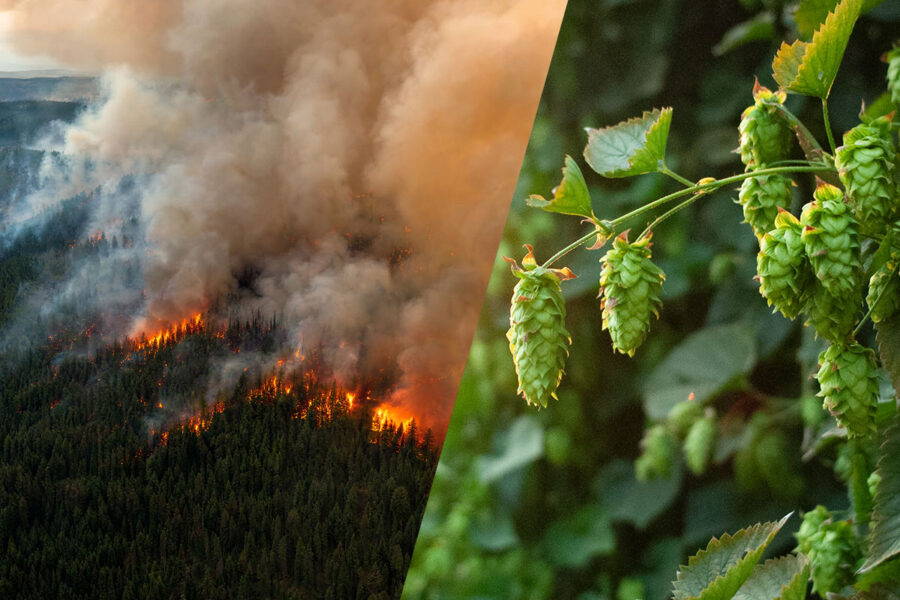

  • Korean International Beer Expo in Seoul, South Korea (April 11–13): The EDP looks forward to its return to the Korean International Beer Expo (KIBEX) in Seoul, South Korea. In conjunction with the USDA in Korea, the EDP will organize booth space to exhibit member beer already in the market and meet with importers for breweries seeking market representation. Trade mission travel applications conclude on Feb. 9, with beer due at the West Coast consolidation point by March 8.
  • Australian International Beer Awards (Registration Jan. 30–March 8, Judging May 2024): Entry fees for up to three beers and a consolidated airfreight shipment to Australia for all EDP members will be covered by the program.

Brewers Association Supports Credit Card Competition Act

woman paying tab in brewer with credit card

The Brewers Association (BA), along with over 200 national and state trade associations, sent a letter to Congress asking them to support S. 1838/H.R. 3881, the Credit Card Competition Act, bipartisan legislation lead by Senators Roger Marshall (R-Kan.) and Dick Durbin (D-Ill.) and Representatives Lance Gooden (R-Texas-5) and Zoe Lofgren (D-Calif.-18). The Credit Card Competition Act would require the largest credit card issuing financial institutions in the country to enable at least two unaffiliated credit card networks to be used to process credit card transactions.

The Credit Card Competition Act would require that credit cards issued by the nation’s largest banks be enabled to be processed over at least two unaffiliated networks—Visa or Mastercard plus an independent network. Domestic credit card networks like American Express or Discover could also be the second network, but not networks supported by foreign governments like China’s Union Pay. Merchants would be allowed to choose which network to use.

If passed, networks would have to compete to offer the best pricing, security, and service. As written, this legislation would apply only to financial institutions with $100 billion or more in assets—fewer than three dozen institutions nationwide but 90% of Visa and Mastercard credit card volume—and would have no impact whatsoever on small community banks or small credit unions.

Small breweries, especially taprooms and brewpubs, have seen a major increase in credit and debit card transactions and have been impacted by the growing fees. Accepting credit and debit cards is an important and necessary part of running a brewery and giving customers a convenient way to purchase the product. Like many other small businesses, these fees make up a large portion of a brewery’s expenses.

U.S. merchants and consumers pay more than other countries. Average credit card swipe fees in European countries are 0.3% compared to the average rates in the U.S. of around 1.8%. The Credit Card Competition Act and Federal Reserve’s suggested percentage changes would be a good start towards bringing the U.S. more in line with reasonable credit and debit card fees. The BA supports those efforts and will continue to advocate for passage of the legislation.

New Jersey Governor Phil Murphy Signs Liquor Modernization Legislation Into Law

beer in brewery with B.A. logo and new jersey brewers guild association logos

Governor Phil Murphy (R-N.J.) signed Bill S4265 / A5912 into law on January 16, signaling a new era of liquor enforcement in the Garden State and ending the threat of draconian restrictions on small and independent craft breweries that have loomed over the industry for years.

The Brewers Association (BA) was honored to help the Brewers Guild of New Jersey (BGNJ) and New Jersey Brewers Association (NJBA) in this effort. BA grassroots efforts helped prompt more than 9,000 supporters to send an astounding 35,698 emails to assembly members and senators urging them to support the bills. Another 1,482 supporters sent 4,426 messages to Governor Murphy to sign the bill, seeking relief on behalf of the breweries they know and love in their communities.

While the new law will have an impact across segments of the beverage alcohol industry, for brewers the results will be felt immediately by permanently setting aside restrictions on the books that have stifled small producers, hampering their ability to compete against burgeoning industries in neighboring states. Those restrictions would have severely curtailed New Jersey brewers’ ability to entertain customers, hold special events, and otherwise make full use of their breweries. The law also eliminates the long-standing burden that required limited breweries to provide tours of the premises to patrons, while also allowing them to:

  • Offer snacks and other non-alcoholic beverages;
  • Collaborate with outside vendors including food trucks;
  • Host unlimited onsite events and private parties, including birthdays, weddings, anniversaries, and civic and political functions;
  • Host up to 25 offsite special events; and
  • Participate in up to 25 events hosted by the holder of a social affairs permit.

The new law increases the number of barrels that brewpubs may manufacture per year from 10,000 to 300,000 and allows this segment of license holders to directly sell and distribute 50% of the beer produced on premises in each year to retailers, rather than having to rely solely on wholesalers. It also establishes a new farm-brewery license that would permit the licensee to produce beer for retail sale to consumers for consumption off the licensed premises.

“Clarifying the rights and privileges afforded to craft breweries in our state will give our industry a stronger foundation to operate on moving forward. The legislation allows all state craft beverage manufacturers more opportunities to deliver both the unique products and experiences our customers deserve in our tasting rooms and throughout our communities,” said Eric Orlando, executive director BGNJ. “Governor Murphy’s approval will most certainly set New Jersey’s craft beer industry on a positive trajectory for years to come and shows the state’s commitment towards embracing the ingenuity and local pride which are at the core of every craft brewery which calls the Garden State home.”

New Jersey is just one state where the BA is working with the state’s brewer’s organization and membership to change laws and regulations to benefit small and independent brewers.

Non-Alcohol Beer on Draught – Is It Safe?

Two smiling women clinking glasses of beer at a bar.

Increased consumer interest in non-alcohol beer in the United States can potentially give craft brewers a needed boost. The opportunity exists for craft brewers to expand their product line and increase sales and profits. That said, producing and serving non-alcohol beer is inherently different from traditional alcohol containing styles craft brewers are accustomed to brewing. The absence of alcohol in non-alcohol beer raises different regulatory, production, and public health and safety concerns that brewers must be aware of when adding these products to their portfolio.

The protection that alcohol provides beer that limits the survival and growth of pathogenic bacteria is well known and documented. However, little scientific research has been published on the growth and survival of pathogens in non-alcohol beer. A “food safe” non-alcohol beer can be produced at the brewery for packaging in a can or bottle through pasteurization. However, in keg, non-alcohol beer moving through the three-tier system is subject to circumstances beyond the brewer’s control, such as elevated temperatures during transportation and storage, or being served from a poorly maintained long draw draught system. These and other pathways such as a contaminated food product stored in beer service areas, can possibly introduce contamination and/or stimulate bacterial growth with potentially human harming consequences.

A recently published “challenge study” conducted by researchers at Cornell University found that the pathogenic bacteria Escherichia coli (E. coli) and Salmonella enterica can survive and grow at higher rates in non-alcohol beer under certain conditions. This study confirms other study results, indicating low and non-alcohol beers are susceptible to pathogens. After examining available evidence, the Brewers Association (BA) does not believe that sufficient evidence exists to understand the potential risk of serving non-alcohol beer on draught. Similarly, the BA does not believe there is sufficient knowledge or experience to recommend best practices that would guarantee the safety of the product during on-premise draught retail sales.

The potential consequences stemming from a foodborne pathogen contaminating non-alcohol beer are not the same as those of a beer that is compromised by non-pathogenic “beer spoilers” that impact the quality of a beer. A non-alcohol beer on draught that contains pathogens could result in illness or death of consumers from foodborne pathogens and reputational risk and business losses for an individual brewery.

The BA will continue to consult and work with subject matter experts and members of the academic community and industry in the interest of increasing the scientific knowledge addressing the growth of pathogens in non-alcohol beer while seeking to identify best practices that will ensure public safety. Brewers should understand the food safety risks involved with producing and serving non-alcohol beer in all package types, particularly draught beer, when considering adding non-alcohol beer to their portfolio.

For more in-depth information, refer to Non-Alcohol Beer on Draught: Risks, Considerations, and Resources.

Federal Antitrust Regulators Publish Revised Merger Guidelines

FTC logo over image on brewery tanks

Last month, federal antitrust regulators published a final version of their revised Merger Guidelines to inform their future enforcement efforts aimed at protecting fair competition in the U.S. economy. The Brewers Association (BA) submitted comments on the first draft of the revised guidelines in September. Those comments responded favorably to the proposed changes, and the BA is pleased that the final guidelines adhere to the more pro-competition direction reflected in the earlier draft.

Antitrust law, known as competition law in much of the world, seeks to protect consumers and the economy by, among other things, blocking or modifying proposed mergers and acquisitions that could reduce competition. While not the law, the Merger Guidelines articulate the views of the two agencies in charge of federal antitrust enforcement—the Federal Trade Commission (FTC) and the Antitrust Division of the Department of Justice (DOJ).

Small and independent brewers frequently find themselves as “minnows” in an economy increasingly dominated by giant corporate “whales.” Consolidation at the supplier tier makes beer one of the most concentrated manufacturing sectors in the U.S. Consolidation at the wholesale tier has resulted in most geographic territories being served by just two beer wholesalers capable of distributing to most retail accounts in a given territory. Consolidation at the retail tier has seen the rise of bigger and bigger “big box” and grocery chains with massive purchasing power and market share. More rigorous antitrust enforcement promises to reverse or at least slow the trend toward consolidation, giving small businesses a greater ability to compete and thrive.

The revised Merger Guidelines reflect the current administration’s more aggressive stance toward antitrust enforcement. Among other things, the revised guidelines articulate new theories for when and how a proposed transaction may harm competition, reduce the threshold size of transactions that the FTC and DOJ may “infer” (the original draft used the term “presume”) competitive harm, and recommend more scrutiny of proposed “vertical” transactions (e.g., those involving a supplier of goods and a downstream customer). In summary, the revisions give the FTC and DOJ more flexibility and leeway in challenging proposed transactions that would not have previously prompted antitrust scrutiny. The BA believes that more aggressive enforcement can help protect U.S. consumers and the ability of small and independent brewers to reach those consumers.

It is important to put the potential impact of the Merger Guidelines into a larger legal context. As noted, the guidelines are not the law but represent federal agencies’ aspirational enforcement posture toward future transactions. Courts can and sometimes do reject FTC or DOJ enforcement actions, and whether courts will embrace the revised guidelines’ more aggressive theories remains to be seen. In addition, while the revised guidelines give the FTC and DOJ enforcers more flexibility to challenge proposed transactions, the agencies do not have unlimited resources and must pick and choose what transactions to challenge. Finally, some of the approaches articulated in the revised guidelines depart from a roughly 40-year consensus on how to interpret and enforce the antitrust laws. As such, a change in administration could see federal agencies abandon the more aggressive theories of the revised guidelines.

The BA will continue to advocate for rigorous enforcement of antitrust laws so that small and independent brewers can compete in the market. We believe that the revised guidelines, while not a cure-all, will lead over time to more competition for the benefit of small brewers and the consumers of their products.

2024 Could Be Another Tumultuous Year for Congress

rows of congress seats in house chamber

2023 and the first legislative session of the 118th Congress is coming to a close. The House of Representatives has already departed, and the Senate is expected to follow this week, ending a tumultuous and historic year for the U.S. Congress. Jokingly referred to by some as the “(really) do nothing Congress,” this legislature was able to pass key legislation to raise the debt ceiling and avoid a government shutdown but not much else.

The shutdown was only averted due to two continuing resolutions, the last of which separated when agencies would run out of funding. Programs like transportation, veterans’ benefits, the Food and Drug Administration, water, energy, and housing and urban development programs will receive funding until Jan. 19, 2024. Other federal programs including the Department of Treasury and the Alcohol and Tobacco Tax and Trade Bureau (TTB) will be funded through Feb. 2, 2024.

Passing the budget is already a big ask, but throw in border security, immigration, and funding for Ukraine and other wars, and it becomes even more difficult. 2024 is also an election year, making large pieces of legislation campaign issues. To date, 35 members of Congress have announced that they aren’t seeking re-election, with some members even leaving at the end of the year, making the slim majority in the House even smaller.

All the must-pass issues combined with an election year could slow everything down, or worse cause a government shutdown which would have a negative impact on small and independent brewers. This makes the work that the Brewers Association (BA) does in Washington, D.C., even more critical. We will continue to advocate for legislation that improves the day-to-date operations of breweries and our supplier partners.

Issues of focus include:

  • Passing the 2024 fiscal year budget
  • Credit Card Competition Act
  • American Innovation and Research and Development Competitiveness Act
  • USPS Shipping Equity Act

The BA will advocate on your behalf and keep breweries informed about the legislative issues that could impact them, positively or negatively, in 2024.

The American Craft Beer Experience Takes Tokyo by Storm

american craft beer experience participants posing in front of sign in tokyo

Japan, renowned for its appreciation of high-quality and flavorful food and beverages, has become a key export destination for American craft brewers. In fact, more Brewers Association (BA) member breweries export to Japan than any other foreign market.

As part of its efforts to drive international awareness and sales opportunities for U.S. beer, the BA Export Development Program (EDP) conducted the seventh edition of the American Craft Beer Experience Festival (ACBE), in Tokyo, Japan November 10-12, 2023.

The ACBE returned to Tokyo with a bang, featuring a new third session on Friday evening. Over the three days, more than 5,000 beer lovers visited to experience the 40 American craft breweries featured at the outdoor venue on Tokyo Bay. The event, executed in collaboration with a committee of six importers, represents a robust network of trade members actively working with the BA to elevate the volume of quality American craft beer shipped to Japan. Brewers who were not represented by an importer were featured at the BA’s new-to-market booth.

Several U.S. brewery representatives accompanied the EDP team and traveled to Japan to participate in a trade mission surrounding the festival. Attendance included staff from 903 Brewers, East Brother Beer Company, Heavy Riff Brewing Company, Maui Brewing Company, Migration Brewing Co., Sierra Nevada Brewing Company, Paradox Brewery, The Bruery, and Upslope Brewing Company. Prior to the festival, these representatives engaged in market visits around Tokyo aimed at deepening their understanding of the Japanese beer market and the specific locations where imported craft beers thrive.

To support and amplify the festival objectives, the BA invested in a social media campaign to engage Japanese craft beer drinkers. During the campaign, www.uscraftbeer.jp served as the foundation for telling the story of American craft beer, the brewers that make it, and the people who inspire it. The most popular feature was the directory of breweries and their beers available in the Japanese market. From discovering the history of a brewery’s origins to learning a beer’s style metrics and where to buy it in Japan, the campaign website supplied Japanese consumers with an outlet to familiarize themselves with their favorite brands.

As the BA reflects on the success of the 2023 ACBE, plans are already underway for the 2024 edition. The EDP’s commitment to the Japanese market extends beyond the festival, encompassing social media marketing, coverage of member entry fees in the Japan International Beer Cup, and domestic trade missions inviting importers to attend the Craft Brewers Conference® and the Great American Beer Festival®.

New Member Benefit: Share Your News on the Brewers Association Website

barley next to beer in a tulip glass

Publish your press releases and company updates for the world to see

Start spreading the news!

Today the Brewers Association (BA) is rolling out a new benefit for all members: the ability to publish news articles and press releases on the BA website. Submissions will be visible on the homepage, as well as in the Member News archive, where they’ll live for 12 months.

Reach Your Target Audience

The BA website averaged over 205,500 visits per month in 2023 and draws viewers from all areas of the industry—brewers, suppliers, distributors, retailers, investors, educators—as well as local and national media reps. It’s the perfect place to spread the word and generate interest in your business.

What kind of news can you share on the website? All kinds! To get the juices flowing, here’s an incomplete list of newsworthy items you might want to broadcast:

  • Grand openings
  • Product launches
  • Collaborations
  • Special events
  • Charitable activities
  • Company milestones
  • New locations
  • New hires
  • Legislative priorities
  • Marketing campaigns
  • Holiday promotions
  • Seasonal tappings
  • Technological breakthroughs
  • Employee recognition
  • Community fundraisers
  • Anniversaries
  • New service offerings
  • Rebranding announcements
  • Business partnerships
  • Territory expansions
  • Local advocacy efforts
  • Customer appreciation
  • Acquisitions
  • Grassroots activism
  • And more!

What Else Should I Know?

Include post title, contact information, and link to your website. The recommended word count for a press release is 300-500 words.

Double check before you publish! Please be mindful that submissions will be posted as-is and cannot be edited once live.

The BA reserves the right to remove the post if it determines the material is deemed inappropriate and/or in violation of the Brewers Association Code of Conduct.

Breweries Entitled to Claims in Visa/Mastercard Class Action Lawsuit

two women paying at point of sale in brewery taproom

A $5.5 billion class action settlement involving Visa and Mastercard is underway. If your brewery accepts either of these card types and was operating between January 2004 and January 2019, you may be entitled to a claim.

Filing is underway, and claim forms will be mailed to businesses that request them through January. The attached PDF includes a QR code and a link with more information on filing independently. Filing on behalf of your business ensures that you get the most of your claim, rather than paying a fee to file through a third party.

Additional frequently asked questions and details on submitting a claim are located on the official claim site.

How American Craft Beer Changed the World: A U.S. and U.K. Collaboration Brewing Project

collage of four american craft beers being made

Collaboration brewing has become a hallmark of American craft brewing culture. Diverging from the conventional competitive approach found in most industries, collaborative efforts in brewing have become a dynamic platform to discover new ingredients and brewing techniques, create compelling narratives in marketing, and foster a sense of community within the ever-evolving world of craft beer. Even outside one’s local brewing network, collaboration brewing has become an effective tactic for breweries looking to build brand recognition from afar.

In August 2023, the Brewers Association’s Export Development Program embarked on a trade mission to the United Kingdom to heighten awareness and grow sales opportunities for American craft brewers. Anchored by a presence at the London Craft Beer Festival, the trade mission was complemented by a series of promotional activities including a cross-continental collaboration brewing project. Seven brewers from the United States were paired with counterparts in London with one prompt: create a beer influenced by the American craft beer industry. The endeavor was captured by the award-winning YouTube group, The Craft Beer Channel, and released as a two-part series.

Part one takes us behind the scenes of brew day, the stories of the people behind them, and the beers they chose to brew.

In the second episode, our hosts review each of the finished products and discuss the wider impact of American craft brewing around the world.

The beers from this year’s collaboration project can be found in the participating London brewery tasting rooms while supplies last.

The work of the Brewers Association (BA) Export Development Program (EDP) is made possible by grants from the United States Department of Agriculture. The BA remains steadfast in its mission to fortify trade relationships, enhance media visibility, and elevate consumer awareness of American craft beer in the U.K. These endeavors encompass active participation in international trade and consumer festivals, securing U.S. craft beer-oriented speaking slots at conferences, supporting retail promotions to drive sales, and undertaking media campaigns. Through these efforts, the BA EDP is poised to continue propelling the demand for American craft beer, not only in the U.K. but throughout Europe and beyond.

New Jersey: New Recycled Content Requirements Take Effect in January 2024

row of uncapped bottles on bottling line

Legislation signed into law in January 2022 established post-consumer recycled content requirements for rigid plastic containers, glass containers, paper and plastic carryout bags, and plastic trash bags sold or offered for sale in the state by a manufacturer. Defined standards for all regulated containers and packaging products become effective on Jan. 18, 2024.

Brewers would likely qualify as manufacturers under the second, and possibly third, section of the following definition if packaging in glass bottles. Notably, aluminum containers are not specified as subject to the provisions of the law.

Manufacturers that must comply with these new requirements for post-consumer recycled content are defined as:

  1. A person that produces or generates a rigid plastic container, paper carryout bag, plastic carryout bag, or plastic trash bag that does not contain a product and that is sold or offered for sale in the state;
  2. A person who is the brand owner of a product that is sold or offered for sale in the state and that is packaged in a rigid plastic container, plastic beverage container, or glass container unless the brand owner identifies a licensee who agrees to accept responsibility under this act and the licensee informs the department in writing of the agreement; or
  3. In the absence of a person meeting the criteria in (1) or (2) of this definition over whom the state may exercise jurisdiction, a person who imports or distributes a product into or within the state that is sold or offered for sale in the state and that is packaged in a rigid plastic container, plastic beverage container, or glass container.

Significantly, the definition of “manufacturer” expressly excludes a person who, at a single physical location, produces, packages, and sells a product directly to a consumer at retail. This may include a grocery store, restaurant, bar, cafeteria, café, food truck, food cart, or similar establishment. Brewers with a retail-focused business model should consider seeking counsel or guidance from the state on whether the exclusion would apply to their specific business.

Manufacturers covered by the new law must register with the state’s Department of Environmental Protection (DEP) and pay an annual registration fee of $1,000. A manufacturer who demonstrates to the DEP that their gross revenue is below $5,000,000 would be exempt from paying this fee.

Finally, the law provides a process for requesting a waiver from the post-consumer recycled content requirements under four specific conditions (enumerated in the fact sheet linked below).

For more information on the requirements of the new law and on who must comply, please see the New Jersey DEP’s fact sheet.

The 2023 Year in Beer

2023 Year in Beer

Challenges continue in a mature and competitive market

Boulder, Colo. — As 2023 draws to a close, the Brewers Association—the not-for-profit trade association dedicated to small and independent American craft brewers—recaps a year that proved challenging for many small and independent brewers facing a mature, competitive marketplace. Its midyear survey indicated a production dip, with all signs pointing to production being down in 2023, the first time outside of a unique 2020 that independent brewers have seen such a decline. Craft’s challenges come in the context of a slow-growth environment for all beer. Pricing, demographics, and marketing/branding continue to be factors in beer’s continued share loss within beverage alcohol.

“While many individual businesses are struggling, there is good news in the continued overall popularity of the category. Yes, things are more challenging, but independent brewers still sell more than one out of eight beers in the United States; beer drinkers spend roughly one out of four of their beer dollars on a beer from a small and independent brewer; and the industry remains a source of jobs and community across the country,” said Bart Watson, chief economist, Brewers Association.

Federally and on the state level, the Brewers Association continued its work to ensure small brewers have equitable access to markets, fair tax rates, and sensible regulations. The Brewers Association prioritized working closely with state guilds nationwide to modernize outdated laws and regulations, with efforts supporting shipping craft beer directly to consumers, beer franchise law reform, and self-distribution authorization for small and independent craft brewers.

“While the Brewers Association, along with state guilds, will continue to fight for additional market access in areas such as direct-to-consumer shipping, many of craft’s current challenges will require new strategies to reach new and existing customers in new occasions with new flavors and innovations,” said Watson. “To grow in 2024, small brewers can work to take share within the same pie or grow the pie in new ways.”

Supply chain issues moderated somewhat in 2023, but climate change and persisting disruptions challenged brewers throughout the year. Climatic stresses affected the two primary agricultural inputs in brewing: barley and hops. The 2023 North American barley harvest was larger than in 2022 but still below the five-year average. Barley quality issues persisted, particularly in the Canadian prairie provinces and parts of Montana, where precipitation remained below average and temperatures stayed above normal. In the U.S., hop acreage strung for harvest decreased due to the large volume of hops in inventory, but growing conditions produced above-average yields in most varieties. Climatic conditions continued to be challenging in Europe, with the quantity of hops harvested remaining well below average. The supply of CO2 stabilized somewhat, but spot shortages continued to affect some regions.

View the complete 2023 Year in Beer report.

For a deeper dive into 2023 and predictions for 2024, Brewers Association members are invited to attend the “Ten Points and Predictions for 2024” webinar on Thursday, Dec. 14, at 10:00 a.m. MT with chief economist Bart Watson.

Brewers Association Supports Ohio Craft Brewers’ Push for Franchise Law Reform

warehouse of packaged beer and kegs with brewers association and ohio craft brewers association logos

This week, Ohio’s House Commerce and Labor Committee heard proponent testimony on House Bill 306. Led by the Ohio Craft Brewers Association (OCBA), this effort would exempt manufacturers producing less than 250,000 barrels of beer annually from the Ohio Alcohol Franchise Law, allowing the state’s craft brewers more mobility in the marketplace.

The Brewers Association was asked to submit written testimony for this hearing, and that is shared below.

We thank the bill sponsors and the efforts put forth by the OCBA to get this hearing scheduled and to share our testimony with lawmakers in Columbus.


Members of the Ohio House Commerce & Labor Committee: 

I write today on behalf of the Brewers Association, the national trade association representing America’s small and independent brewers to express our support for House Bill 306, a bill that would reform archaic franchise law and help Ohio’s locally owned and operated brewers continue to grow and thrive.

It is fitting that this hearing has been scheduled for today, Dec. 5, as it happens to be the 90th anniversary of the repeal of prohibition in the United States. We mention this because our friends in the middle tier of alcohol beverage industry will surely insinuate that franchise protections grew directly out of the post-Prohibition era. In truth, Ohio’s successful post-Prohibition regulatory system did not feature a franchise law until 1974, when the threat of one of the few big beer makers pulling out of your distribution house was real and the threat was existential. Today, wholesalers have consolidated while small brewers have proliferated, resulting in the inverse size imbalance to the one that prompted the legislature to first pass the franchise law.

Existing franchise law makes exiting or not renewing a contract nearly impossible. When a brewery agrees to work with a wholesaler to sell their product it is a forever partnership with the legal advantages falling on the wholesaler’s side. There is little recourse for a brewery that wants to work with a different distributor, even if the language of the contract should allow a change. Small brewers must either beg a wholesaler to voluntarily sell the brewer’s distribution rights to another wholesaler or proceed with a time- and capital-consuming litigation that almost no small brewer can afford, at the end of which they may still end up buying the right to their own product back at a price determined solely by the wholesaler. H.B. 306 would level the playing field by giving some negotiating power to small and independent craft brewers.

Things have changed significantly over the course of nearly five decades. There are now more than 9,500 small and independent craft brewers in the United States, with 420 of those making beer in Ohio. Conversely, over the past 10 years the industry has seen massive consolidation in the wholesaler tier, with giant regional and national corporations buying out small houses, leaving small brewers with fewer choices and little bargaining power. Given the size and diversity of today’s wholesalers, a small brewer moving distribution from one wholesaler to another would not threaten the wholesaler losing the brand, as they have dozens of other brands, including those of the big multinationals, to continue selling.

Right here in Ohio, the wholesalers trumpet these acquisitions and consolidations, as encapsulated perfectly in February of this year when Superior Beverage Group purchased Newark, Ohio-based Brown Distributing, creating a 20-million-case wholesaler in the Buckeye State. “Superior Beverage Group turned 100 [in] September [2022], and has made 50 acquisitions in that time.” Fewer wholesalers means fewer trucks, fewer sales reps, fewer opportunities for small and independent craft breweries, locked into their contracts even when a sale like this is made. 

Simply put, H.B. 306 exempts small brewers (under 250,000 barrels of total production annually) from the Ohio beer franchise law. To put this in perspective, Superior Beverage distributes 20 million cases a year in the state, which is about three million more than all of the craft beer produced in Ohio combined. Even the largest craft brewers in Superior’s portfolio make up a small fraction of their overall sales and revenue. H.B. 306 is the single most equitable solution to the issue of outsized wholesaler-tier power in these relationships. Should this important legislation pass, brewers can negotiate enforceable contract provisions that give them some control over the distribution of their products.

Ohio wouldn’t be the first to make these needed reforms. Fourteen other states have already passed franchise laws to give relief to small brewers without jeopardizing the wholesale or retail tiers. New York enacted a law in 2012 that gave relief to brewers making less than 300,000 barrels per year. According to Brewers Association Chief Economist Bart Watson, not only did beer distribution jobs in New York not decline after the legislation passed, they grew.

Craft Brewers in Wisconsin Earn Hard-Fought Victory

colorful beers in a circle with BA logo and Wisconsin guild logo

Wisconsin SB 268 To Be Signed by Governor Tony Evers on Dec. 6

The state of Wisconsin in November passed important legislation that included key items for the state’s craft brewers, the result of nearly a decade of negotiations with every segment of the beverage alcohol industry. Governor Tony Evers will sign the bill into law on Dec. 6 in his office.

Senate Bill 268 covered a lot of ground, allowing brewers up to four full-service retail locations (including their production facility) from which they can sell products to consumers, dependent on their annual production. This incentivizes growth, product introduction into other regions of the state, and extends tourism dollars for Wisconsin.

This bill also provides more clarity by aligning state law with federal law around the various types of contract brewing operations, often a gateway to successful brewing businesses for startup brewers before it makes financial sense to expend for a brick-and-mortar location. This change mirrors federal standards and will make an immediate impact for Wisconsin brewers.

“Codifying existing trade practice to match federal code was a key component to making sure Wisconsin’s brewers weren’t held back by state law from competing in and out of state,” said Will Glass, president of the Wisconsin Brewers Guild. “After years of Wisconsin’s brewers systematically losing our rights and privileges, we’re excited to deliver significant reforms to Wisconsin’s system of alcohol regulation.”

Finally, this bill includes various changes to improve alcoholic beverage regulations in the state, strengthening the existing system of beverage alcohol control with a new division that will be focused full time on promoting and regulating Wisconsin beer, wine, and spirits.

Wisconsin, seventh in the nation in the size of craft brewing operations, with over one million barrels of beer made by small, independent brewers, will benefit from the passage of this bill. This commonsense legislation will help brewers innovate and expand to build a better status quo for all.

“It’s been a hard-fought effort working with industry members with whom we don’t see eye to eye,” said Glass, “But we were able to put many differences aside to accomplish compromise. We look forward to seeing our members flourish in an ever-changing marketplace with the freedom to give their customers what they want.”

“The Brewers Association worked closely with the Wisconsin Brewers Guild to lobby and testify for passage of this bill and we were honored to lend a hand,” said Sam DeWitt, state government affairs manager for the Brewers Association. “We’re grateful for the work by the state legislature to get this done, and thankful for Governor Evers’ dedication to small and independent businesses in Wisconsin.”

Fawn Weaver to Keynote 2024 Craft Brewers Conference

Fawn Weaver, founder and CEO of Uncle Nearest Premium Whiskey.

Founder and CEO of Uncle Nearest Premium Whiskey to address the nation’s largest beverage alcohol conference

Boulder, Colo. • The Brewers Association, the not-for-profit trade group dedicated to promoting and protecting America’s small and independent craft brewers, today announced Fawn Weaver, business entrepreneur and founder and CEO of Uncle Nearest Premium Whiskey, as the keynote speaker at its upcoming Craft Brewers Conference® & BrewExpo America® (CBC®) in Las Vegas, Nevada, from April 21-24, 2024.

“Fawn Weaver has been a dynamic force in the entrepreneurial business world for over 25 years, smashing barriers and setting new standards wherever she goes—including in the distilling industry. We are thrilled to have her share her expertise with us at the Craft Brewers Conference this April,” said Ann Obenchain, vice president of marketing and communications at the Brewers Association. “Brewers are increasingly looking to find growth in new ways to meet changing consumer preferences and demographics. Ms. Weaver’s presentation will undoubtedly offer timely, thought-provoking, and inspiring insights from a different small producer lens.”

New York Times bestselling author and groundbreaking business mogul Fawn Weaver is an expert in crafting compelling stories; as a writer, powerhouse investor, and values-driven leader. Weaver leverages 25 years of experience as an entrepreneur, from founding and serving as CEO of Grant Sidney, Inc., a privately held investment company, to launching the fastest-growing whiskey brand in U.S. history, Uncle Nearest, Inc. The brand boasts significant accolades as the most awarded American whiskey, including bourbon, of 2019, 2020, and 2021, sweeping 16 of the top 18 award competitions in the world. Weaver also built the $50M Uncle Nearest Venture Fund, investing in minority-founded, -owned, and -led brands with the greatest potential to grow into legacy brands. A multi-hyphenate and popular TED speaker and guest on NPR’s “How I Built This,” Weaver is a highly sought-after voice in conversations about accelerating growth without sacrificing values, inclusive organizational strategy, and leadership, making an impact with audiences of all kinds.

Weaver’s keynote address, “The Story of Uncle Nearest and What Craft Distillers and Brewers Have in Common,” will shine a light on her journey to becoming the first non-celebrity Black American woman to build an independent company valued at over $1 billion from the ground up, in just four years.

In addition to Weaver’s keynote at the nation’s largest gathering for beverage alcohol producers, experts will present more than 60 educational seminars spanning eight areas critical to running a successful business: Business & Leadership, Export Development, Government Affairs & Legal, Production & Operations, Quality & Ingredients, Sales & Marketing, Taprooms & Brewpubs, and THRIVE. At the BrewExpo America trade show, more than 650 exhibitors will display the latest and greatest product innovations, supplies, and services for the beverage alcohol industry. The conference culminates with the awards ceremony for the World Beer Cup®, the world’s largest and most prestigious beer competition.

Super early bird registration for the 2024 Craft Brewers Conference & BrewExpo America opens Tuesday, December 5.

Media interested in attending and covering the 2024 Craft Brewers Conference & BrewExpo America and World Beer Cup must apply for media credentials beginning December 5, 2023. Please direct any media questions to brewerspr@backbone.media.

Contact: Meg Papanastassiou (on behalf of the Brewers Association) 970-963-4873 ext. 1212.


ba logo

About the Brewers Association

The Brewers Association (BA) is the not-for-profit trade organization representing more than 9,300 small and independent American brewers, their beverages, and the community of craft beer enthusiasts. The BA champions the independent craft brewer seal—a trusted symbol that helps consumers identify beer brewed by small and independent producers.

The BA organizes some of the industry’s most influential events, including the World Beer Cup®, Great American Beer Festival®, Craft Brewers Conference® & BrewExpo America®, and American Craft Beer Week®. It also publishes The New Brewer® and through Brewers Publications®, remains the country’s leading publisher of brewing literature. Beer lovers can explore the world of craft beer at CraftBeer.com and follow the BA on Facebook, Instagram, and LinkedIn. 

The Brewers Association is an equal opportunity employer and does not discriminate on the basis of race, color, national origin, gender, religion, age, disability, political beliefs, sexual orientation, or marital/familial status. The BA complies with provisions of Executive Order 13672 and the rules, regulations, and relevant orders of the Secretary of Labor.

Going For Gold! American Craft Beer Excels In European Beer Competitions

brussels beer challenge judging tables

American craft brewers performed strongly across two prestigious international European beer competitions this fall—Brussels Beer Challenge and European Beer Star—securing 58 medals in total.

Brussels Beer Challenge

The 12th edition of the Brussels Beer Challenge took place in Turnhout, Belgium over three days at the end of October 2023 and attracted 1,811 beers from 37 countries, judged by 92 independent beer experts. Participating beers were subdivided into categories based on origin, typology, and style, and then tasted.

Brewers Association (BA) Export Development Program (EDP) members were awarded 33 medals in total, eight more than last year. These included nine gold, 11 silver, and 13 bronze, including Breakside Brewery’s “Are You Afraid of the Dark” Imperial Stout aged in Apple Brandy Bourbon and Rye Whisky Barrels, which was voted “Best American Beer of the Competition.”

Brussels Beer Challenge Judges in actions

Breakside Brewery’s brewmaster Ben Edmunds says, “We were thrilled to learn that ‘Are You Afraid of the Dark?’ had been named Best American Beer in the Competition in addition to snagging a gold medal in its category. This win is a wonderful reward. We have been able to send beers to Brussels and the other international competitions before thanks to the support of the EDP. I know that these are extremely competitive events where the judge panels have different sensibilities than our peers and customers in the U.S. The diversity of entries is inspiring, and it is exciting to know that our beers are being evaluated side-by-side with many of the most iconic beers from Europe, Asia, and elsewhere. It is a great opportunity for us to get feedback from an expert audience with a distinctive perspective on world beers.”

Brewery Name of the beer Category Award
pFriem Family Brewers West Coast IPA Pale and Amber Ale: Pacific IPA Gold
River North Brewery Nightmare Fuel Flavored beer: Coffee Gold
River North Brewery Midnight Hike Flavored beer: Chocolate Gold
Belching Beaver Brewery Hazers Gonna Haze Hazy IPA Pale and Amber Ale: New England IPA Gold
Fremont Brewing Company Golden Lager: German-Style Pilsner Gold
Coronado Brewing Company Weekend Vibes IPA Pale and Amber Ale: American IPA (Higher than 6.5 ABV) Gold
Revision Brewing Company Coconut Pie Face Flavored beer: Field beer Gold
Breakside Brewery & Taproom Are You Afraid of the Dark? Flavored beer: Imperial Stout Barrel- or Wood-Aged Gold / Best Beer
New Glarus Brewing Company Enigma 23 Dark Ale: Oud Bruin (Flanders Brown Ale) Gold
Port City Brewing Company Port City Porter Stout or Porter: Porter Silver
Templin Family Brewing Templin Family Rauch Bier Flavored beer: Smoked Beer Silver
Quarter Celtic Brewpub Vienna Festbier Lager: Vienna Lager Silver
Stormcloud Brewing Company Rainmaker Ale Pale and Amber Ale: Belgian-Style – Spéciale Belge Silver
pFriem Family Brewers Druif Rouge Specialty Beer: Grape Ale Silver
pFriem Family Brewers Rum Barrel Aged Coconut Porter Flavored beer: Imperial Stout Barrel- or Wood-Aged Silver
Anderson Valley Brewing Co Black Rice Ale Specialty Beer: Low carb Silver
River North Brewery Father Time Specialty Beer: Barley Wine Silver
Boston Beer Company Samuel Adams Gold Rush Pale and Amber Ale: IPA Alcohol-Free/Low Silver
Fremont Brewing Company Rusty Nail 2022 Flavored beer: Wood- or Barrel-Aged Silver
Destihl Brewery Destihl DeadHead Tourbus Hazy IPA Pale and Amber Ale: New England IPA Silver
Templin Family Brewing Templin Family Fouder Brett Bier Specialty Beer: Brett Beer Bronze
No-Li Brewhouse Wrecking Ball Imperial Stout Stout or Porter: Russian Imperial Stout Bronze
Reuben’s Brews Robust Porter Stout or Porter: Porter Bronze
Wallenpaupack Brewing Company Hawley Hefeweizen Wheat: Weizen Bronze
The Virginia Beer Company Elbow Patches Stout or Porter: Export Stout Bronze
Quarter Celtic Brewpub Capri-Derhosen Specialty Beer: Specialty beer (Less than 7 ABV) Bronze
Maui Brewing Co. Big Swell IPA Pale and Amber Ale: Pacific IPA Bronze
Three Weavers Brewing Co Seafarer Pale and Amber Ale: Kölsch Bronze
Belching Beaver Brewery Peanut Butter Milk Stout Flavored beer: Field beer Bronze
Fremont Brewing Company Lush Pale and Amber Ale: American IPA (Higher than 6.5 ABV) Bronze
Boston Beer Company Samuel Adams OctoberFest Lager: German-Style Märzen Bronze
Mother Earth Brew Co Cruiser Pale Ale Pale and Amber Ale: American Pale Ale Bronze
New Glarus Brewing Company 30th Anniversary Dark Ale: Strong Dark Ale Bronze

European Beer Star

One of the most recognized beer competitions in the world, the European Beer Star Awards, is committed to the traditional European art of brewing. It recognizes high-quality, authentic beers that are genuine and distinctive and is limited to beer categories that originate in Europe.

This year’s competition took place for the 20th occasion in September 2023 in Nuremberg, Germany, and attracted 2,355 entries in 74 categories which were judged by 149 beer experts from 31 countries. Of these entries, 64.5% were international and 35.5% domestic. EDP members won 24 medals in total, including nine gold, eight silver, and eight bronze. View the full list of winners here.

Brewery Beer Category Award
Port City Brewing Company Downright Pilsner Bohemian-Style Pale Lager Gold
Firestone Walker Brewing Company Dad Bod Quad Belgian-Style Strong Dark Ale Gold
Taxman Brewing Company Qualified Belgian-Style Strong Dark Ale Silver
Taxman Brewing Company Deduction Belgian-Style Dubbel Gold
Allagash Brewing Co Allagash Tripel Belgian-Style Tripel Silver
Flying Dog Brewery Royal Crush Juicy IPA Fruit Beer Silver
Bruz Beers Oak Marionette with Peaches Wood And Barrel Aged Sour Beer Gold
Firestone Walker Brewing Company Frieky Bones Belgian-Style Geuze And Lambic Gold
New Glarus Brewing Company Vintage 2023 Belgian-Style Geuze And Lambic Bronze
No-Li Brewhouse Big Juicy New-Style Pale Ale Bronze
Wormtown Brewery Be Hoppy Traditional-Style India Pale Ale Bronze
Wren House Brewing Co Spellbinder Hazy India Pale Ale Gold
Hinterland Brewery Hinterland Rest In Paradise Imperial India Pale Ale Silber
No-Li Brewhouse Corner Coast English-Style Golden Ale Silver
Alaskan Brewing Company Alaskan Amber Red Ale Silver
Port City Brewing Company Port City Porter English-Style Porter Silver
River North Brewery Nightmare Fuel Flavoured Or Pastry Stout Silver
Deschutes Brewery The Abyss Imperial Stout Gold
49th State Brewing Smо̄k Franconian-Style Smoke Beer Bronze
River North Brewery Pumpkin Spice J. Marie Herb And Spice Beer Gold
The Virginia Beer Company Cool Inside Beer With Alternative Cereals Bronze
pFriem Family Brewers Bourbon Barrel Aged Imperial Stout Wood And Barrel Aged Strong Beer Gold
Olde Hickory Brewery Forest Hills Wood And Barrel Aged Strong Beer Bronze
Olde Hickory Brewery Hillcrest Ultra Strong Beer Silver
Athletic Brewing Company Cerveza Atletica New-Style Non-Alcoholic Lager Bronze

The EDP views international competitions as a key mechanism by which to generate publicity for the U.S. craft beer industry and assist EDP members with gaining attention and distribution for their brands in select target markets. Therefore, the EDP helps facilitate U.S. brewery participation and performance in select competitions by covering entry fees and consolidated airfreight shipment to judging sites.

panel of judges and beer taster glasses

Lotte Peplow, the BA’s American craft beer ambassador for Europe, adds, “The success of American craft beer at prestigious global beer competitions is a testimony to the skill, creativity, and all around excellence of America’s small and independent craft breweries, who continue to lead the field in quality, consistency, innovation, and style-diversity. Garnering 93 medals in total across three highly competitive international competitions is no easy feat and I’m incredibly proud of each and every one of them.”

Congratulations to all the award-winning breweries.

Brewers Association Petitions TTB for Further Formula Requirement Exemptions

hazy ipa in a tulip glass next to the BA logo

Last week, the Brewers Association (BA) submitted its latest petition to the Alcohol and Tobacco Tax and Trade Bureau (TTB) seeking exemption from formula requirements for specific ingredients used in the brewing of beer.

Since 2006, the BA has submitted four ingredient exemption petitions to TTB bringing the list of ingredients determined to be traditional, and therefore not subject to formula requirements, to eighty-eight. The BA’s 2021 petition and the latest submitted last week, both of which are pending review and action, potentially add another fifteen ingredients to that exempt list.

The exemption of nearly 100 ingredients represents significant time and cost savings for both small brewers and TTB personnel, and importantly allows brewers to brew innovative beers on their schedules without unnecessary regulatory review delays. For more information, access the current list of traditional ingredients.

USDA Announces New Investment in Export Market Development

crowd of craft beer enthusiasts at london beer event

The United States Department of Agriculture (USDA) has announced its decision to invest $1.3 billion from the Commodity Credit Corporation (CCC) for a new export promotion and foreign market development program—the Regional Agricultural Promotion Program (RAPP).

The funds come at the request of Senate Agriculture Committee chairwoman Senator Debbie Stabenow (D-Mich.) and Ranking Member Senator John Boozman (R-Ark.), who urged USDA to provide additional program funds in the absence of a new Farm Bill. U.S. Agricultural Export Development Council (USAEDC) members have been urging Congress to double funding for export programs in the next Farm Bill.

The Brewers Association (BA) applauds USDA and our congressional leaders for their support of increased export promotion support for U.S. products, including exported American craft beer.

The BA’s Export Development Program has been involved in export promotion since 2004 and utilizes these programs to assist U.S. breweries in identifying opportunities for international expansion and to support marketing initiatives that increase awareness of the quality of U.S. craft beer. Since the program’s inception, U.S. craft beer exports have grown more than 1,200%.

House of Representatives Elects New Speaker

Beer in front of US Capitol Building

After three weeks, multiple candidates, and numerous failed votes, the House of Representatives has elected Mike Johnson of Louisiana to serve as Speaker of the House. Johnson, the fourth nominee for speaker, won the gavel with 220 votes, with the full support of the Republicans in attendance.

This concludes the turmoil that started on October 3, when then-Speaker Kevin McCarthy (R-Calif.) lost a motion to vacate after passing a clean continuing resolution (CR) to avert a government shutdown. Rep. Patrick McHenry (R-N.C.) became Interim Speaker but was limited in power, officially only allowed to preside over the vote for the next Speaker.

Washinton, D.C. is eager for the House to get back to work. Congress has until November 17 to pass a 2024 fiscal year (FY) budget or another CR, or face a government shutdown. A government shutdown impacts the Alcohol and Tobacco Tax and Trade Bureau’s (TTB) ability to approve labels and formulas and provide brewers notices. It could also impact business loans needing Small Business Administration (SBA) approval.

The Brewers Association (BA) expects government funding to be a top priority of the new Speaker. BA staff is continuing to meet with congressional offices to advocate on behalf of our industry, including our appropriations requests of $154 million for the TTB 2024 FY budget and for United States Department of Agriculture, Agriculture Research Services (USDA-ARS) funding for hops and barley growers.

Just Published: 2023 Salary and Benefits Benchmarking Reports

2023 Salary and Benefits Benchmarking Report cover with brewery worker on canning line, can tops, and statistic graphics

The Brewers Association (BA) has recently posted updated human resources (HR) benchmarking data, including data on both benefits and salary statistics. This new data not only updates, but significantly expands previous benchmarking efforts. Many thanks to the Craft Beer HR Group for their assistance in this effort.

The two reports are compilations of members who responded to our surveys related to benefits and salary. Thanks to those members who filled it out. As with many areas of the BA, this is one area where we wouldn’t be able to do what we do without member participation. If you didn’t participate but find the data valuable, I hope you’ll consider participating in future years.

Although there are numerous sources of wage or benefits data available, the ability to survey solely small breweries makes this data unique, and hopefully uniquely valuable. While we cannot assure that those breweries who responded are representative, where possible we have segmented the results by size of brewery to better help you situate your company within these benchmarking results.

In addition, to help with localization, we have provided additional cost of living data (by state) in the salary report, as well as a more comprehensive set of wage and geography data from the Bureau of Labor Statistics, which members can download. Both of those resources are designed to help members as they consider how to localize the results from our national benchmarking.

If you have any questions of feedback about these reports, feel free to reach out to BA chief economist Bart Watson and BA human resources partner Holly Haslam.

Export Development Program News – October 2023

lotte peplow beer ambassador presenting on craft beer

American Craft Beer Ambassador to Europe Continues to Generate Media Coverage

Lotte Peplow, the Export Development Program’s (EDP) American craft beer ambassador to Europe, continues to generate solid media coverage for American craft breweries. In 2022, Lotte’s work resulted in 100 articles published with a total circulation of 10.9 million. This coverage reached eight European target markets.

2023 is proving to be another strong year for EDP media coverage. A few recent highlights include:

  • Beer Today (United Kingdom [U.K.]) – This piece covered an American craft beer pairing with smoked foods at a new London restaurant, Humo. Beer Today sees 100,000 visitors monthly.
  • Foodepedia (U.K.) – This site is a new media partner to the Brewers Association (BA) and covers the same Humo lunch for their 60,000 monthly readers.
  • The latest BA-funded Harris poll on craft beer consumption was picked up by a number of European publications including Beer Republic (Ireland), Restaurant Update (U.K.), Eat, Drink, Sleep (U.K.), and Beer Today.
  • The Brewers Journal (U.K.), among other media partners, covered the EDP’s participation at the London Craft Beer Festival.
  • An article written by Lotte on World Beer Cup judging was picked up by partners in India, Australia, and other markets.

These are just a sampling of recent results from the EDP’s media outreach efforts. More exciting coverage is on the way. Lotte has secured a commitment from the Campaign for Real Ale (CAMRA) to include three articles on beer and food pairing in their magazine, What’s Brewing. The magazine reaches 200,000 consumers. Articles will be published in three editions from September to October.

EDP Partners with the U.S. Small Business Administration and Virginia SBDC for Export Education

In June and July, the EDP partnered with the U.S. Small Business Administration (SBA) and the Virginia Small Business Development Center (SBDC) to educate craft brewers on export opportunities. Steve Parr, BA director of international relations, joined Chris Van Orden (Virginia SBDC), Dan Pische (SBA), and other invited guests for a three-part webinar series to discuss key considerations for international expansion.

Brewers of Europe Forum and Brewcon Speaking Engagements

beer ambassadors presenting at brewers of europe

Bob Pease, Brewers Association CEO, and Lotte Peplow, American craft beer Ambassador to Europe, attended the Brewers of Europe Forum in May in Prague, Czech Republic. Bob spoke at the event, which offered an excellent opportunity to expand awareness of American craft beer, and network within the larger European beer community. The speaking opportunity also provided a platform to steer a discussion on the future of craft beer in Europe from an American perspective. Bob made excellent contacts while at the conference with leading European importers, media attendees, European brewers associations, ingredient groups, and more.

Bob also recently returned from Brewcon in Australia where he presented on the state of the American craft beer industry. His attendance helped make connections with leading Australian media, craft brewers, and officials with the Independent Brewers Association of Australia.

Collaboration and speaking engagements at events like Brewcon and Brewers of Europe Forum keep the Brewers Association front and center as an industry leader for craft breweries.

EDP Hosts Inbound Trade Mission to Great American Beer Festival®

The Export Development Program recently completed its first-ever reverse trade mission of importers and other international trade contacts at the 2023 Great American Beer Festival (GABF®). Approximately 30 international visitors were part of this trade mission. Some were specifically invited by the EDP while others contacted us with independent plans to attend GABF. Countries represented include the United Arab Emirates, South Korea, the Dominican Republic, Thailand, Indonesia, Vietnam, India, Brazil, China, Japan, Colombia, Italy, the Czech Republic, and Taiwan. EDP members interested in meeting with these importers registered with the EDP and received contact information and instructions for meeting arrangements to take place surrounding GABF.

This inbound trade mission is an exciting expansion of the EDP’s efforts to bridge the gap between American craft brewers and qualified importers in markets around the world. EDP staff attended some of the one-on-one meetings to better understand the needs of both buyers and sellers as they seek mutually beneficial import opportunities. EDP staff will follow up with participants after six months to try to determine any new business results. If successful at fostering new business relationships, this will serve as a model for inbound trade missions to other BA events.

Meetings with U.S. Department of Agriculture Foreign Service Officials

In July, Steve Parr attended the U.S. Agriculture Export Development Council (USAEDC) Attaché Seminar in Virginia. This annual conference brings together U.S. agricultural trade associations that receive export promotion grant funds from the United States Department of Agriculture (USDA) with USDA grant administrators and officials from the Foreign Agricultural Service (FAS). FAS officials are typically stationed overseas at Embassy and Consular Posts in key U.S. trade partner markets. Steve arranged meetings with FAS personnel stationed in Japan, France, Taiwan, and the Netherlands—all EDP target markets. The meetings provided an opportunity for Steve to share EDP program plans for these markets and to seek assistance with importer connections, logistics, and media outreach where possible. FAS officials are important partners to the EDP in each target market and their ongoing support of EDP programming helps ensure continued funding for future initiatives.

U.S. Beer Wins at Australia International Beer Awards

Australia beer awards event

Australia’s largest international beer competition, the Australian International Beer Awards, was held in May. This year the competition celebrated its 30th anniversary, with a new record of 2,826 entries from over 400 breweries in 21 countries worldwide. Of those entries, U.S. beer excelled, bringing home 95 awards: 45 bronze medals, 31 silver medals, 17 gold medals, a bronze in Best Outer Packaging Design for Calicraft Brewing Co.’s Cool Kidz IPA, and the Champion Major Trophy for Best Non-Alcohol Beer for Boston Beer Company’s Samuel Adams Gold Rush. Events such as these provide excellent opportunities for U.S. craft brewers to showcase their products in important target markets around the world.

Congratulations to all of this year’s winners.

London Craft Beer Festival a Strong Anchor Point for U.S. Craft Beer

In August the EDP returned to London’s Craft Beer Festival, bringing with them a delegation of U.S. brewery representatives for a busy week of spreading awareness for American craft beer. The London Craft Beer Festival (LCBF) is one of the U.K.’s largest and most influential beer festivals and attracted over 17,000 attendees in 2023. The EDP presence at the festival centered around its booth, which featured more than 60 beers from 22 U.S. breweries. The booth was well attended throughout, with consumers, importers, and media alike enthusiastically sampling one of the most diverse offerings at the festival.

excited attendees at the Discover American Craft Beer booth at the 2023 London Craft Beer Festival

Preceding the festival, the EDP organized several key activities that helped maintain the high esteem surrounding U.S. craft beer in the U.K. First, the delegation kicked off the week’s activities with a curated beer and food pairing lunch at talk-of-the-town newcomer restaurant, Humo. Celebrating “beer and fire,” this trade and media-focused lunch invited the attendees to consider the similarities between the brewing process and cooking, where heat is added to carefully selected ingredients to highlight aromas, tastes, and smells—eventually arriving at an exceptionally high-quality result. This seven-course lunch was very well reviewed, with several excellent articles generated by influential media writers.

The following day, members of the delegation split up to attend collaboration brews all over the city with some of London’s best breweries. With styles ranging from a California Common to a strawberry and prickly pear Berliner Weisse, the teams developed some brews that are sure to be delicious. They will help raise the profile of these breweries within the U.K. craft beer scene—especially important as U.S. breweries attempt to gain a foothold in the market. The collab brews were documented by the Craft Beer Channel, which created an excellent documentary of our efforts in 2022. Stay tuned for the 2023 version, to be released in October, which will highlight LCBF as well!

All told, the slate of activities in London helped to boost the image of American craft beer in one of our most important export markets. Looking ahead, the EDP will continue to develop opportunities in the U.K. for member breweries, securing a strong foothold in a mature craft beer market.

Read more and explore photos from this recent American craft beer marketing initiative in the U.K.

EDP Returns to Swedish Beer and Whisky Festival in Stockholm

Sweden, long one of Europe’s most important markets for U.S. craft beer, continues to play an integral role in the export landscape. The EDP returned to Sweden in September 2023 to attend the Stockholm Beer and Whisky Festival (SBWF), which unites consumers and trade attendees for a strong showing of craft beer. This year, the festival is operating at a new venue, which is much more central and offers some excellent waterfront views. Having recently returned from the event, the EDP delegation will be evaluating this new venue, along with additional opportunities to promote U.S. craft beer in Sweden next year.

Craft beer enthusiasts at American craft beer booth in Stockholm

The festival was well attended, but the EDP booth was the star of the show. The EDP booth at SBWF featured nearly 50 different beers from 15 breweries and was one of the largest lineups at the festival. Further filling out the EDP schedule, the team held seven importer meetings and three consumer-oriented master classes, providing curated tasting opportunities for impactful parties within the Swedish craft beer system. Notably, the EDP met with Katarina Westman, beer purchaser for Systembolaget, and discussed the potential for growing American craft beer listings in the monopoly retailer.

Outside of the festival, the EDP team met with various Swedish industry personnel, discussing everything from market trends to opportunities for collaboration. As a mainstay of U.S. craft beer exports to Europe, Sweden is an essential market as the EDP team looks to stimulate increased exports of U.S. craft beer. Both through festivals and continued dialogue with key industry players, the EDP will continue to make an impact for American craft beer in Sweden.

Retail Promotions Return in the United Kingdom

As the EDP looks to stimulate continued expansion of U.S. craft beer exports, it has found noteworthy success with retail activations. Beginning in December of 2022 and continuing in the summer of 2023, cooperation with retail chain Home Bargains has linked consumers to a strong lineup of U.S. craft beers. The promotion, designed to coincide with the Fourth of July, was highly successful. Along with the first promotion in December, this recent iteration has helped to convince the retailer to add U.S. craft to its regular offerings, along with further integrating it into the mainstream beer culture in the U.K. It also serves as a strong template for replication in other markets, or with more English retailers. The EDP will look to continue this type of promotion in the future in the U.K. and elsewhere around the world.

Upcoming EDP Events This Fall

Though it has been a busy year to date, the EDP has a strong slate of events prepared for this Fall. Details are below, and stay tuned for further updates!

  • Advent Calendar Promotion in Europe: The EDP will be supporting an American craft beer Advent calendar promotion in the Netherlands, and elsewhere in Europe via e-commerce, featuring a number of member breweries.
  • American Craft Beer Experience in Mexico: The EDP is revising its programming for Mexico after several years of attendance at Cerveza Mexico. In October it will debut a buyer event on Oct. 11 at Foros Lomas in Mexico City, aimed at stimulating growth and retail connections for beers already present in the market.
  • American Craft Beer Experience Tokyo and Japan Trade Mission to take place Nov. 10-12: The EDP is pleased to be returning to Tokyo for its American Craft Beer Experience. Shipment registration closed on Oct. 2, and beer is due at the West Coast consolidation point by Oct. 13.
  • Japan International Beer Cup – Awards announced in early October: Consolidation has concluded and EDP member beers have arrived in Japan. Be on the lookout for results announcements in early October.
  • European Beer Star and Brussels Beer Challenge – Announced in November: Brussels Beer Challenge results are due to be announced on Nov. 20, with European Beer Star results following shortly thereafter on Nov. 29.

GLP-1s and Beer Consumption

Here in 2026, GLP-1s often appear prominently on the list of beer’s headwinds. It’s easy to see why: beer consumption is already falling, and more people each year are taking drugs that curb the urge to drink. But how much do the impacts of the drugs actually show up in beer’s performance?

But first, a definition. Glucagon-like peptide-1 (GLP-1) is a hormone the body releases after eating that helps regulate blood sugar and signals fullness. Prescription drugs such as semaglutide mimic its effects, lasting longer than the natural hormone, suppressing appetite and supporting weight loss. Though technically different, I’ll use the phrase “GLP-1s” as shorthand for this broader medication category throughout this post as it’s common parlance.

The reach of GLP-1s is growing. Gallup found that 11% of U.S. adults currently used GLP-1 medications for weight loss in 2026, while 15% had used them at some point (past or present). A separate survey by the Health Management Academy estimated that roughly 48 million adults are either considering or are already using the drugs in 2026.

Speculation for the impact on drinking is based on early studies. In a nine-week study involving 48 adults with alcohol use disorder, semaglutide reduced drinks per drinking day, weekly cravings, and heavy drinking relative to placebo. It did not significantly change average drinks per calendar day or the number of drinking days. But, results from a study of 48 individuals can only be extrapolated so far, and so I wanted to explore what we’re seeing directly in the beer data.

State-By-State Analysis

To look for a market-level pattern, I compared 2024 state GLP-1 figures with beer performance. All else equal, I wanted to test the hypothesis that if GLP-1s have a sizable impact on beer sales, states with greater GLP-1 exposure might produce larger beer declines than states with lower usage.

One measurement issue matters here. The state source I used divides prescription counts by population. Its figures range from roughly five prescriptions per 100 residents in Hawaii to 24 in West Virginia. Those are not percentages of unique residents taking the drugs. The underlying insurance claims also exclude some purchases. A person can fill multiple prescriptions, so the distinction affects both the size of the estimate and how we interpret it.

Using the groupings in this analysis, 12 states fall into what I call the Low Usage category (roughly 0–10 prescriptions per 100 residents), 26 in the Moderate Usage category (10–15 per 100 residents), and 12 in the High Usage category (above 15 per 100 residents).

Map of US by states with GLP-1 prescriptions per population 2024
Map of US by states with GLP-1 prescriptions per population rate increase between 2023-2024

Beer Overall

Beer Institute shipment data doesn’t show the linear relationship across those groups that would be expected from a strong impact. From 2023 to 2024, Moderate Usage states had the largest median decline in beer sales at 2.7%, compared with 1.4% for High Usage and 1.5% for Low Usage. In other words, the Moderate Usage states declined by more than a percentage point beyond that of either extreme.

The longer view was similar. From 2023 to 2025, median shipments fell 7.4% in Moderate Usage, versus 6.3% in High Usage and 6.4% in Low Usage states.

Shipments measure beer moving into a market, which can also reflect inventory changes. They are useful for this comparison, but they don’t track what individual GLP-1 users purchase or drink. Nor does grouping states account for their differing beer trends before treatment became widespread.

Accounting for population didn’t change the results. Median shipments per capita 2023-2024 declined 4.2% in Moderate Usage, compared with 3.1% in Low Usage and 2.7% in High Usage.

The one cut of the data that did support the hypothesis somewhat was in looking at beer sales broken down by states with the largest year-over-year increase in GLP-1 prescription rates. Among the High Increase states, beer shipments declined 4.5% whereas the Moderate Increase group dropped 3.5% and the Low Increase group was down 3.8%.

The Craft Comparison

Next, I wanted to look at craft specifically. While not as useful of a metric as shipments (since volume produced sometimes goes out of state for sales), we have craft production by state to compare. For craft production, the median state changes from 2023 to 2024 were nearly identical across groups, with declines of 4.3% in High Usage, 4.1% in Moderate Usage, and 4.2% in Low Usage.

Combining each group’s production volumes produced one notable exception. Total craft volume fell 11% in the high group, compared with 1% in the medium group and 4% in the low group. The national decline was 3.9%. Total Beer Institute shipments, by comparison, declined at similar rates across all three groups.

The distinction matters. Medians describe the middle state while combined volumes give larger producers more influence. But, as mentioned above, craft beer also crosses state lines, so production in a state doesn’t necessarily reflect consumption by its residents.

What Can We Take Away?

These comparisons don’t reveal a consistent relationship between greater GLP-1 exposure and steeper beer declines. They also don’t establish the drugs’ impact to be minimal or absent. State differences in demographics, drinking habits, and economic conditions could obscure an effect.

That said, it’s worth exploring why the middle might perform worse. While we don’t know the makeup of GLP-1 users in any given state, higher-exposure states might include more patients whose health conditions had already limited their drinking, while medium-exposure states might include more people with good insurance seeking aesthetic weight loss who previously drank more. This is simply a hypothesis that would need to be validated (or refuted) by additional analysis should that data become available.

The differences could also reflect unrelated trends or chance. At this time and with this information, I wouldn’t be convinced to assign the moderate group’s larger decline simply to GLP-1s.

I’ll revisit this as better usage data become available. Adoption is still rising, and any broader effect may take time to emerge. Affordability remains a barrier in GLP-1 access, and lower costs could expand the market further. For now, GLP-1s remain a plausible contributor to beer’s challenges, but they do not appear to be a prescription boogeyman that the beer industry can pin much of its struggles on.

Yet, even if there are not clear ties to volume change, GLP-1s could be shifting other aspects of beer under the surface. It could be changing the styles that people are drinking (e.g. to lighter, lower carbonation styles) or could change when and where the consumption is happening.

If you have noticed any shifts at your brewpub or taproom that you think could be linked to GLP-1s, I’d be interested in hearing from you. It seems clear that there’s still much to learn.